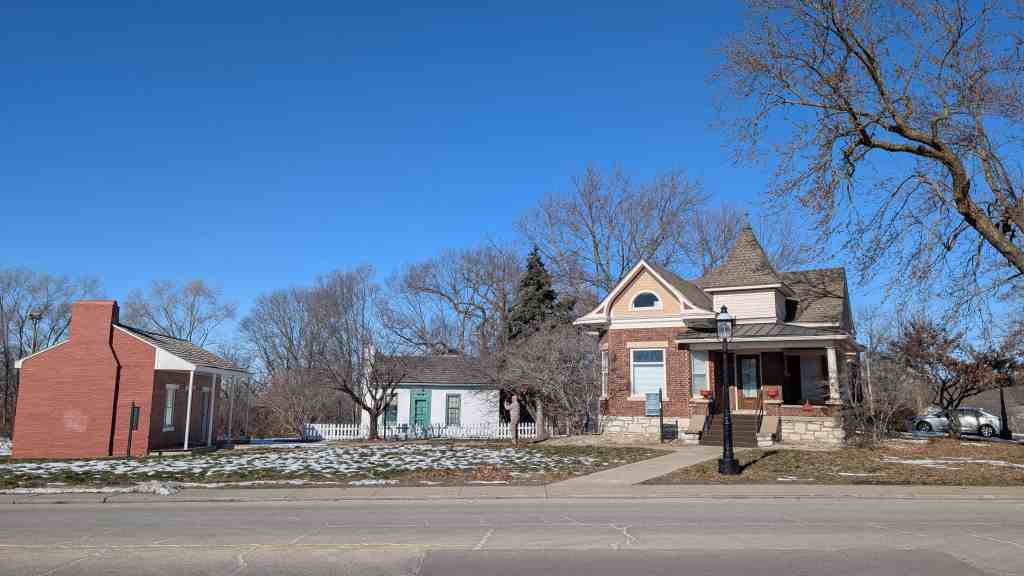
Located at 1034 West Lexington Avenue Independence, Missouri – Heritage Plaza includes:
- F.M. Smith Study
- Flournoy House
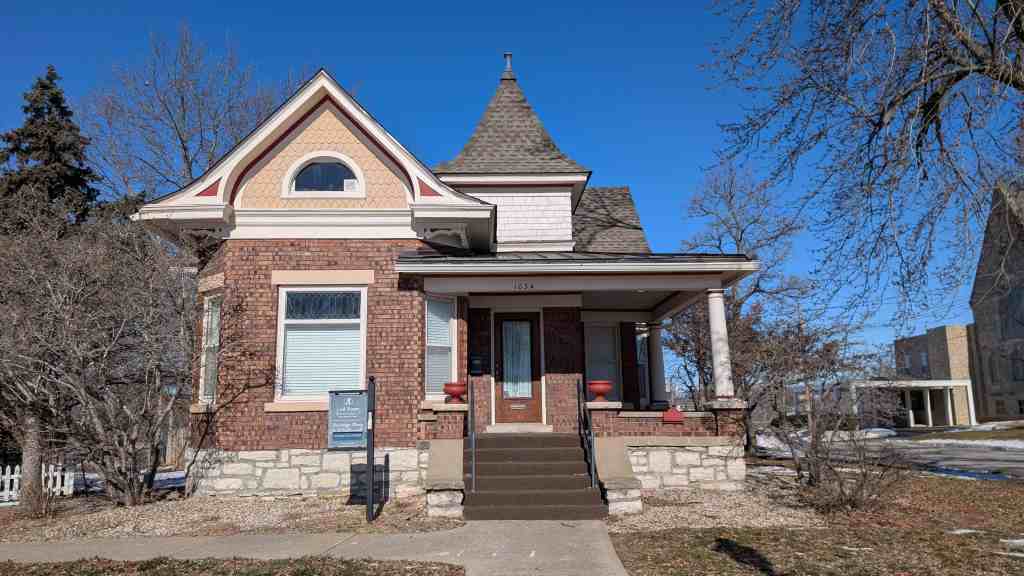
- Luff Home
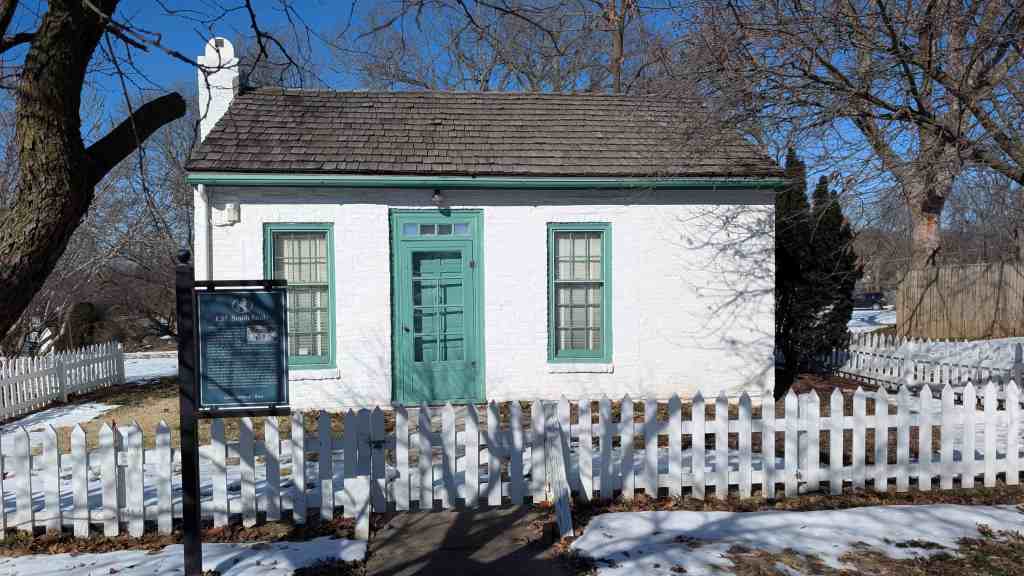
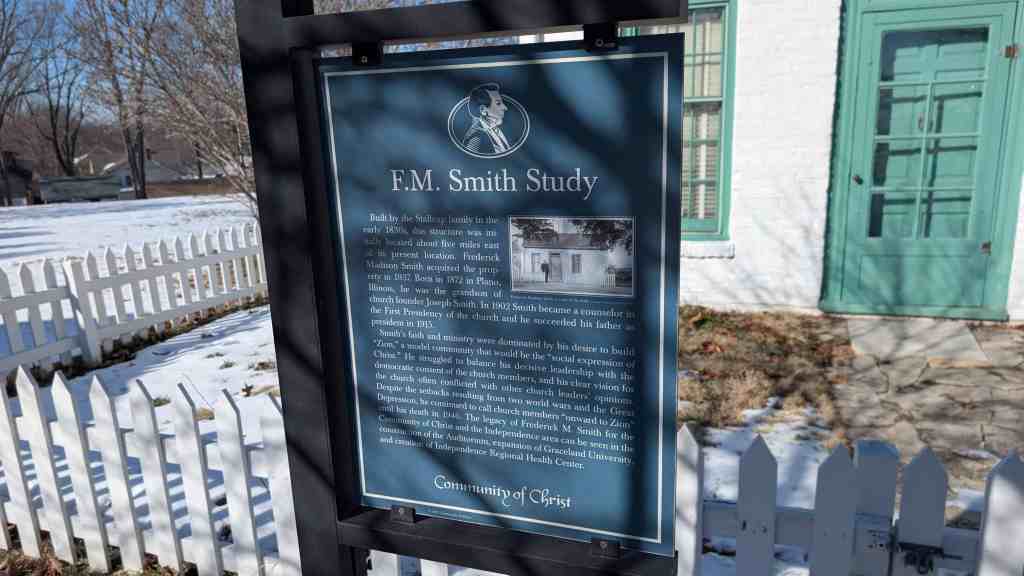
F.M. Smith Study
Built by the Stallcup family in the early 1830s, this structure was initially located about five miles east of its present location. Frederick Madison Smith acquired the property in 1937. Born in 1872 in Plano,
Illinois, he was the grandson of Frederick Madison Smith in front of his study Courtesy Community of Christ Archives church founder Joseph Smith. In 1902 Smith became a counselor in the First Presidency of the church and he succeeded his father as president in 1915.
Smith’s faith and ministry were dominated by his desire to build “Zion,” a model community that would be the “social expression of Christ.” He struggled to balance his decisive leadership with the democratic consent of the church members, and his clear vision for the church often conflicted with other church leaders’ opinions. Despite the setbacks resulting from two world wars and the Great Depression, he continued to call church members “onward to Zion” until his death in 1946. The legacy of Frederick M. Smith for the Community of Christ and the Independence area can be seen in the construction of the Auditorium, expansion of Graceland University, and creation of Independence Regional Health Center.
Flournoy House
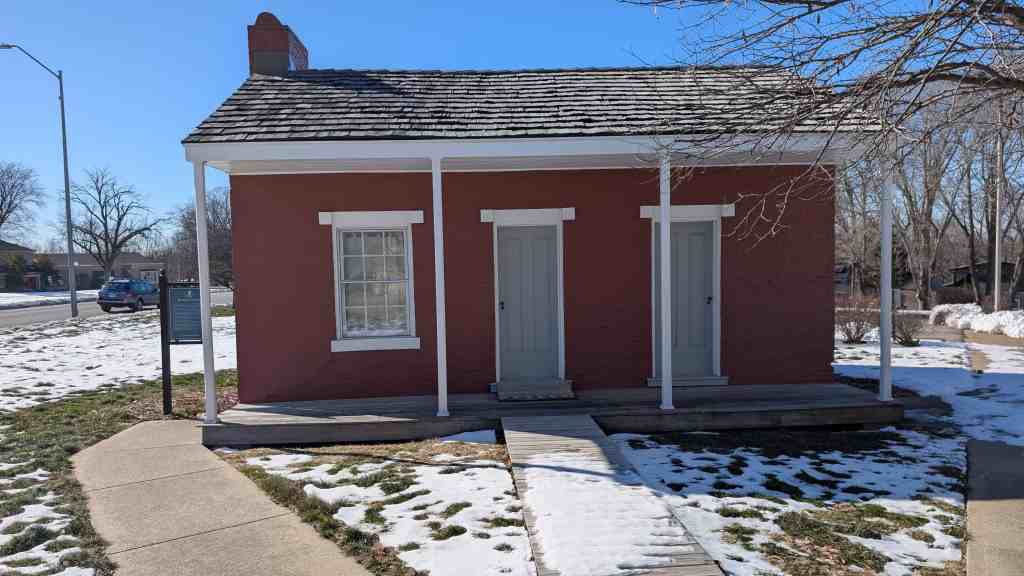
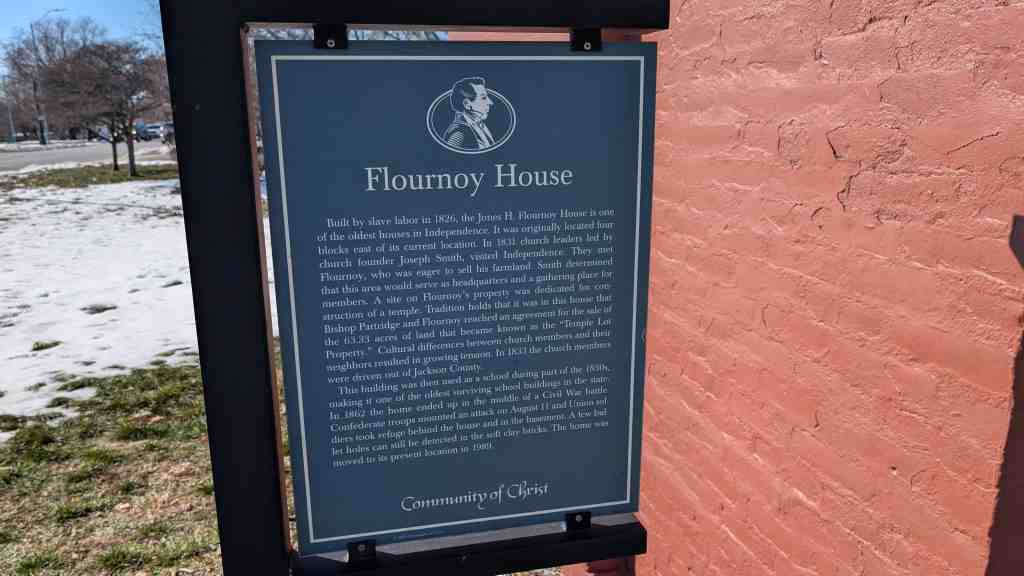
Built by slave labor in 1826, the Jones H. Flournoy House is one of the oldest houses in Independence. It was originally located four blocks east of its current location. In 1831 church leaders led by church founder Joseph Smith, visited Independence. They met Flournoy, who was eager to sell his farmland. Smith determined that this area would serve as headquarters and a gathering place for members. A site on Flournoy’s property was dedicated for construction of a temple. Tradition holds that it was in this house that Bishop Partridge and Flournoy reached an agreement for the sale of the 63.33 acres of land that became known as the “Temple Lot Property.” Cultural differences between church members and their neighbors resulted in growing tension. In 1833 the church members were driven out of Jackson County.
This building was then used as a school during part of the 1830s, making it one of the oldest surviving school buildings in the state. In 1862 the home ended up in the middle of a Civil War battle. Confederate troops mounted an attack on August 11 and Union soldiers took refuge behind the house and in the basement. A few bullet holes can still be detected in the soft clay bricks. The home was moved to its present location in 1989.