Hiram Spencer/William H. Eccles Home

The Hiram Spencer/William H. Eccles Home

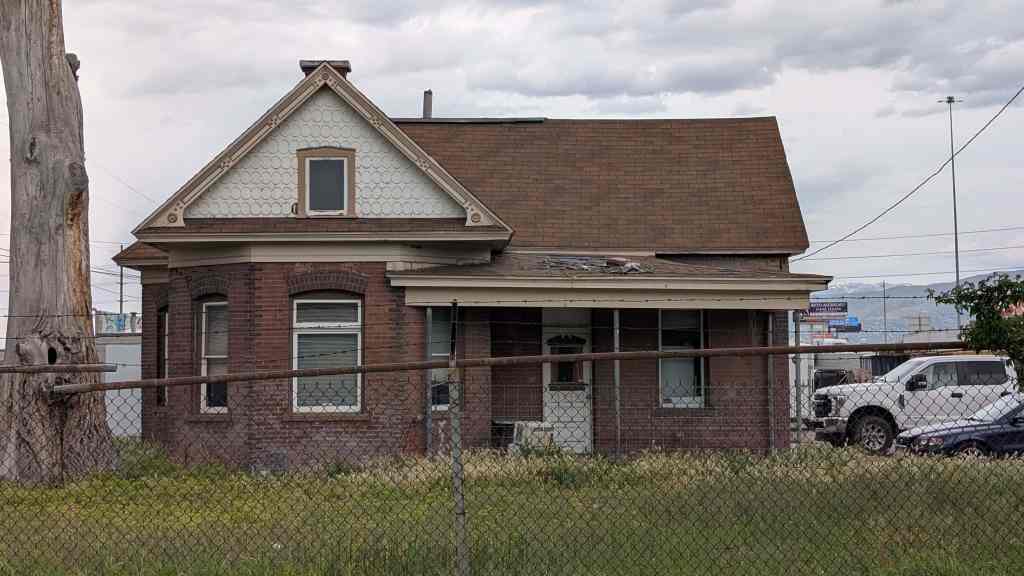
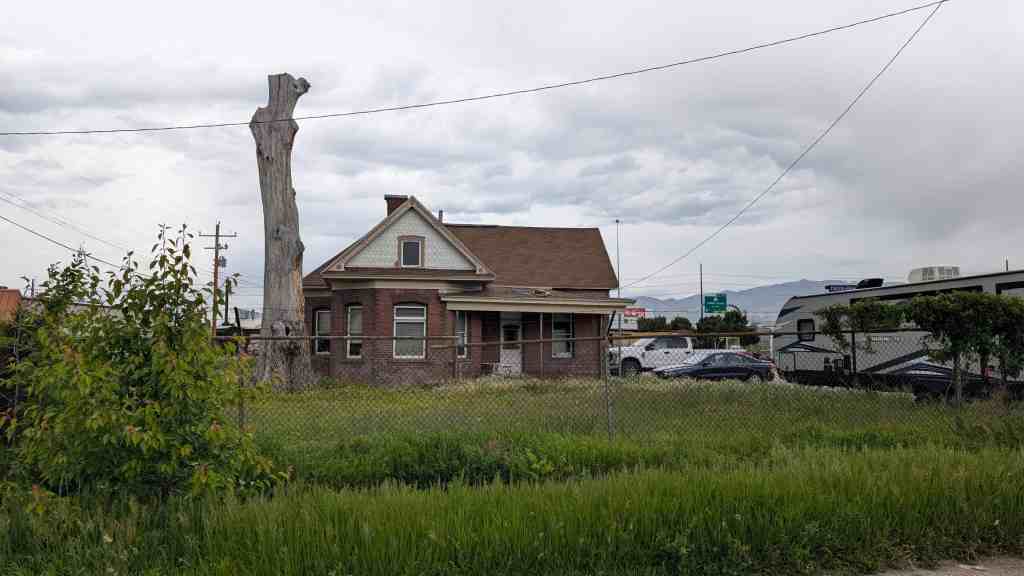
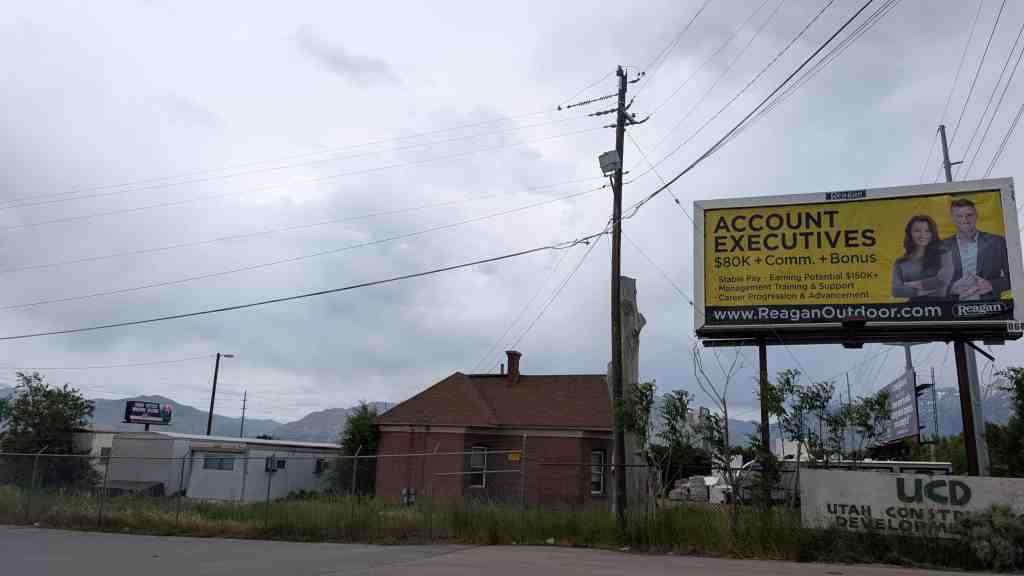
The house was built by Hiram Hupp Spencer in 1895: This Victorian home is a 21⁄2 story brick, frame and concrete structure, thought to be designed by Francis C. Woods. The mass of the building is asymmetrically designed in an eclectic or restrained Queen Anne style with five gabled bays. Windows of the main façade have leaded glass transoms. Other features of the home include patterned shingles and a gabled roof. The home is the largest and most visible home in the district, next to the Eccles Community Art Center.

Hirum Hupp Spencer was a prominent businessman, working for the Gibson Eccles and VanNoy Lumber Company. He also served as president of the Ogden Furniture Company, treasurer of Ogden Waterworks and Rapid Transit, and a one-term mayor of Ogden City.

In 1903, William H. Eccles and his wife Mary acquired the property, doing some remodeling before moving into the home. This may have been when the southern Colonial Greek Revival elements were added. William, brother of financier David Eccles was in the lumber business and was a stockholder of the Utah-Idaho Central Railroad, Amalgamated Sugar, and Goddard Packing. William’s daughter, Celia and her husband Walker Cheesman purchased the home in 1919. Cheesman operated a successful automobile sales business, selling Peerless, Buick and Dodge vehicles. They later lost the home in a foreclosure. It was vacant for a few years, and by 1938 it had been converted into seven apartments, then later to 14 apartments. Ogden City acquired the building in 2004 and removed the colonial pillars and restored the building to its original design. Its restoration was later completed by Steve and Nancy Jones.

2555 Jefferson Avenue in the Jefferson Avenue Historic District and in Ogden’s Central Bench Historic District in Ogden, Utah

  • mentioned in Jefferson Avenue Historic District:
    William Eccles (2555 Jefferson) was the brother of the influential businessman, David Eccles. William was affluent in his own right as the president of W.H. Eccles Lumber Company.

    also,
    Hiram H. Spencer (2555 Jefferson) was the mayor of Ogden and also the manager of the Eccles Lumber Company. He was the president of the Ogden Rapid Transit, and a vice-president of Amalgamated Sugar.

John G. Tyler Home

The John G. Tyler Home

Built between 1888-1891, the residence is a premier example of the Queen Anne style. It features the steeply pitched cross-gable roof and pediments, window bays on the second story and a wide veranda and porte cochere. Fish-scale shingles adorn the main front gable and side gable along with pressed metal decoration, wooden shingles and clapboard siding. The building is a 2 1/2 story frame structure on a sandstone foundation.

John G. Tyler conducted a “profitable hotel enterprise” in connection with the Beardsley Hotel from 1875-1887. He was then appointed Ogden City Postmaster, a position he held until 1890 when he was elected to the office of the Weber County Recorder. He later became an office employee of the Utah Construction Company.

In 1907, Charles F. Osgood acquired the home. Dr. Osgood was a physician and surgeon who had offices in the First National Bank Building and the Eccles Building in Ogden. Osgood lived here until 1916 when he was tragically murdered by a mentally disturbed former patient who shot the physician in his car as he was preparing to return home from the Eccles Building. Alexander Rankin McIntyre lived in the home from 1918 until 1924. McIntyre was president of McIntyre Drug Company which had two stores in downtown Ogden. Walter Nelson Cleveland owned the property from 1924 until his death in 1925.

Robert H. Hinckley owned the home from 1928 until 1960. Hinckley was one of Ogden’s most prominent citizens. He was director of the Chamber of Commerce, president of the Rotary Club and vice-president of the Utah Pacific Airways, helping to develop the Ogden Airport. Hinckley and Ed Noble teamed up to purchase and reorganize a network that would later be known as the American Broadcasting Company. ABC merged with United Paramount Theaters where Hinckley served as Vice President until his retirement in the 1960’s.

Hinckley’s wife Abrelia Clarissa Seely Hinckley was the founder and member of the First Board of Directors of the Ogden YWCA and a member of the Ogden Soroptimist Club, a women’s business organization. She was also the first president of the Utah Wool Growers Association Women’s Auxiliary and was a member of the Daughters of the Utah Pioneers and the Altruist Club.

It is one of the few homes on the Jefferson block that was not split up into apartments.

2560 Jefferson Avenue in the Jefferson Avenue Historic District and in Ogden’s Central Bench Historic District in Ogden, Utah

  • mentioned in Jefferson Avenue Historic District:
    Robert H. Hinckley (2560 Jefferson) was one of Ogden’s most prominent citizens who was recognized for local, state, and national achievement. He established the Hinckley Dodge automobile dealership in Ogden, was a director of the Chamber of Commerce, president of the Rotary Club, and helped develop the Ogden Airport and was a vice-president of Utah Pacific Airways. With his political success, he was asked to join the Franklin D. Roosevelt Administration as the Assistant Secretary of Commerce and the Director of Contracts Settlement. He established the Hinckley Institute of Politics at the University of Utah. He and Ed Noble worked together to purchase the RCA network and reorganize it as the American Broadcasting Company (ABC).

    also,
    Abrelia Clarissa Seely Hinckley (2560 Jefferson) was also a contributing person in Ogden. She was a founder of the first Board of Directors of the Ogden YWCA, and also the first president of the
    Utah Wool Growers Association Women’s Auxiliary.

John G. Tyler Home

John G. Tyler, who was at various times a postmaster, manager of the Broom Hotel, County Recorder and Purchasing Agent for the Utah Construction Company, had this home built in 1898, and it is located in the heart of the Jefferson District.

The home is a premier example of the Queen Anne architectural style, which highlights wooden decoration and massive scale. The style of the architecture, the scale of the building and its massiveness clearly put this home within the context of the surrounding properties which contribute to the overall ambiance of the Jefferson District.

Edmund T. Hulaniski Home

The Edmund T. Hulaniski Home

Built in 1891 by Edmund T. Hulaniski, this home is one of the few remaining examples of William W. Fife’s residential architecture in Ogden. The Victorian Eclectic style is represented by the two-story vertical emphasis of windows and gables. The structure is brick, built on a sandstone foundation with gables faced with shingles. The corners of the front of the building use spindle work pendicules to tie the roof overhang to the walls. The windows give balance by their placement in the frontal and pendiculed walls. The house is a cross-gable plan and has a small gabled entry porch which is enclosed by spindled posts. There is a double garage at the left rear of the home.

Edmund Hulaniski served in the American Civil War and was “widely known as the youngest commissioned officer” in the war, being commissioned as a captain at the age of 16 by President Lincoln. After the war, he studied law and was admitted to the bar. He then was employed in railroading for 21 years. In Ogden, Hulaniski was a member of the Grand Army of the Republic and served as the Commander of the Department of Utah in that organization. He was the general agent for the Union Pacific Railroad in Ogden from 1883-1890. Hulaniski also served as City, County, & District Attorney, police judge, as well as Chairman of the County and City Republican Committees.

After forty years as a resident of Ogden, Edmund Tuttle Hulaniski died on April 15, 1928 at age 80 at his home in Ogden. He had been a significant person in Ogden life and history during the “heyday” of Jefferson Avenue.

The home was sold to William Schultz in 1930. It was made into several apartments after 1936, owned by Scott & Martha Sorensen. It survived as a boarding house long into the next century. After a foreclosure, it was purchased by PJ and Lydia Gravis, who restored it as a single-family home.

2523 Jefferson Avenue in the Jefferson Avenue Historic District and in Ogden’s Central Bench Historic District in Ogden, Utah

  • mentioned in Jefferson Avenue Historic District:
    Edmund T. Hulaniski (2523 Jefferson) who was significant to Ogden’s politics by serving as city, county, and district attorney, police judge, and chairman of the county and city Republican Committees. From 1907 to 1909 he was a member of the Utah State Senate. He lived in the
    Jefferson District from 1882 until his death in 1928.

    also,
    Unique house specimens are nevertheless an important factor of the district’s character. Some architect-designed homes are known (i.e., 2523 Jefferson was designed by William W. Fife, a prominent Ogden architect), while others show the originality and sophistication that suggest an architect’s involvement (i.e., 2580 Jefferson and 2504 Jefferson).

William W. Fife designed this brick house for Edmund Hulaniski, who lived in the home from 1893 until his death in 1928. Fife also designed Ogden City Hall and Ogden High School.*

Marindale Avenue

This quaint, narrow street is unlike any other street in Logan. In 1888, the U.S. government deeded this property to Logan while William B. Preston was the mayor. After several owners, Marriner S. Eccles and Fred A. Dahle, two local businessmen, acquired the property in 1914. They divided it into plots, and created Logan’s first subdivision. They named it Marindale Avenue, using a combination of their names. The homes face each other and residents can visit back and forth from their neighboring porches. Maple trees were part of the street since its beginning, but were causing buckling and splitting of the sidewalk and curbs so the city replaced them with Linden trees.*