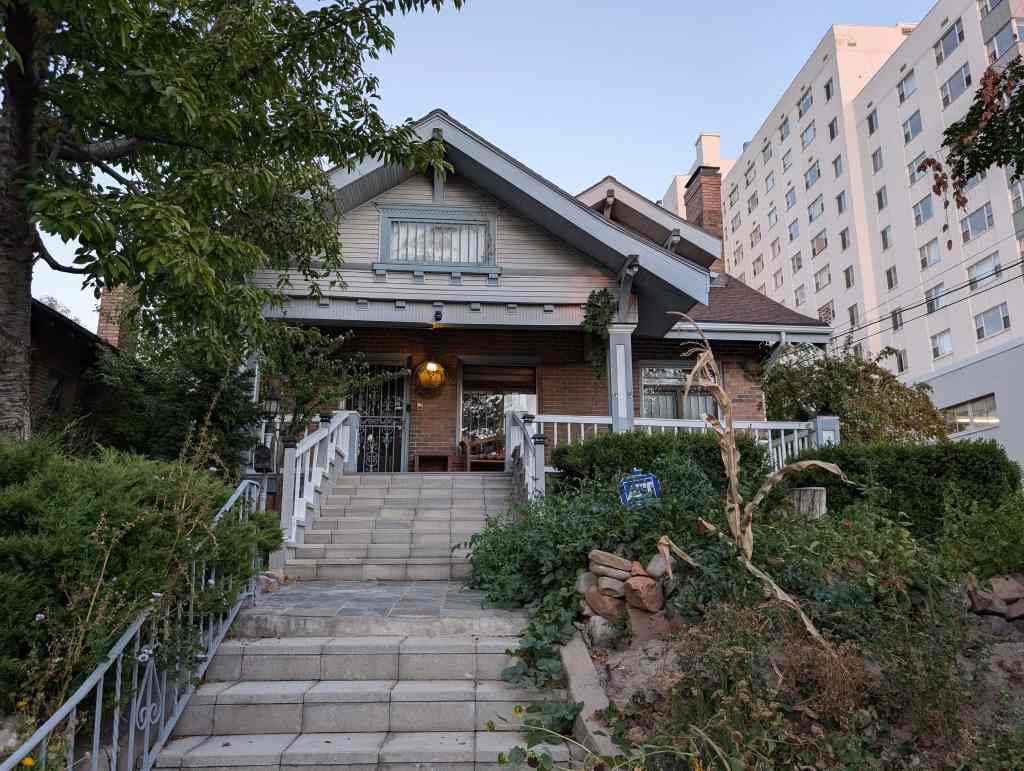
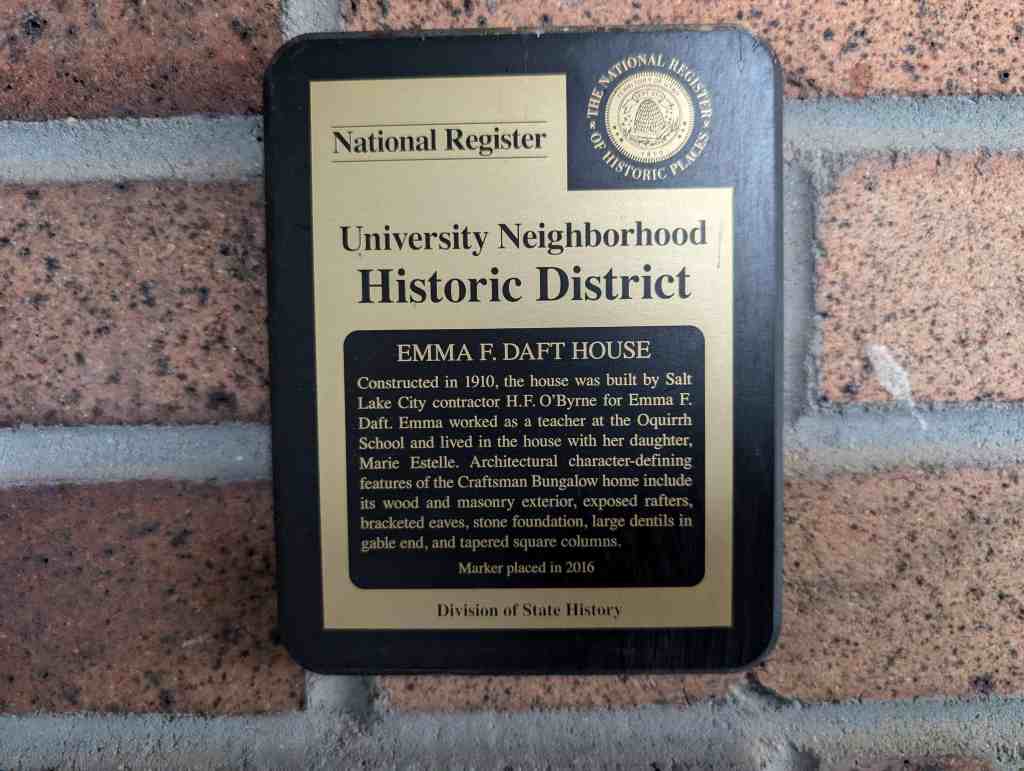
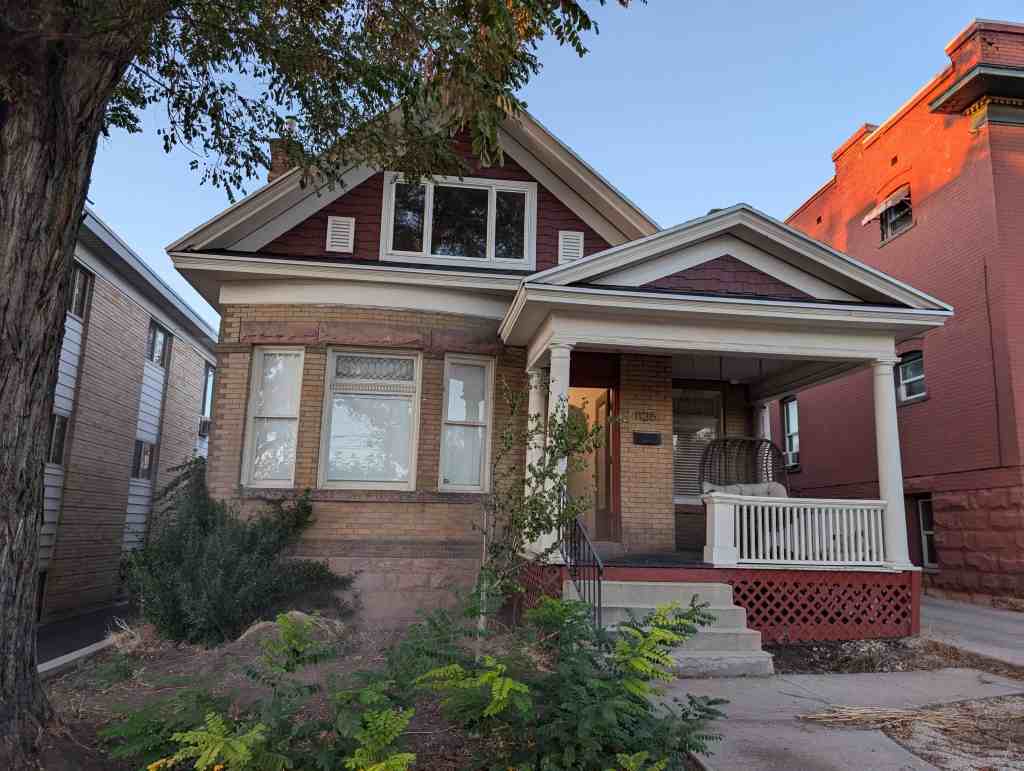
Constructed in 1910, the house was built by Salt Lake City contractor H.F. O’Byrne for Emma F. Daft. Emma worked as a teacher at the Oquirrh School and lived in the house with her daughter, Marie Estelle. Architectural character-defining features of the Craftsman Bungalow home include its wood and masonry exterior, exposed rafters, bracketed eaves, stone foundation, large dentils in gable end, and tapered square columns.
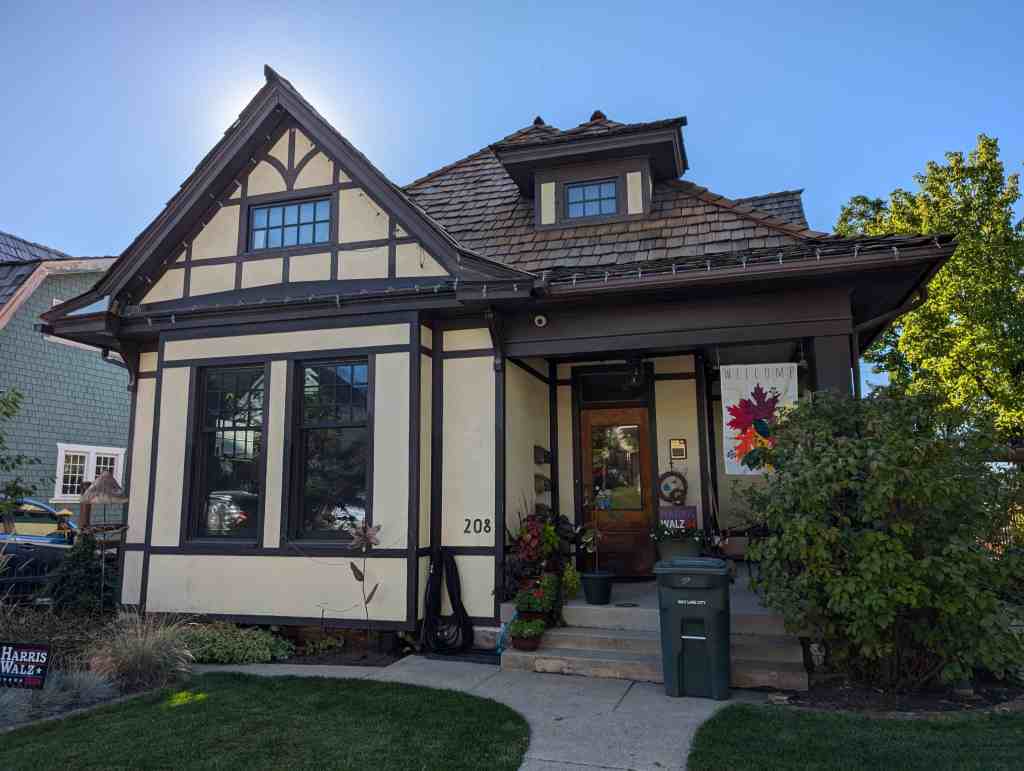
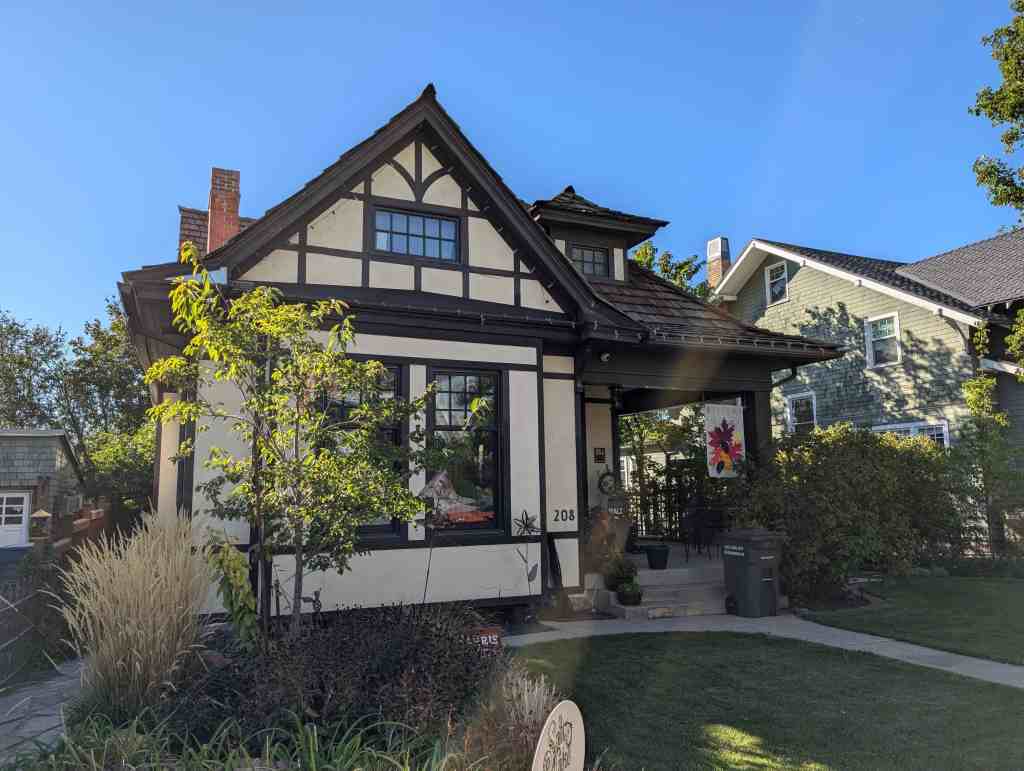
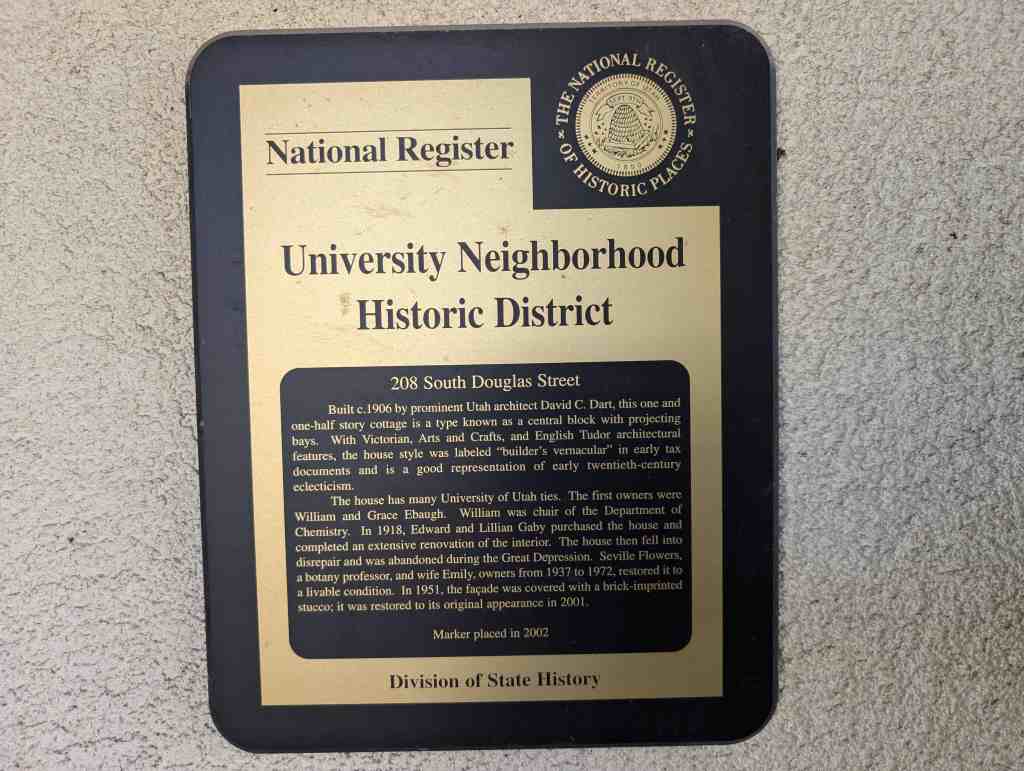
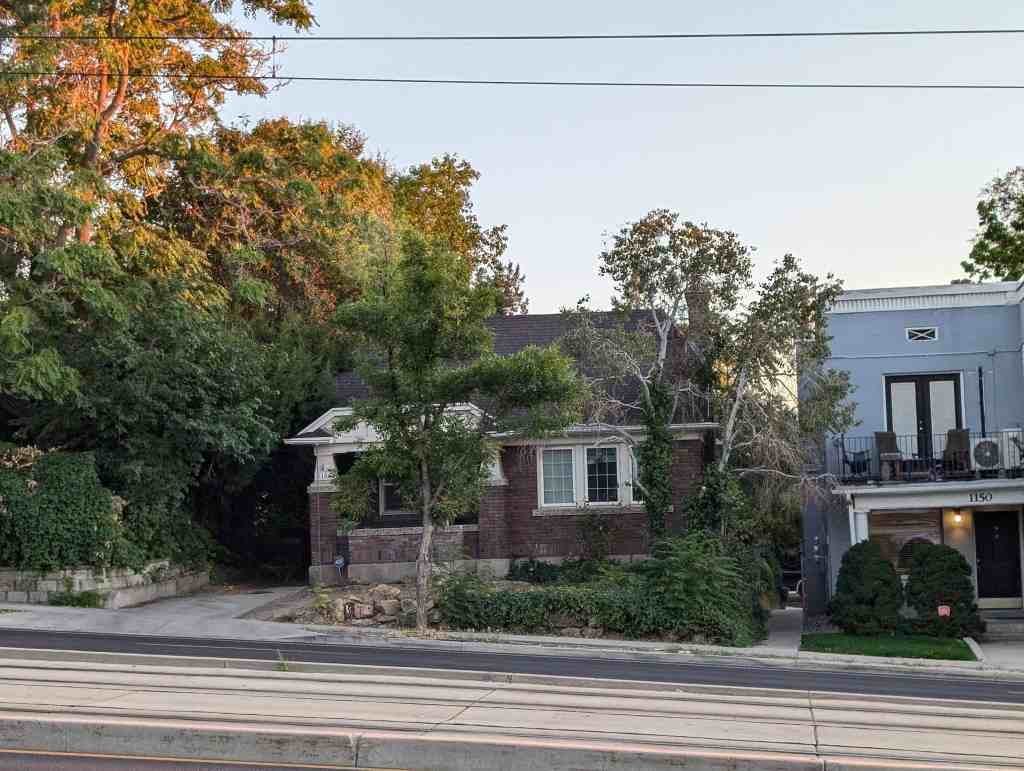
Built c.1906 by prominent Utah architect David C. Dart, this one and one-half story cottage is a type known as a central block with projecting bays. With Victorian, Arts and Crafts, and English Tudor architectural features, the house style was labeled “builder’s vernacular” in early tax documents and is a good representation of early twentieth-century eclecticism.
The house has many University of Utah ties. The first owners were William and Grace Ebaugh. William was chair of the Department of Chemistry. In 1918, Edward and Lillian Gaby purchased the house and completed an extensive renovation of the interior. The house then fell into disrepair and was abandoned during the Great Depression. Seville Flowers, a botany professor, and wife Emily, owners from 1937 to 1972, restored it to a livable condition. In 1951, the façade was covered with a brick-imprinted stucco; it was restored to its original appearance in 2001.
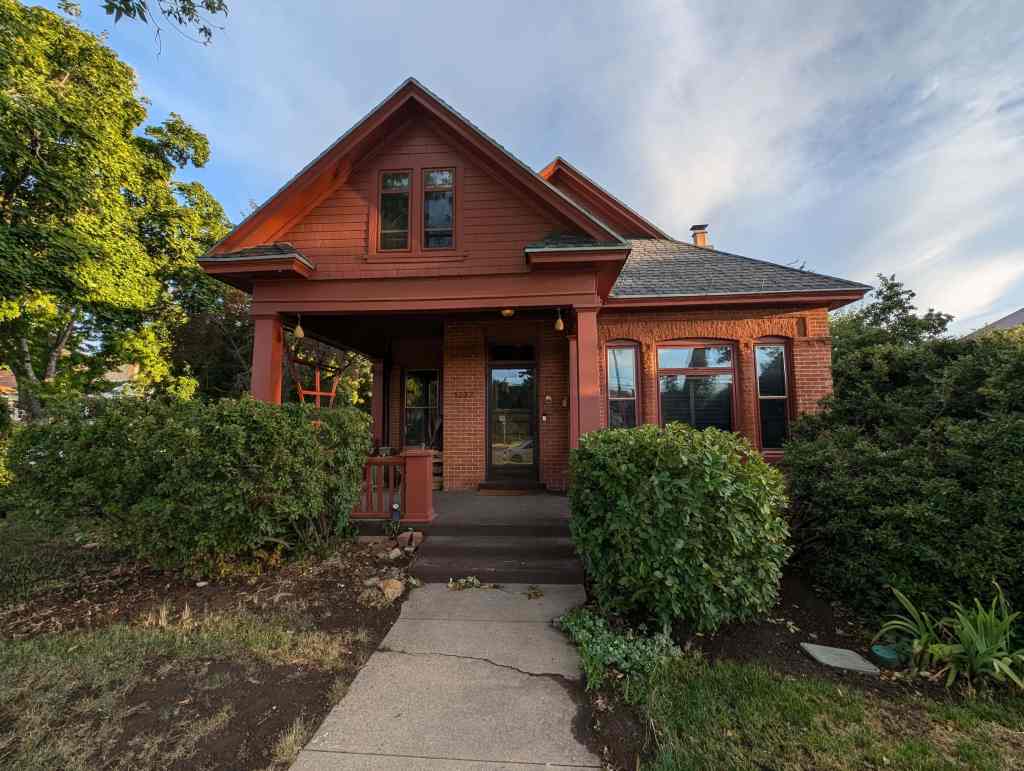
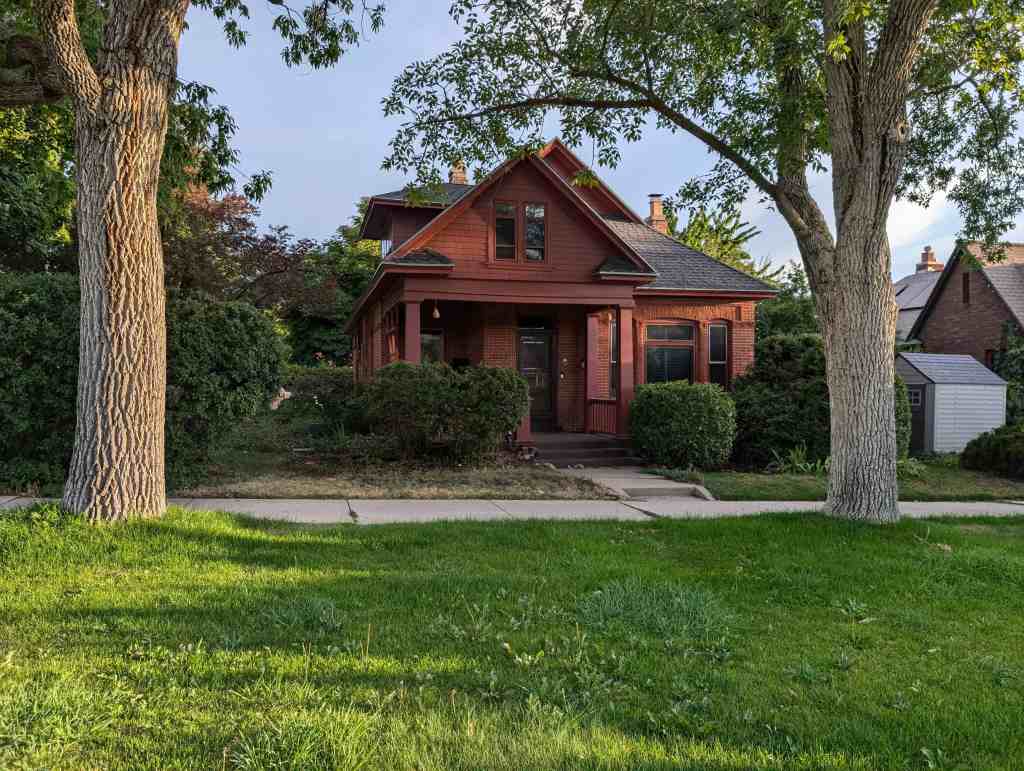
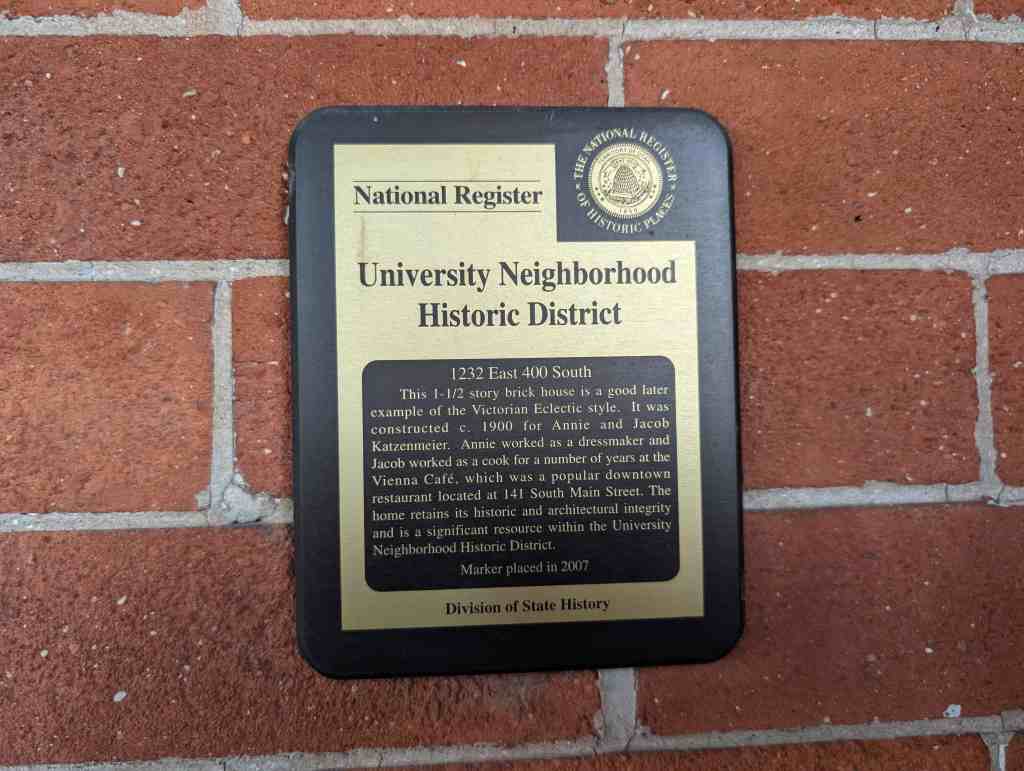
This 1-1/2 story brick house is a good later example of the Victorian Eclectic style. It was constructed c. 1900 for Annie and Jacob Katzenmeier. Annie worked as a dressmaker and Jacob worked as a cook for a number of years at the Vienna Café, which was a popular downtown restaurant located at 141 South Main Street. The home retains its historic and architectural integrity and is a significant resource within the University Neighborhood Historic District.
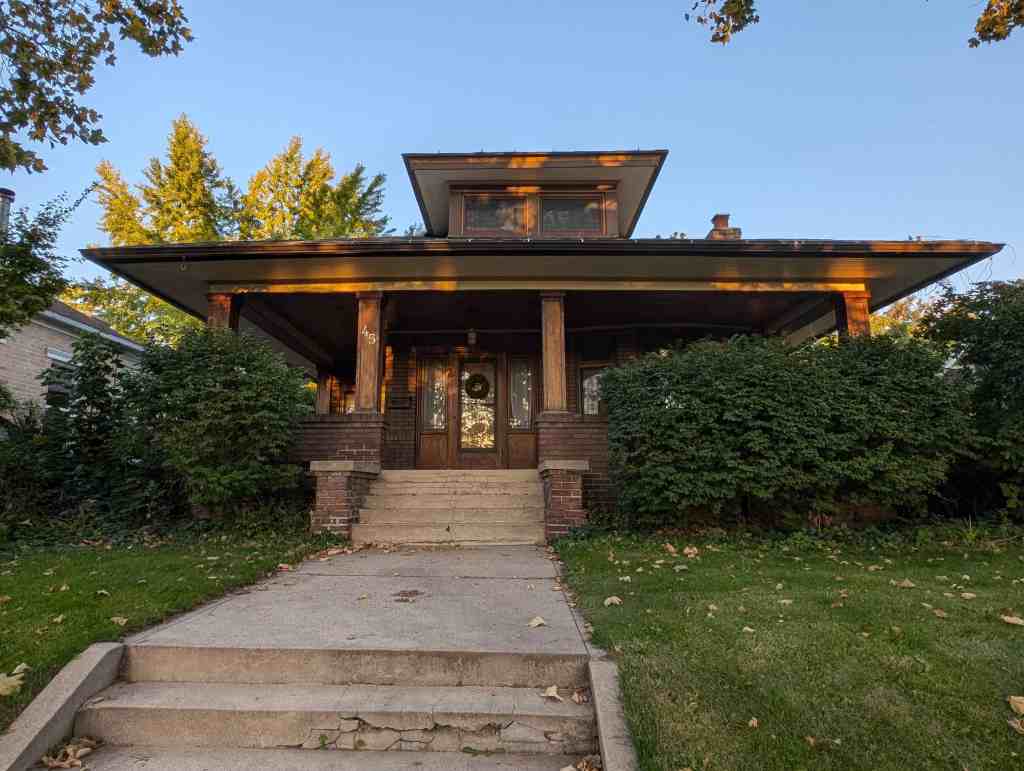
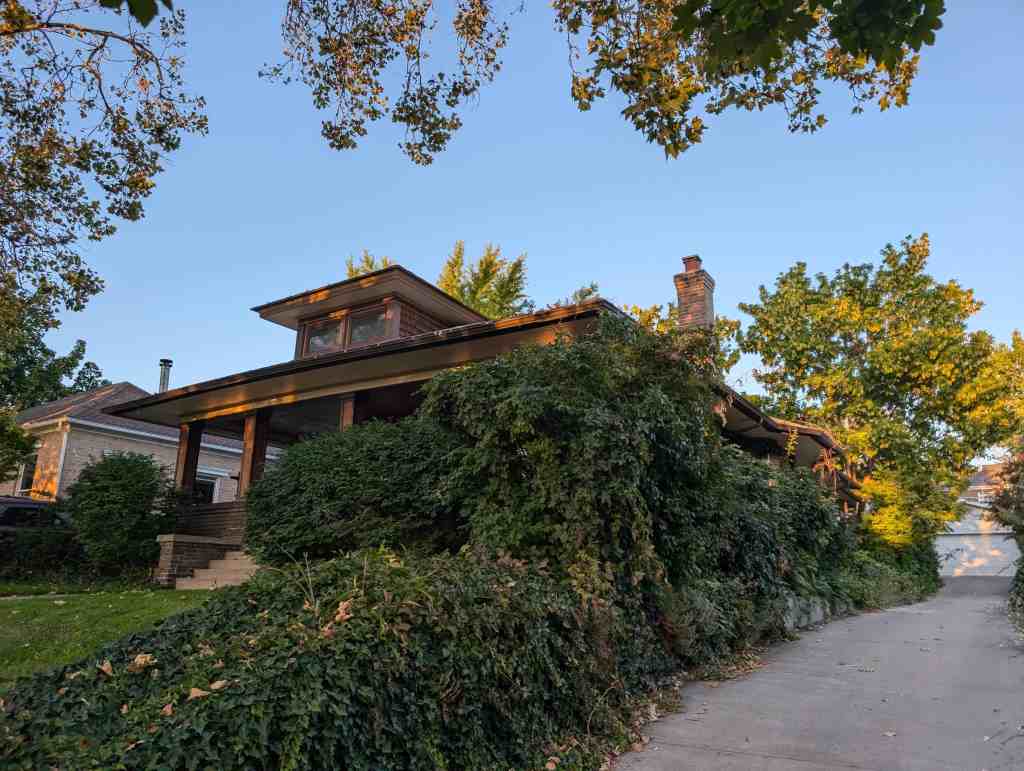
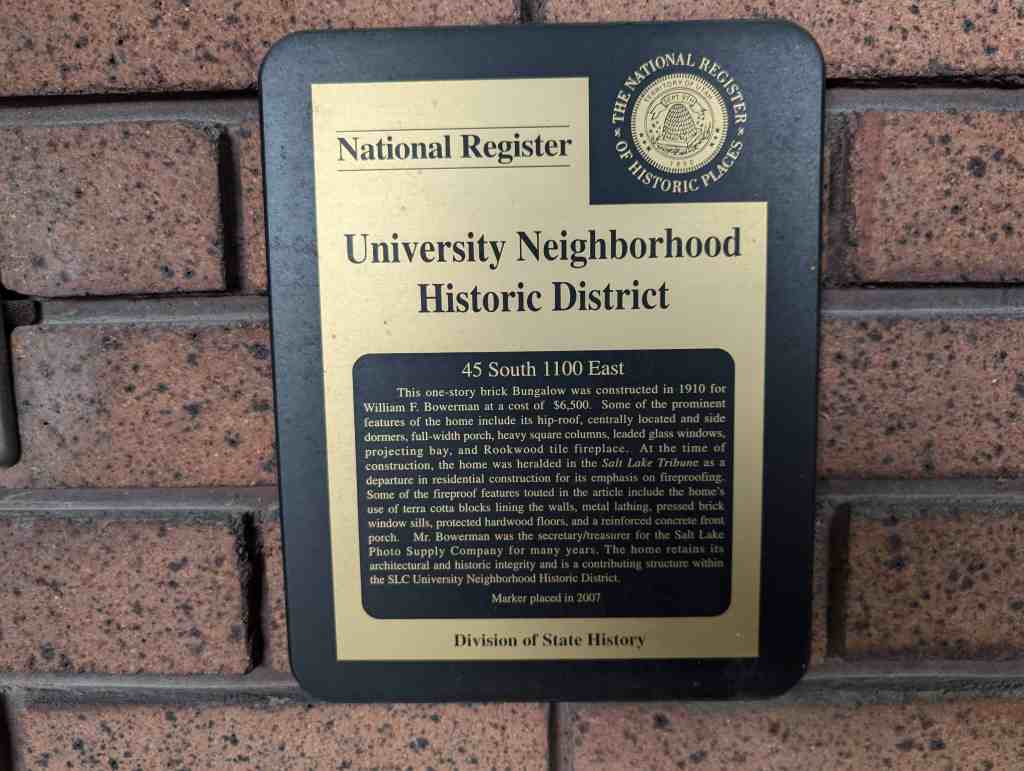
This one-story brick Bungalow was constructed in 1910 for William F. Bowerman at a cost of $6,500. Some of the prominent features of the home include its hip-roof, centrally located and side dormers, full-width porch, heavy square columns, leaded glass windows, projecting bay, and Rookwood tile fireplace. At the time of construction, the home was heralded in the Salt Lake Tribune as a departure in residential construction for its emphasis on fireproofing. Some of the fireproof features touted in the article include the home’s use of terra cotta blocks lining the walls, metal lathing, pressed brick window sills, protected hardwood floors, and a reinforced concrete front porch. Mr. Bowerman was the secretary/treasurer for the Salt Lake Photo Supply Company for many years. The home retains its architectural and historic integrity and is a contributing structure within the SLC University Neighborhood Historic District.