Tags
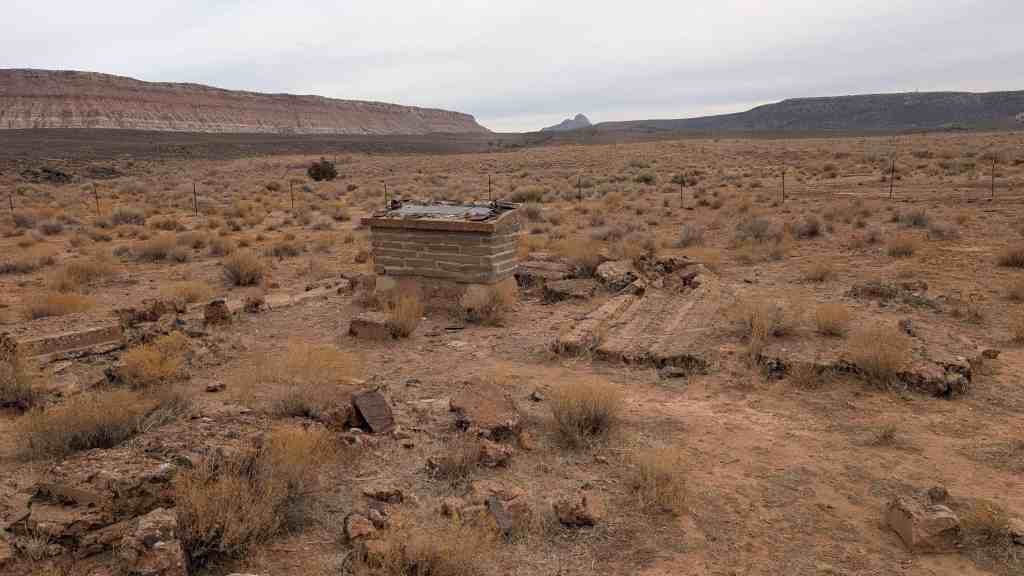
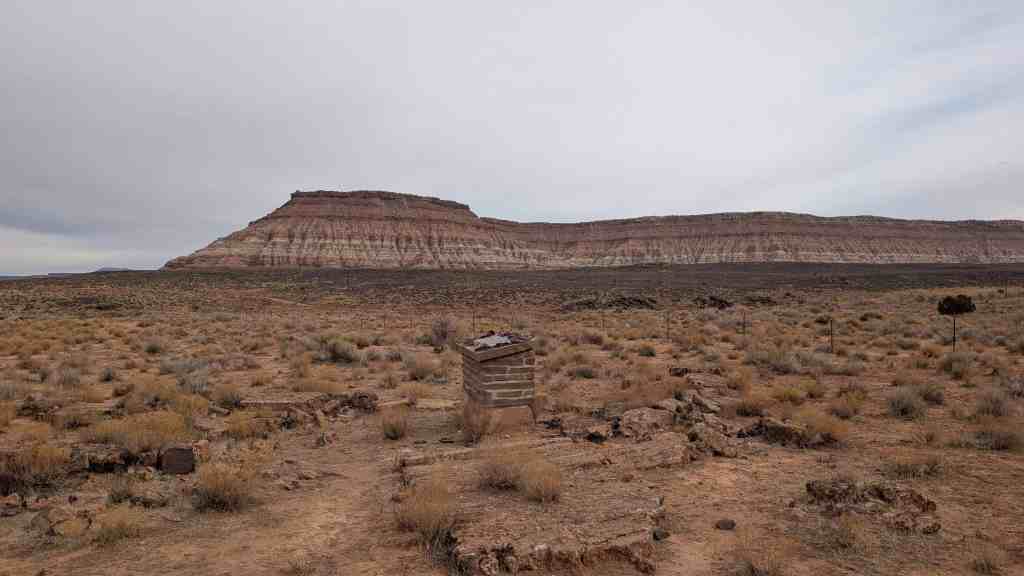
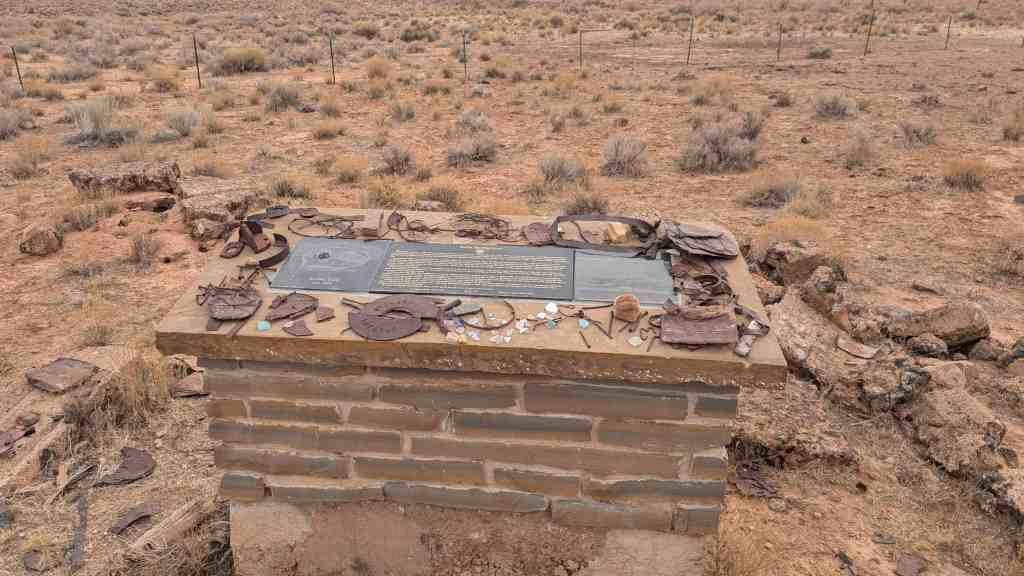
Goulds Shearing Corral
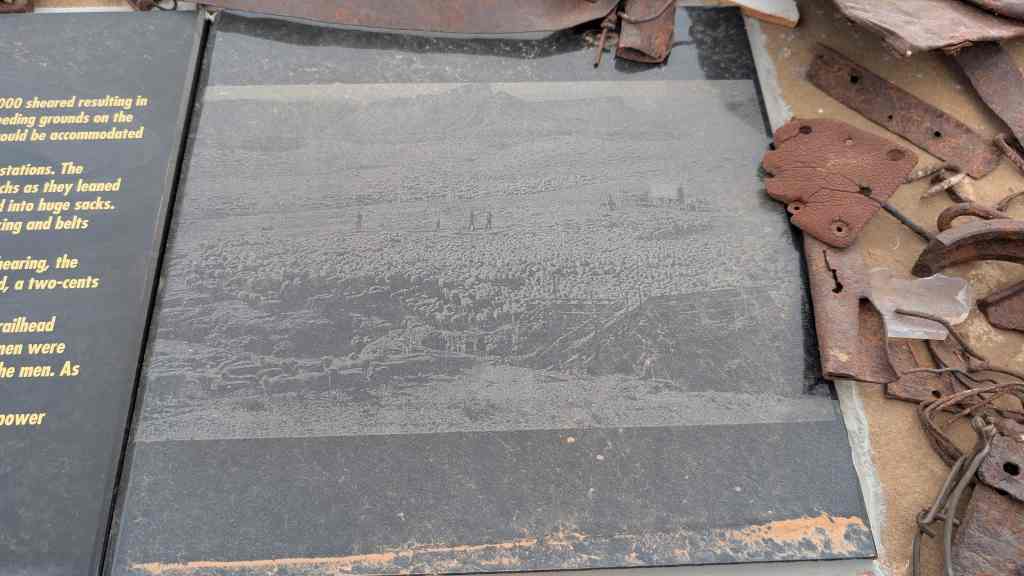
Considerably more than a million sheep were sheared at or near this site between 1910 and the early 1930’s. Some years there were as many as 150,000 sheared resulting in over one million pounds of wool. At times it was the largest shearing operation in the world. Sheep herds trailed in on a prearranged schedule from winter-feeding grounds on the Arizona Strip and Southeastern Nevada for their annual fleecing that took place between March 20th and May 10th. A typical herd of 2,500 to 3,000 sheep could be accommodated daily.
Hand powered shears were first used but soon a gasoline engine and a system of shafts, pulleys and belts powered clippers for as many as thirty shearing stations. The concrete base upon which this monument sits is the same concrete base upon which their power plant was supported. Supported by wide belts under their stomachs as they leaned over the sheep, each man would shear 100 or more sheep in a day. Shearers placed the wool on a conveyor belt where it could be inspected prior to being tamped into huge sacks. A worker recalled, “I’ll never forget the wild cacophony of the shearing shed: sheep bleating, dogs barking, wranglers shouting, clippers whirring, machinery clanking and belts slapping became a deafening din.”
Wagons loaded with twelve to sixteen three-hundred-pound sacks make their four-day journey to the railhead at Lund, Utah (northwest of Cedar City). After shearing, the sheep, now vulnerable to late killing frosts, were trailed to mountain pastures. A narrow toll bridge just below Virgin facilitated the shorn sheep’s journey northward, a two-cents per-sheep toll reportedly being charged.
At the time when this region was struggling for an economic foothold, this industry brought a great infusion of much needed capital. Hauling the wool to the Lund railhead provided work for as many as 50 teams and wagons netting about $10,000.00 yearly to the haulers. As many as 30 shearers were employed and many more young men were needed as wool trompers and wranglers. Supplies and drinking water were delivered from Hurricane to the corrals almost daily. Two cook shacks were needed to feed the men. As one woman lamented, “Mother put up 1,500 quarts of fruit each summer to be used at the shearing corral.”
Multiple events forced the corral’s closure. It was twice torched by resentful cattlemen. By the mid thirties, highways and equipment improved; trucks equipped with power shears could drive to the herds thus lessening stress to the sheep. The Taylor Grazing Act of 1934 ended uncontrolled grazing. Low priced wool from abroad caused severe permanent cuts in United States production.
The sheep and lenticular trails made by millions of their hooves over this region are now a vague memory.
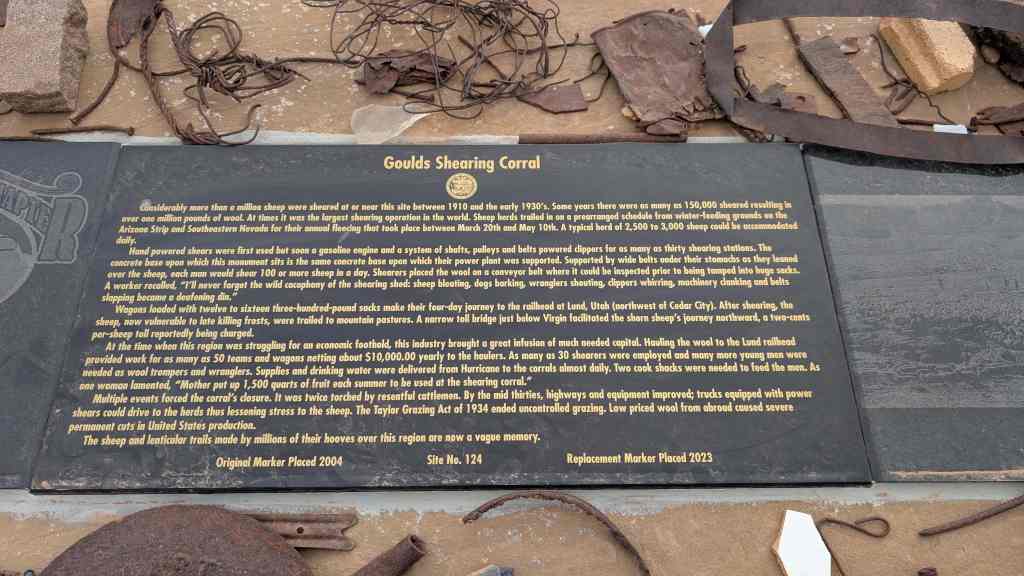
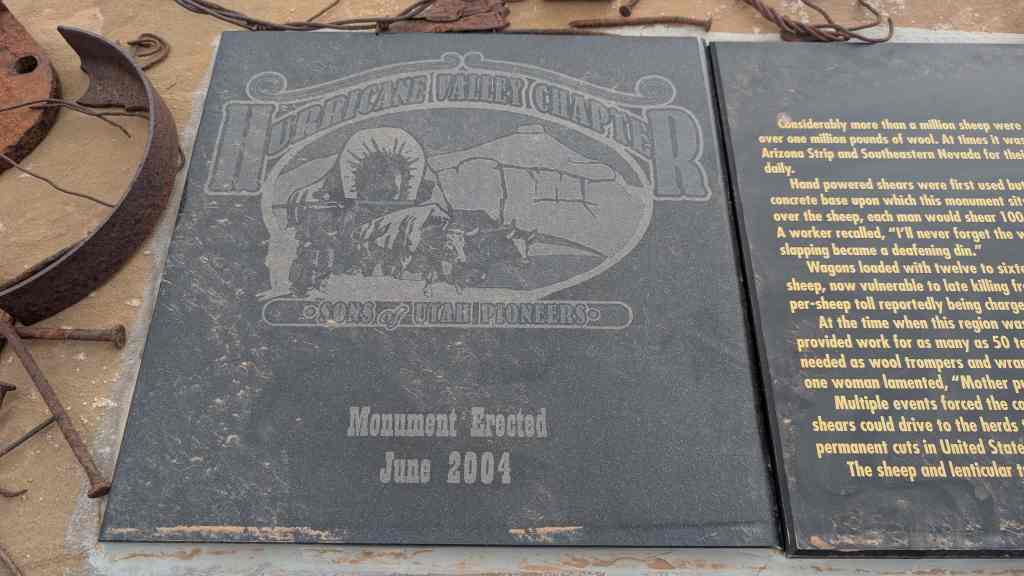
This is Sons of Utah Pioneers historic marker #124 (see other S.U.P. markers here) located southeast of Hurricane, Utah. It was originally placed in 2004 and replaced in 2023.