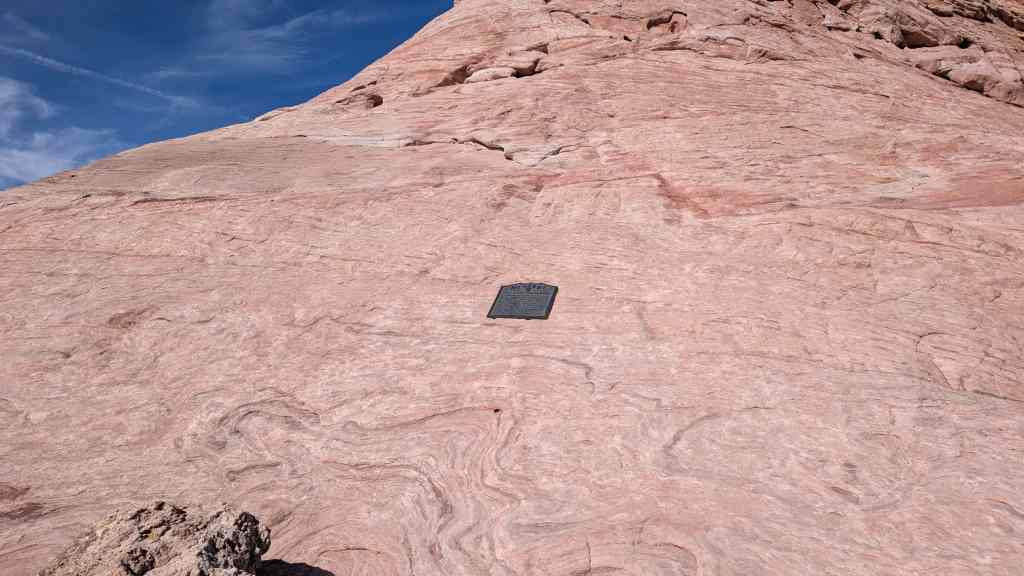
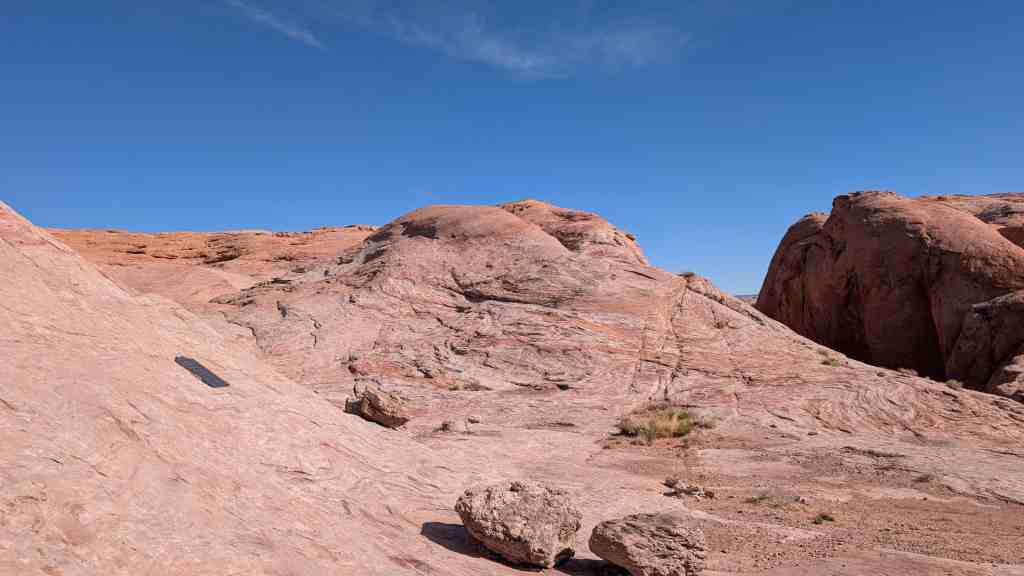
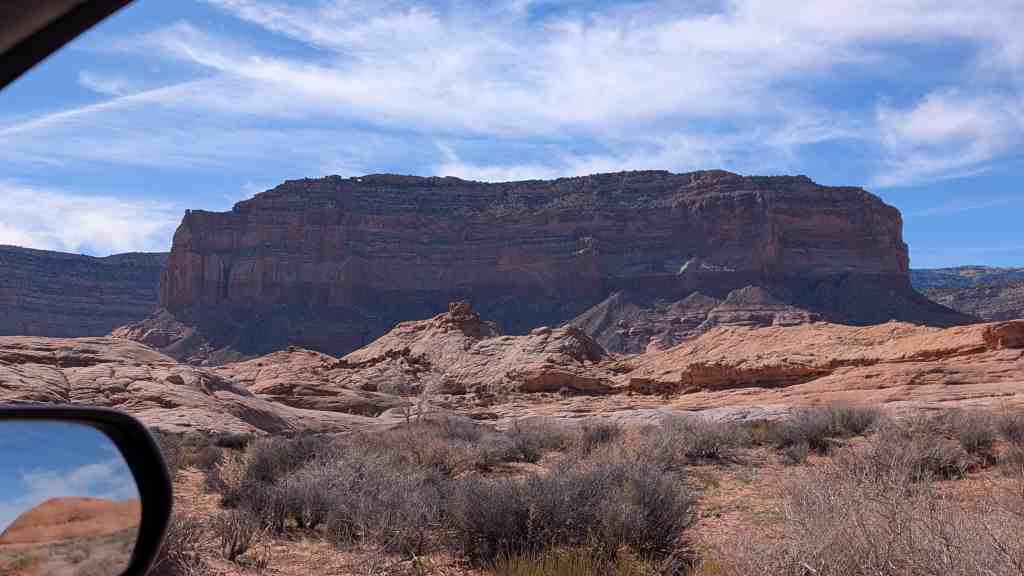
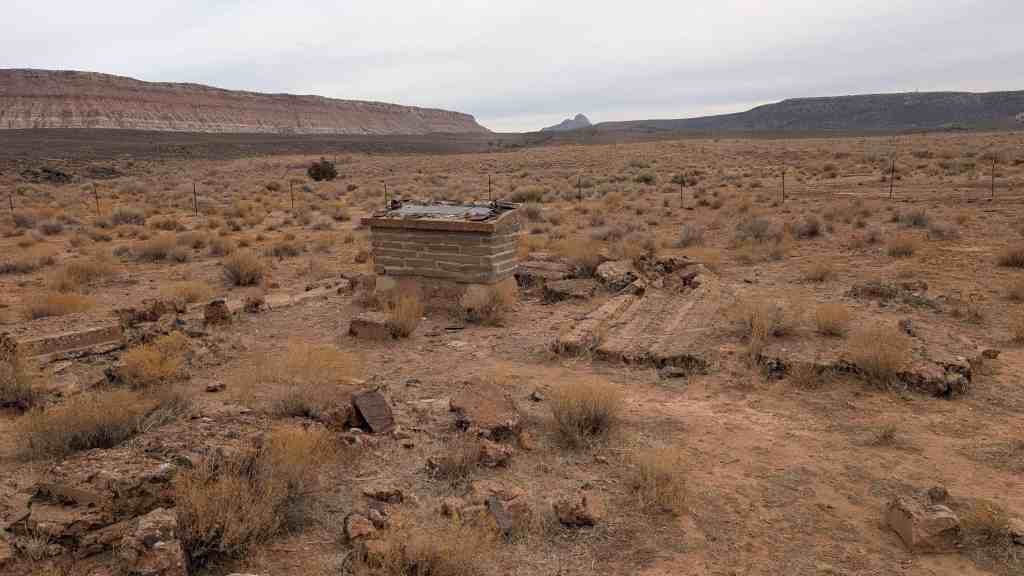
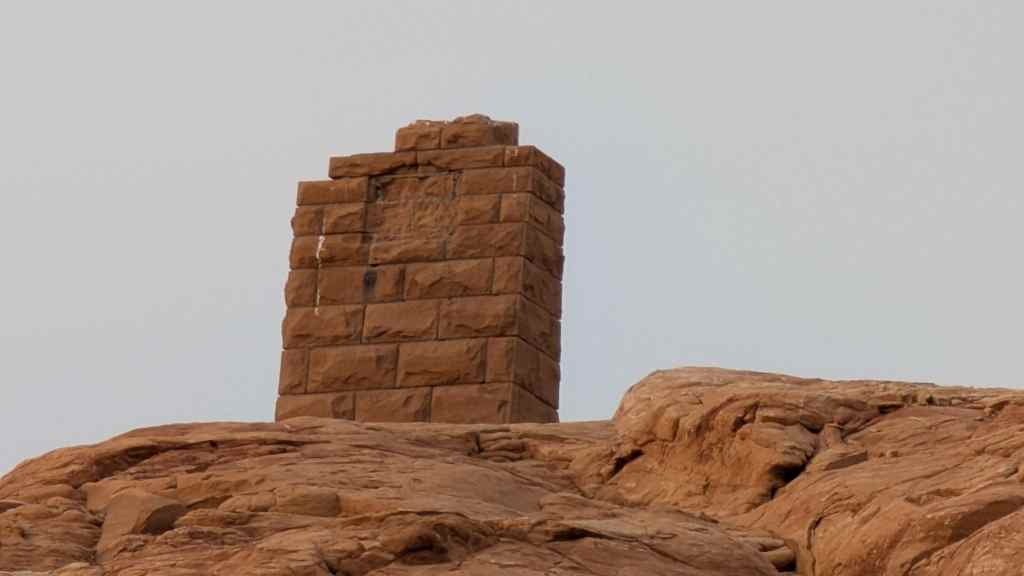
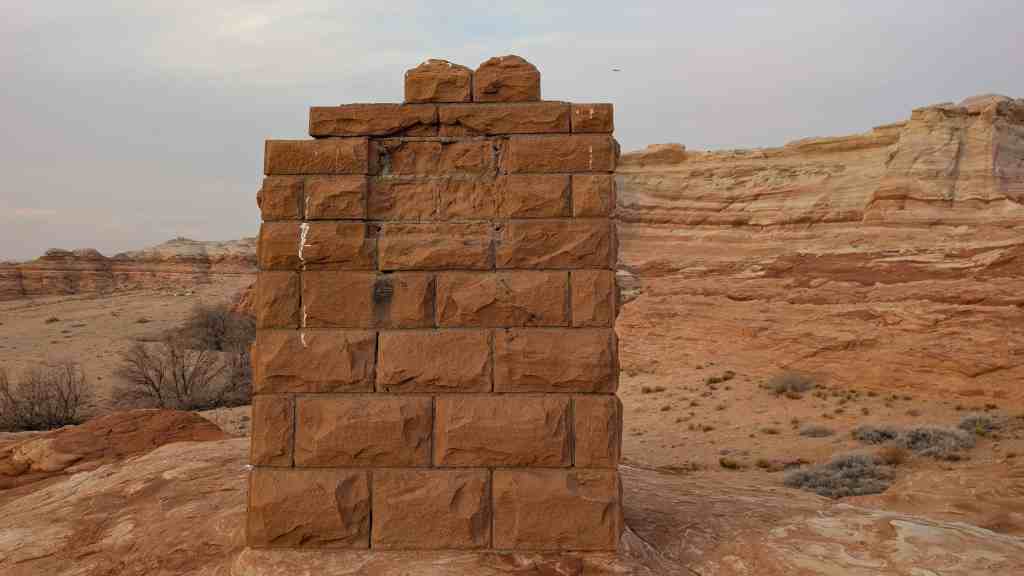
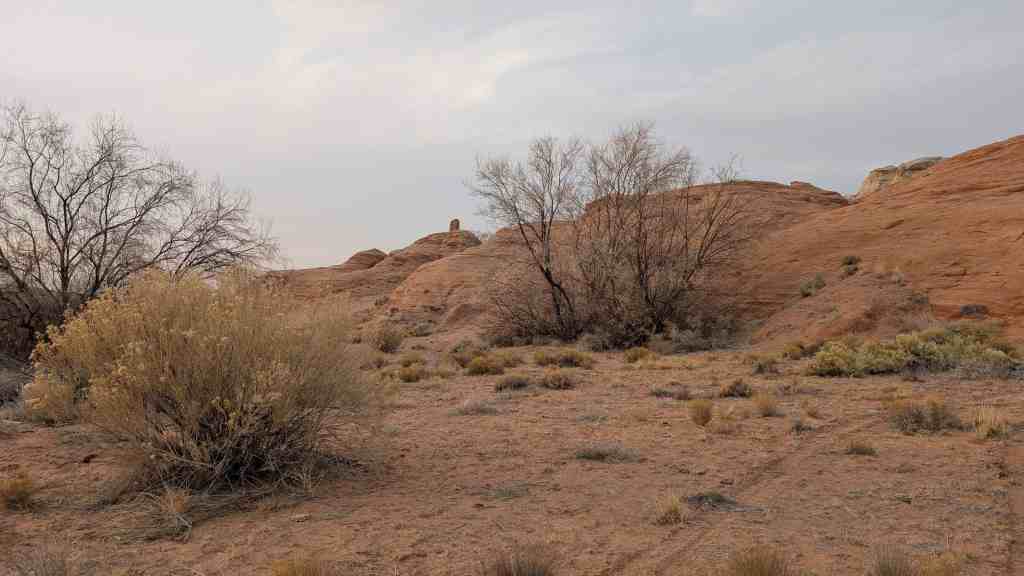
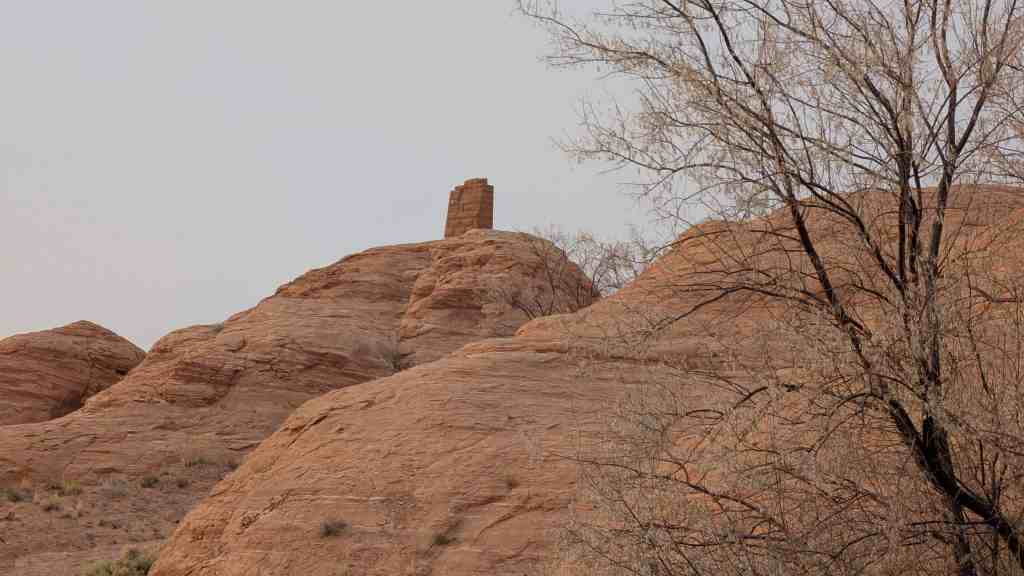
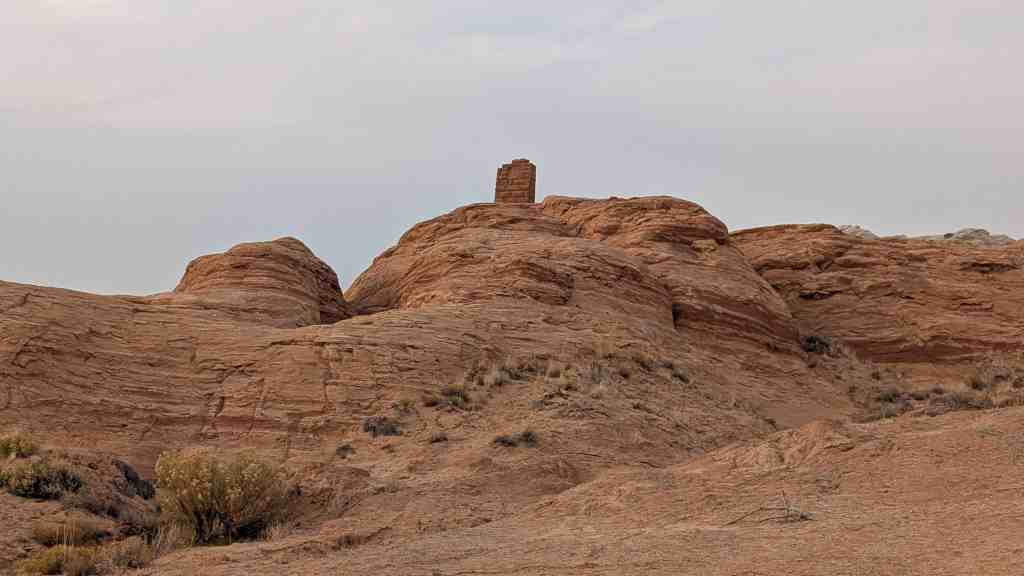
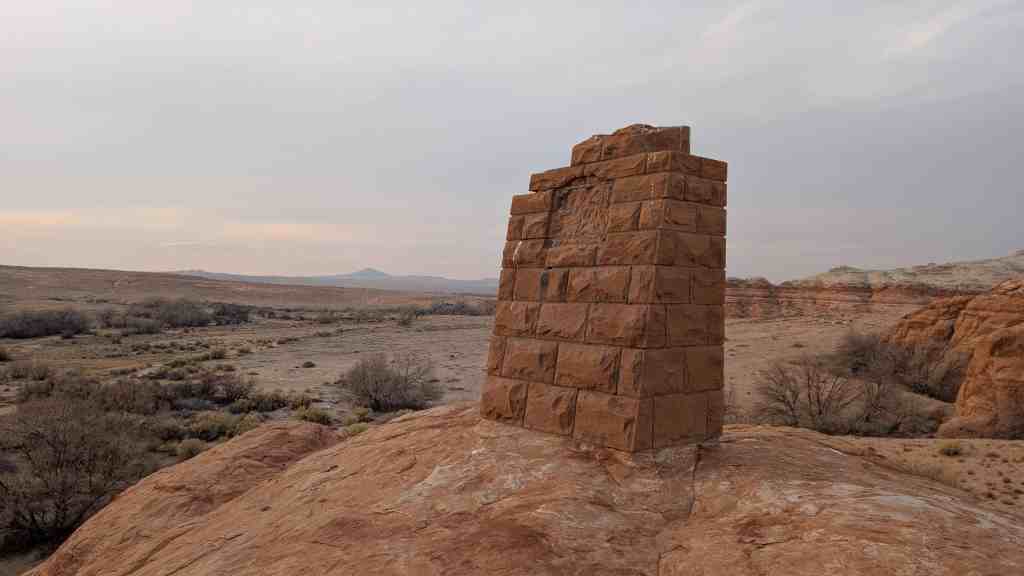
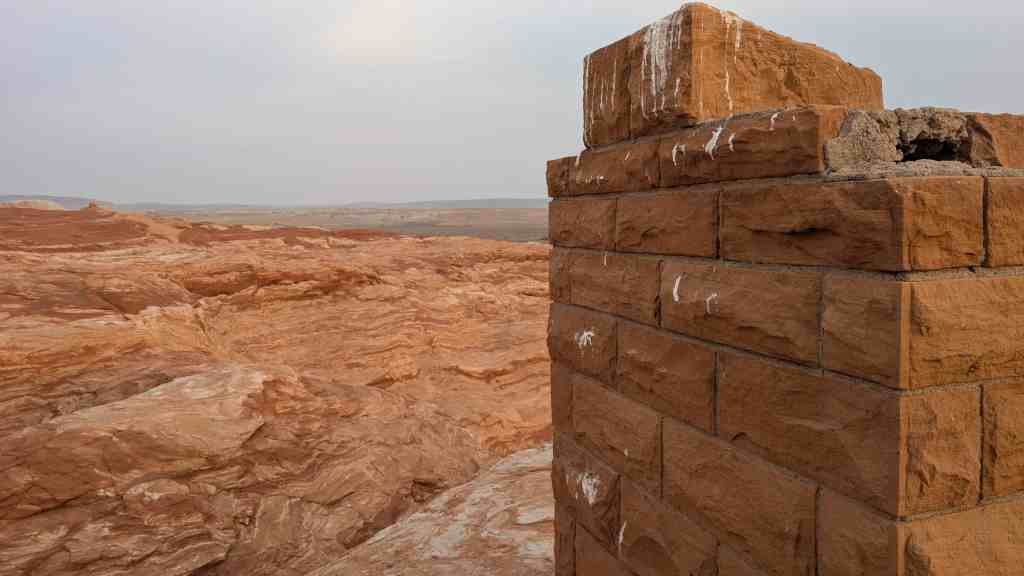
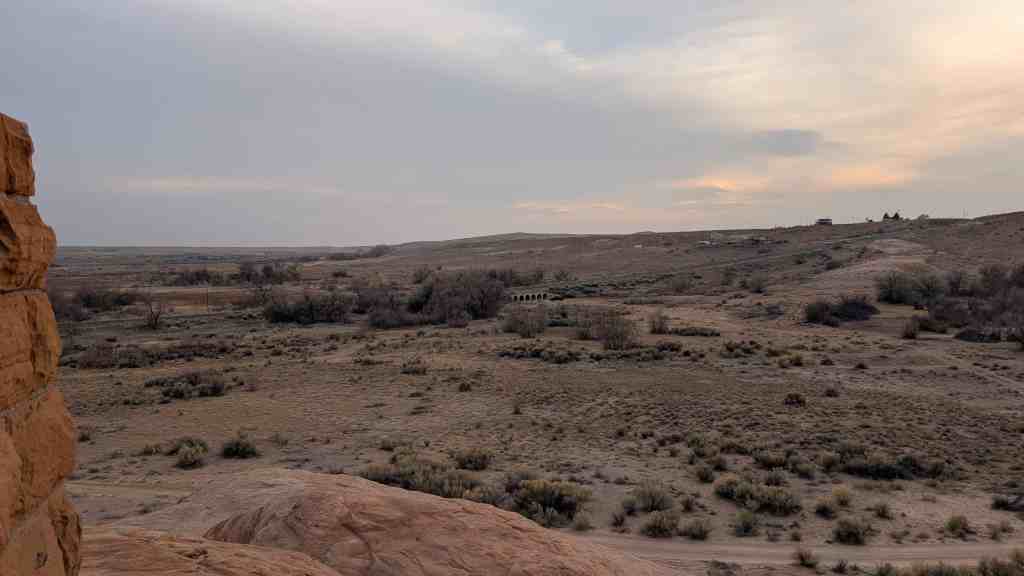
Mormon Pioneers of San Juan Valley crossed the Colorado River at “Hole-In-The-Rock” January 26, 1880. Twenty-six wagons were lowered over the cliff that day. A total of 250 persons were in the party. All made the perilous descent and ferried the river here.
This is Utah Pioneer Trails and Landmarks Association Historic Marker #81 (UPTLA Markers were later adopted by the Sons of Utah Pioneers) located at Hole-In-The-Rock, Utah.
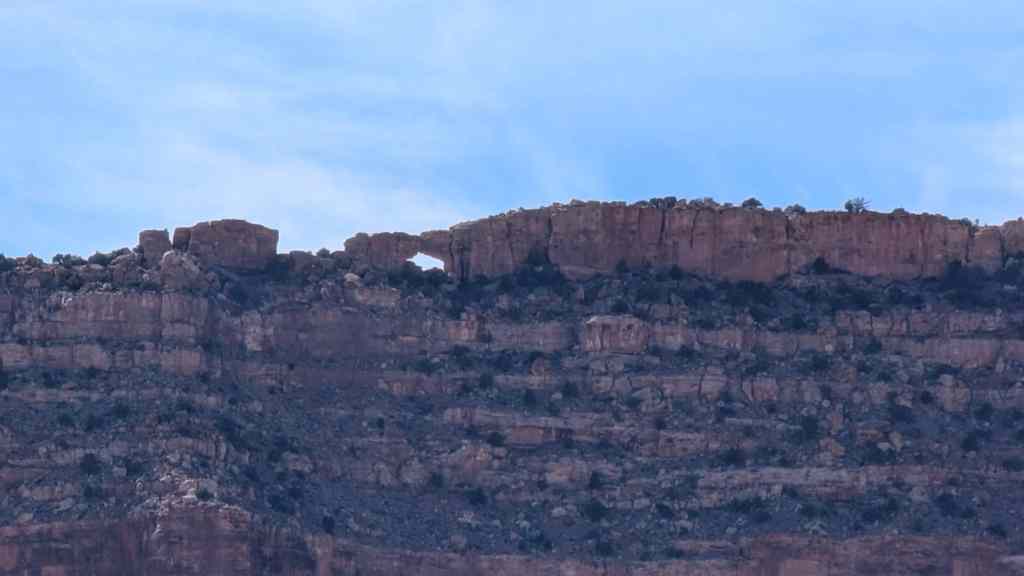
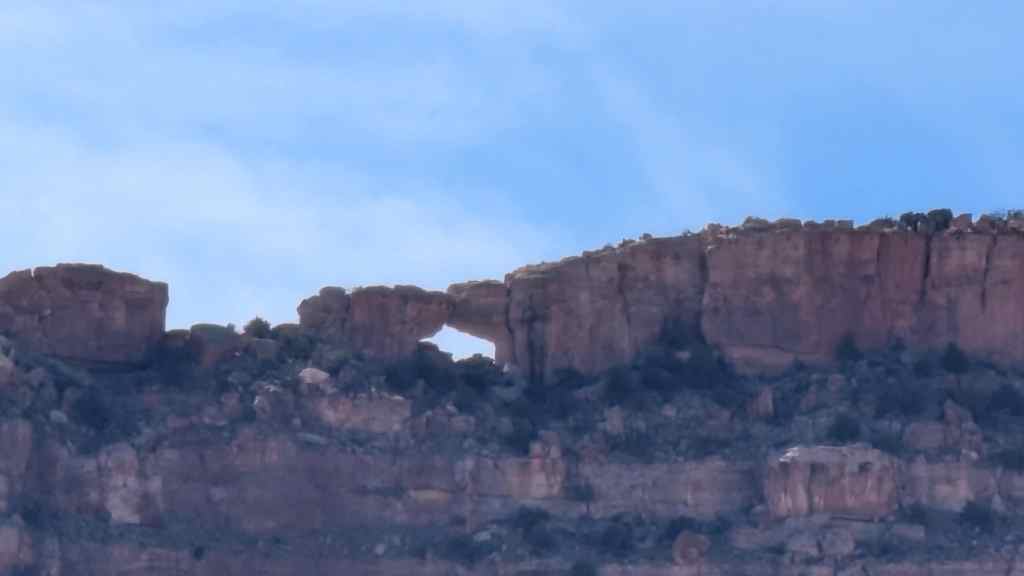
The naming of this arch honors the historic trek of the Mormon Pioneers called by Brigham Young to colonize San Juan County in 1879-1880.
This is Utah Pioneer Trails and Landmarks Association historic marker #132 (see other UPTLA markers here), located along Hole-in-the-Rock Trail in Kane County, Utah.
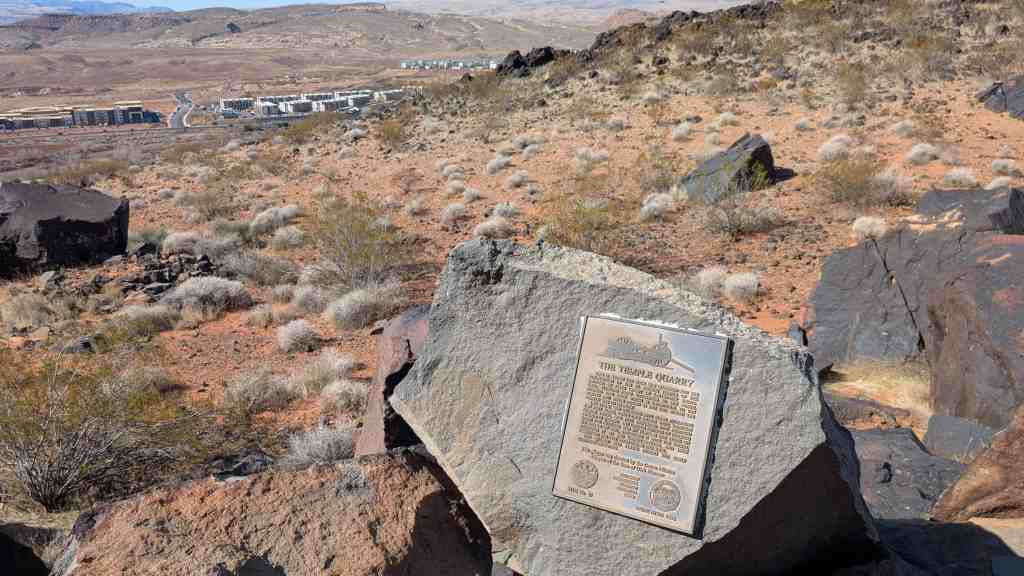
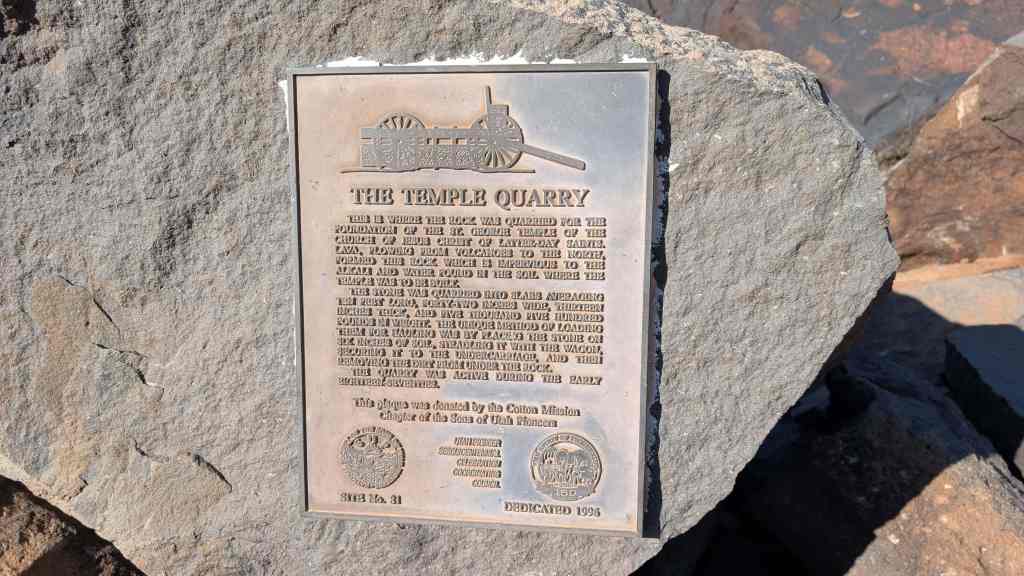
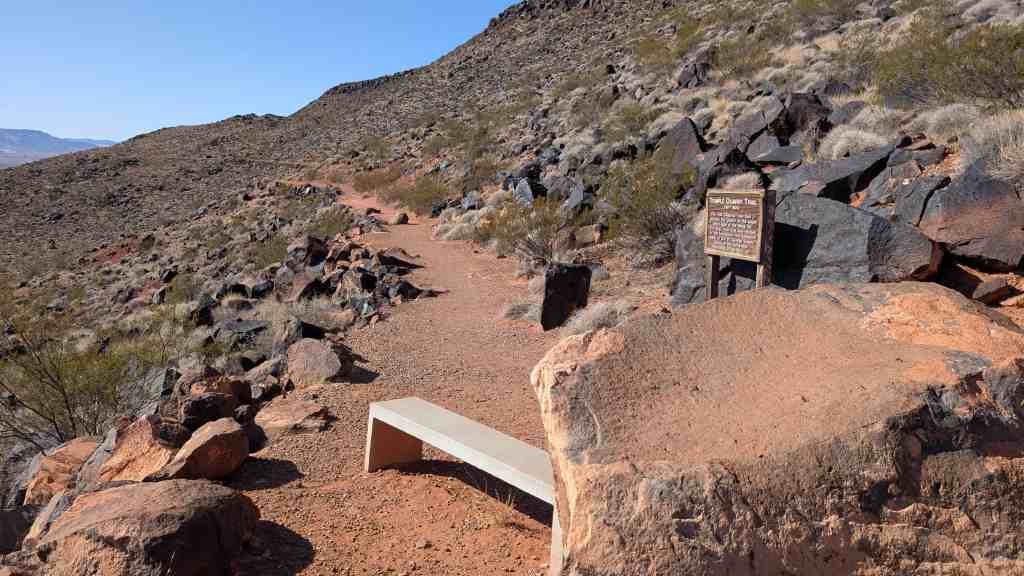
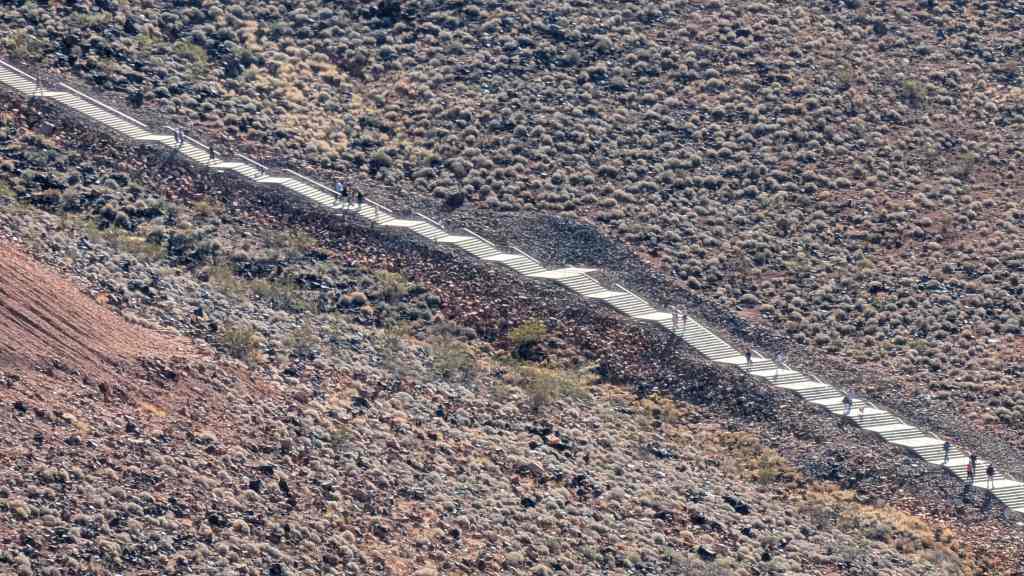
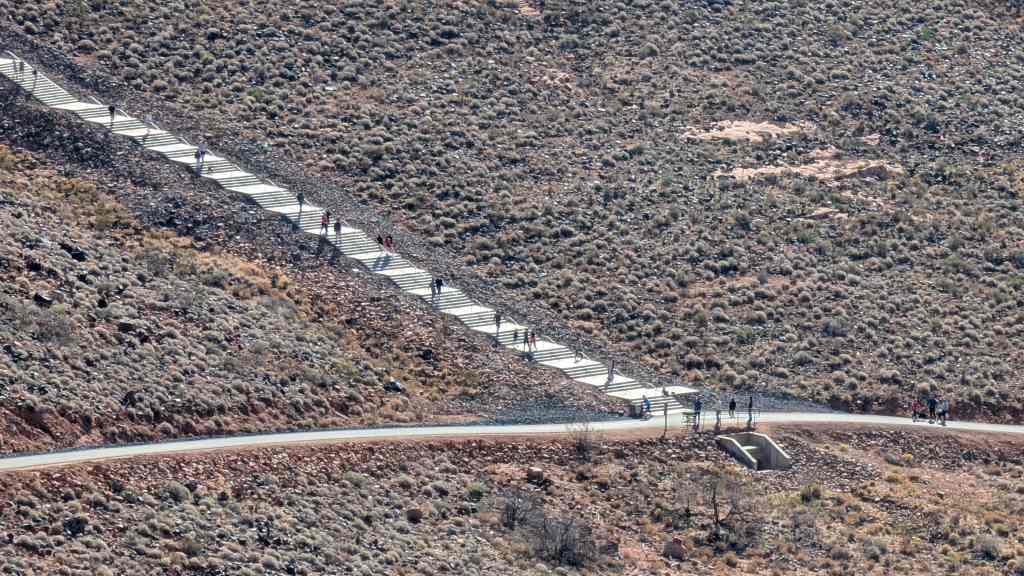
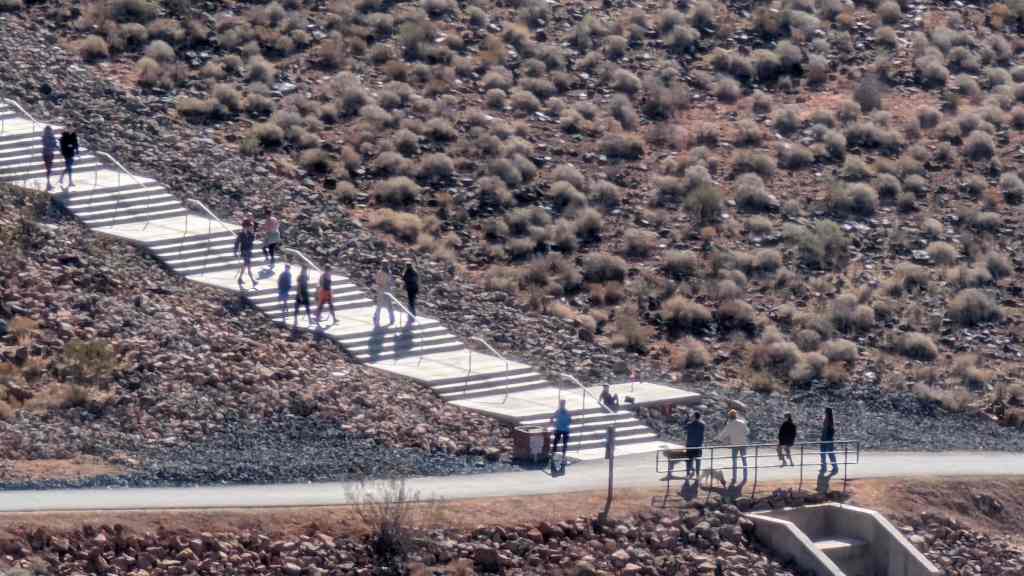
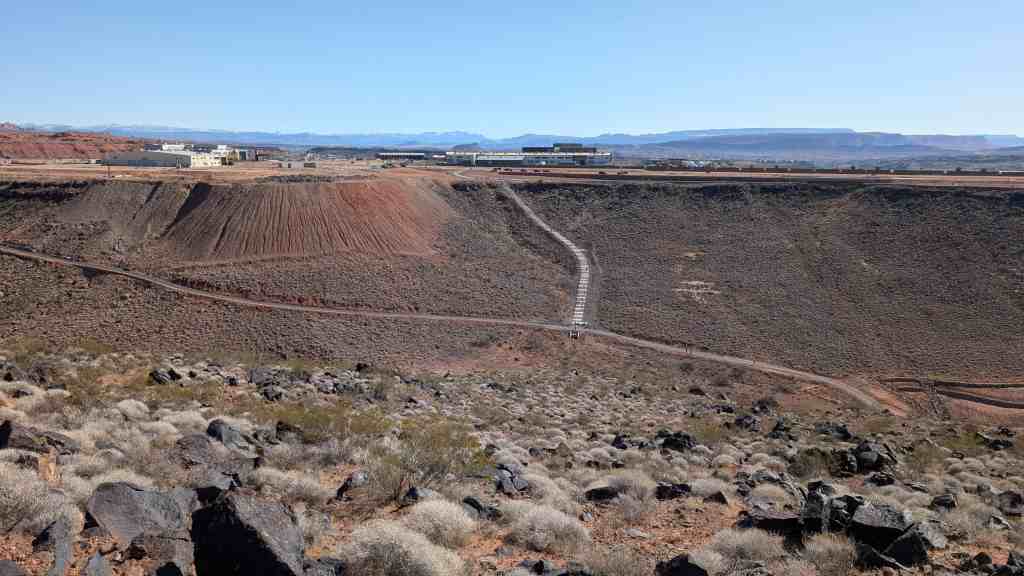
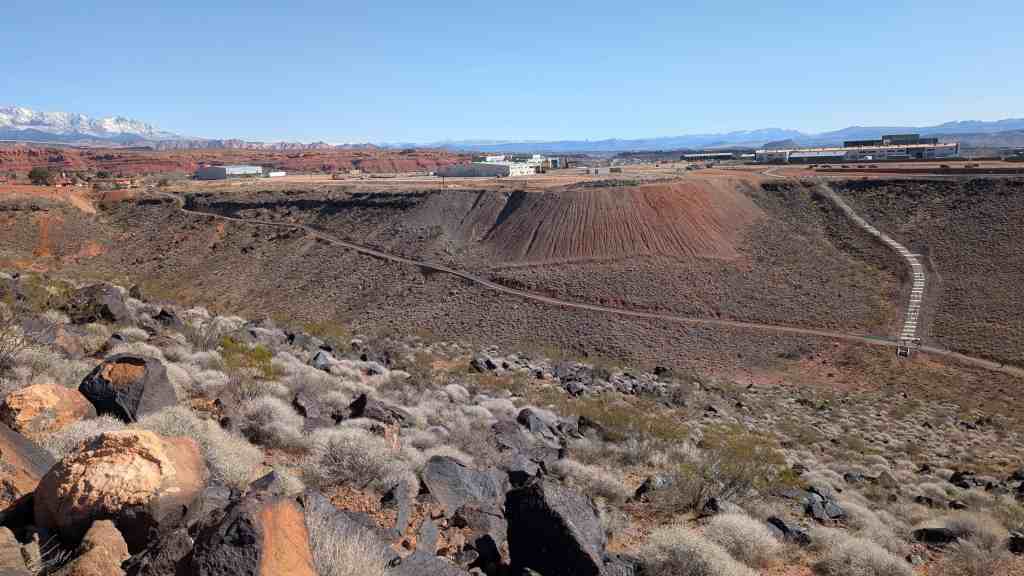
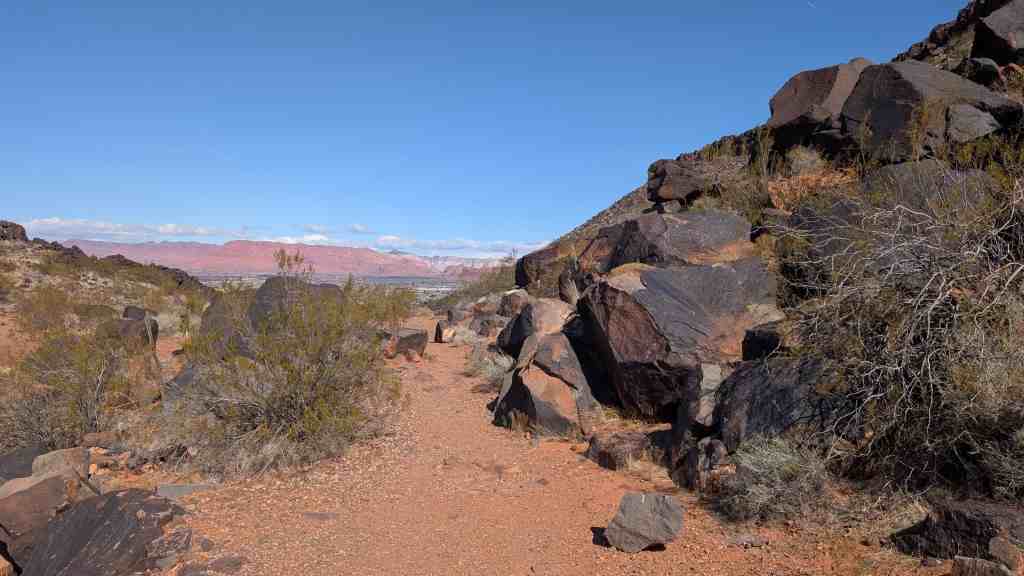
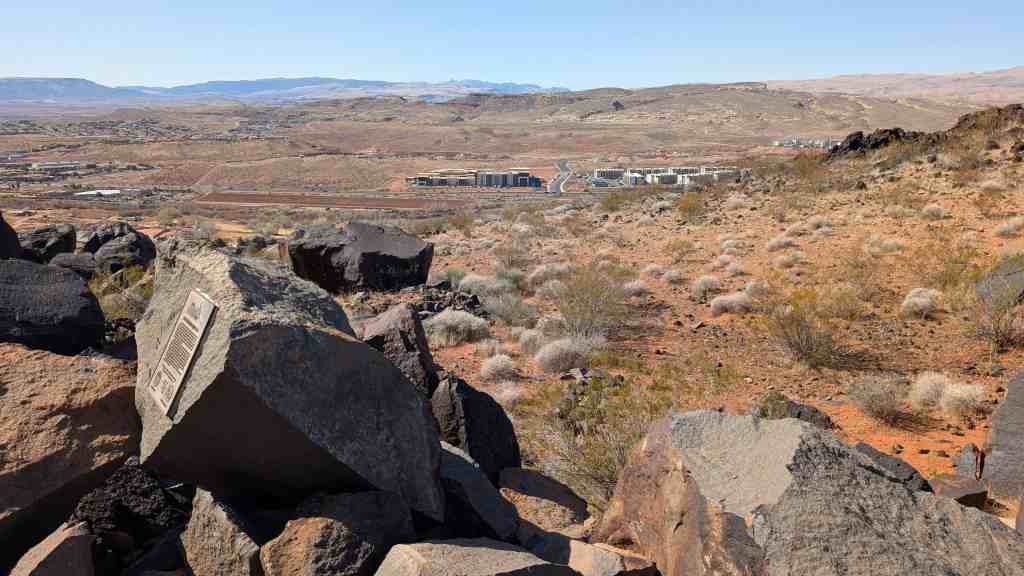
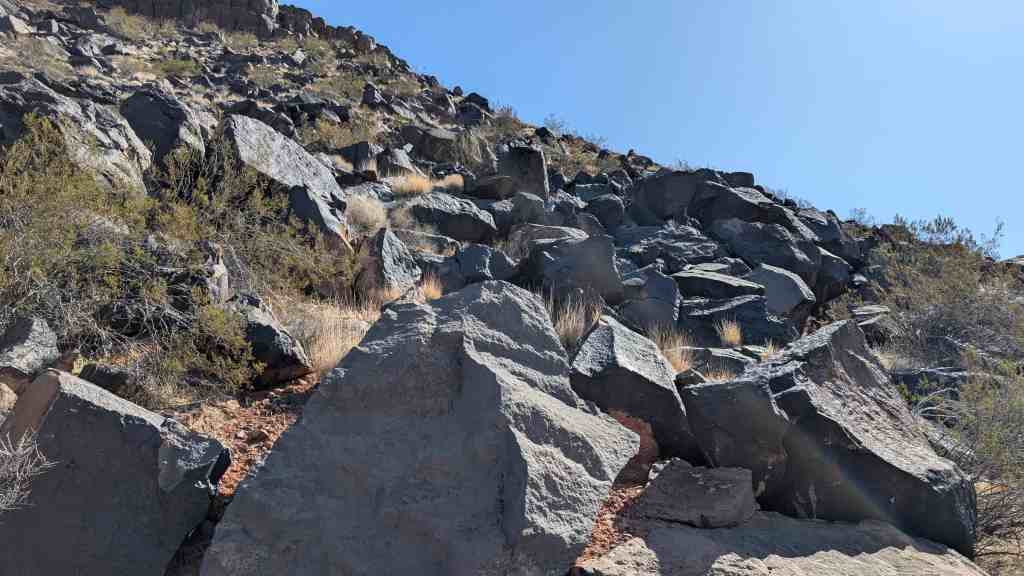
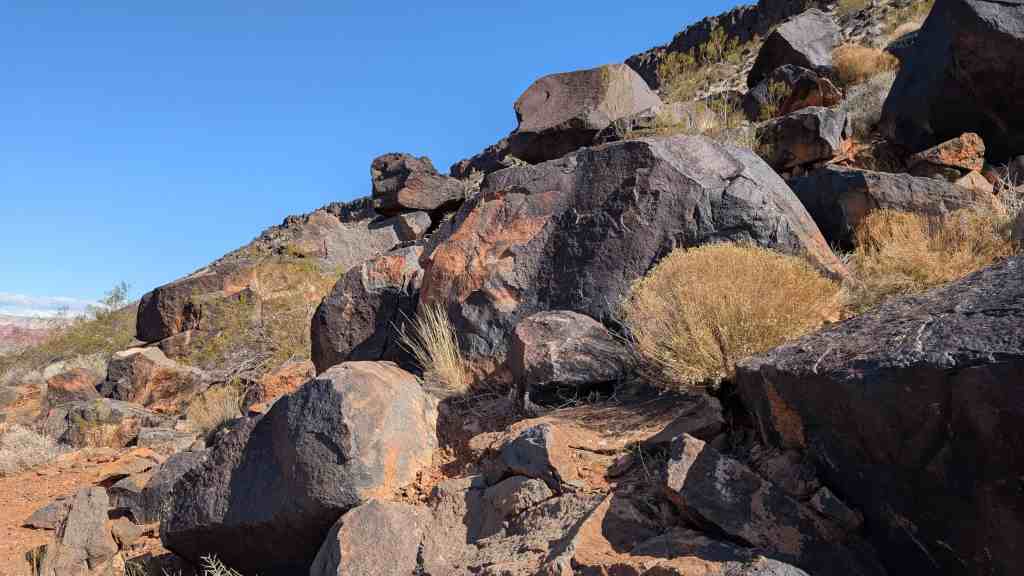
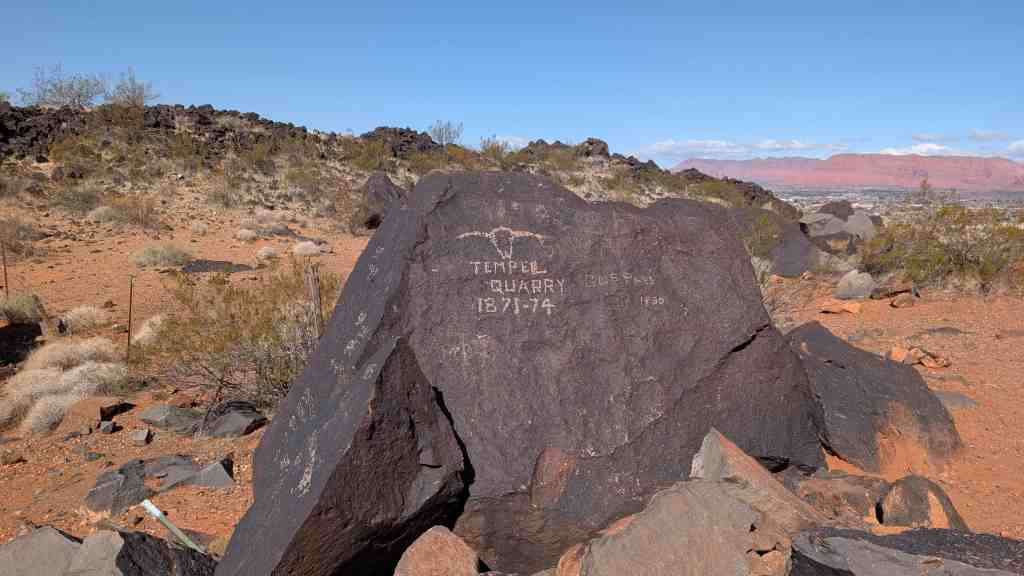
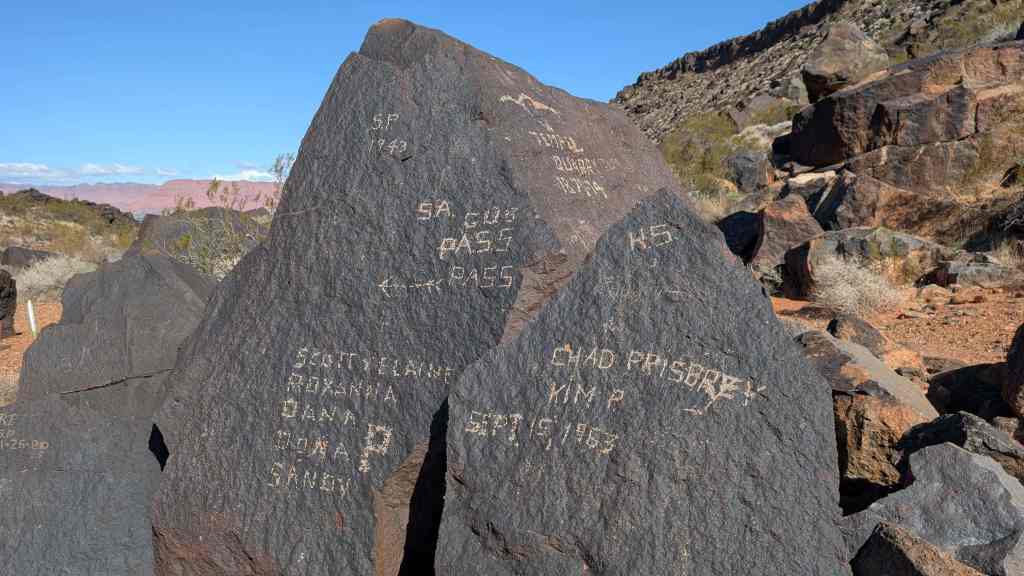
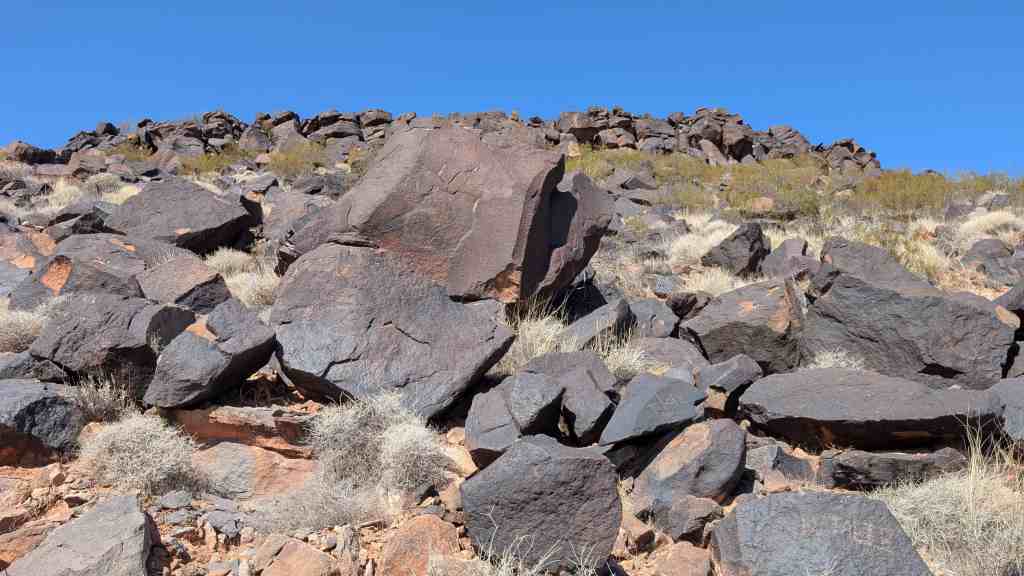
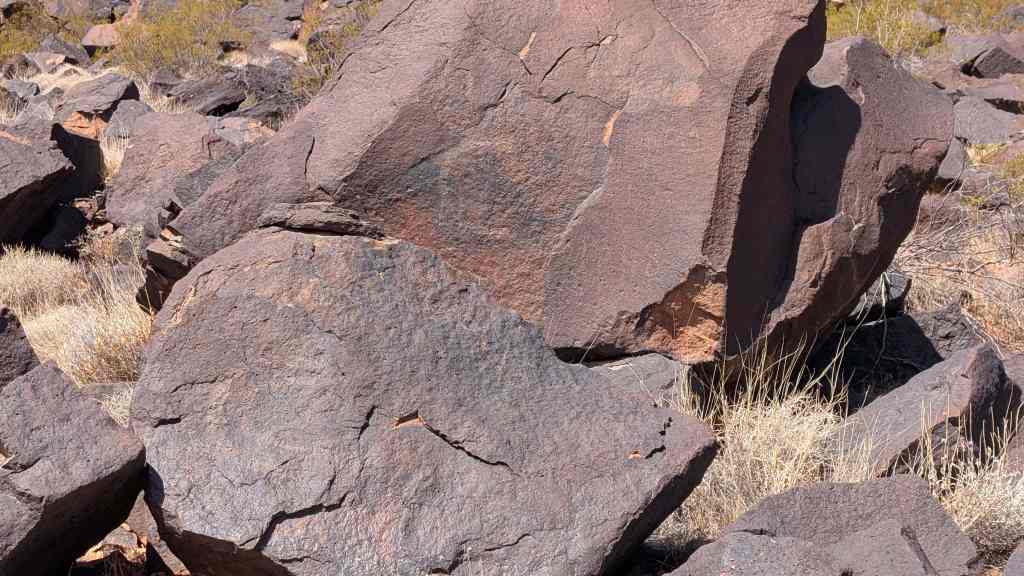
This is where the rock was quarried for the foundation of the St. George Temple of The Church of Jesus Christ of Latter-day Saints. Lava, flowing from volcanoes to the North, formed this rock which is impervious to the alkali and water found in the soil where the temple was to be built.
The stone was quarried into slabs averaging ten feet long, forty-two inches wide, thirteen inches thick, and five thousand five hundred pounds in weight. The unique method of loading them for hauling was by placing the stone on six inches of soil, straddling it with the wagon, securing it to the undercarriage, and then removing the dirt from under the rock.
The quarry was active during the early eighteen-seventies.
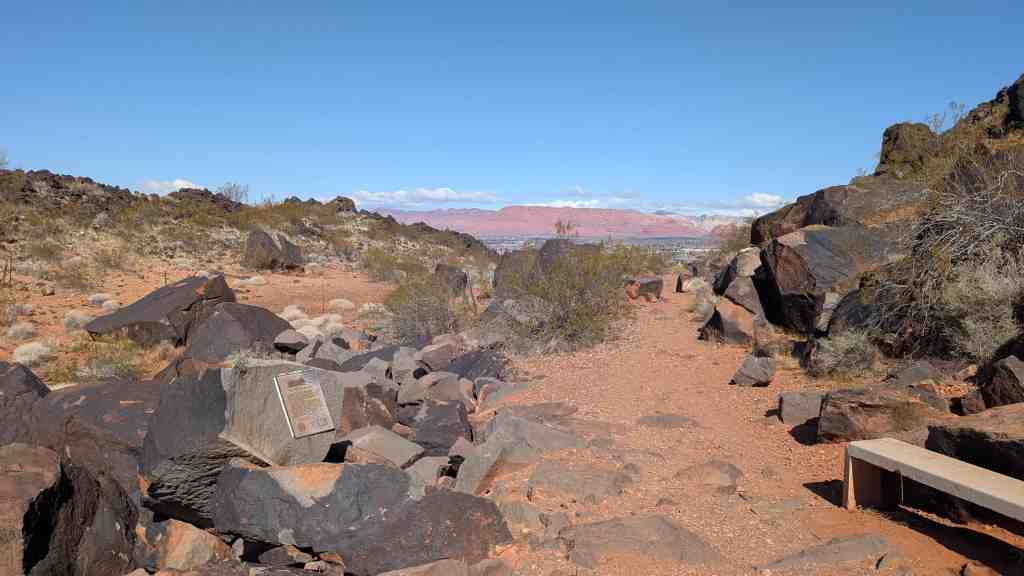
This is Sons of Utah Pioneers historic marker #81 (see other S.U.P. makers here) located on the Temple Quarry Trail in Saint George, Utah.
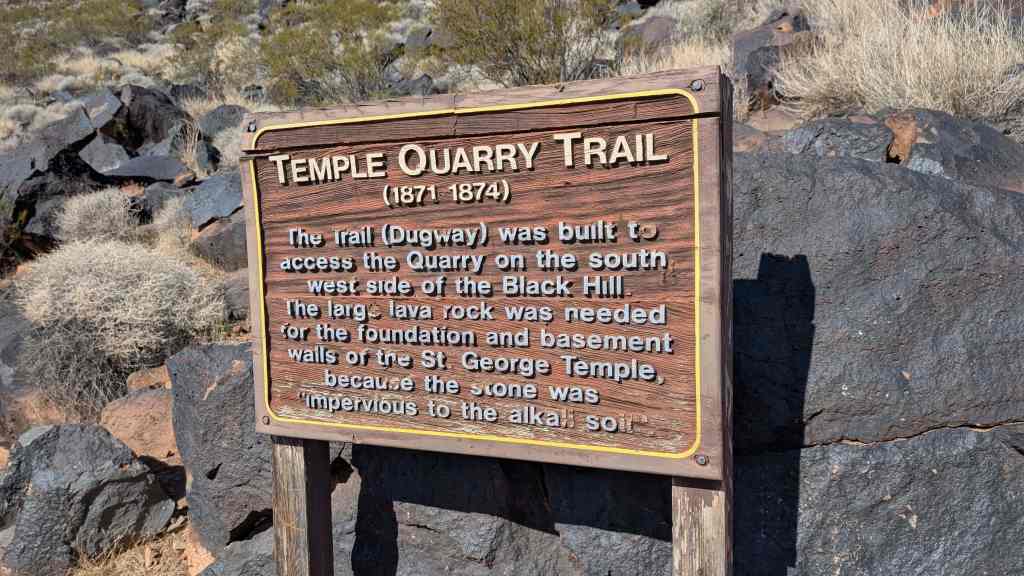
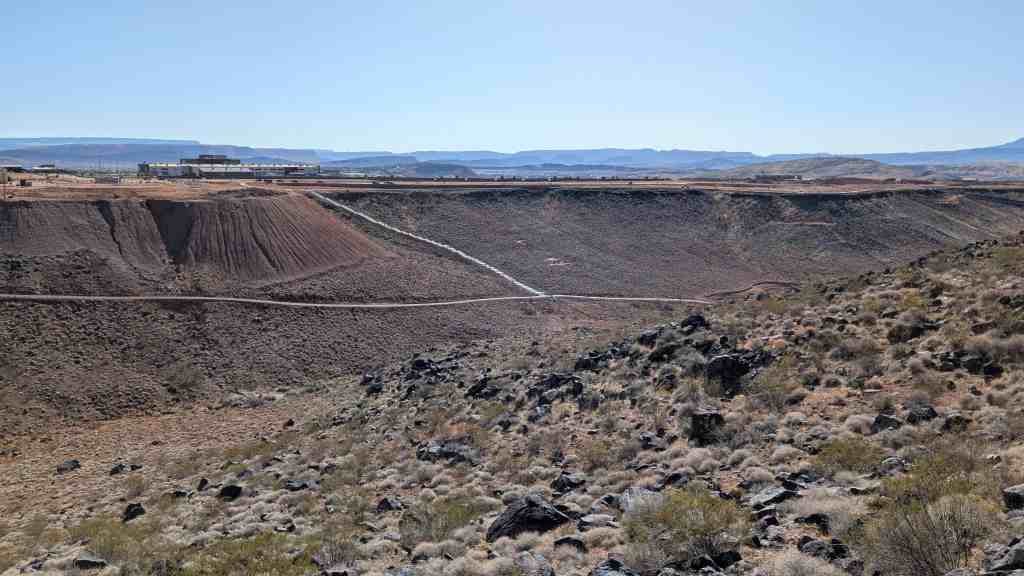
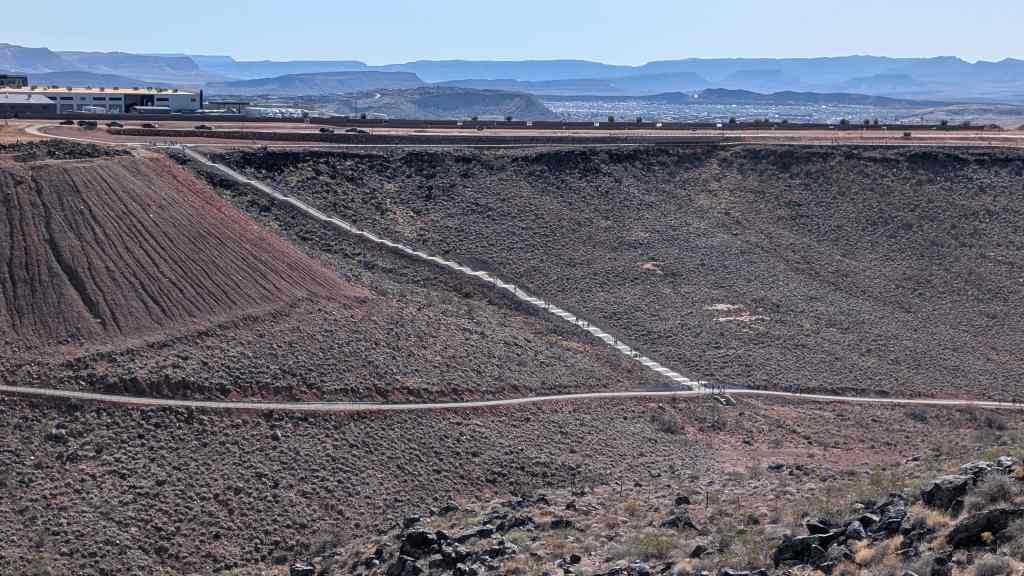
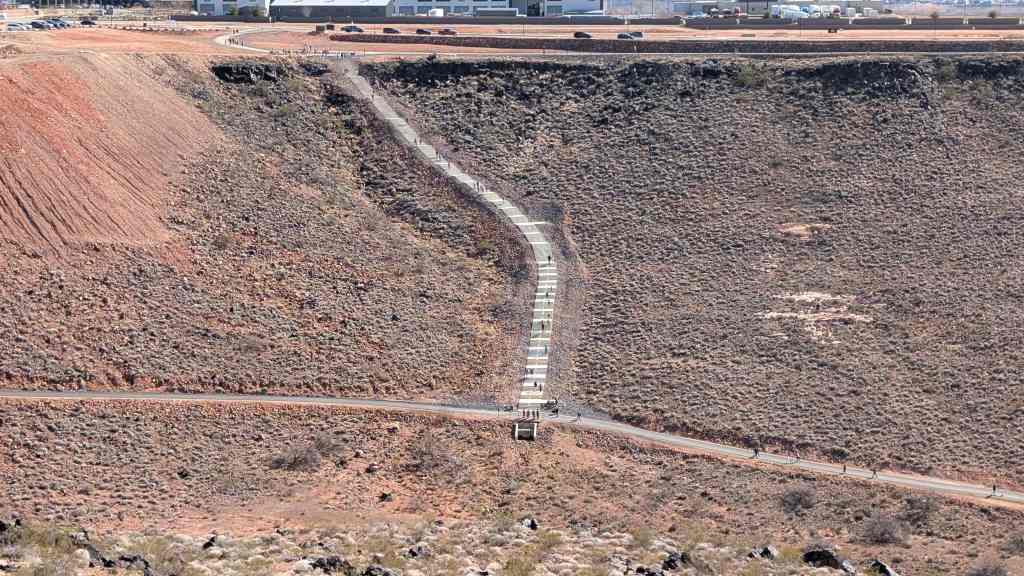
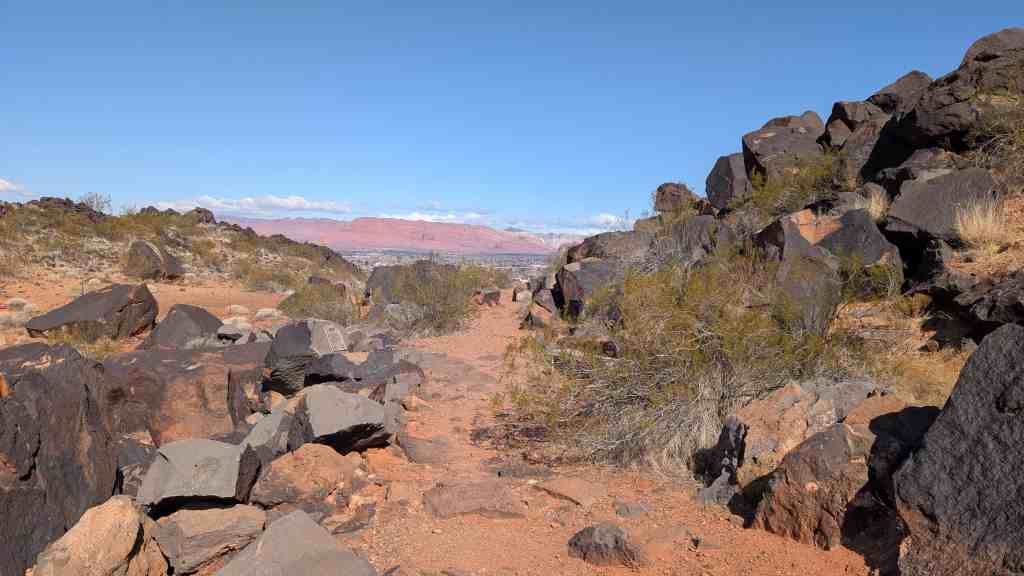
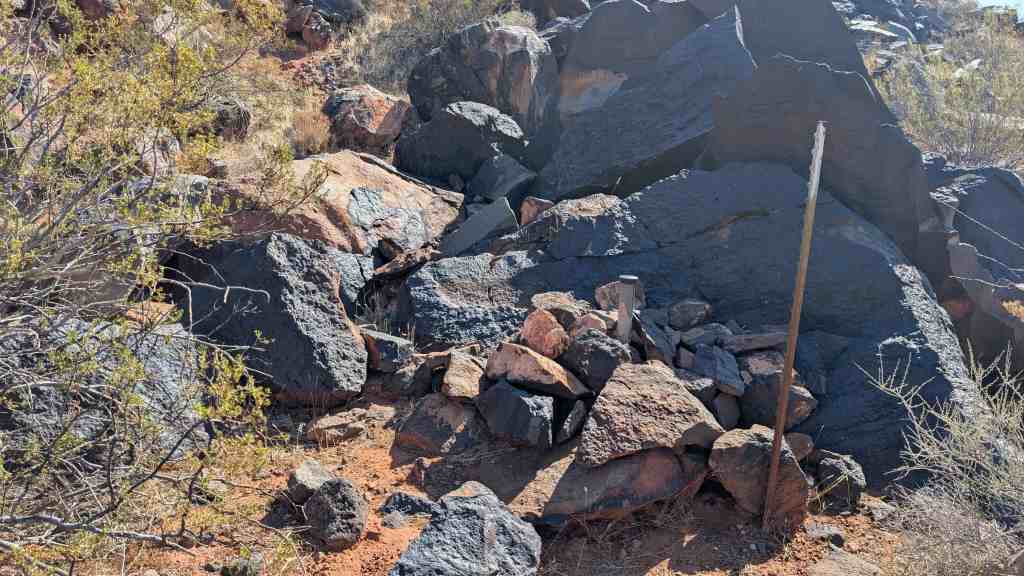
Temple Quarry Trail 1871-1874 The Trail (Dugway) was built to access the Quarry on the south west side of the Black Hill. The large lava rock was needed for the foundation and basement walls of the St. George Temple, because the stone was “impervious to the alkali soil.”
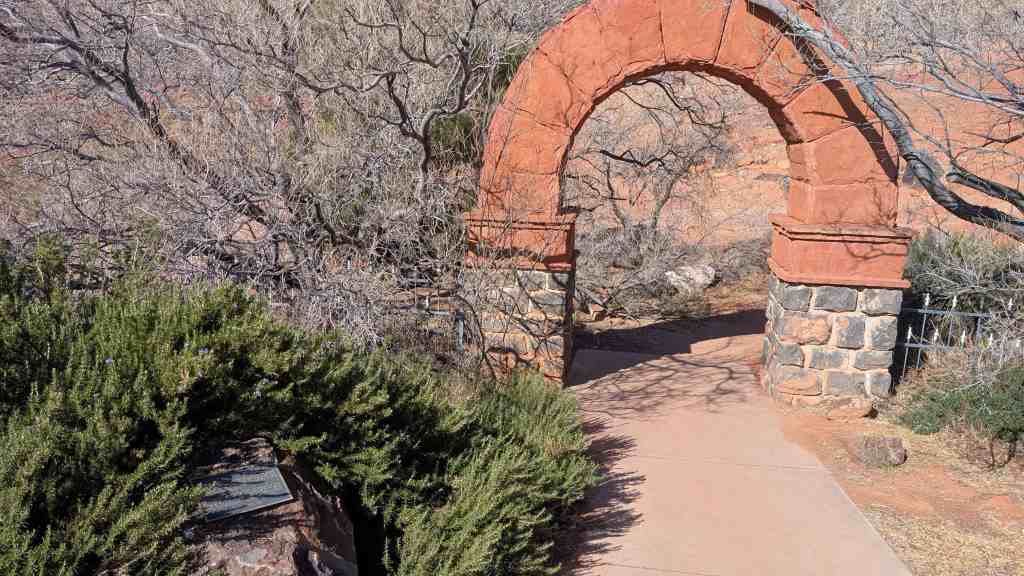
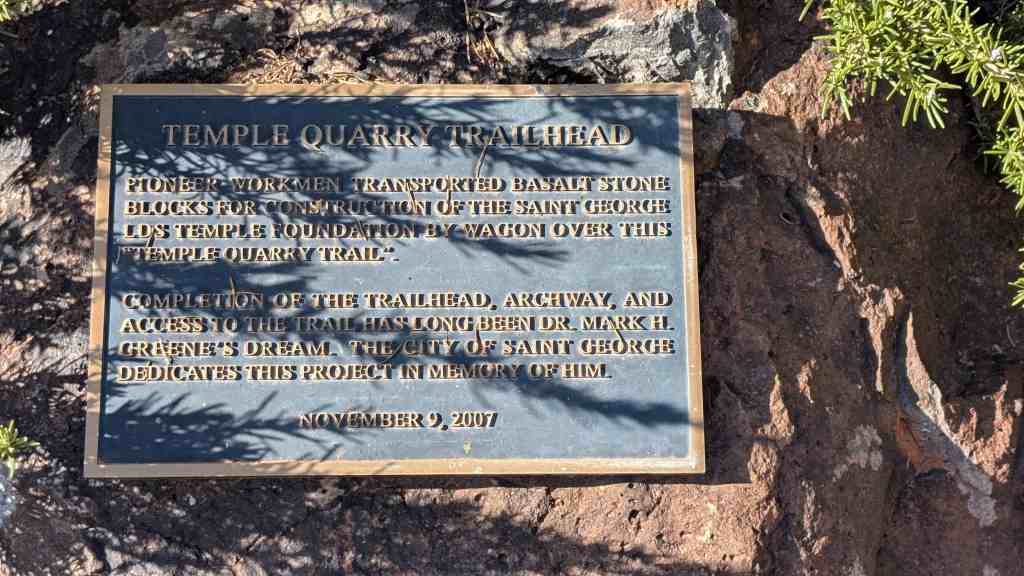
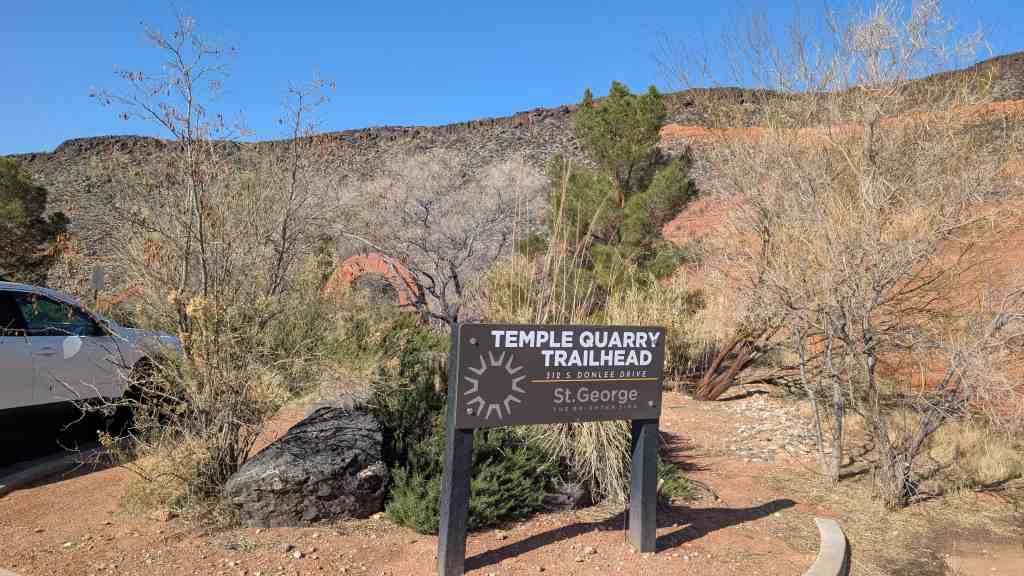
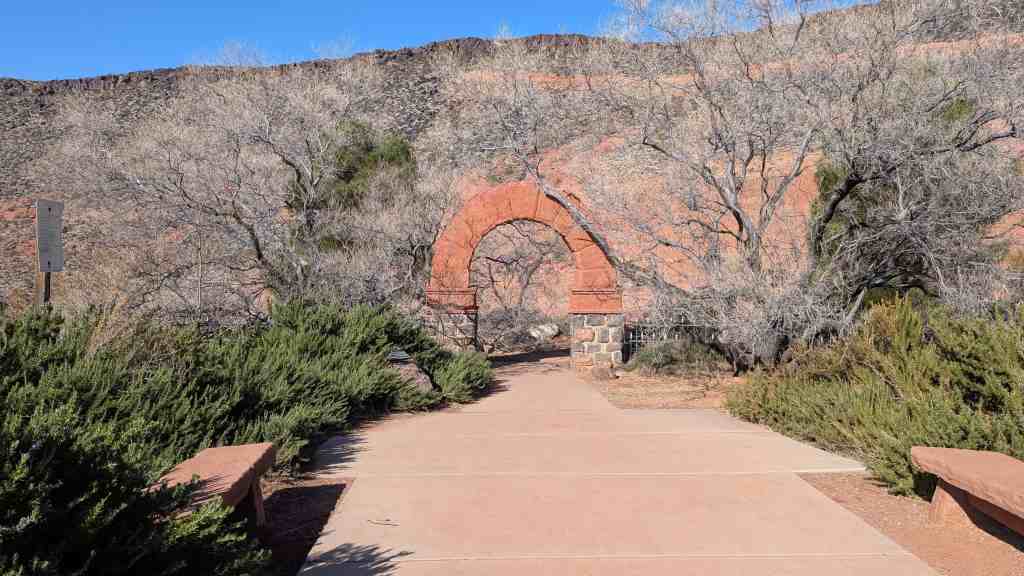
Temple Quarry Trailhead Pioneer workmen transported basalt stone blocks for construction of the Saint George LDS Temple foundation by wagon over this “Temple Quarry Trail.” Completion of the trailhead, archway, and access to the trail has long been Dr. Mark H. Green’s dream. The city of Saint George dedicates this project in memory of him.
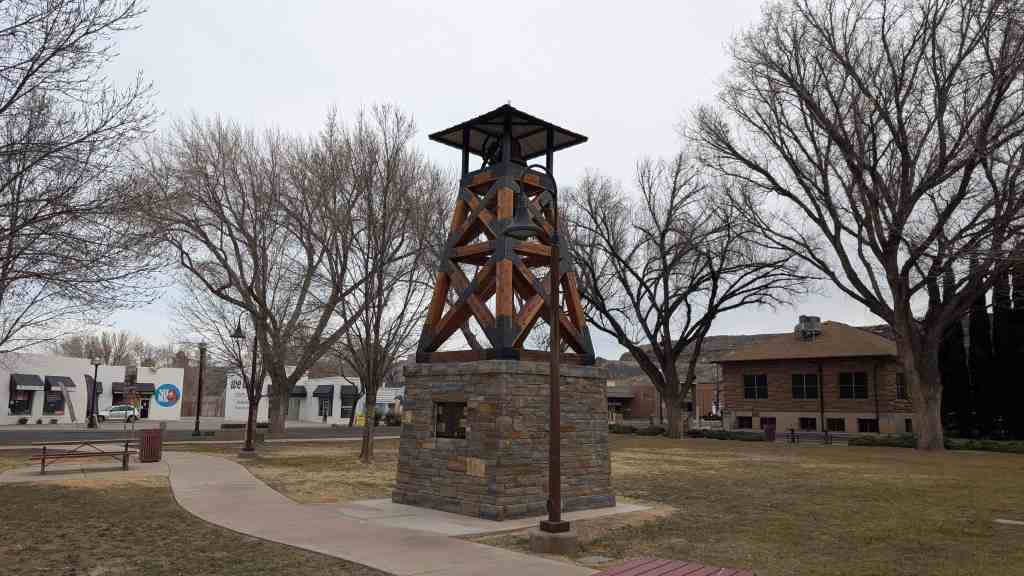
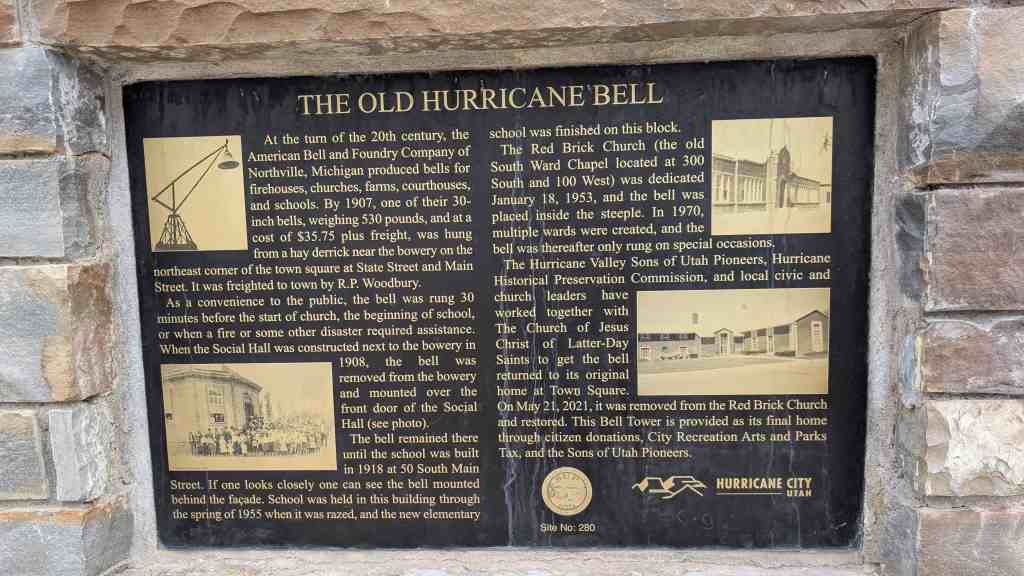
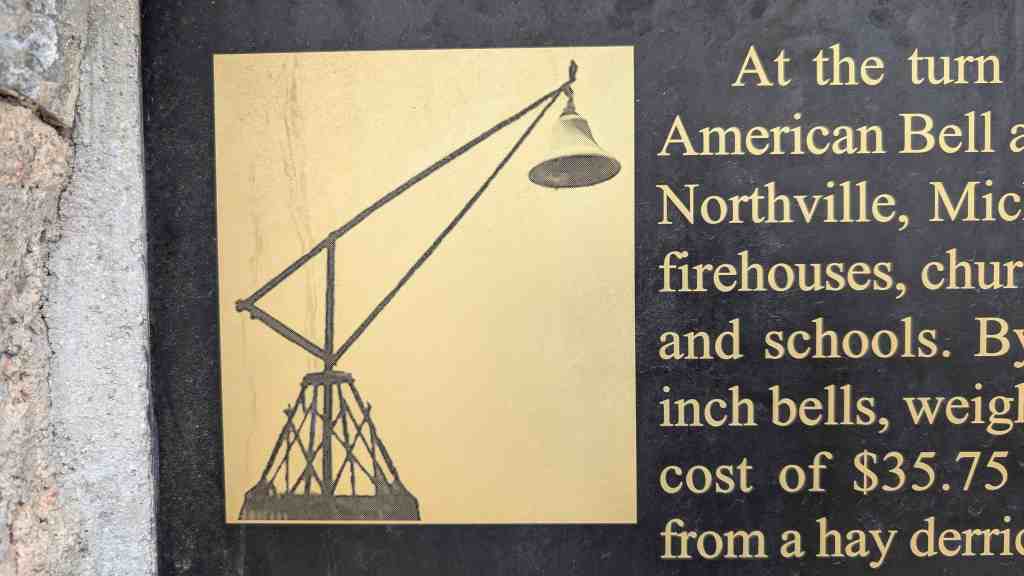
At the turn of the 20th century, the American Bell and Foundry Company of Northville, Michigan produced bells for firehouses, churches, farms, courthouses, and schools. By 1907, one of their 30- inch bells, weighing 530 pounds, and at a cost of $35.75 plus freight, was hung from a hay derrick near the bowery on the northeast corner of the town square at State Street and Main Street. It was freighted to town by R.P. Woodbury.
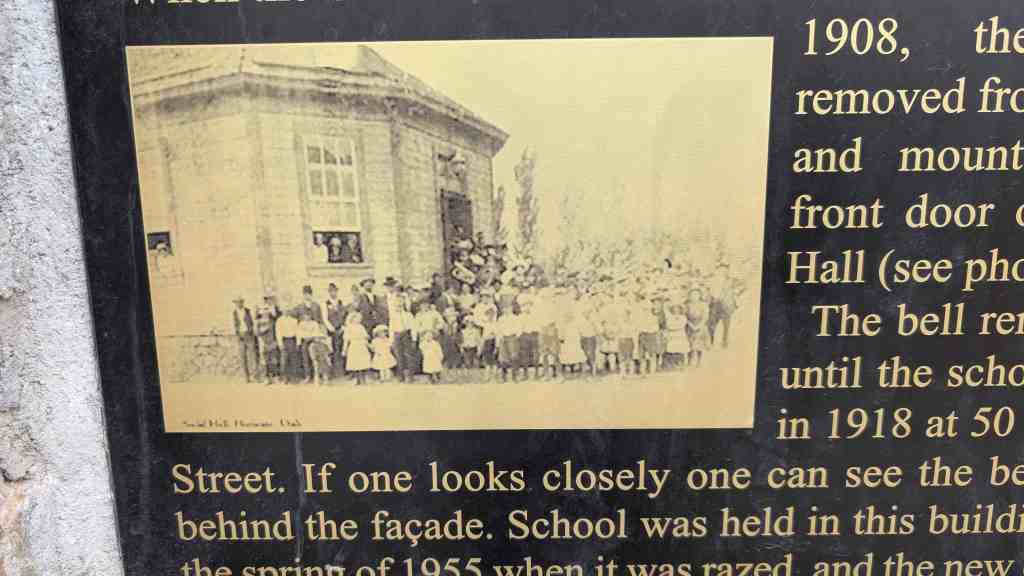
As a convenience to the public, the bell was rung 30 minutes before the start of church, the beginning of school, or when a fire or some other disaster required assistance. When the Social Hall was constructed next to the bowery in 1908, the bell was removed from the bowery and mounted over the front door of the Social Hall.
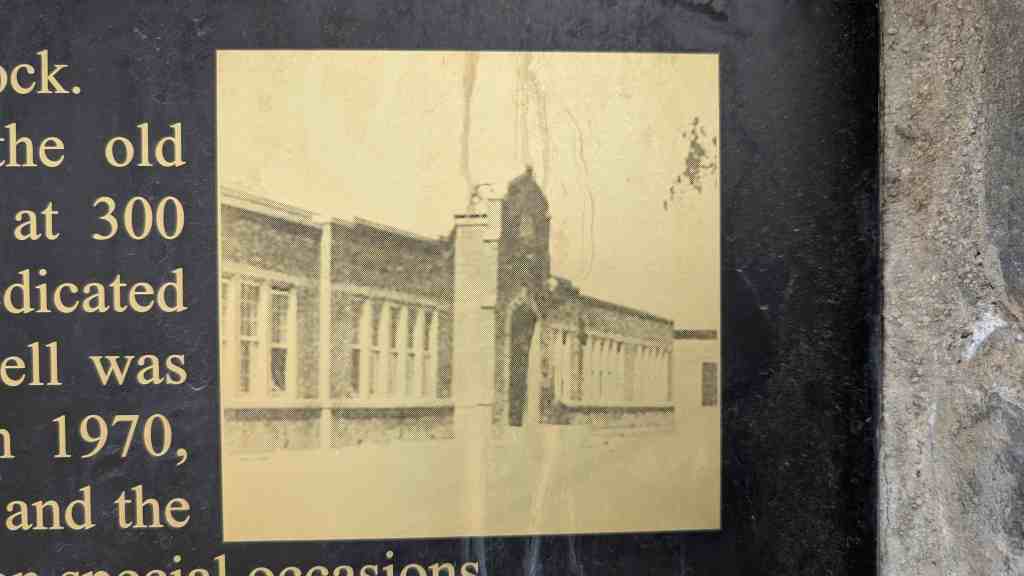
The bell remained there until the school was built in 1918 at 50 South Main Street. If one looks closely one can see the bell mounted behind the façade. School was held in this building through the spring of 1955 when it was razed, and the new elementary school was finished on this block.
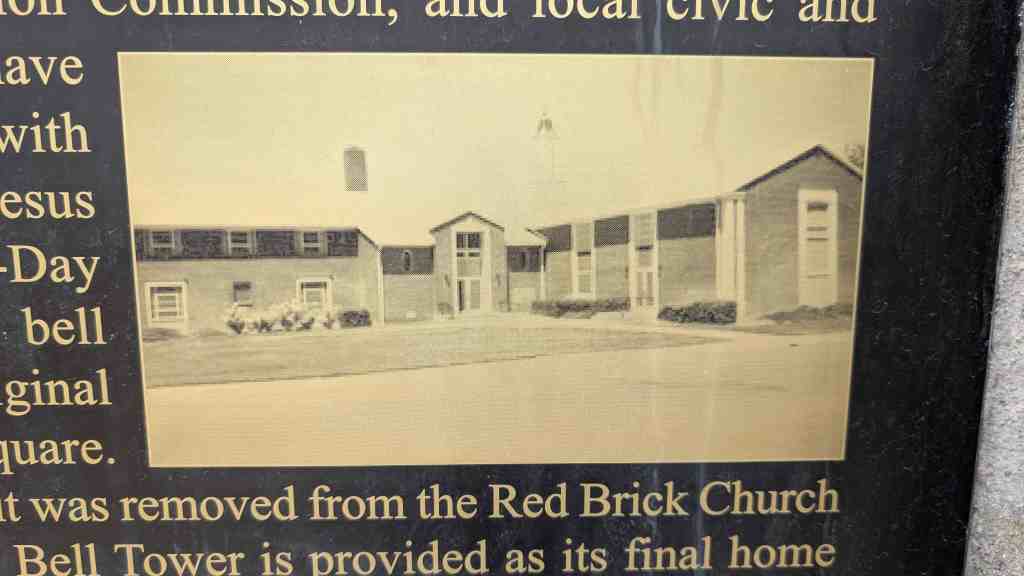
The Red Brick Church (the old South Ward Chapel located at 300 South and 100 West) was dedicated January 18, 1953, and the bell was placed inside the steeple. In 1970, multiple wards were created, and the bell was thereafter only rung on special occasions.
The Hurricane Valley Sons of Utah Pioneers, Hurricane Historical Preservation Commission, and local civic and church leaders have worked together with The Church of Jesus Christ of Latter-Day Saints to get the bell returned to its original home at Town Square.
On May 21, 2021, it was removed from the Red Brick Church and restored. This Bell Tower is provided as its final home through citizen donations, City Recreation Arts and Parks Tax, and the Sons of Utah Pioneers.
This is Sons of Utah Pioneers historic marker #280 (see other S.U.P. markers here) located in a park at 65 West State Street in Hurricane, Utah.
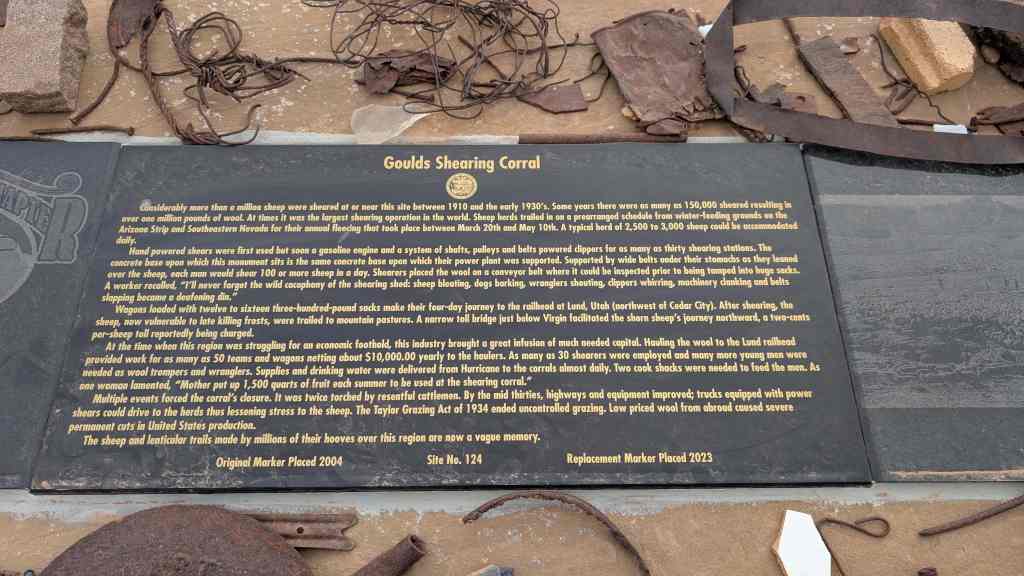
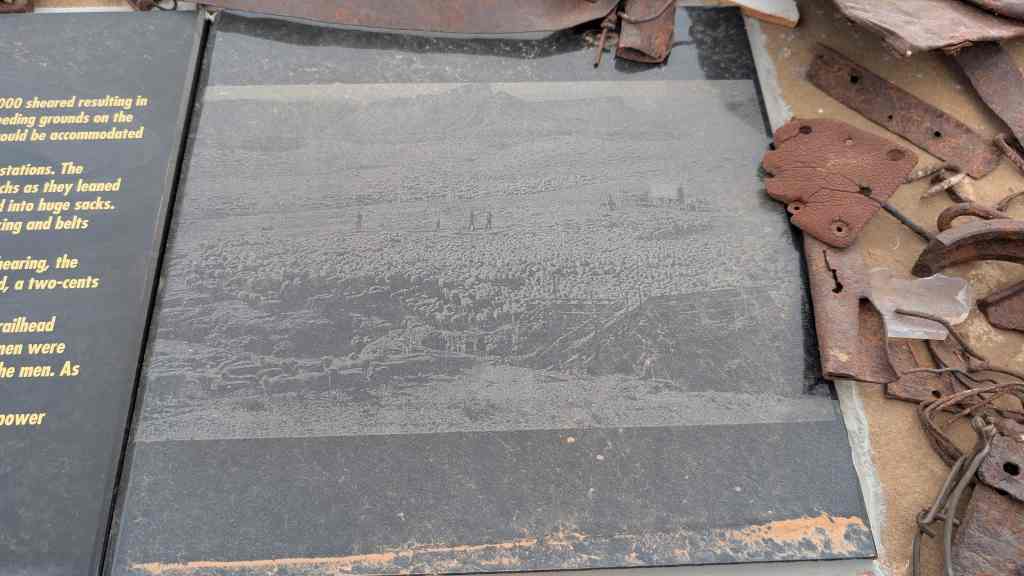
Considerably more than a million sheep were sheared at or near this site between 1910 and the early 1930’s. Some years there were as many as 150,000 sheared resulting in over one million pounds of wool. At times it was the largest shearing operation in the world. Sheep herds trailed in on a prearranged schedule from winter-feeding grounds on the Arizona Strip and Southeastern Nevada for their annual fleecing that took place between March 20th and May 10th. A typical herd of 2,500 to 3,000 sheep could be accommodated daily.
Hand powered shears were first used but soon a gasoline engine and a system of shafts, pulleys and belts powered clippers for as many as thirty shearing stations. The concrete base upon which this monument sits is the same concrete base upon which their power plant was supported. Supported by wide belts under their stomachs as they leaned over the sheep, each man would shear 100 or more sheep in a day. Shearers placed the wool on a conveyor belt where it could be inspected prior to being tamped into huge sacks. A worker recalled, “I’ll never forget the wild cacophony of the shearing shed: sheep bleating, dogs barking, wranglers shouting, clippers whirring, machinery clanking and belts slapping became a deafening din.”
Wagons loaded with twelve to sixteen three-hundred-pound sacks make their four-day journey to the railhead at Lund, Utah (northwest of Cedar City). After shearing, the sheep, now vulnerable to late killing frosts, were trailed to mountain pastures. A narrow toll bridge just below Virgin facilitated the shorn sheep’s journey northward, a two-cents per-sheep toll reportedly being charged.
At the time when this region was struggling for an economic foothold, this industry brought a great infusion of much needed capital. Hauling the wool to the Lund railhead provided work for as many as 50 teams and wagons netting about $10,000.00 yearly to the haulers. As many as 30 shearers were employed and many more young men were needed as wool trompers and wranglers. Supplies and drinking water were delivered from Hurricane to the corrals almost daily. Two cook shacks were needed to feed the men. As one woman lamented, “Mother put up 1,500 quarts of fruit each summer to be used at the shearing corral.”
Multiple events forced the corral’s closure. It was twice torched by resentful cattlemen. By the mid thirties, highways and equipment improved; trucks equipped with power shears could drive to the herds thus lessening stress to the sheep. The Taylor Grazing Act of 1934 ended uncontrolled grazing. Low priced wool from abroad caused severe permanent cuts in United States production.
The sheep and lenticular trails made by millions of their hooves over this region are now a vague memory.
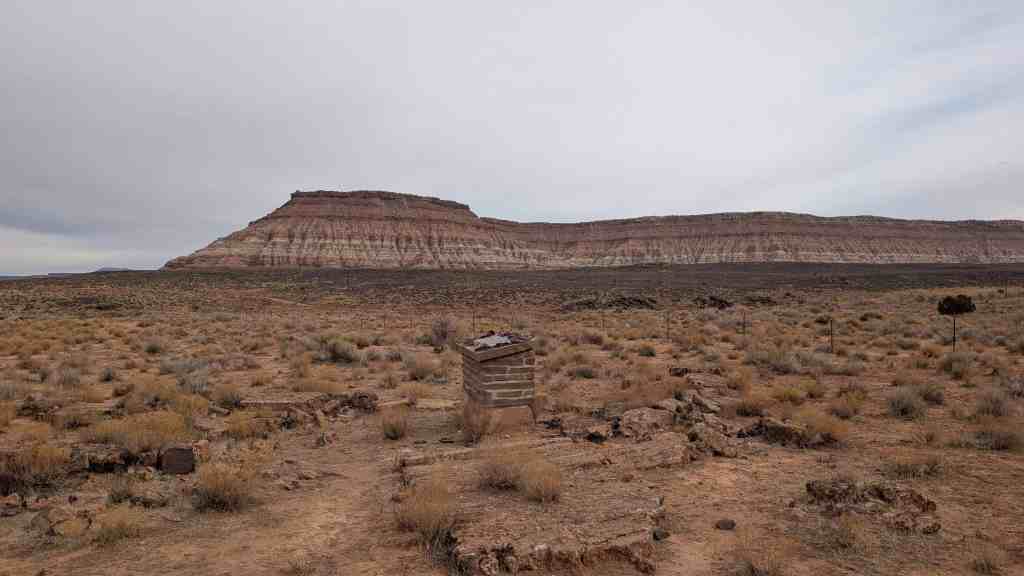
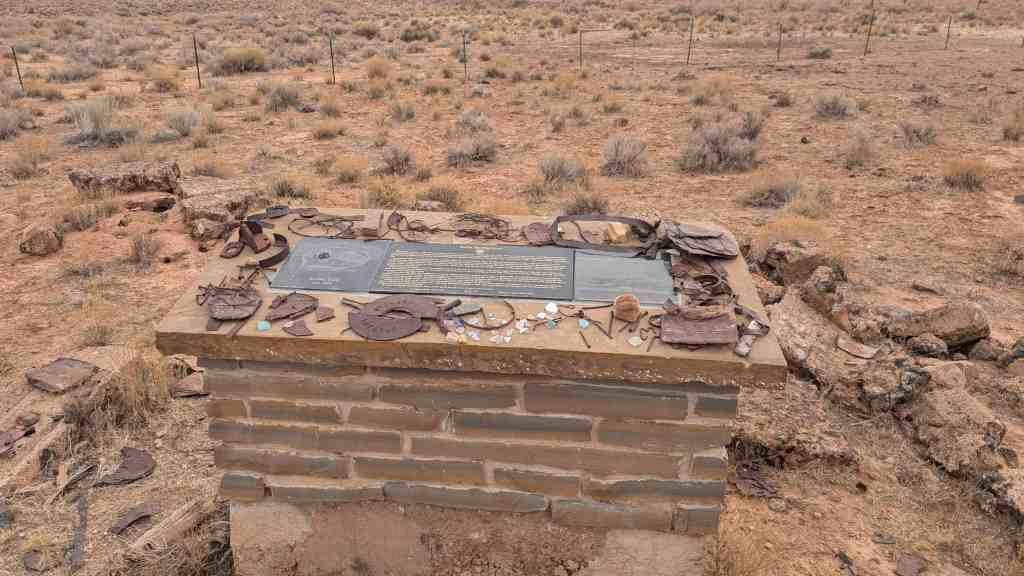
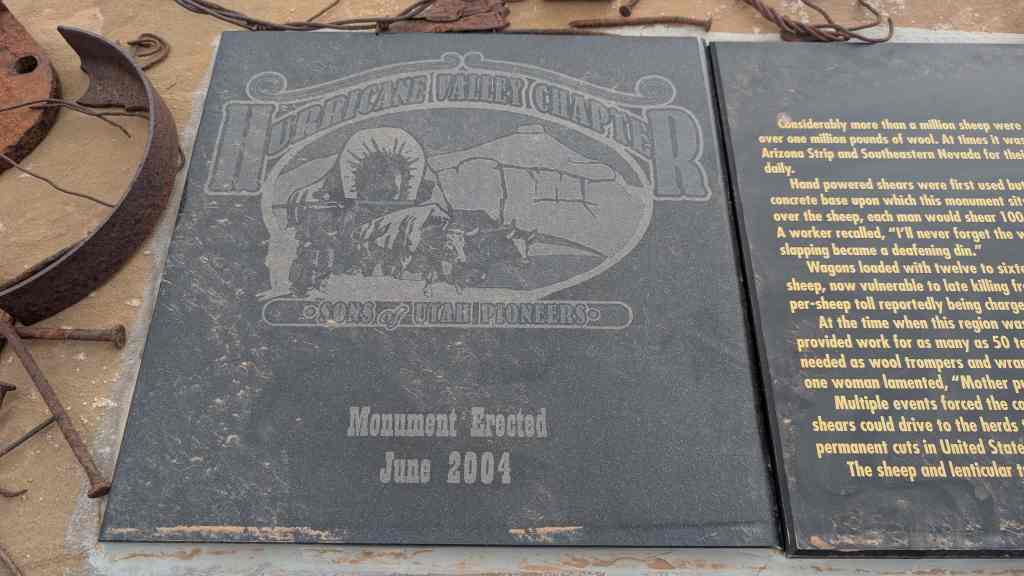
This is Sons of Utah Pioneers historic marker #124 (see other S.U.P. markers here) located southeast of Hurricane, Utah. It was originally placed in 2004 and replaced in 2023.
Chief Tuba, member of the water and corn clan, who served as scout of Kit Carson’s U.S. Expedition in 1865, was born about 1810, and died about 1887. Mormon Missionaries who visited the Indian villages of northern Arizona as early as 1858 converted him to their religion. Later, with his wife, Cocheneman, he spent a year in Utah. In 1875, Tuba gave the spring and the land upon which Tuba City stands. To the Mormon Pioneers in return for protection from his enemies. He frequently expressed gratitude for the strong friendship which developed between his people and the Mormons.
This is Utah Pioneer Trails and Landmarks Association historic marker #96 (see other UPTLA markers here), located in Tuba City, Arizona.
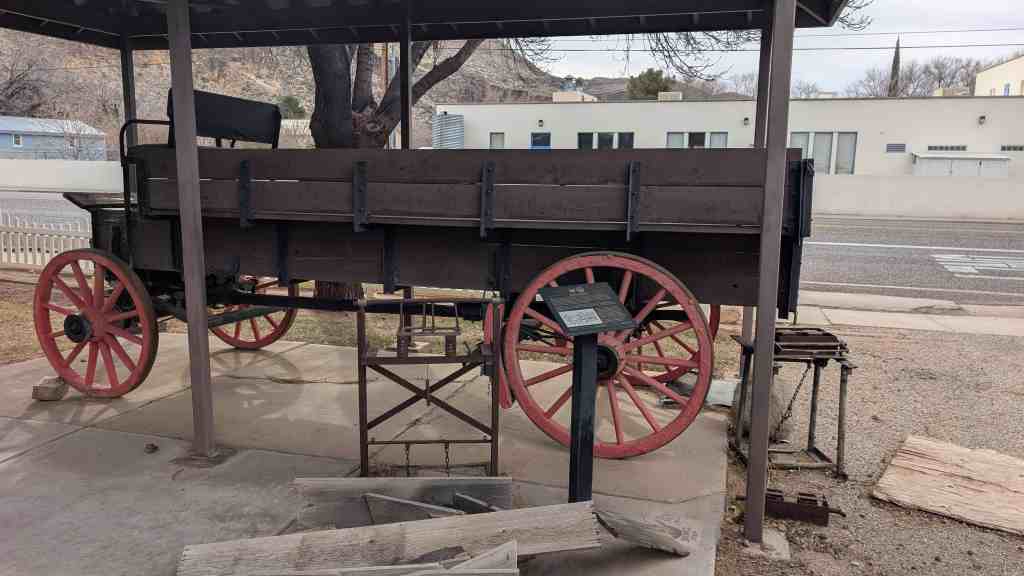
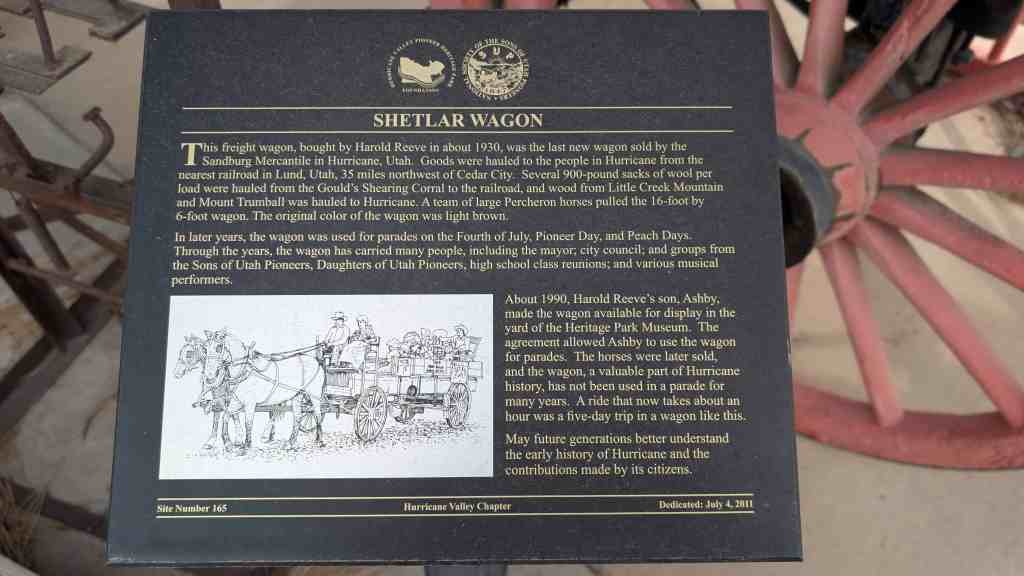
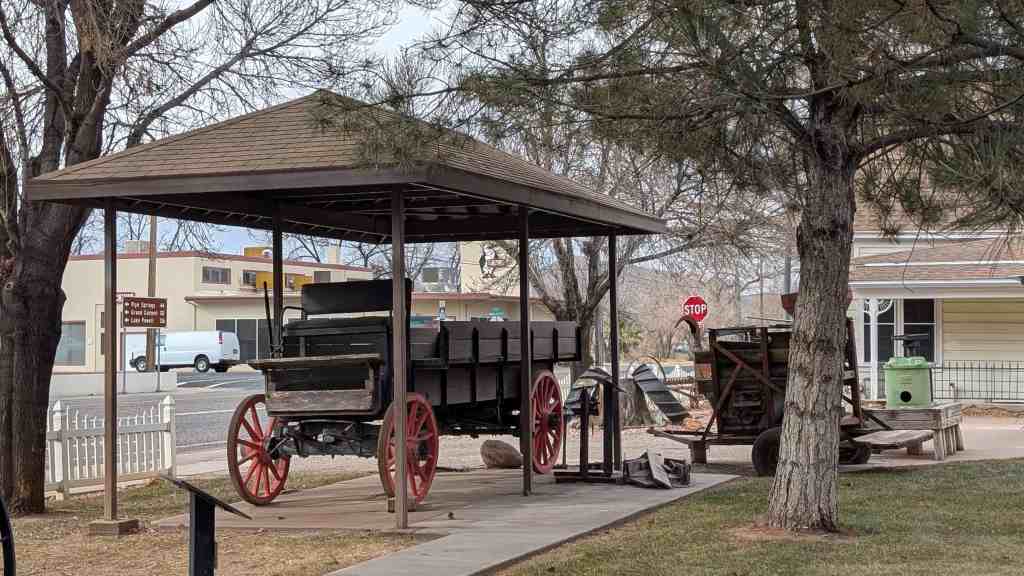
This freight wagon, bought by Harold Reeve in about 1930, was the last new wagon sold by the Sandburg Mercantile in Hurricane, Utah. Goods were hauled to the people in Hurricane from the nearest railroad in Lund, Utah, 35 miles northwest of Cedar City. Several 900-pound sacks of wool per load were hauled from the Gould’s Shearing Corral to the railroad, and wood from Little Creek Mountain and Mount Trumball was hauled to Hurricane. A team of large Percheron horses pulled the 16-foot by 6-foot wagon. The original color of the wagon was light brown.
In later years, the wagon was used for parades on the Fourth of July, Pioneer Day, and Peach Days. Through the years, the wagon has carried many people, including the mayor; city council; and groups from the Sons of Utah Pioneers, Daughters of Utah Pioneers, high school class reunions; and various musical performers.
About 1990, Harold Reeve’s son, Ashby, made the wagon available for display in the yard of the Heritage Park Museum. The agreement allowed Ashby to use the wagon for parades. The horses were later sold, and the wagon, a valuable part of Hurricane history, has not been used in a parade for many years. A ride that now takes about an hour was a five-day trip in a wagon like this.
May future generations better understand the early history of Hurricane and the contributions made by its citizens.
This is Sons of Utah Pioneers historic marker #165 (see other S.U.P. markers here) located at the Heritage House Pioneer Center / Heritage Park / Museum at the Bradshaw House-Hotel at 85 South Main Street in Hurricane, Utah.
“The History” The First wagons crossed the Mississippi River from Nauvoo, Illinois on February 4, 1846. The untimely winter departure became necessary due to the mob violence against the Mormons’ farms, homes and families. As they departed and began their trek to the west, they were subjected to gale-force winds, torrential rain, axle-deep mud, freezing temperature and snow.
The Saints faced an epic journey of 1,300 miles to an unsettled territory far away in the west. Some were farmers, and many were city dwellers from the eastern United States and Great Britain, experienced in valuable trades, but unfamiliar with the skills of harnessing horses, oxen and mules, driving wagons, herding livestock, or foraging for food on a long trek.
Through much work, sacrifice and prayer, and guided by the hand of God, the first faithful Saints under the leadership of Brigham Young completed their journey west, arriving in the Great Salt Lake Valley over a three-day period between July 22 and July 24th, 1847. Tens of thousands more followed in their footsteps to settle their promised land in the Rocky Mountains.
To these early pioneers whom we love, honor and cherish, may your names be forever remembered; and may we who inherit your legacies never forget your sacrifices, your values, your vision, and your magnificent accomplishments.
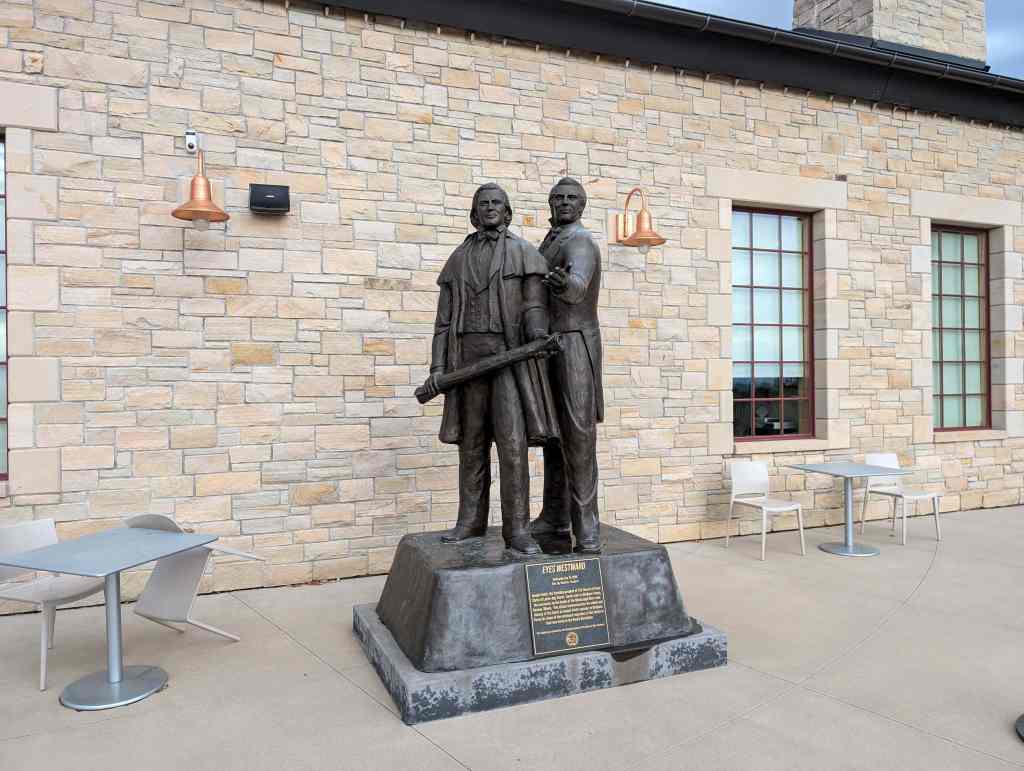
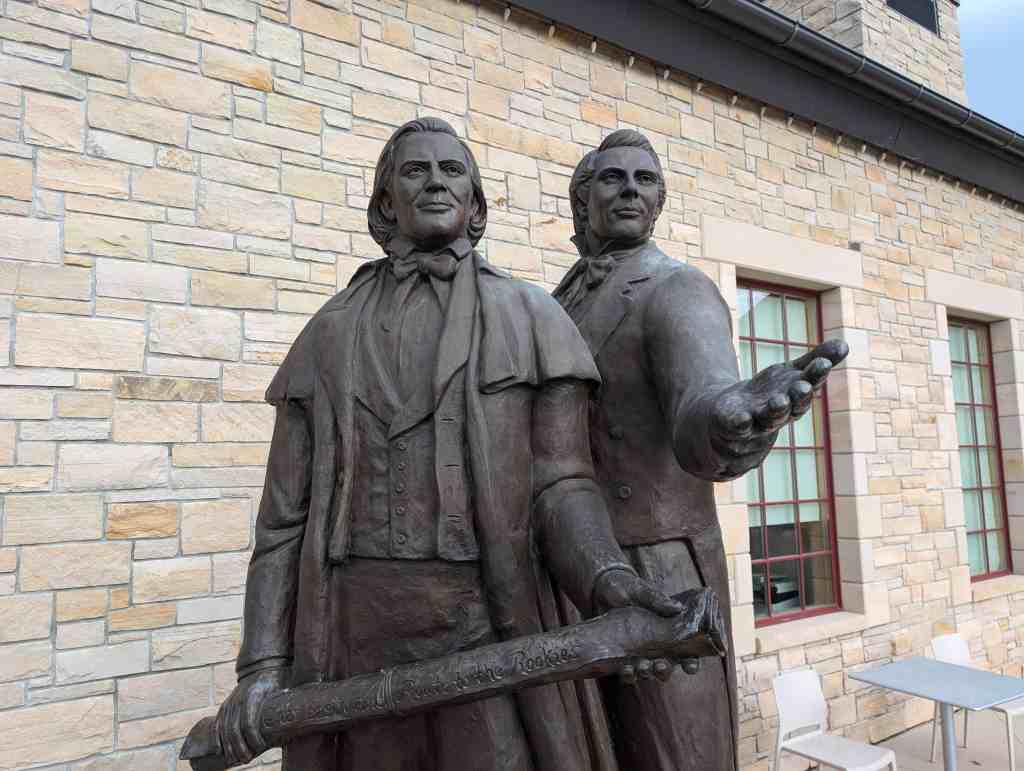
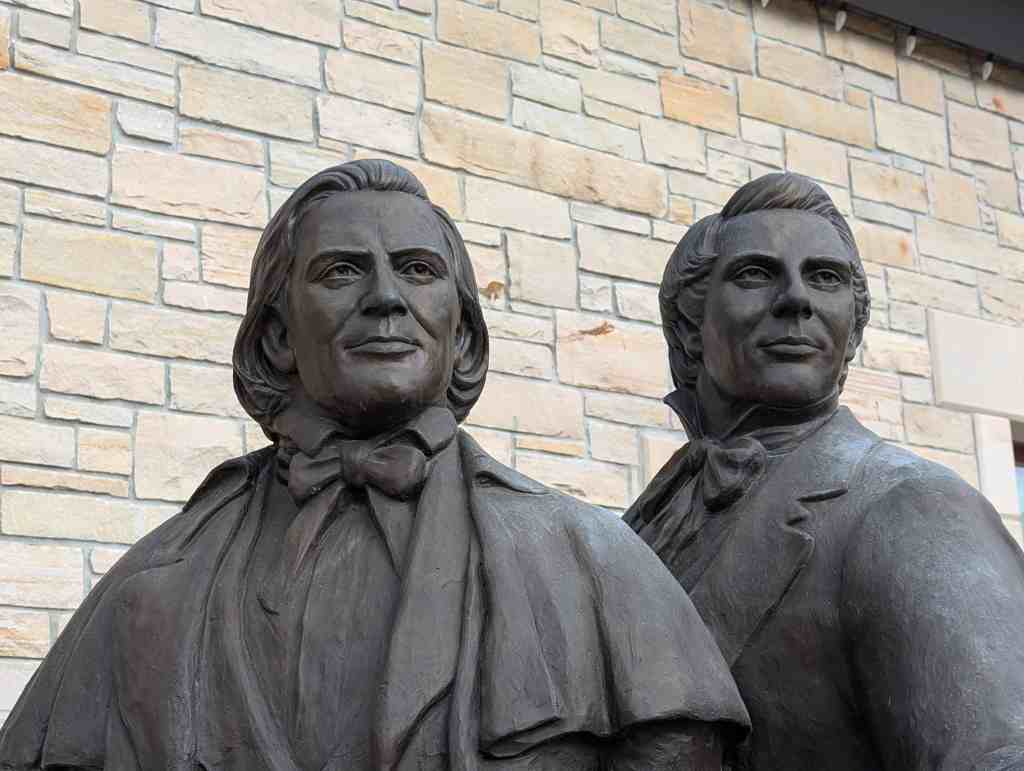
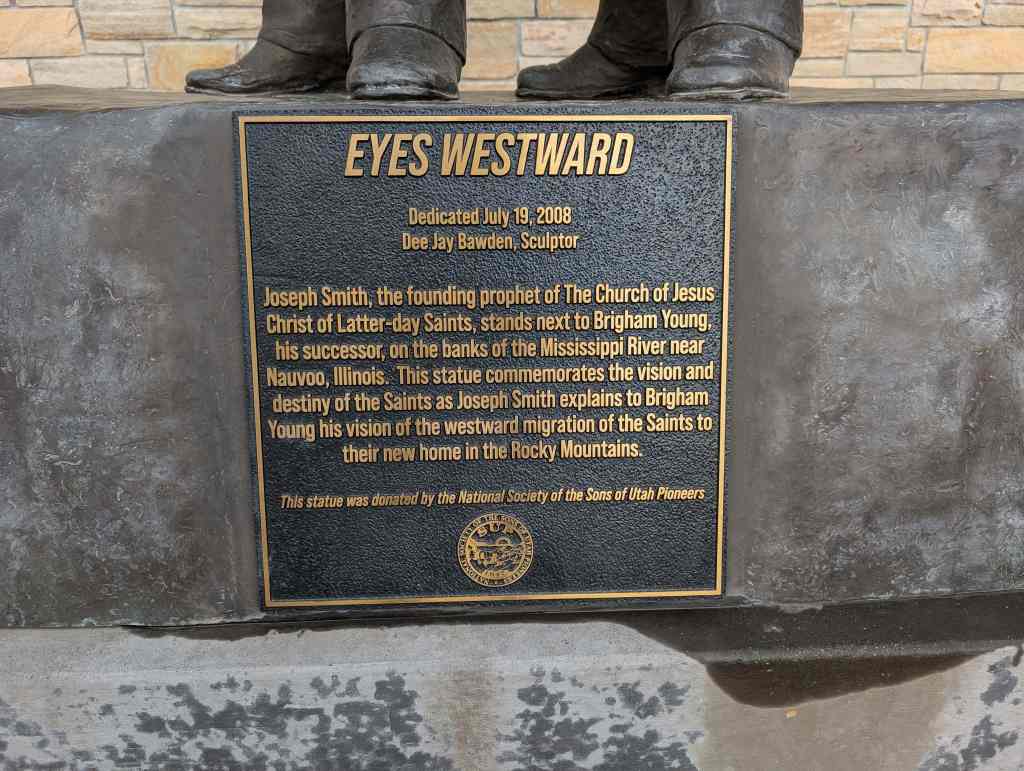
“The Prophecies” Joseph Smith, the founding prophet of the Church of Jesus Christ of Latter-day Saints (Mormons), is shown here standing next to Brigham Young, his successor, on the banks of the Mississippi River near Nauvoo, Illinois. Brigham is holding a map showing the westward trek of the Latter-day Saints that Joseph had seen in a vision. Before Joseph’s death, he prophesied about the relocation of the Saints to the Rocky Mountains, and he and Brigham conversed many hours on the subject. “My people shall become a numerous and mighty host in the vastness of the Rocky Mountains,” Joseph Smith said. Other Saints were also privileged to hear Joseph’s prophecies concerning the prospective exodus:
“Joseph Smith said, ‘Now I will show you the travels of this people.’ He then showed our travels through Iowa and said, ‘Here you will make a place for the winter and here you will travel west until you come to the valley of the Great Salt Lake. You will build cities to the north and to the south and to the east and to the west and you will become a great and wealthy people in that land.” –Mosiah Hancock
‘Joseph Smith, just before he was killed, made a sketch of the future home of the Saints in the Rocky Mountains and their route … to that country as he had seen it in a vision. Levi Hancock drew a copy of that map … and told them that there were four copies of that map taken; one of which Brigham Young kept and one that was carried by the Mormon Battalion by which they knew where to find the Church and Salt Lake Valley.” –Oliver Huntington
“While he (Joseph Smith) was talking, his countenance changed to … a living, brilliant white. He seemed absorbed in gazing at something at a great distance and said, ‘I am gazing upon the valleys of those mountains. Oh the beauty of those snow-capped mountains!’” Anson Call
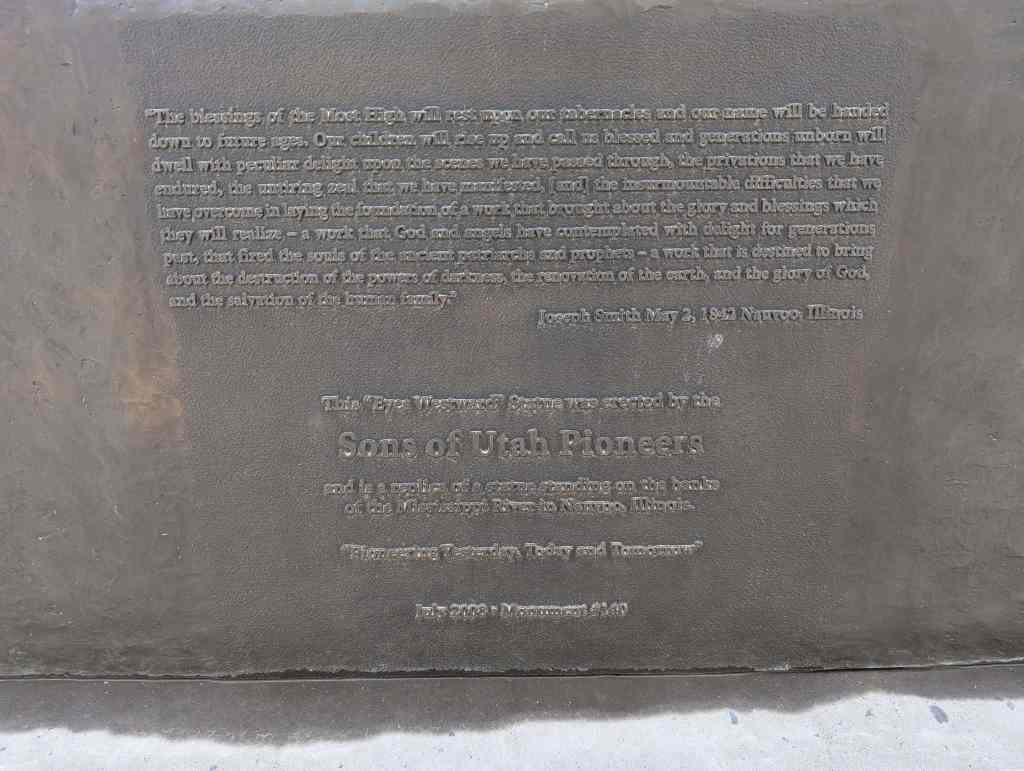
SUP Attribution Plaque “The blessings of the Most High will rest upon our tabernacles and our name will be handed down to future ages. Our children will rise up and call us blessed and generations unborn will dwell with peculiar delight upon the scenes we have passed through, the privations that we have endured, the untiring zeal that we have manifested, (and) the insurmountable difficulties that we have overcome in laying the foundation of a work that brought about the glory and blessings which they will realize – a work that God and angels have contemplated with delight for generations past, that fired the souls of the ancient patriarchs and prophets – a work that is destined to bring about the destruction of the powers of darkness, the renovation of the earth, and the glory of God, and the salvation of the human family.” Joseph Smith May 2, 1842 Nauvoo, Illinois
This “Eyes Westward” statue was erected by the Sons of Utah Pioneers and is a replica of a statue standing on the banks of the Mississippi River in Nauvoo, Illinois.
“Pioneering Yesterday, Today and Tomorrow” July 2008 * Monument #140
Sculptor Attribution Plaque Eyes Westward Sculptor Dee Jay Bawden
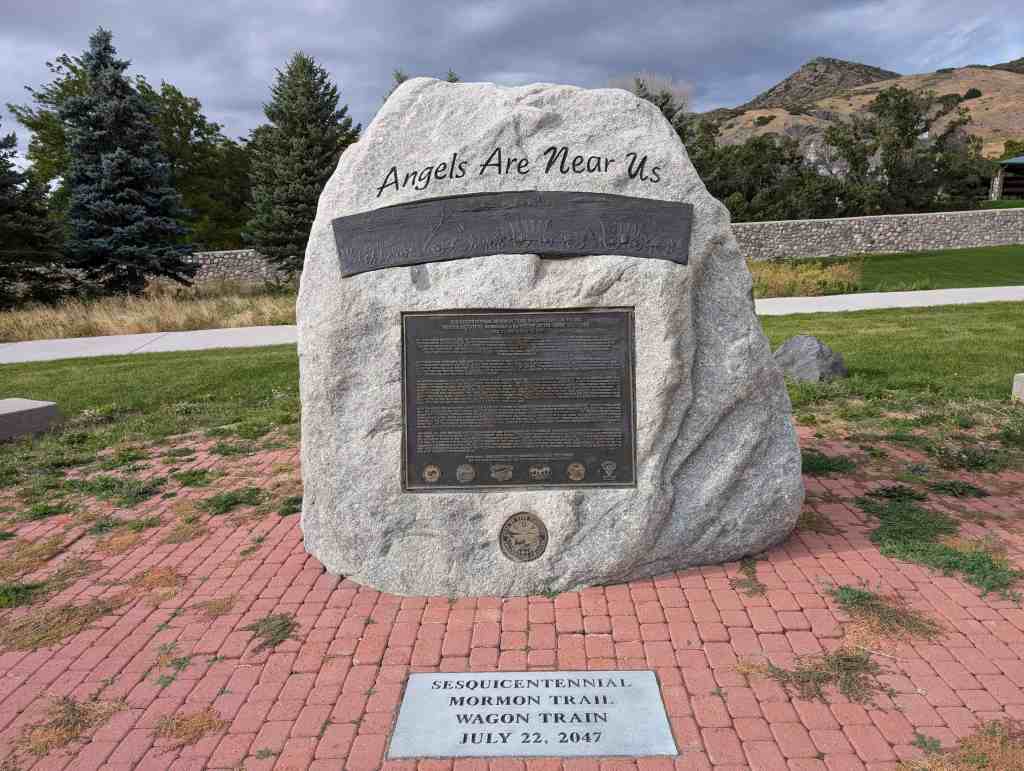
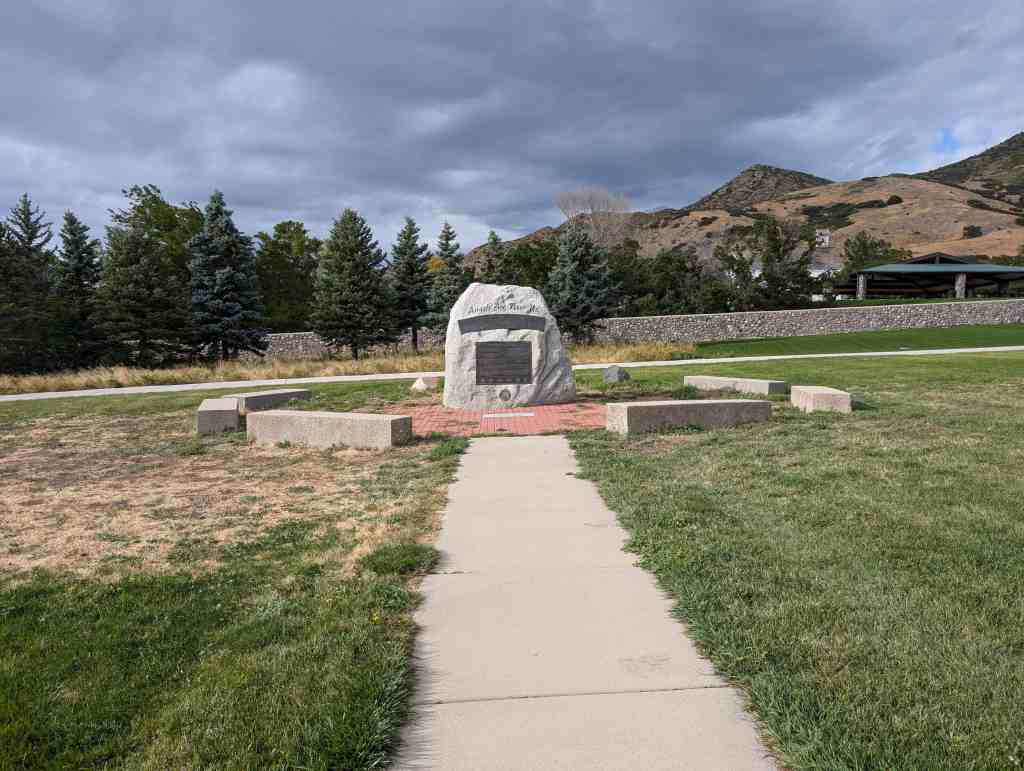
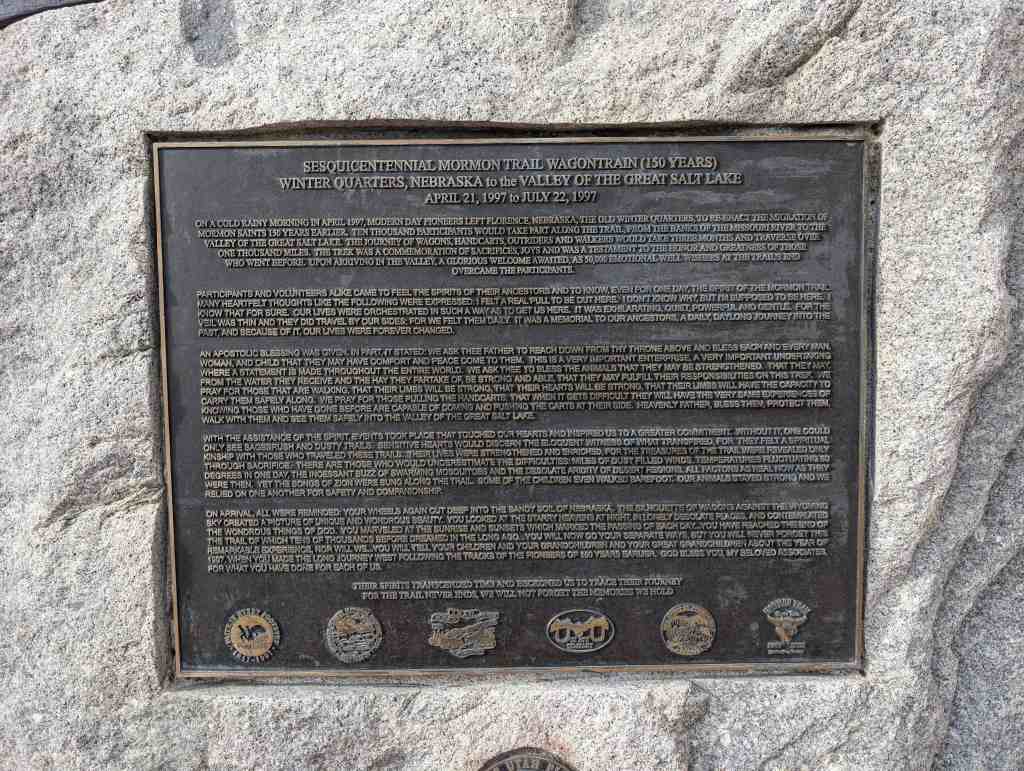
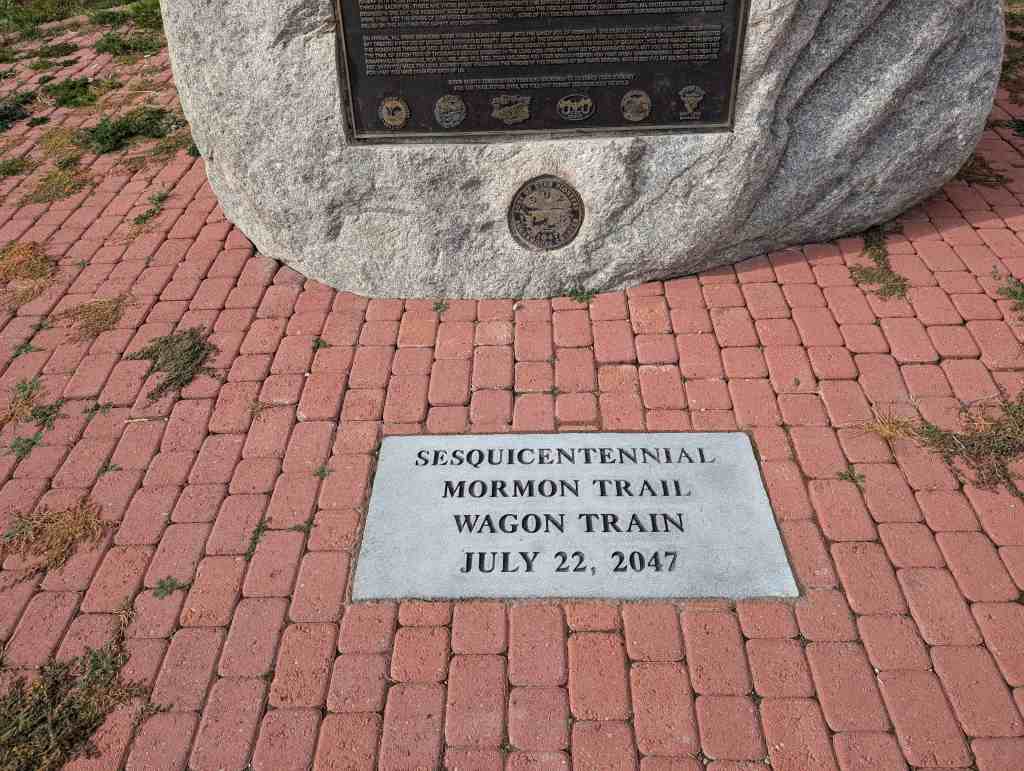
Sesquicentennial Mormon Trail Wagon Train (150 Years) Winter Quarters, Nebraska to the Valley of the Great Salt Lake April 21, 1997 to July 22, 1997.
On a cold rainy morning in April 1997, modern day pioneers left Florence, Nebraska, the old Winter Quarters, to re-enact the migration of Mormon Saints 150 years earlier. Ten thousand participants would take part along the trail, from the banks of the Missouri River to the Valley of the Great Salt Lake. The journey of wagons, handcarts, outriders and walkers would take three months and traverse over one thousand miles. The trek was a commemoration of sacrifices, joys and was a testament to the honor and greatness of those who went before. Upon arriving in the valley, a glorious welcome awaited as 50,000 emotional well wishers at the trail’s end overcame the participants.
Participants and volunteers alike came to feel the spirits of their ancestors and to know, even for one day, the spirit of the Mormon Trail. Many heartfelt thoughts like the following were expressed: I felt a real pull to be out here. I don’t know why, but I’m supposed to be here. I know that for sure. Our lives were orchestrated in such a way as to get us here. It was exhilarating, quiet, powerful and gentle. For the veil was thin and they did travel by our sides; for we felt them daily. It was a memorial to our ancestors, a daily, daylong journey into the past and because of it, our lives were forever changed.
An apostolic blessing was given. In part, it stated: We ask thee Father to reach down from thy throne above and bless each and every man, woman, and child that they may have comfort and peace come to them. This is a very important enterprise, a very important understanding where a statement is made throughout the entire world. We ask thee to bless the animals that they may be strengthened. That they may, from the water they receive and the hay they partake of, be strong and able, that they may fulfill their responsibilities on this trek. We pray for those that are walking, that their limbs will be strong, that their hearts will be strong, that their limbs will have the capacity to carry them safely along. We pray for those pulling the handcarts; that when it gets difficult they will have the very same experiences of knowing those who have gone before are capable of coming and pushing the carts at their side. Heavenly Father, bless them, protect them, walk with them and see them safely into the Valley of the Great Salt Lake.
With the assistance of the spirit, events took place that touched our hearts and inspired us to a greater commitment. Without it, one could only see sagebrush and dusty trails. Sensitive hearts would discern the eloquent witness of what transpired, for they felt a spiritual kinship with those who traveled these trails. Their lives were strengthened and enriched, for the treasures of the trail were revealed only through sacrifice. There are those who would underestimate the difficulties: miles of dust filled winds, temperatures fluctuating 60 degrees in one day, the incessant buzz of swarming mosquitoes and the desolate aridity of desert regions, all factors as real now as they were then. Yet the songs of Zion were sung along the trail. Some of the children even walked barefoot. Our animals stayed strong and we relied on one another for safety and companionship.
On arrival, all were reminded: your wheels again cut deep into the sandy soil of Nebraska. The silhouette of wagons against the Wyoming sky created a picture of unique and wondrous beauty. You looked at the starry heavens at night, in lonely desolate places, and contemplated the wondrous things of God. You marveled at the sunrise and sunsets which marked the passing of each day…you have reached the end of the trail of which tens of thousands before dreamed in the long ago…you will now go your separate ways, but you will never forget this remarkable experience, nor will we…you will tell your children and your grandchildren and your great grandchildren about the year of 1997, when you made the long journey west following the tracks of the pioneers of 150 years earlier. God bless you, my beloved associates.
Their spirits transcended time and beckoned us to trace their journey for the trail never ends, we will not forget the memories we hold.