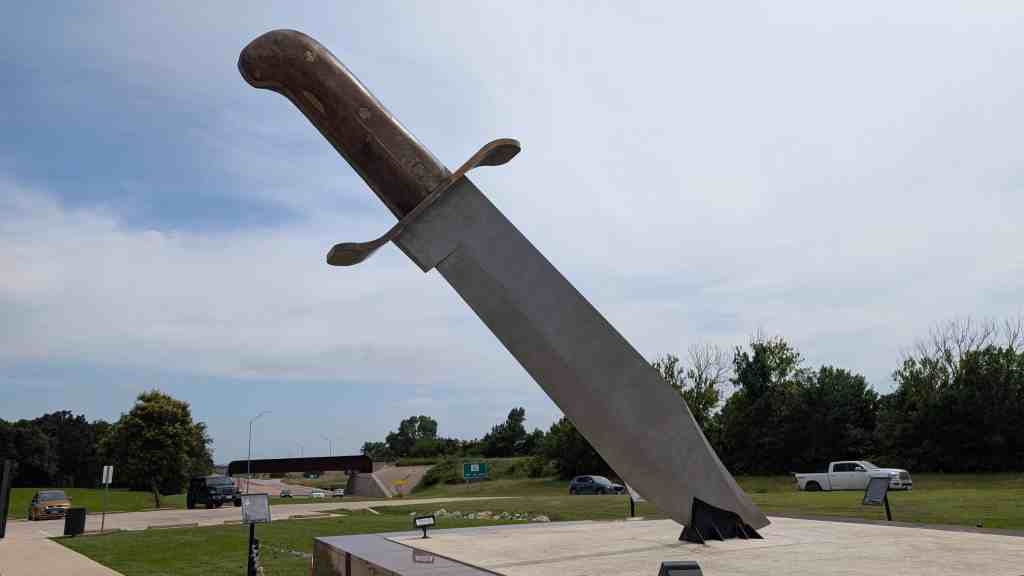
World’s Largest Bowie Knife
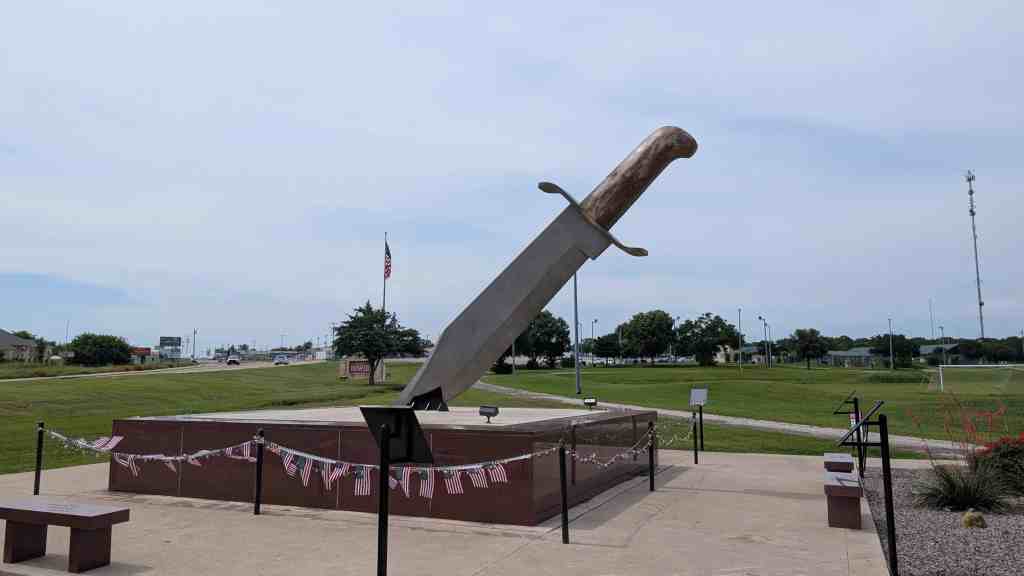
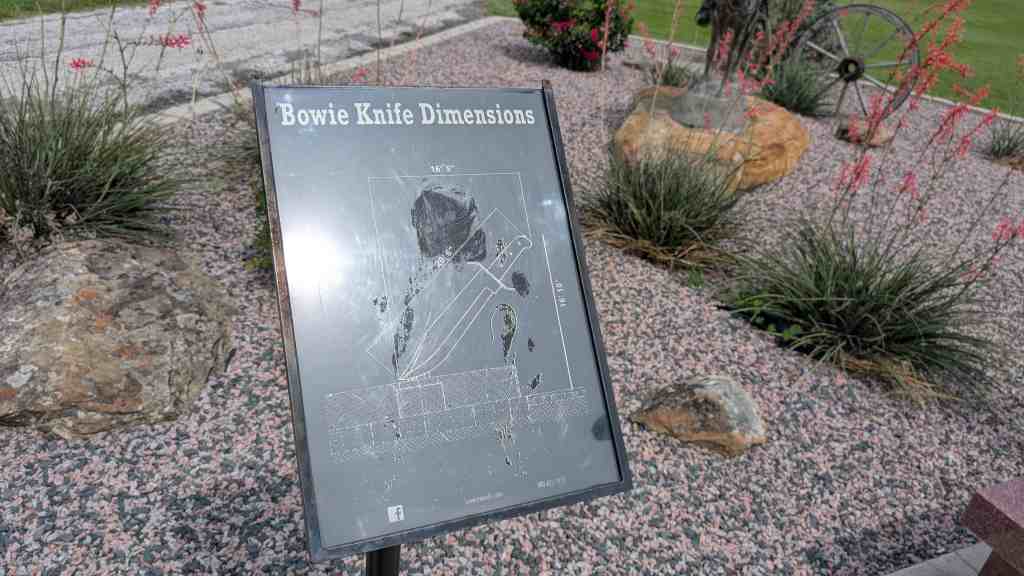
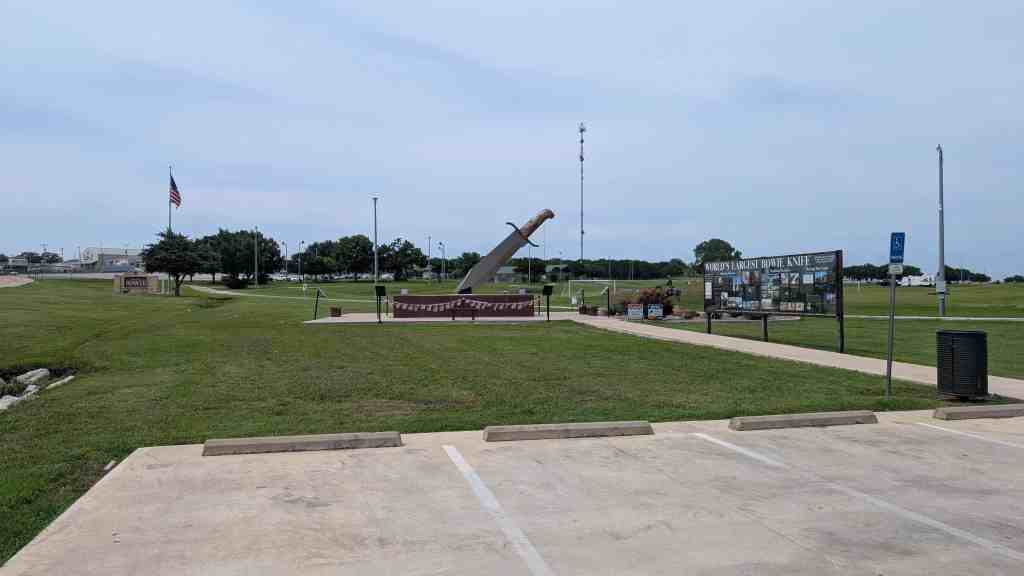
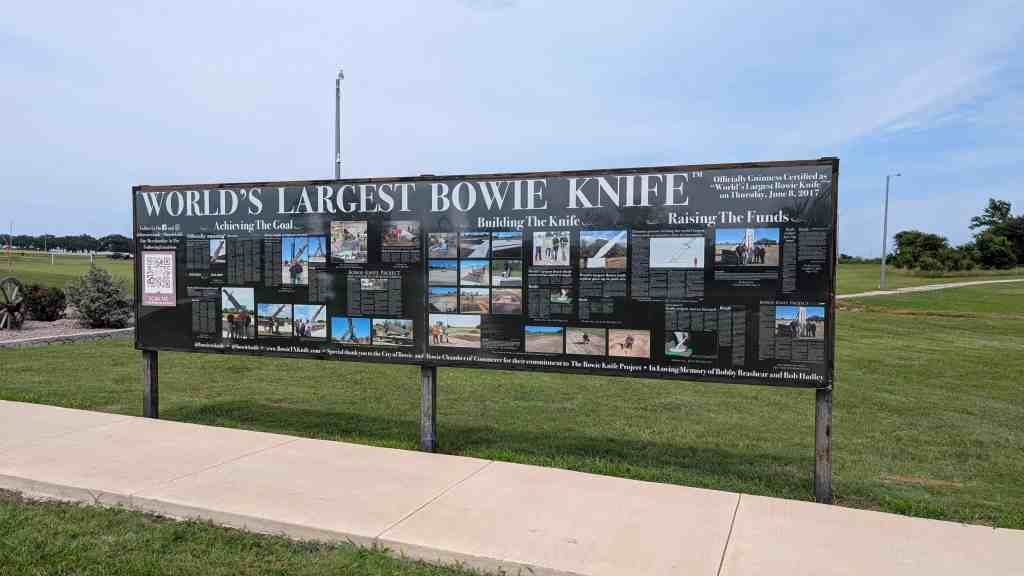
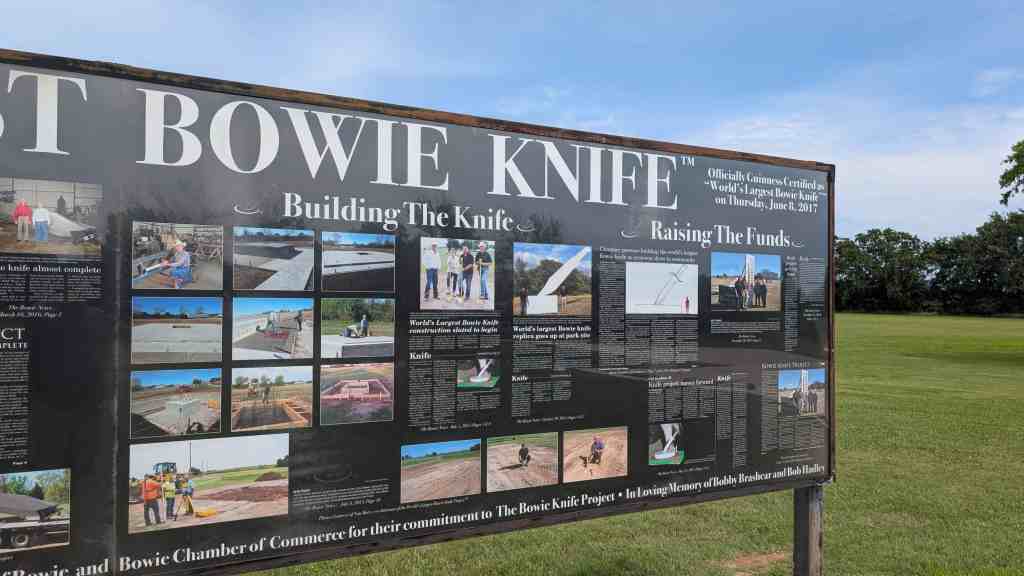
The largest Bowie knife measures 6.24 m ( 20 ft 6 in ) long, and was achieved by the Bowie Chamber of Commerce (USA), in Bowie, Texas, USA, on 8 April 2016.
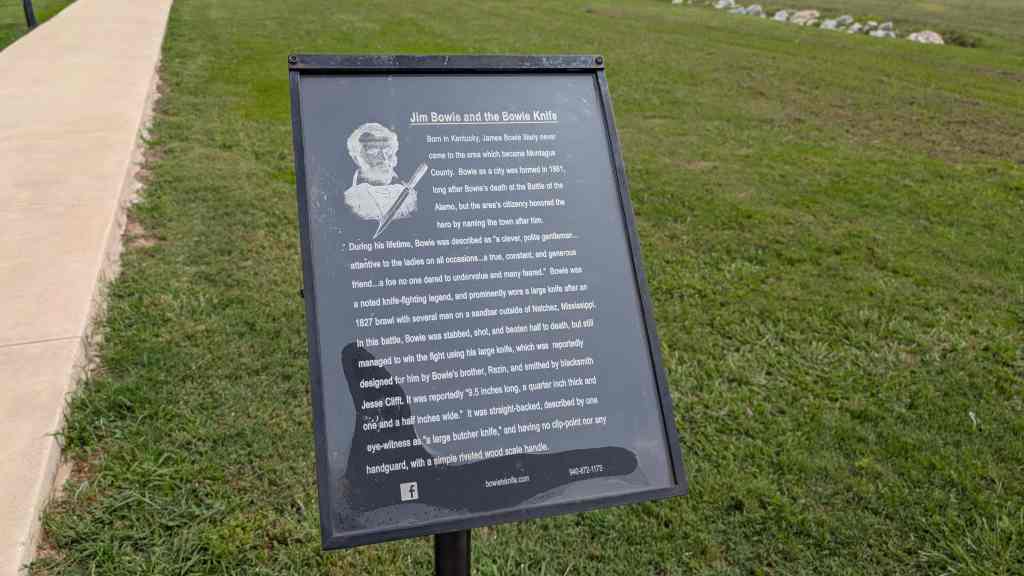
Jim Bowie and the Bowie Knife
Born in Kentucky, James Bowie likely never came to the area which became Montague County. Bowie as a city was formed in 1881, long after Bowie’s death at the Battle of the Alamo, but the area’s citizenry honored the hero by naming the town after him. During his lifetime, Bowie was described as “a clever, polite gentleman… attentive to the ladies on all occasions…a true, constant, and generous friend…a foe no one dared to undervalue and many feared.” Bowie was a noted knife-fighting legend, and prominently wore a large knife after an 1827 brawl with several men on a sandbar outside of Natchez, Mississippi. In this battle, Bowie was stabbed, shot, and beaten half to death, but still managed to win the fight using his large knife, which was reportedly designed for him by Bowie’s brother, Rezin, and smithed by blacksmith Jesse Clifft. It was reportedly “9.5 inches long, a quarter inch thick and one and a half inches wide.” It was straight-backed, described by one eye-witness as “a large butcher knife,” and having no clip-point nor any handguard, with a simple riveted wood scale handle.
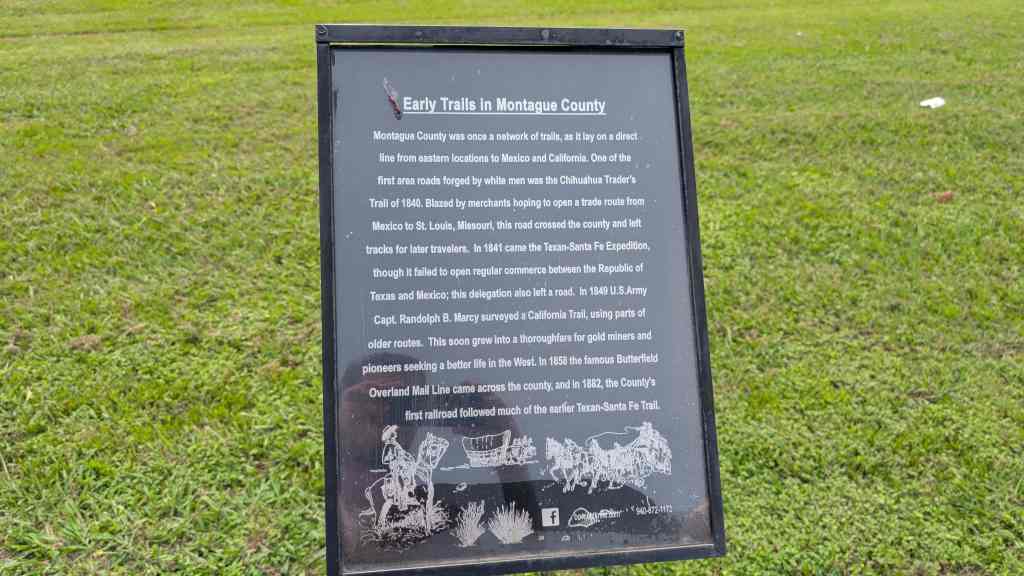
Early Trails in Montague County
Montague County was once a network of trails, as it lay on a direct line from eastern locations to Mexico and California. One of the first area roads forged by white men was the Chihuahua Trader’s Trail of 1840. Blazed by merchants hoping to open a trade route from Mexico to St. Louis, Missouri, this road crossed the county and left tracks for later travelers. In 1841 came the Texan-Santa Fe Expedition, though it failed to open regular commerce between the Republic of Texas and Mexico; this delegation also left a road. In 1849 U.S.Army Capt. Randolph B. Marcy surveyed a California Trail, using parts of older routes. This soon grew into a thoroughfare for gold miners and pioneers seeking a better life in the West. In 1858 the famous Butterfield Overland Mail Line came across the county, and in 1882, the County’s first railroad followed much of the earlier Texan-Santa Fe Trail.

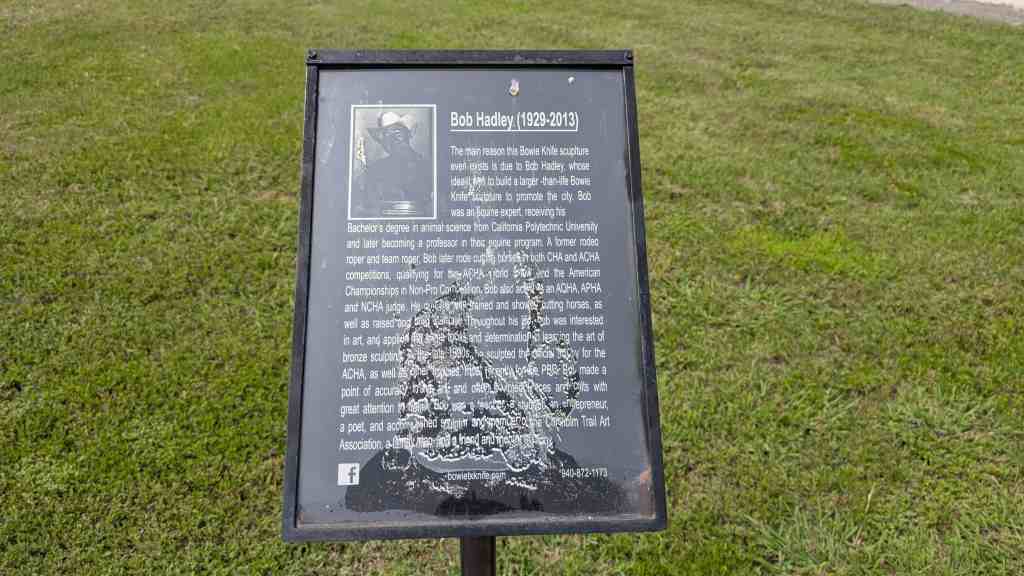
Bob Hadley (1929-2013)
The main reason this Bowie Knife scuplture even exists is due to Bob Hadley, whose idea it as to build a larger-than-life Bowie Knife sculpture to promote the city. Bob was an equine expert, receiving his Bachelor’s degree in animal science from California Polytechnic University and later becoming a professor in their equine program. A former rodeo roper and team roper, Bob later rode cutting horses both CHA and ACHA competitions, qualifying for the ACHA World Gowend the American Championships in Non-Pro Competition. Bob also acted as an AQHA, APHA and NCHA judge. He is we trained and show cutting horses, as well as raised and bred stallion Throughout his life ob was interested in art, and applied the focus and determination learning the art of bronze sculpting the late 1990s, he sculpted the official trophy for the ACHA, as well as other es, mest terenty for the PBR Bu made a point of accuracy in art and often sculpted trees and Colts with h great attention to detal Bou was a teacher a student an entrepreneur, a poet, and accorshed sculptor and member of the Chisholm Trail Art Association, a family man and a friend and mentorat
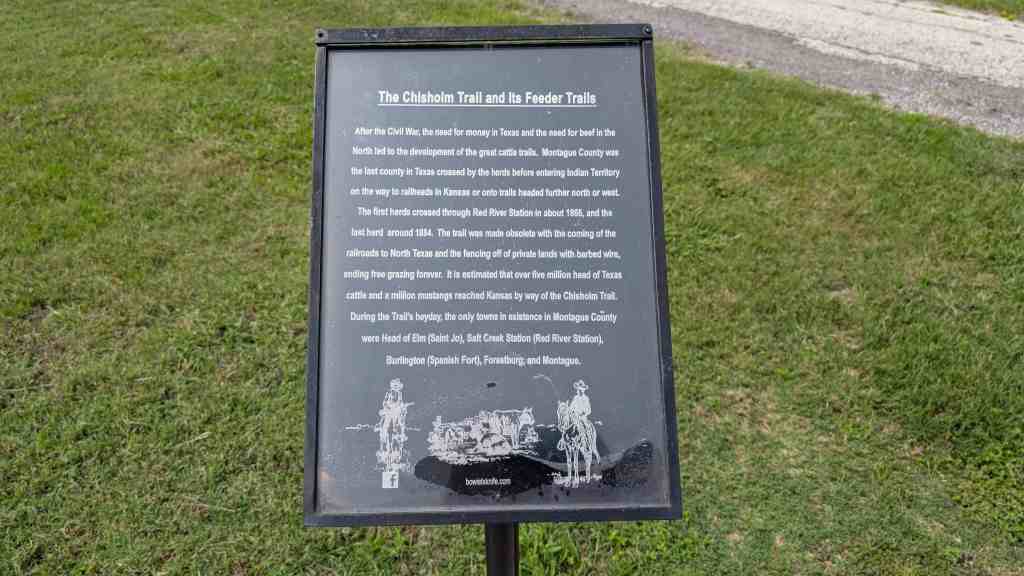
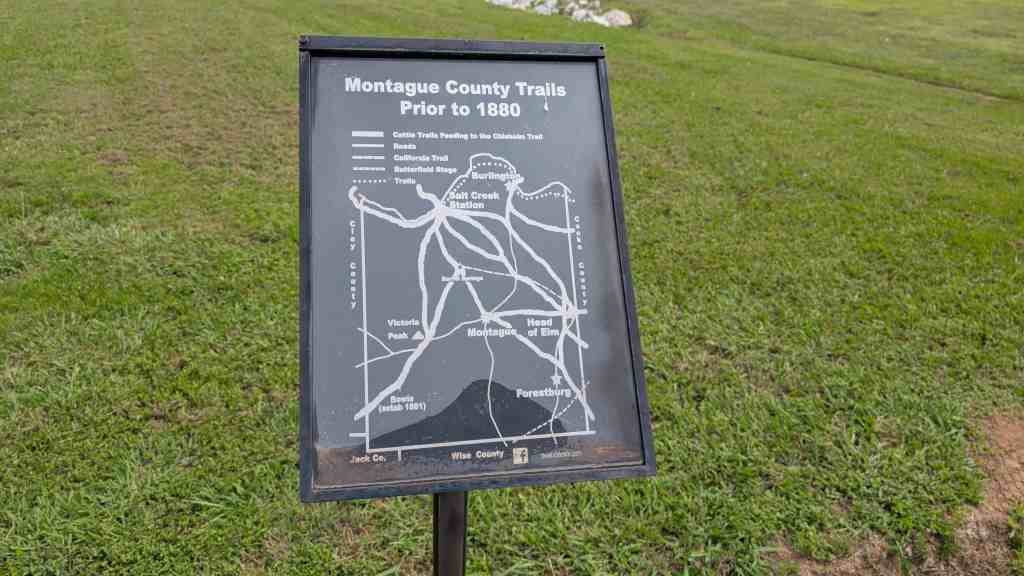
The Chisholm Trail and Its Feeder Trails
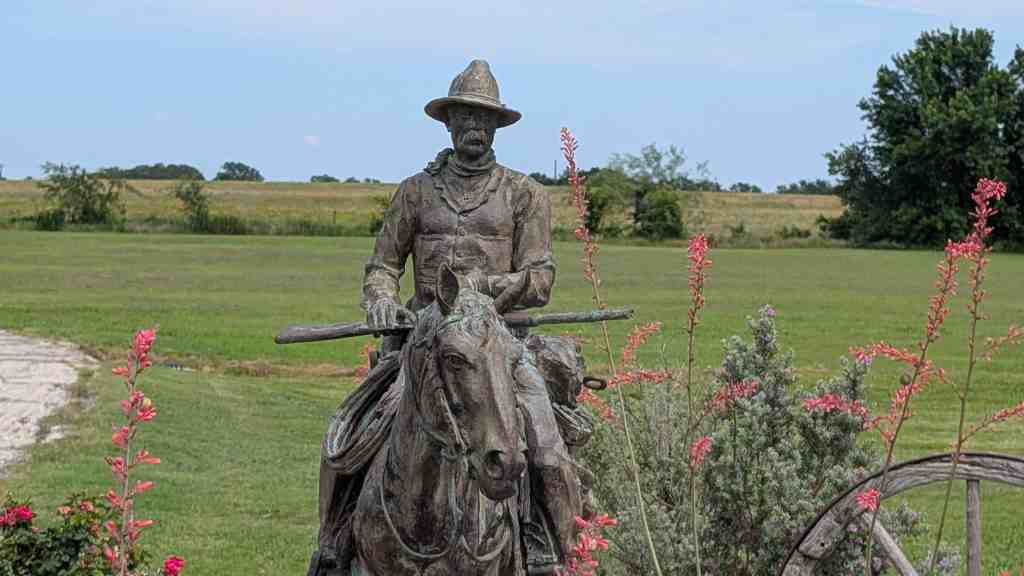
After the Civil War, the need for money in Texas and the need for beef in the North led to the development of the great cattle trails. Montague County was the last county in Texas crossed by the herds before entering Indian Territory on the way to railheads in Kansas or onto trails headed further north or west. The first herds crossed through Red River Station in about 1866, and the last herd around 1884. The trail was made obsolete with the coming of the railroads to North Texas and the fencing off of private lands with barbed wire, ending free grazing forever. It is estimated that over five million head of Texas cattle and a million mustangs reached Kansas by way of the Chisholm Trail. During the Trail’s heyday, the only towns in existence in Montague County were Head of Elm (Saint Jo), Salt Creek Station (Red River Station), Burlington (Spanish Fort), Forestburg, and Montague.
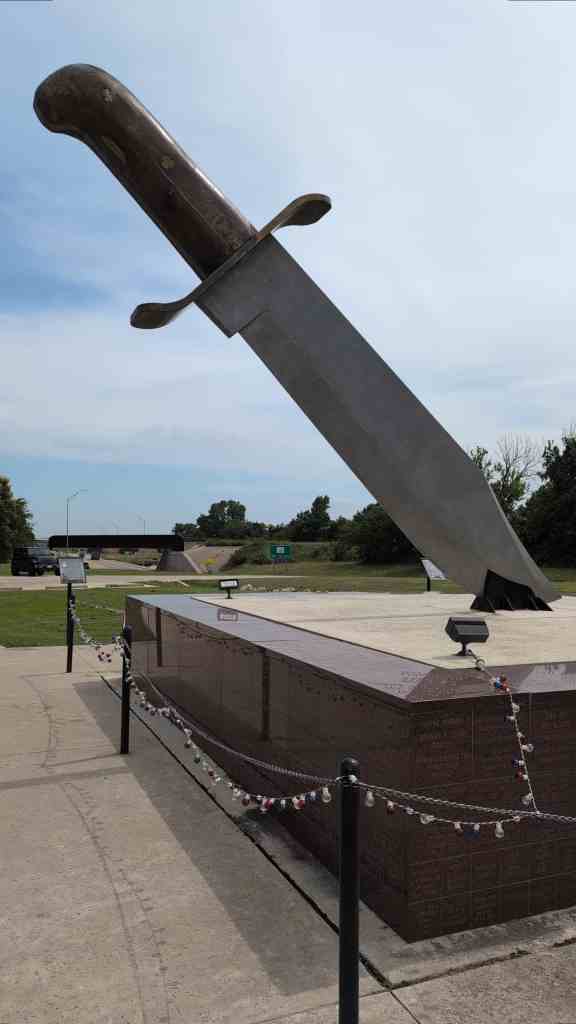
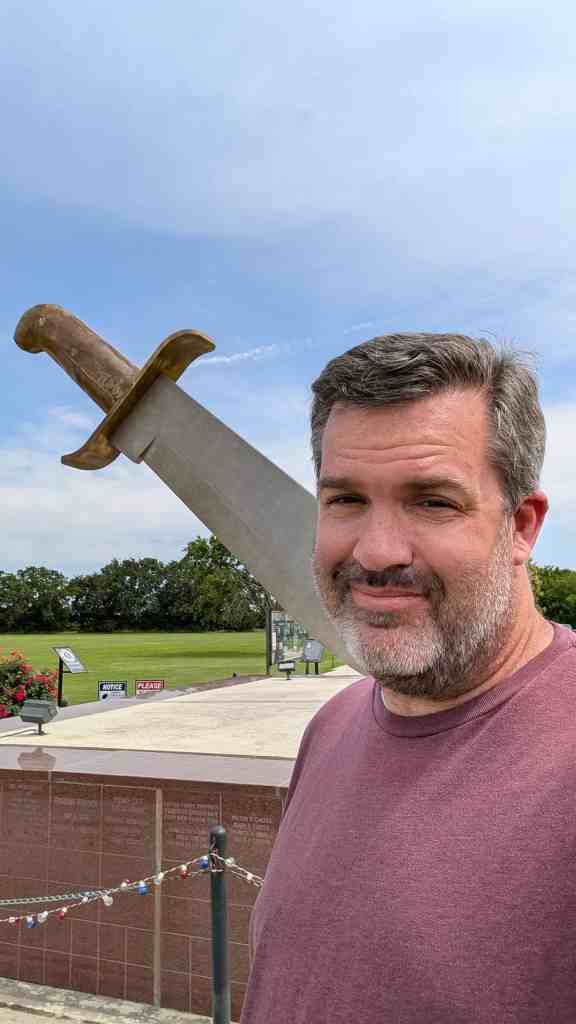
Located at 1555-1699 East Wise Street in Bowie, Texas