


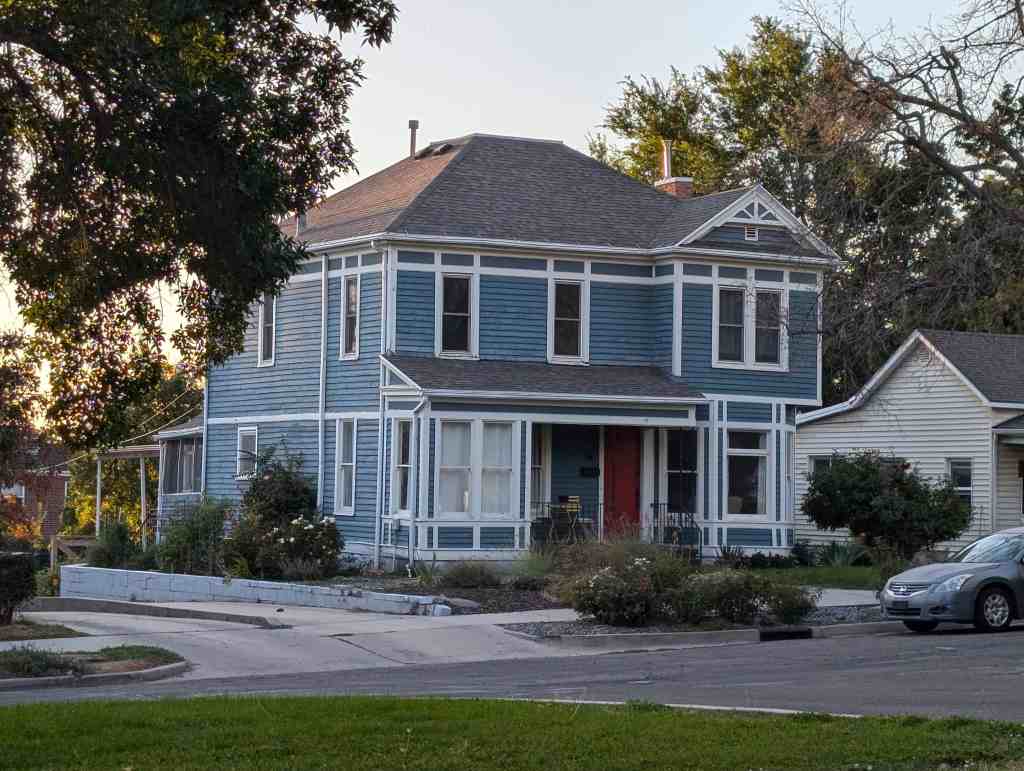
The Charles F. and Hannah H. Loofbourow house was built in 1890. Charles moved to Utah in 1889 from Iowa where he had been a lawyer and district judge. In Salt Lake he was elected president of the Salt Lake City Council in 1892, and served on the committee in charge of constructing the Salt Lake City and County Building. When he died in 1904 his son, Frederick, moved into the house. Frederick served as assistant county attorney, district attorney, was appointed a district judge in 1911, and was elected to Congress in 1930. In addition to his political activities, he served on the board of education during the 1930s, was active in the Children’s Service Society, and was a language scholar and historian.
54 South 1200 East in the University Neighborhood Historic District in Salt Lake City, Utah
- mentioned in University Neighborhood Historic District:
A look at the lives of many of the residents in the district (brief synopses with addresses and dates of the construction of the house are listed in Appendix A) reveals that the district was home to many prominent citizens involved in mining, business, politics and law, medicine, and teaching at the University of Utah. Their success indicates the prosperity that the city enjoyed during the period of significance c.1893-1945. In many instances their professions and civic activities indicate their desire to improve their community through more responsible government, improved education, and more opportunities for the general population. For example, Charles Loffbourow (54 South 1200 East) was a district attorney, a district judge, and a Congressman who also served on the board of education and volunteered for the Children’s Service Society. Frank Stephens (169 South 1300 East) was Salt Lake City Attorney and was instrumental in Salt Lake City’s adoption of the commission form of government. Dr. Leslie Paul (258 South Douglas) was a volunteer clinical faculty member at the University of Utah College of Medicine who helped establish the Intermountain Red Cross Blood Bank and served as commanding officer of a U.S. Army field hospital in Iran in 1944.

