David P. Gardner Hall
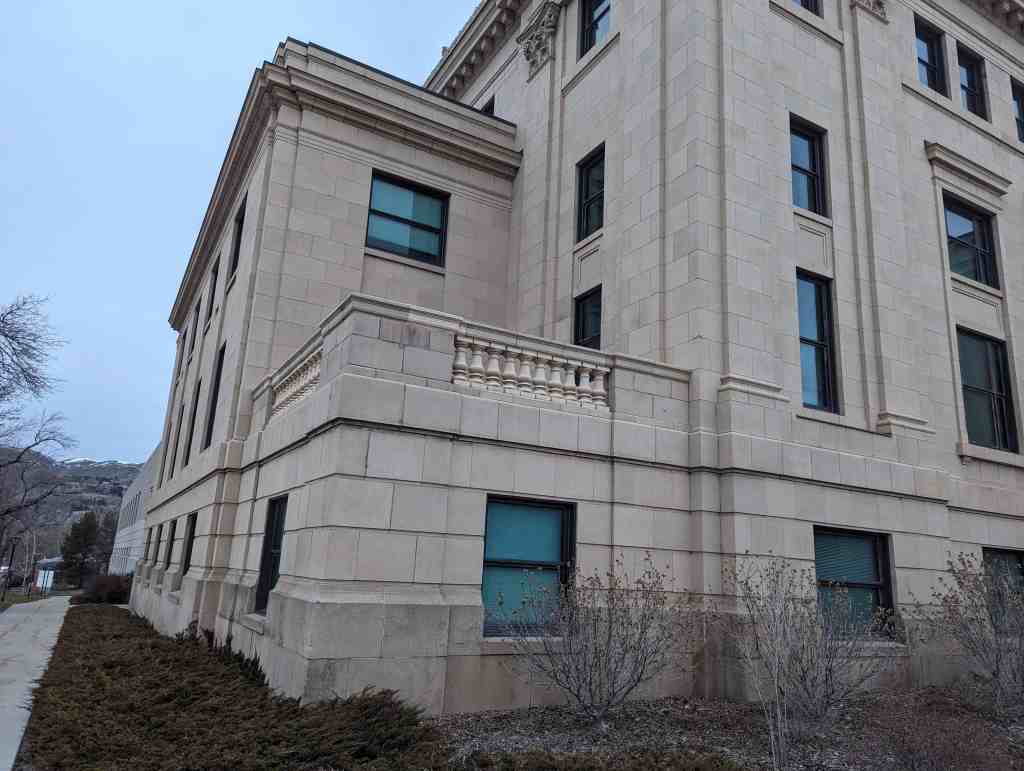
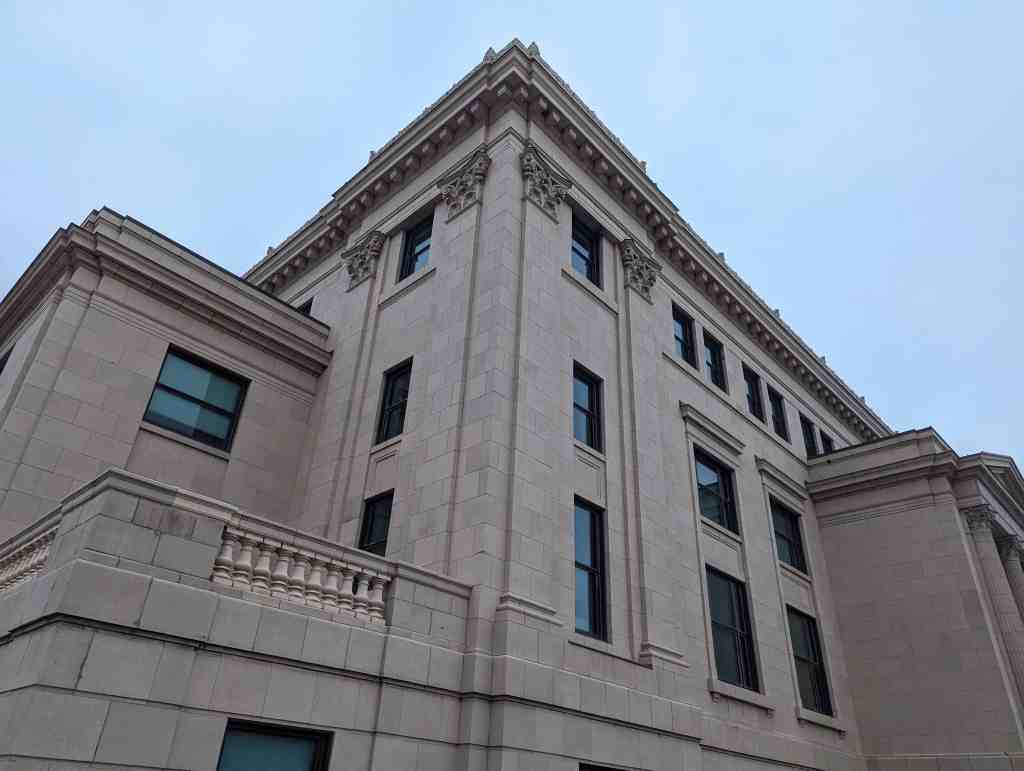
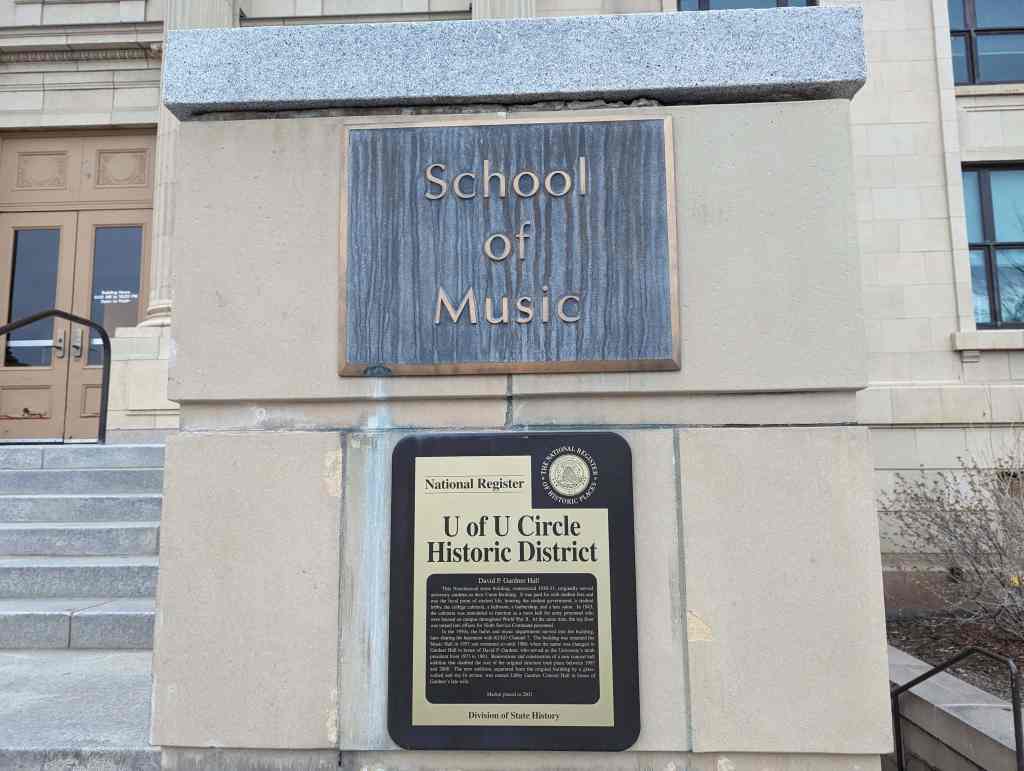
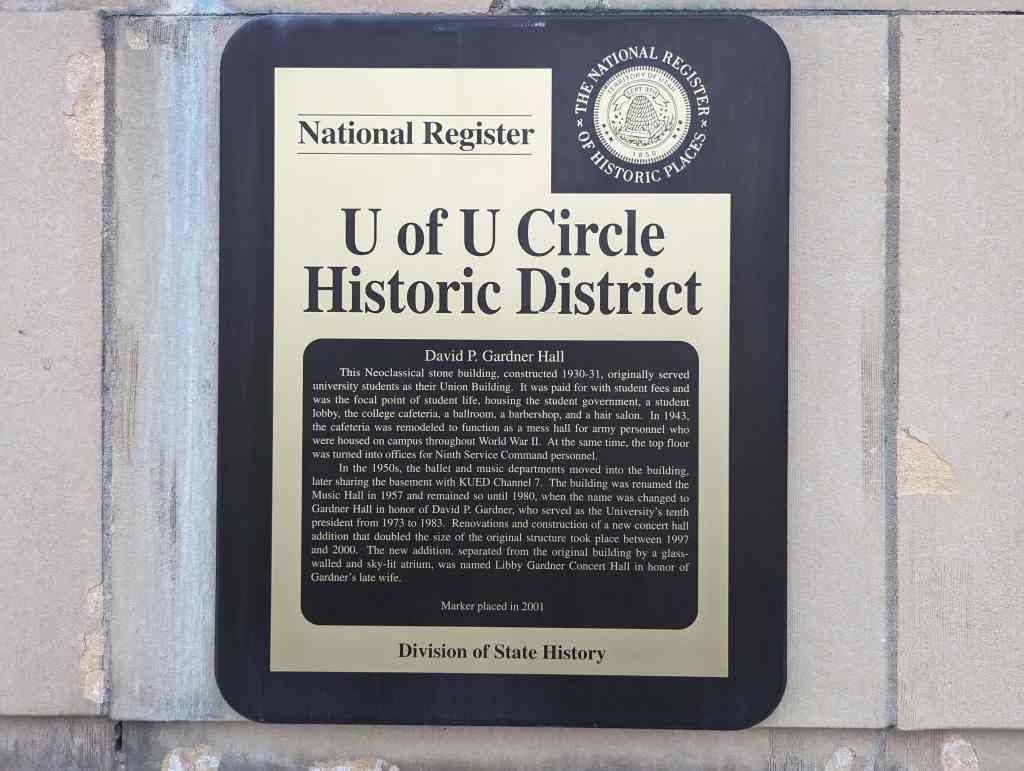
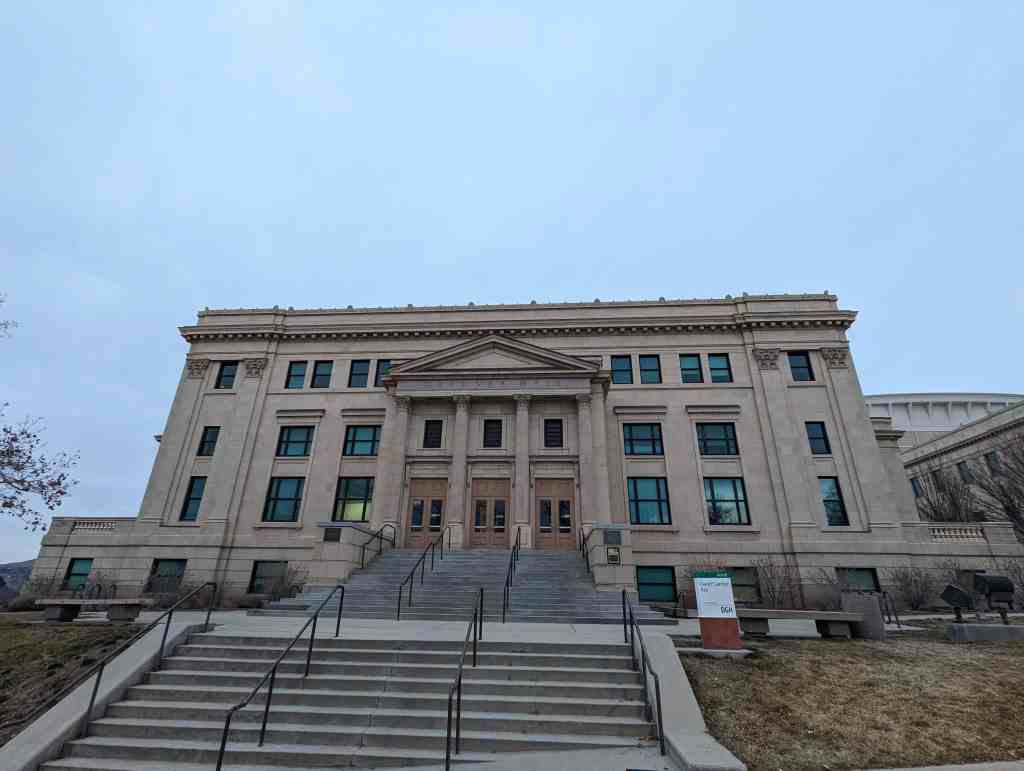
This Neoclassical stone building, constructed 1930-31, originally served university students as their Union Building. It was paid for with student fees and was the focal point of student life, housing the student government, a student lobby, the college cafeteria, a ballroom, a barbershop, and a hair salon. In 1943, the cafeteria was remodeled to function as a mess hall for army personnel who were housed on campus throughout World War II. At the same time, the top floor was turned into offices for Ninth Service Command personnel.
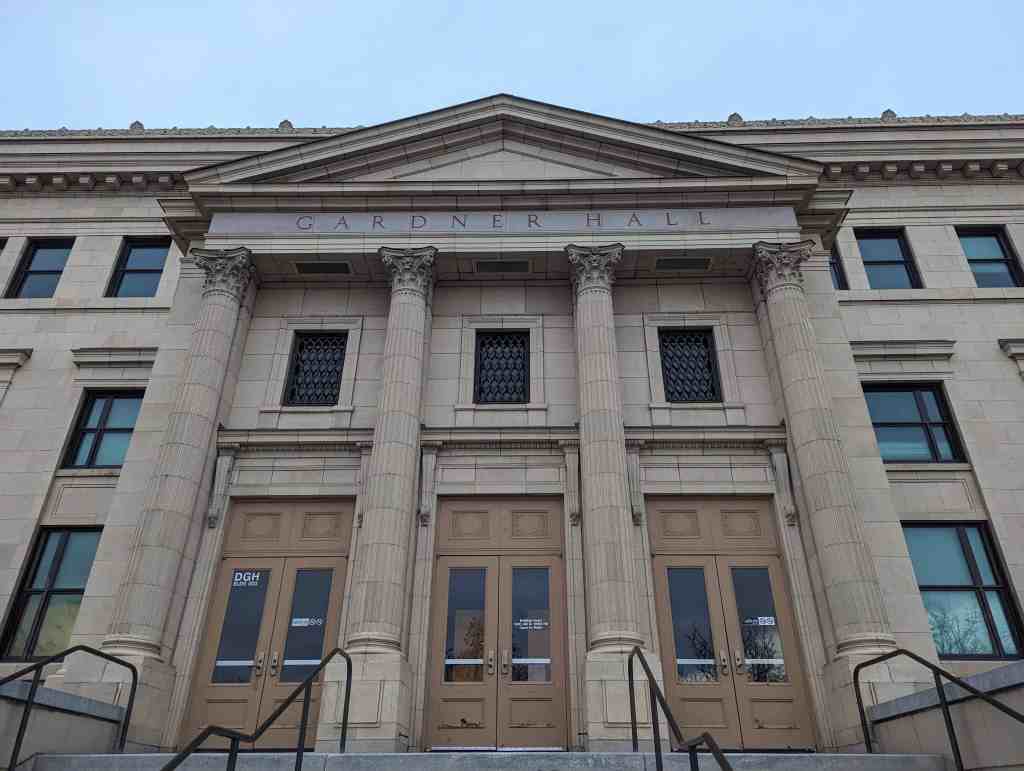
In the 1950s, the ballet and music departments moved into the building, later sharing the basement with KUED Channel 7. The building was renamed the Music Hall in 1957 and remained so until 1980, when the name was changed to Gardner Hall in honor of David P. Gardner, who served as the University’s tenth president from 1973 to 1983. Renovations and construction of a new concert hall addition that doubled the size of the original structure took place between 1997 and 2000. The new addition, separated from the original building by a glass- walled and sky-lit atrium, was named Libby Gardner Concert Hall in honor of Gardner’s late wife.
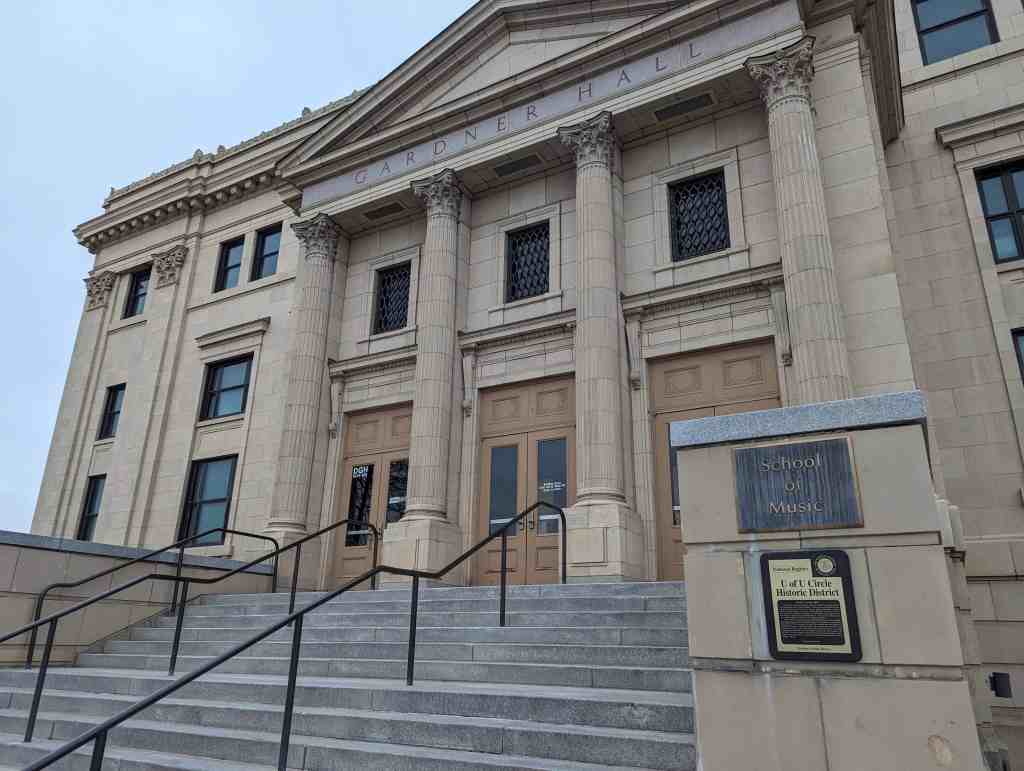
Located at 1375 Presidents’ Circle in the U of U Circle Historic District in Salt Lake City, Utah
This building was begun in 1930 to serve as a student union; and it was paid for by the students with fees added to their tuition. Raymond J. Ash ton and Raymond L. Evans were the architects. Its style was supposed to conform to that of the Neo-Classical Administration Building. The building is more eclectic but it still has the columns, pilasters and pediments associated with the Neo-Classical style. It is done in white stone. When a bigger union was built in the fifties, David C. Haines and Arne R. Pulhoven were selected to remodel the interior for a music building. This remodeling was extensive. On March 11, 1957, it was officially renamed the Music Hall. The building has a lovely foyer with recessed niches and a marble floor. In the east wing there is a room with the original pilasters and crown molding.*