


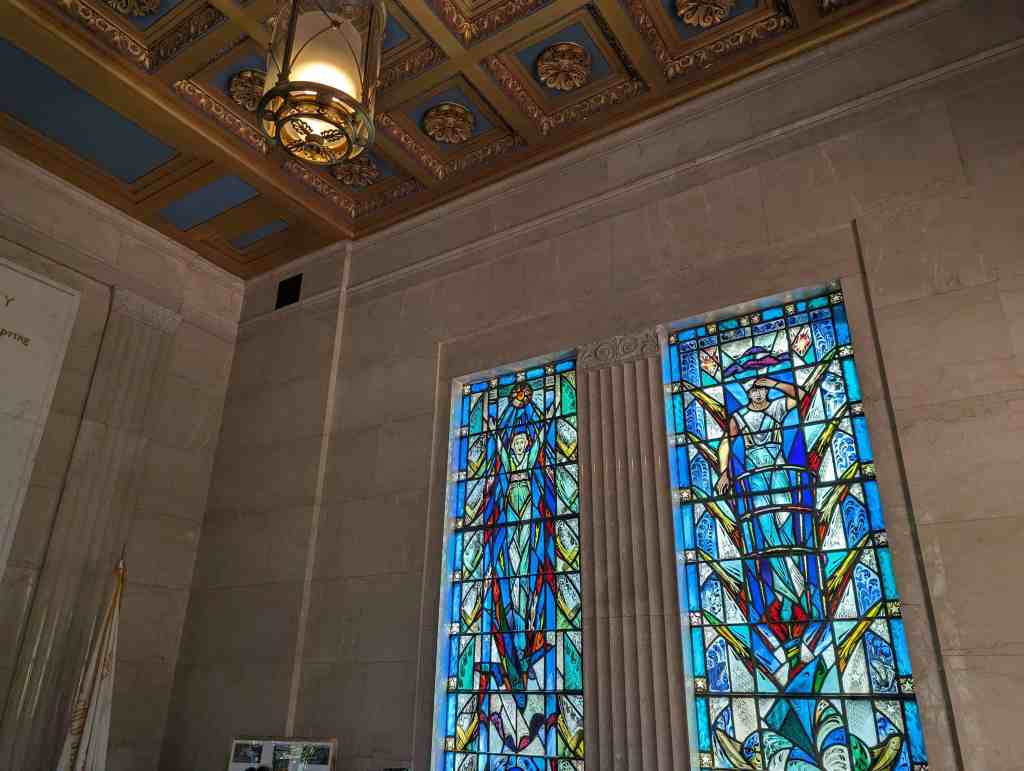
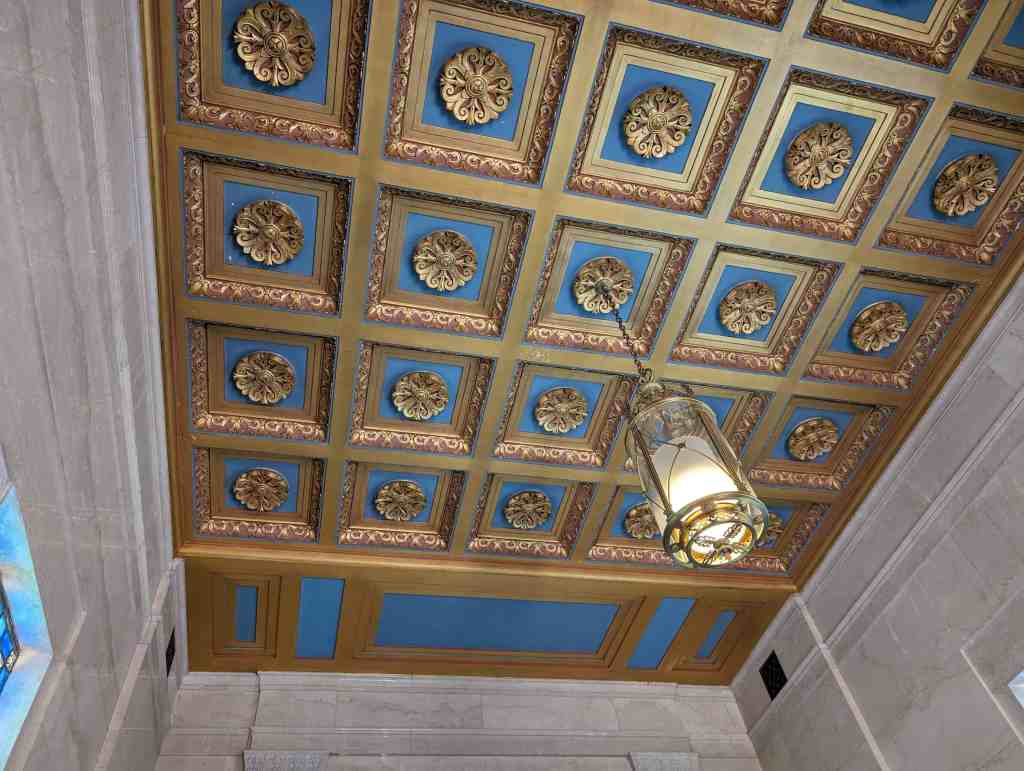
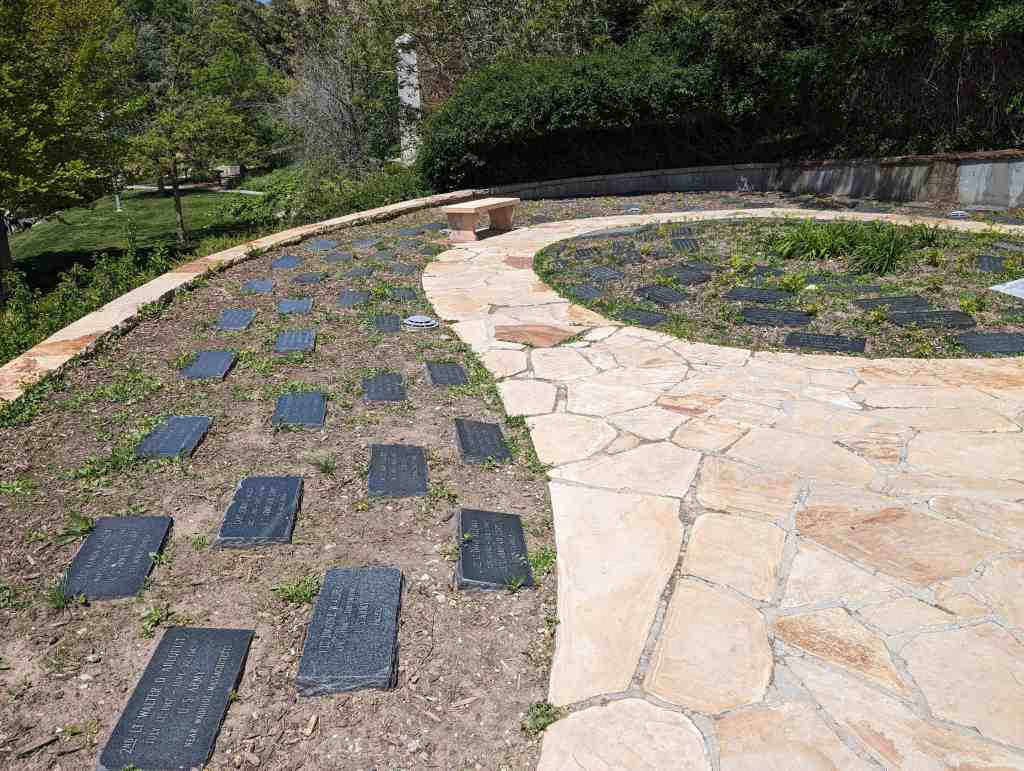
(*)The beautiful Meditation Chapel is a space set apart for quiet reflection. Mr. and Mrs. Ross Beason built the chapel in 1948 as a memorial to their son, Ross Beason, Jr., and all other Utahns who died in World War II. The plaza surrounding the chapel contains more than 300 granite markers each representing a Utah serviceman whose remains were not recovered after the war. The pink marble chapel features intricate bronze doors, stunning “acid etched” windows, and a patterned marble floor. Take some time to enjoy the chapel’s contemplative atmosphere and lovely setting in Memory Grove Park.
Following World War II, Mr. and Mrs. Ross Beason offered to build a memorial to their son and other Utah sons who died in the war. Their son, Ross Beason, Jr.’s plane had been shot down off the coast of Italy. Mr. Beason had owned a financial house in Salt Lake from 1922-1932. Although he no longer lived in the state, he felt Utah was the appropriate place for the memorial.
The Meditation Chapel was designed by Paul Owan Davis, a Los Angeles architect. Taylor Wooley of Salt Lake City was the resident architect. The building was constructed of concrete and Italian marble. Mark B. Garff and Company contracted to do the labor and E. W. Hardy installed the marble. J. W. Askee was the superintendent of construction. Markers were placed around the memorial in honor of those Utah born citizens who died during World War II and when bodies were not recovered. The chapel was dedicated on July 24, 1948.

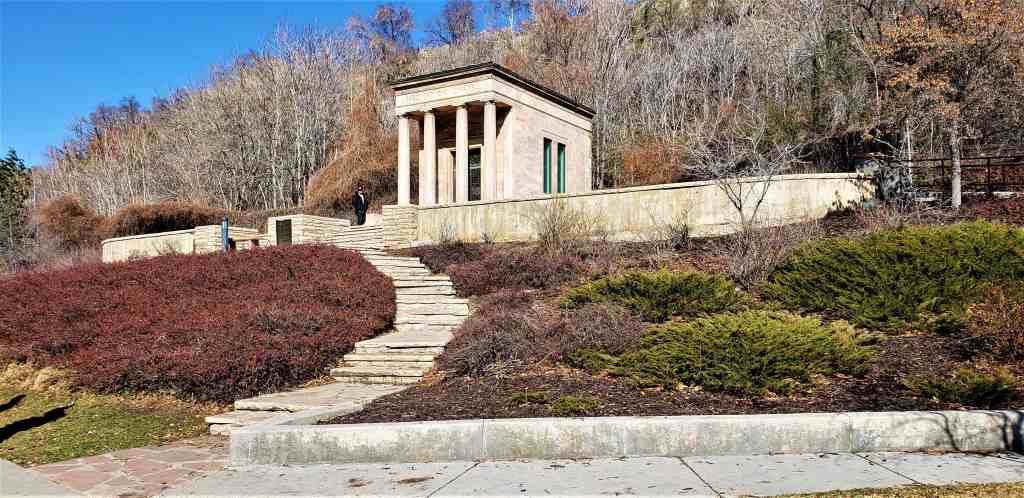


The Meditation Chapel somewhat resembles a Greek temple such as the temple of Nike Apteros in Athens. Having a tetraprostyle front with an inner portico or pronaos, from which entry is gained into the Chapel or Naos via a set of bronze rectangular sculptural doors.
The structure is rectangular measuring 16 feet by 28 feet. The construction medium is reinforced concrete covered with striated Georgian Marble ranging in color from pink to orange. The fluted ionic columns are monolithic marble having exceptional color and graining. The columns support an architrave frieze and cornice having no pediment but supporting a standing seam hipped copper roof.
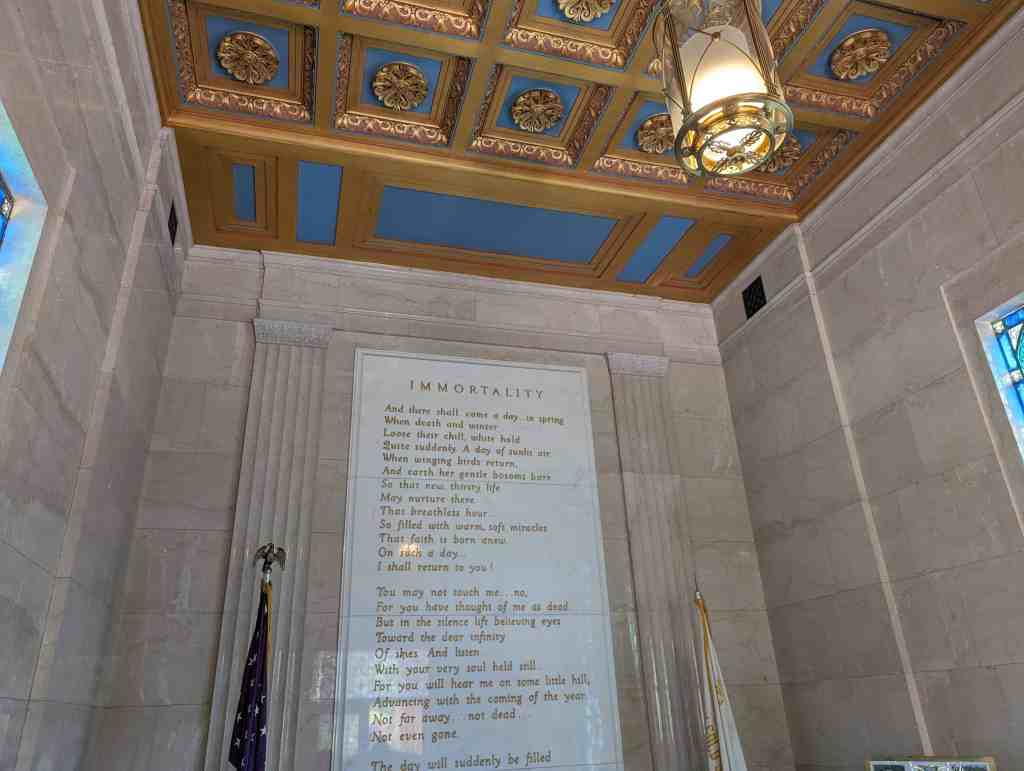
The interior of the monument is surfaced in marble, the walls are finished in Italian Botticino and the floor is laid in mosaic form composed of French and Italian marbles. The view into the interior is blocked by a delicately carved and inscribed marble bench seat having a tall straight back. The bench faces to the back or east end of the chapel where a marble chancel rail extends across the front of a white marble wall on which the poem “Immortality” is inscribed in gold lettering.
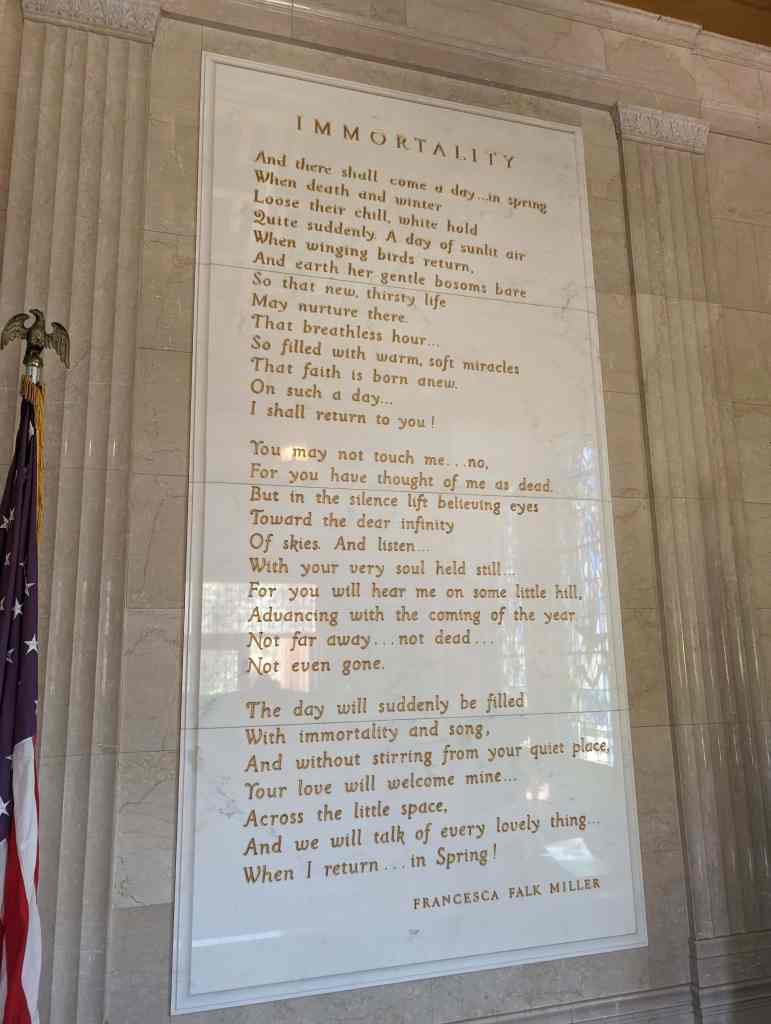
IMMORTALITY
And there shall come a day…in spring
When death and winter
Loose their chill, white hold
Quite suddenly. A day of sunlit air
When winging birds return,
And earth her gentle bosoms bare
So that new, thirsty life
May nurture there.
That breathless hour…
So filled with warm, soft miracles
That faith is born anew.
On such a day…
I shall return to you!
You may not touch me…no,
For you have thought of me as dead.
But in the silence lift believing eyes
Toward the dear infinity
Of skies. And listen…
With your very soul held still…
For you will hear me on some little hill,
Advancing with the coming of the year.
Not far away… not dead…
Not even gone.
The day will suddenly be filled
With immortality and song,
And without stirring from your quiet place,
Your love will welcome mine…
Across the little space,
And we will talk of every lovely thing…
When I return… in Spring!
– FRANCESCA FALK MILLER
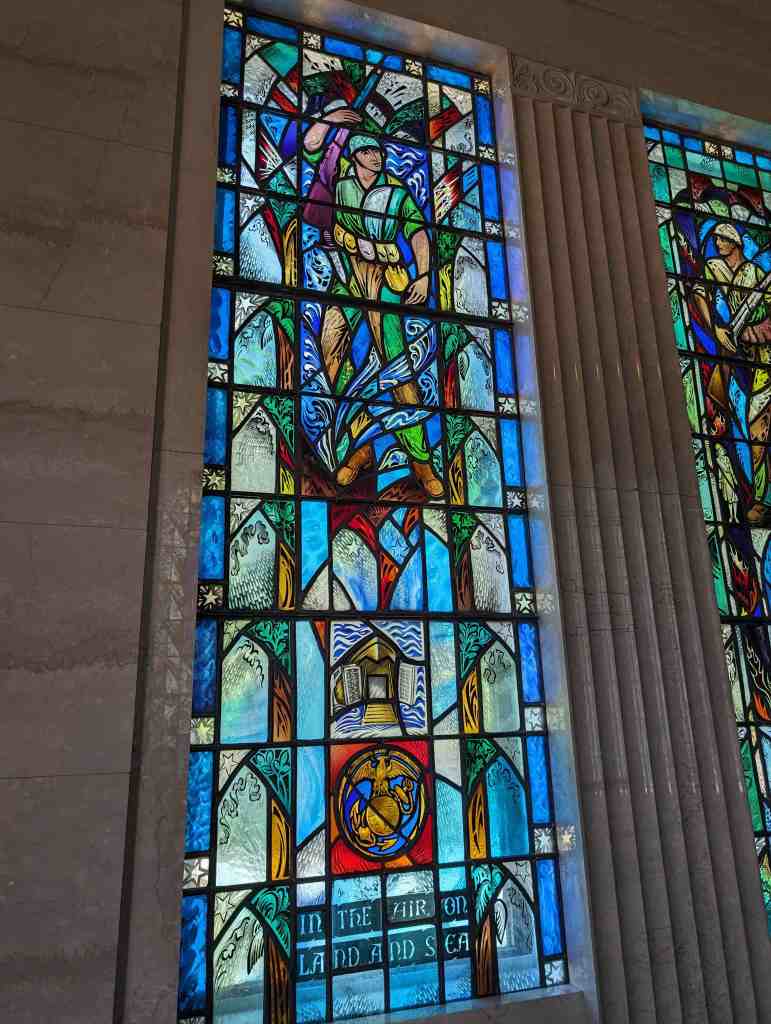
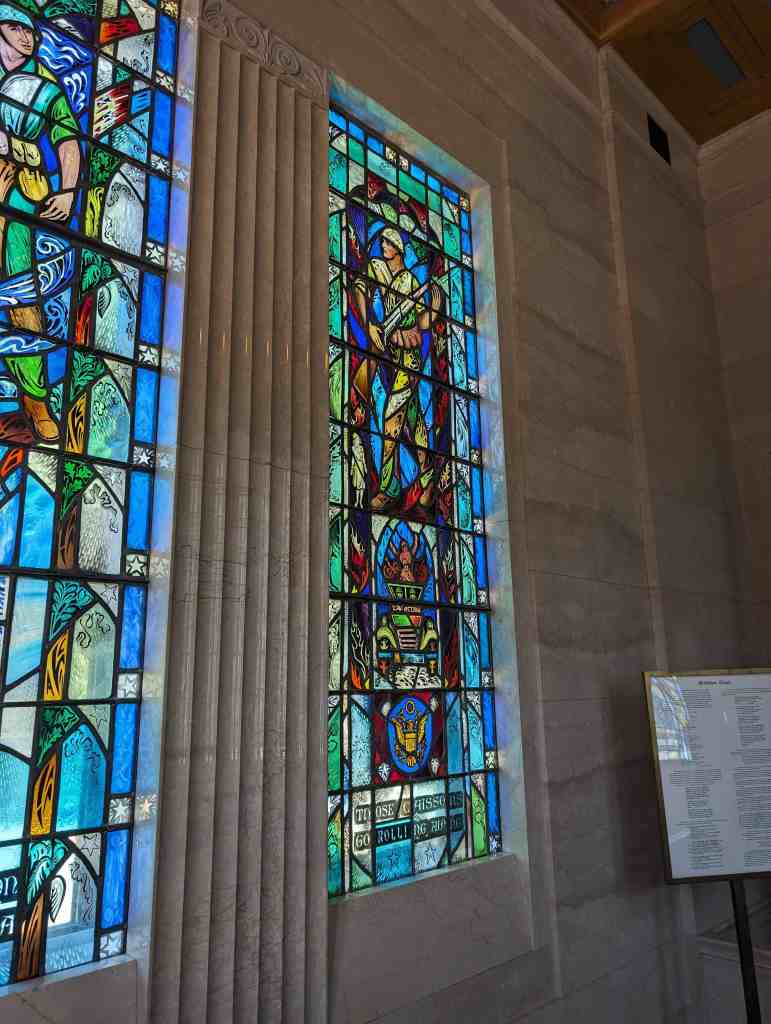
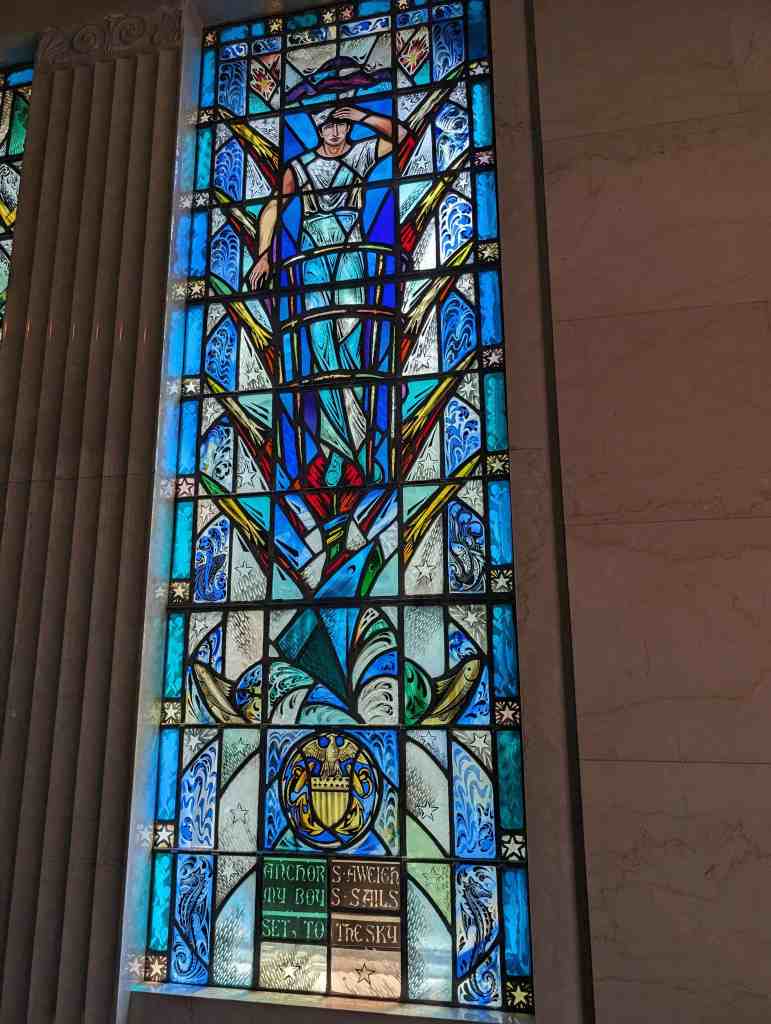
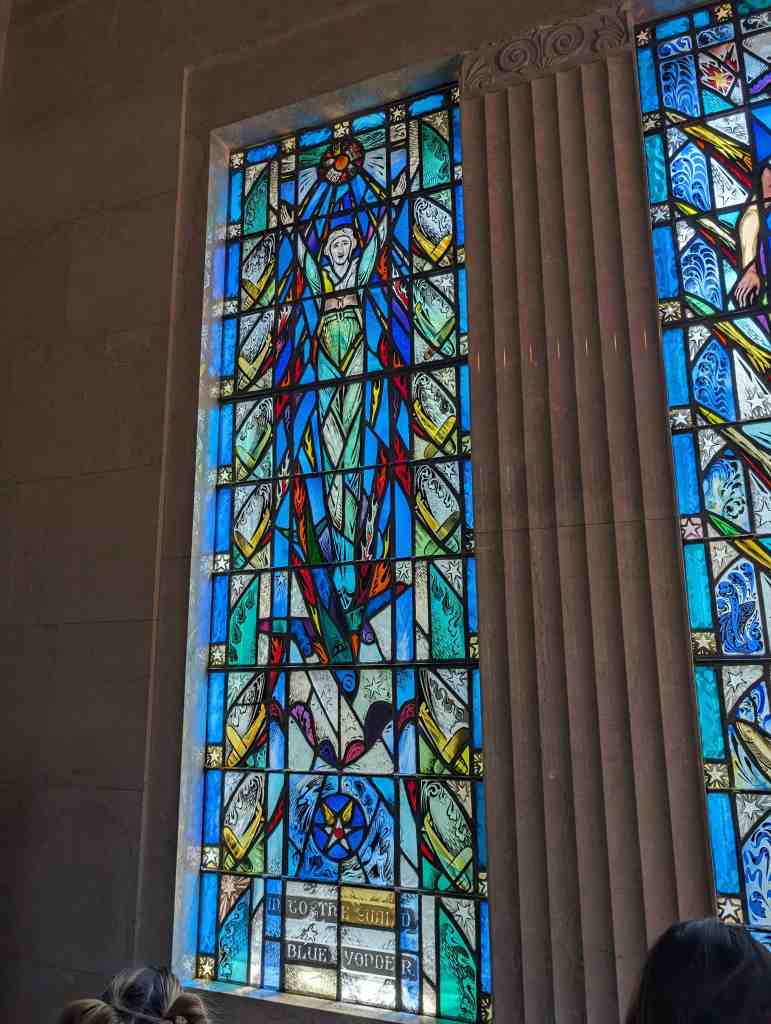
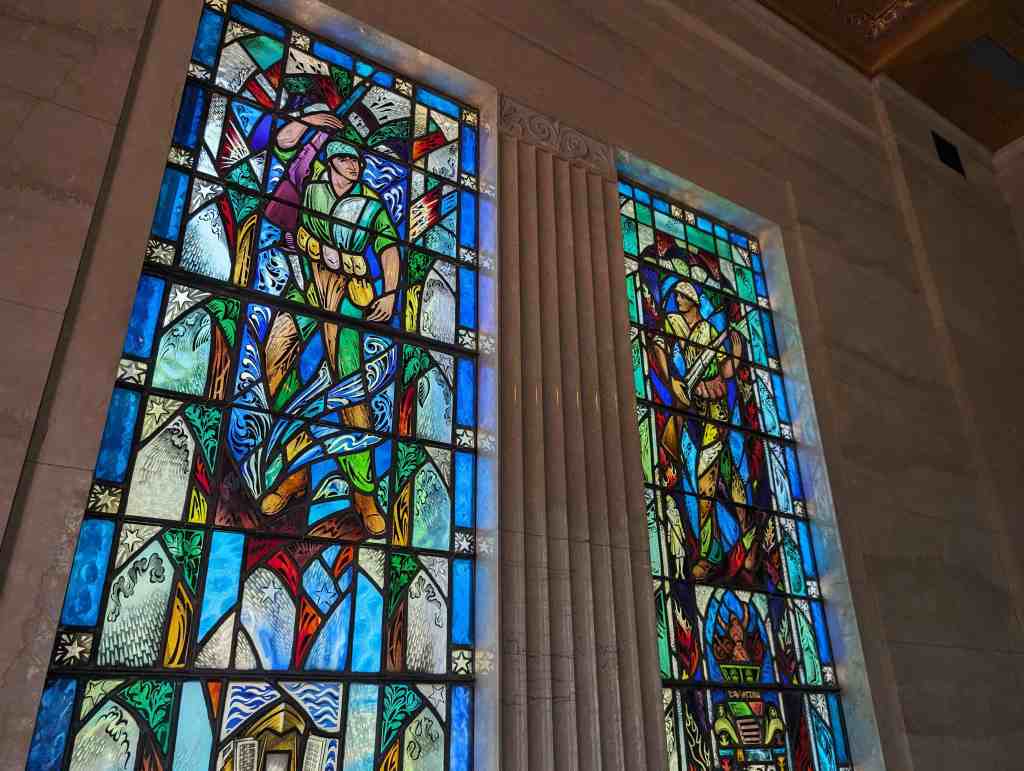
On either side of the chapel are two stained glass windows set side by side divided by a flat column. These windows being of exceptional quality and design depict a soldier, sailor, marine and army soldier.
Following World War II, Mr. and Mrs. Ross Beason offered to build a memorial to their son and other Utah sons who died in the war. Their son, Ross Beason, Jr.’s plane had been shot down off the coast of Italy. Mr. Beason had owned a financial house in Salt Lake from 1922-1932. Although he no longer lived in the state, he felt Utah was the appropriate place for the memorial.
The Meditation Chapel was designed by Paul Owan Davis, a Los Angeles architect. Taylor Wooley of Salt Lake City was the resident architect. The building was constructed of concrete and Italian marble. Mark B. Garff and Company contracted to do the labor and E. W. Hardy installed the marble. J. W. Askee was the superintendent of construction. Markers were placed aroung the memorial in honor of those Utah born citizens who died during World War II and when bodies were not recovered. The chapel was dedicated on July 24th, 1948.



Preservation Utah‘s pamphlet from the 53rd Annual Historic Homes Tour of the City Creek Canyon Historic District on May 18, 2024 said this about the site:
Meditation Chapel was commissioned after World War II by Mr. and Mrs. Ross Beason, former Salt Lake residents, to honor their only son, Lt. Ross Beason Jr., age 23, whose plane was shot down and plunged into the ocean on April 15, 1944. A place for quiet prayer and reflection, it was to serve as a reminder of the sacrifices made by Utahns who gave their lives in defense of freedom in World War II and whose remains were not recovered. The chapel was designed by Los Angeles architect Paul O. Davis, with Salt Lake architect Taylor Woolley overseeing construction, and was dedicated in the spring of 1948. By 1998, the chapel and markers had suffered from neglect. When California banker Murray Hiatt visited Memory Grove in the mid-1990s, he discovered that his brother’s marker was overgrown and the chapel was padlocked. His disappointment prompted a series of news articles that led to the restoration of the memorial. On Veteran’s Day in 1998, members of the Disabled American Veterans, Veterans of Foreign Wars, current members of the military, and prominent civic officials rededicated the chapel.