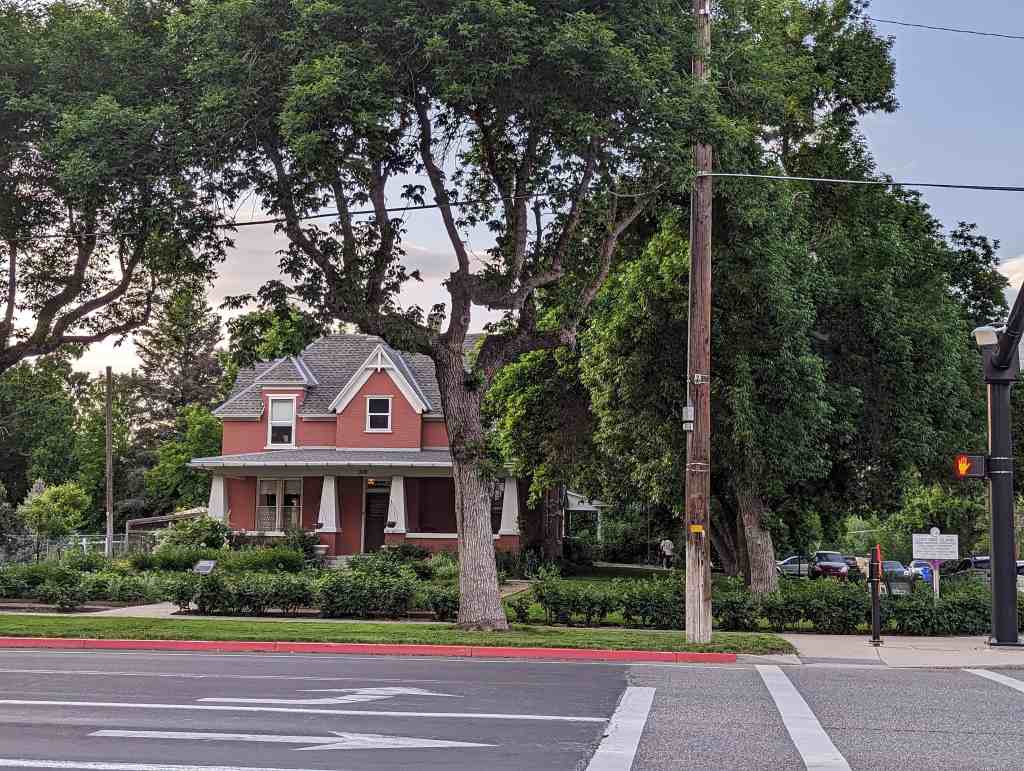
Leavitt / Clark House
This home began as a humble, 12-foot-square, single-cell house. It was made of sun-dried adobe bricks in 1862 by John Quincy and Malinda Minion Leavitt. They soon added a second small room to the first – now the northeast corner of this house. While living here, John helped complete the transcontinental railroad and served as conductor of a train at the Golden Spike Ceremony in 1869. In 1873 Timothy Baldwin and Lucy Augusta Rice Clark purchased the home and built a 2-room, rock addition to the west. They raised a large family in these four rooms until 1881, when they built the south-facing, brick, 12-story, central-passage wing. It originally featured elaborate Victorian Eastlake details, including a small second-story porch, roof cresting, and a large gable ornament. Timothy was a beekeeper and inventor and sold coal and salt. Lucy was active in politics, running for the Utah Senate in 1896; serving as president of the Davis County Women’s Suffrage Association; and becoming the nation’s first female, full delegate to the National Republican Convention in 1908. In 1918 Edmond and Elizabeth Ann Wood Whitaker bought the old home and added the current front porch as well as a new kitchen and the home’s first indoor plumbing. The Whitakers were farmers, raising sheep, dairy cows, onions, and other crops. In 1948 they sold the house to Harold and Nelda Monson, who raised five boys and lived here for 50 years. Nelda ran a hairdressing salon from the home for most of those years. In 1998 she sold the house to the current owners, including a great-grandson of Ed and Lizzie Whitaker.

Located at 208 West State Street in Farmington, Utah
Also located here are these historic markers: