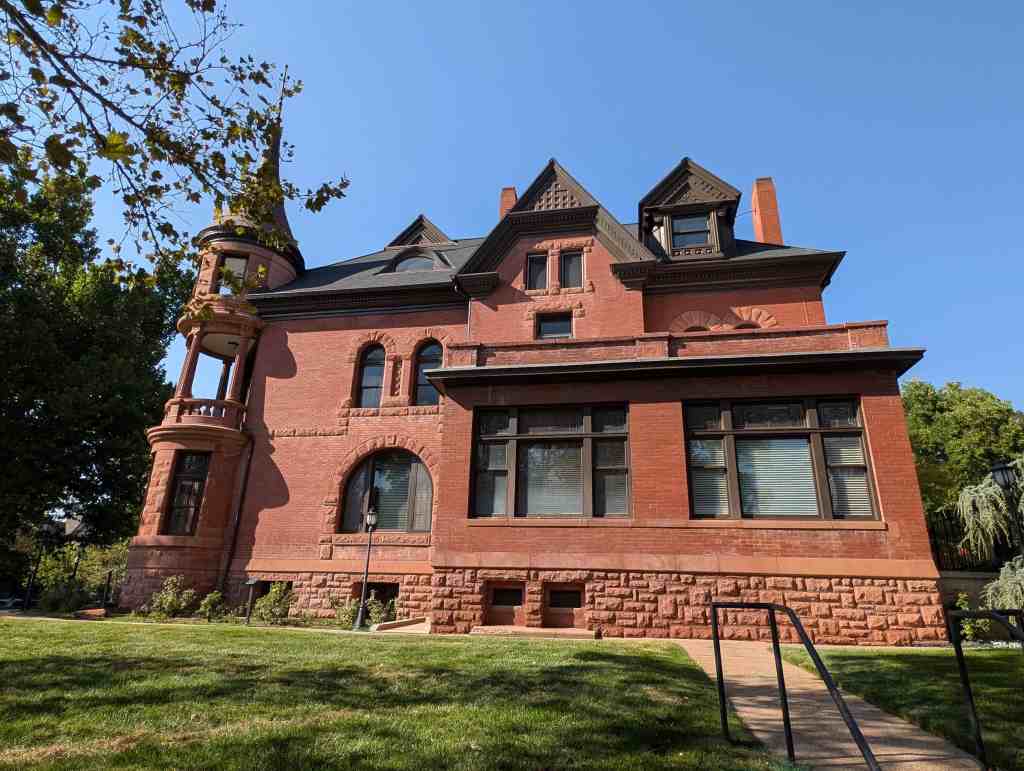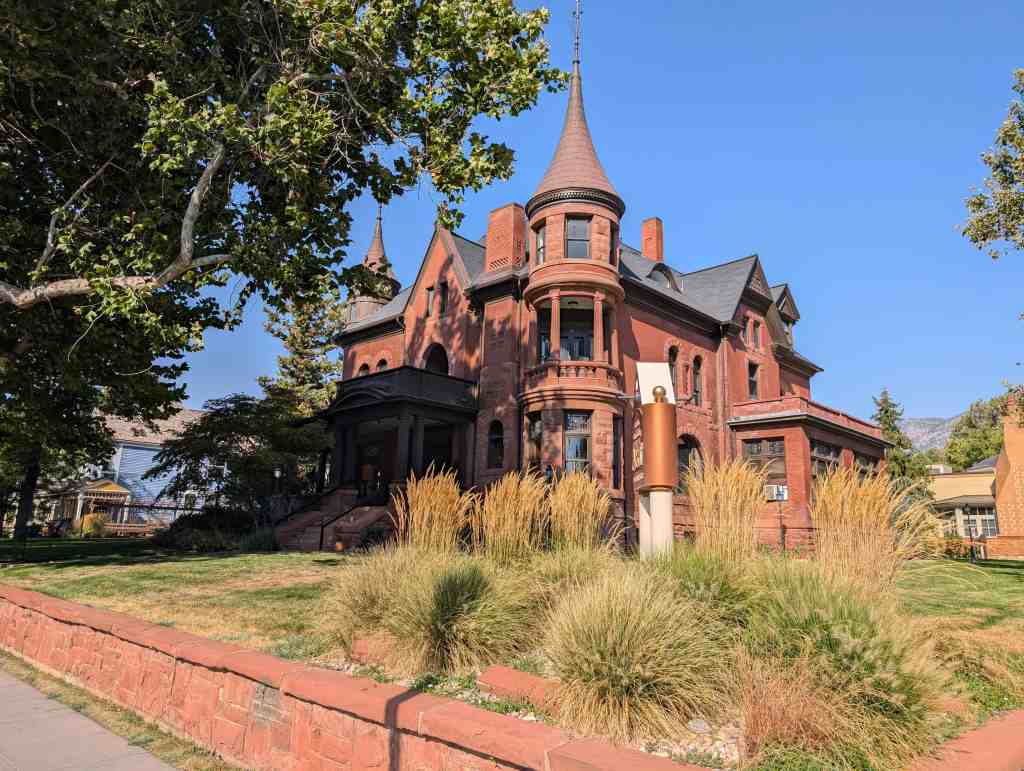
Bertha Eccles Community Art Center / Bertha Eccles Hall
One of the primary sources of wealth in 19th Century Utah was mining. Often this revenue was then invested in banking, commercial and agricultural ventures to multiply the wealth of already successful entrepreneurs. The case of James C. Armstrong is no exception.
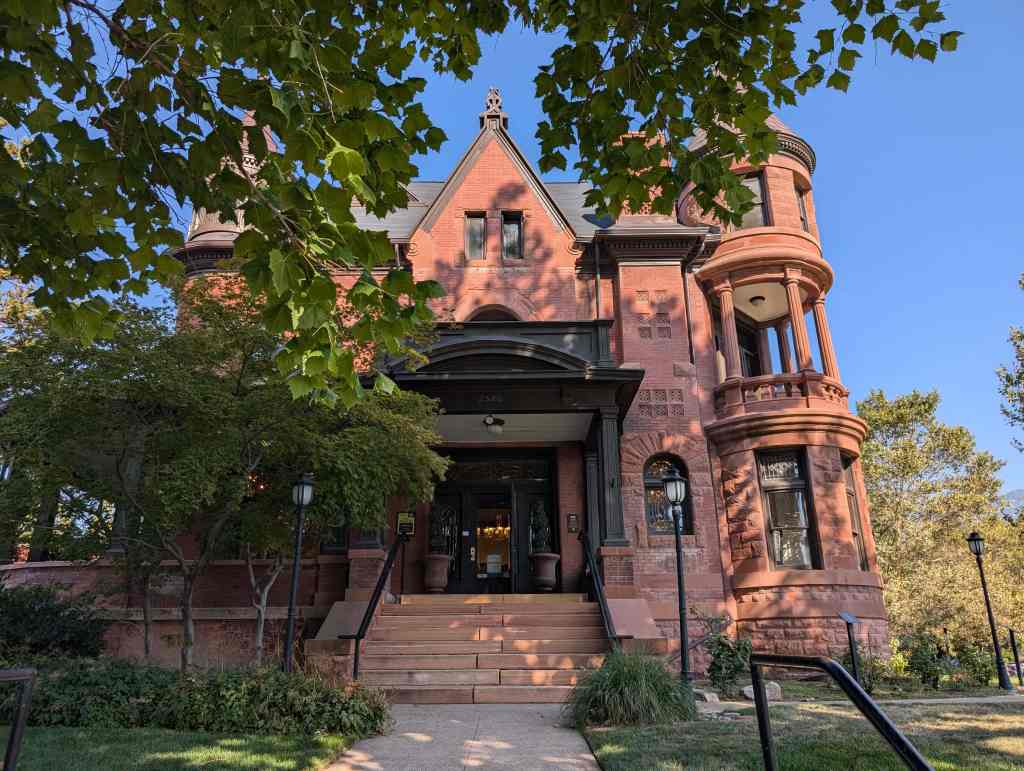
The Bertha Eccles Community Art Center is located at 2580 Jefferson Avenue in the Jefferson Avenue Historic District and in Ogden’s Central Bench Historic District in Ogden, Utah and added to the National Historic Register (#71000865) on May 14, 1971.
- mentioned in Jefferson Avenue Historic District:
Two buildings within the district were already listed individually in the National Register prior to the district being listed. These include the Bertha Eccles House, built in 1893, and located at 2580 Jefferson.
also,
Some architect-designed homes are known (i.e., 2523 Jefferson was designed by William W. Fife, a prominent Ogden architect), while others show the originality and sophistication that suggest an architect’s involvement (i.e., 2580 Jefferson and 2504 Jefferson).
also,
The townspeople built impressive brick buildings and invested in a host of new export industries which were serviced by the railroad: canning, flour mills, sugar beet production. One example of this is David Eccles (2580 Jefferson) who was the president of the Amalgamated Sugar Company and was instrumental in the development of other Ogden industries as mentioned previously. After his death, his son David C. Eccles (607 25th Street) took over as vice-president and general manager.
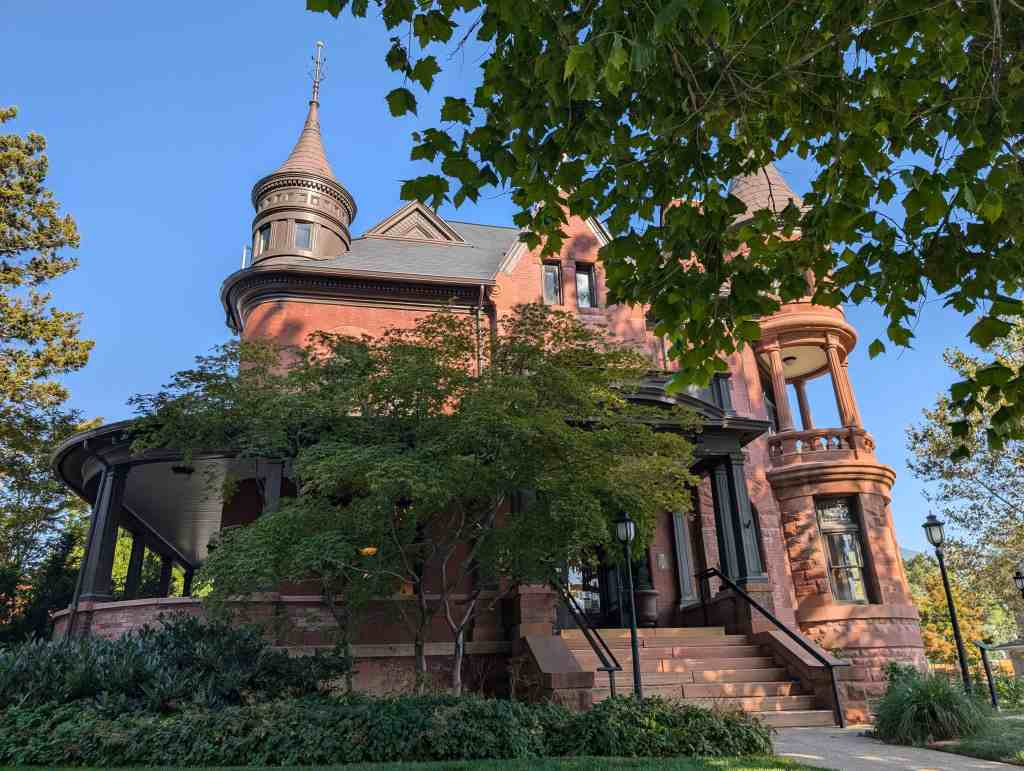
With wealth from the mines, he invested in the Commercial National Bank of Ogden and became its president. He also served on the Bear River Water Board, as treasurer of the Union Publishing Company and as a Weber County commissioner in 1897 and 1898. Armstrong used part of his money to build a lovely home on Jefferson Avenue in 1893. The architect is unknown. Apparently the contractor was Joseph T. Johnson.
In 1896, Armstrong sold the home to David Eccles, another prominent businessman in northern Utah. His interests extended to lumber, land, railroads, banking and sugar industry. In time he became one of the state’s most significant financiers with his Influence extending far beyond the state’s boundaries.
David Eccles’ story is in the Horatio Alger’s tradition. Born in Scotland, he immigrated to Utah with his family, new converts to Mormon ism in 1863.
After locating in the Ogden area, David’s father, who was blind, made various articles on his wood lathe which his son peddled to people in the Ogden area. From this lowly beginning the young man rose to great financia prominence before his death in 1912.
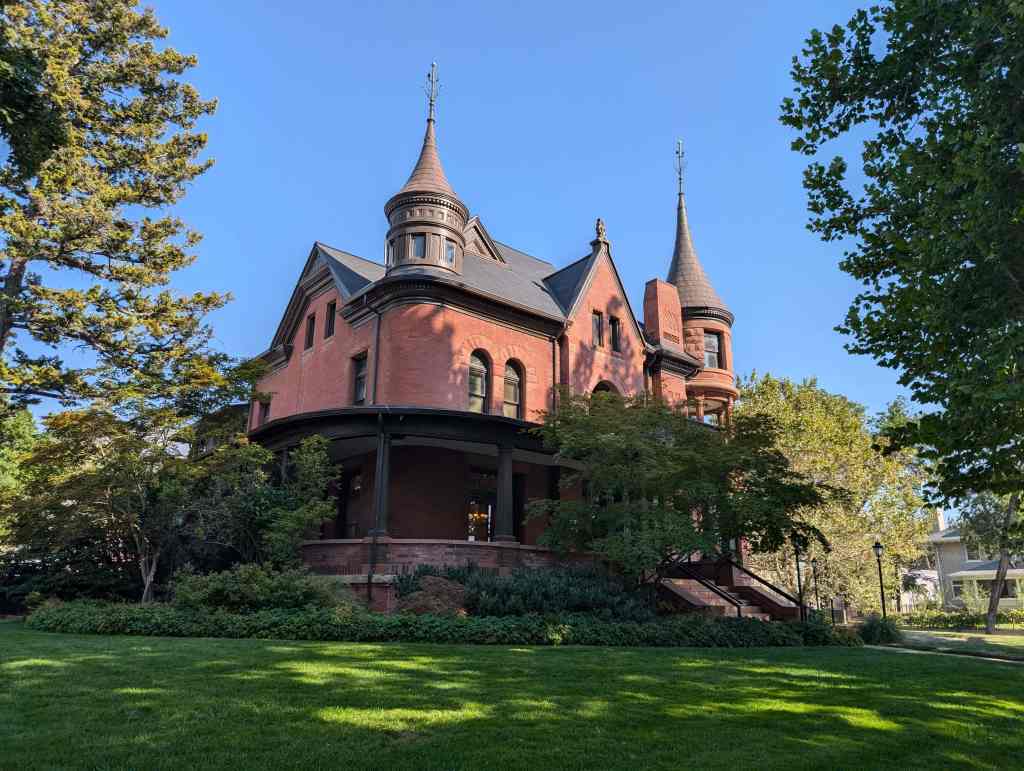
His first wife, Bertha Jensen Eccles, was born in Denmark in 1857. At age ten, she also came to Utah with her family, walking much of the way. Living in Huntsville also, she grew up knowing the boy she later married. (1875) Their lovely home on Jefferson Avenue was many years removed from that beginning.
Because of her wealth and the opportunities it provided for travelling Bertha Eccles became a prominent influence in Ogden ‘s educational and social life. Not only did her home provide her family with the best in cultural opportunities, but it became a center for Ogden’s cultural festivities and social activities. Mrs. Eccles became one of the founders of the Girl Scout movement in Utah. She requested that her home remain in use as a center for these kinds of activities. After her death it was given to the L.D.S. Church. Then, in June, 1948, the home was presented to Weber Ste College by the Church, where it became a women’s dormitory and College Social Center. When the college moved to its new campus in about 1956, the home reverted to the L.D.S, Church again. About this time (1956-1959), the art council acquired the home for its use, as a gift from the church.
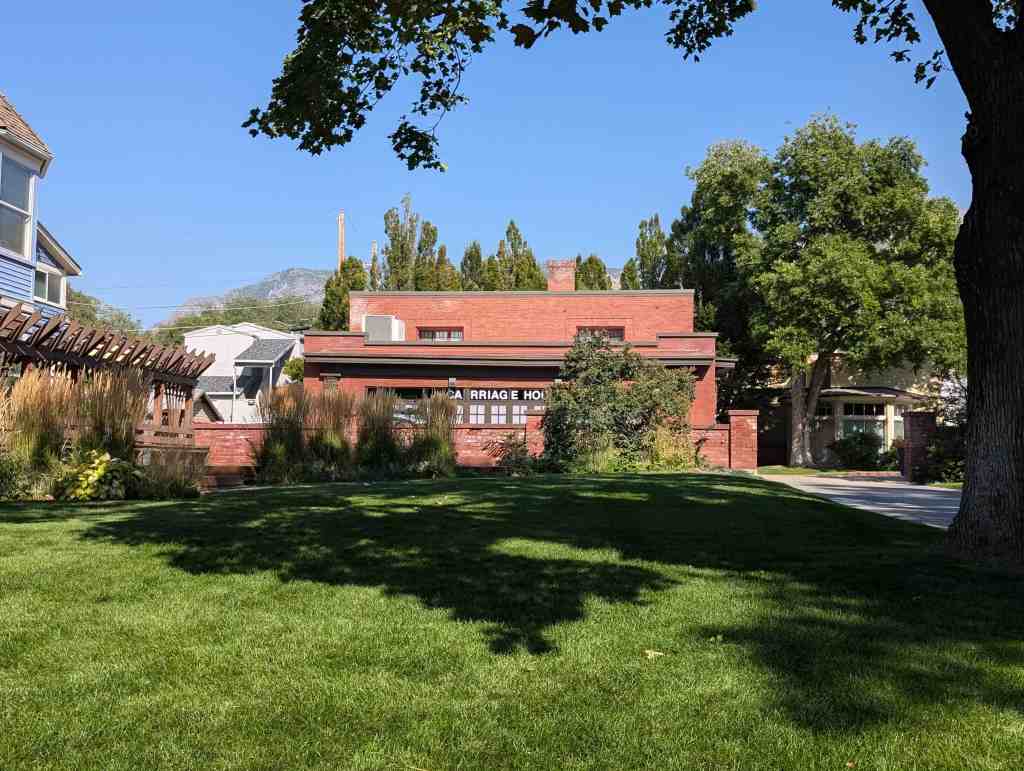
Since that time it has served as the Bertha Eccles Community Art Center. Various groups make direct use of it — the Junior League of Ogden, Ballet West’s Ogden Office, Ogden’s Symphony Guild, the Palette Club, and the Child Culture Club, In addition, art works are constantly on display. Classes in graphics, ceramics, painting, drawing, sculpture, drama, ballet, etc., are taught during nine months of the year. Last season over 35,000 people visited and used the center.
Thus this lovely Victorian home remains an example of early mining and commercial wealth spent on architecture which remains a cultural catalyst for the community. The qualities of Bertha Eccles still permeate the premises. With pride the community now honors her and seeks the preservation of this center.
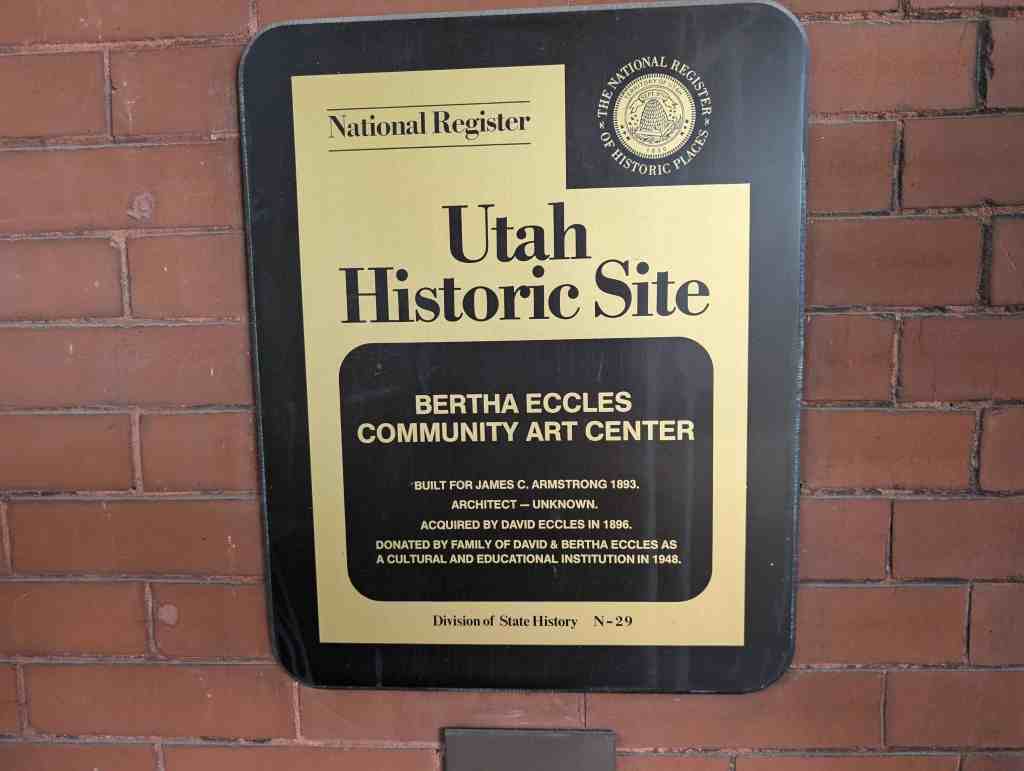
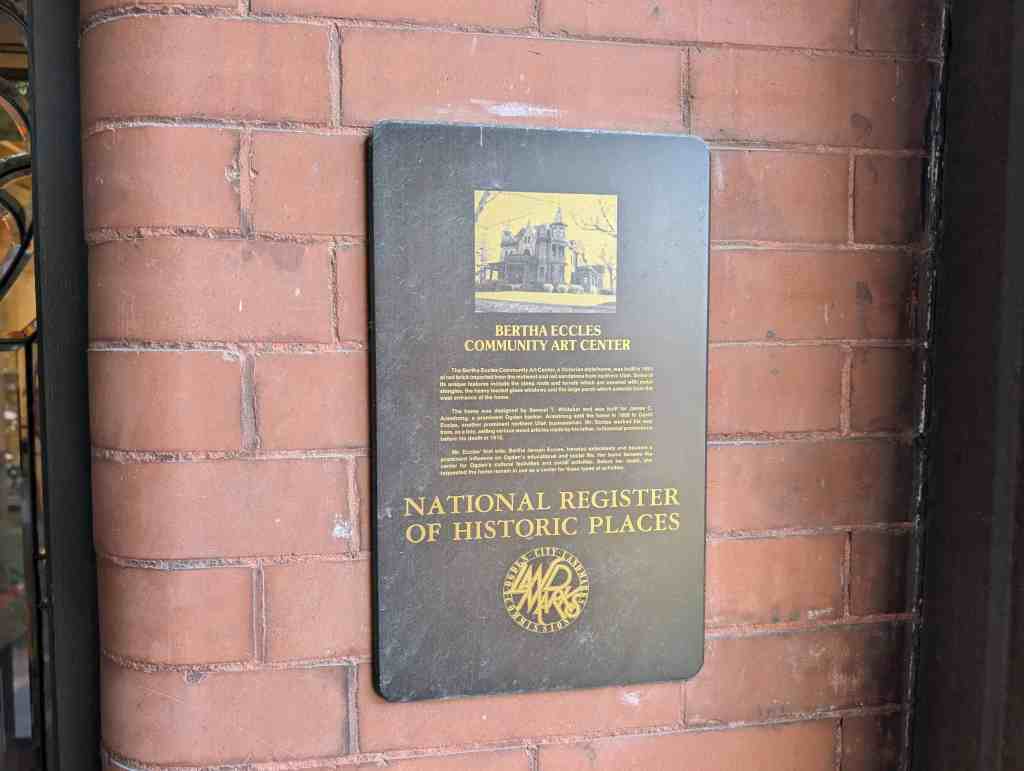

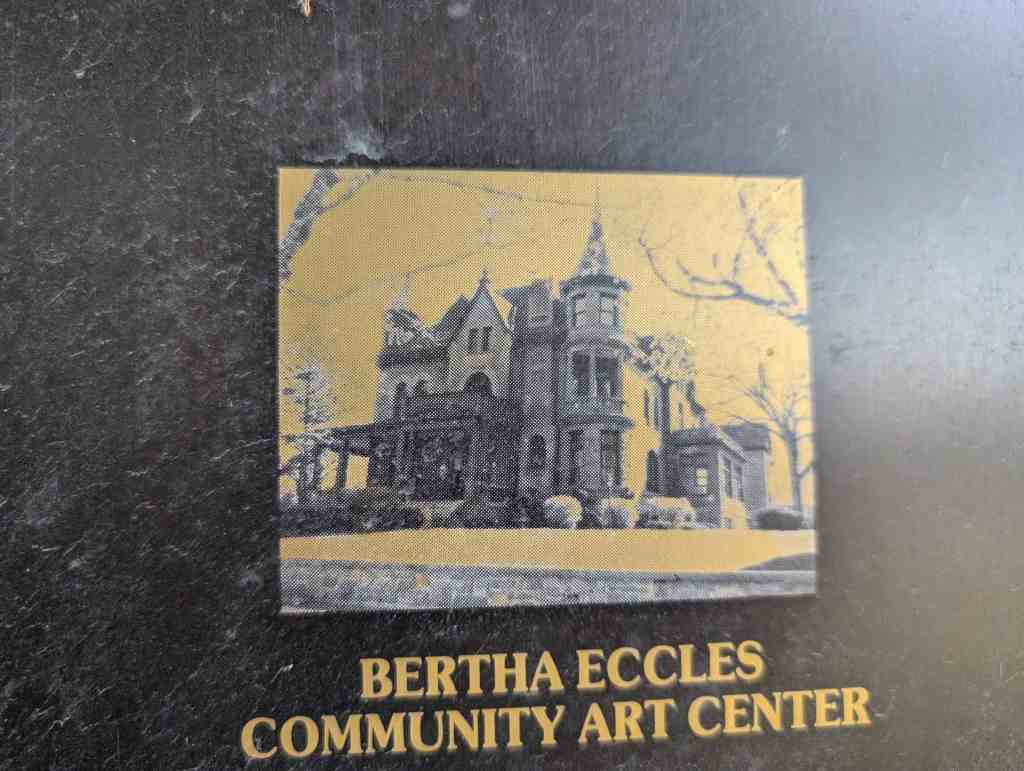
Bertha Eccles Community Art Center
The Bertha Eccles Community Art Center, a Victorian style home, was built in 1893 of red brick imported from the midwest and red sandstone from northern Utah. Some of its unique features include the steep roofs and turrets which are covered with metal shingles, the heavy leaded glass windows and the large porch which extends from the west entrance of the home.
The home was designed by Samuel T. Whitaker and was built for James C. Armstrong, a prominent Ogden banker. Armstrong sold the home in 1896 to David Eccles, another prominent northern Utah businessman. Mr. Eccles worked his way from, as a boy, selling various wood articles made by his father, to financial prominence before his death in 1912.
Mr. Eccles’ first wife, Bertha Jensen Eccles, traveled extensively and became a prominent influence on Ogden’s educational and social life. Her home became the center for Ogden’s cultural festivities and social activities. Before her death, she requested the home remain in use as a center for these types of activities.