


Hampton’s Bear River Crossing
Hampton’s Bear River crossing ford was used by Indians, fur trappers and mountain men. About 1853 Ben Hampton and Wm. Godbe operated a ferry for emigrant traffic. The site became a “home station” successively for stages of Oliver & Conover, Ben Holladay, and Wells-Fargo. About 1866 Hampton, Godbe,
Alvin Nichols, Sr., Mark Bigler and others erected the toll bridge, stage barns and rock hotel. The bridge was acquired by Box Elder County in 1883. In 1904 the rails reached Malad and traffic through here declined. The station remains one of the best preserved of all stage stops in the old west.
Sons of Utah Pioneers historic marker #C is located here (see S.U.P. Markers here), Hampton’s Ford Stage Stop and Barn is located at 3605 West Bigler Road in Collinston, Utah and was added to the National Register of Historic Places (#71000841) on August 12, 1971.


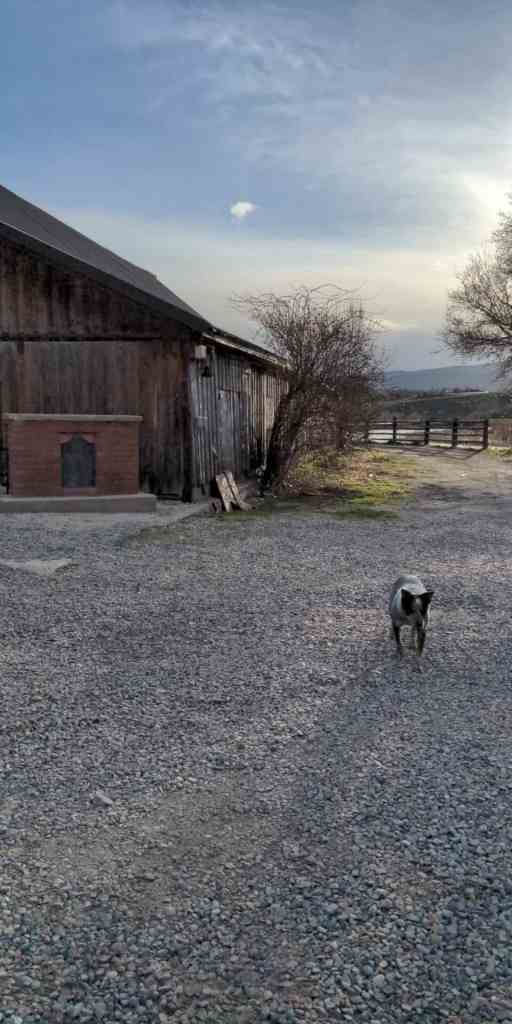
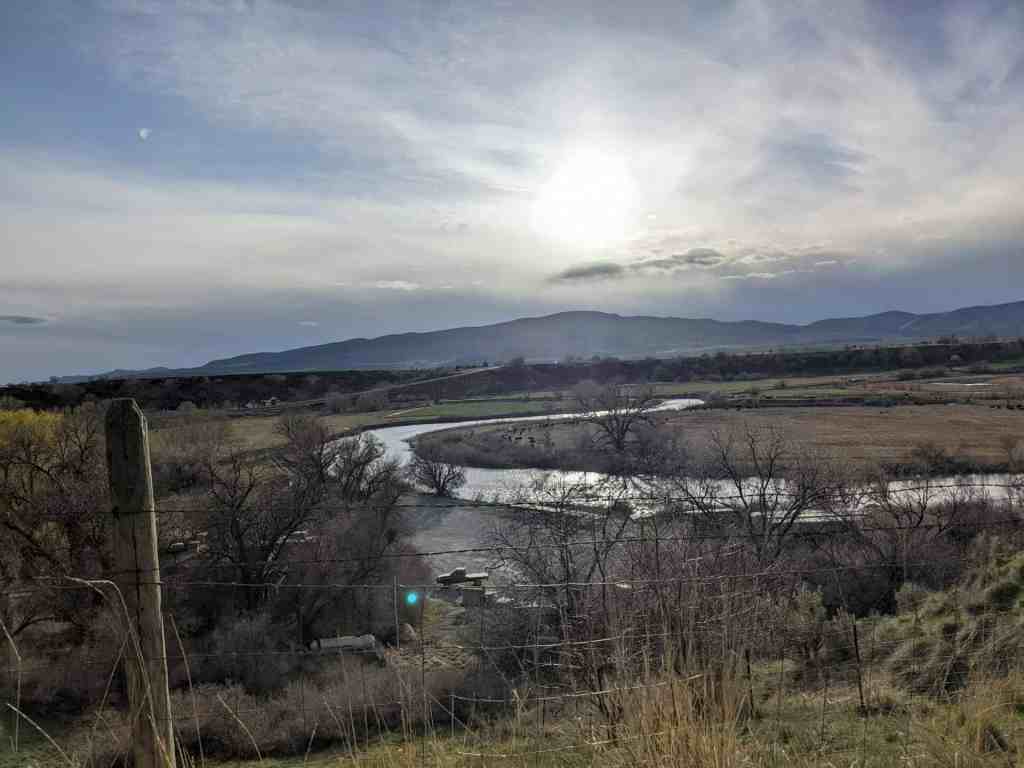


Western Transportation was a dominant theme in early Utah History. Because of the location of several geographic features–Great Salt Lake, the Wasatch Ranges, Bear River, Snake River, Hurnboldt River, and the Salt Lake and Nevada deserts the routes through Utah had limited options. To go from Salt Lake Valley west one had to turn either north or south. Those emigrants seeking a good wagon route struck north on the Salt Lake Cutoff, going from Salt Lake City to Bear River, which was usually crossed where Hampton’s Ford Stage Stop and Barn was later constructed, between Collinston and Fielding on the Bear River.
Early trappers undoubtedly crossed the river, likely Jed Smith in 1826 and Peter Skene Ogden in 1828-1829. It appears that John C. Fremont also reached the site in September, 19^3. But the first man to open the route was Captain Samuel J. Hens ley, who crossed the river in late summer 1848, enroute to California. He met returning Mormon Battalion men who brought several hundred head of stock and ]k wagons through the ford, a few days later.
In 18^9 Captain Howard Stansbury forded the river enroute to Fort Hall. He reported it was about 250 feet wide with steep banks. Later the crossing was used extensively by freighters going from northern Utah to the Montana gbldfields.
In 1853, Benjamin Y. Hampton and William S. Godbe established a toll ferry across the stream, charging 10 cents for a horse and 25 cents for a wagon. In 1859, they built a bridge. Later (1866) a new toll bridge was built on the old piers. At this time the territorial legislature set the rates–$3.00 for a wagon with two horses or oxen, $2.00 for a loaded cart, fi $1.00 for pack horses.
They also built the big home, which served as a hotel. The barn was an important stop and feed center for animals.
The Holladay Overland Mail and Express made this site its first overnight stop north of Salt Lake City. However, teams were changed at approximately ten-mile intervals. Their run ended at Virginia City, Montana.
In 1875, James Standing purchased the property and operated the Bear River Hotel and toll bridge. A new bridge was built in 1892. Two years later, James Bigler bought the land, which has remained in the family. The present owner, L. Odel1 Bigler, received title in 1952.
This very important site remains in generally good condition, a reminder of the early transportation story in Utah. Utah Highway 30 passes between the old buildings to cross the river on a bridge of more recent vintage, but near the old ford and older bridges. The setting is remarkably unchanged.