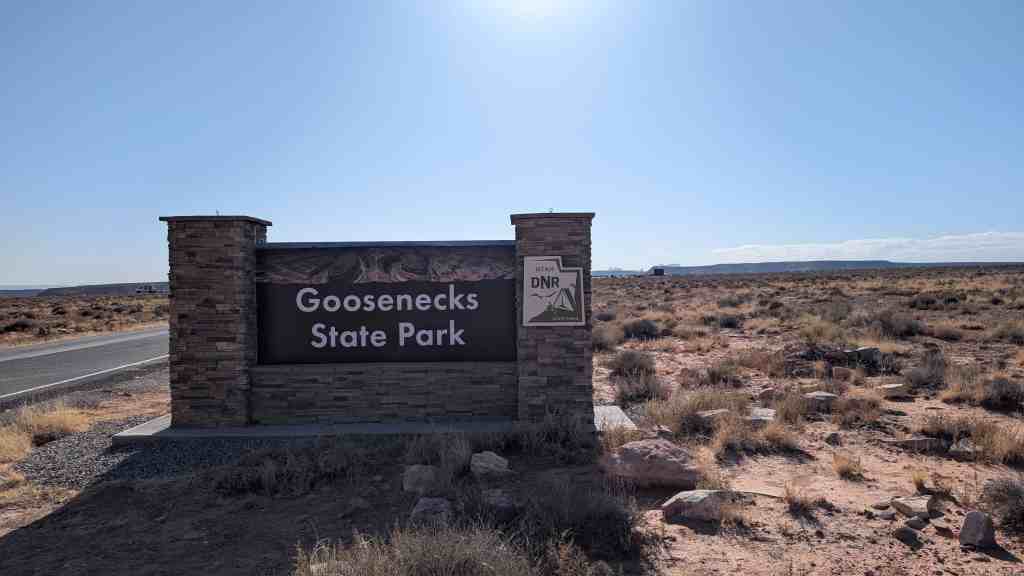
Goosenecks State Park
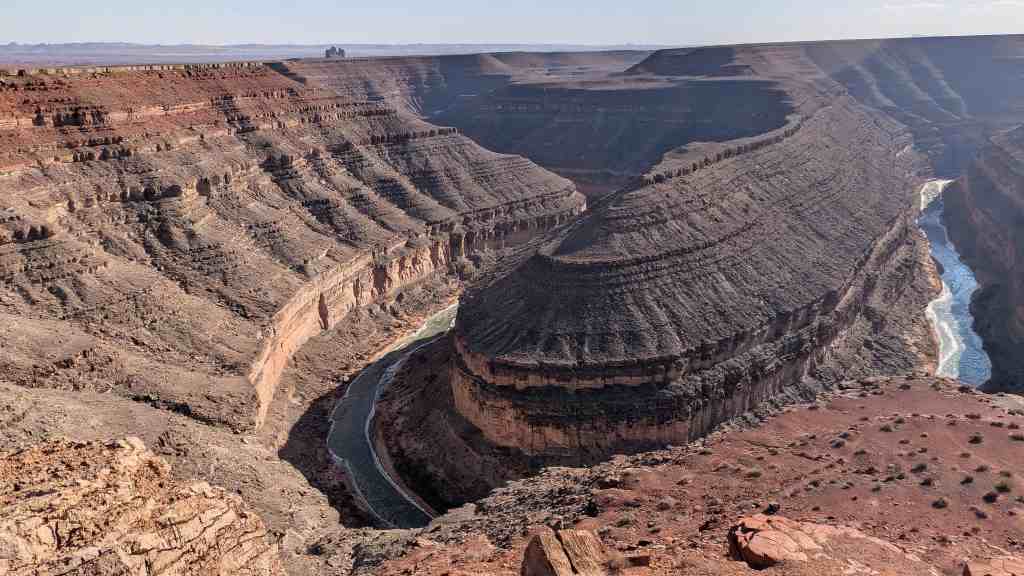
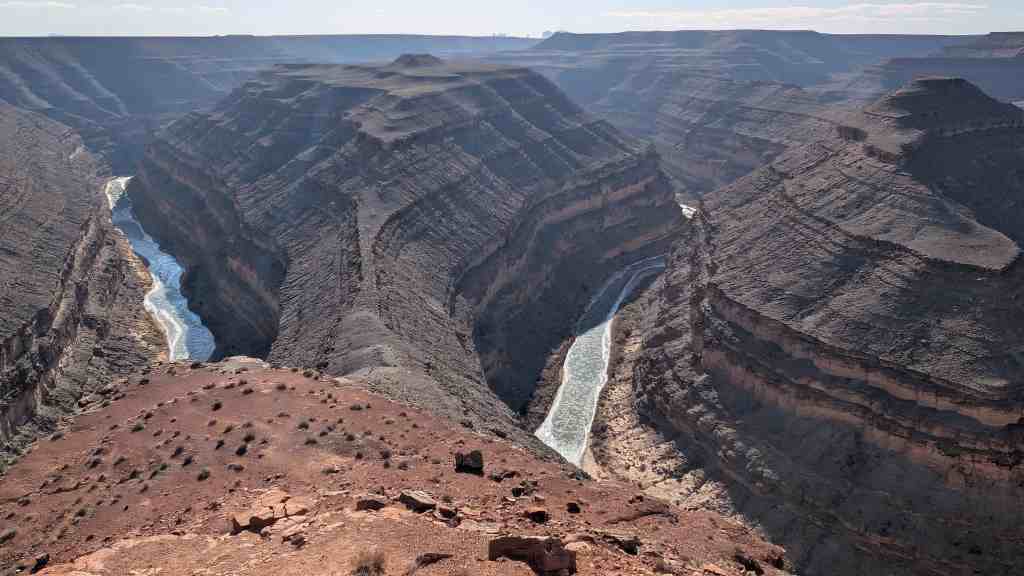
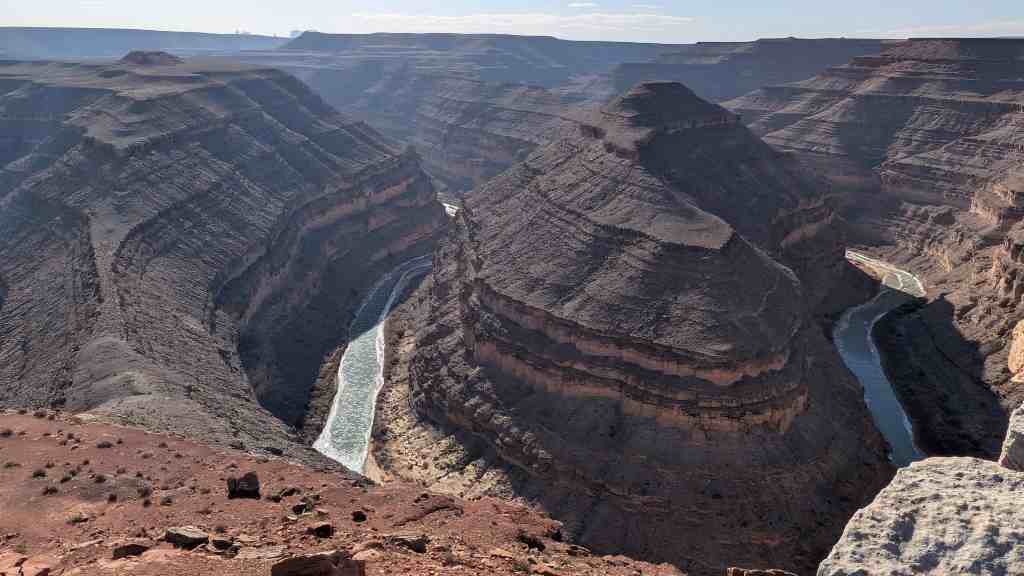
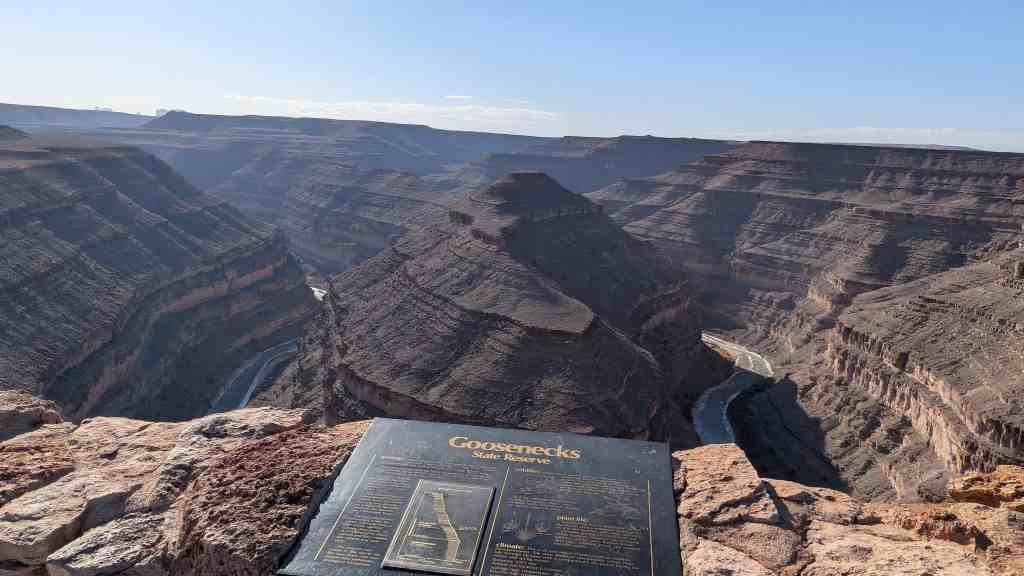
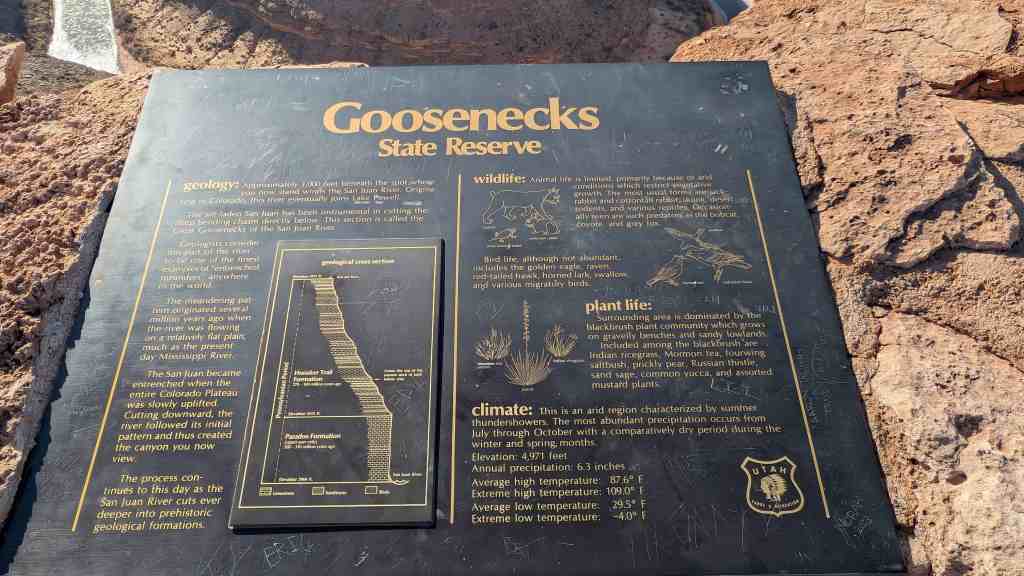
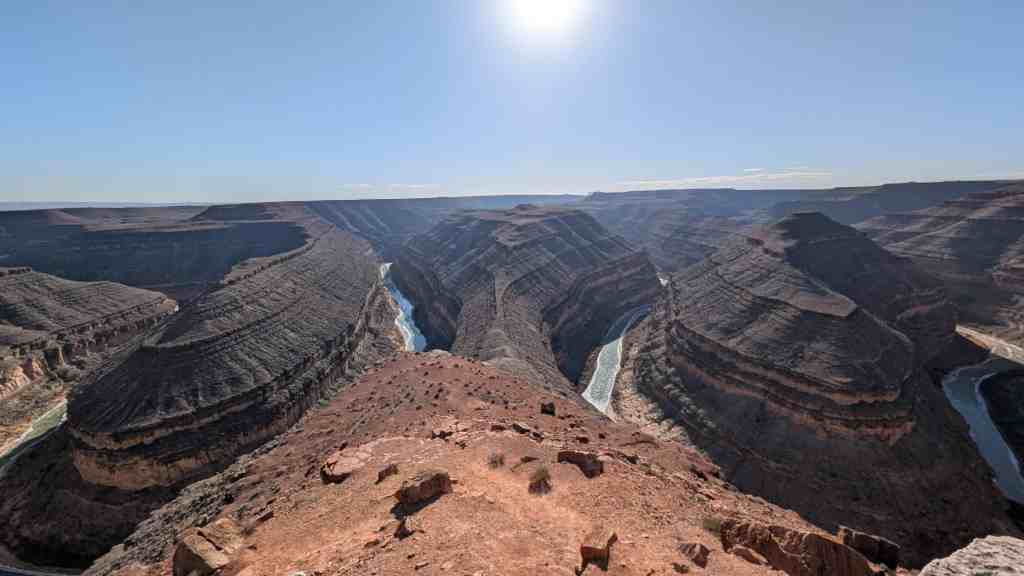
Approximately 1,000 feet beneath the spot, where you now stand winds the San Juan River. Originating in Colorado, this river eventually joins Lake Powell.
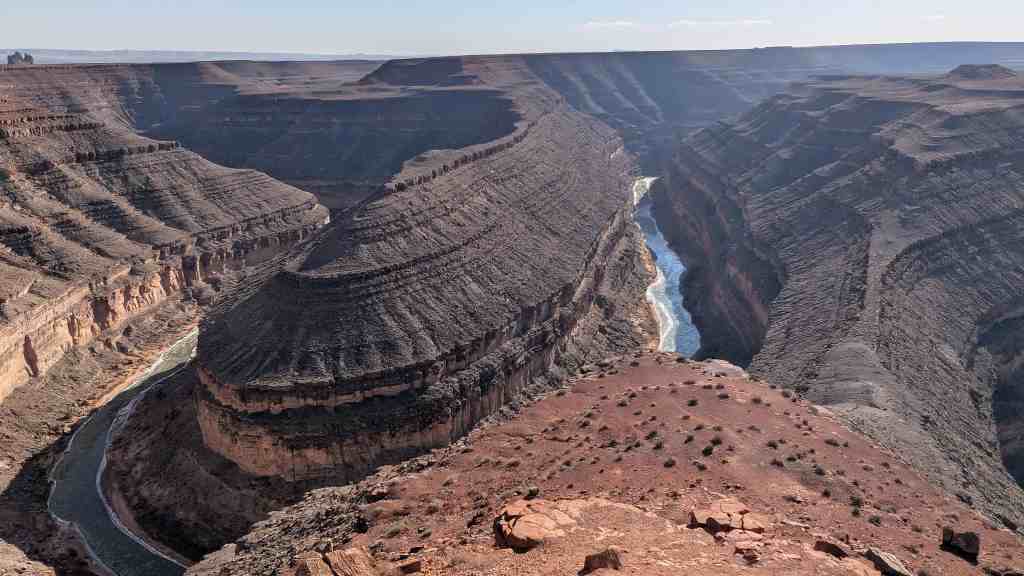
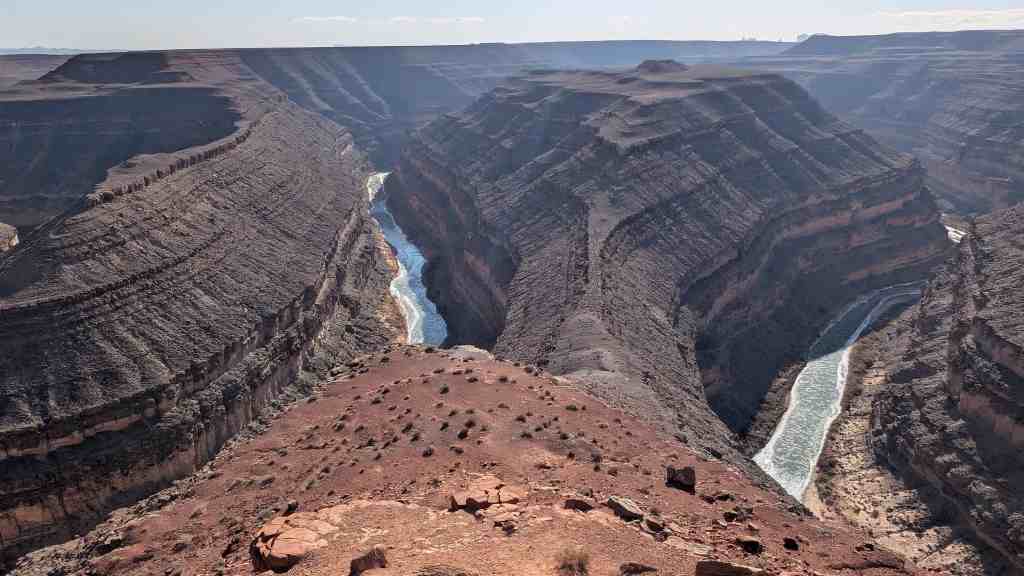
The silt-laden San Juan has been instrumental in cutting the deep bending chasm directly below. This section is called the Great Goosenecks of the San Juan River.
Geologists consider this part of the river to be one of the finest examples of “entrenched meanders” anywhere in the world.
The meandering pattern originated several million years ago when the river was flowing on a relatively flat plain, much as the present day Mississippi River.
The San Juan became entrenched when the entire Colorado Plateau was slowly uplifted. Cutting downward, the river followed its initial pattern and thus created the canyon you now view. The process continues to this day as the San Juan River cuts ever deeper into prehistoric geological formations.
wildlife: Animal life is limited, primarily because of arid conditions which restrict vegetative growth. The most usual forms are jack- rabbit and cottontail rabbit, skunk, desert rodents, and various reptiles. Occasionally seen are such predators as the bobcat, coyote, and grey fox.
Bird life, although not abundant, includes the golden eagle, raven, red-tailed hawk, horned lark, swallow, and various migratory birds.
plant life:
Surrounding area is dominated by the blackbrush plant community which grows on gravelly benches and sandy lowlands. Included among the blackbrush are Indian ricegrass, Mormon tea, fourwing saltbush, prickly pear, Russian thistle, sand sage, common yucca, and assorted mustard plants.
climate:
This is an arid region characterized by summer thundershowers. The most abundant precipitation occurs from July through October with a comparatively dry period during the winter and spring, months.