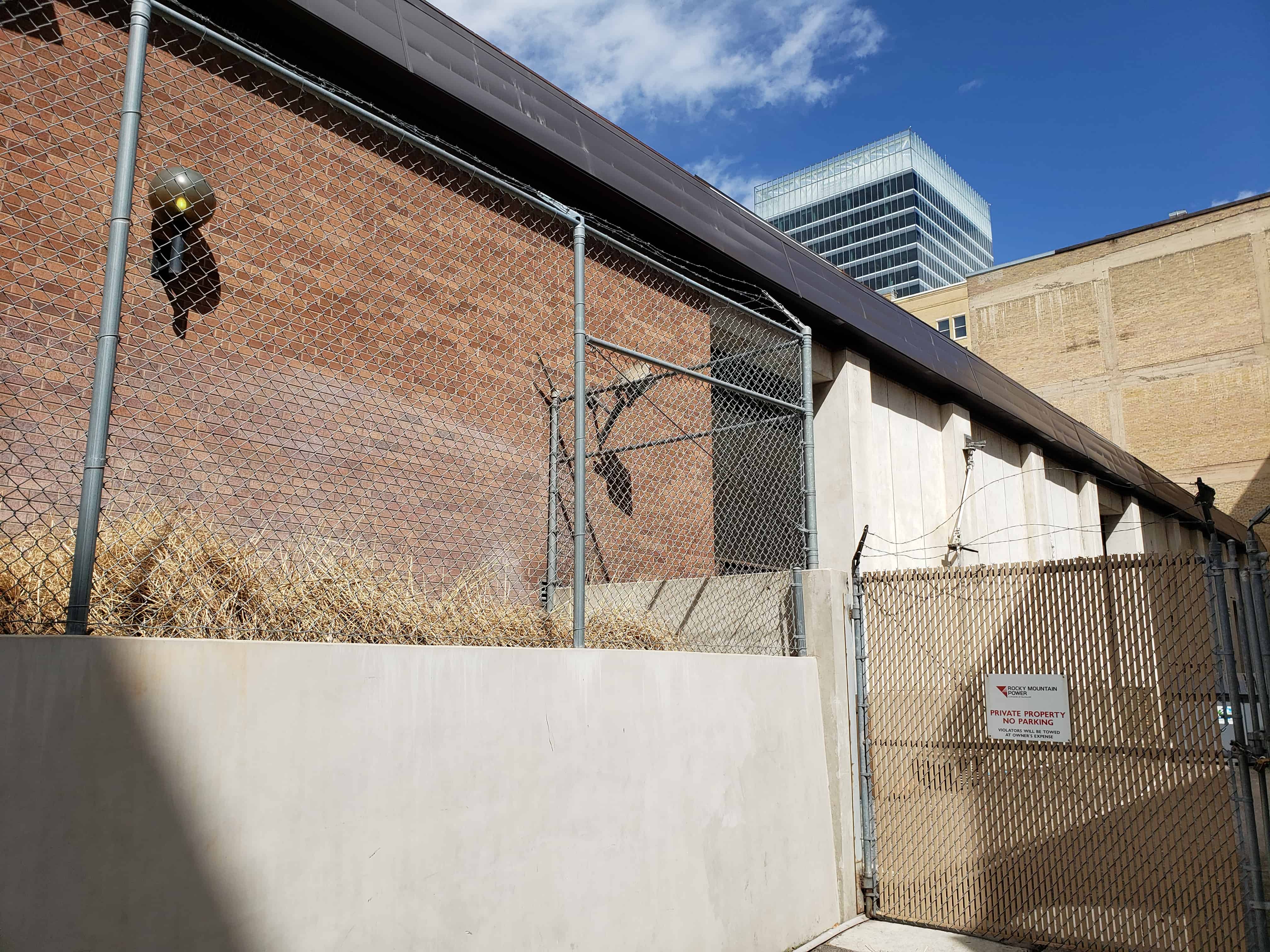
Utah Power and Light’s West Temple Substation at 155 South West Temple in Salt Lake City, Utah
JESSIE ECCLES QUINNEY BALLET CENTRE
JANET QUINNEY LAWSON CAPITOL THEATRE
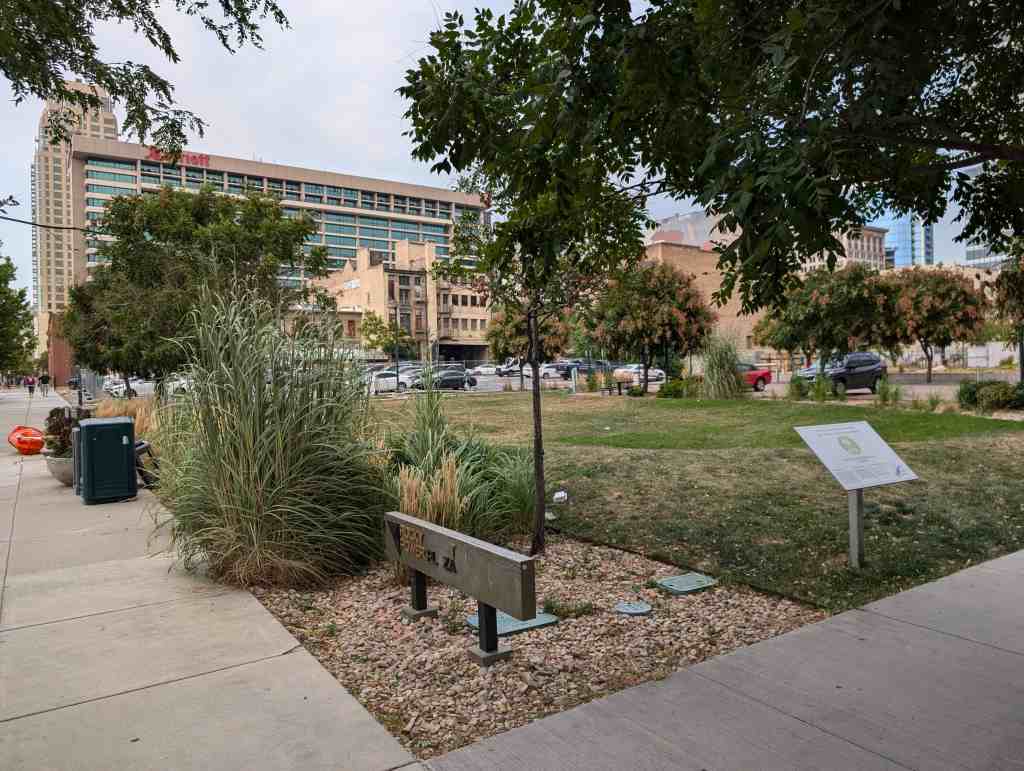
ROCKY MOUNTAIN POWER PLAZA BIOSWALE
What is a Bioswale?
A bioswale aides in the removal of pollutants created from storm water runoff. Each time it rains, excess rainwater runs across different surfaces as it flows toward the storm drain. While traveling across surfaces such as parking lots, rooftops, and landscaped areas the storm water picks up different pollutants, such as oils, fertilizers and other chemicals. Most likely, these pollutants get deposited in our natural bodies of water including streams, rivers, lakes and bays. Bioswales are installed to capture and treat storm water to remove any pollutants and also increase groundwater recharge by holding water and allowing percolation to pass through the soil.
How Does a Bioswale Work?
Bioswales are made up of plant material, mulch and engineered soils to remove pollutants. As the storm water flows through the bioswale, wood mulch traps heavy metal pollutants, oil and grease. The rainwater infiltrates through a special soil mix of a sandy soil layer that removes other pollutants such as nitrogen and phosphorous. Plant root absorption also helps in capturing and storing pollutants that can be carried in the storm water flow.
What are the Benefits of a Bioswale?
- Treat water quality using soil, vegetation and microbes
- Reduce total volume of storm water runoff
- Increase infiltration of groundwater recharge
- Can be aesthetically pleasing in the landscape, provide animal habitat and improve biodiversity