

Fire Station No. 8
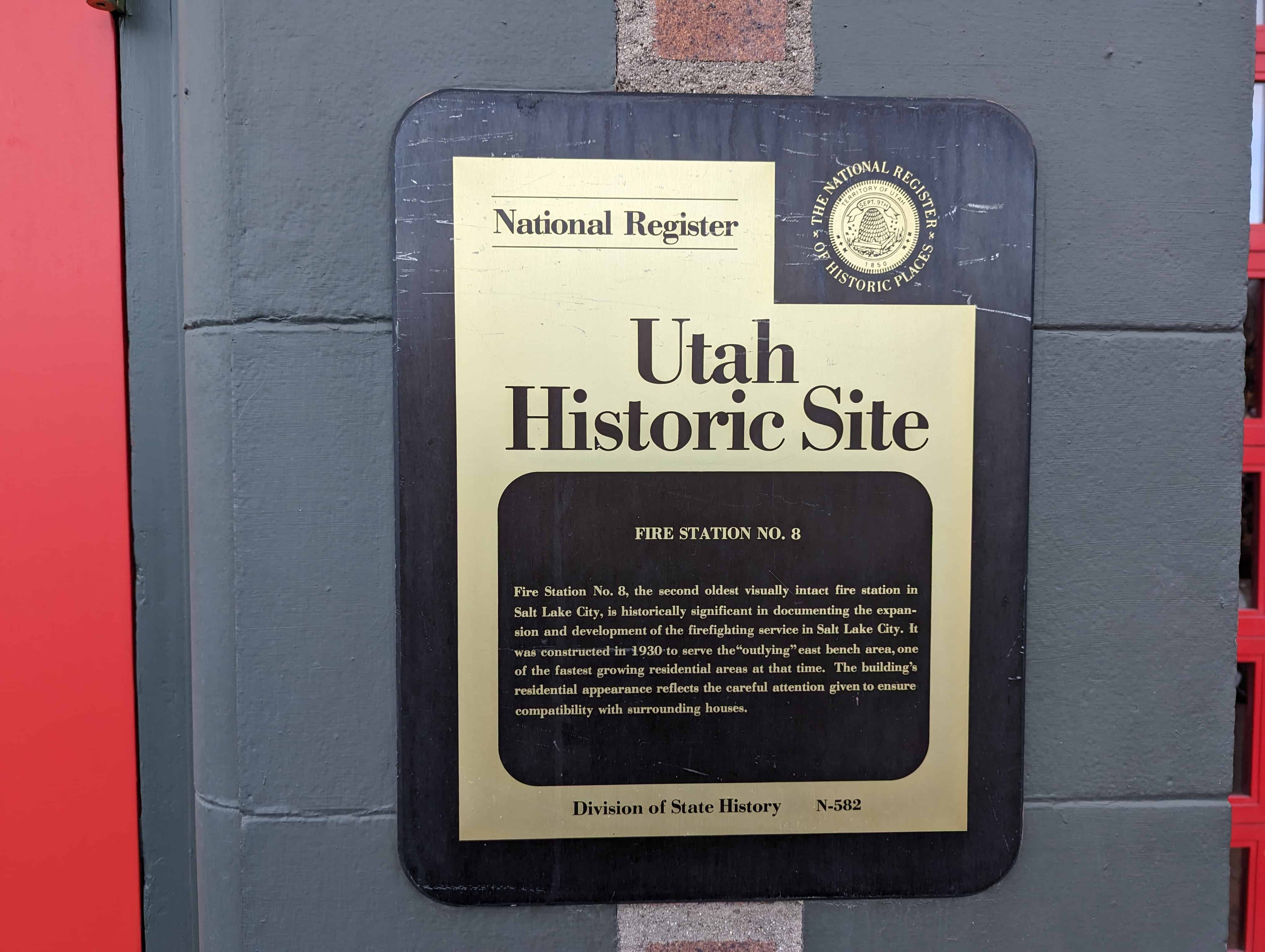
Fire Station No. 8, the second oldest visually intact fire station in Salt Lake City, is historically significant in documenting the expansion and development of the firefighting service in Salt Lake City. It was constructed in 1930 to serve the “outlying” east bench area, one of the fastest growing residential areas at that time. The building’s residential appearance reflects the careful attention given to ensure compatibility with surrounding houses.
The fire station is located at 258 South 1300 East in the University Neighborhood and University Neighborhood Historic District in Salt Lake City, Utah. It was added to the National Register of Historic Places (#83004423) on July 28, 1983. The text below is from the nomination form for the national register.
Fire Station No. 8, the second oldest visually intact fire station in Salt Lake City, is historically significant in documenting the expansion and development of the firefighting service in Salt Lake City. It was constructed in 1930 to serve the “outlying” east bench area, one of the fastest growing residential areas at that time. The building’s residential appearance reflects the careful attention given to ensure compatibility with surrounding houses.
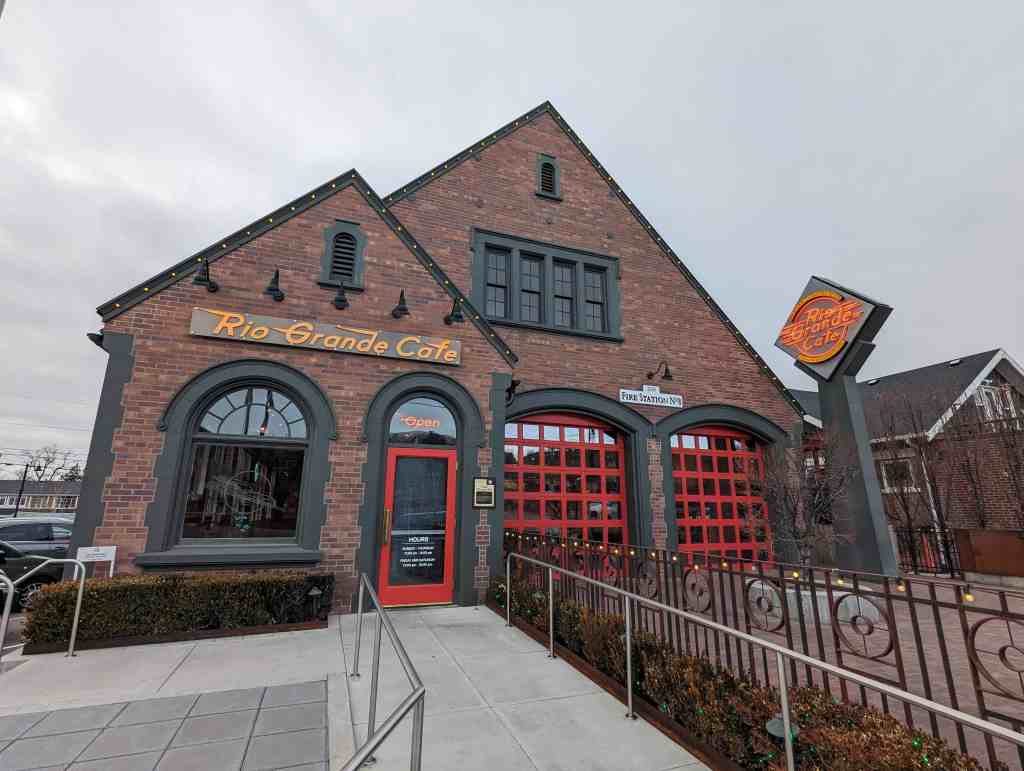
Fire Station No. 8, as the second oldest visually intact fire station in Salt Lake City, is historically significant in documenting the expansion and development of the firefighting service in Salt Lake City, and, through its design and siting, illustrates the City’s willingness to combine aesthetic considerations with functional needs, Fire Station No. 8 was built in 1930 to serve the “outlying” east bench area, one or the fastest growing residential areas at that time., The building’s residential appearance reflects the careful attention that was given to the scale, setback and design of the building to ensure that it would be compatible with the surrounding houses in this prime residential neighborhood. Of the nine fire stations built before 1940 in Salt Lake City, only five remain standing, of which only three, stations No. 3 (1914), No. 8 (1930) and No. 9 (1940), have not been significantly altered.
Fire Station No. 8 was built in 1930 on the east bench of Salt Lake City at 258 S. 1300 East, adjacent to the University of Utah and in the midst of several residential areas of fine homes. Expansion onto the east bench had been spurred by the extension of streetcar lines to that area around the turn-of-the-century, and, in this neighborhood, especially by the establishment of the University of Utah there around 1905. Neighborhoods of fine, attractive homes were built in subdivisions surrounding the university and to the south along and above the brow of the east bench line, many of which were built or bought by university personnel. City officials recognized the need for fire and police services in these rapidly growing areas, and the economic consideration that “hundreds of citizens have invested hundreds of thousands of dollars in their property” was not ignored, or perhaps was made evident to the city by the voiced demands of those citizens and homeowners. The establishment of the university in this area further magnified the need for such services. Citizens living on the east bench, as municipal taxpayers, felt entitled to such services and were undoubtedly pleased with the installation Of this facility, with the possible exception of those who would be neighbors to it.
Construction of a fire station in this location, a popular and respectable neighborhood, was undertaken with some degree of caution and sensitivity by the city, but it neverless effected a change in the composition of the neighborhood. with strong support from the Board of Commissioners, which felt that “it is very desirable to have a fire station in this locality,” zoning on both sides of 1300 East Street between 200 South and 300 South streets was changed in November 1929 from Residential B-2 to Residential C-2. This zoning change has, over the years, precipitated the growth of an island of commercial development along this block. City officials, apparently in an attempt to placate any disgruntled neighbors, took pains in the design and siting of Fire Station No. 8 to ensure that “the new building lends itself well to the attractive surroundings of the east bench residential district.” The one-and-one-half story structure was promised to be “set back even with residences along the street and will eventually be surrounded by lawn and shrubs and kept up in such a way as to be an asset to the surrounding property.”
The building was designed by members of the City Engineer’s staff and the contract tor its construction was awarded in May 1930 to Albert White whose bid of $15,242 was the lowest of eleven bidders. Albert White was a local contractor and builder, who also constructed many houses and buildings in the area, and supervised the remodeling of the Salt Lake LDS Tabernacle and Temple on Temple Square. White was also active as a member of the Volunteer Veteran Firemen’s Association and the Utah State Firemen’s Association, although those affiliations had nothing to do with his receiving the contract.
Soon after its construction Fire Station No. 8 was “(d)eclared to be one of the most modernly equipped and attractive structures ever built in a western city to house fire fighting equipment….” An article on the building in the October 1930 issue of the Municipal Record gave the following detailed description:
In addition to the apparatus room on the ground floor there is a large sleeping room, reading and living room with an open fire place, wash room equipped with showers, commanding officer’s room, locker room, kitchen and boiler room. The kitchen and boiler room are equipped for the use of gas as fuel. The roof is constructed fire proof in keeping with the balance of the building in so far as possible in the interests of economy and general design.
The upper portion of the building has been partially finished so that with little additional expense it can be utilized as a gymnasium or for additional sleeping quarters. It will probably be put to the former use when the station is fully manned, explained Fire Chief Walter S. Knight, but if the time arrives when it is necessary to install additional apparatus at the station the upper portion can easily be transformed into sleeping quarters thereby providing the extra apparatus space downstairs.
When the building is actually put into use there will be a force of twelve men on duty equally divided into day and night shifts. The force will include a captain and lieutenant, one of which will be on duty with each force of men and will be the guardian of this east bench property.
Entrances and exits together with large windows, permitting ample air and sunshine, have been installed on all sides of the building. Two wide doors which blend well with the architectural design are provided in the front to allow speedy exit of the tire wagons onto Thirteenth East street.
Electrical appointments of the building are of the most modern type and include the gong alarm, ticker tape, lights and automatic door controls together with traffic stop signals. The latter, consisting of both lights and bells, will be flashed on simultaneous with the alarm devices inside the station to afford ample time for…
Fire Station No. 8 was placed in operation early in the spring of 1931, after the City Commission approved the hiring of “ten additional firemen to safeguard the lives and property of Salt Lakers.” A sub-station of the police department was also established in the building when it opened, “strategically located to respond quickly to burglary and robbery alarms coming from a wide area on the east bench,” which, at the time, was considered an outlying area of the city. The fire station continued in operation until 1980, although for the last several years it housed only a paramedics crew because the doorways were too small to accommodate the large new firetrucks. John W. Williams, the current owner, bought the property in 1982 and converted it into a restaurant, keeping the original appearance of the building virtually intact.

Description:
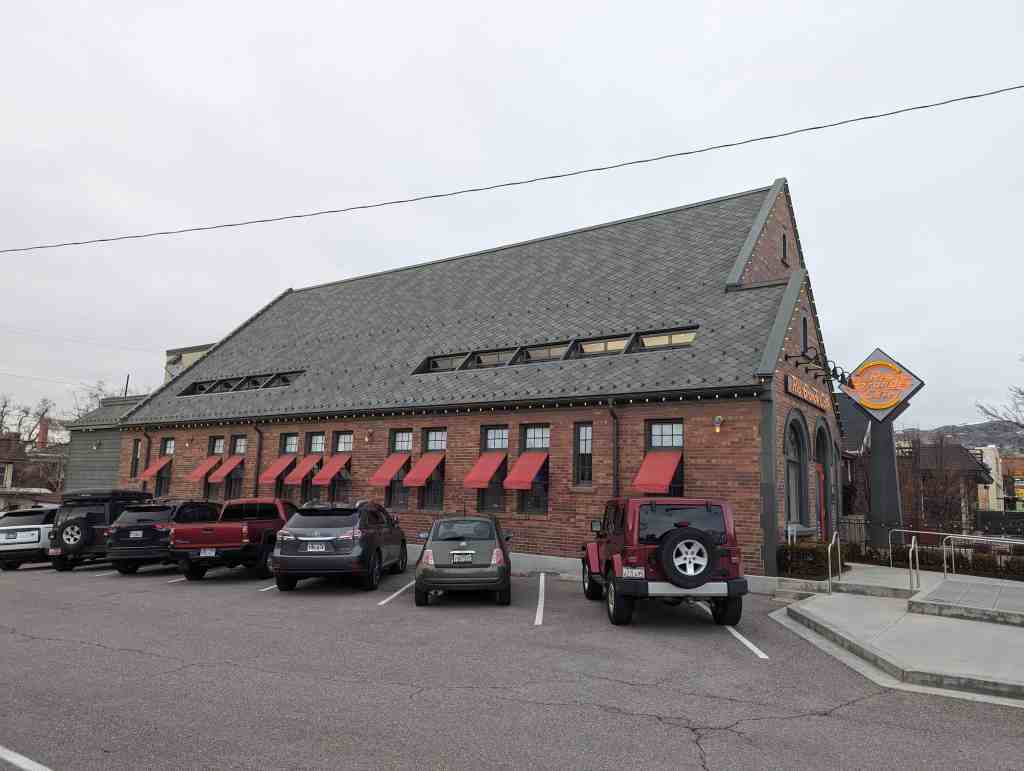
Fire Station No. 8, constructed in 1930, is a one-and-one-half story gable-roofed brick building featuring Period Revival styling. Its narrow rectangular shape extending towards the rear reflects the proportions of the lot upon which it was built, 60′ X 140′ . The front gable faces the street, and the small gable of the projecting front entrance bay on the southern half of the façade echoes the steep roof pitch of the main block. The brick exterior walls are accented with cast stone quoins, coping, and trim around windows and doors. The foundation is concrete. Windows throughout the building are divided by muntins into small rectangular panes. The façade features the majority of the building’s architectural expression with its round-arched window and doorway in the entrance bay and the two arched garage door openings, now serving as windows. Centered on the upper façade is a group of four double-hung, multi-pane windows framed with cast stone/and, divided by cast stone millions. The steeply pitched roof and hexagonal shingles contribute to the stylistic statement off the building.
Penod Revival styles, popular in the early decades of the twentieth century, were derived from historical styles, often of European origin, such as English Tudor, Spanish Colonial Revival and French Norman. In Salt Lake City the Period Revival designs inspired by English architectural styles were the most popular, especially in the construction of houses and churches. Some of these buildings were architect-designed, but most, as was typical of Period Revival styles in general, were executed by builders who did not thoroughly understand the sources or components of the original style. The design of this building most closely resembles the Period Revival/English Cottage style, a popular residential style at that time. The residential scale and styling of this fire station were intended to help it blend in with its residential surroundings, it is unusual as one of the very few public buildings in salt Lake City incorporating an English-inspired Period Revival design. Sprague Library (2131 S Highland Drive), built in 1928, is possibly the only other example.
Conversion of the building to restaurant use in 1982-83 has altered the interior but has left the exterior virtually intact, including almost all of the window and door openings. The original hinged double doors at the firetruck entrances have been replaced with overhead garage doors, which now serve as windows with their small square panes of glass replacing the wooden lower sections of the original doors. The glass door in the round-arched doorway maintains the visual affect of the original opening which served as an open doorway into the recessed entrance. Other alterations include the rear addition of a two-story frame porch with a concrete foundation and basement delivery entrances, and the insertion of narrow bands of windows into the lower areas of the roof slopes. The plane of the roof slopes have not been altered by these windows, which are inset rattier than attached to the roof. A solid, cedar-sided railing wall, approximately three feet high, enclosing an open dining plaza in the front was added, as was the latticework privacy wall, which parallels the north side of the building, attached to the building by open horizontal beams.
Pingback: University Neighborhood Historic District | JacobBarlow.com