
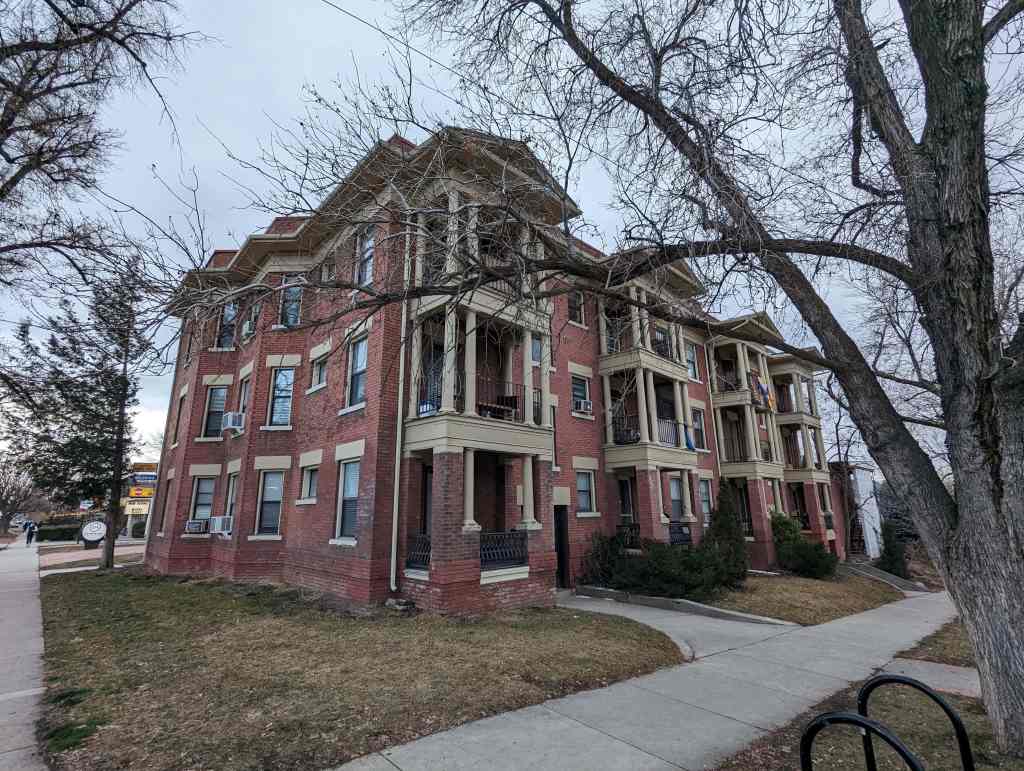
Cluff Apartments
Constructed in 1911, the Cluff Apartments is one of over 180 “urban apartments” built in Salt Lake City during the first three decades of the twentieth century, a period of unprecedented expansion and urbanization. Over 60 percent of those buildings are either listed or eligible for listing in the National Register. Urban apartments are significant under Criterion C as a distinct and important type of residential building in the city. Apartments are remarkably consistent with one another in terms of building plan, height, roof type, materials, and stylistic features. These and other characteristics mark them as a new and distinct type of early twentieth century residential building. Under Criterion A, urban apartments are significant for their association with the rapid urbanization of Salt Lake City during the 1890s-1930 period. The growth that took place during those decades spurred the construction of two opposing types of housing in the city: urban apartments and suburban homes. Suburban homes represent a rejection of urban conditions. Apartments, on the other hand, document the accommodation of builders and residents to the realities of crowded living conditions and high land values. They were a significant new housing option that emerged in response to the growth that transformed Salt Lake City into an urban center during the early twentieth century.
Located at 1268 East 200 South in Salt Lake City, Utah and added to the National Register of Historic Places (#89001739) on October 20, 1989.
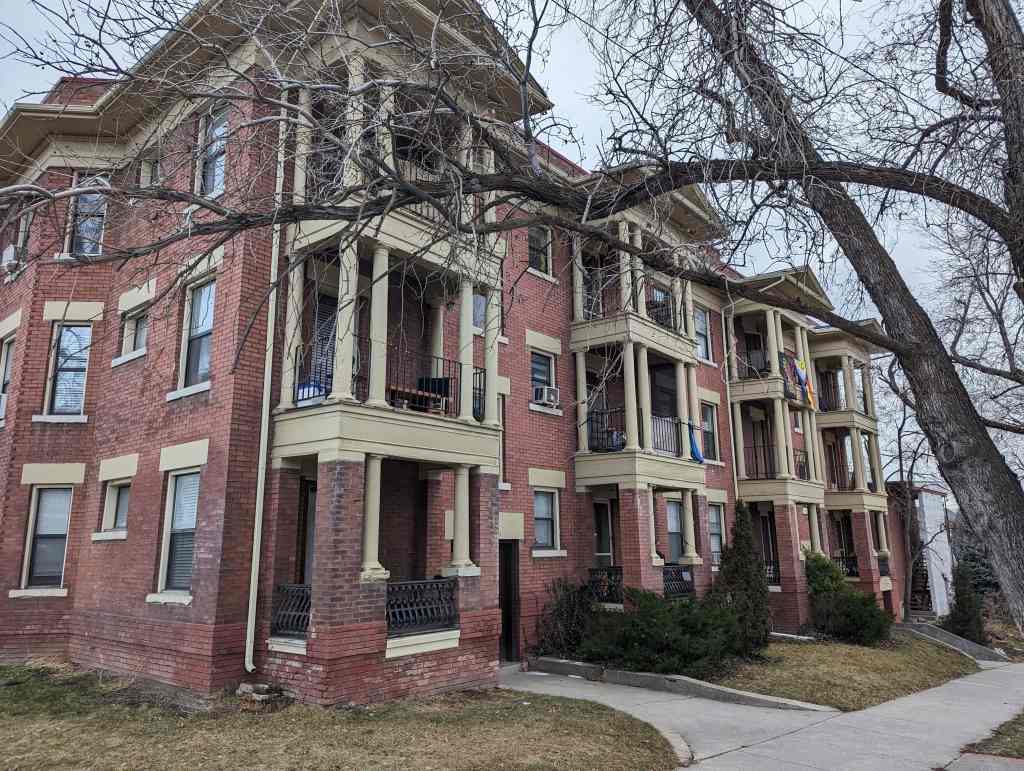
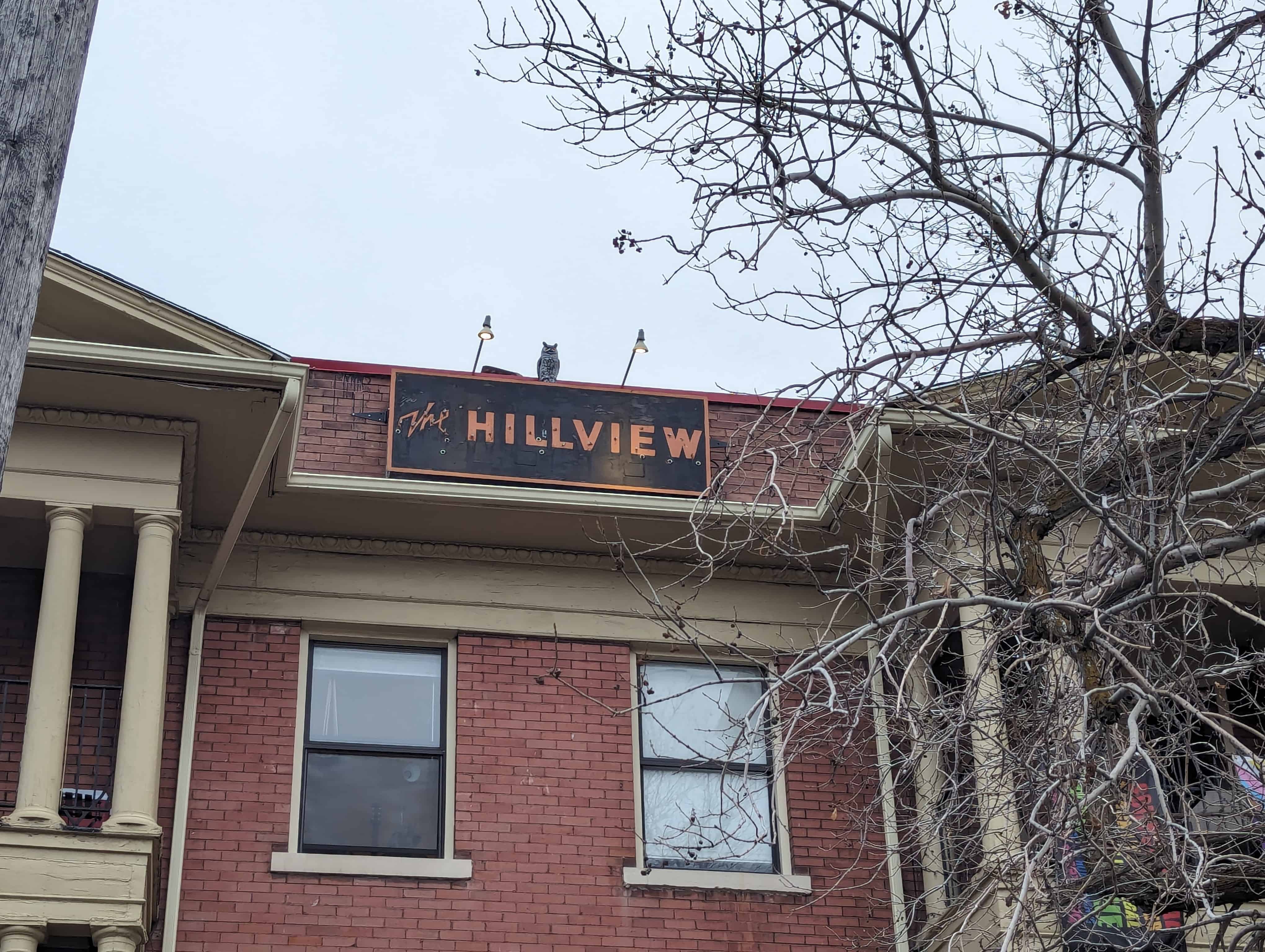
The building permit for the Cluff Apartments was issued on April 4, 1911, to Mrs. Ann Cluff. Estimated cost of the 14-unit building was $24,500. Ann Whipple Cluff was the wife of William W. Cluff, a local businessman. The Cluffs lived nearby at 1246 E. 200 South. William died in 1915, but Ann continued to own the apartment building until 1924, the last five years under the firm name of Cluff Investment Company. William H. and Jennie R. Bennett bought the building in 1924 and renamed it the Bennett Apartments in 1936. The building was renamed the Hillview Apartments in 1947.
In May 1911, the Salt Lake Tribune noted the construction progress of the building as follows.
“The Cluff apartments on Thirteenth East street, near the University buildings, will be one of Salt Lake’s handsome buildings when completed. The exterior finish is of dark colored brick. It will offer modern living rooms to persons who are seeking the benches for places of residence. The first story of this building is completed and the workmen have started on the next.“
W.C.A. Vissing, the builder, was one of the most active developers of apartment buildings in Salt Lake City during the pre World War I period. W.C.A. “Andy” Vissing constructed at least 20 major apartment buildings in Salt Lake City during his career. Born in Denmark in 1874, he emigrated to the U.S. and Salt Lake City at the age of fourteen. He started in the construction business as a young man and continued until his death in 1936. He is credited as “one of the first local apartment house builders.” He constructed some of the largest apartments in the city, including the Hillcrest, Buckingham, Fairmont and Commander apartments. The first apartments he is known to have constructed were the LaFrance Apartments in 1905. That was also the first of several apartment projects in which he was involved with Covey Investment Company, another major developer and owner of apartments in Salt Lake City. The Cluff Apartments is very similar to the Princeton and Boulevard Apartments (100 South 900 East) which were also built by Vissing in 1913.

Description:
Constructed in 1911, the Cluff Apartments is a rectangular, three-story brick building with a brick foundation, parapet roof and modest Neo-Classical Revival/Colonial Revival styling. No significant alterations have been made to the building.
The Cluff is a rectangular building with its broad side serving as the principal façade. It is a variant of the “walk-up” type apartment building. The basic walk-up contains six units, is three stories in height, one apartment deep and two units in width across the façade. It has a central entrance/stairway with two apartments opening off each landing. That basic plan is doubled on the Cluff; in essence the building is two walk-up apartments with a common side wall. The façade is symmetrical with projecting, three-story front porches flanking each of the two entrances. Architectural details are primarily classical—porch columns and pediments and the egg-and–dart decorated cornice. On the rear there are frame service porches connected by open walkways and stairs. Successive “telescoping” bays along the sides of the building increase its overall width at the rear.