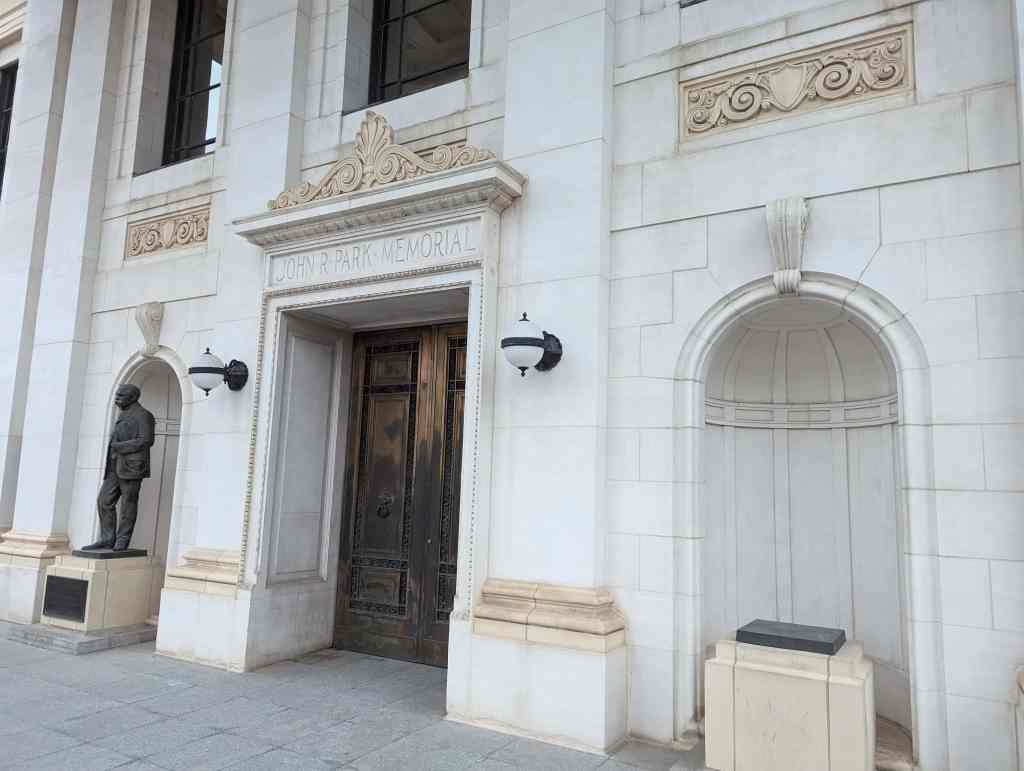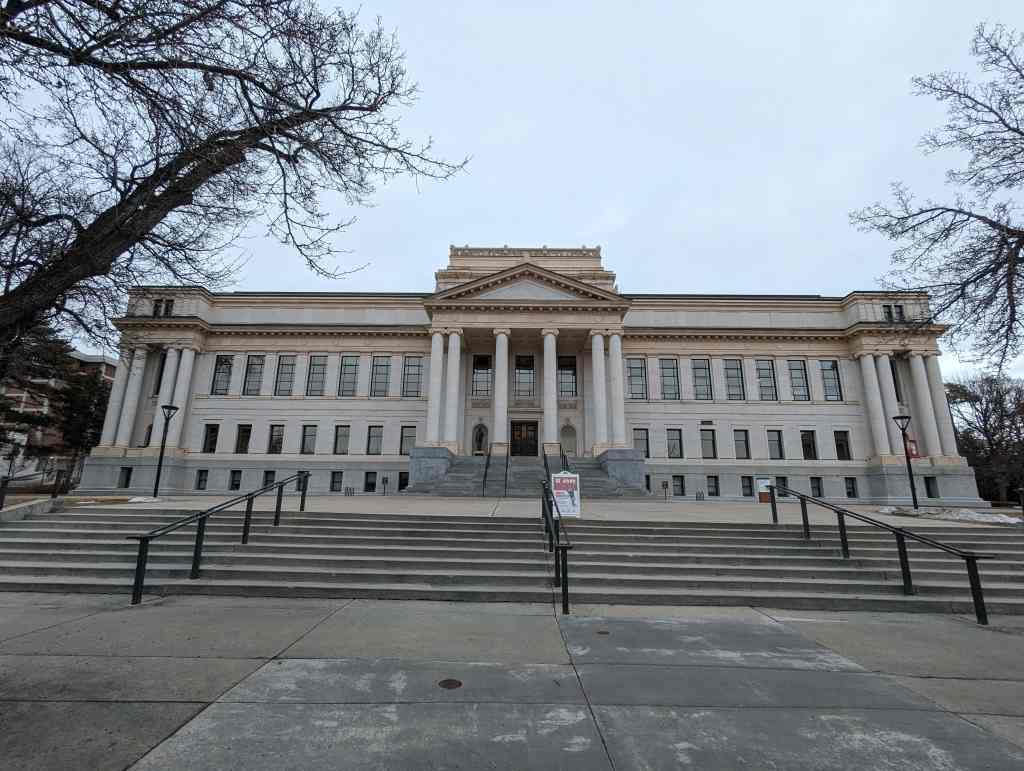
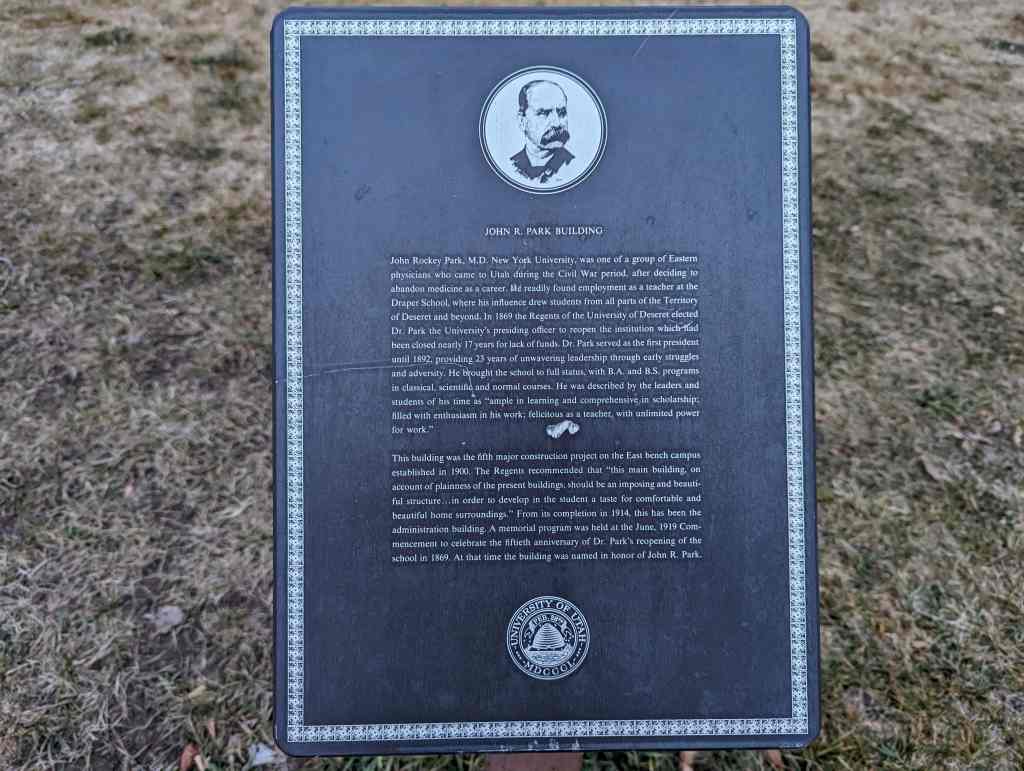
John R. Park Building
John Rockey Park, M.D. New York University, was one of a group of Eastern physicians who came to Utah during the Civil War period, after deciding to abandon medicine as a career. He readily found employment as a teacher at the Draper School, where his influence drew students from all parts of the Territory of Deseret and beyond. In 1869 the Regents of the University of Deseret elected Dr. Park the University’s presiding officer to reopen the institution which had been closed nearly 17 years for lack of funds. Dr. Park served as the first president until 1892, providing 23 years of unwavering leadership through early struggles and adversity. He brought the school to full status, with B.A. and B.S. programs in classical, scientific and normal courses. He was described by the leaders and students of his time as “ample in learning and comprehensive in scholarship; filled with enthusiasm in his work; felicitous as a teacher, with unlimited power for work.”
This building was the fifth major construction project on the East bench campus established in 1900. The Regents recommended that “this main building, on account of plainness of the present buildings, should be an imposing and beautiful structure…in order to develop in the student a taste for comfortable and beautiful home surroundings.” From its completion in 1914, this has been the administration building. A memorial program was held at the June, 1919 Commencement to celebrate the fiftieth anniversary of Dr. Park’s reopening of the school in 1869. At that time the building was named in honor of John R. Park.
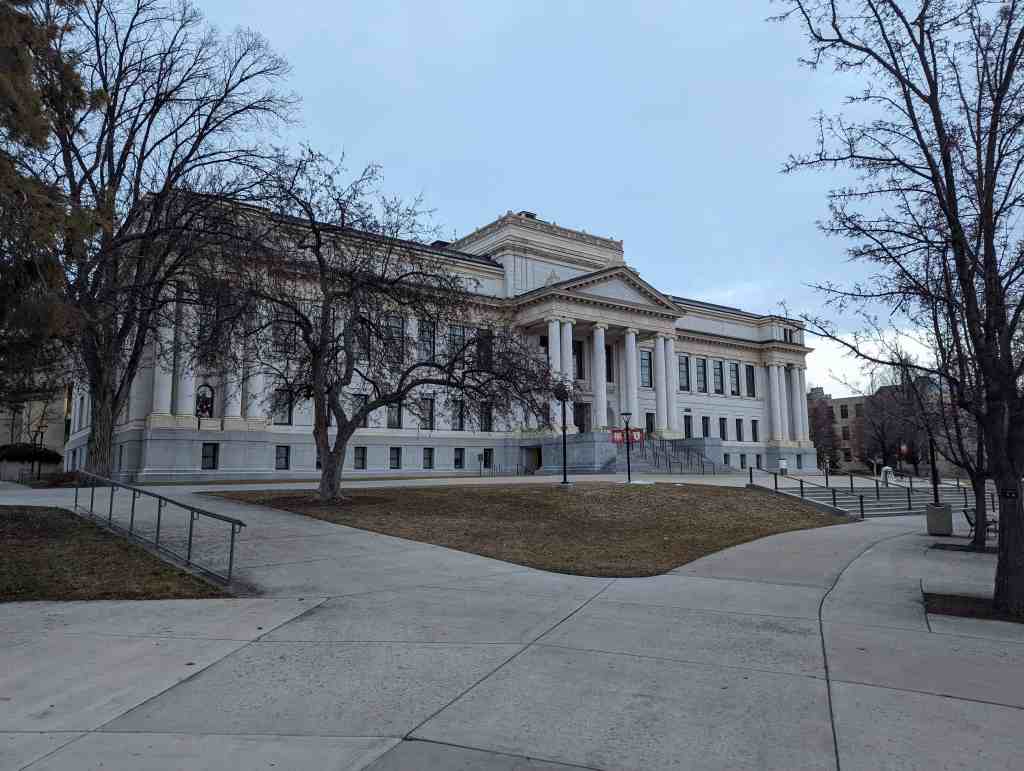
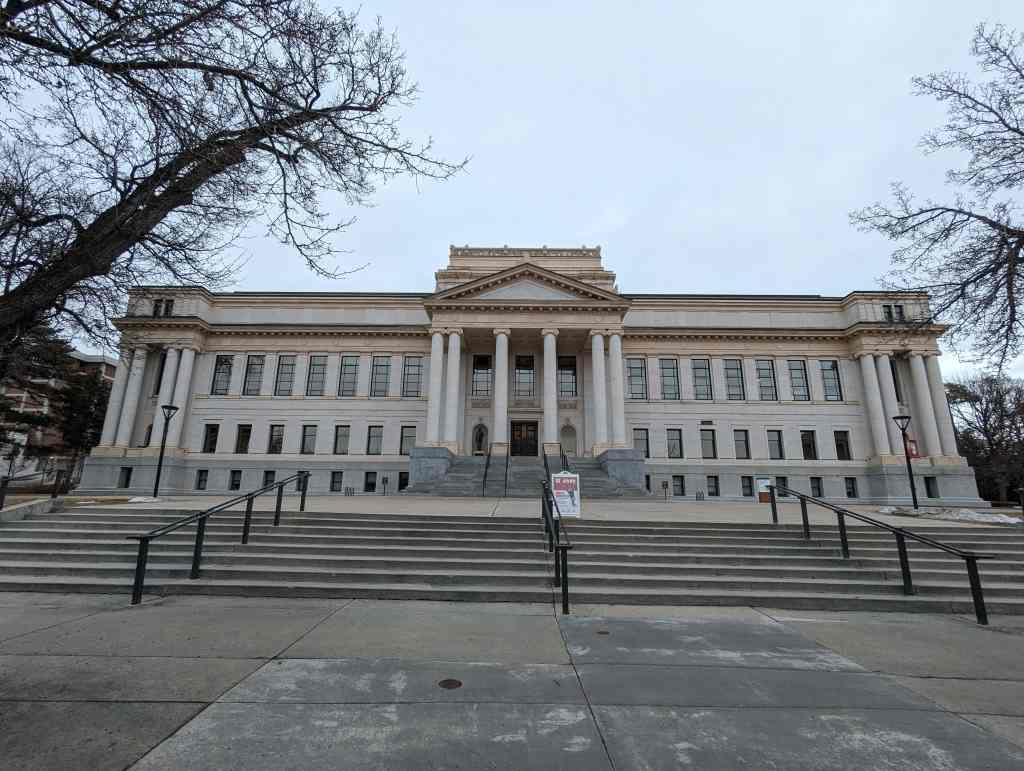
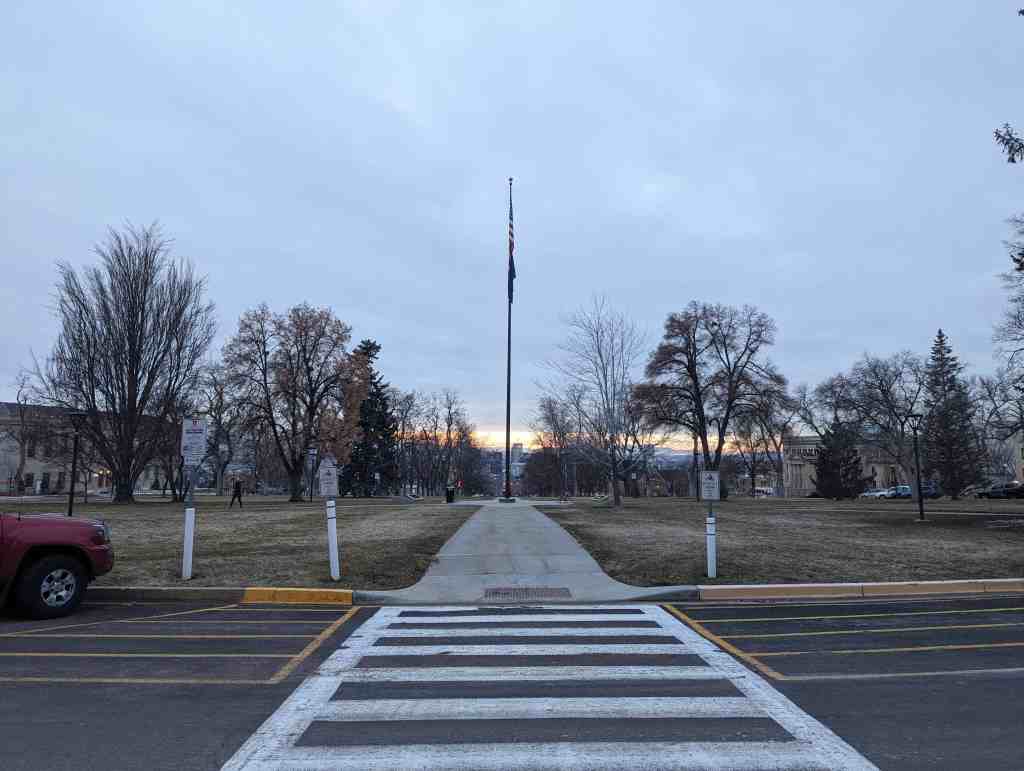
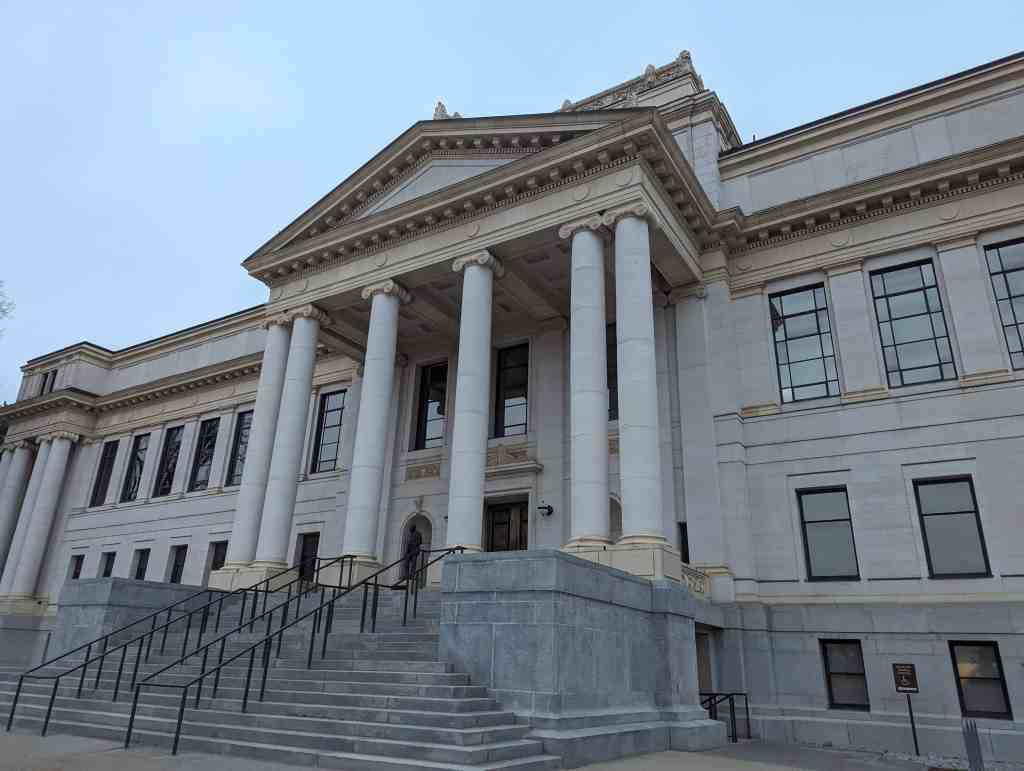
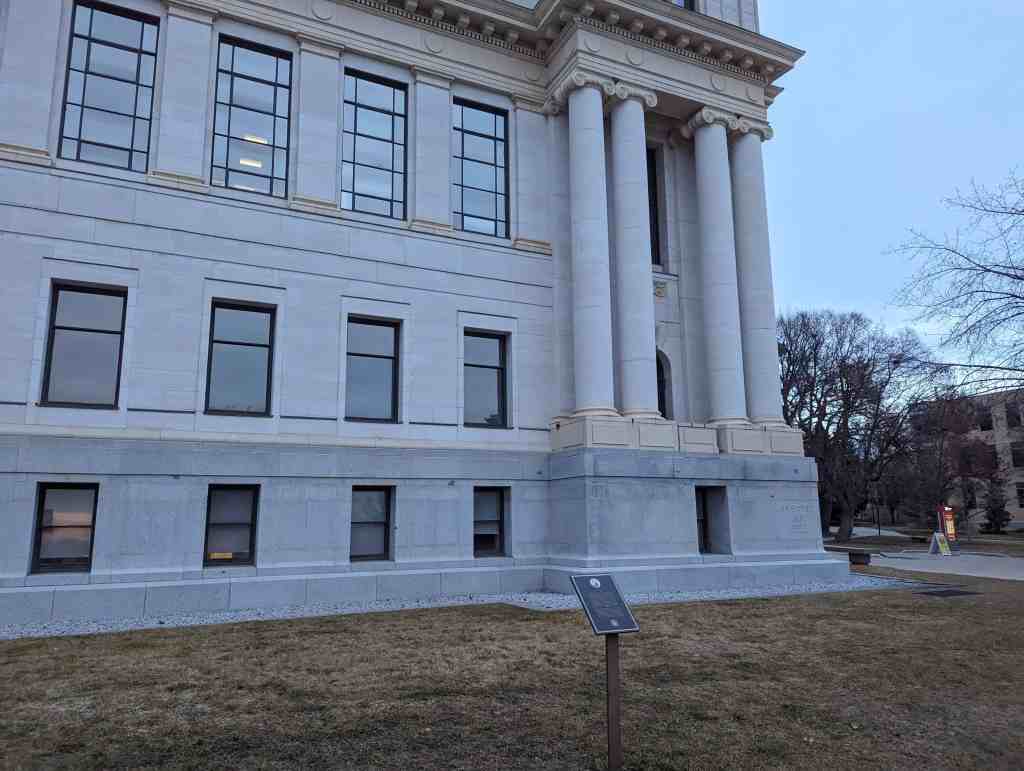
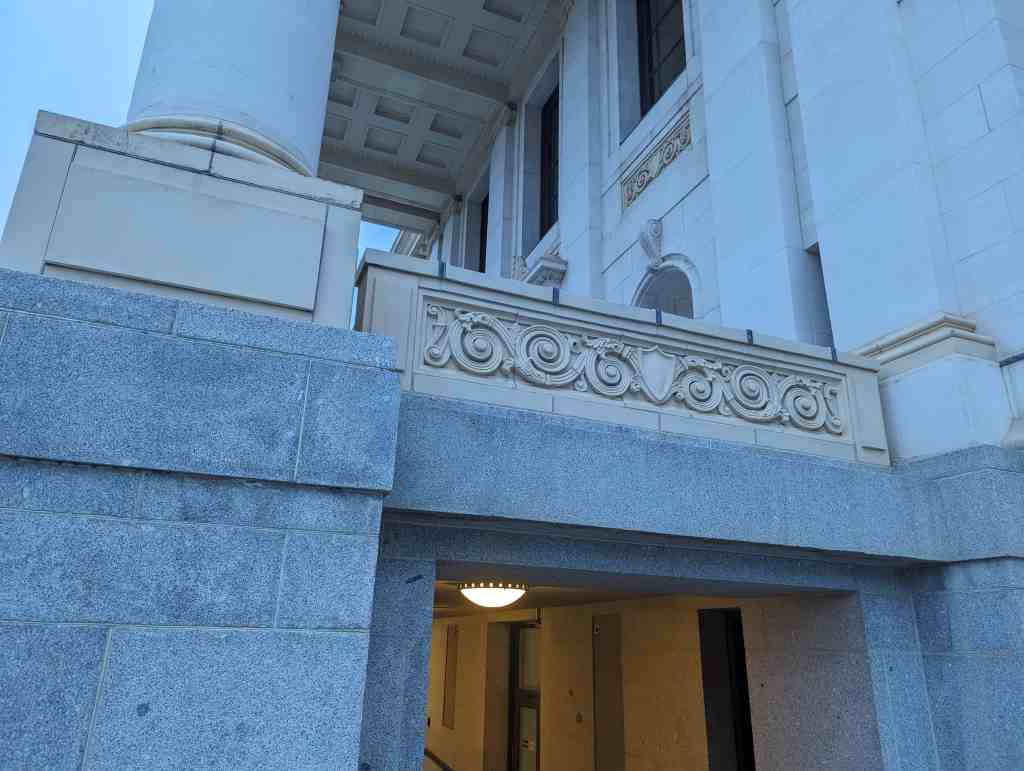
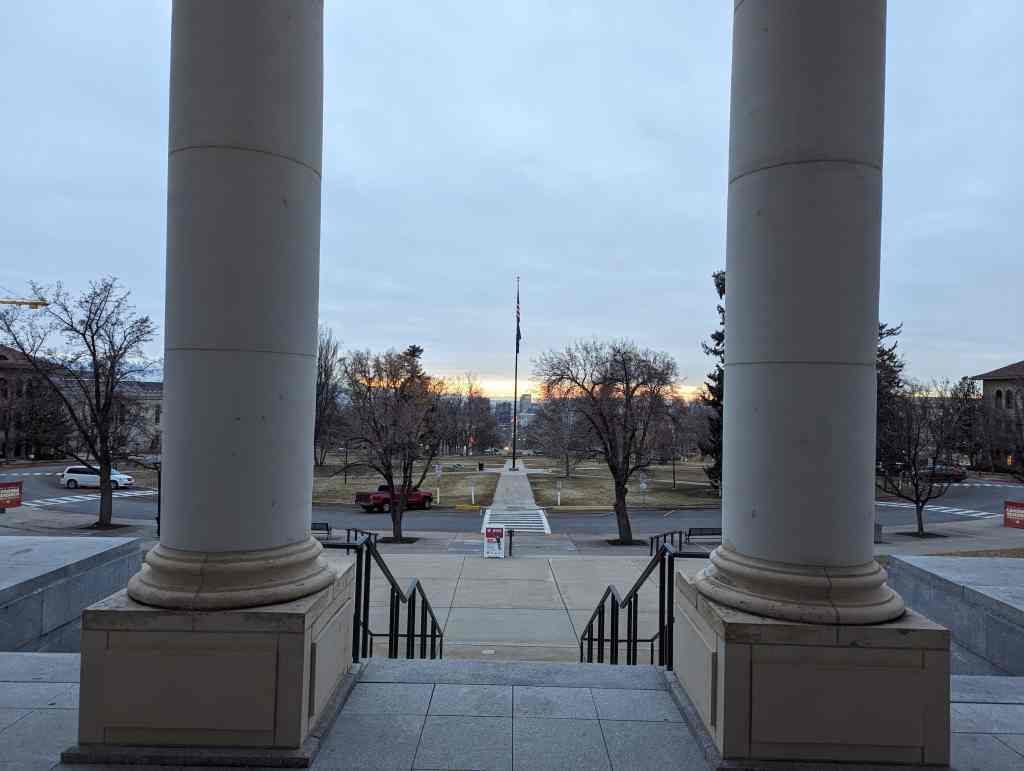
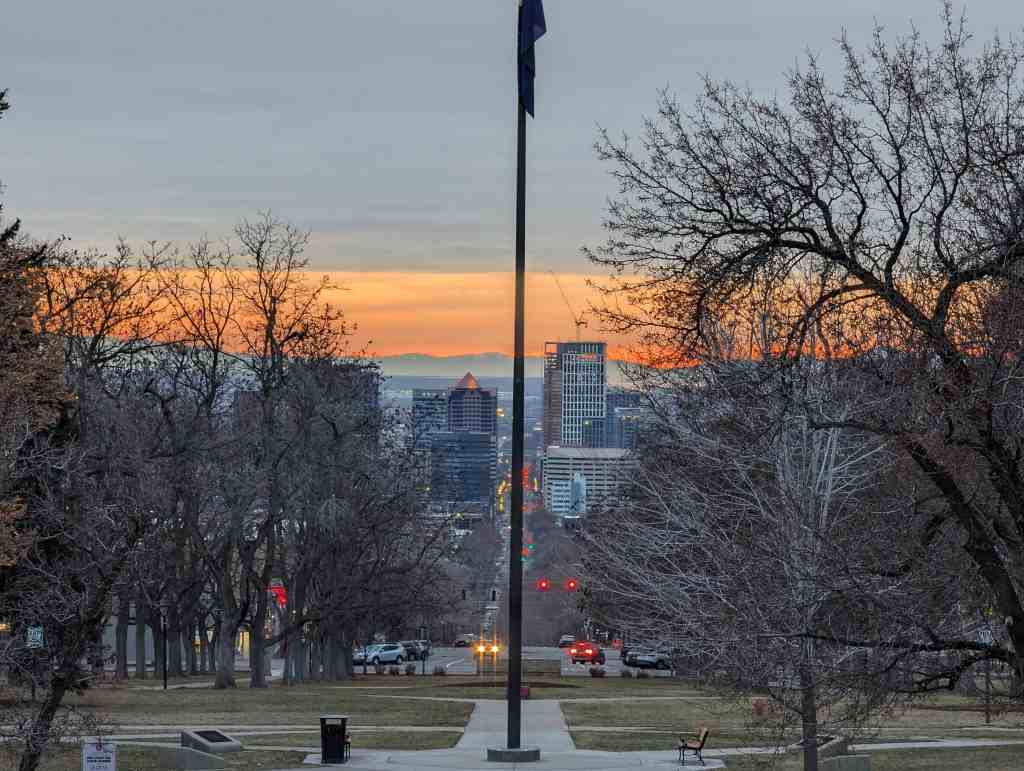
Located at 201 Presidents’ Circle in the U of U Circle Historic District in Salt Lake City, Utah
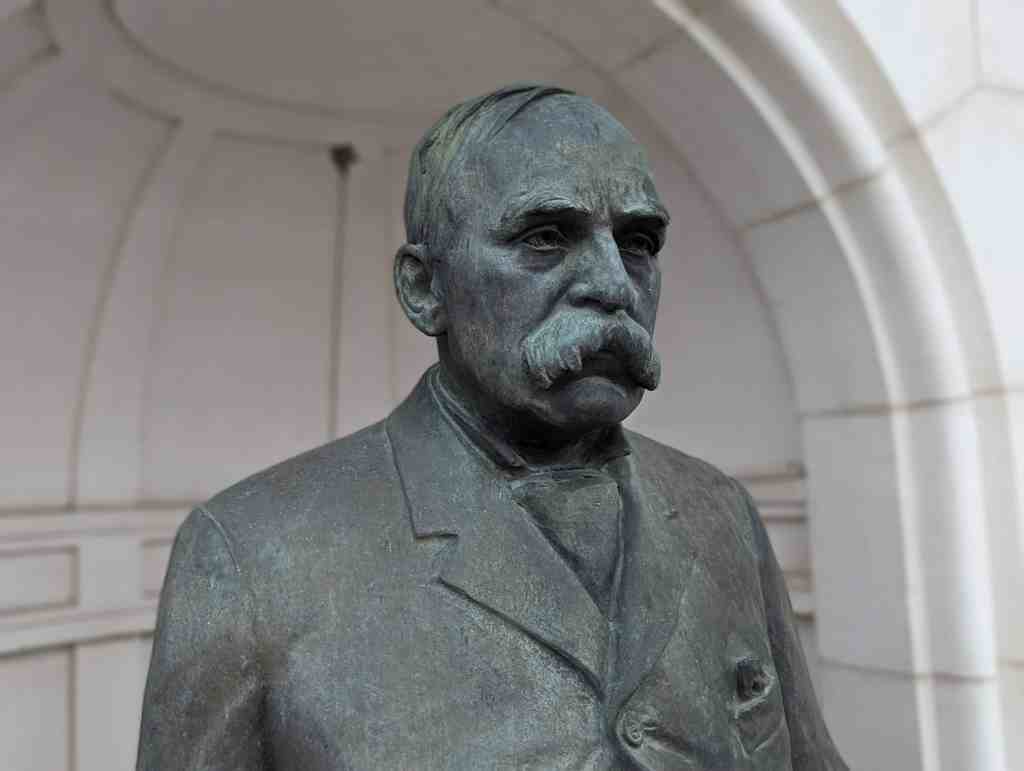
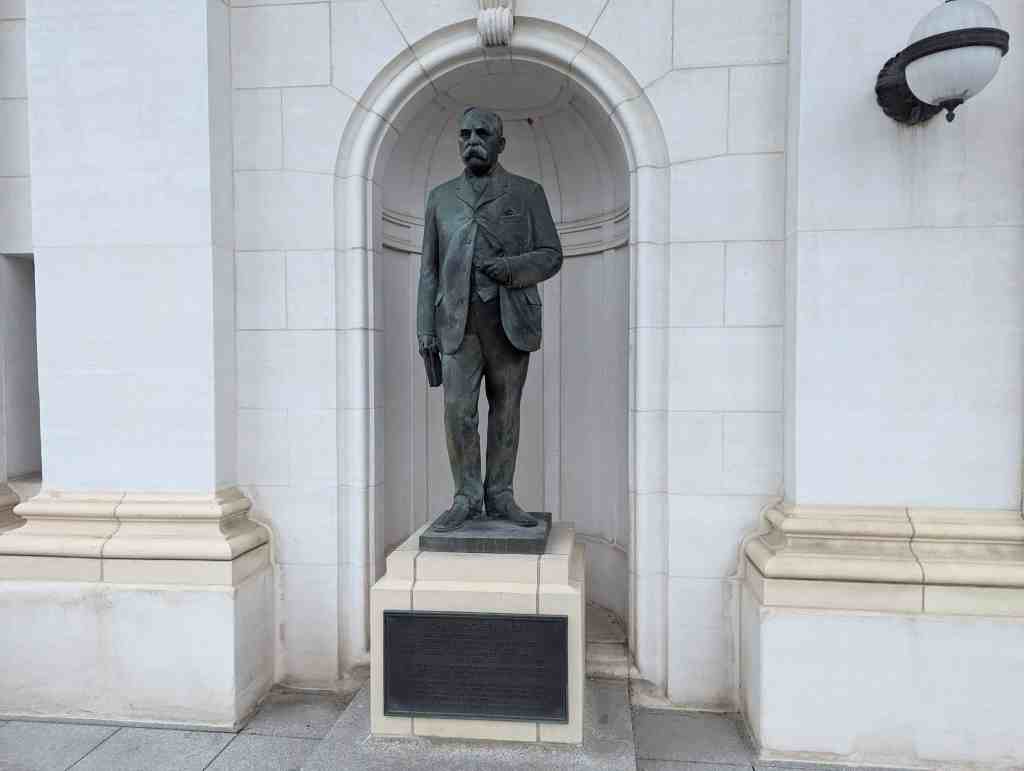
The administration building was built in 1912 with $300,000 raised by the Legislature. The architects were Samuel C. Dallas and William S. Hedges. It was to be an imposing and beautiful structure to compensate for the plainness of the original three buildings. It was the first building on campus done in the Neo-Classical Revival style. It has the common features of the style, the broad expanses of plain wall surface, the quiet roof line, the square window bays, the dental molding and the pedimented portico with ionic columns at the main entrance. On June 9, 1919, the building was dedicated and named the John R. Park Building after the first president (1869-1992) and driving force behind the growth of the University. It has undergone several reworkings to accommodate various departments but has always remained the Administration Building for the University. Originally it housed the library, but when the library was removed in 1935 to a new building the upper floor of the Park building was remodeled with P.W.A. funds to accommodate the Psychology, Anthropology and Law departments. In 1949 the upper floor was again remodeled to house the Hudnut and Hatch Art Collection and an extension was added to the east. In 1953 the basement was reworked to handle student traffic, arid in 1966 the second and third floors were remodeled for the offices of the presidents and deans. In 1971 more administrative offices were made on the fourth floor when the art collection was moved to the Fine Arts Museum. The building has several significant features. A statue of John Park, done by Mahonri Young, a Utah sculptor, occupies a niche in the front of the building. The lobby, stairway and foyer are lavishly trimmed in marble. On the walls of the stairway are five large panels of the Great Men of Knowledge done by Lee Greene Richards, another Utah artist.*
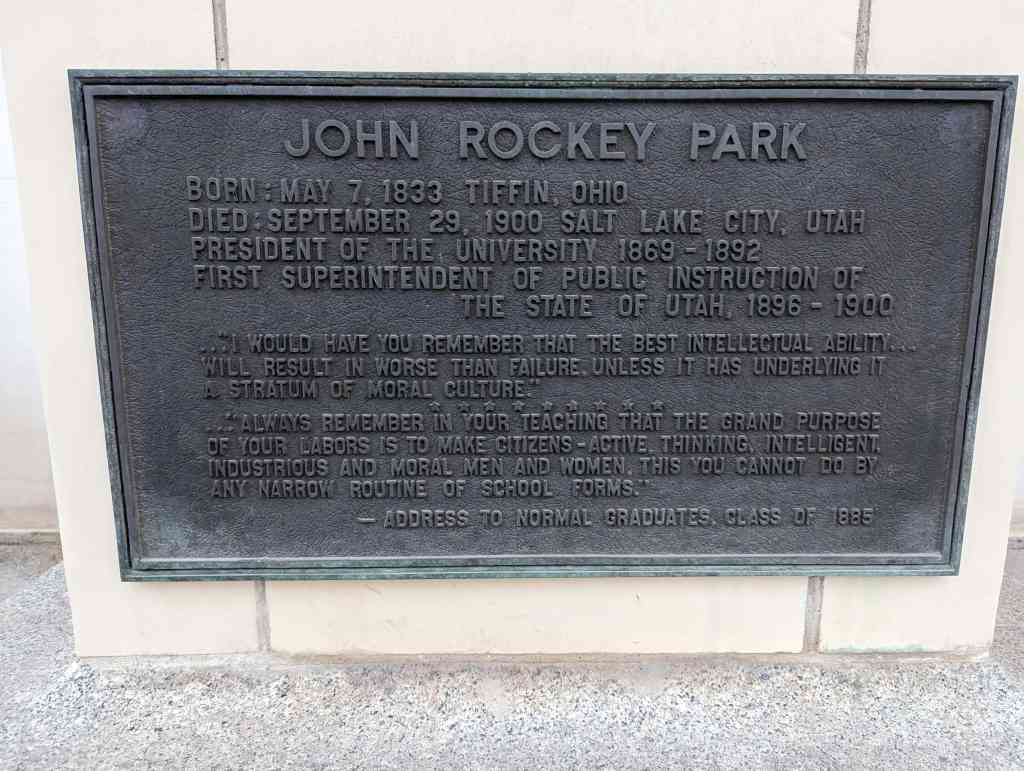
This statue of John R. Park is at the entrance to the building with a plaque that states:
John Rockey Park
Born: May 7, 1833 Tiffin, Ohio
Died: September 29, 1900 Salt Lake City, Utah
President of the University 1869 – 1892
First Superintendent of Public Instruction of the State of Utah, 1896 – 1900
“…I would have you remember that the best intellectual ability… will result in worse than failure, unless it has underlying it a stratum of moral culture.“
“…Always remember in your teaching that the grand purpose of your labors is to make citizens – active, thinking, intelligent, industrious and moral men and women, this you cannot do by any narrow routine of school forms.“
– Address to normal graduates, Class of 1885