Tags
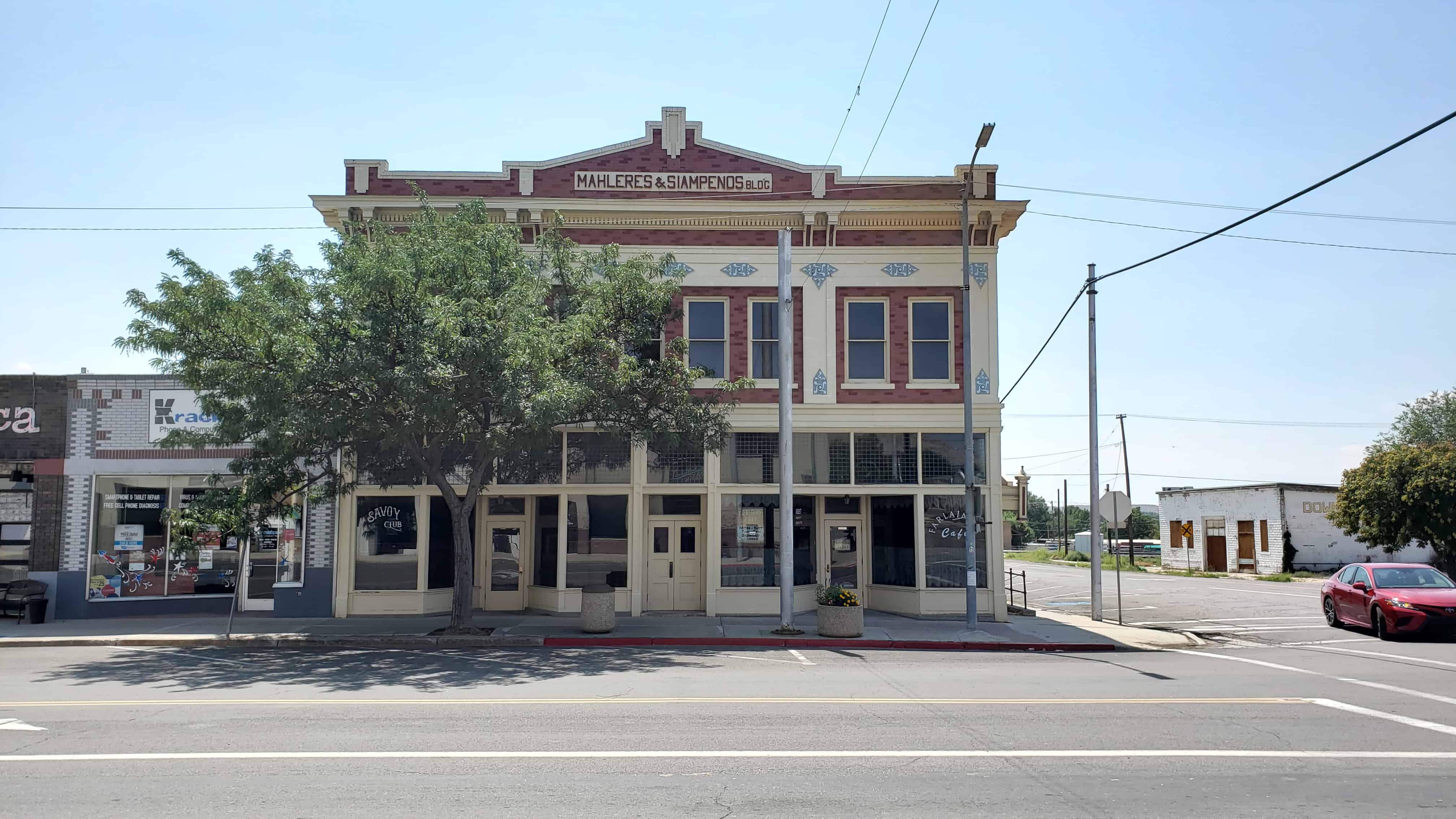
Parker & Weeter Block / Mahleres & Siampenos Building
87 West Main Street in Price, Utah
The Mahleres-Siampenos Building built in 1913 is locally significant as one of the oldest commercial buildings in Price still to retain most of its outstanding architectural features and traditional uses. It exemplifies much of the enduring commercial development that made Price the leading business center of eastern Utah, and remains an outstanding local example of twentieth century commercial architecture which combines elements of the Classical Revival style with the massing and decorative elements of the Prairie Style.
Listed on the National Register of Historic Places (#82004115), the text on this page is from the nomination form from when it was added.
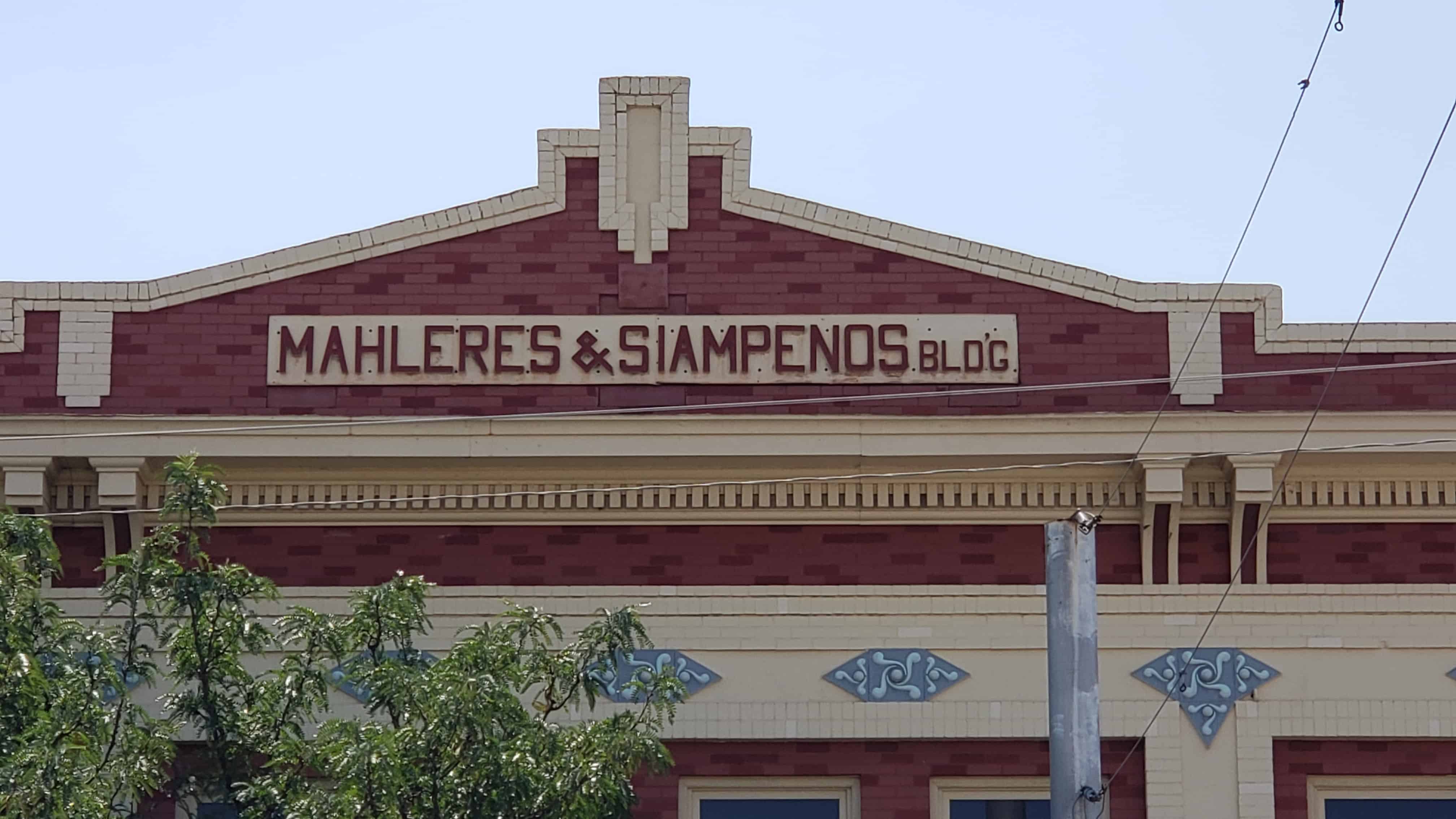
The present Mahleres-Siampenos building was originally known as the Parker and Weeter Block when it was built in 1913. It was constructed on the site of the original Weeter Lumber Company yard, the first enterprise of its kind in Price. John C. Weeter owned both the land and the building, which he constructed in partnership with Frank L. Parker and James W. Loofbourow. Weeter Lumber Co. was also responsible for building many of Price’s other pre-World War I structures; the owners insured that their edifice would be among the finest in that city.
The building has passed through very few owners in its long existence, testifying to its viability as a commercial structure. During the first few years it was managed by Loofbourow, secretary of the J. C. Weeter Lumber Company and later mayor of Price (1924-25). Later, Frank L. Parker obtained sole ownership from his two partners. Parker’s widow, Mary, deeded the building to Harry Mahleres in 1938, who granted one-half interest to Sam Sampenos a year later. (Please note that Siampenos and Sampinos are variations on the same name; the spellings differ on the building and the deed.) Harry Mahleres had actually had an interest in the building before his purchase, investing $59.50 for improvements in 1921. After purchase by Mahleres and Sampinos, the name of the building was changed to that of its present owners, the heirs of the purchasers.
Harry Mahleres and Sam Sampinos were brothers-in-law, since Harry was married to Sam’s sister Ourania. They came from nearby villages in the mountains of central Greece, where sheepherding was a way of life. Upon arrival in America in the early 1900’s both men first worked at odd jobs and later went into the sheep business. Their success at breeding sheep enabled them to buy this building, as well as several other properties which they held in common(including their family home and a ranch out in Nine Mile Canyon where the sheep were sometimes pastured.) No doubt some of the Greek architectural features of this building, especially the ornamental façade, appealed to these Greek men who always retained a love of their native land.

From its construction, the Mahleres-Siampenos Building housed a variety of commercial interests, just as it does today. On the ground floor, the left-hand side has always been a bar. The initial manager was John Causer, who ran the Bank Club 66 bar at that location. Around 1920 the name was changed to Gilners, and the Miners Club formed part of the enterprise. In 1971 the Savoy Club began operation on the premises, where it remains. (This last bar was originally in the grand old Savoy Hotel, across the street to the west, one of Price’s finest landmarks. The hotel was torn down in the late sixties to create a parking lot, but its name is preserved in the business housed in the Mahleres-Siampenos Building.)
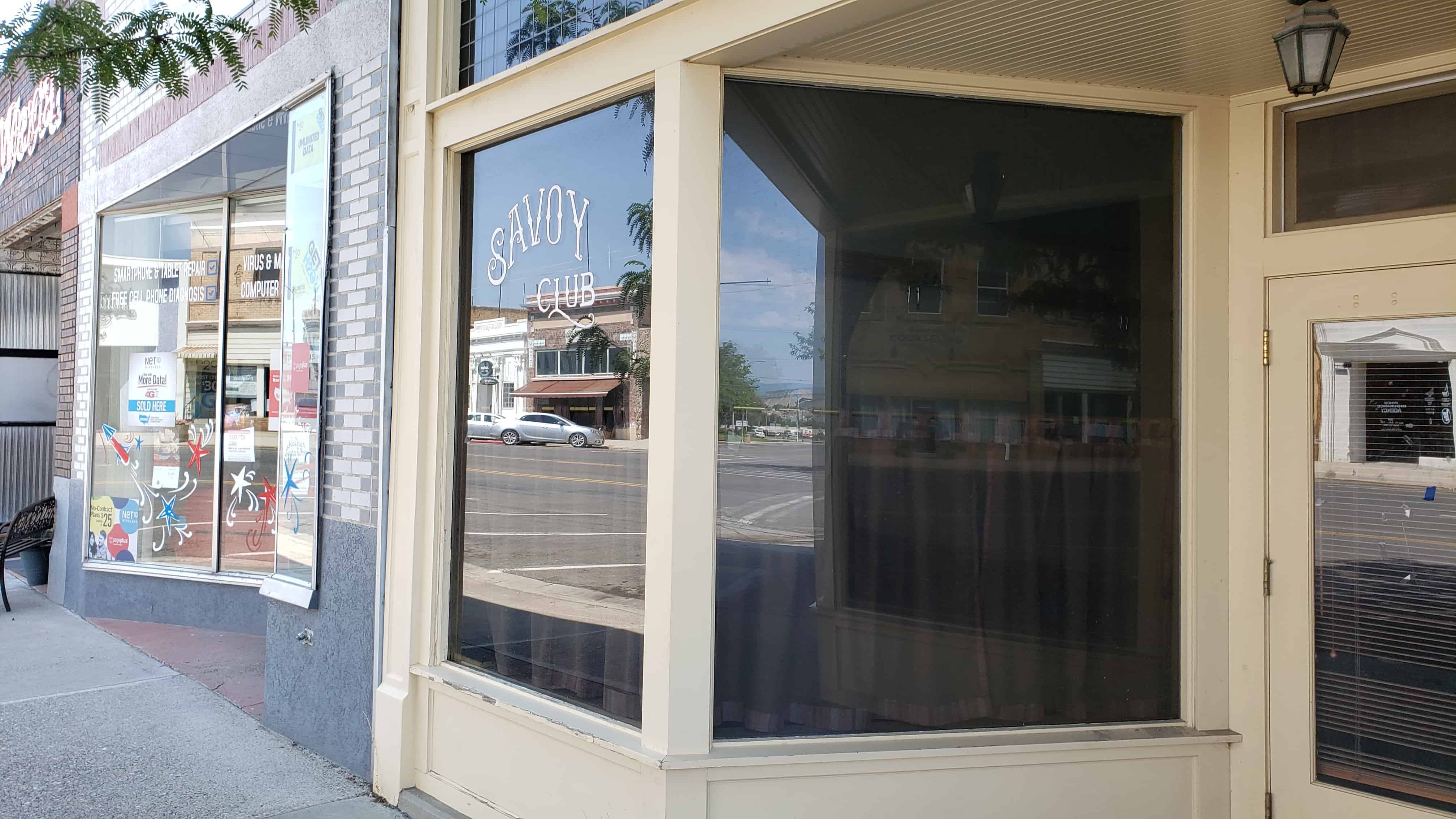
The right-hand side of the ground floor has usually been a restaurant. The earliest proprietors were Nick Rinette and Mr. Capitolo, who ran an Italian and French restaurant on the premises for many years. During the 1940’s the Bureau of Land Management office utilized this space, and beginning in the early 1950’s the Hi Spot Restaurant opened in this part of the building. The Hi Spot was first a confectionary, along the lines of the traditional Greek coffee-house, run by immigrant Greeks but catering to people of all nationalities. The first proprietor, Tom Anest, sold out in 1958 to John Sampinos, the nephew of Sam Sampinos and Harry Mahleres. He and his family made the Hi Spot into a restaurant and something of a Price institution. When John retired on May 30, 1980, the community expressed regret at his departure, which was prominently featured in the local newspaper, the Price Sun Advocate. The restaurant currently rests in the capable hands Andy and Reva Douros who maintain the tradition of an eating and meeting place in this building.

The upper floor of the structure was originally a rooming house, or hotel. The first managers are unknown, but the second were Mr. & Mrs. Ernest Sumner, who rented the entire upstairs as well as running a furniture store further east on Price’s Main Street. Around 1920 it became known as the Central Hotel, a name it bore until it closed c. 1960.
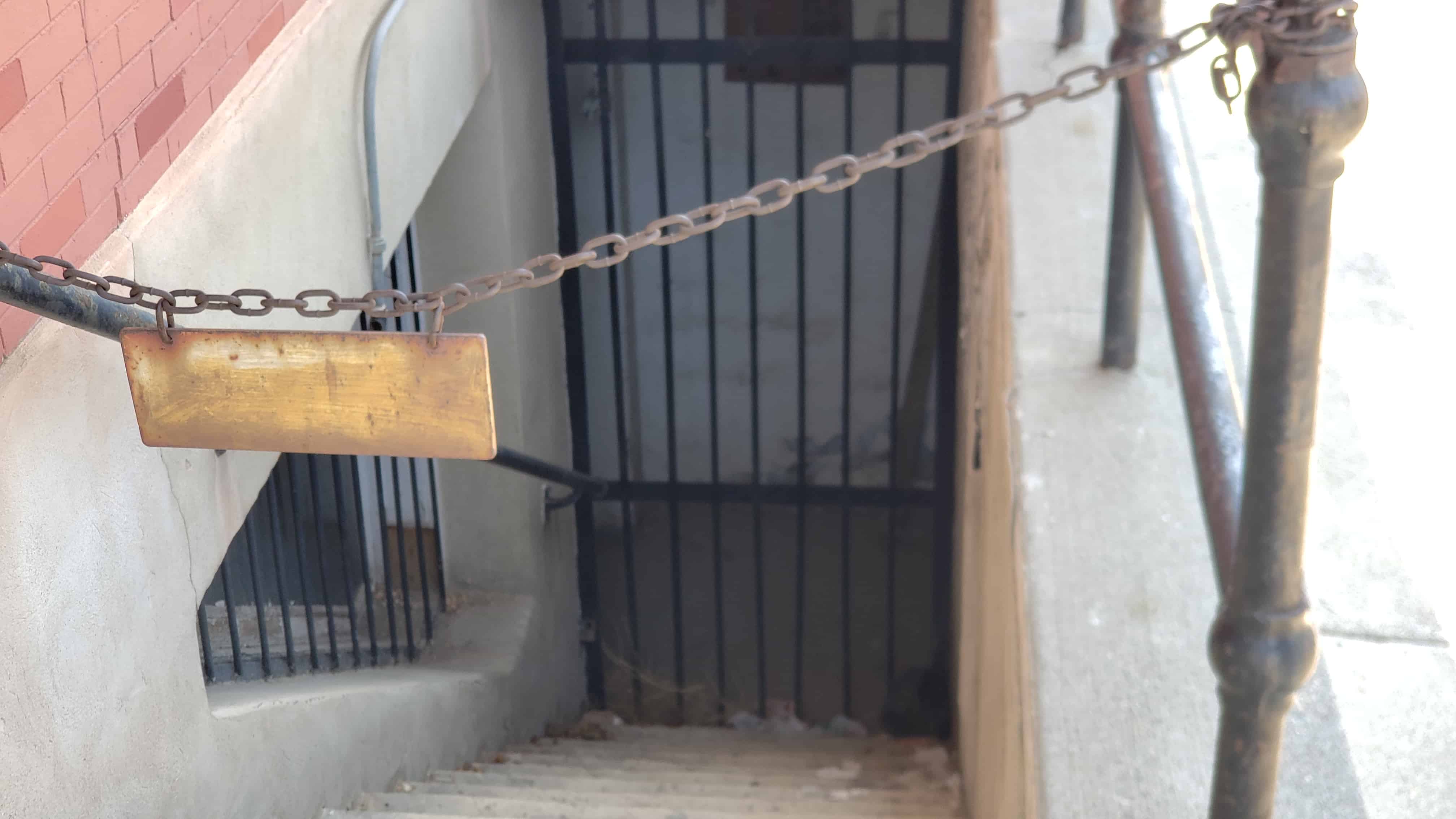
The basement of this structure also saw a variety of uses. At first it was utilized for meetings of various clubs: Rotarians, Kiwanas, the American Legion. On several occasions Rinette and Capitolo catered banquets for the clubs on these premises. At other times, dances were held there. During the sixties these functions ceased, and the basement remained unoccupied until 1977, when it housed Infinity Music record shop for a few months. The basement is once again vacant, although it had been remodeled to accommodate this last business.
In the future, the Mahleres-Siampenos Building will undoubtedly continue to house the type of business that it has consistently maintained since construction. The Savoy Club will remain; the Hi Spot is due for some interior remodeling to facilitate the operation of the restaurant. The owners have begun to give some thought to remodeling the upstairs hotel, which could then be reopened for use. There is no doubt that the building will be preserved and will continue to act an an amalgam of Price’s varied, enduring commercial enterprises.
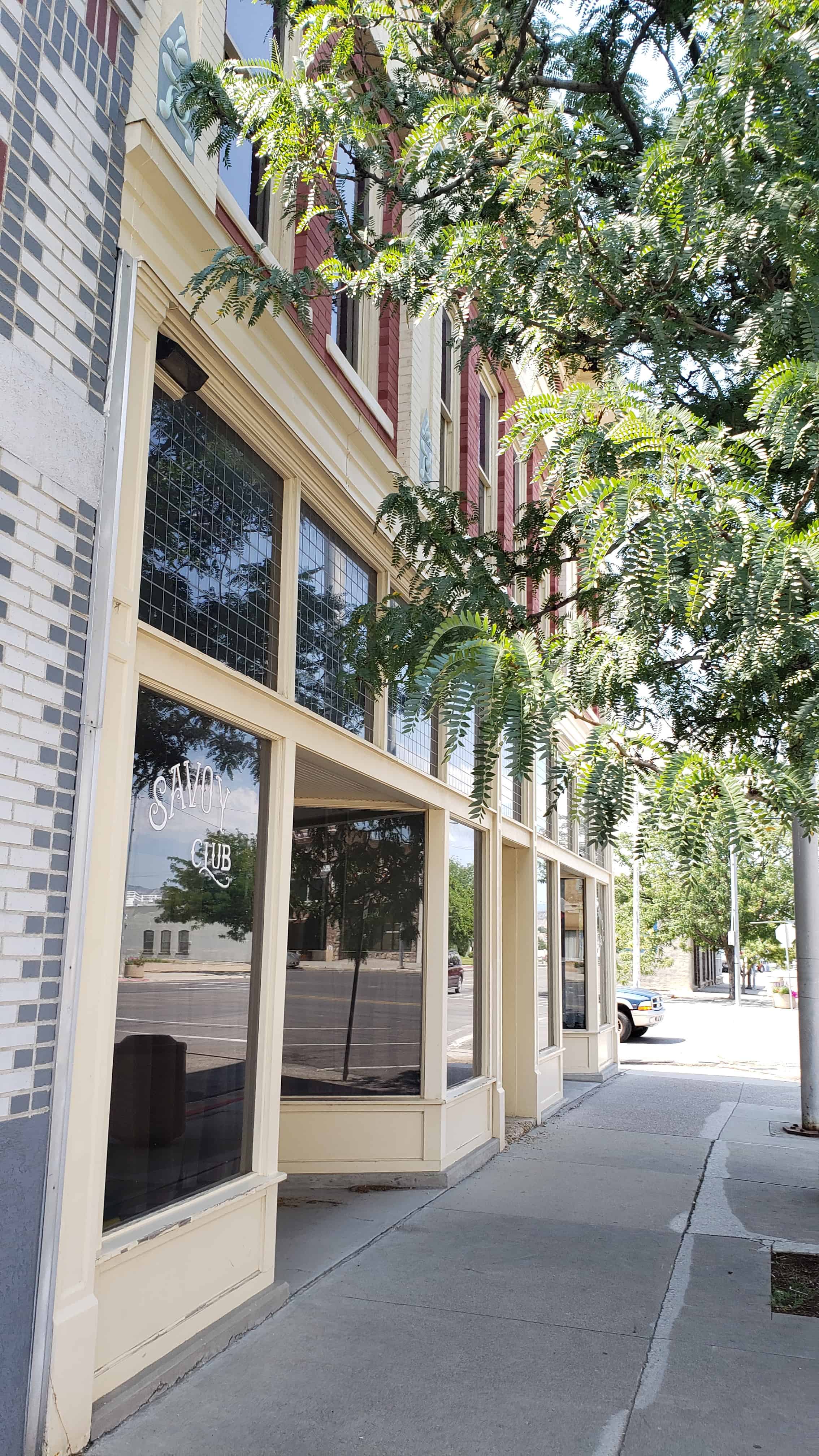
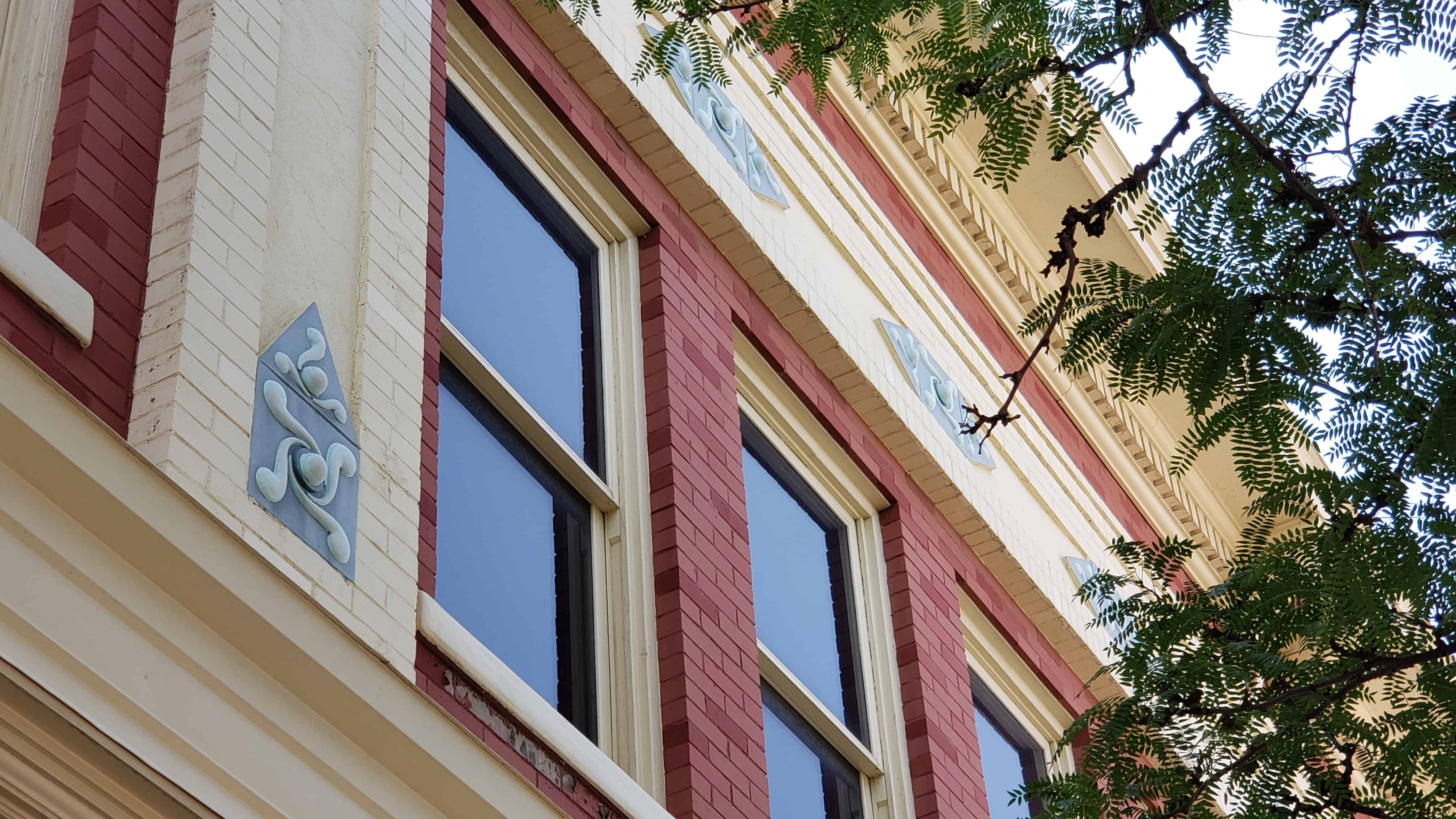
The Mahleres-Siampenos building is a two story brick building, three bays wide and six bays deep with a flat roof. It has elements of the Prairie Style. Classical elements include the paired brackets and dentils at the cornice line. The Prairie Style influence is evident in the horizontality of the building emphasized by the bands of fenestration and accented cornice line. The central projection on the parapet, the geometric quality of the blocky massing of the building, and the geometric ornament are all characteristics common to Prairie Style design in commercial buildings.
The first floor of the façade was originally divided into two commercial spaces each with a recessed entry, which was separated by a recessed central door that offers access to the second floor. The same arrangement still exists except that there is no longer a recessed entrance to the shop on the south half of the building. The panel of windows that spanned the width of the building over the first floor establishments have since been filled in.
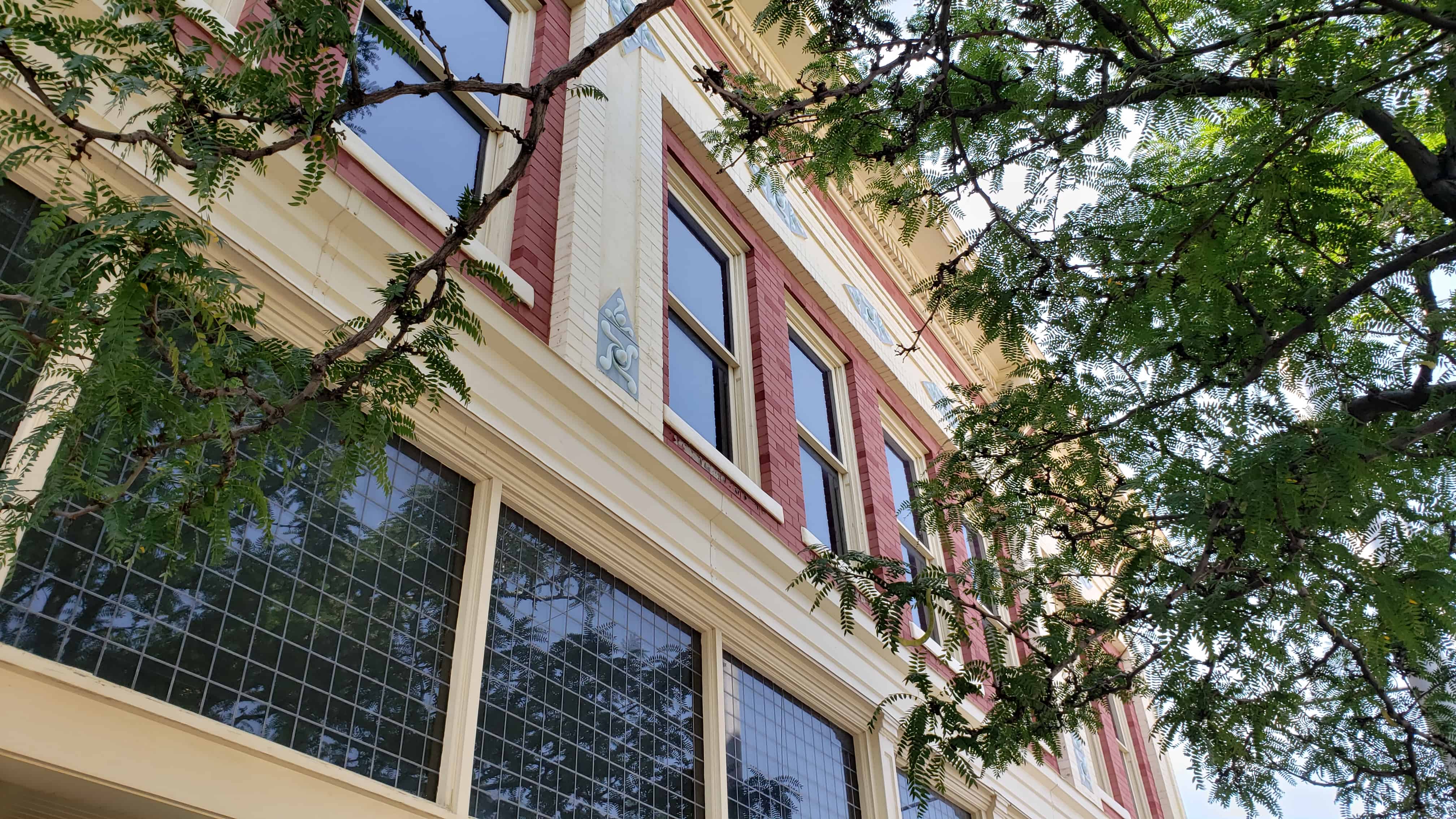
The windows on the second story are the double hung sash type. Across the façade they are grouped so that four windows are centered between two pairs of windows. Down the north side of the building there are two windows per bay. The windows are set into a darker brick and the bays are outlined and divided by bands of a light color brick. Within the panel above the windows and separating the bays, defined by the light color brick, are geometric decorative elements reminiscent of Prairie Style design. Above the second story windows is a projecting cornice supported by paired brackets and a line of dentils. The cornice is topped by a parapet which is outlined by a band of light colored brick and ornamented at the corners and at projecting points along the wall with a simple geometric ornament, also reminiscent of Prairie Style design.
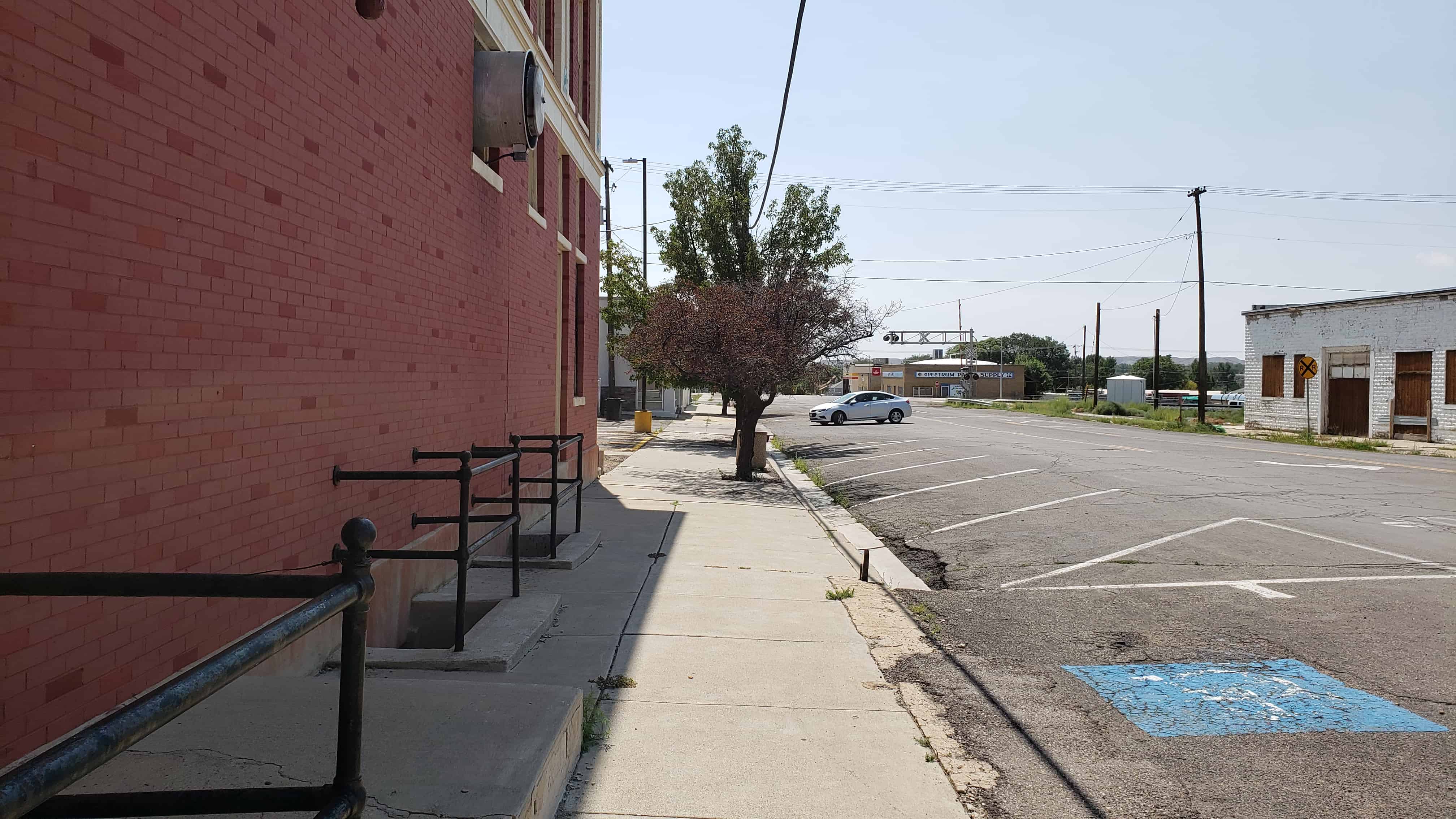
The building has received few alterations. No changes are evident above the first floor, and on the first floor only the south half of the façade and the band of windows above the shops appear to have been changed. A hood over the basement steps has been removed. These changes, however, have not affected the original integrity of the building.