
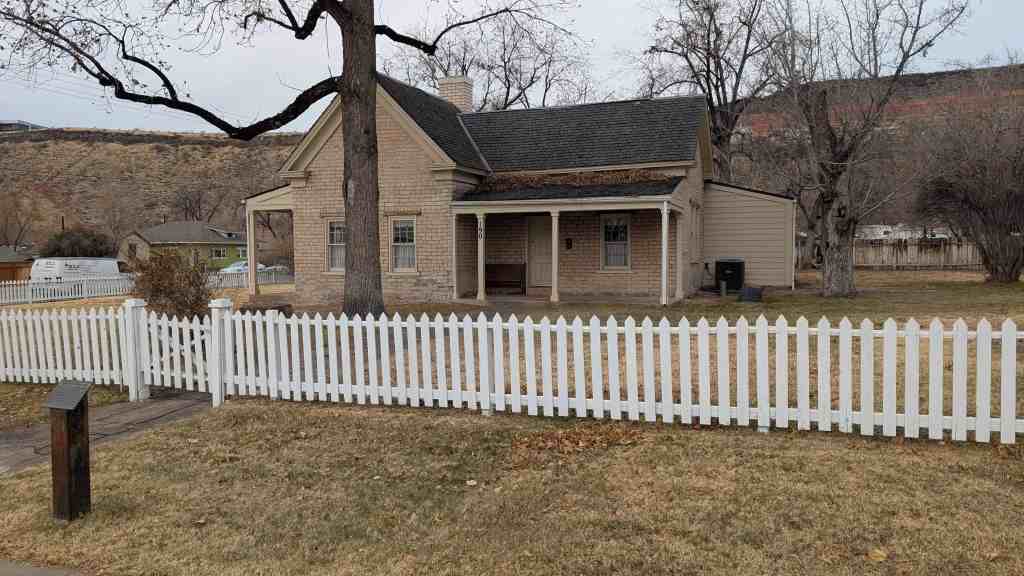
William F. Butler House
Built c. 1865, with a c. 1886 addition, the William F. Butler House is architecturally significant as one of only a few remaining examples of exposed adobe dwellings in the early Mormon settlement of St. George, Utah. Because adobe was readily available, quickly and easily made, and inexpensive, it was the most ubiquitous building material in southern Utah before the turn of the century. Many adobe buildings have been destroyed, and most of the exteriors of the remaining ones have been covered with stucco plaster, brick, wood, aluminum siding or some other sheathing. Never covered over, the exterior walls of the Butler House show the size, color, texture and coursing of its original sun-dried, earthen bricks. The roof, trim and windows of the house are also intact. In addition, this house is historically significant as the only identified house associated with William F. Butler, a farmer and pioneer colonizer, who was one of the initial settlers of St. George, as well as Palmyra and Spanish Fork, Utah and other Mormon towns in Arizona. The arrangement of house and granary on a large in-town lot with the farming land outside of town is typical of the agrarian Mormon settlement pattern
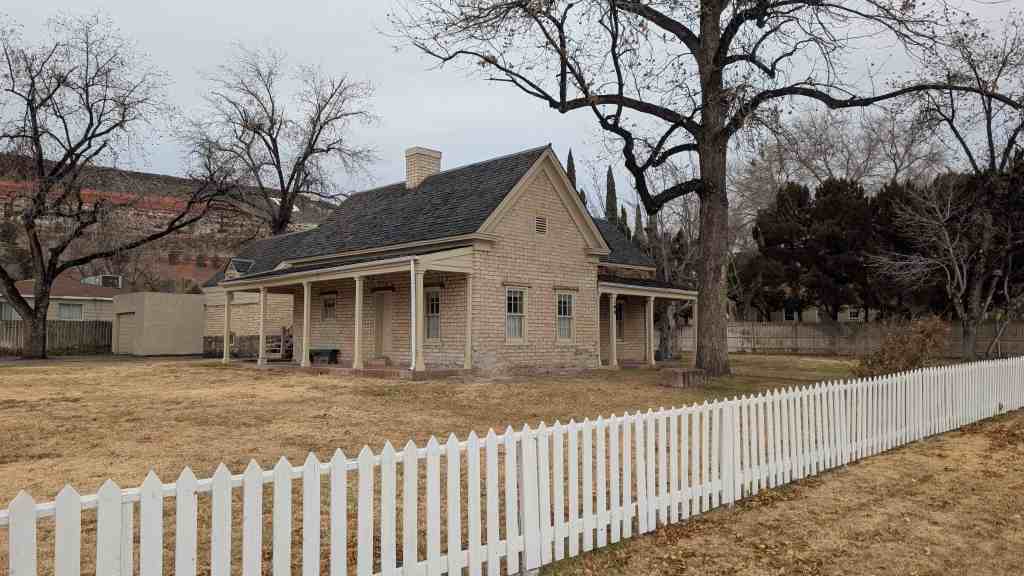
The William F. Butler House is located at 190 South 300 West in St George, Utah and it was added to the National Historic Register (#84002433) on July 13, 1984. The text on this page is from the nomination form for the national register.
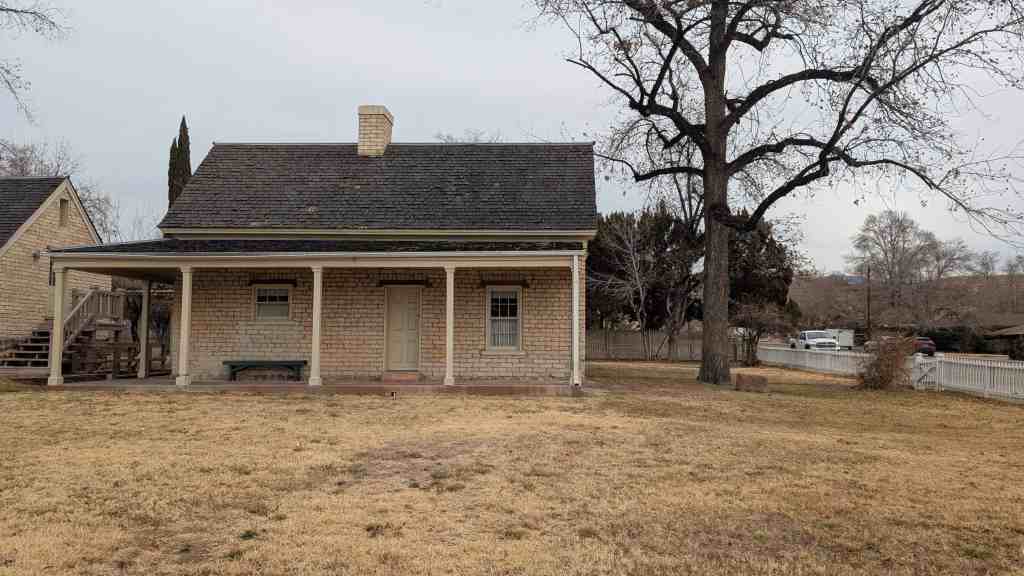
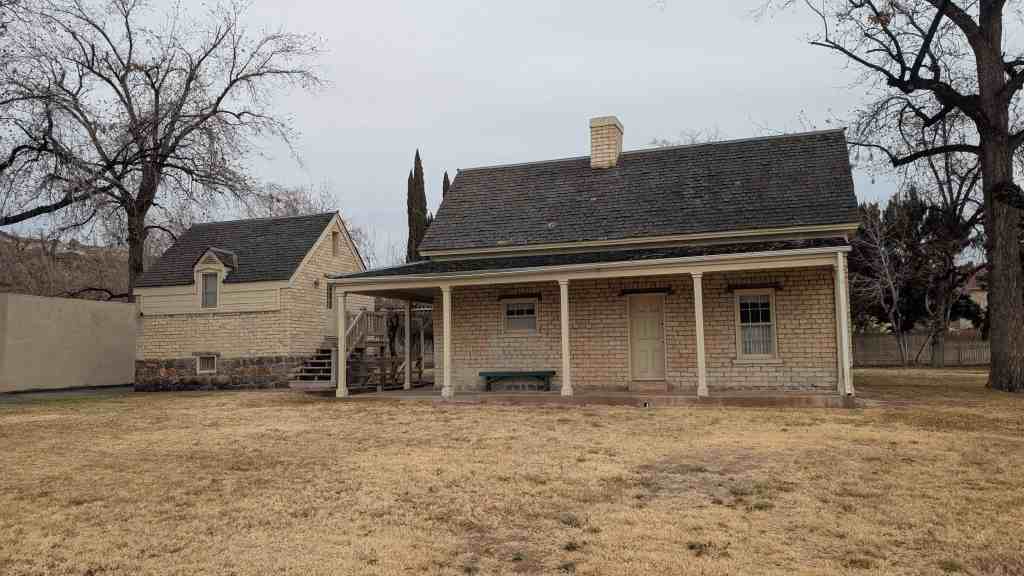
The William Franklin Butler House is said to have been built by its namesake and first owner sometime between 1862, when Butler became the first occupant of the property, and 1886, when it was sold to the next owner, Henry G. Bryner. Based on an analysis of the building’s materials, type of construction and architectural design, it is estimated that the first two adobe rooms of the dwelling were built in the mid-to-late 1860s while the next two adobe rooms and probably the roof as it presently appears, were built in the mid-to-late 1880s. According to Bryner family tradition, Henry Bryner added the north rooms as well as the two-level cellar-granary after purchasing the property in 1886.
William F. Butler, a farmer by occupation, was representative of many Mormon pioneers who, upon coming to Utah, were “called” by church leaders to move from place to place colonizing and expanding the boundaries of “Zion” in the “Mormon Corridor.”
Born in Spencer, Indiana, February 1, 1824, William F. Butler became a convert to Mormonism and moved west with his growing family of five, arriving in what is now Utah in 1852. He was immediately called to be in the vanguard party of settlers who established Palmyra, a short-lived town near Utah Lake which was temporarily abandoned in 1855. Like most of his neighbors, Butler moved over to nearby Spanish Fork where he expanded his family by five children and served as a city councilman.
At the Mormon “General Conference” in October 1861, the Butler family was one of 309 families asked by church president Brigham Young to join “a company of missionaries for the south.” Anticipating the outbreak of a national civil war, Young expected that the territory’s supply of cotton from the southern states might be cut off thereby creating a critical shortage of the important materials. To minimize the impact of this eventuality, Young sent the “company of missionaries” to grow cotton in an arid, sparsely-settled area of southern Utah aptly named Dixie. Here Butler and his fellow colonizers established the city of St. George, named for the settlement’s leader, Mormon Apostle, George A. Smith.
A census taken in the summer of 1862 shows William F. Butler to have been among the city’s very first settlers. In January 1862, he was among those who contributed money toward the building of St. George’s first public building, a stone school, social hall and meeting house. Of such early donors it was said “not many of these subscribers had a roof over his own head as yet.” Apparently somewhat better off than some of his peers, Butler was one of those listed in an 1864 “survey of breadstuffs on hand” to have a surplus of food and cotton, enough to offer some for trade.
The earliest known townsite map of St. George shows that “William F. Buttler” (sic) owned a residential parcel at the northwest corner of 200 South and 300 West streets. This property he obtained by drawing a lot out of a hat as was customary in Mormon communities of the period. On February 15, 1875, after a federal land patent gave legal ownership to the inhabitants of St. George, an abstract was signed and recorded giving Lot 1 on Block 8 Plat A to William F. Butler. It is on this property that the present house is located.
Butler and his burgeoning family of two wives and many children continued to participate in the development of St. George until the mid-1880s when the family responded to another “call,” this time to the seemingly more inhospitable territory of Arizona. On June 7, 1886, Butler sold his holdings to Henry Gotfreid (Gotfrey) Bryner and moved on to help settle Hubbard, Arizona before dying in Pima June 5, 1909.
Henry G. Bryner, the property’s second owner, was born in Edwieken, Switzerland on July 17, 1853. Along with the families of his father and grandfather, he came to Utah as a Mormon convert, settling in St. George and marrying the year after buying the old Butler House. Although he reportedly expanded the house and built the present stone granary, Bryner was shortly thereafter asked to help establish Price, Utah. He moved there and raised seven children all born between 1889 and 1901.
For reasons unknown, he did not sell his home in St. George until April 27, 1897, when it was purchased by Arthur Hartley Woodbury, a St. George born farmer and son of first generation pioneer John Stillman Woodbury. Arthur and his growing family occupied the house until 1904 when it was sold to William Bertie Bradshaw, also a native son and farmer. In 1918, Bradshaw traded the home and lot for a house owned by Ephraim Jarvis Webb in nearby Hurricane, Utah. The fifth large family to occupy the diminuative adobe dwelling, the Webbs, sold the house to George Hackford in 1^45. He in turn sold it in 1952 to Joe F. and Annie Hall who occupied the place until January 1967 when it was purchased by Ivor Clove. A few months later it was turned over to Mr. Clove’s daughter, Mary Rondo and her husband Joseph. On August 18, 1981, the present owners, Lovinia, Stephen and Randall Harmsen bought the old Butler property and began preparing for a rehabilitation project which was recently completed.
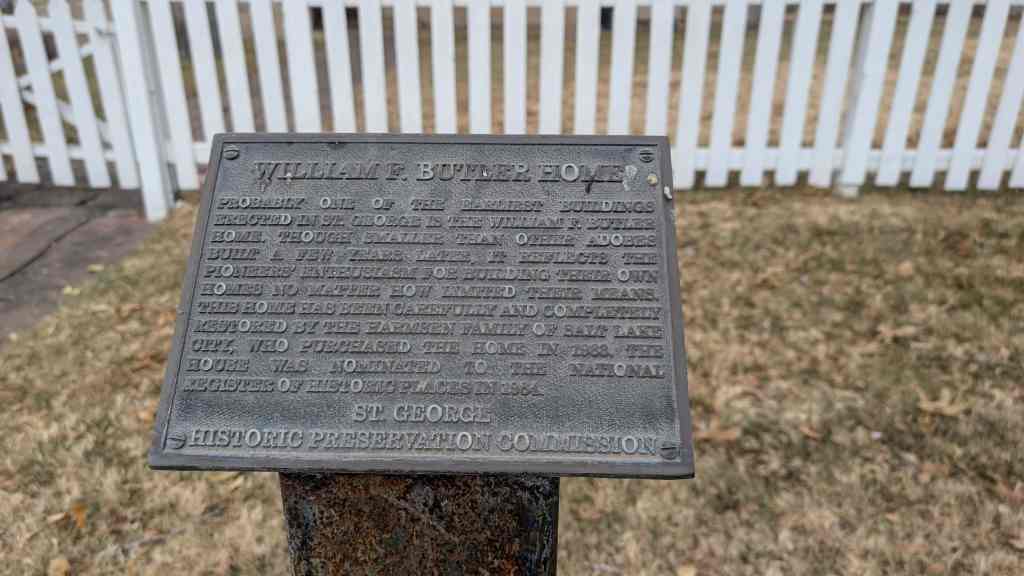
Probably one of the earliest buildings erected in St. George is the William F. Butler Home. Though smaller than other adobes built a few years later, it reflects the pioneers’ enthusiasm for building their own homes no matter how limited their means. This home has been carefully and completely restored by the Harmsen family of Salt Lake City, who purchased the home in 1983. The house was nominated to the National Register of Historic Places in 1984.
Pingback: St George by Address | JacobBarlow.com
Pingback: St. George, Utah | JacobBarlow.com