
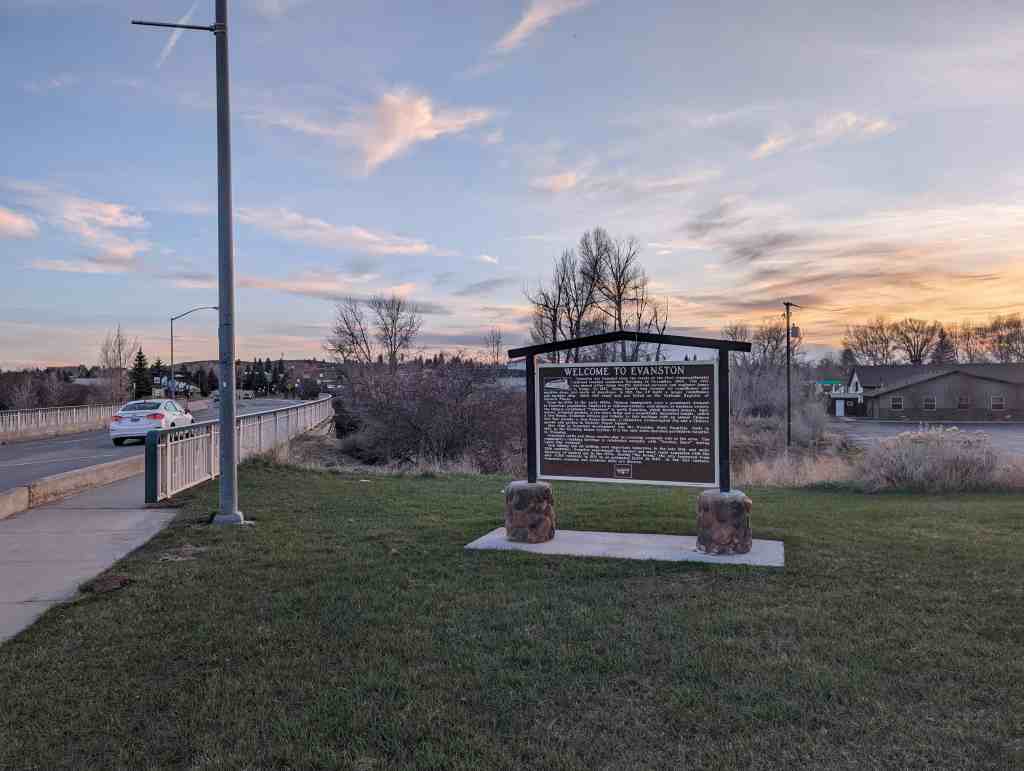
Welcome to Evanston
Evanston was founded when the tracks of the first transcontinental railroad reached southwest Wyoming in November, 1868. The city was named after Union Pacific Railroad surveyor and engineer James A. Evans. By 1871, Union Pacific had located its roundhouse and machine shops just north of downtown. In 1912, the UP built a larger roundhouse and machine shop, which still stand and are listed on the National Register of Historic Places.
From the 1870s to the early 1920s, Chinese immigrants were a prominent element in Evanston’s population. Employed as railroad workers, coal miners or business owners, the Chinese established “Chinatown” in north Evanston, which included houses, businesses, irrigated gardens, a two-story lodge and a beautifully decorated temple, called a Joss House. Evanston citizens pay tribute to this heritage with an annual Chinese New Year parade, a Joss House Museum, a Chinatown Archeological Dig and a Chinese gazebo and garden in Historic Depot Square.
Built in Also vital to Evanston’s development was the Wyoming State Hospital. 1887, as the Wyoming Insane Asylum, it is the only state-operated psychiatric hospital in Wyoming.
Evanston’s cattle and sheep ranches play an essential economic role in the area. The community’s ranching heritage is celebrated annually with “Cowboy Days” during Labor Day weekend.
Coal mining and oil drilling were important industries in the late 19th and early 20th centuries. Evanston experienced its largest and most rapid expansion with the discovery of natural gas in the 1970s. During “the boom,” the city increased from In the 21st century, only 4,000 residents in 1970 to an estimated 15,000 in 1980. Evanston’s economy and residents alike are diverse.

Located at Evanston, Wyoming.