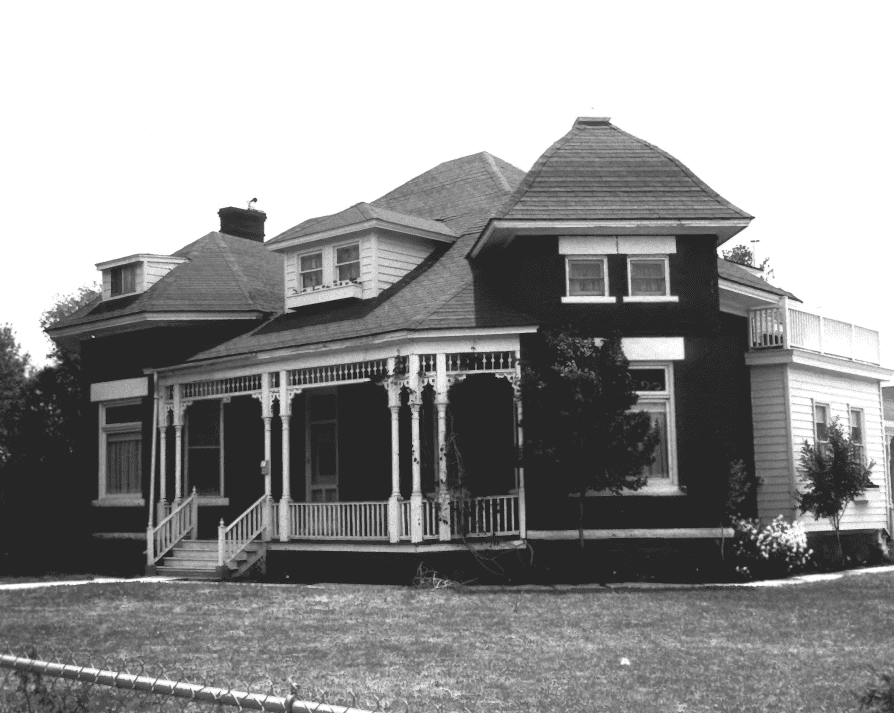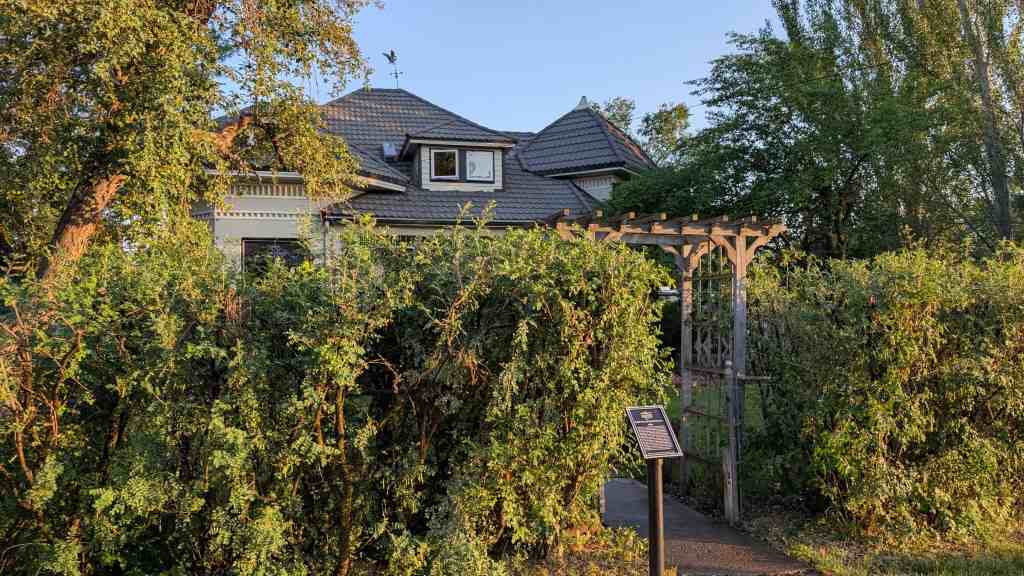
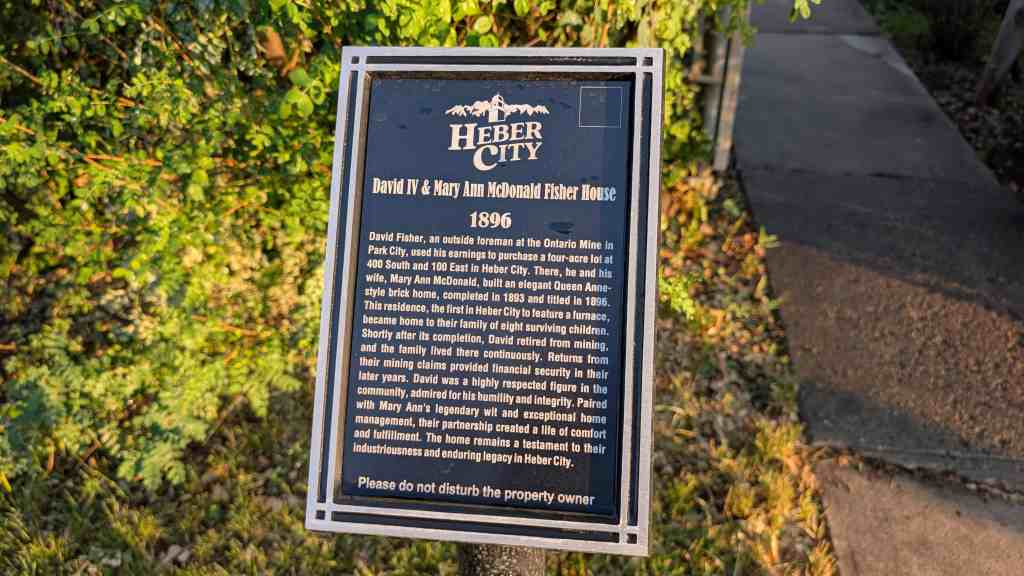
David IV & Mary Ann McDonald Fisher House
1896
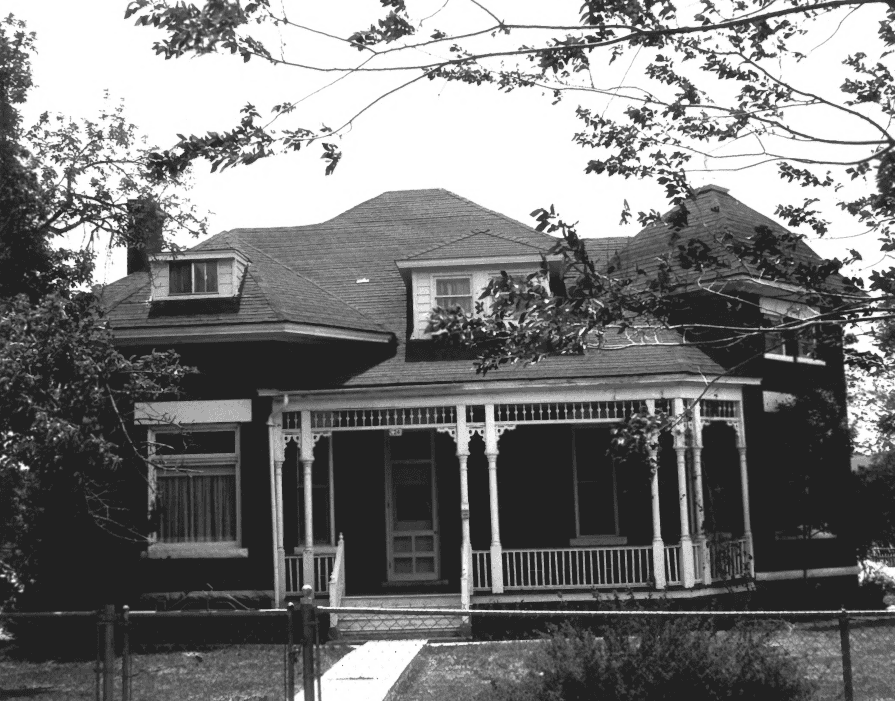
David Fisher, an outside foreman at the Ontario Mine in Park City, used his earnings to purchase a four-acre lot at 400 South and 100 East in Heber City. There, he and his wife, Mary Ann McDonald, built an elegant Queen Anne- style brick home, completed in 1893 and titled in 1896. This residence, the first in Heber City to feature a furnace, became home to their family of eight surviving children. Shortly after its completion, David retired from mining, and the family lived there continuously. Returns from their mining claims provided financial security in their later years. David was a highly respected figure in the community, admired for his humility and integrity. Paired with Mary Ann’s legendary wit and exceptional home management, their partnership created a life of comfort and fulfillment. The home remains a testament to their industriousness and enduring legacy in Heber City.
Part of the Historic Home Tour and located at 124 East 400 South in Heber City, Utah and added to the National Register of Historic Places (#80003984) on April 16, 1980.
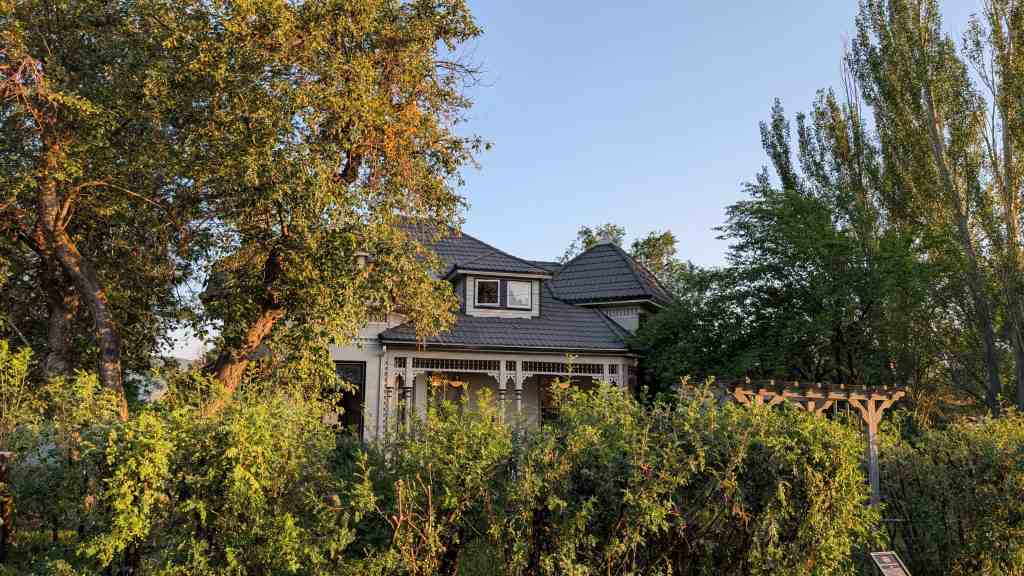
In the rural economy of Wasatch County, few people had the resources to construct large buildings. The David Fisher house, although only a one and one-half story structure, is one of the largest remaining nineteenth century homes in Heber City. The irregularity of plan and massing and the complex roof forms reflect the influence of the Queen Anne style, probably in its “patternbook” mode. The Queen Anne style was embraced not only in the metropolitan areas of the inter mountain west but also in areas linked somehow to the mining industry during its booming early years where the exuberance of the architecture often paralleled the local atmosphere and prosperous economy. Though Heber City was an agrarian community, its economy was largely dependent upon neighboring Park City, an important nineteenth century mining district. David Fisher’s home is one of the few known remaining homes in the county documenting this situation, an important example of Victorian “patternbook” eclecticism in rural Utah.
When the Mormon pioneers came to Utah, Brigham Young encouraged the members of the Church to plant crops and not dig for ores. His advice was followed, and so the mining industry was developed by non-Mormons. Patrick E. Connor, an army colonel who developed Fort Douglas, is usually referred to as, “the father of Utah mining”. Later men like Thomas Kearns, a gentile, and Jesse Knight, a Mormon, made fortunes from the mines in the state.
Although in most cases, the Mormons did not play an active role in prospecting, they supported the industry in other ways. Farmers sold their produce to the miners and occasionally young men went to the mines to earn needed cash.
This relationship between farmers and miners was true especially in Wasatch and Summit Counties. Heber City in Wasatch County was settled by the Mormons and was largely an agricultural community. Park City, in Summit County, more than 20 miles away, was settled by non-Mormons and was a mining boom town in the late nineteenth century. Throughout the mining period in Park City, Heber City farmers sent produce to Park City and many of the men traveled to the mines to work. When silver prices declined in the 1890s and caused a depression in Park City, the economy in Heber was also shaken.
David Fisher, like many men in Heber, went to work at the Ontario Silver Mine in Park City. Fisher was born in Scotland in 1852 and came to Utah with his parents in 1860. The family settled in Salt Lake at first but then decided to move to Heber where there was agricultural land available. David’s father took out a homestead and then returned to Salt Lake so that he and David could work on the Union Pacific. After his father was killed by a landslide, David returned to Heber.
David started working for John McDonald, a farmer in the valley. He married Mary Ann McDonald in the Endowment House in 1874. They built a small loghouse in Heber. Later the couple decided that David would go to the Ontario mine to work and Mary Ann would stay at the family homestead in Daniel’s Creek.
In 1892, at about the time that Park City went into a depression because of a drop in silver prices, David returned to Heber. He built this home in Heber and continued to live in it until his death in 1915.
David was able to have a comfortable living because of the interest he had received from his mining claims in Park City. Like most residents of Heber, he also had a garden and a few farm animals that he kept around his home. In addition to this small farming operation, David also spent his time serving the community of Heber. He served on the city council from 1905 to 1913. During this time he worked on committees to improve the cemetery grounds and install the Heber City electric plant and water system.
David was a member of the Mormon Church. Although he did not attend church regularly or hold offices in the church, he made donations to the local ward and helped support the Church financially.
After David’s death in 1915, his wife, Mary Ann, continued to live in the home. The family sold it in 1936 and it was owned by several people. For about eight years it was a rest home and the house became very run down. Within the last two years, Mr. and Mrs. Wesley Budd have bought the house and have restored much of the outside to its former beauty.