
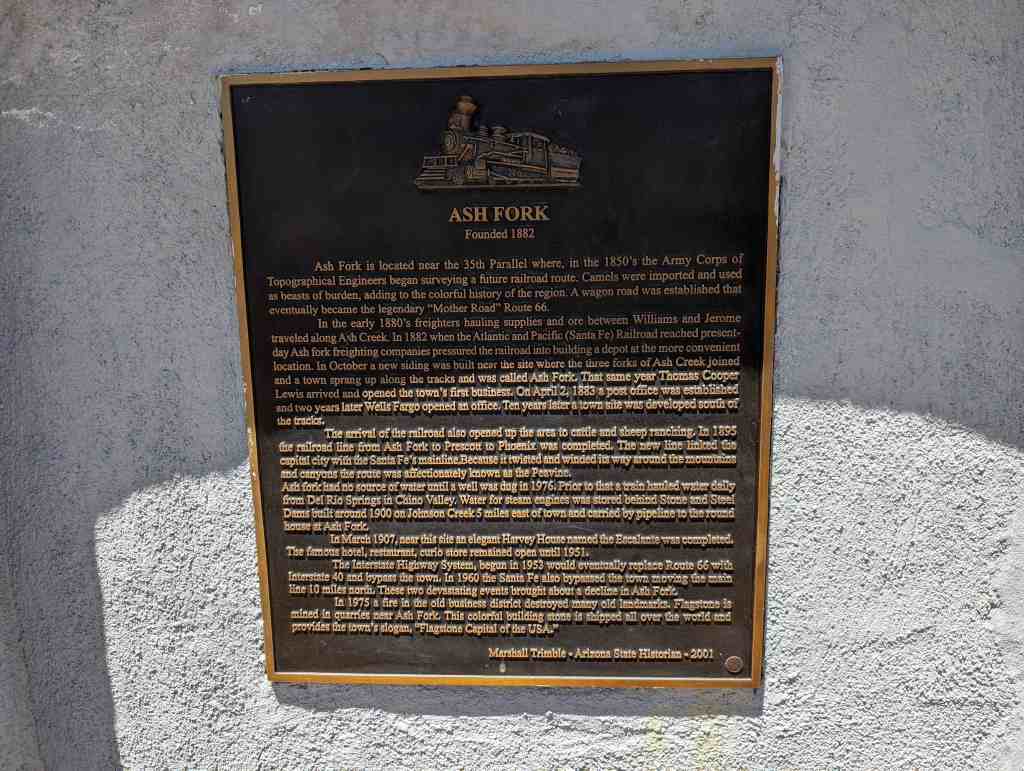
ASH FORK
Founded 1882
Ash Fork is located near the 35th Parallel where, in the 1850’s the Army Corps of Topographical Engineers began surveying a future railroad route. Camels were imported and used as beasts of burden, adding to the colorful history of the region. A wagon road was established that eventually became the legendary “Mother Road” Route 66.
In the early 1880’s freighters hauling supplies and ore between Williams and Jerome traveled along Ash Creek. In 1882 when the Atlantic and Pacific (Santa Fe) Railroad reached present-day Ash fork freighting companies pressured the railroad into building a depot at the more convenient location. In October a new siding was built near the site where the three forks of Ash Creek joined and a town sprang up along the tracks and was called Ash Fork. That same year Thomas Cooper Lewis arrived and opened the town’s first business. On April 2, 1883 a post office was established and two years later Wells Fargo opened an office. Ten years later a town site was developed south of the tracks.
The arrival of the railroad also opened up the area to cattle and sheep ranching. In 1895 the railroad line from Ash Fork to Prescott to Phoenix was completed. The new line linked the capital city with the Santa Fe’s mainline Because it twisted and winded its way around the mountains and canyons the route was affectionately known as the Peavine.
Ash fork had no source of water until a well was dug in 1976. Prior to that a train hauled water daily from Del Rio Springs in Chino Valley. Water for steam engines was stored behind Stone and Steel Dams built around 1900 on Johnson Creek 5 miles east of town and carried by pipeline to the round house at Ash Fork.
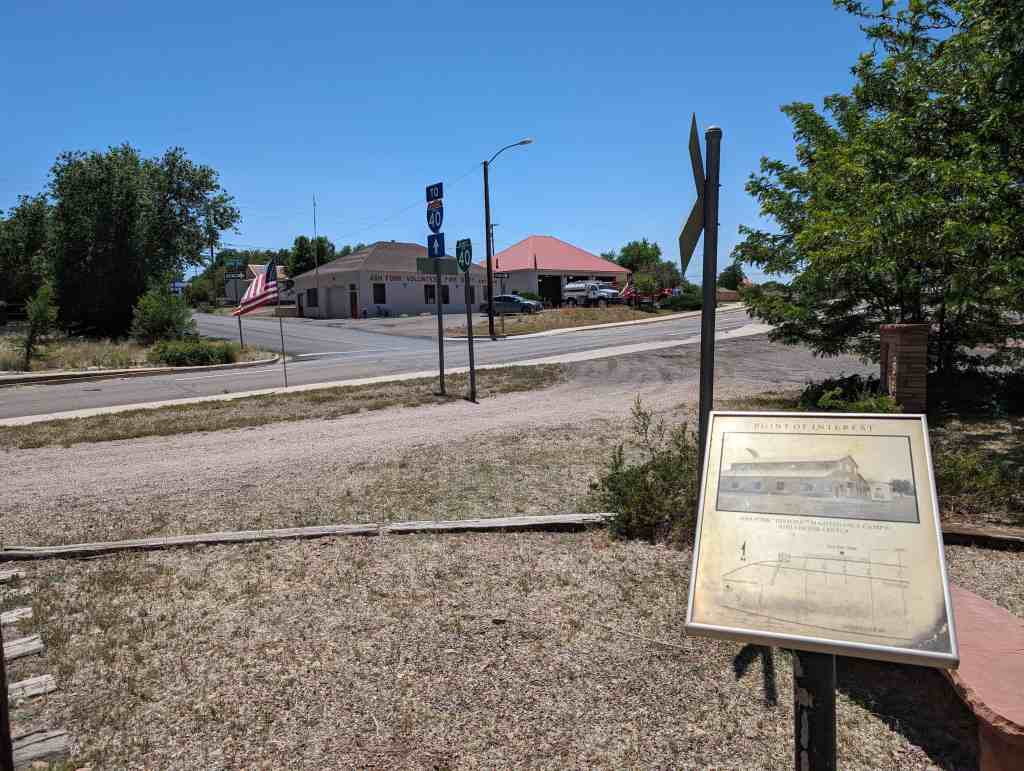
In March 1907, near this site an elegant Harvey House named the Escalante was completed. The famous hotel, restaurant, curio store remained open until 1951.
The Interstate Highway System, begun in 1953 would eventually replace Route 66 with Interstate 40 and bypass the town. In 1960 the Santa Fe also bypassed the town moving the main line 10 miles north. These two devastating events brought about a decline in Ash Fork.
In 1975 a fire in the old business district destroyed many old landmarks. Flagstone is mined in quarries near Ash Fork. This colorful building stone is shipped all over the world and provides the town’s slogan, “Flagstone Capital of the USA.”
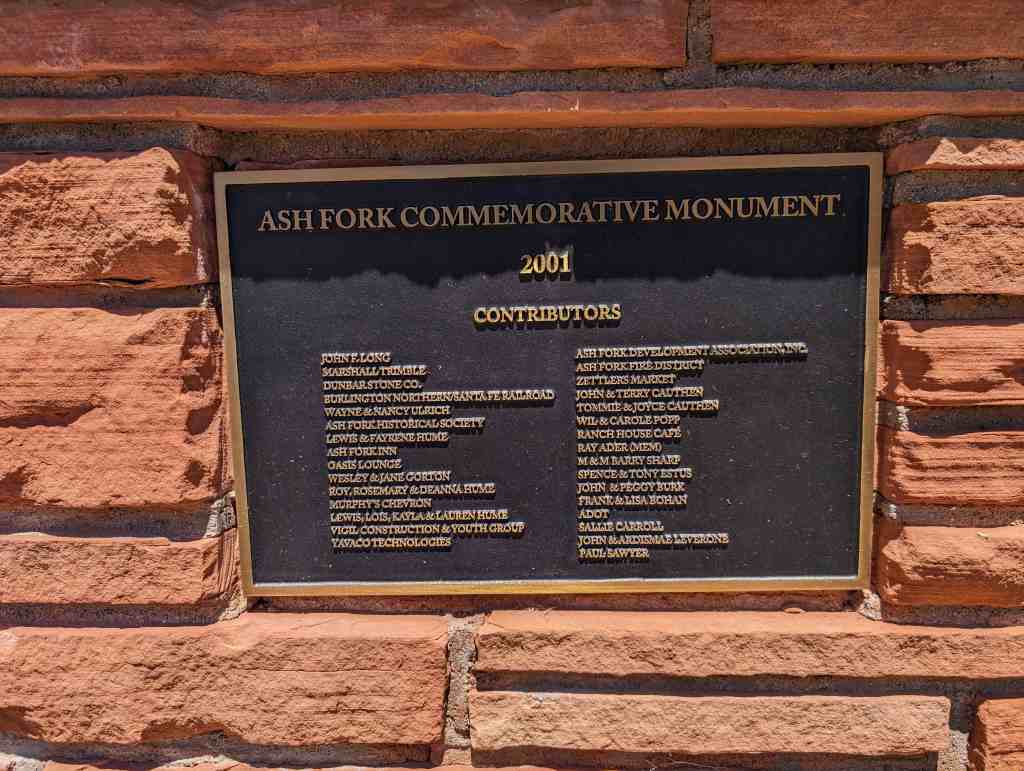
Marshall Trimble-Arizona State Historian-2001
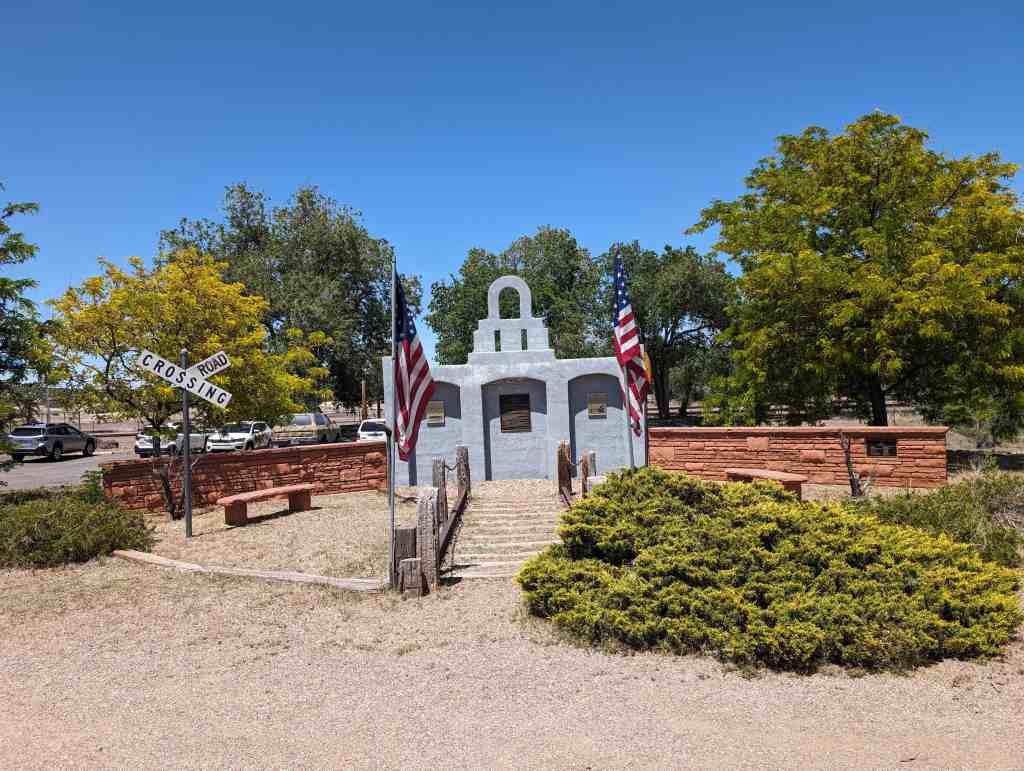
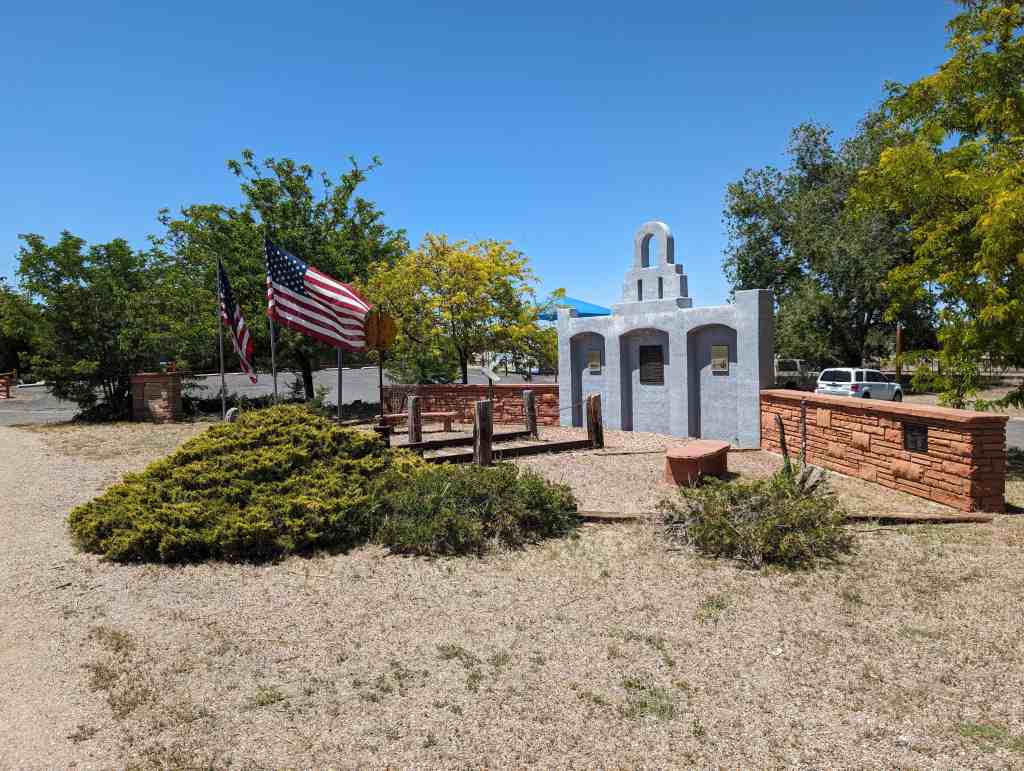
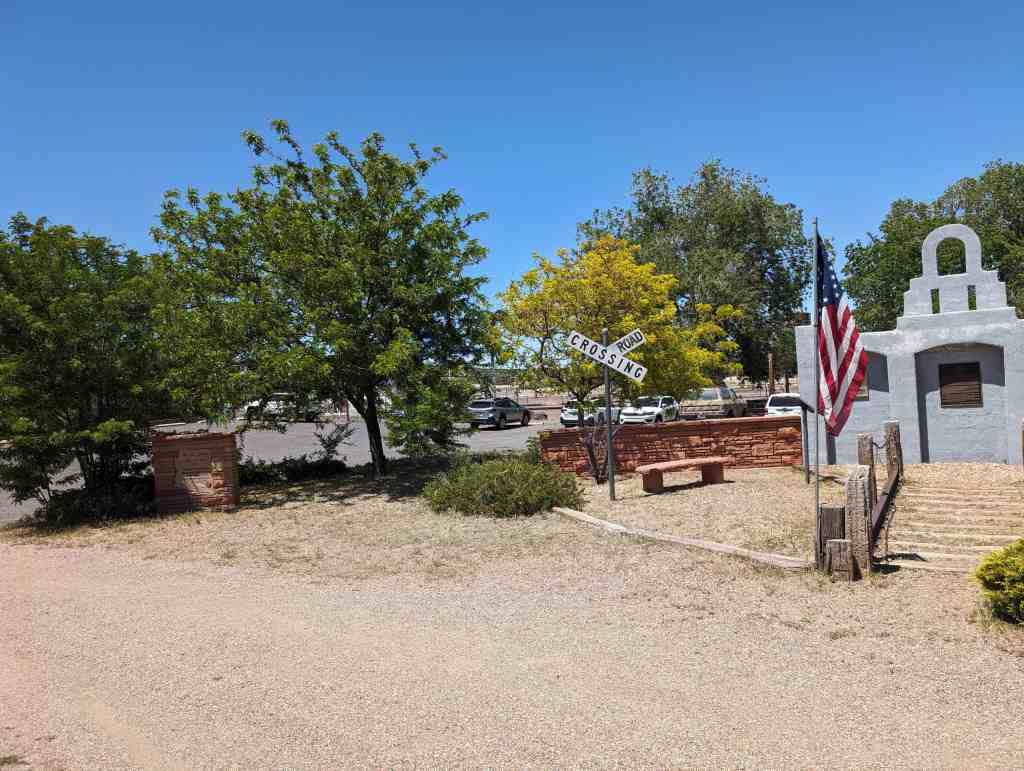
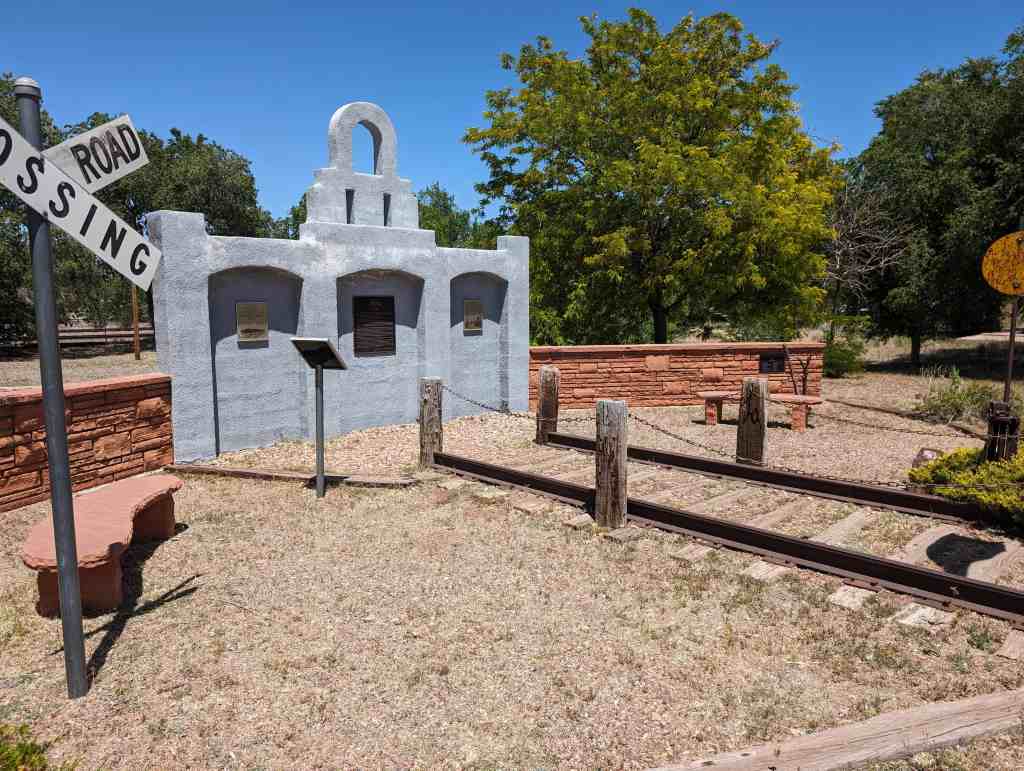
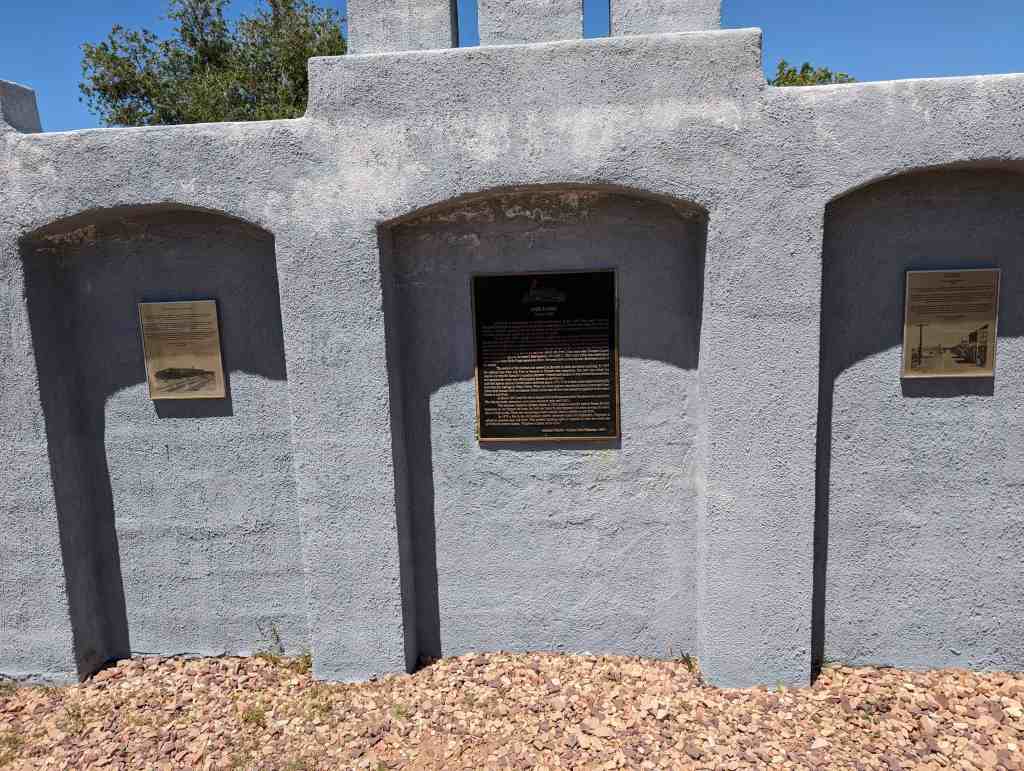
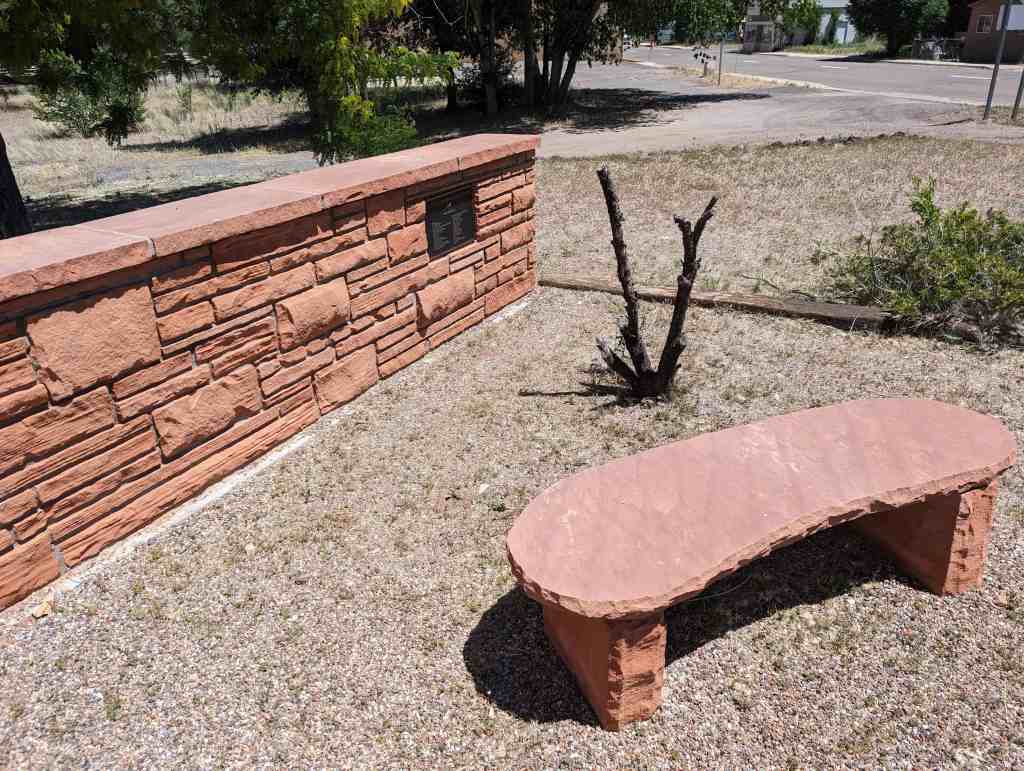
Monument located in Ash Fork, Arizona
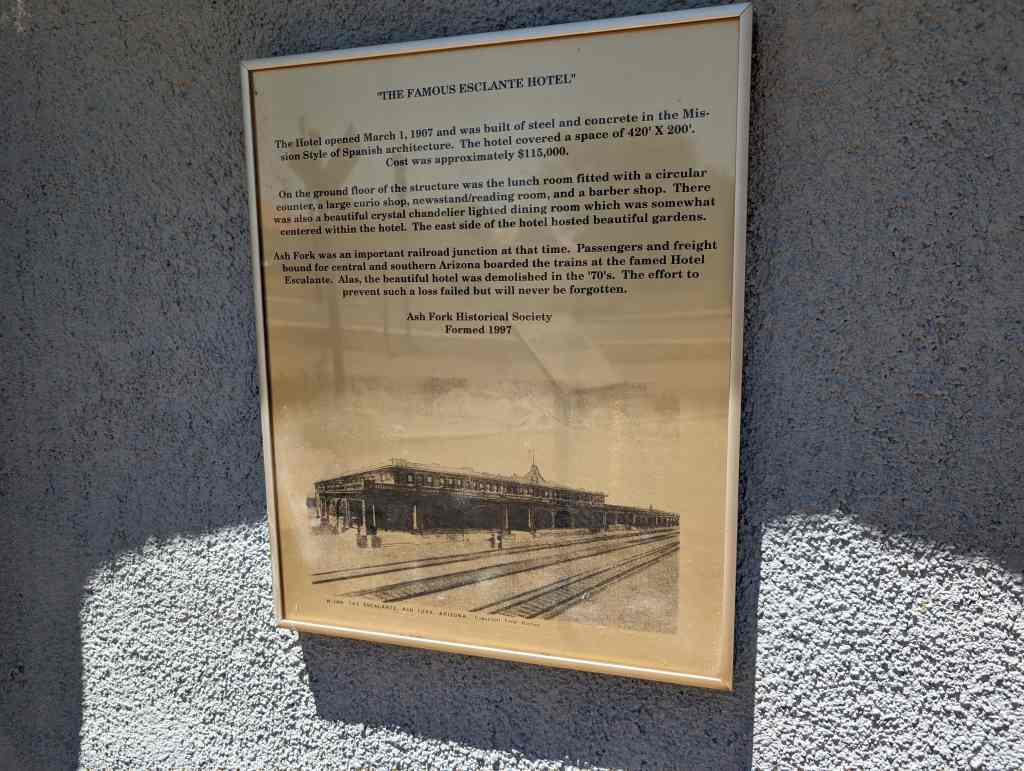
“THE FAMOUS ESCLANTE HOTEL”
The Hotel opened March 1, 1907 and was built of steel and concrete in the Mis- sion Style of Spanish architecture. The hotel covered a space of 420′ X 200′.
Cost was approximately $115,000.
On the ground floor of the structure was the lunch room fitted with a circular counter, a large curio shop, newsstand/reading room, and a barber shop. There was also a beautiful crystal chandelier lighted dining room which was somewhat centered within the hotel. The east side of the hotel hosted beautiful gardens.
Ash Fork was an important railroad junction at that time. Passengers and freight bound for central and southern Arizona boarded the trains at the famed Hotel Escalante. Alas, the beautiful hotel was demolished in the ’70’s. The effort to prevent such a loss failed but will never be forgotten.
Ash Fork Historical Society Formed 1997
H-2409 THE ESCALANTE, ASH, FORK, ARIZONA. Copyright Fred Harvey

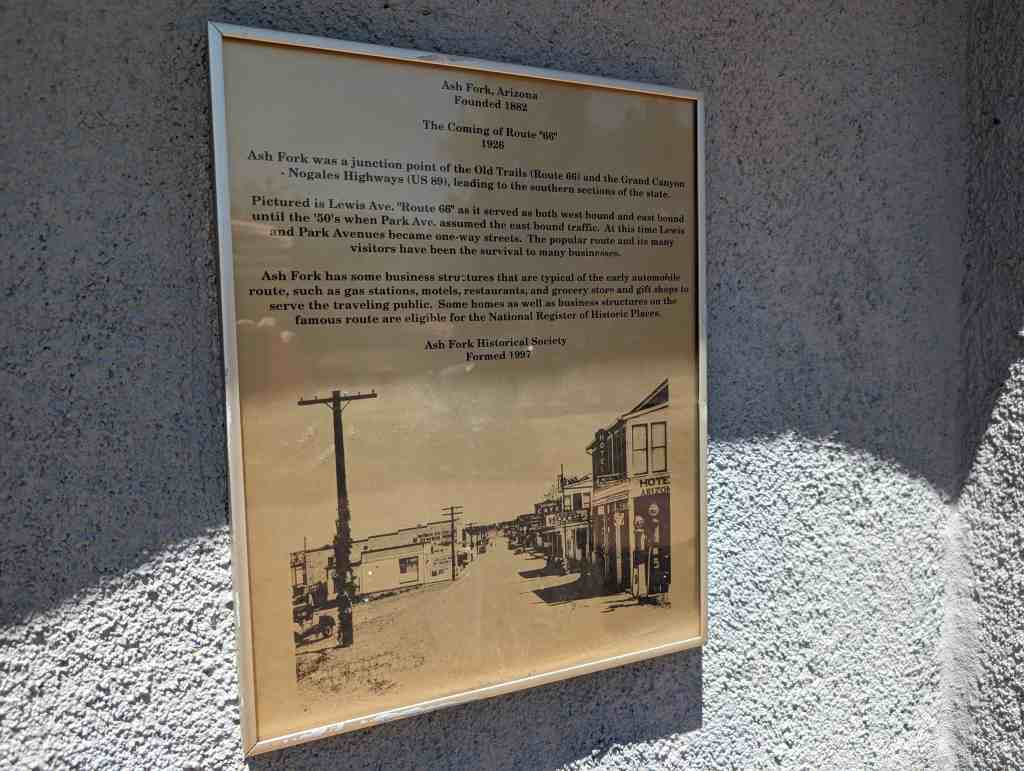
Ash Fork, Arizona
Founded 1882
The Coming of Route “66”
1926
Ash Fork was a junction point of the Old Trails (Route 66) and the Grand Canyon Nogales Highways (US 89), leading to the southern sections of the state.
Pictured is Lewis Ave. “Route 66” as it served as both west bound and east bound until the ’50’s when Park Ave. assumed the east bound traffic. At this time Lewis and Park Avenues became one-way streets. The popular route and its many visitors have been the survival to many businesses.
Ash Fork has some business structures that are typical of the early automobile route, such as gas stations, motels, restaurants, and grocery store and gift shops to serve the traveling public. Some homes as well as business structures on the famous route are eligible for the National Register of Historic Places.
Ash Fork Historical Society
Formed 1997

Pingback: Ash Fork, Arizona | JacobBarlow.com