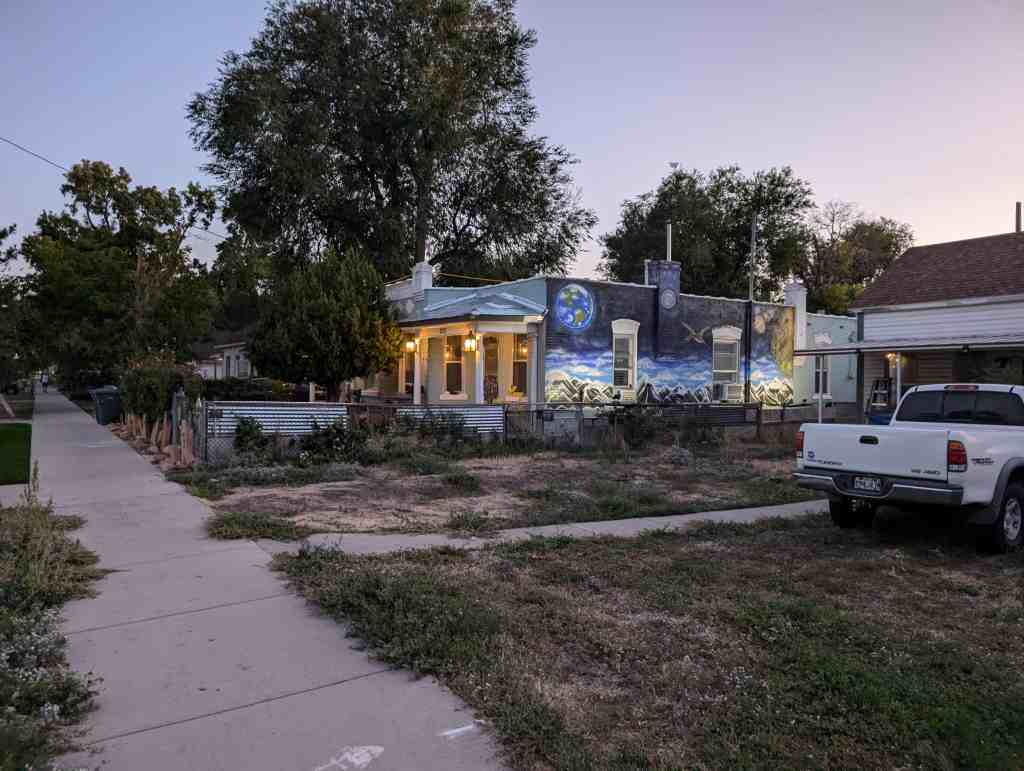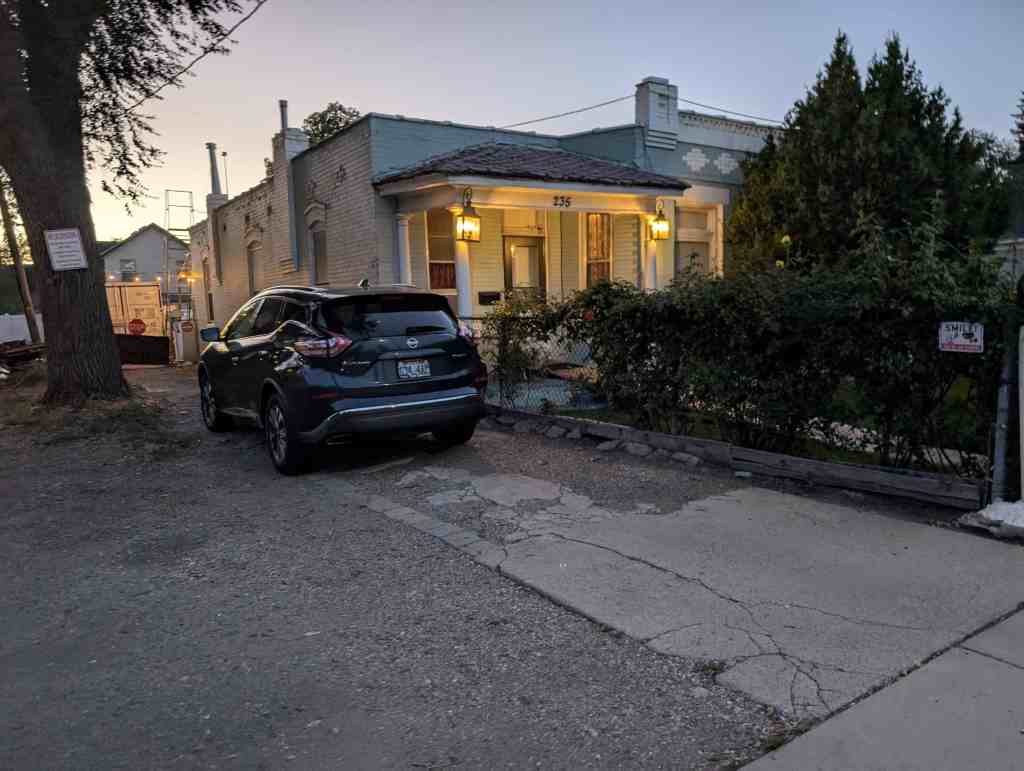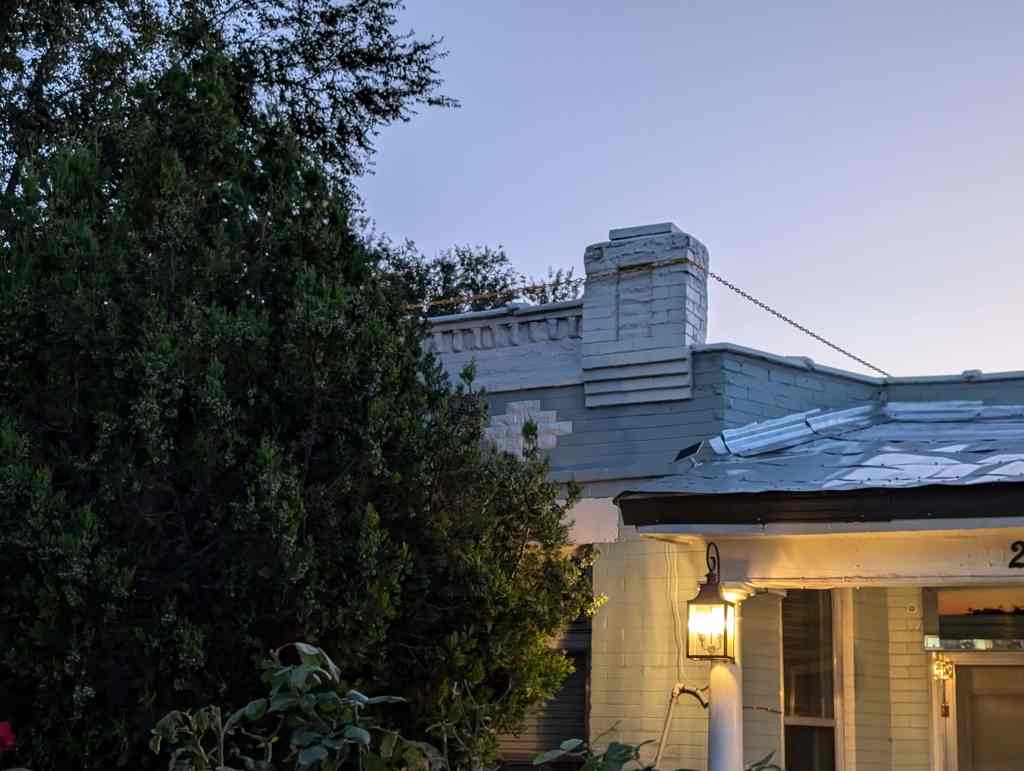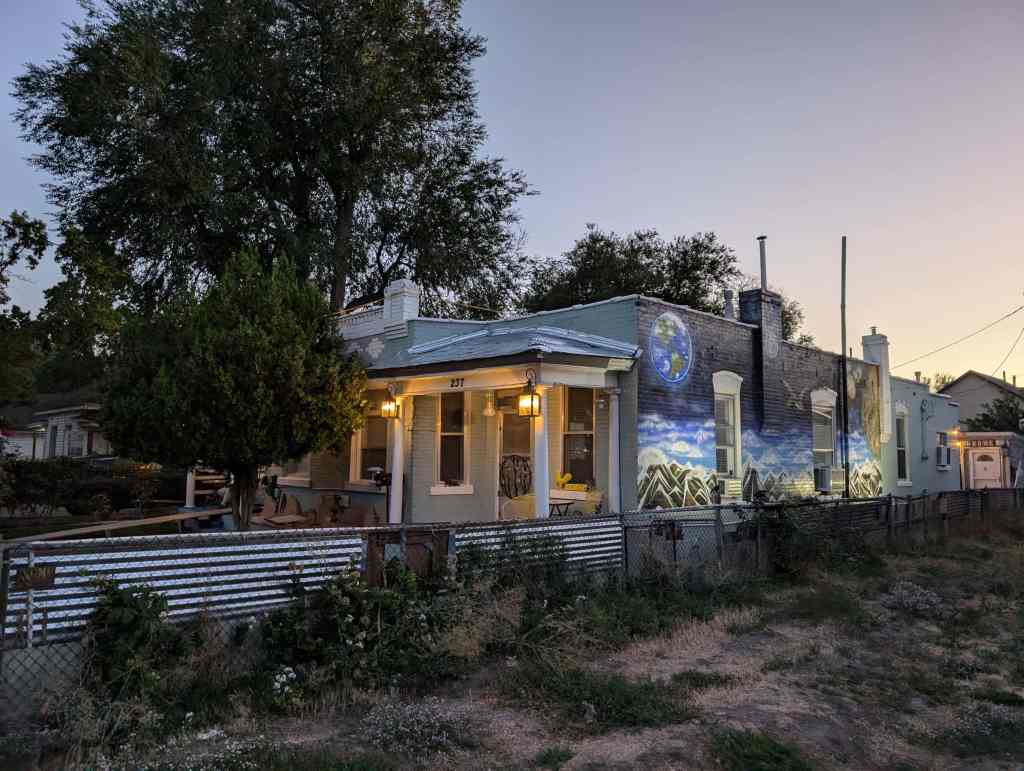
237 North 600 West in Salt Lake City, Utah.
- referenced in Salt Lake Northwest Historic District:
The greatest change to the northwest district was an economic change. The ratio of railroad workers to nonrailroad workers increased dramatically from the previous decades. In fact, in the 1910 census enumeration for the district, the percentage of heads of household who list “railroad” in the type of industry column ranges from 25 to 50 percent for some streets. There appears to be a slight decrease in the 1920 census. In the following sample of housing built during this period, the dominance of railroad-related occupations is illustrated. Of the two men who lived in the 1908 flat-roofed brick duplex at 235-237 North 600 West, one worked for an electric company and the other worked at the Garfield Smelter. Living in a row of 1909 Victorian cottages near 1000 West and 400 North, two-thirds of the adult male residents held railroad jobs. A survey of the original residents of fourteen Langton Park bungalows (built in 1918) along 900 West, states “the majority of the residents worked for the railroad — either the Oregon Short Line or Denver and Rio Grand [sic] as switchmen, brakemen, baggage agent, signal man, fireman, or as conductors.” Three out of four original occupants of four period cottages, built in 1928-1929, on the 300 block of Chicago Street worked for the railroads.