
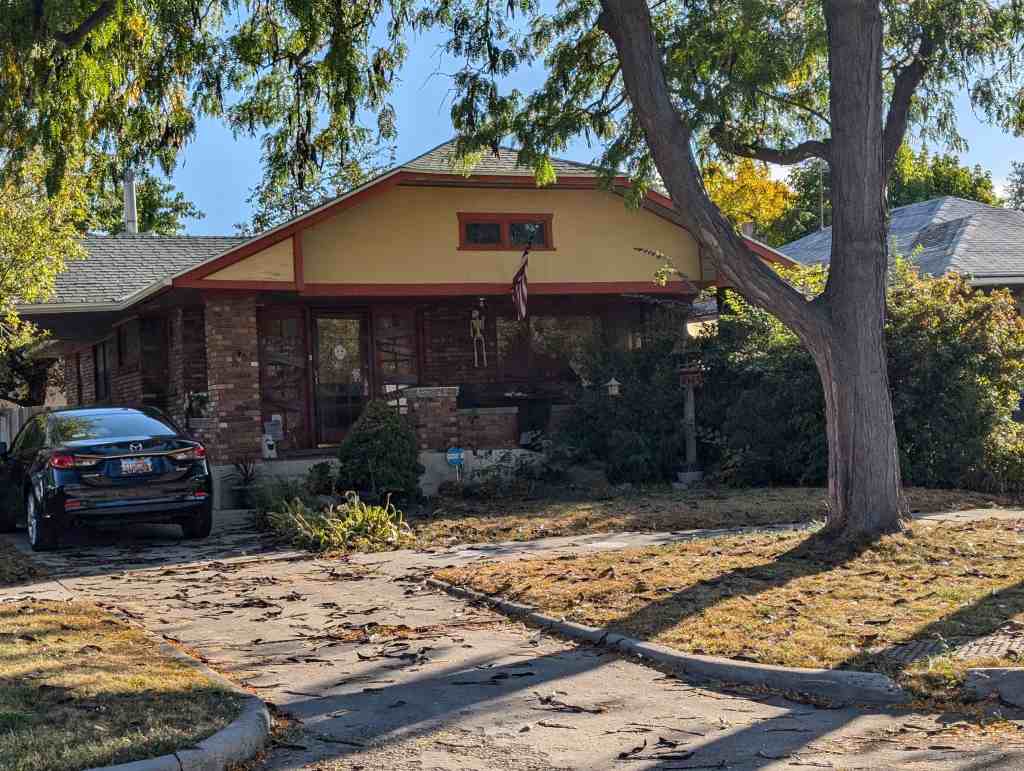
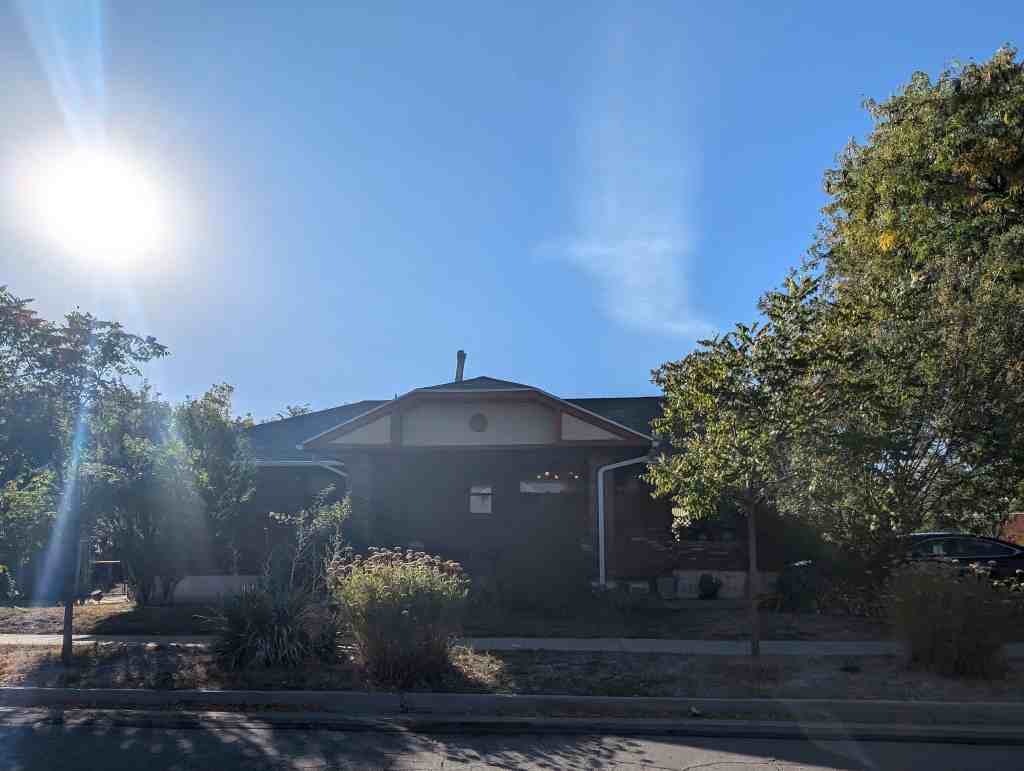
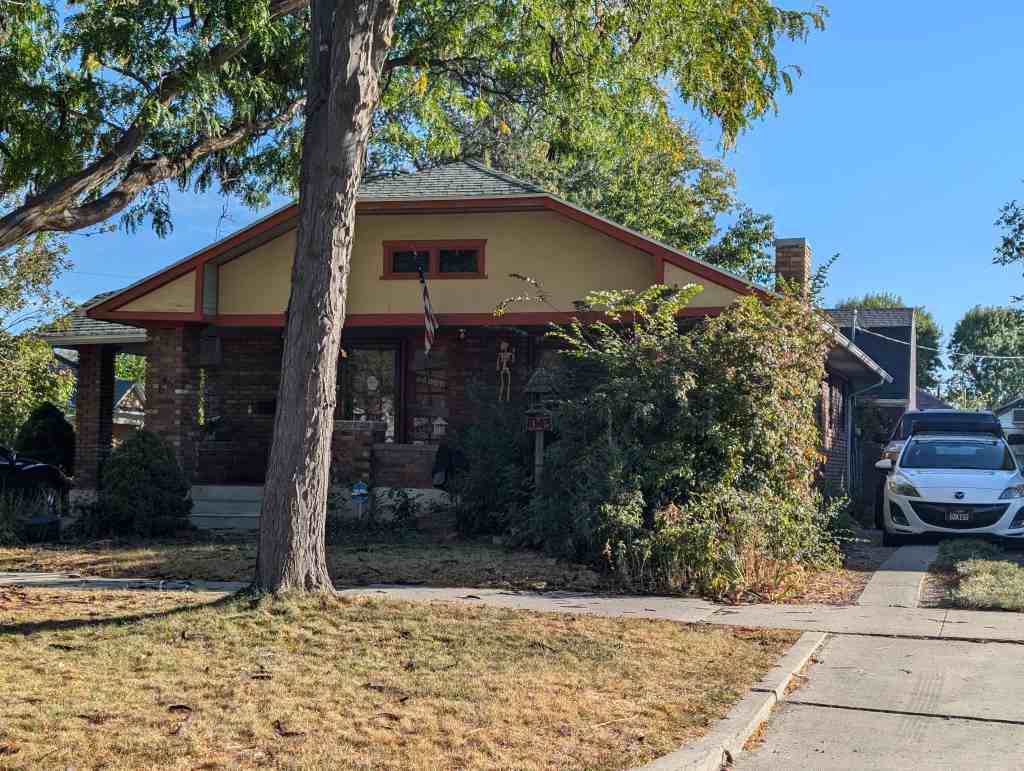
1043 West 500 North in the Fairpark Neighborhood in Salt Lake City, Utah.
- mentioned in the Salt Lake Northwest Historic District:
The dominant architectural style of the early twentieth century was the Bungalow. Nineteen percent of contributing single-family houses in the Salt Lake City Northwest Historic District are Bungalows in type and style. The Bungalow was intended to be a comfortable, sheltering, low profile house. While early Bungalows like the one at 578 North Dexter Street were built contemporaneously with Victorian houses, by 1915 the Bungalow had become the everyman’s house replacing the earlier Victorian cottages. Most of the Salt Lake City Northwest Historic District’s Bungalows are modest homes (as are Utah bungalows in general) with little decorative detail, however several in the district are distinctive. The Langton Park Bungalows built in 1918 are a combination of Arts & Crafts and the California styles. Brick Bungalows at 575 West 200 North and 251 North 700 West have a hint of Prairie School influence. A row of brick Bungalows, also from 1924, on 500 North, includes one at 1043 West 500 North with a distinctive porte-cochere. The description of Bungalow as a type, as well as a style, fits most of the Bungalows in the district. The houses usually have the narrow end to the street with a variety of roof styles (simple gable, hipped, and clipped gable), and a full or half-width porch. The few Foursquare houses in the district are modest in size with bungalow influence and are not similar to the traditional two-story, upscale Foursquares found in other parts of Salt Lake City. The most popular material for Bungalows was brick, with wood and stucco used for decoration. Frame Bungalows are also found throughout the district, though many have been altered. Stone was used as a foundation material in early Bungalows, however after 1915, concrete was used increasingly. During the Bungalow period, the use of concrete — as well as better drainage — increased the occurrence of fully excavated basements. The Bungalow period also has examples of new materials such as striated brick and concrete block. There is even one brick Bungalow with a volcanic rock veneer on its lower half.
Pingback: Salt Lake by Address (north) | JacobBarlow.com