Lydia D. Alder Home
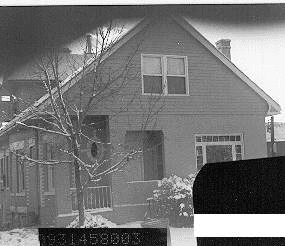
This Victorian cottage is significant because Lydia D. Alder, the original owner, was the first president of the National Woman’s Suffrage Association in Utah and a well known suffragette. Its materials, massing, and pattern book design contribute to the architectural character of the district .
E.C. Warren, a cashier for Freed Farm and Machinery Company, took out the building permit to build this house in 1905. A lien was placed against the property for construction material by Morrisson Merris and Salt Lake Hardware Company in 1906. Warren sold the house that year to Lydia D. Alder.
Lydia was born Trowbridge, Wilshire, England on July 2, 1846, to George and Sarah Jones Dunford. She came to America with her parents as a young girl. The family settled in St. Louis. Lydia came to Utah with her husband, George A. Alder, in 1867. George was a shoe merchant.
Lydia was active in women’s movements. She was the secretary of the women’s’ mass meeting in 1868 that was held by the Mormon women to protest passage of the pending Cullom Bill. She was the first president of the National Women’s Congress in London in 1899. She spoke at the Intemational Conference of Women in Berlin in 1904 and the Quinquennial Congress in Rome in 1914.
Lydia was also a writer. She spent some time in the Holy Land writing a book on the area. An active member of the LDS Church, Lydia helped organize Relief Societies in Utah and was secretary of the Relief Society in the Seventeenth Ward for seventeen years before she moved to this house.
Lydia lived in this house until 1921. She then moved to the Peeny Apartments and she died there in 1923.
For a few years after Lydia’s death, the house was a rental unit. Milton W. Snow bought it in about 1943. He lived here until his death in the 1940’s. His wife continued to live in the house until 1948. During the 1930’s the house was converted to apartments and the Snows did not occupy the entire house.
320 East First Avenue in The Avenues in Salt Lake City, Utah
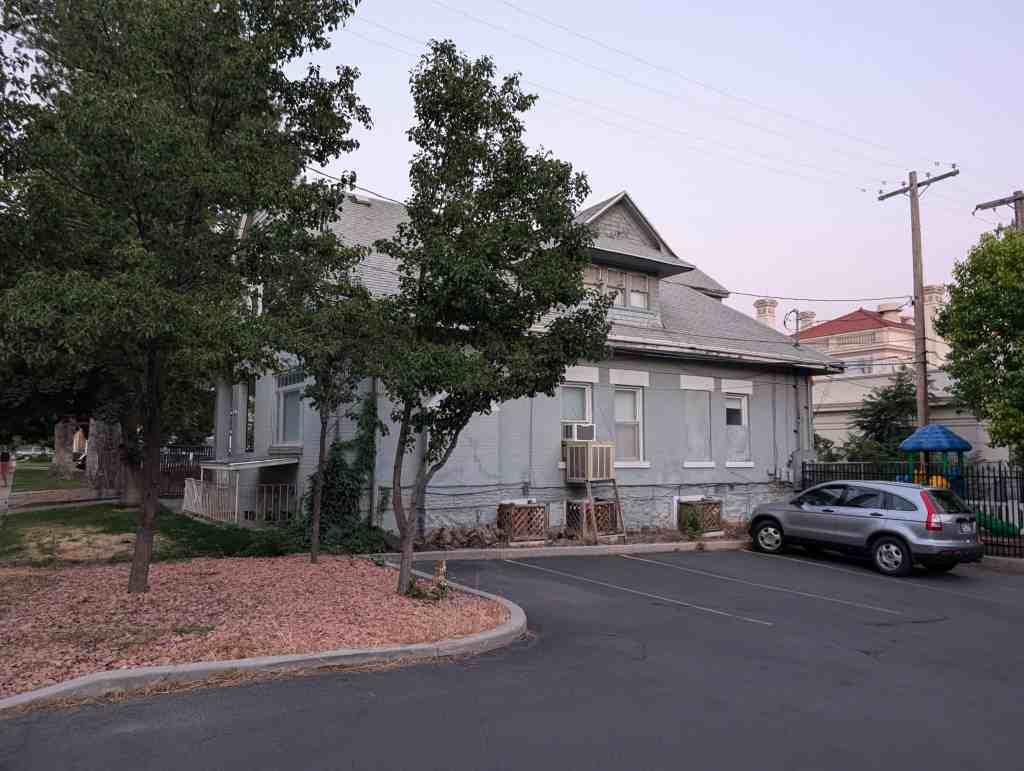
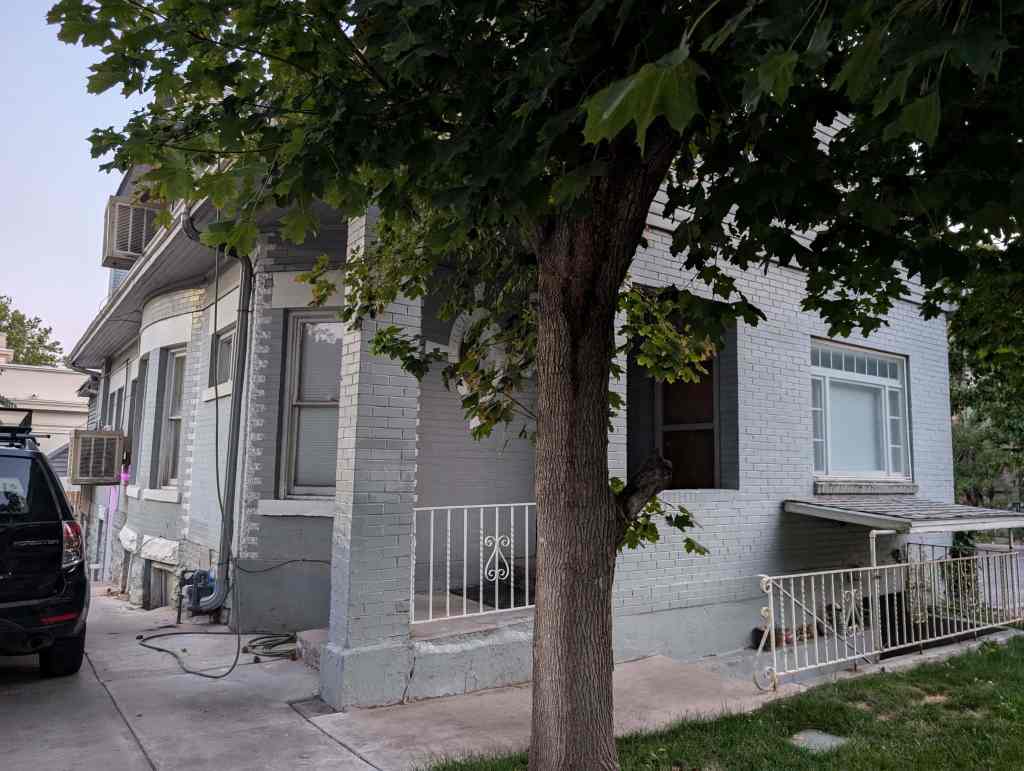
This is a one-and-a-half story Victorian cottage of pattern book design. There is a curved brick bay window on the east side with a wood-shingle dormer window above. There is an oval window on the front porch. Rough-faced brick is used to accent al l edges, and the foundation is of large, rough-faced stone blocks. The front porch, partially enclosed with brick, may be a later alteration.