
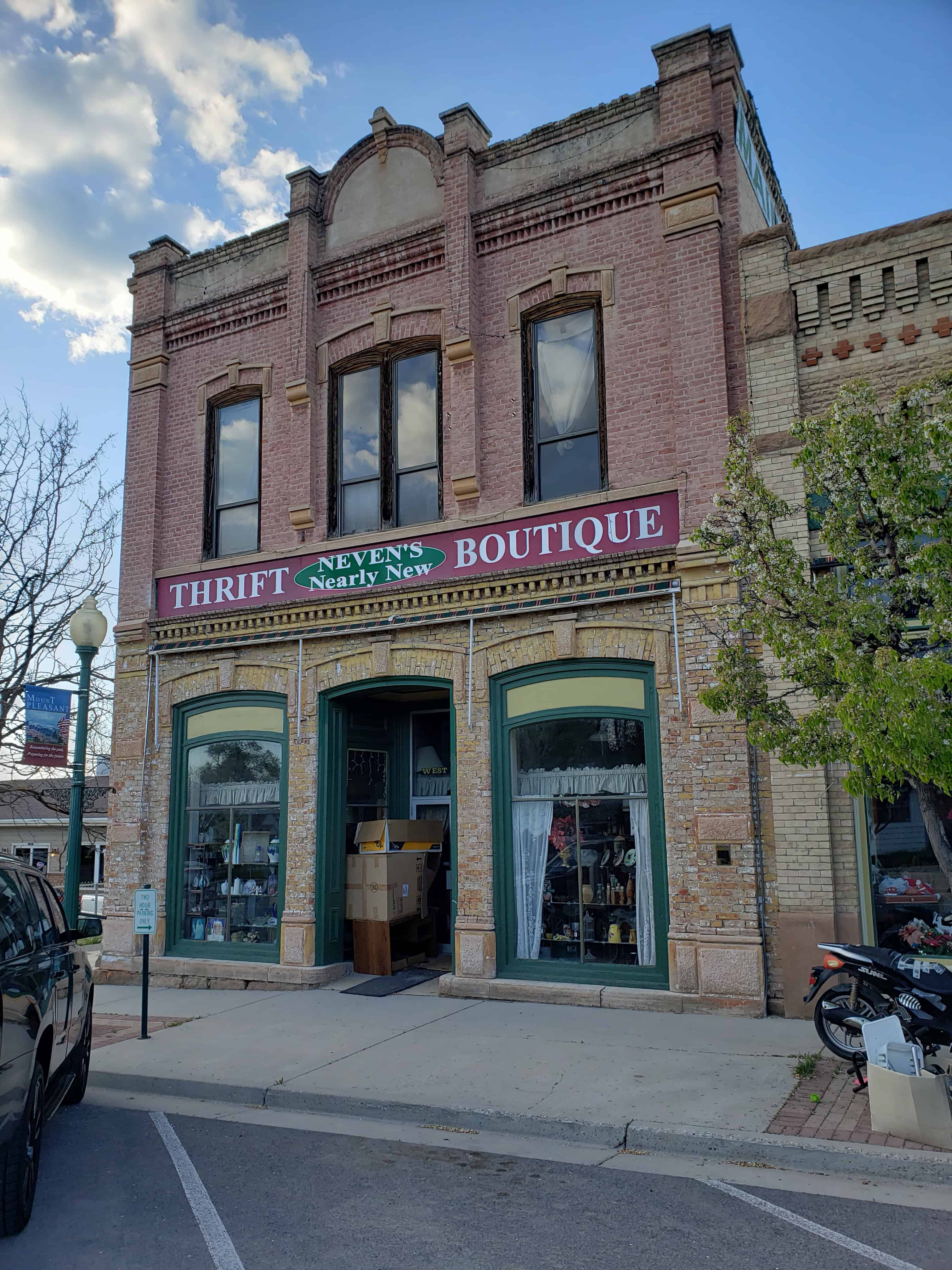
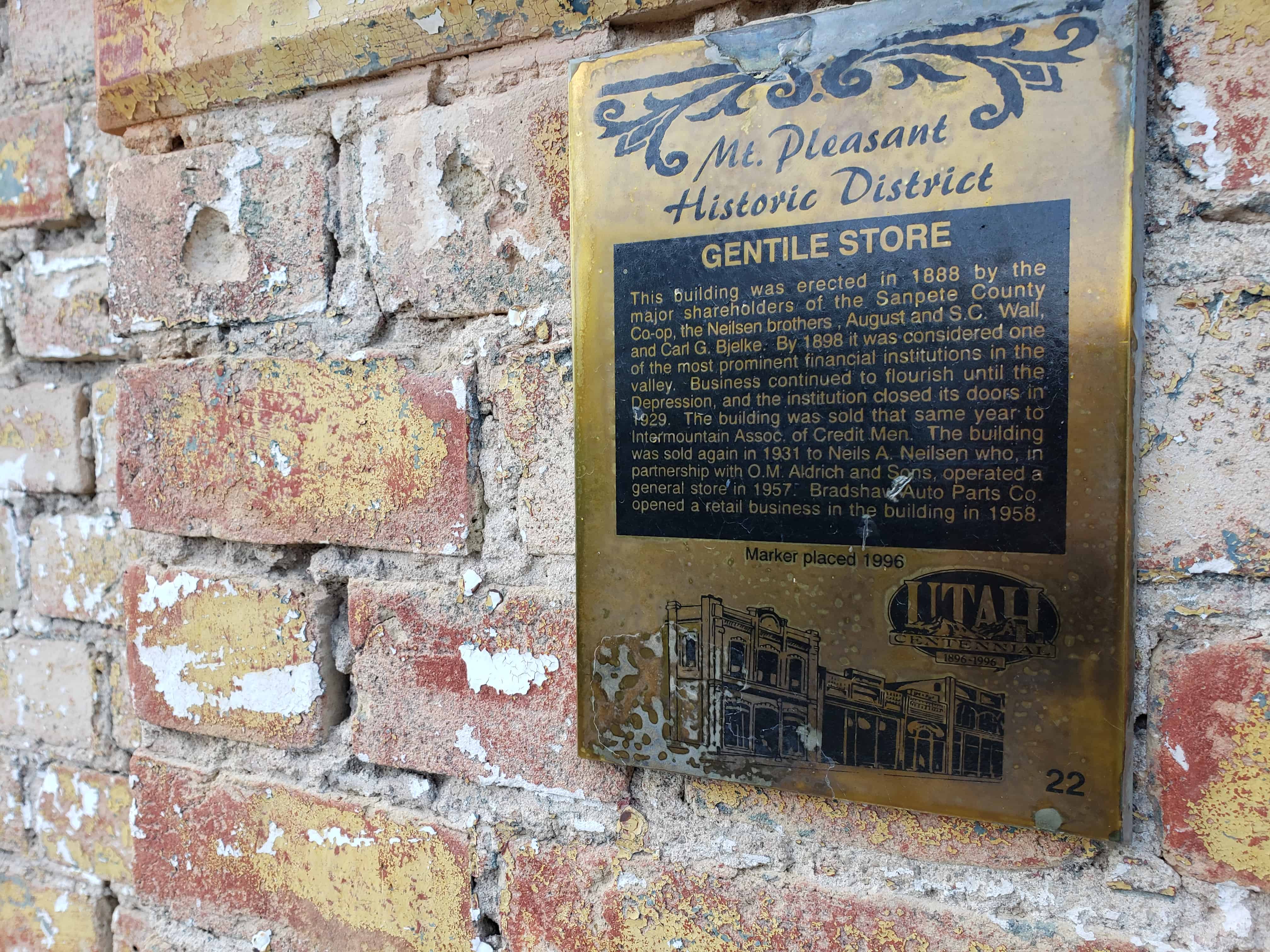
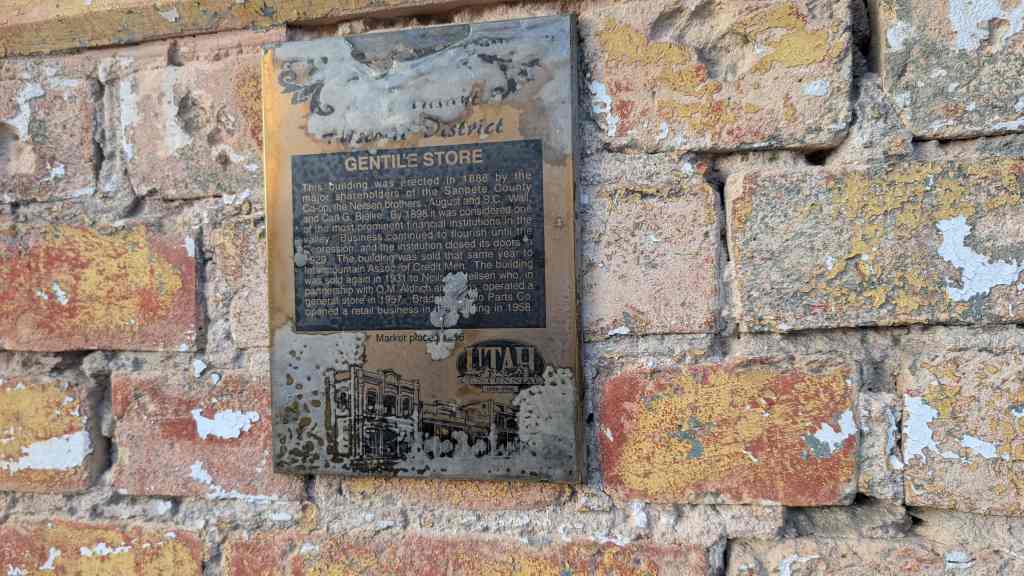
This building was erected in 1888 by the major shareholders of the Sanpete County Co-op, the Neilsen brothers, August and S.C. Wall, and Carl G. Bjelke. By 1898 it was considered one of the most prominent financial institutions in the valley. Business continued to flourish until the Depression, and the institution closed its doors in 1929. The building was sold that same year to Intermountain Assoc. of Credit Men. The building was sold again in 1931 to Neils A. Neilsen who, in partnership with O.M. Aldrich and Sons, operated a general store in 1957. Bradshaw Auto Parts Co. opened a retail business in the building in 1958.

Related Posts:
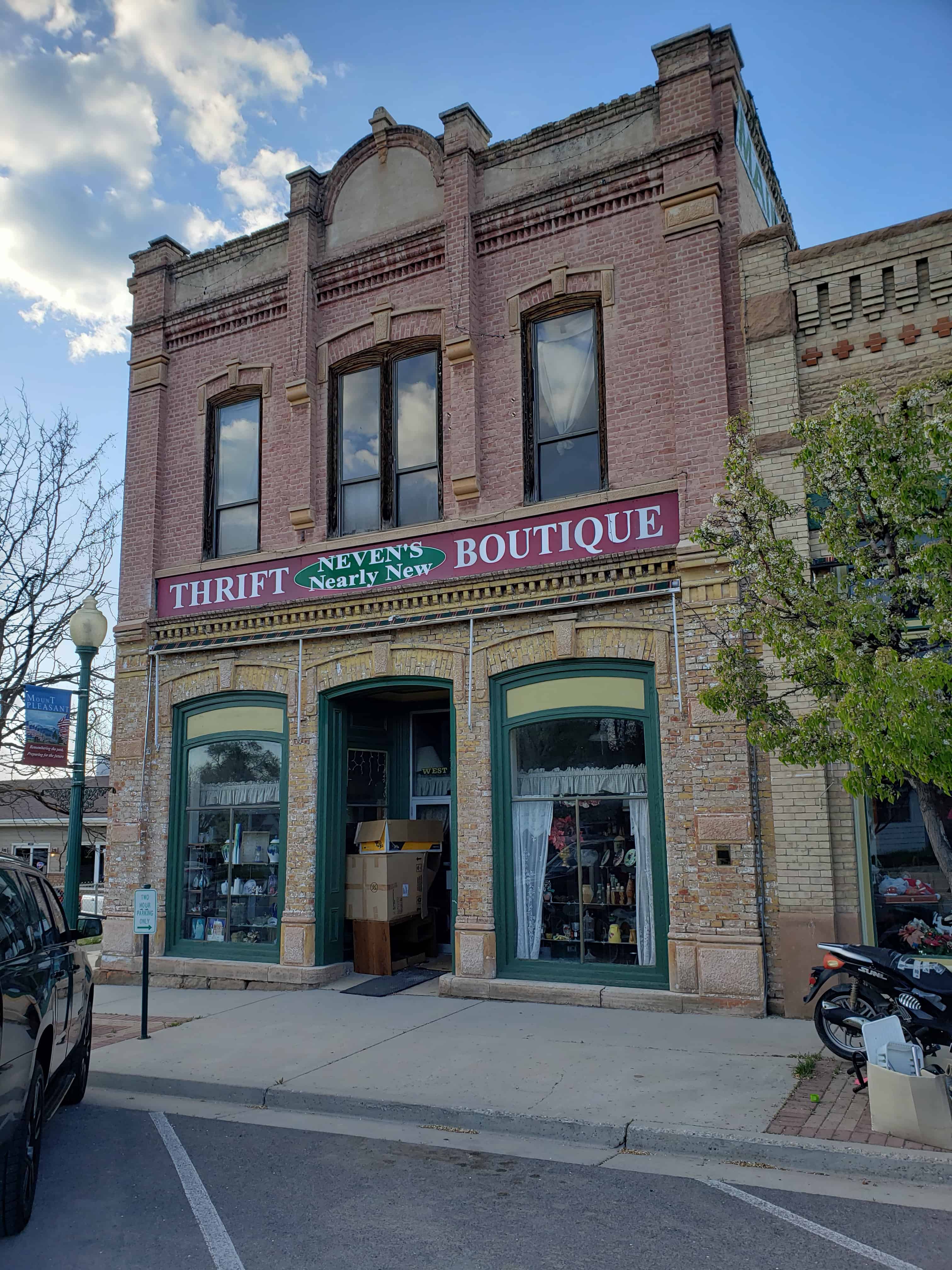
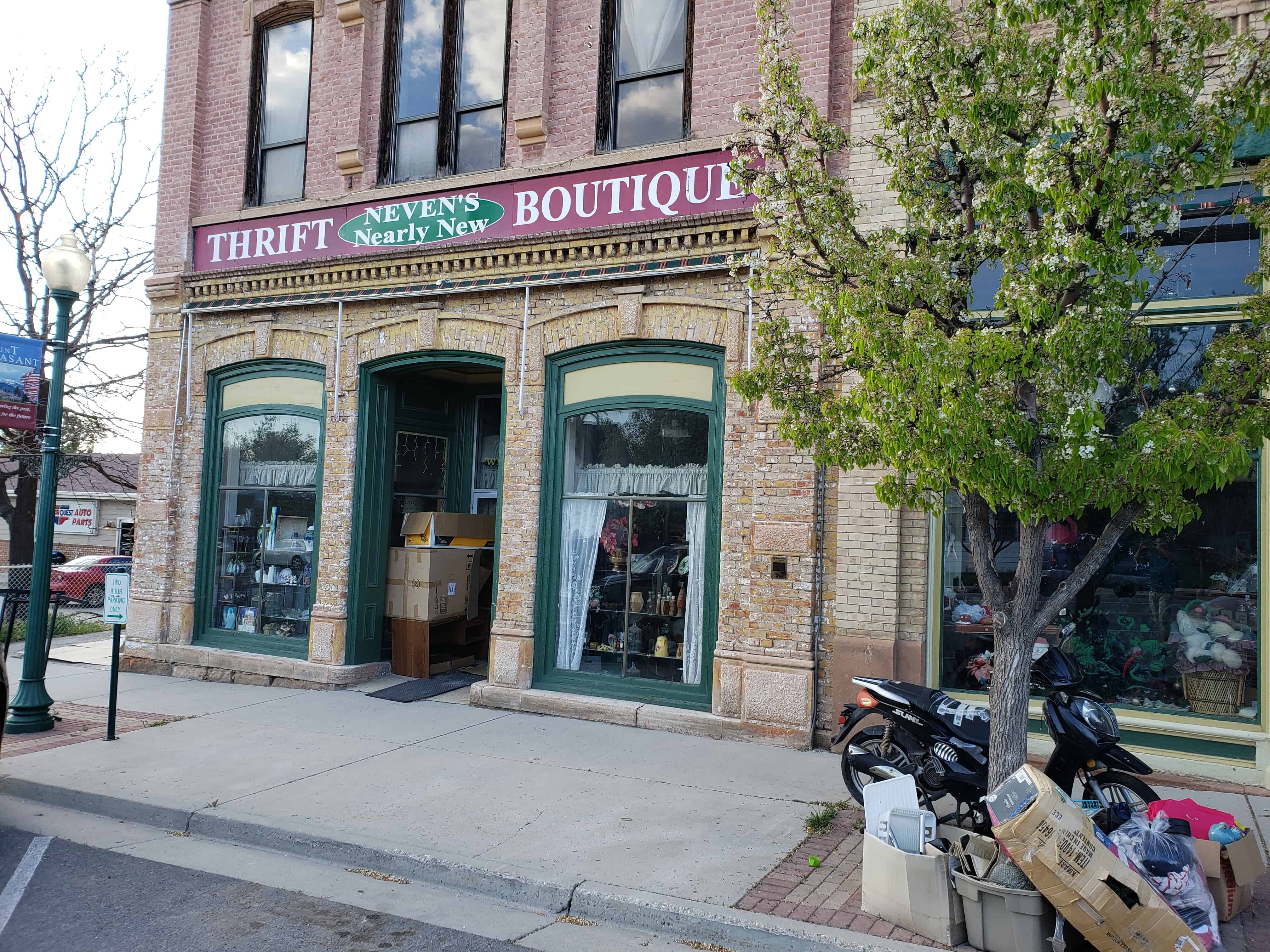
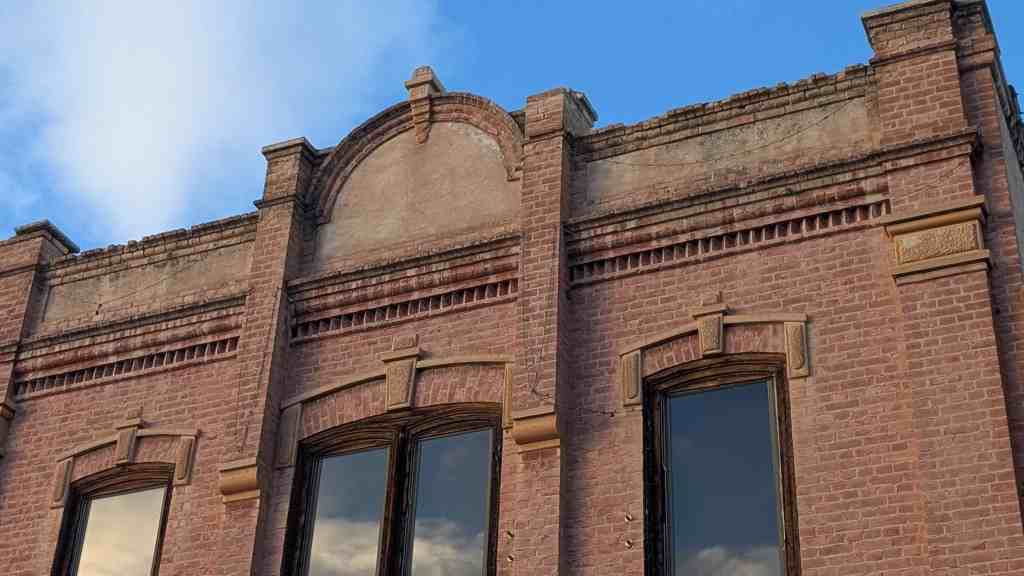
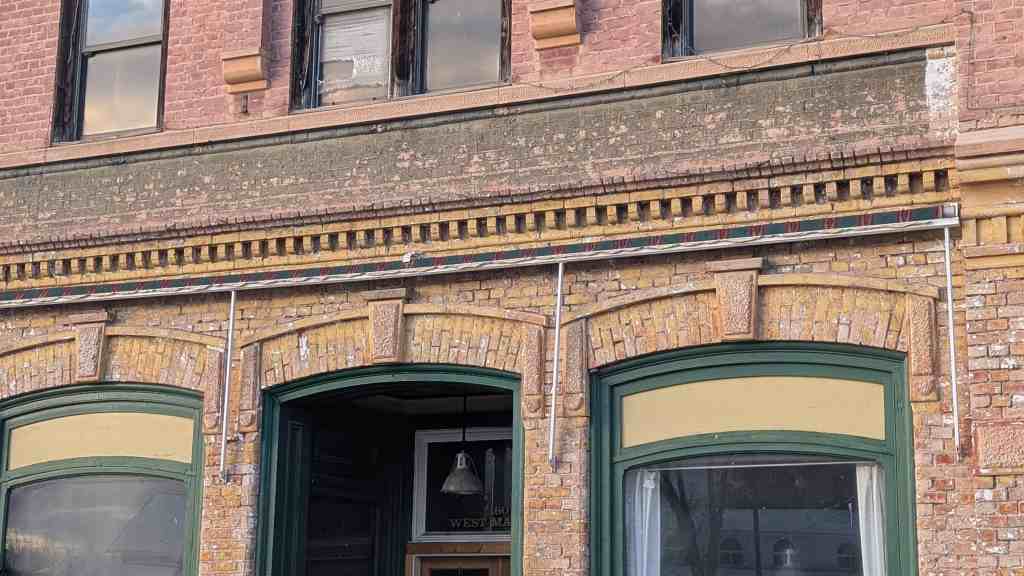
Two story three bay brick commercial building, with recessed entrance on the first floor and double window on the second floor of the center bay. Wide brick pilasters framing the facade are balanced by second story pilasters which divide the three bays. The building is divided horizontally by an intermediate and two second story cornices, with the upper cornice making a semi-circular pediment in the center bay. Fine cut stone work emphasizes the decorative brick work of the window arches and pilasters.
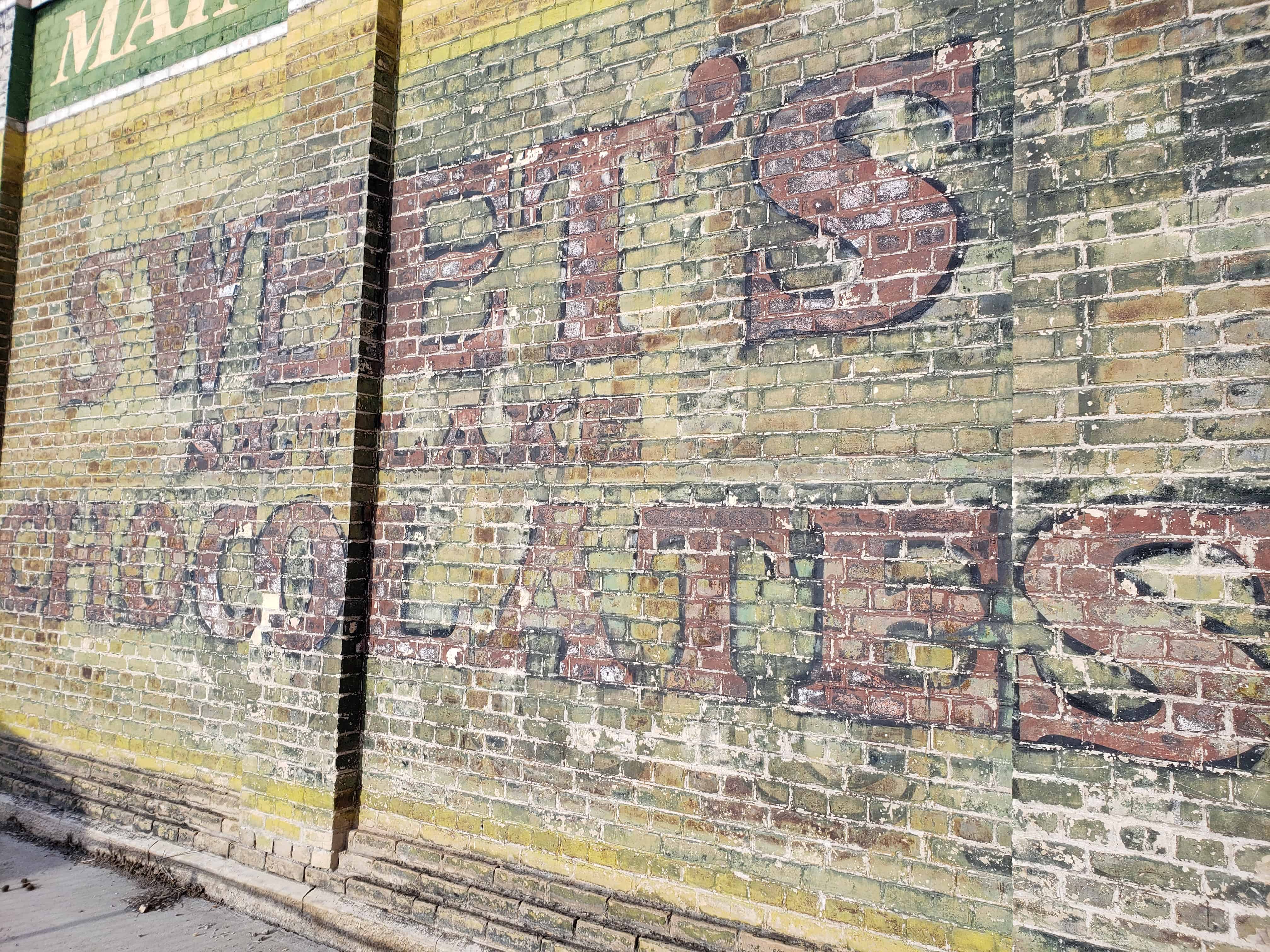
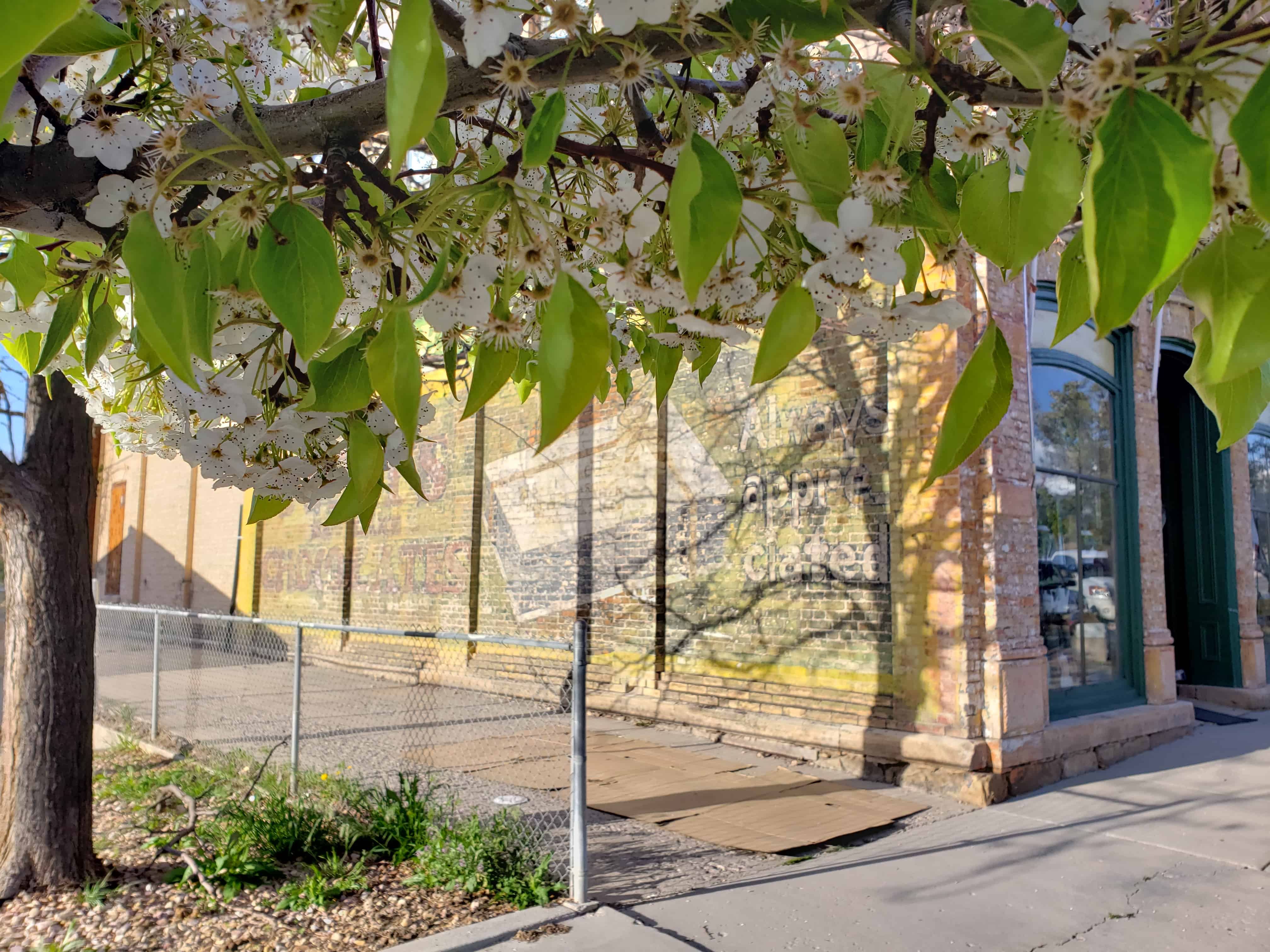
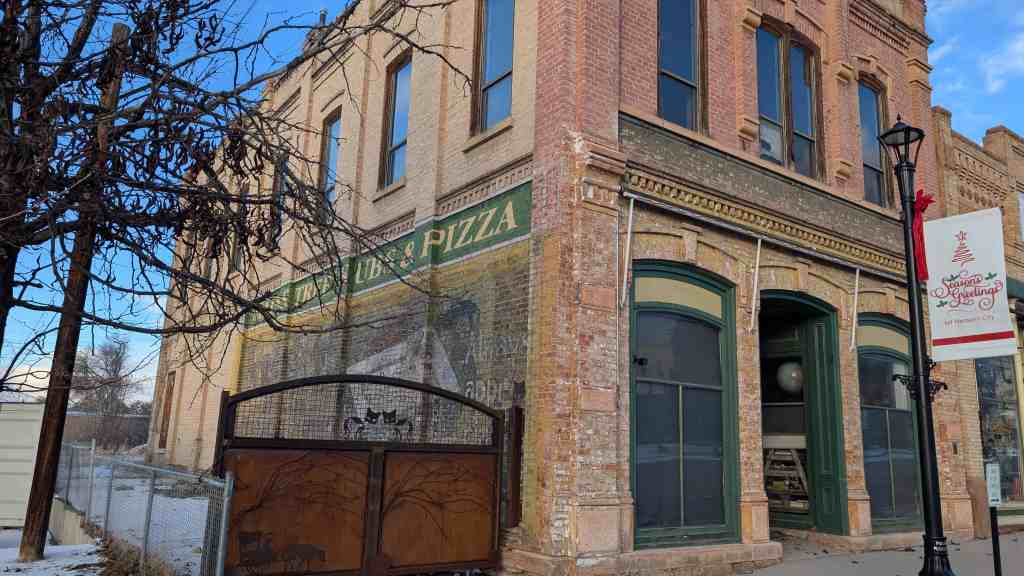
The building has an elevator, a steam heater, and a second floor stage (the upper floor may have been a social hall.) The first floor of the facade has been painted dark blue and white; otherwise the building is completely intact. An early twentieth century painted sign covers the first floor of the west façade.


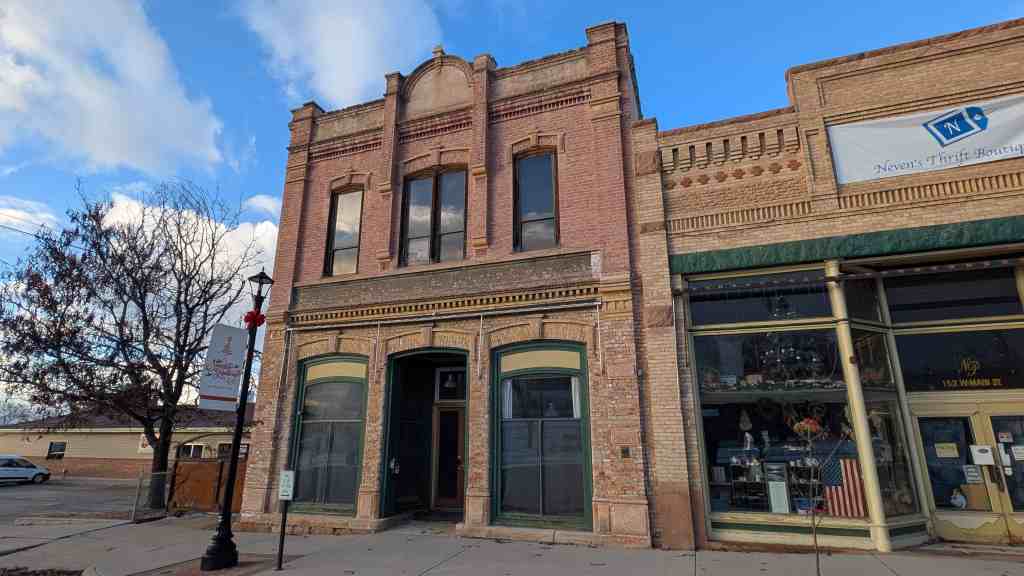

The Sanpete County Co-op building documents the efforts of Sanpete businessmen to establish Mormon cooperative enterprise. The building is also significant for its intact Victorian commercial architecture and as the west end of a contiguous streetscape of four buildings.
Cooperation among the early Mormon colonists was almost a mandatory virtue. Every settler understood that interdependence was vital to individual survival. Mormon immigrants learned the principles and benefits of cooperation and unity long before entering Sanpete (Sanpitch) Valley. Organized into groups of tens, fifties, and hundreds, for convenient division of the work load in colonizing trains, this method of organization was continued in building of forts, guarding stock, digging irrigation ditches, erecting meetinghouses and mills, clearing roads, etc. It was a natural extension of this cooperative system that led to the creation of Mt. Pleasant’s first co-op store in 1867, one year before the city was incorporated. Starting with a capital stock of $700 and housed in a small log hut, this institution flourished for years under the direction of the town’s most prominent men: W.S. Seeley, A. Madsen, Bishop Crhistion N. Lund . In February 1869, the Mt. Pleasant ZCMI was organized as a cooperative organization patterned after the ZCMI formed in Salt Lake City in October, 1868. The Mt. Pleasant ZCMI apparently took the original co-op business, operating in the same log building but changing the name and perhaps the format. The log building, later known as Anderson’s Blacksmith Shop, was located on the east side of State Street at about Third South. Here Arthon H. Lund served as clerk. A few years later the company erected a larger log building on the southwest corner of the intersection of State and Main. Amoss Aldrich wrote, “This was quite a creditable building at that time, being built of logs chinked with mud. The room on the inside was plastered with mud. Outside, above the door, which faced east, was painted the sign “Z.C.M.I.” Underneath this was painted the “All Seeing Eye” and beneath that, “Holiness to the Lord.”
Considered the first real store in Mt. Pleasant, the ZCMI was later known as the Mormon Polygamist store and had clerks who spoke both English and Danish so all the patrons could be served. W.S. Seeley was chosen as superintendent. In addition to the ZCMI store, a cooperative stock herd, tannery, cabinet shop and shoe store were established by 1871.
In 1879 a large two-story brick building was erected to replace the outgrown log store. The second story was used as a theatre and dance hall.
Earlier, however, in 1872, Carl G. Bjelke, John Waldemar, Magnus Rosenberg and others built an adobe store between Second and Third West on the north side of Main Street, This building was considered much superior to the ZCMI log building built earlier. In 1873, Neils S. Neilsen, and brother Andrew and Hans (clerk) joined with them to form what became known as the Sanpete County Co-op. It was first known as the Lower or Swedish store and later was called the “Gentile” store, perhaps because it competed directly with the ZCMI. In 1888 the major shareholders, principally the Neilsen brothers with August and S.C. Wall and Carl G. Bjelke, built the present two-story brick building. It may have been physically built by John Waldemar, credited with starting the Sanpete County Co-op and the Neilsens, all of whom were either brickmakers or carpenters.
The stately building was constructed adjacent to the east side of the earlier adobe store which then became used for hardware sales,
The Sanpete County Co-op prospered rapidly, once it abandoned its original co-operative organization and became a regular joint stock corporation. By 1898 it was considered one of the most prominent financial institutions in the valley. One account called it “a mercantile establishment of large dimensions, having probably the greatest volume of business of any similar firm in the county.” The store had six clerks and a substantial capital stock in 1898. Business continued to flourish until 1929 when the depression hit and the institution closed its doors. The Sanpete County Co-op (whose graphics are still clearly visible on the west side of the building) was sold to the Intermountain Association of Credit Men in 1929. The building was sold again in 1931 to Neils A. Neilsen who, in partnership with A.M. Aldrich and Sons, operated a general merchandising store until 1957. Bradshaw Auto Parts Co. has operated a retail business in the ninety year old co-op store since 1958.