
Tags
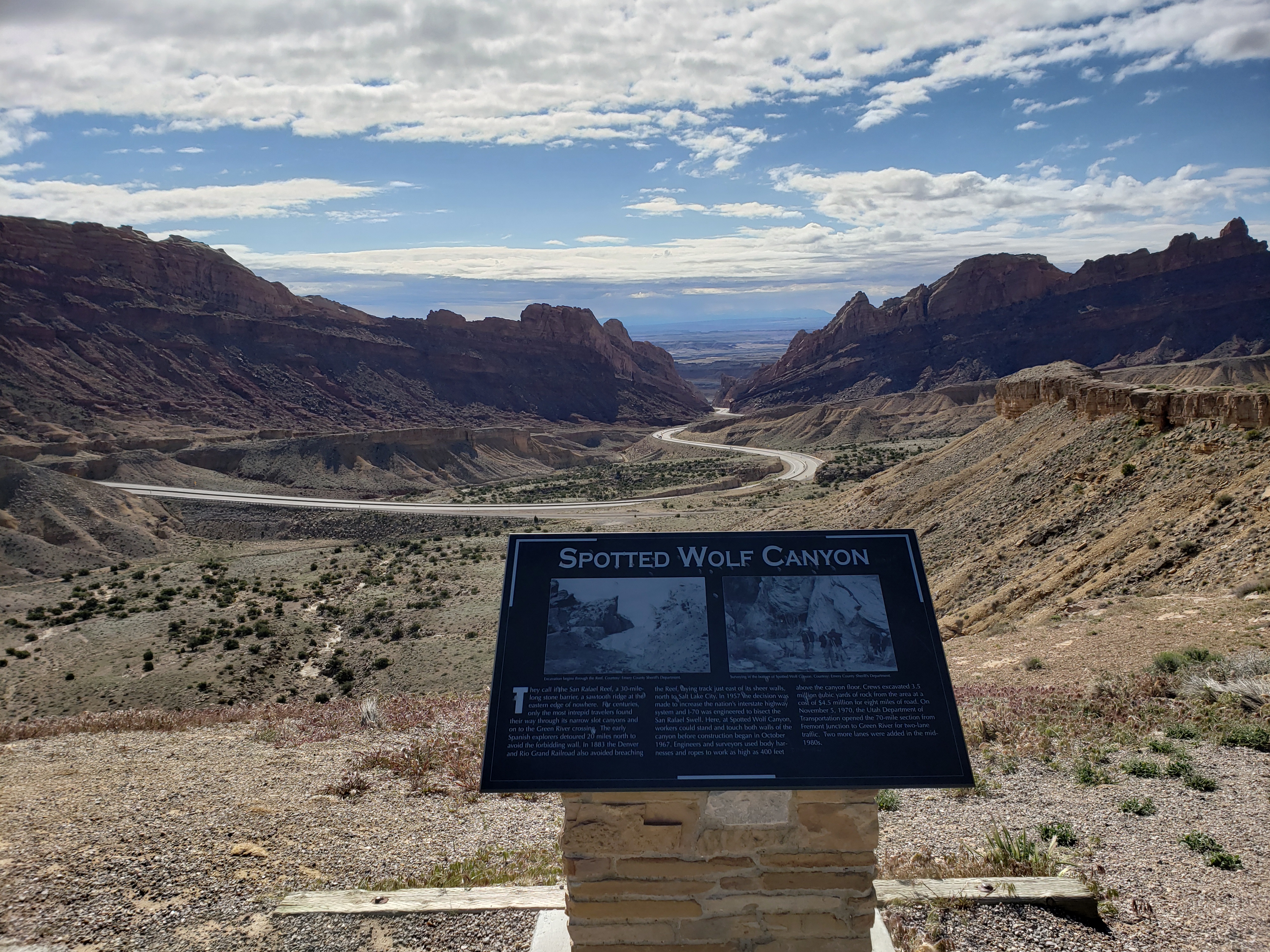
One of the rest areas along I-70 in the stretch that goes through the San Rafael Swell area.
Spotted Wolf View Area
For my post about this section of Interstate 70 and links to the other rest areas on it visit this page.

SPOTTED WOLF CANYON
They call it the San Rafael Reef, a 30-mile- long stone barrier, a sawtooth ridge at the eastern edge of nowhere. For centuries, only the most intrepid travelers found their way through its narrow slot canyons and on to the Green River crossing. The early Spanish explorers detoured 20 miles north to avoid the forbidding wall. In 1883 the Denver and Rio Grand Railroad also avoided breaching the Reef, laying track just east of its sheer walls, north to Salt Lake City. In 1957 the decision was made to increase the nation’s interstate highway system and 1-70 was engineered to bisect the San Rafael Swell. Here, at Spotted Wolf Canyon, workers could stand and touch both walls of the canyon before construction began in October 1967. Engineers and surveyors used body harnesses and ropes to work as high as 400 feet above the canyon floor. Crews excavated 3.5 million cubic yards of rock from the area at a cost of $4.5 million for eight miles of road. On November 5, 1970, the Utah Department of Transportation opened the 70-mile section from Fremont Junction to Green River for two-lane traffic. Two more lanes were added in the mid- 1980s.
CROSSING THE RIVER
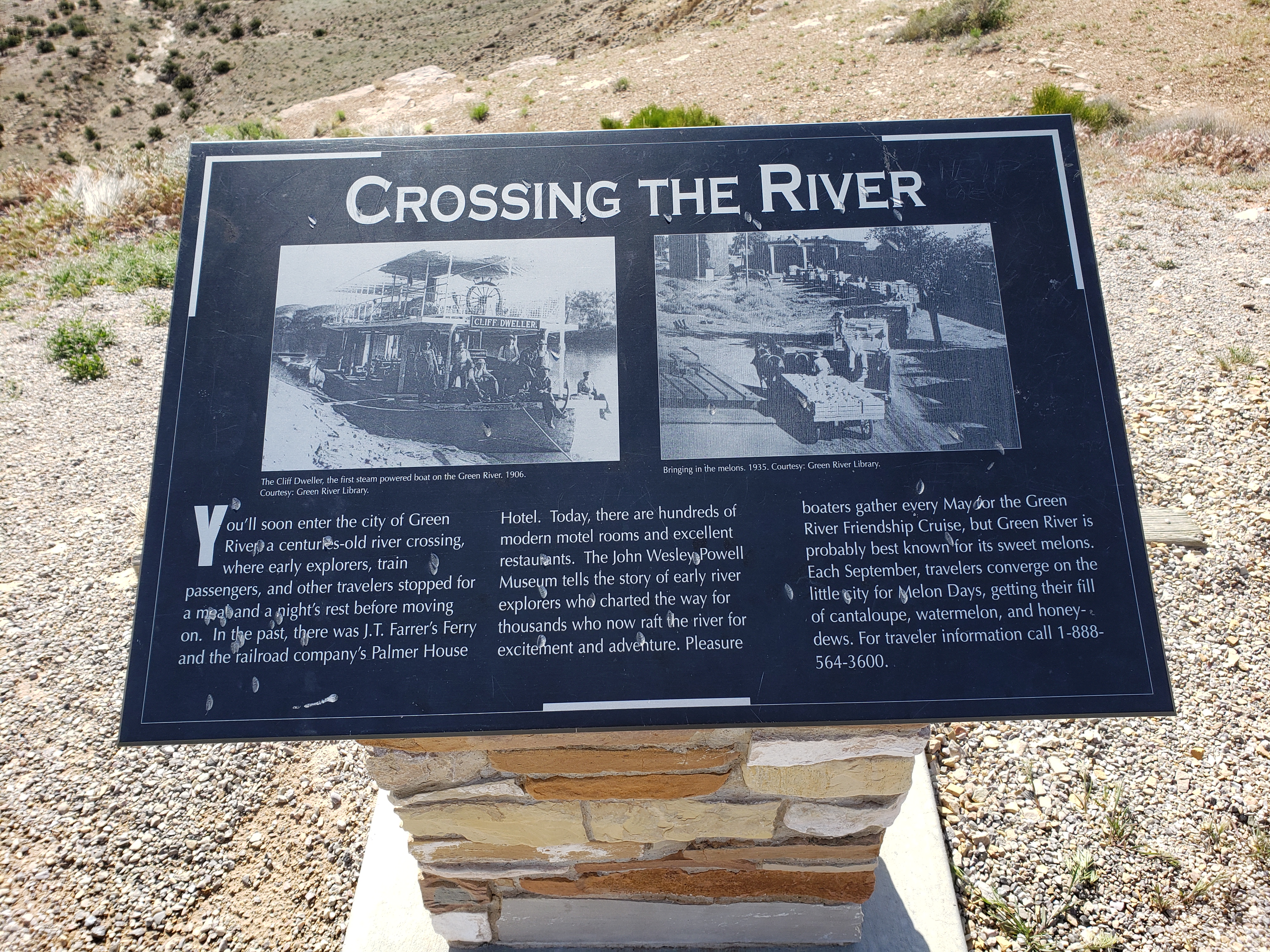
You’ll soon enter the city of Green River a centuries-old river crossing, where early explorers, train passengers, and other travelers stopped for a meal and a night’s rest before moving on. In the past, there was J.T. Farrer’s Ferry and the railroad company’s Palmer House Hotel. Today, there are hundreds of modern motel rooms and excellent restaurants. The John Wesley Powell Museum tells the story of early river explorers who charted the way for thousands who now raft the river for excitement and adventure. Pleasure boaters gather every May for the Green River Friendship Cruise, but Green River is probably best known for its sweet melons. Each September, travelers converge on the little city for Melon Days, getting their fill of cantaloupe, watermelon, and honeydews.
THE SAN RAFAEL REEF
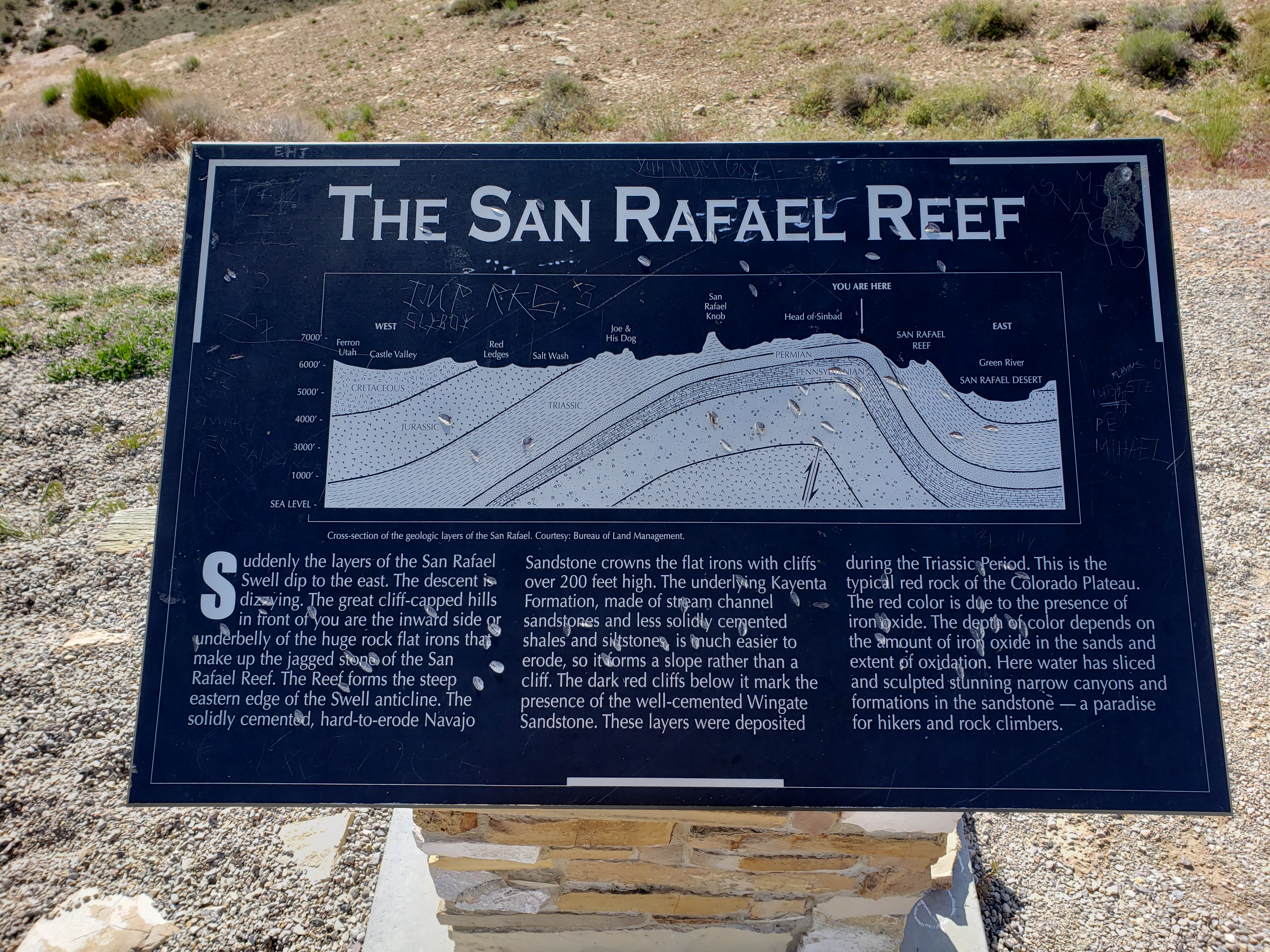
Suddenly the layers of the San Rafael Swell dip to the east. The descent is dizzying. The great cliff-capped hills in front of you are the inward side or underbelly of the huge rock flat irons that make up the jagged stone of the San Rafael Reef. The Reef forms the steep eastern edge of the Swell anticline. The solidly cemented, hard-to-erode Navajo Sandstone crowns the flat irons with cliffs over 200 feet high. The underlying Kayenta Formation, made of stream channel sandstones and less solidly cemented shales and siltstones, is much easier to erode, so it forms a slope rather than a cliff. The dark red cliffs below it mark the presence of the well-cemented Wingate Sandstone. These layers were deposited during the Triassic Period. This is the typical red rock of the Colorado Plateau. The red color is due to the presence of iron oxide. The depth of color depends on the amount of iron oxide in the sands and extent of oxidation. Here water has sliced and sculpted stunning narrow canyons and formations in the sandstone – a paradise for hikers and rock climbers.
Who defaced the informational signs at the rest area in Spotted Wolf Canyon on I-70. It appears to me someone with a caribiner on a sling swung it repeatedly against the signs. Wish I had been there!