
Tags

Weber Stake Relief Society Building
Constructed in 1902, the Weber Stake Relief Society Building is locally significant as the center of activities for the women’s organization of the Church of Jesus Christ of Latter-day Saints (Mormon or LDS Church). During the late nineteenth century. Relief Society women in virtually every Mormon community constructed buildings to accommodate their activities . There were meetinghouses, granaries, stores, and homes of assistance for the needy. These buildings represent the significant role the Relief Society played i n promoting the spiritual and temporal welfare of Mormon communities. Relief Society buildings were gradually abandoned during the early twentieth century as new accommodations for the Relief Society were provided within the main church buildings being constructed at that time. Although the building acted as a religious structure , it s significance i s derived from it s representation of the historical theme of Relief Society activity in early Mormon communities.
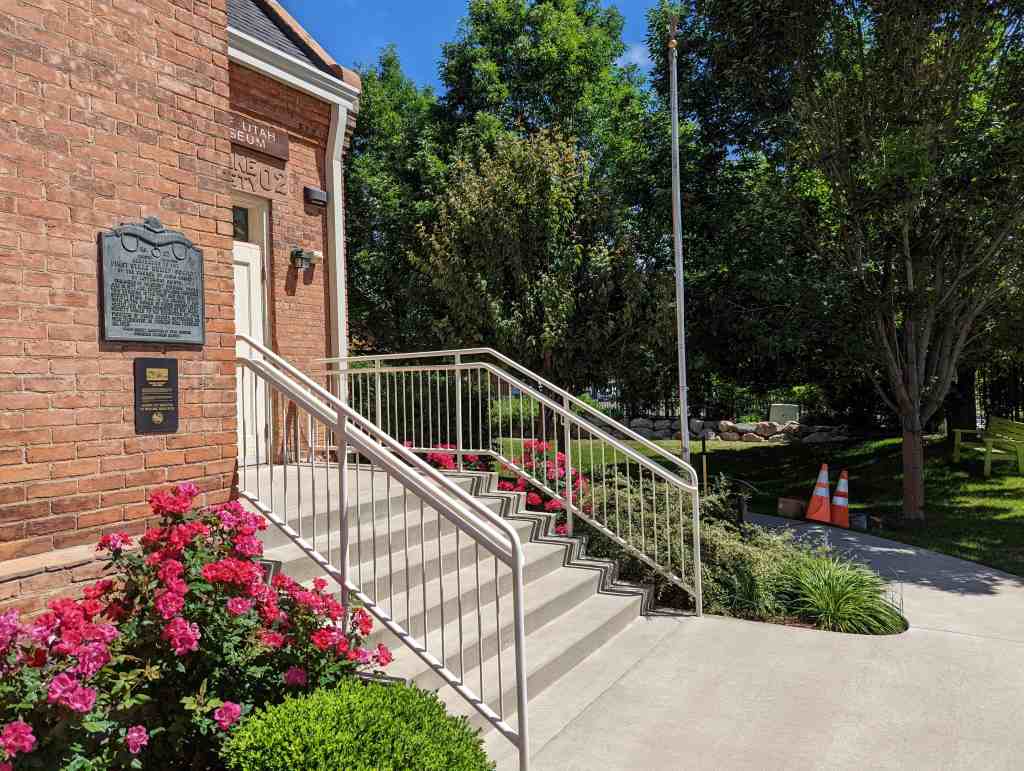
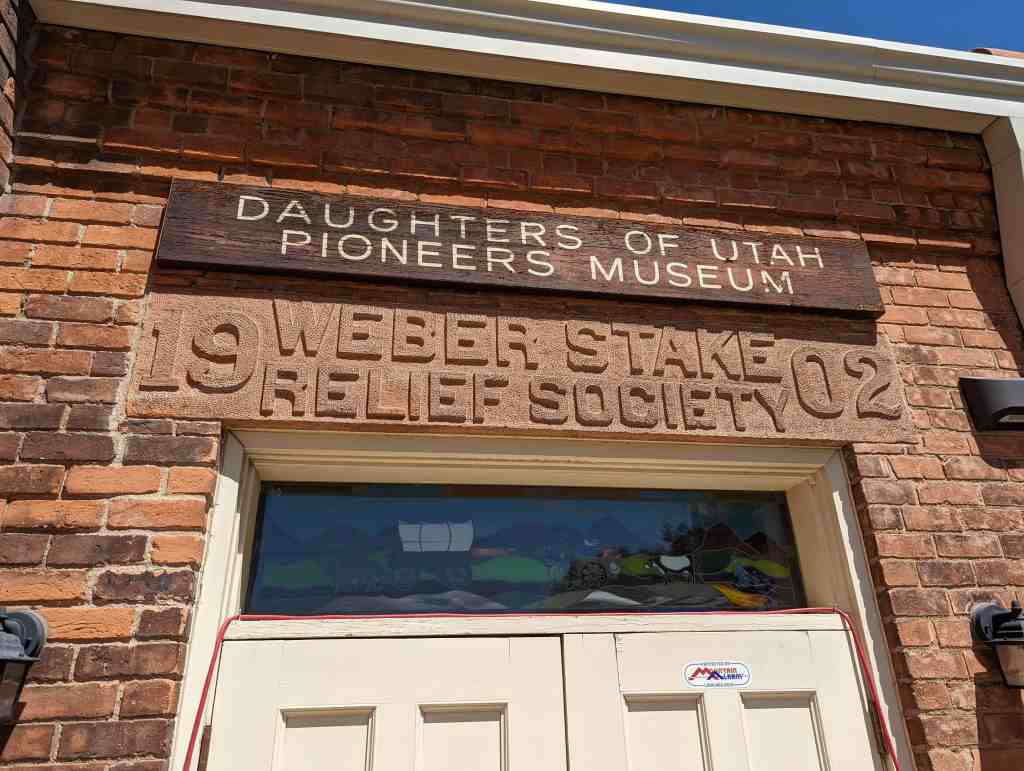
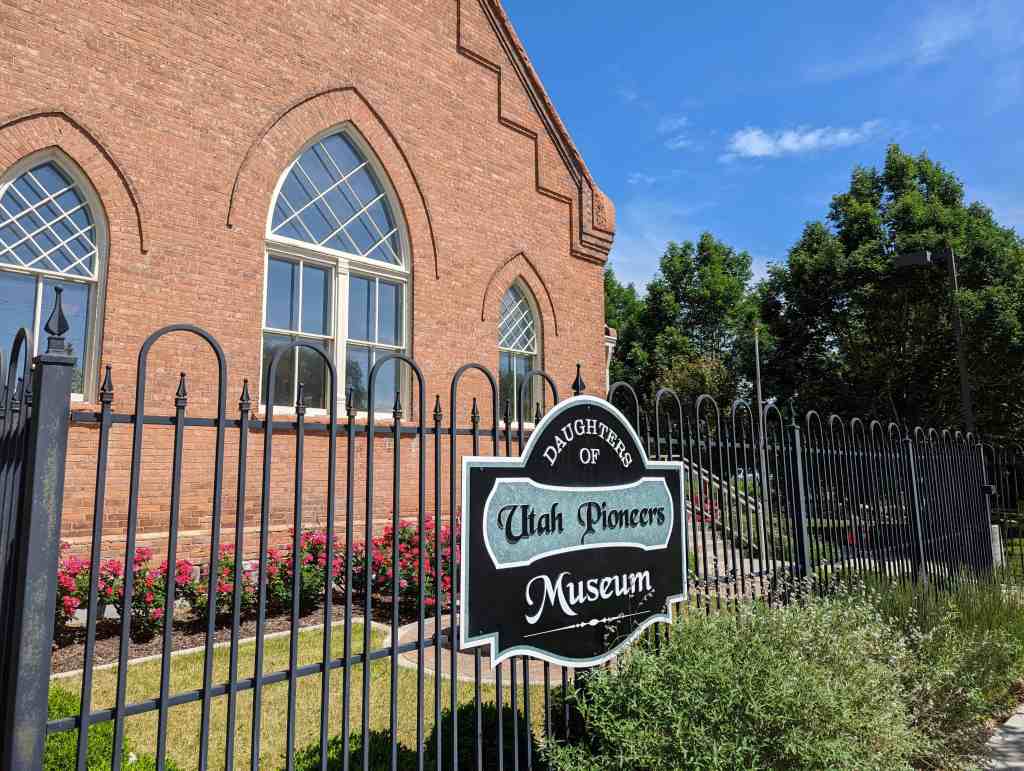
This building is located at 2104 Lincoln Avenue in Ogden, Utah, it was moved from 2148 Grant Avenue on January 24, 2012, it was added to the National Historic Register on February 13, 1989 (#88003438) and it is the home of the Weber County Daughters of Utah Pioneers Museum.

The Weber Stake Relief Society was organized in 1877 under the direction of Brigham Young and other LDS church officials. It was reportedly the first Relief Society group to be organized by stake rather than ward (a stake comprises several wards or congregations). Like Relief Society groups church- wide, the Weber Stake Relief Society was responsible for providing assistance to the poor, the sick and the needy. It is unknown where the group met during its first 25 years, but in 1902 plans were made -for constructing a large brick building on Tabernacle Square in downtown Ogden. Property for the building was donated by the Ogden Third Ward of the LDS church. Work commenced in the spring of 1902 under the supervision of a three-man building committee consisting of D.H. Peery, Barnard White and S.W. Wade. Funds were obtained by the women through donations and various fund-raising projects. Most of the $5,000 construction cost was paid by the time the building was dedicated on July, 19, 1902. The dedication was attended by a number of church officials and scores of women who were also celebrating the 25th anniversary of the organization of the Weber Stake Relief Society. 2 The building was used by the
Relief Society for a variety of purposes, including meetings, quilt- making, concerts, dances, .and other cultural events.
Changes in church organization and policy brought an end to the use of the building by the Relief Society in 1926. The Weber Stake had been divided into three stakes in 1908, and wit h the growth of those organizations the building was unable to accommodate al l the needs of the Relief Society. In addition, the church began constructing new church buildings which included accommodations for the Relief Society and other auxiliary functions. As a result of those developments, the building was no longer needed as a Relief Society facility. In 1926 it was transferred to the Weber County Daughters of Utah Pioneers in 1926 wit h the stipulation s that it be used as a non-profit museum for displaying pioneer relics. If those conditions were not adhered to then the property was to revert back to the church. The Weber County Daughters of Utah Pioneers have maintained a museum in the building to the present.

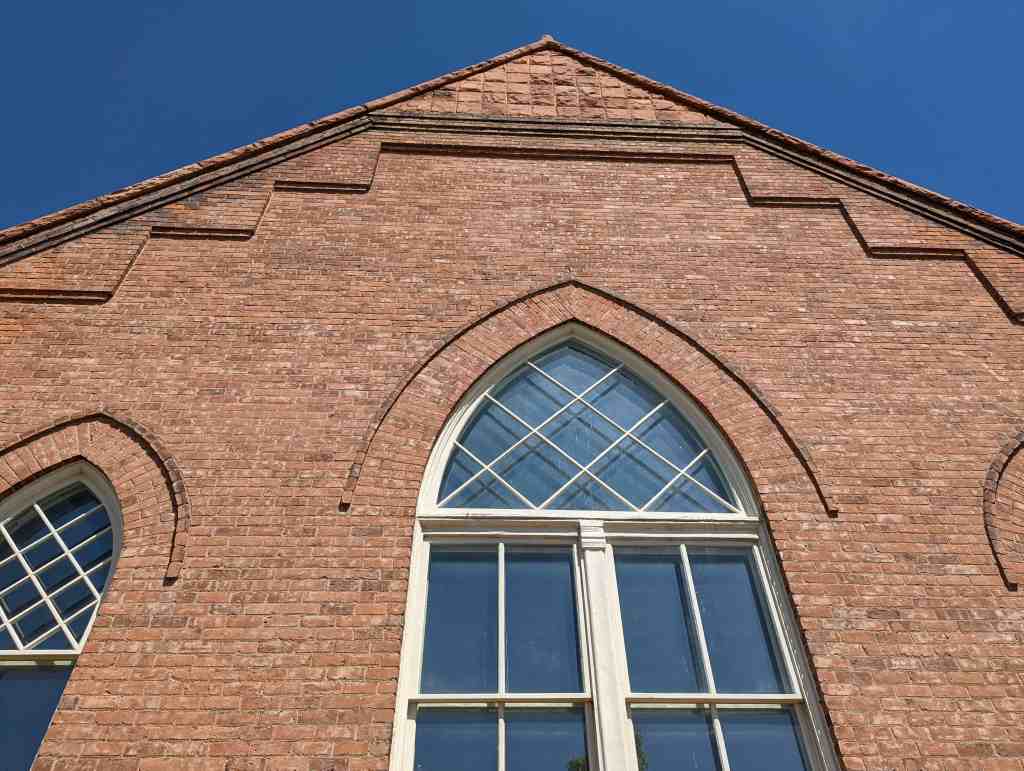
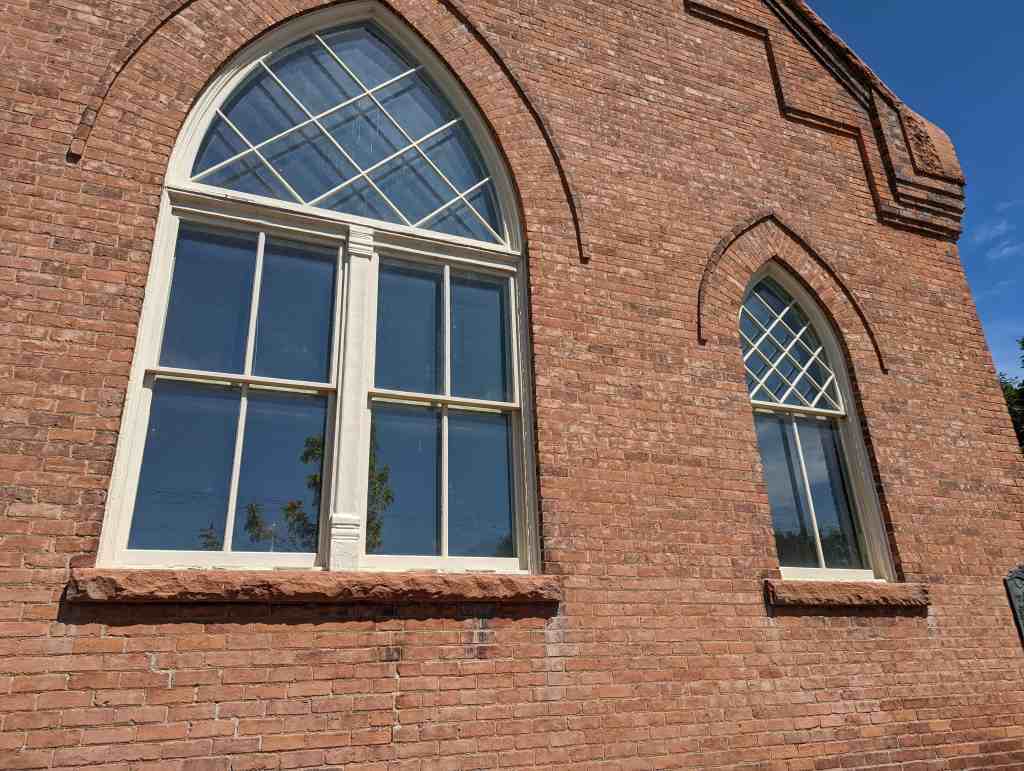
This brick building , constructed in 1902, is a good example of the Victoria n Gothic architectural style, a style which was popular in Utah in the years between 1880 and 1910. Gothic features include the prominent, steeply pitched gable roof that spans the main part of the building, and the three pointed arched windows in the principal façade. The center window is the largest, and all three are highlighted
by low-relief segmental brick arches. Rusticated stone coping has been used along the raking eaves of the front gable. Further adding to the the rustic appearance of the building are the slate tiles infilling the top of the front gable and the use of a shadow line of low-relief brickwork to approximate a stepped gable along the raking eaves. Also, diamond-paned tracery is found in the transoms of the three front windows.
The rest of the building is plainer and more Victorian in style. Rows of main story and basement windows along each side and rear of the rectangular gabled block have slightly rounded segmental arches. The rear gable is pedimented but devoid of ornamentation. A one story gabled entrance wing is located on the front of the south side, and there is another one story gabled extension to the rear of the main block. Both these sections appear to be original and have rusticate d coping along their raking eaves. A smaller addition has been placed at the southeast corner of the rear section which also appears original . The building remains in good historic condition.

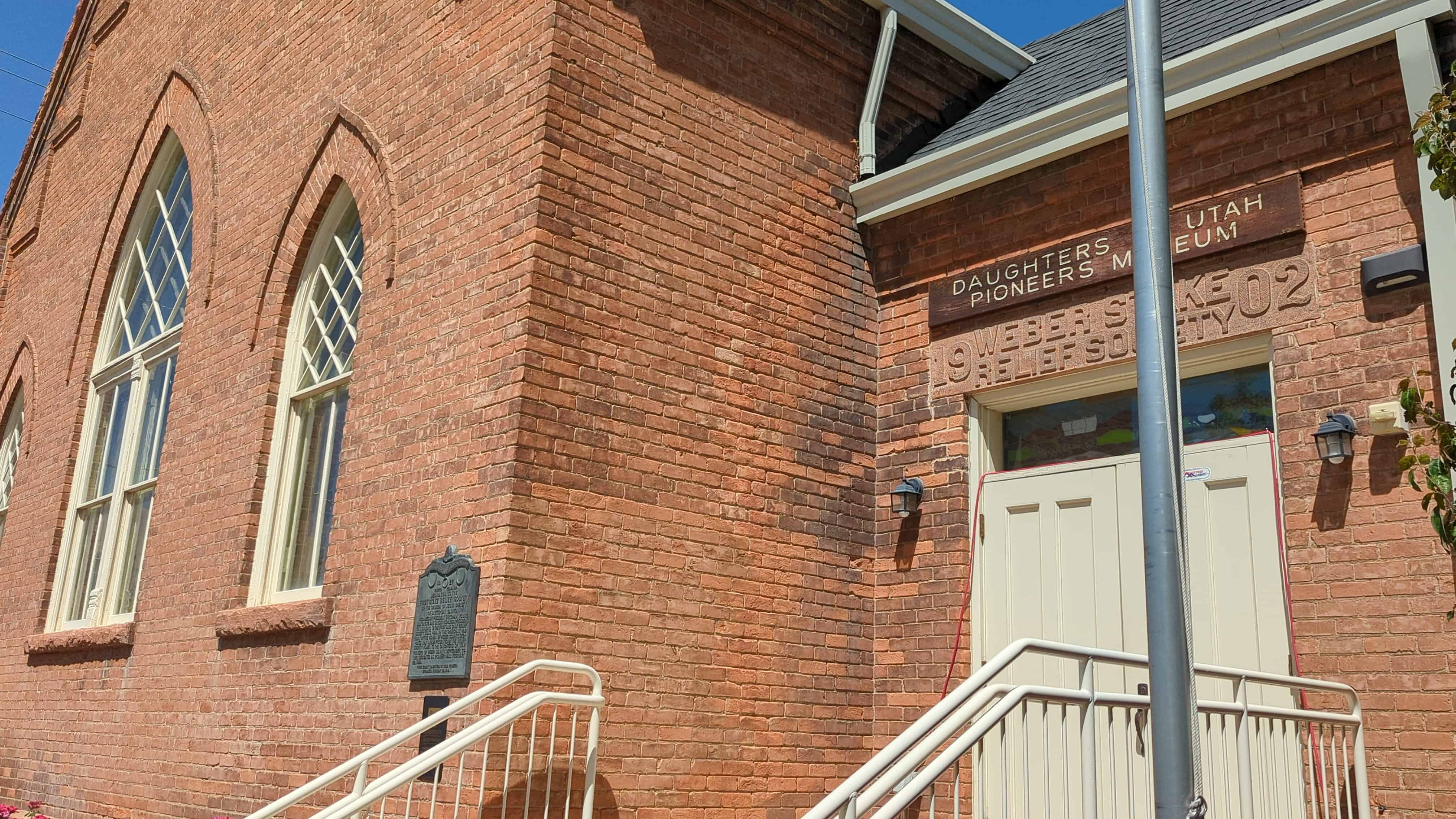
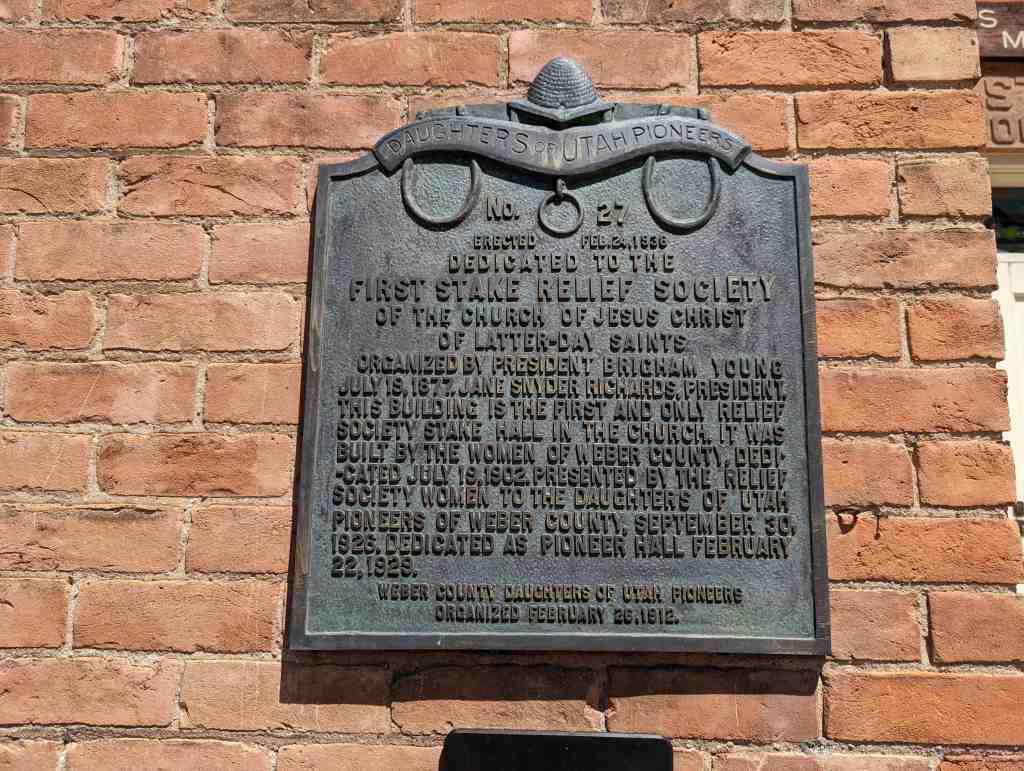
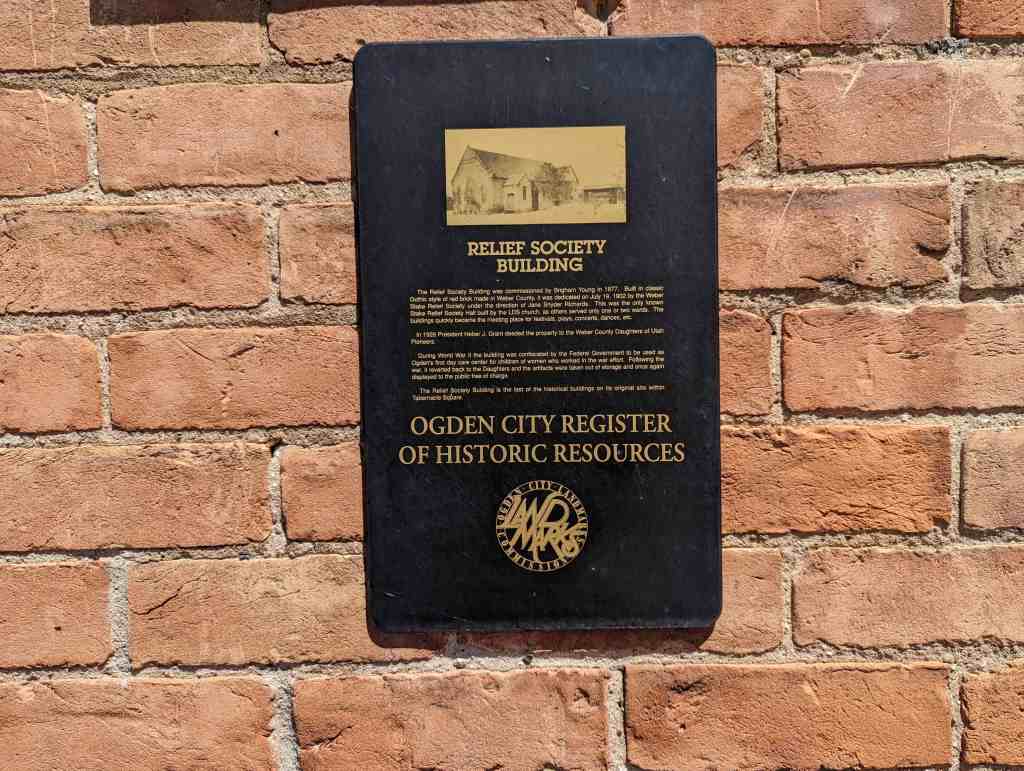
The Relief Society Building was commissioned by Brigham Young in 1877. Built in classic Gothic style of red brick made in Weber County, it was dedicated on July 19, 1902 by the Weber Stake Relief Society under the direction of Jane Snyder Richards. This was the only known Stake Relief Society Hall built by the LDS church, as others served only one or two wards. The buildings quickly became the meeting place for festivals, plays, concerts, dances, etc.
In 1926 President Heber J. Grant deeded the property to the Weber County Daughters of Utah Pioneers.
During World War II the building was confiscated by the Federal Government to be used as Ogden’s first day care center for children of women who worked in the war effort. Following the war, it reverted back to the Daughters and the artifacts were taken out of storage and once again displayed to the public free of charge.
The Relief Society Building is the last of the historical buildings on its original site within Tabernacle Square.



Pingback: Jane S. Richards | JacobBarlow.com