
Tags
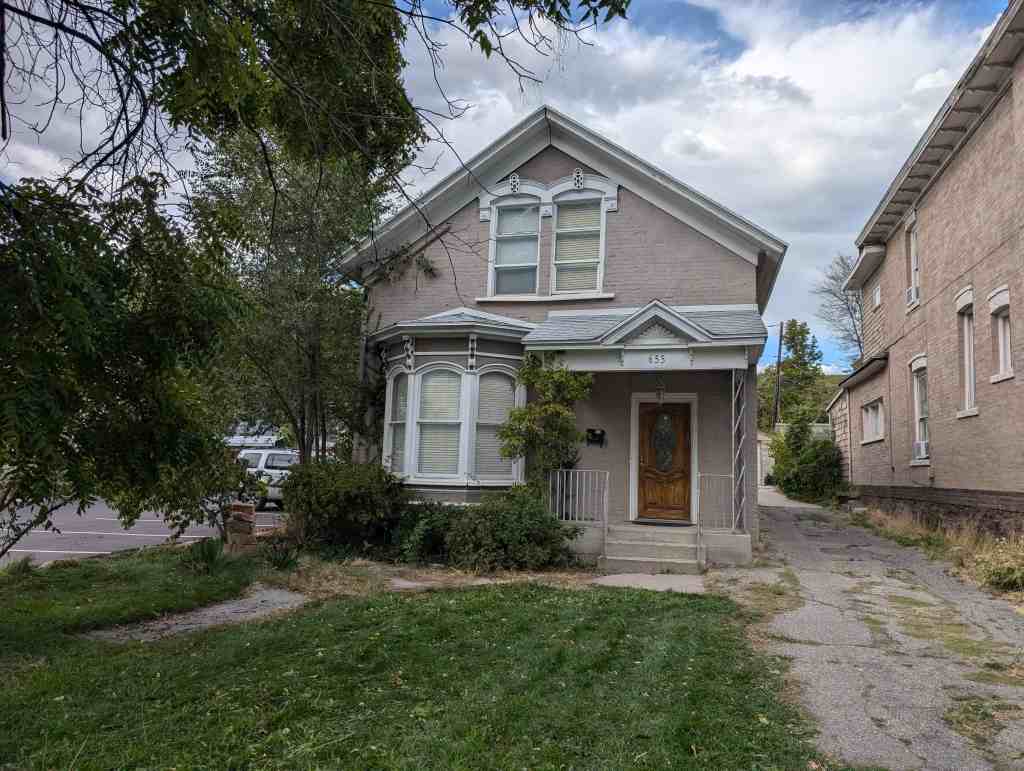
Jeremiah Beattie House
The Jeremiah Beattie House, built in 1880, is significant as an example of the temple-form vernacular house type in Utah. This gable-façade, side passageway plan house is primarily associated with the Greek Revival architectural style and, as a vernacular form, is characteristic of the westward moving New England frontier. The house migrated to Utah with the Mormons in 1847 and is found here as one of several common mid-nineteenth century domestic architectural types. Its origins in the northeast, and its popularity in the northern Midwest document the New England background of the early Mormon religion. The Beattie House, built for a prominent Salt Lake City physician, displays stylistic features of the Italianate style, including hood mold or eyebrow window heads, and a projecting, bracketed bay window. Conceived during the Greek Revival, the temple-form house soon acquired a popularity which insured its persistence through several nineteenth century stylistic periods. The house type is found in Utah with Greek Revival, Gothic Revival, and Italianate decoration, and nicely illustrates the vernacular process by which individual examples display variation while the house type itself remains the same. The Beattie House is one of only nine documented Utah examples of the Greek Revival inspired temple-form vernacular house type.
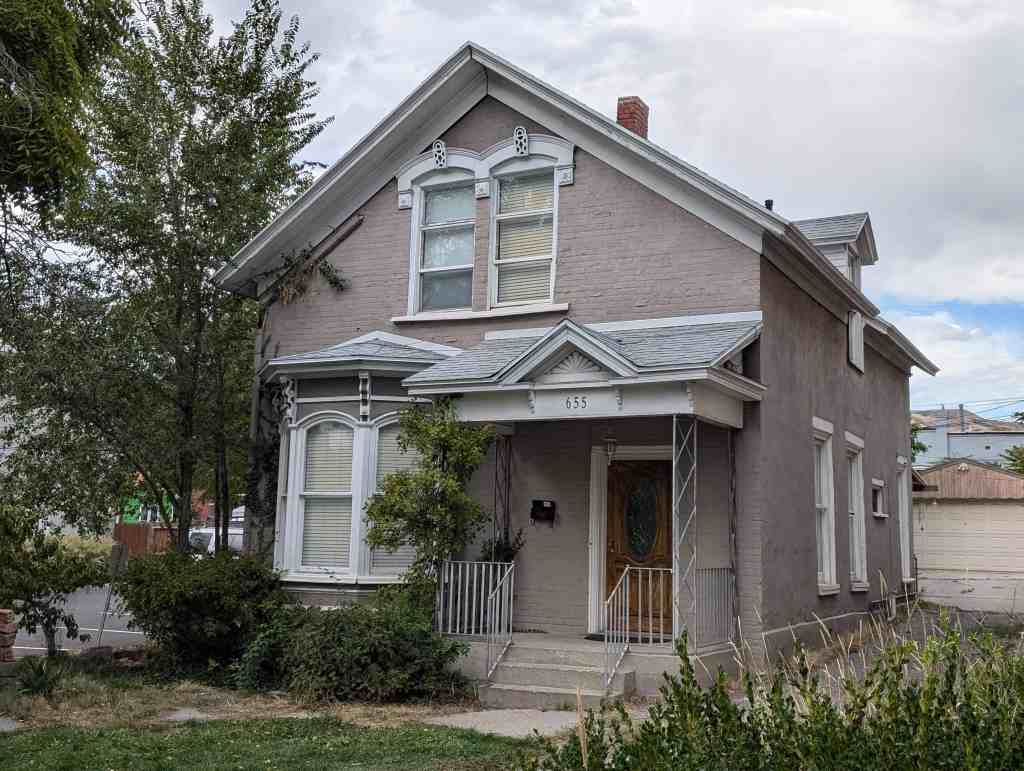
Located at 655 East 200 South in Salt Lake City, Utah and added to the National Historic Register (#83004421) on July 7, 1983. The text on this page is from the nomination form from when it was added to the register.
Almira C. and Dr. Jeremiah Beattie had this house built in 1880 at 655 East 200 South as a major addition to the east side of a smaller one story house already on the site. The smaller house, probably built in the early 1860s, by Nicolas Rumell, was apparently removed in the early 1890s to make room for a new, larger house. The Beattie’s had first come to Utah five years earlier, but had spent two years in Evanston, Wyoming before returning to Salt Lake City in 1880, when they purchased this property and built this house. Dr. Beattie was one of the early physicians in Utah, practicing in partnership with Dr. Isaiah White for many years.
Born in 1839 in London, Canada, Jeremiah graduated from McGill University in Toronto, then took courses in medicine at the Ann Arbor, Michigan College of Medicine and, later, similar courses at Cincinnati College of Physicians and Surgeons. He married Almira C. during the Civil War. They had a daughter, Joy, and a son, James H.
Around 1893 the Beatties built a large, two-story, brick and stone house next door at 653 East 200 South (demolished) and began renting out this house. Dr. Beattie retired from active practice about fifteen years before his death on May 7, 1913. Almira continued to live in the house at 653 East until 1930 when she went live with her daughter in Chicago, where she died in 1935.
In 1930, Tracy Loan and Trust Company bought the property including both houses, renting them out until selling them to Nellie B. Johnson in 1935. She continued to rent out this house until 1937, when she sold just the house and property at 655 East to Ira A. and June Beal. Mr. Beal, who operated a gas station at the time, later worked at the Tooele Ordinance Depot, where he retired one year before his death in 1948. Irene Beal continued to live in this house after her husband’s death until about 1961. She had transferred title to the property to her son, Wayne, and daughter, Sylva, in 1949. Sylva and her husband, Melvin J. Roswald, have lived in the house from the mid-1950s to the present.