
Tags
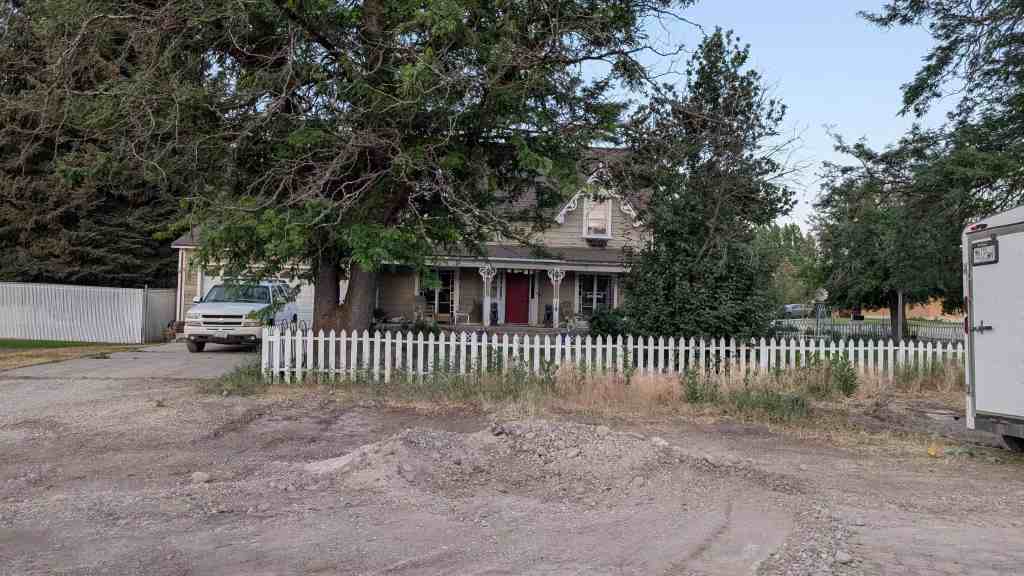
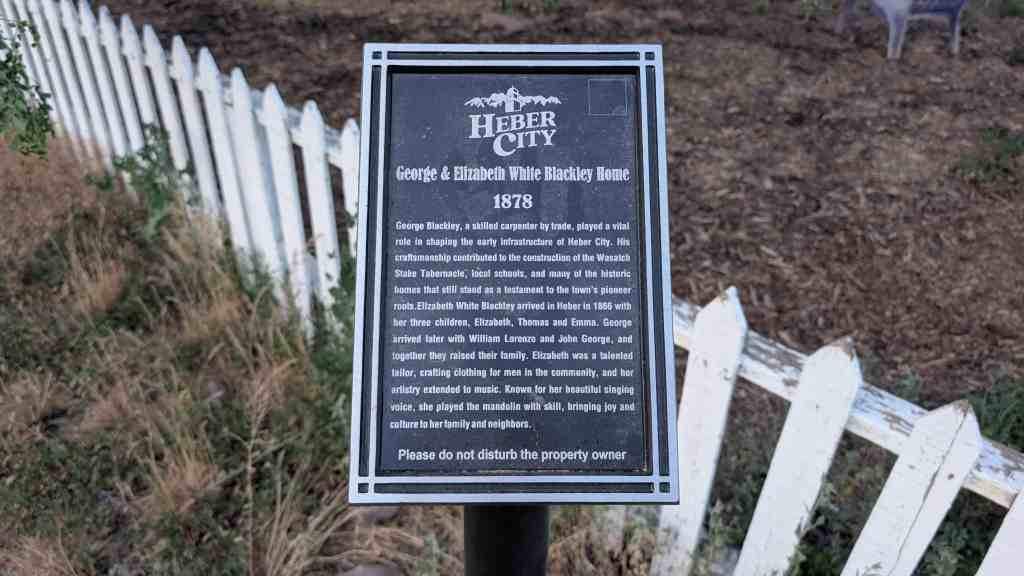
George & Elizabeth White Blackley Home
1878
George Blackley, a skilled carpenter by trade, played a vital role in shaping the early infrastructure of Heber City. His craftsmanship contributed to the construction of the Wasatch Stake Tabernacle, local schools, and many of the historic homes that still stand as a testament to the town’s pioneer roots. Elizabeth White Blackley arrived in Heber in 1866 with her three children, Elizabeth, Thomas and Emma. George arrived later with William Lorenzo and John George, and together they raised their family. Elizabeth was a talented tailor, crafting clothing for men in the community, and her artistry extended to music. Known for her beautiful singing voice, she played the mandolin with skill, bringing joy and culture to her family and neighbors.
Part of the Historic Home Tour and located at 105 East Center Street in Heber City, Utah, it was added to the National Register of Historic Places (#85001392) on June 27, 1985.
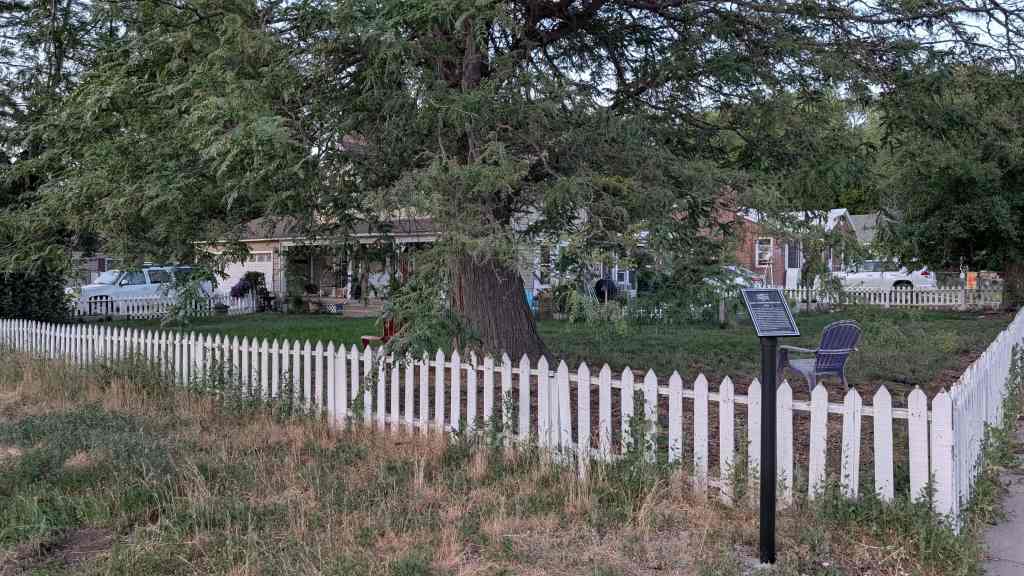
The George Blackley House, built in 1877-78, is architecturally significant as one of a very limited number of Carpenter Gothic houses in Utah. 1 Inspired by the pattern books of the mid-nineteenth century, particularly the published works of A. J. Davis and A. J. Downing, the Carpenter Gothic was characterized by local interpretation of picturesque religion science sculpture social/ humanitarian theater transportation other (specify) designs, often approximating a regional vernacular.2 Gothic revival elements are common in many of the early residences in Utah, in the form of projecting gables on standard house types and decorative jigsaw cut ornament. Because brick was the most readily available building material in Utah, however, there are very few examples of frame houses that reflect Gothic Revival influences. The Blackley House incorporates frame construction and Gothic Revival elements in a house that also displays characteristics of the local building tradition. It is an excellent example of the typical manifestation of the Carpenter Gothic style in Utah architecture.
George Blackley, a local carpenter and joiner, built this house in 1877-78 and lived there until his death in 1902. Born in England in 1830, he emigrated to the U.S. and Utah in 1869 after converting to Mormonism. During the course of his career as a carpenter, he helped construct numerous buildings in the Heber City area, including the stake tabernacle (LDS) and numerous other schools, churches, and residences. His wife, Elizabeth White Blackley, also a Mormon convert, came to Utah in 1866 with two of their children, while George stayed behind to earn money for his and their other children’s emigration. They settled in Heber City where George pursued his carpentry work and Elizabeth, in addition to raising their five children, worked as a tailor. She died in 1909. William L. (Lorry) Blackley, a son, took over the house and property after his parents’ deaths. The house remained in the Blackley family until 1937, when it was sold to Gray-Payne Realty, which probably used it as rental property. Lynn and LaPreel McKnight purchased the property in 1943 and it remained in their family until 1984.
Typical of most Mormon towns, Heber City is primarily a town of masonry buildings. The construction of frame houses in Utah was discouraged by both the scarcity of wood and by the pronouncements of Mormon church leaders, specifically Brigham Young, who favored the symbolic and structural permanence of masonry buildings. The use of wood on most houses in Mormon communities usually consisted of eave and porch decoration only. Due to abundant local timber resources in the Heber City area, however, there are a greater percentage of frame buildings in this town than are generally found in Utah communities, which are, for the most part, located in more arid, sparsely timbered regions. Other well-timbered regions, such as Cache Valley in northern Utah, also exhibit a greater number of frame buildings, as do the non Mormon mining towns which in face have very few masonry houses. The availability of lumber in Heber City provided a construction climate conducive to the use of the wood-frame Carpenter Gothic style, although it was never a popular style locally. The Black!ey House is the only identified example of a wood-frame Carpenter Gothic style house in Heber City.