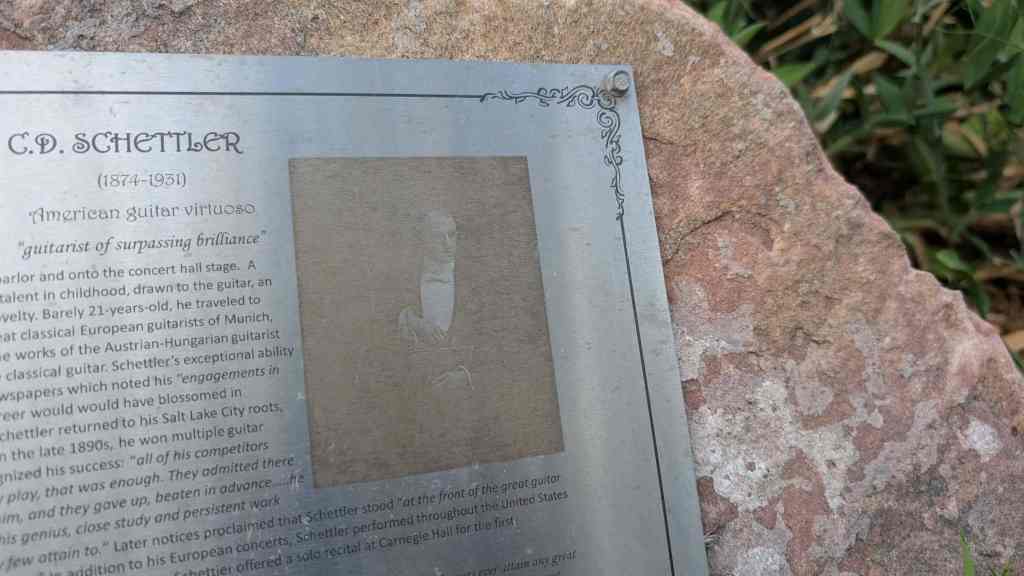
C.D. Schettler
(1874-1931)
American guitar virtuoso
“guitarist of surpassing brilliance”
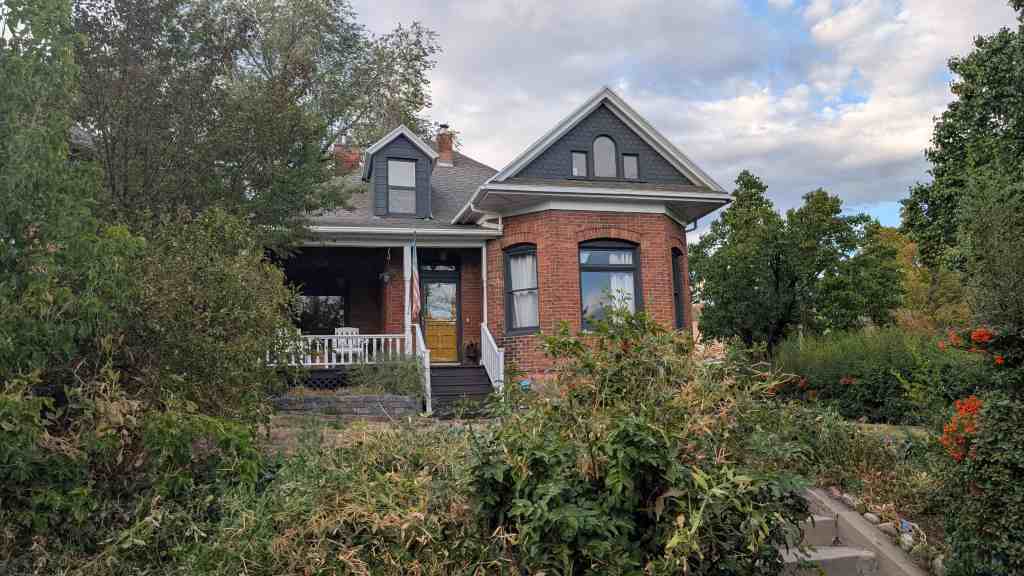
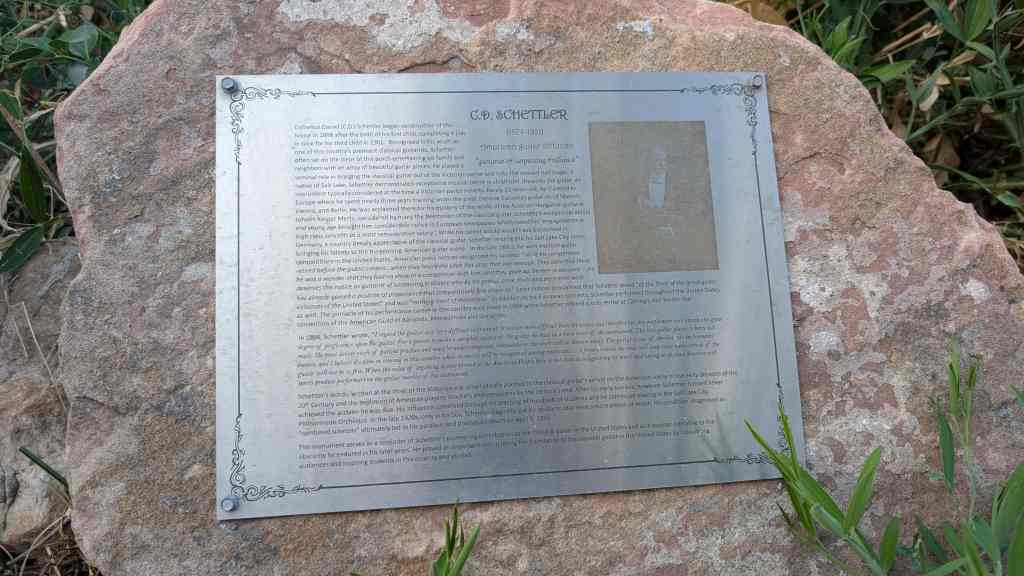
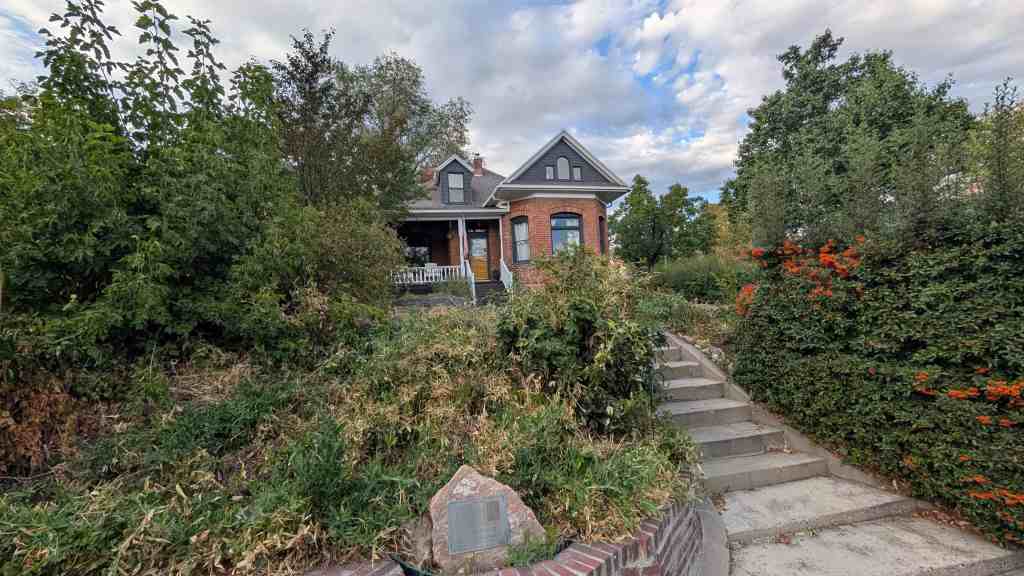
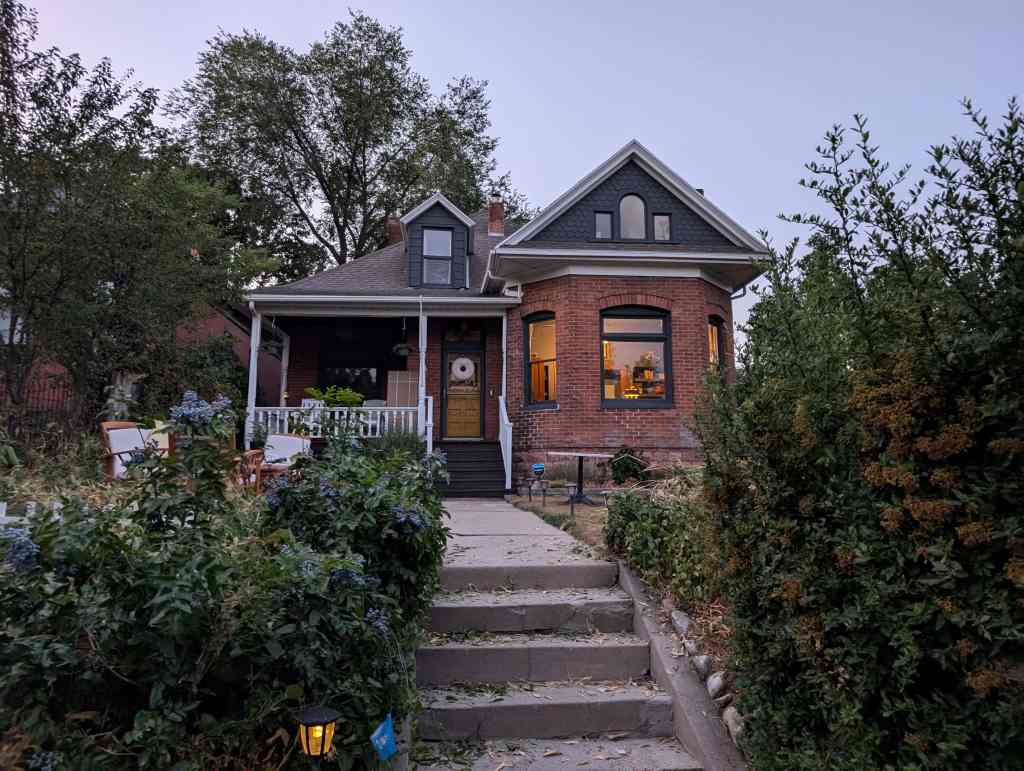
Cornelius Daniel (C.D.) Schettler began construction of this house in 1898 after the birth of his first child, completing it just in time for his third child in 1901. Recognized in his youth as one of this country’s premiere classical guitarists, Schettler often sat on the steps of this porch entertaining his family and neighbors with an array of beautiful guitar pieces. He played a seminal role in bringing the classical guitar out of the Victorian parlor and onto the concert hall stage. A native of Salt Lake, Schettler demonstrated exceptional musical talent in childhood, drawn to the guitar, an instrument typically considered at the time a Victorian parlor novelty. Barely 21-years-old, he traveled to Europe where he spent nearly three years training under the great classical European guitarists of Munich, Vienna, and Berlin. He was acclaimed there for his mastery of the works of the Austrian-Hungarian guitarist Johann Kaspar Mertz, considered by many the Beethoven of the classical guitar. Schettler’s exceptional ability and young age brought him considerable notice in European newspapers which noted his “engagements in high class concerts at a most remunerative salary”. While his career would would have blossomed in Germany, a country deeply appreciative of the classical guitar, Schettler returned to his Salt Lake City roots, bringing his talents to the burgeoning American guitar scene. In the late 1890s, he won multiple guitar competitions in the United States. American press notices recognized his success: “all of his competitors. retired before the public contest…when they heard the Utah Boy play, that was enough. They admitted there he was a wonder-that they had no show in a competition with him, and they gave up, beaten in advance…..he deserves this notice as guitarist of surpassing brilliance who by his genius, close study and persistent work has already gained a position of prominence that comparatively few attain to.”. Later notices proclaimed that Schettler stood “at the front of the great guitar virtuosos of the United States” and was “nothing short of marvelous.” In addition to his European concerts, Schettler performed throughout the United States as well. The pinnacle of his performance career in this country took place in 1904 when Schettier offered a solo recital at Carnegie Hall for the first convention of the American Guild of Banjoists, Mandolinists and Guitarists.
In 1898, Schettler wrote, “I regard the guitar as a very difficult instrument. It is even more difficult than the violin and therefore but few performers ever attain any great degree of proficiency upon the guitar. For a person to make a complete success of the guitar he must be a born lover of the instrument. The real guitar player is born not made. He must devote years of patient practice and must be under competent instruction or the work will be thrown away. The guitar is one of the best solo instruments known, and I believe it’s time in coming in this country when its merits will be recognized among musicians…. I firmly believe the time will soon come when artists of the guitar will not be so few. When the value of anything is once proved to the American People they’re not slow in recognizing its merit and taking it up, and America will surely produce performers on the guitar worthy of the instrument.”
Schettler’s words, written at the close of the Victorian era, prophetically pointed to the classical guitar’s arrival on the American scene in the early decades of the 20th Century and the explosion of American players, teachers and composers by the century’s end. After his early success, however, Schettler himself never achieved the acclaim he was due. His influence continued through his teaching of hundreds of students and he continued playing in the Salt Lake City Philharmonic Orchestra. In the late 1920s, only in his 50s, Schettler tragically lost his ability to play even simple pieces of music. His condition, diagnosed as “combined sclerosis” ultimately led to his paralysis and premature death on April 3, 1931.
This monument serves as a reminder of Schettler’s pioneering contribution to the classical guitar in the United States and as a counter-narrative to the obscurity he endured in his later years. He played an important role in laying the foundation of the classical guitar in the United States by astounding audiences and inspiring students in this country and abroad.
237 East Fourth Avenue in the Avenues Historic District in Salt Lake City, Utah.