
Tags
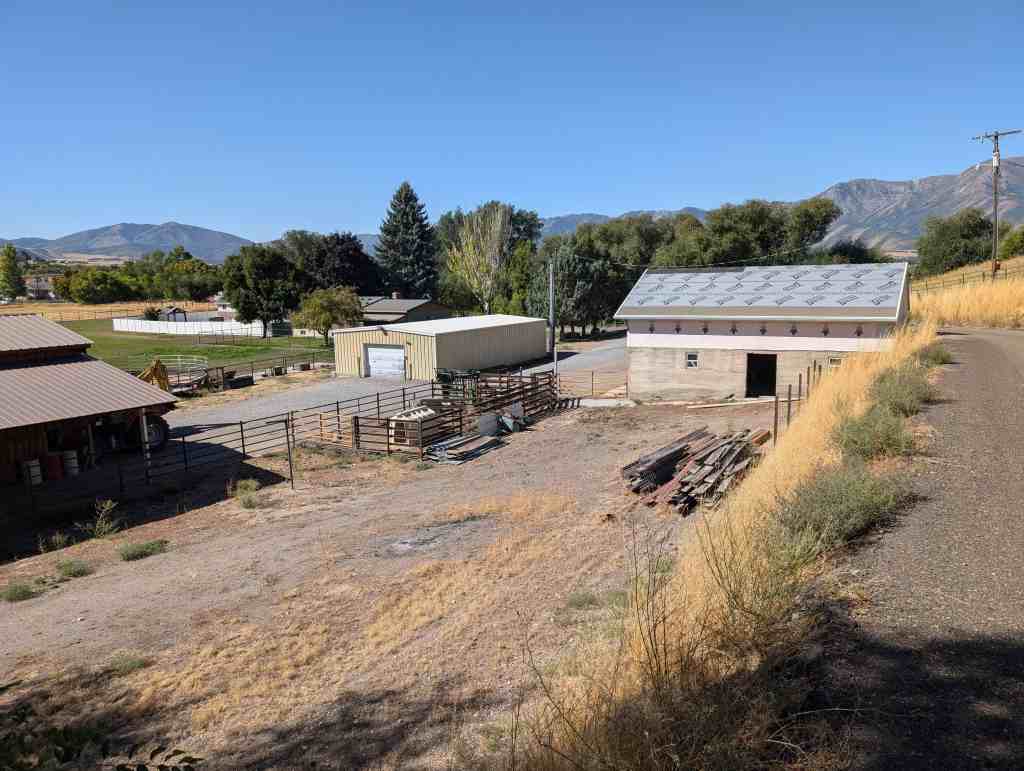
At first glance, you may not notice the banked aspect of this small barn built by Warren McBride in about 1925. As you drive down the portion of 200 South that becomes a dirt road, notice the placement of the barn into the side of the hill. This allowed for hay to be unloaded into the loft from the road on the north side. Warren’s father Wells McBride came here from Farmington to settle this area of Hyrum. An earlier barn built by him has since fallen down. The only memory Keith McBride, son of Warren, has of the building of the barn is that the builder, Bob McFarland, asked if Keith would go get him a drink of water, and when he did, the man gave him a nickel—a lot of money for a little boy in those days. While Keith was growing up they raised sugar beets, peas, pole beans, and watermelon. A big watermelon cost a dime and a little watermelon cost a nickel. Keith’s mother raised chickens, and the family had their own eggs, milk, meat, and produce. Warren McBride never had to work away from the farm. Keith McBride points out that a sagging portion in the ceiling of the barn occurred one year when his father put chopped
hay in there. It weighed more than the loose hay that the barn had been built for. Baled and even chopped hay add a lot more weight. The family kept work horses in the barn. Keith, like many children of that generation, either rode the derrick horse or worked the Jackson fork. Keith says that he felt like he had graduated when he didn’t have to ride that derrick horse any more.
Warren McBride used the barn to milk dairy cows. He started with Jersey cows, then moved on to Guernseys, and ended up with about a dozen Holsteins. He milked by hand for many years, with the cows standing in wooden stanchions, and then they got an electric bucket milker and changed the stanchions to metal. The milk house was built onto the west side of the barn when Grade A regulations changed. The barn’s current use is for the storage of baled hay for feeding bulls and horses. Keith treasures a poem his father wrote about the barn.
Viewing directions: The barn is on the bend of 200 South where the road becomes unpaved. View barn from 200 South looking east
(above info from Historic Barns – Cache County #15)
555 West 200 South in Hyrum, Utah