
Tags
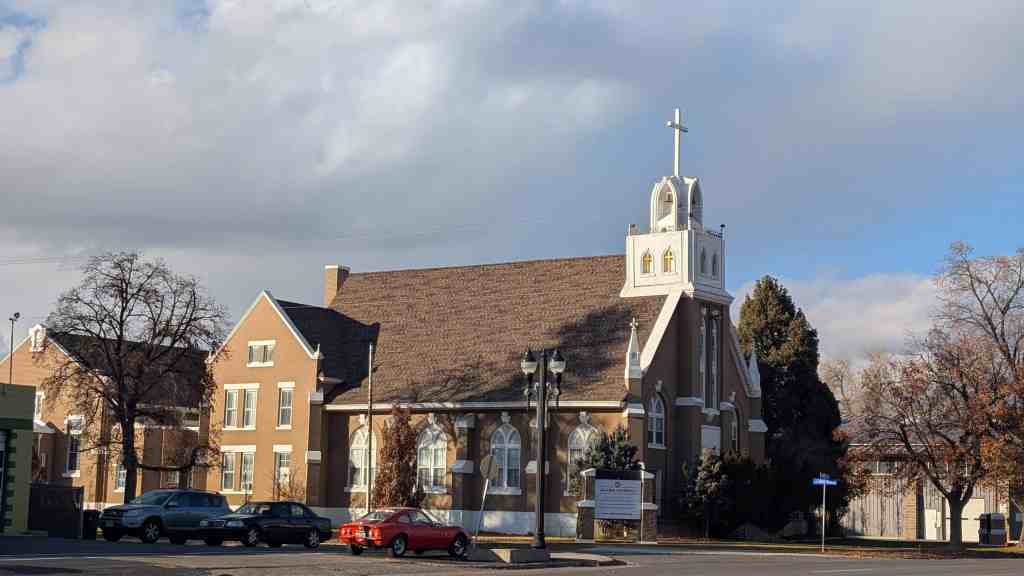
Logan LDS Sixth Ward Church
The Logan L.D.S. Sixth Ward Church is significant because of its architectural beauty and because it is the only chapel in the Gothic style in Logan city. It is especially interesting because of its location on a main thoroughfare and thus helps create an important sense of identity for the city of Logan in the minds of both tourists and local residents.
The Logan Sixth Ward was an outgrowth of the Logan First ward, and came into existence as a branch in November 1881 with Anthon L. Skancky as presiding Elder. On June 5, 1884, part of the Logan First ward that was located on Logan Island was separated from the Logan First ward and organized into two new wards, namely the Logan Sixth and Seventh wards,
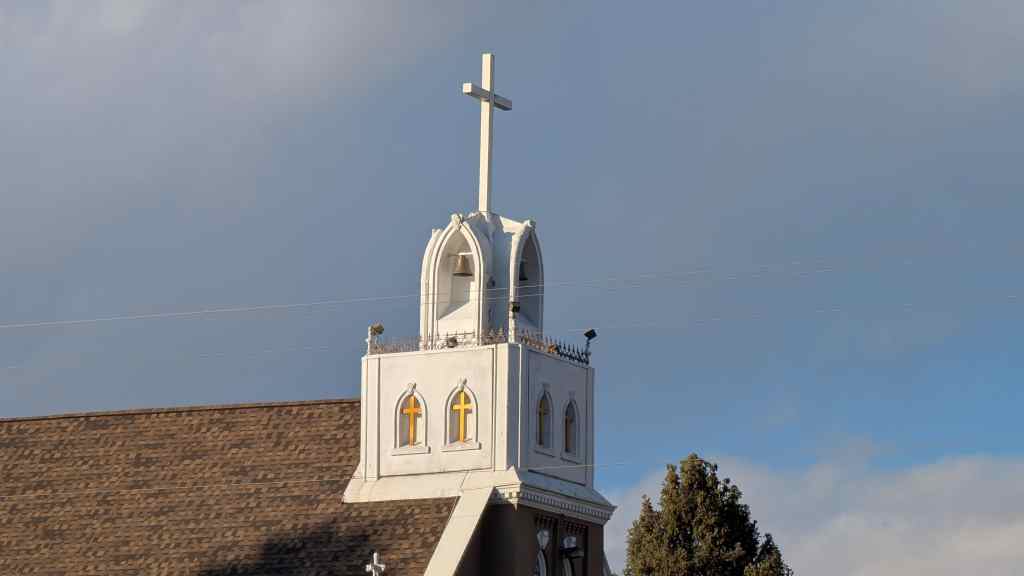
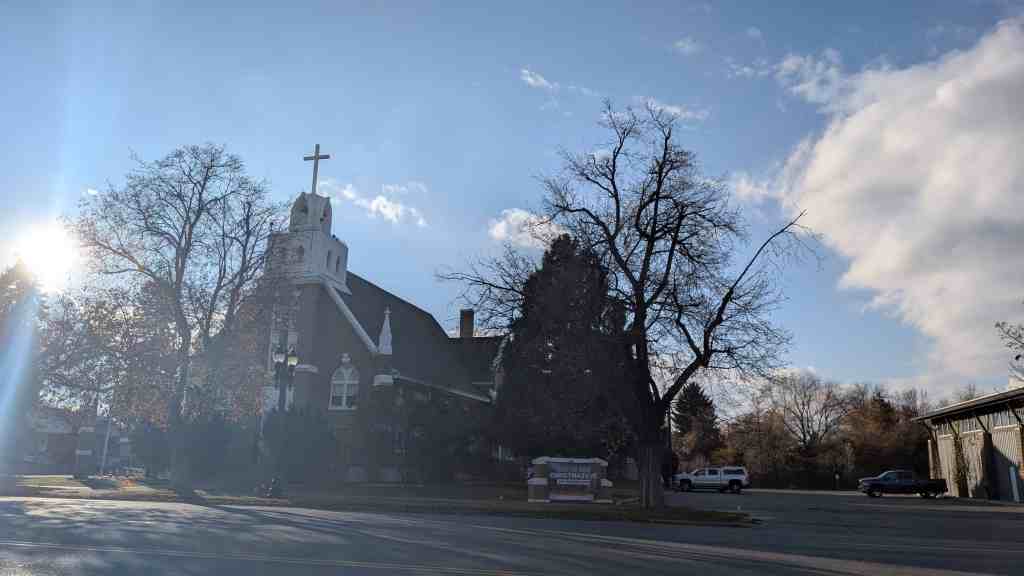
Located at 395 South Main Street in Logan, Utah and added to the National Register of Historic Places (#79002489) on July 17, 1979.
Anthon L. Skancky was ordained a Bishop by Marriner W. Merrill and set apart to preside over the sixth ward. Shortly afterwards meetings were held in private homes, but steps were soon taken to buy a meeting house lot and erect a meeting house. The lumber meeting house was finished in 1883 and measured 20 by 30 feet. In 1884-1885 an addition was made to the church which was also constructed of lumber and its dimensions were 20 by 30 feet.
On December 31, 1900, the Logan Sixth ward consisted of 672 people (131 families). The Bishopric consisted of Anthon Lorenzen Skancky as Bishop, Bans Andrews Hansen as first counselor, and George Dunbar as second counselor. On April 28, 1901, the Logan Sixth ward was put under the jurisdiction of Logan Stake. The ward boundaries extended north to Third South Street, east to Second East Street (which separates it from the Logan Seventh ward), south to the Logan River and Providence Lane, and west to the Logan Second ward.
On March 6, 1907, the decision was made by the Bishopric and ward members to construct a new church house that would hold approximately 800 people. A committee of seven members were appointed by the bishopric to apportion the amount that each person should pay toward the building of the house. The following persons were appointed to the committee: Stephen Hailstone, George W. Skidmore, Jas Z. Stewart, George G. Hendricks, Wesley Jacques, Nathaniel W. Haws, and Peter M. Nielson.
The cornerstone was laid for the new church house on July 6, 1908. The inscription on the stone is as follows: “Laid by Bishop Skancky A.D. 1908.” President Isaac Smith dedicated the foundations and grounds.
The first meeting was held in the new sixth ward church house on September 29, 1909. Bishop Skancky congratulated the ward members upon the completion of the beautiful and commodious house of worship. He stated that the best materials had been used in the building and the workmanship was very good. The sisters of the ward had been active in assisting in every way possible. They cleaned the house, furnished the carpet and and laid it along the aisles and upon the stand.
In 1910 Bishop Skancky was released and Oscar F. Rice was ordained Bishop of the Sixth ward. The first sacrament meeting assembled on March 20, 1910, in the new meeting house. Bishop Rice presided and informed the members that the dedication would have to be postponed because of the debt that still needed to be paid on the building.
The Logan Sixth ward meeting house was dedicated on February 18, 1917, by Apostle James E. Talmage. The building cost was $19,633 and was completely finished and paid for. At the dedication Bishop Rice thanked the people of the ward for their loyal support and liberal contributions.
During the winter of 1926-1927 the need of an amusement hall was discussed. The matter was approved by the first presidency, and on May 20, 1927, the work began. The size of the hall was 40 by 80 feet with a 26 by 26 foot addition connecting it with the meeting house. The building was completed on December 21, 1927, at a cost of $31,000 but was not dedicated until 1930. On April 13, 1941, the Relief Society room was finished at a cost of about $3,653.40.
In January of 1947 a realignment was made and the division of the Sixth ward was made, to create the Fourteenth ward. The Fourteenth ward was organized January 26, 1947. The first bishopric of this ward were the following: E. G. Earl as Bishop, Mahlon F. Rice as first counselor, David W. England as second counselor, and Clements L. Whatcott as clerk.
The Logan Sixth and Fourteenth wards were put under the jurisdiction of the Mt. Logan Stake on December 12, 1971, and the Wellsville wards were put in the Logan Stake.
The present owner is leaving the original chapel as it is, however part of the building will be used for his printing business and called “Deseret Towers.”
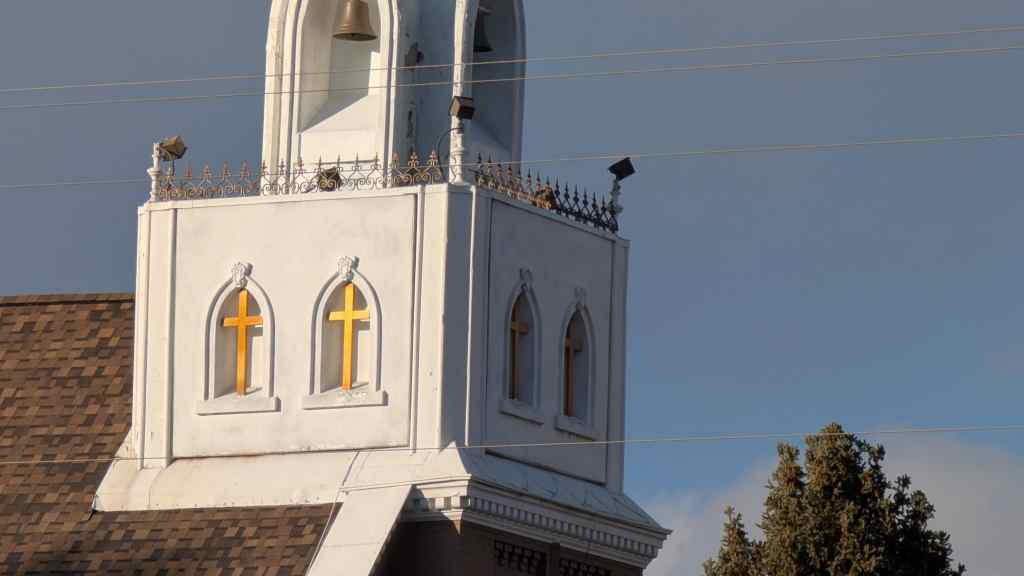
The Logan Sixth Ward church is one of the most interesting churches in the city of Logan. The building is rectangular with the addition of a lateral wing on the west side. The church is located on a corner lot, therefore the two facades of the original church face the street. The front gable displays an engaged front tower with four corner spires and four shorter spires above the center of each façade. While it has been reported that this tower was based on the Salt Lake Temple, it was in fact very similar to Ithiel Town’s Trinity Church in New Haven, Connecticut and other Gothic Revival churches of the period.
The Logan Sixth Ward church is done in the Gothic style with large Gothic windows between stepped buttresses. The pinnacles on top of the front corner buttresses enter the building walls at a 45-degree angle. The materials used for the building are cream brick and concrete.
The chapel has a small seating capacity with sloped floors and a gallery at the rear which seats about sixty people. The ceiling features a round vault with exposed trusses and braces. Behind the podium is a spherical cavern which was intended to improve the acoustics. There is a variety of detailing inside and out which adds to the character of the building.
The dimensions of the chapel are 45 x 114 feet with a total of 16,402 square feet. The architects of the church were K. C. Schaub and Joe Monsen and the contractor was Olof I. Pedersen. Holmgren and Nielsen, from Logan, worked out the scheme of decorating the original walls.
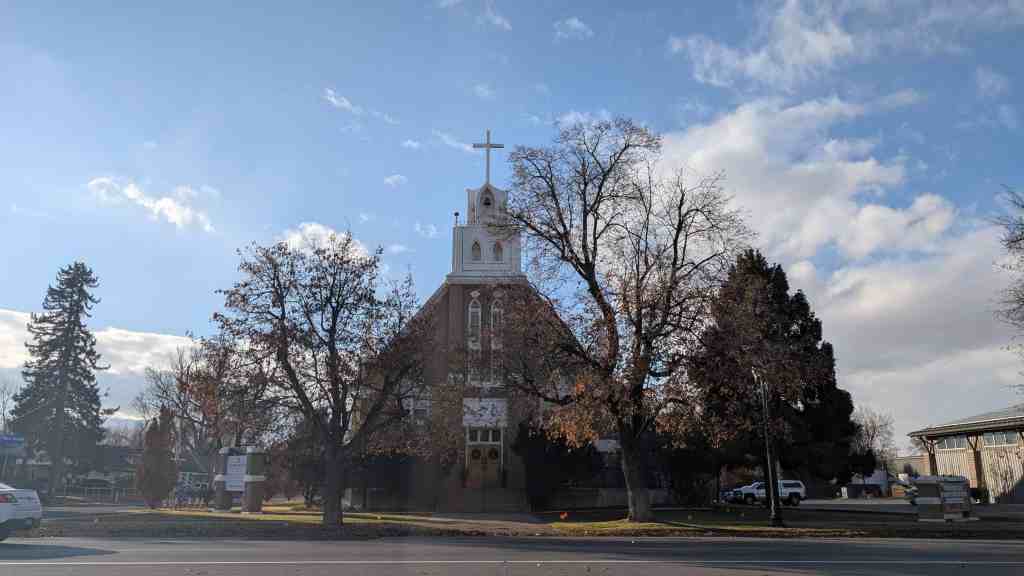
“For around 50-60 years the 6th Ward Building was the first church one would see coming into Logan from the south. The building was unique because it had a large replica of the Salt Lake Temple on the top front of the church.” *