
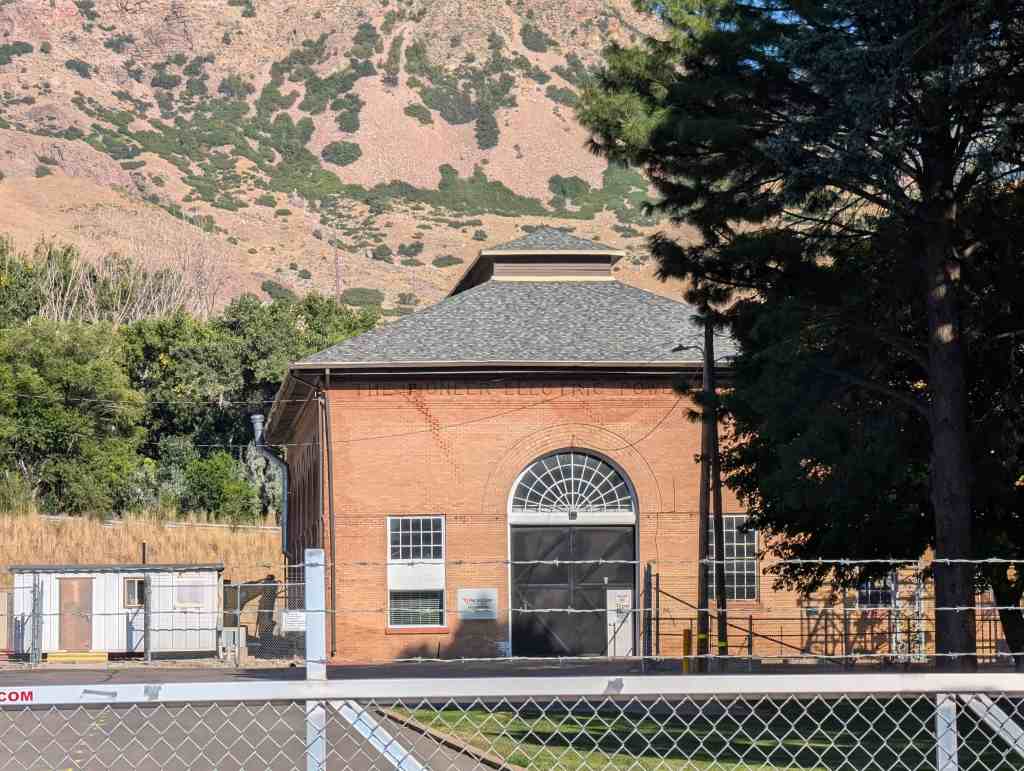
Pioneer Electric Power Company
The Pioneer Hydroelectric Project
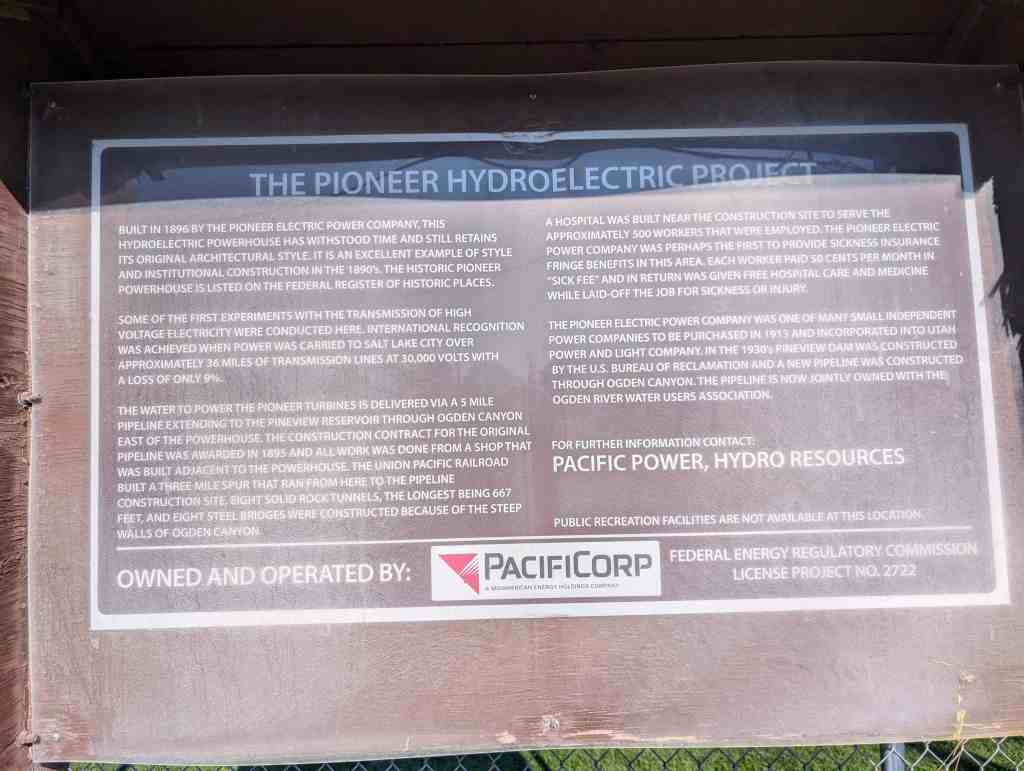
Built in 1896 by the pioneer electric power company, this hydroelectric powerhouse has withstood time and still retains its original architectural style. It is an excellent example of style and institutional construction in the 1890’s. The historic pioneer powerhouse is listed on the federal register of historic places.
Some of the first experiments with the transmission of high voltage electricity were conducted here. International recognition was achieved when power was carried to Salt Lake City over approximately 36 miles of transmission lines at 30,000 volts with a loss of only 9%.
The water to power the pioneer turbines is delivered via a 5 mile pipeline extending to the Pineview Reservoir through Ogden Canyon east of the powerhouse. The construction contract for the original pipeline was awarded in 1895 and all work was done from a shop that was built adjacent to the powerhouse. The union pacific railroad built a three mile spur that ran from here to the pipeline construction site. Eight solid rock tunnels, the longest being 667 feet, and eight steel bridges were constructed because of the steep walls of Ogden Canyon.
A hospital was built near the construction site to serve the approximately 500 workers that were employed. The pioneer electric power company was perhaps the first to provide sickness insurance fringe benefits in this area. Each worker paid 50 cents per month in “Sick fee” and in return was given free hospital care and medicine while laid-off the job for sickness or injury.
The pioneer electric power company was one of many small independent power companies to be purchased in 1913 and incorporated into Utah power and light company. In the 1930’s Pineview dam was constructed by the U.S. Bureau of reclamation and a new pipeline was constructed through Ogden Canyon. The pipeline is now jointly owned with the Ogden river water users association.
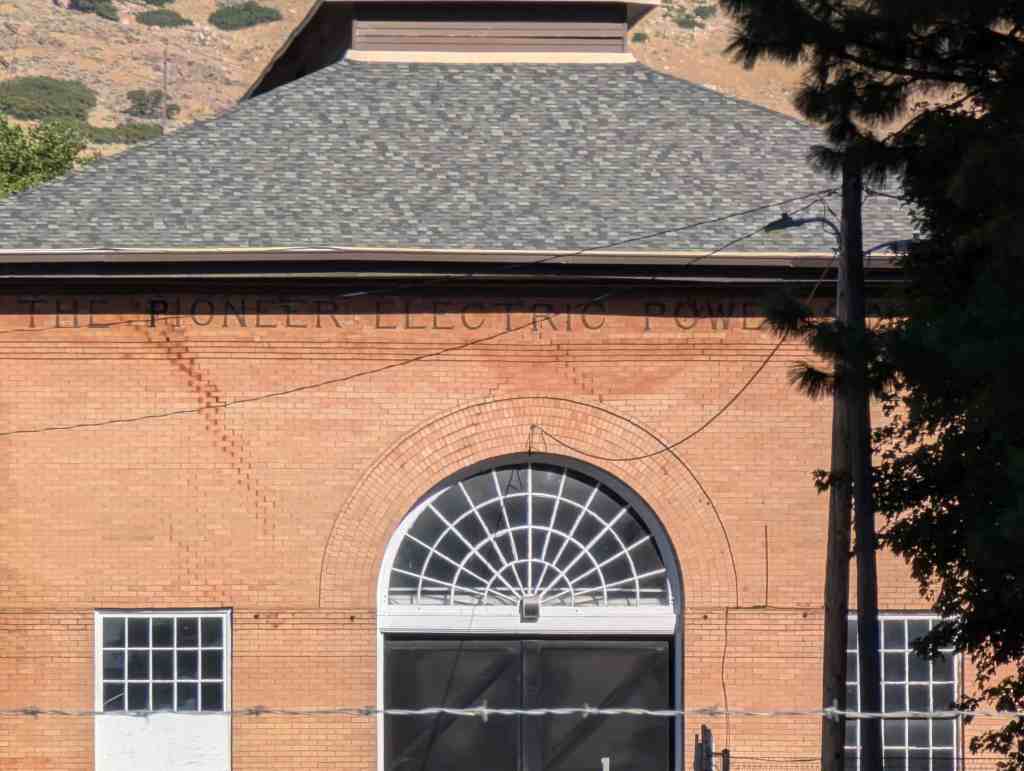
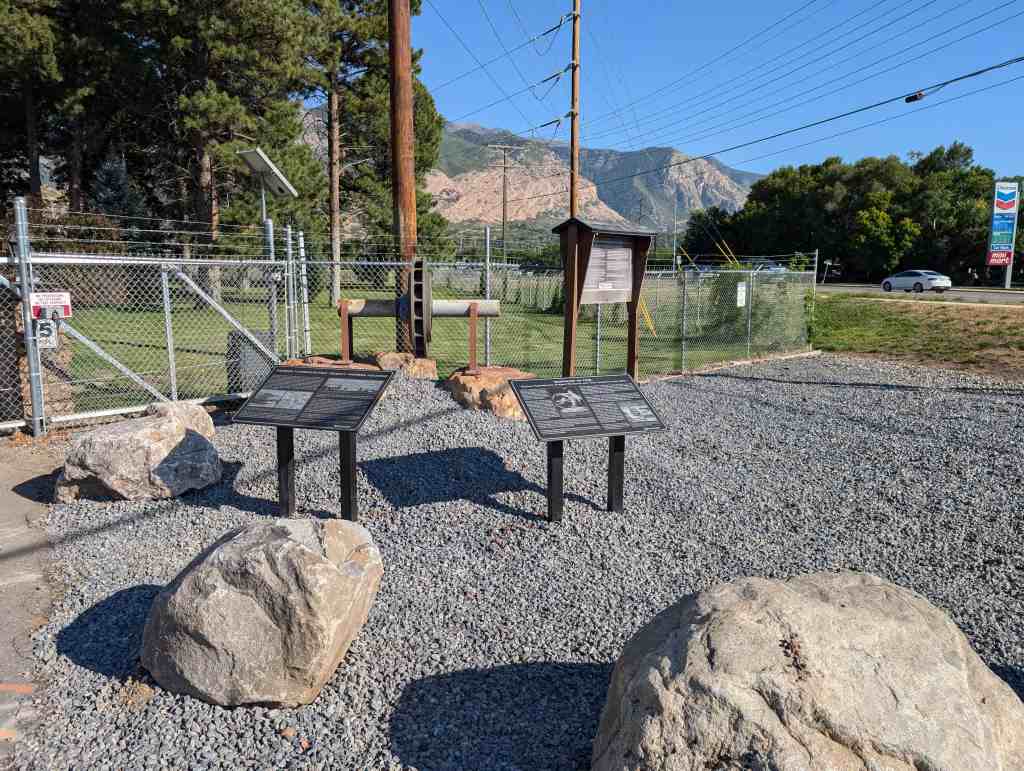
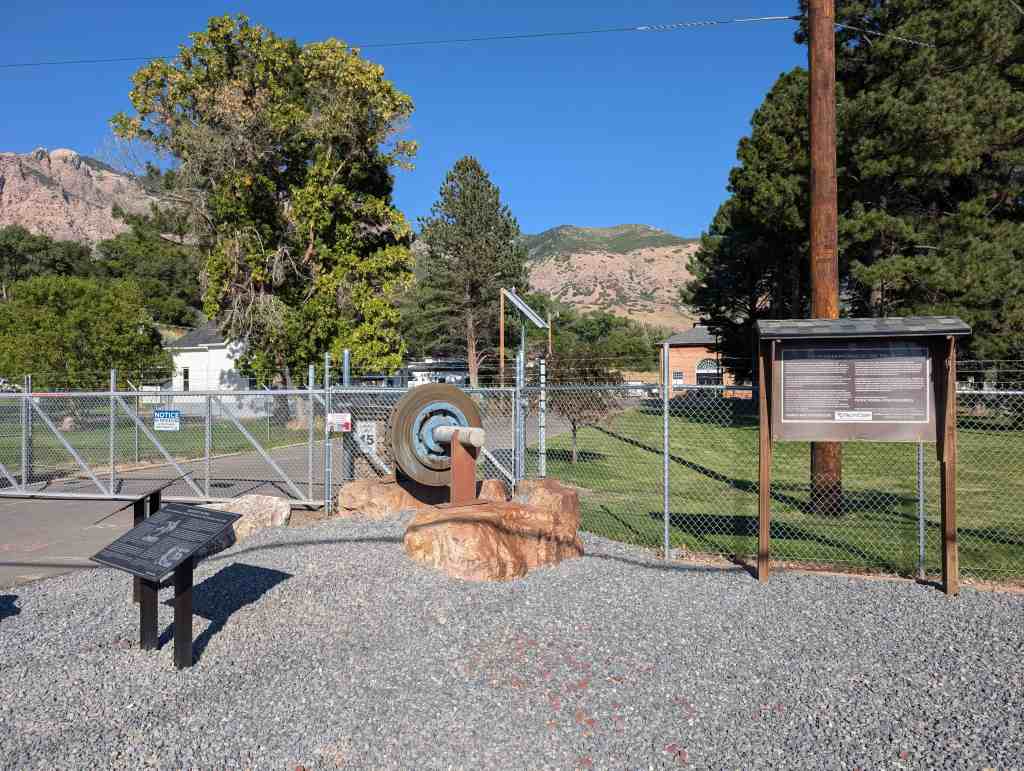
1298 East 12th Street in Ogden, Utah
Also here:
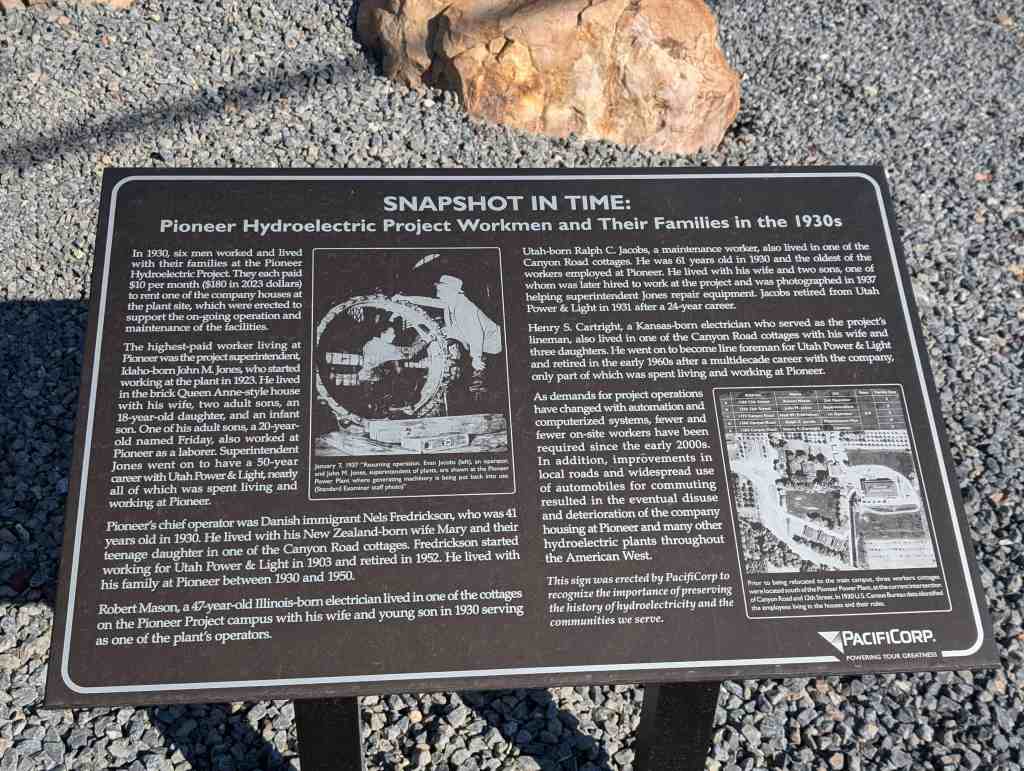
SNAPSHOT IN TIME:
Pioneer Hydroelectric Project Workmen and Their Families in the 1930s
In 1930, six men worked and lived with their families at the Pioneer Hydroelectric Project. They each paid $10 per month ($180 in 2023 dollars) to rent one of the company houses at the plant site, which were erected to support the on-going operation and maintenance of the facilities.
The highest-paid worker living at Pioneer was the project superintendent, Idaho-born John M. Jones, who started working at the plant in 1923. He lived in the brick Queen Anne-style house with his wife, two adult sons, an 18-year-old daughter, and an infant son. One of his adult sons, a 20-year-old named Friday, also worked at Pioneer as a laborer. Superintendent Jones went on to have a 50-year career with Utah Power & Light, nearly all of which was spent living and working at Pioneer.
Pioneer’s chief operator was Danish immigrant Nels Fredrickson, who was 41 years old in 1930. He lived with his New Zealand-born wife Mary and their teenage daughter in one of the Canyon Road cottages. Fredrickson started working for Utah Power & Light in 1903 and retired in 1952. He lived with his family at Pioneer between 1930 and 1950.
Robert Mason, a 47-year-old Illinois-born electrician lived in one of the cottages on the Pioneer Project campus with his wife and young son in 1930 serving as one of the plant’s operators.
Utah-born Ralph C. Jacobs, a maintenance worker, also lived in one of the Canyon Road cottages. He was 61 years old in 1930 and the oldest of the workers employed at Pioneer. He lived with his wife and two sons, one of whom was later hired to work at the project and was photographed in 1937 helping superintendent Jones repair equipment. Jacobs retired from Utah Power & Light in 1931 after a 24-year career.
Henry S. Cartright, a Kansas-born electrician who served as the project’s lineman, also lived in one of the Canyon Road cottages with his wife and three daughters. He went on to become line foreman for Utah Power & Light and retired in the early 1960s after a multidecade career with the company, only part of which was spent living and working at Pioneer.
As demands for project operations have changed with automation and computerized systems, fewer and fewer on-site workers have been required since the early 2000s. In addition, improvements in local roads and widespread use of automobiles for commuting resulted in the eventual disuse and deterioration of the company housing at Pioneer and many other hydroelectric plants throughout the American West.
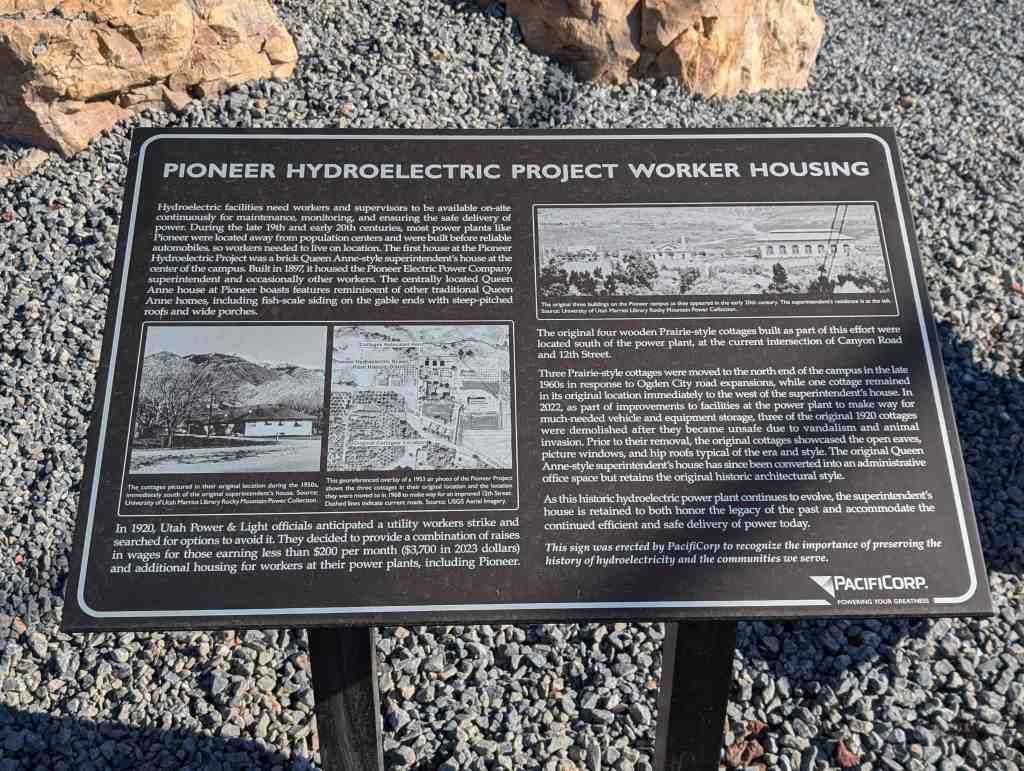
PIONEER HYDROELECTRIC PROJECT WORKER HOUSING
Hydroelectric facilities need workers and supervisors to be available on-site continuously for maintenance, monitoring, and ensuring the safe delivery of power. During the late 19th and early 20th centuries, most power plants like Pioneer were located away from population centers and were built before reliable automobiles, so workers needed to live on location. The first house at the Pioneer Hydroelectric Project was a brick Queen Anne-style superintendent’s house at the center of the campus. Built in 1897, it housed the Pioneer Electric Power Company superintendent and occasionally other workers. The centrally located Queen Anne house at Pioneer boasts features reminiscent of other traditional Queen Anne homes, including fish-scale siding on the gable ends with steep-pitched roofs and wide porches.
In 1920, Utah Power & Light officials anticipated a utility workers strike and searched for options to avoid it. They decided to provide a combination of raises in wages for those earning less than $200 per month ($3,700 in 2023 dollars) and additional housing for workers at their power plants, including Pioneer.
The original four wooden Prairie-style cottages built as part of this effort were located south of the power plant, at the current intersection of Canyon Road and 12th Street.
Three Prairie-style cottages were moved to the north end of the campus in the late 1960s in response to Ogden City road expansions, while one cottage remained in its original location immediately to the west of the superintendent’s house. In 2022, as part of improvements to facilities at the power plant to make way for much-needed vehicle and equipment storage, three of the original 1920 cottages were demolished after they became unsafe due to vandalism and animal invasion. Prior to their removal, the original cottages showcased the open eaves, picture windows, and hip roofs typical of the era and style. The original Queen Anne-style superintendent’s house has since been converted into an administrative office space but retains the original historic architectural style.
As this historic hydroelectric power plant continues to evolve, the superintendent’s house is retained to both honor the legacy of the past and accommodate the continued efficient and safe delivery of power today.
Pingback: Ogden by Address | JacobBarlow.com