
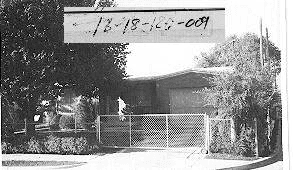
Built in 1955, mentioned here, and located at 1636 South 200 East in Salt Lake City, Utah.

06 Friday Dec 2024
Posted in Uncategorized
Built in 1955, mentioned here, and located at 1636 South 200 East in Salt Lake City, Utah.
06 Friday Dec 2024
Posted in Uncategorized
Samuel Jackson House
225 South 200 East in Beaver, Utah
06 Friday Dec 2024
Posted in Uncategorized
Ancil Twitchell House
100 South 200 East in Beaver, Utah
06 Friday Dec 2024
Posted in Uncategorized
Tags
Harriet S. Shepherd House
The house is significant for both its architecture and the history of its early residents.. It was an early brick house by Beaver standards and is surprisingly substantial for a home built in 1876. Thomas Frazer, the local Scots mason who was the principal builder in Beaver, constructed the granary (the work is recorded in his work books) but the builder of the house itself is unknown.
The home is quite large and was considered a mansion by townspeople. The home is an “I”-house and has a central-hall plan which is quite unusual in Beaver, there being only three other examples of such a plan in town. Its style, more than any other extant building in Beaver, was influenced by the Federalist style of architecture that was so popular in the eastern United States.
Located at 190 North 200 East in Beaver, Utah and added to the National Register of Historic Places (#80003888) on February 8, 1980. The text on this page is from the nomination form from the national register.
Marcus L. Shepherd was a very prominent citizen of pioneer Beaver. He was born in Ohio in 1825 and died in Beaver in 1904. During his years in Beaver, his occupation was primarily that of a sheepman and he served on the board of directors of the Beaver Woolen Mills for many years, Mr. Shepherd was also active in the Church of Jesus Christ of Latter-day Saints, serving as a counselor to two different Stake Presidents from 1877 until his death. He was a polygamist, in accordance with church doctrine, marrying two different wives.
His first wife was Harriet S. Shepherd, who was born in New York in 1831 and died in 1888 in Beaver. She was very active in the Beaver Stake Relief Society, serving as a treasurer and counselor. It is reported that Harriet and Marcus’ second wife, Cedaressa, did not get along well, and they did not live in the same house. Harriet obtained the title to and lived in the big house at 190 North 200 East. Many senior citizens remember attending dances at the home, on the second floor which is now sub-divided into bedrooms. One room of the house also served as an early school house, and there is evidence that the granary just east of the home served as one of Beaver’s early jails. A popular story is that an Indian was incarcerated in this jail for murdering a young miner for his boots. The young man’s brother came into town to seek revenge, and when the jailer saw the brother coming, he simply opened the door to the jail. Thus, no trail was ever necessary.
Marcus L. Shepherd also married Cedaressa Cartwright Shepherd, who was the first white child born in Cedar City, Utah. She was almost thirty years his junior. Apparently, Marcus spent the latter part of his life with this second wife, for townspeople remember them living west of town at what is now a creamery, and not at Harriet’s big house. Upon. Harriet’s death, the house under discussion here went to Harriet’s daughter who lived there for many years.
The Harriet S. Shepherd House is a large, two-story, brick home with a full attic and a half basement. It has a green granite foundation and the body of the house is constructed with Beaver’s local red brick. The house has a central hall plan with two rooms flanking either side of the hall.
On the front façade, the ground floor has four windows and a door arranged with bilateral symmetry. The door has sidelights and a large transom above it. On the second floor, there are five windows, each appearing directly above its ground floor counterpart.
At the gable ends of the house, something unusual happens. There are chimney stacks at the end of the gable on the roof top, but directly under the chimney stacks are windows. A visit to the attic explains the mystery. The flues at each end of the house split and go around the windows, down through the second story to the ground floor.
The windows are all six panes over srix, ! and the lintels for the doors and windows are wood. The cornice is very decorative; with two sets of dentils and a partial boxed return at the gable ends.
There is a granary on the east side of the house that was built by Thomas Frazer, the local stonemason and contractor. It has a black rock foundation and is constructed of red brick with lines that are reminiscent of the big house.
06 Friday Dec 2024
Posted in Uncategorized
James Fennemore House
195 North 200 East in Beaver, Utah
06 Friday Dec 2024
Posted in Uncategorized
John Grimshaw House
290 North 200 East in Beaver, Utah
06 Friday Dec 2024
Posted in Uncategorized
Mitchell M. Stephens House
495 North 200 East in Beaver, Utah
06 Friday Dec 2024
Posted in Uncategorized
This building is part of the 1930s commercial development of this block.
In 1939 the J. C. Penney Co. built this building when the business was moved from 286 West Center. Later, another chain store – W. T. Grant Co., occupied the building.
The building façade has been altered using stucco to cover up six small windows on the upper façade and using tile to redo the lower façade. The building entrance has also been lowered – – de-emphasizing the presence of a mezzanine which is no longer used.
A concrete block and brick two-story warehouse was built at the rear and attached to the main building by a second story walkway.
175-177 West Center Street in Provo, Utah
06 Friday Dec 2024
Posted in Uncategorized

This building was built for one of several automobile-related businesses built in this area in the 1920s.
About 1919 the Brimhall Brothers (Enos and Wilford W.) moved their tire business from 147 West Center into this building at 223 West Center.
The inside of the building has been altered, but the outside façade of light and dark brick in geometric patterns is still intact, if obscured somewhat by a metal pole-supported sign.
The roof is flat, but the top of the façade is outlined with a curvalimar cotnice,
The front façade was remodeled in 1965.
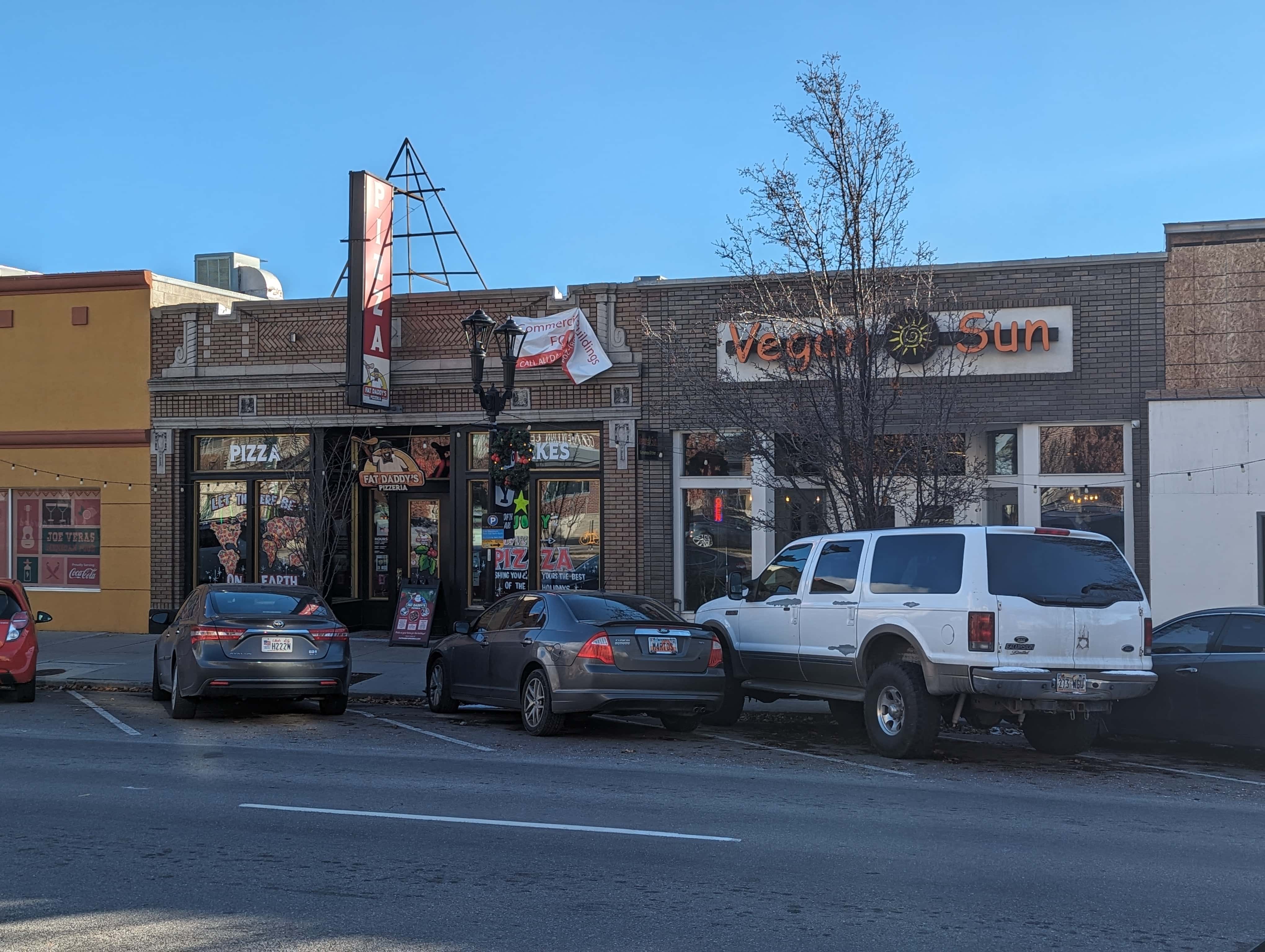
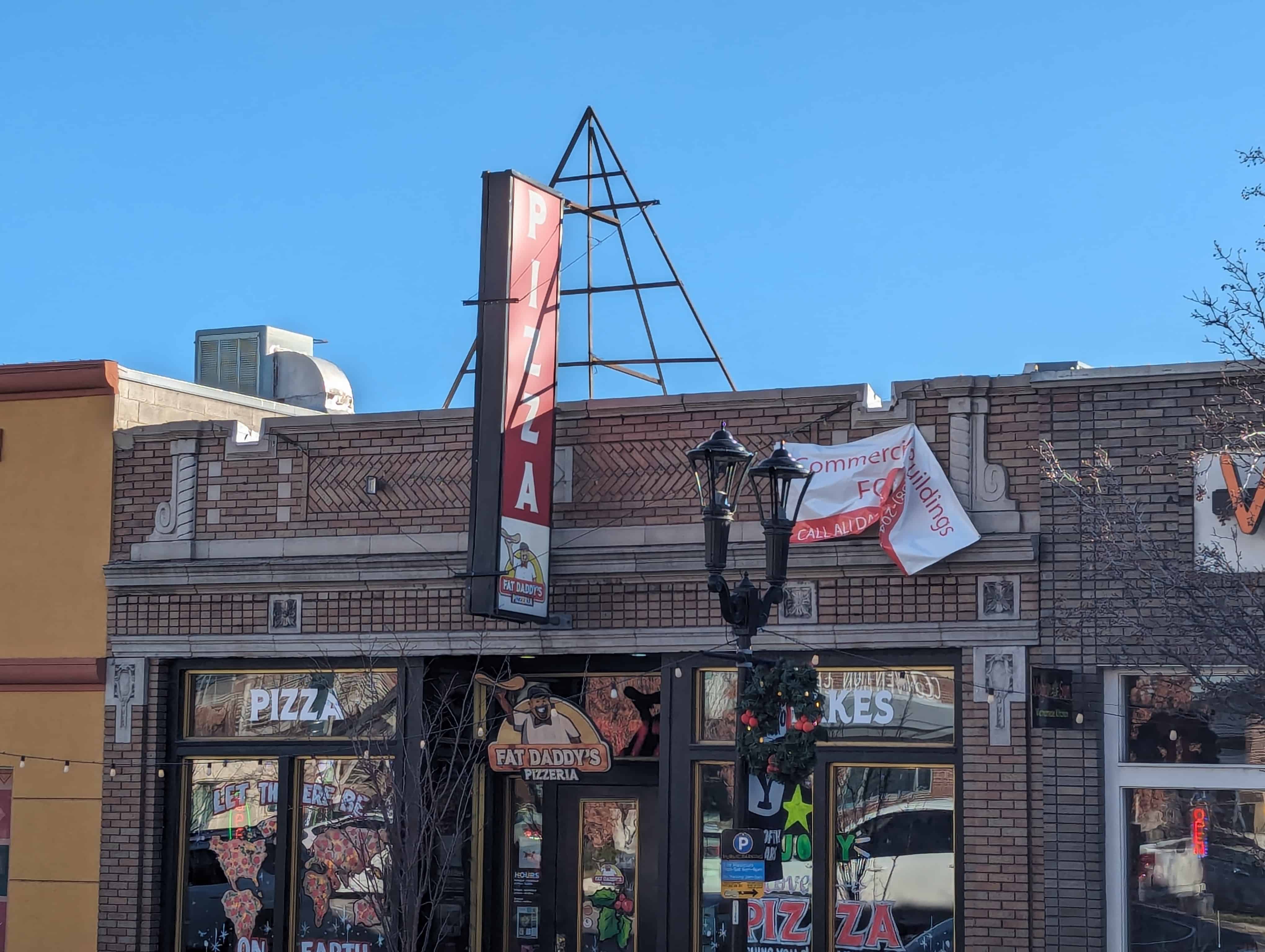
223 West Center Street in Provo, Utah

06 Friday Dec 2024
Posted in Uncategorized
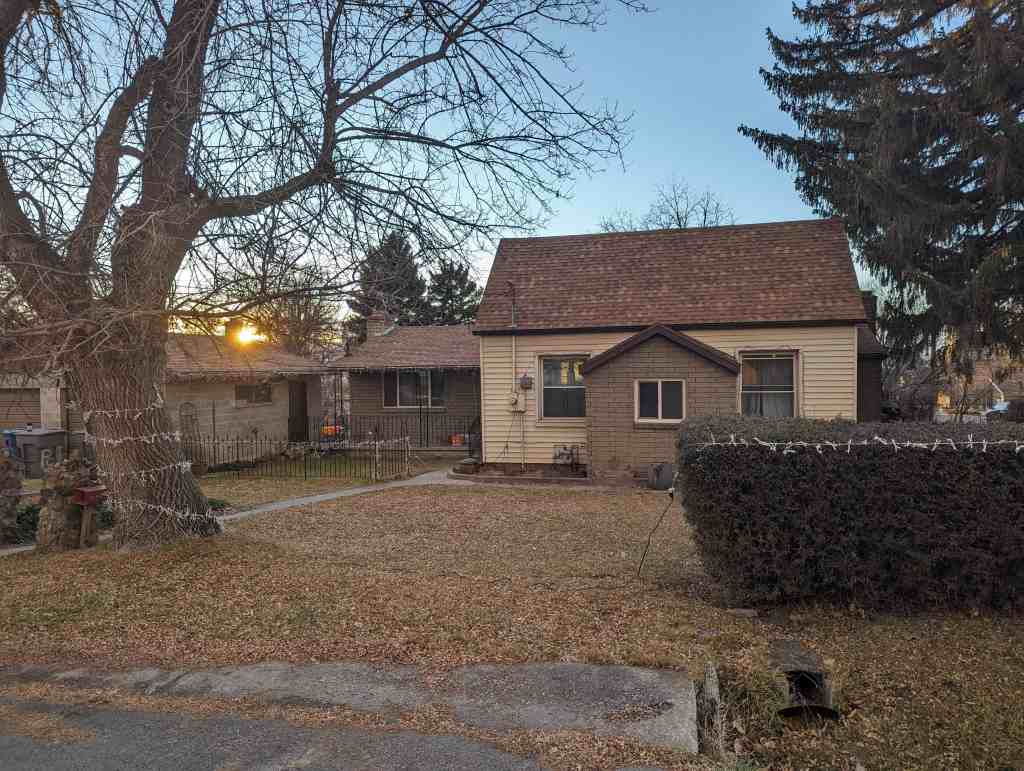
491 North 500 East in Pleasant Grove, Utah