Tags
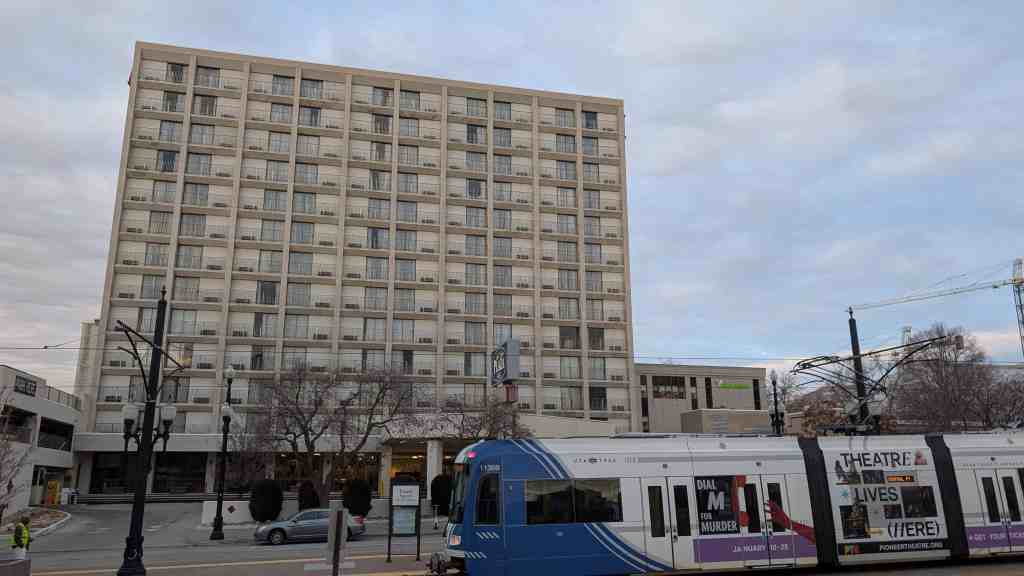
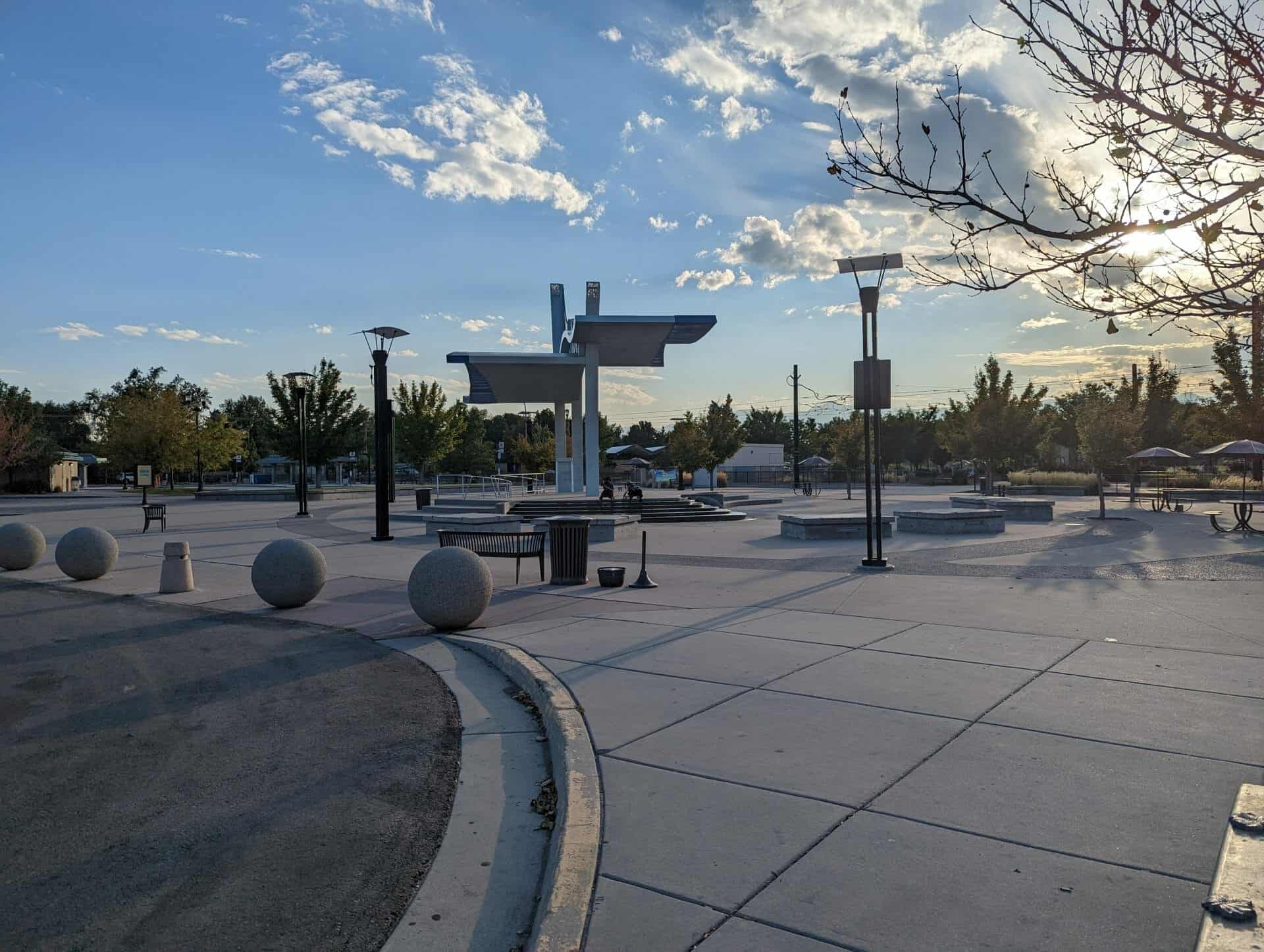
Temple Square TRAX Stop
31 Saturday Jan 2026
Posted in Uncategorized

31 Saturday Jan 2026
Posted in Uncategorized
Tags
13 Saturday Dec 2025
Posted in Uncategorized
Tags
13 Saturday Dec 2025
Posted in Uncategorized
Tags
TRAX is a light rail system in Salt Lake City and Valley.
03 Wednesday Dec 2025
Posted in Uncategorized
Tags
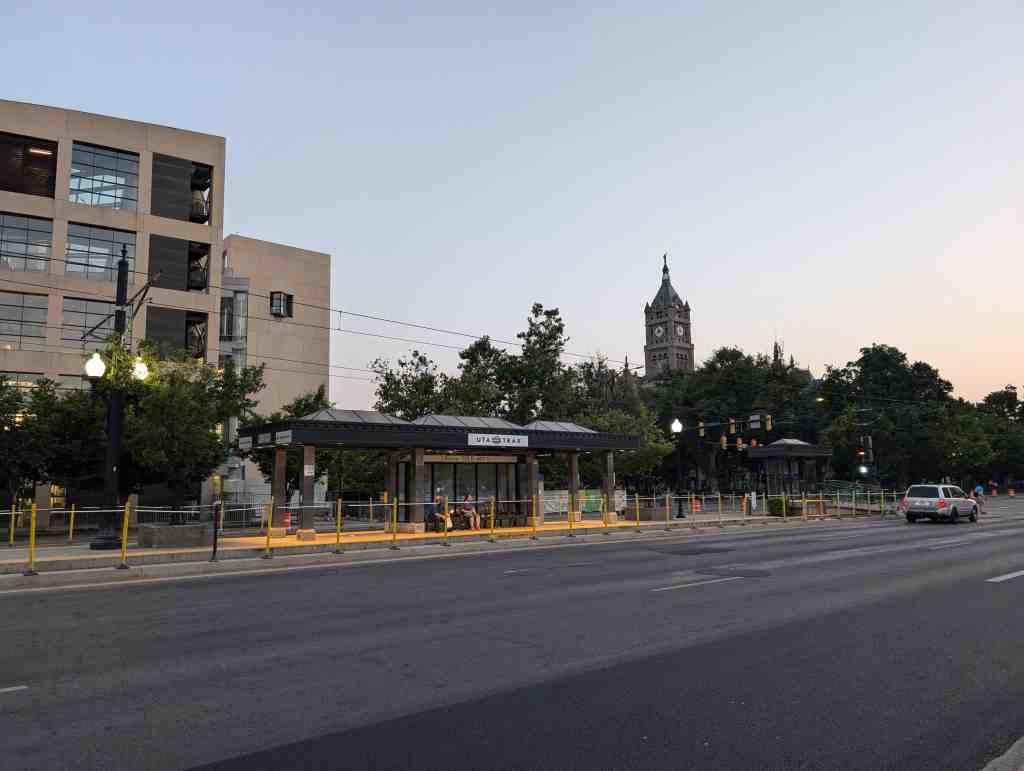
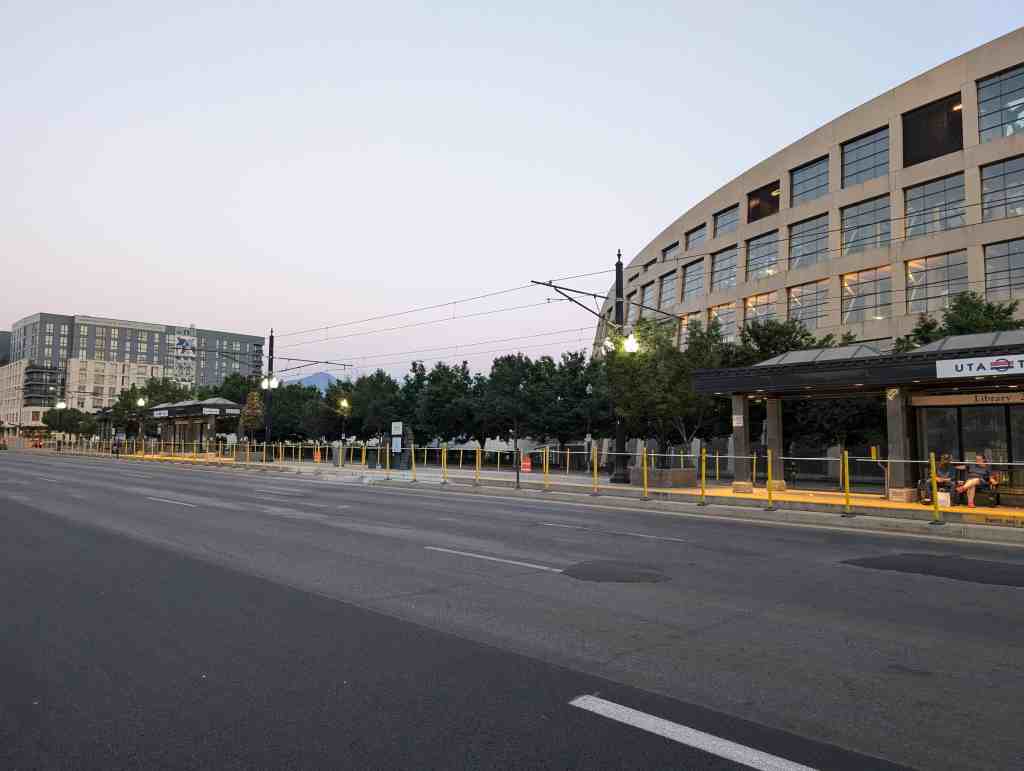
Library TRAX Station
225 East 400 South in Salt Lake City, Utah at the Salt Lake City Public Library.
19 Wednesday Nov 2025
Posted in Uncategorized
Tags
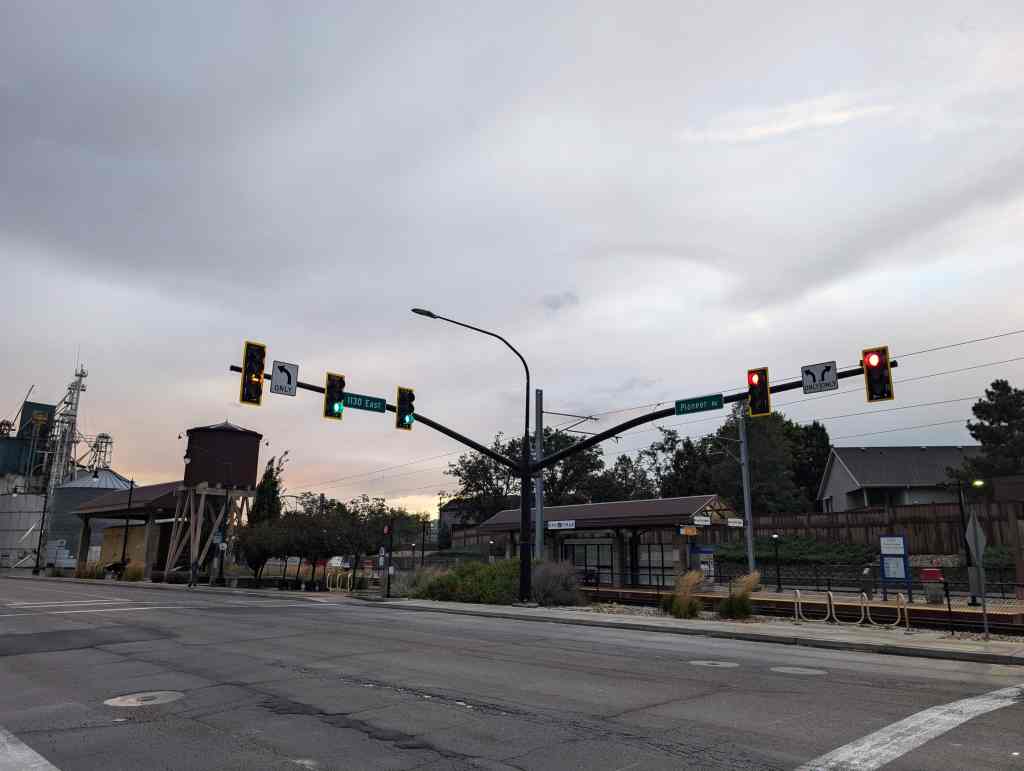
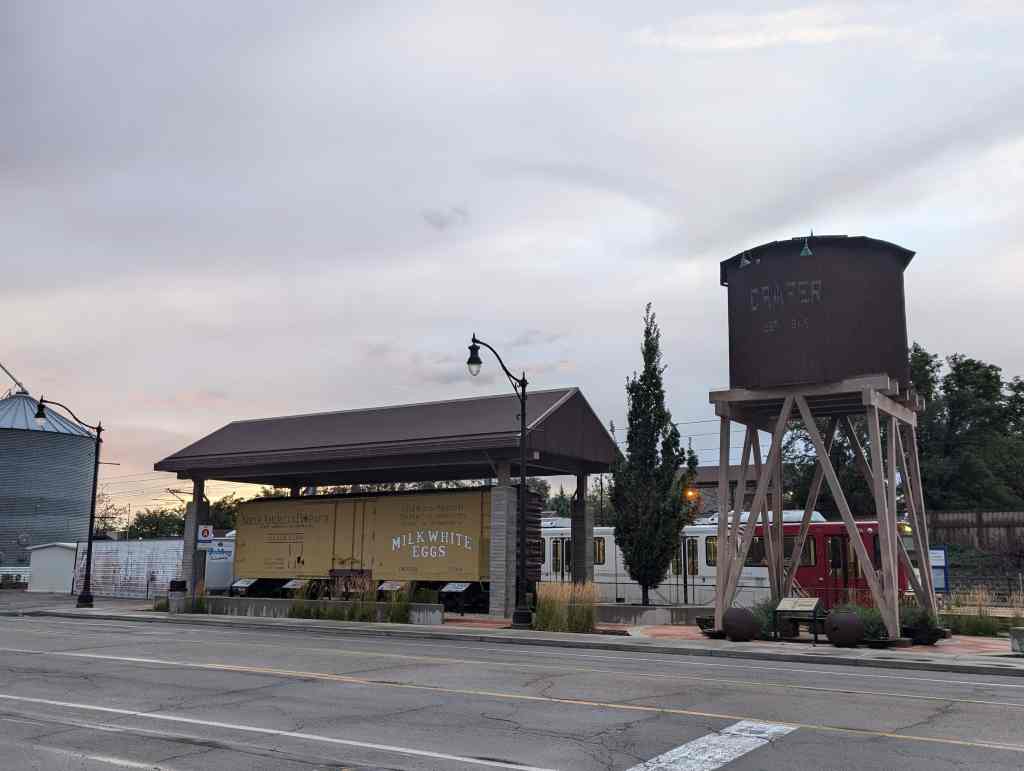
Draper Town Center TRAX Station
1131 East Pioneer Road in Draper, Utah

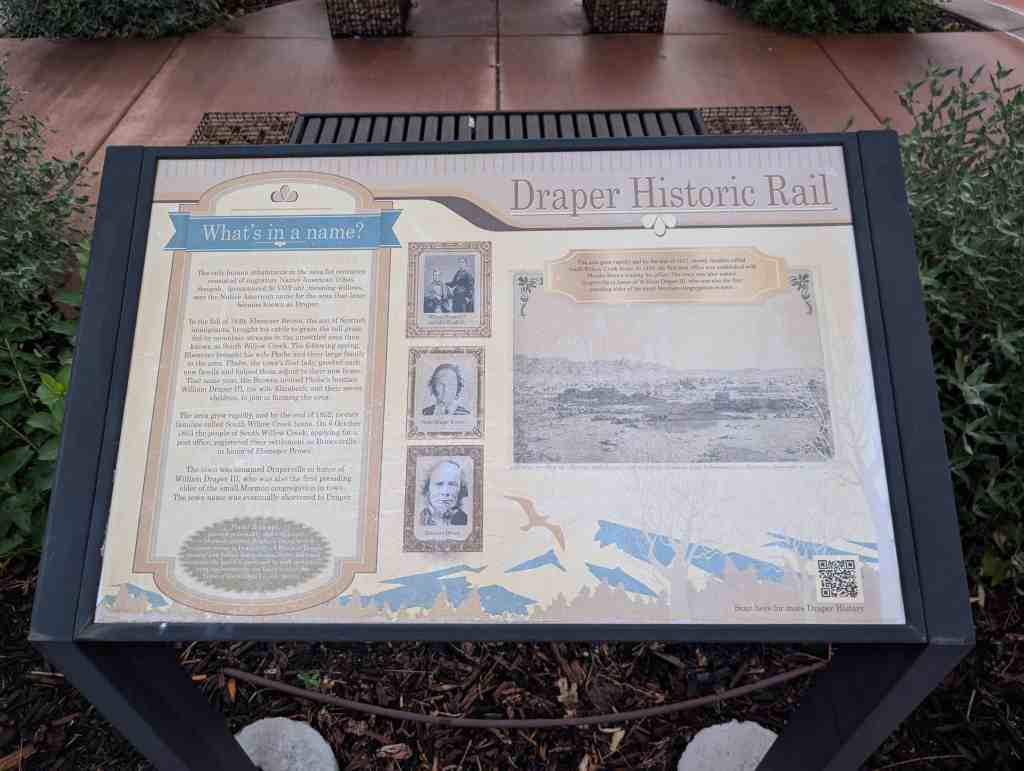
What’s in a name?
The only human inhabitants in the area for centuries consisted of migratory Native American tribes. Sivogah, (pronounced Si-VOY-ah) meaning willows, was the Native American name for the area that later became known as Draper.
In the fall of 1849, Ebenezer Brown, the son of Scottish immigrants, brought his cattle to graze the tall grass fed by mountain streams in the unsettled area then known as South Willow Creek. The following spring, Ebenezer brought his wife Phebe and their large family to the area. Phebe, the town’s first lady, greeted each new family and helped them adjust to their new home. That same year, the Browns invited Phebe’s brother, William Draper III, his wife Elizabeth, and their seven children, to join in farming the area.
The area grew rapidly, and by the end of 1852, twenty families called South Willow Creek home. On 6 October 1853 the people of South Willow Creek, applying for a post office, registered their settlement as Brownsville in honor of Ebenezer Brown.
The town was renamed Draperville in honor of William Draper III, who was also the first presiding elder of the small Mormon congregation in town. The town name was eventually shortened to Draper.
Porter Rockwell, pioneer personality and bodyguard to Mormon prophet Brigham Young, waka frequent visitor to Draperville. A friend of Draper pioneer and Indian scout Joshua, Terry, Rockwell occasionally found it necessary to seek protection. from his enemies in the fields behind the home of blacksmith Lauritz Smith.
The area grew rapidly and by the end of 1852, twenty families called South Willow Creek home. In 1854, the first post office was established with Phoebe Brown tending the office. The town was later named Draperville in honor of William Draper III, who was also the first presiding elder of the small Mormon congregation in town.
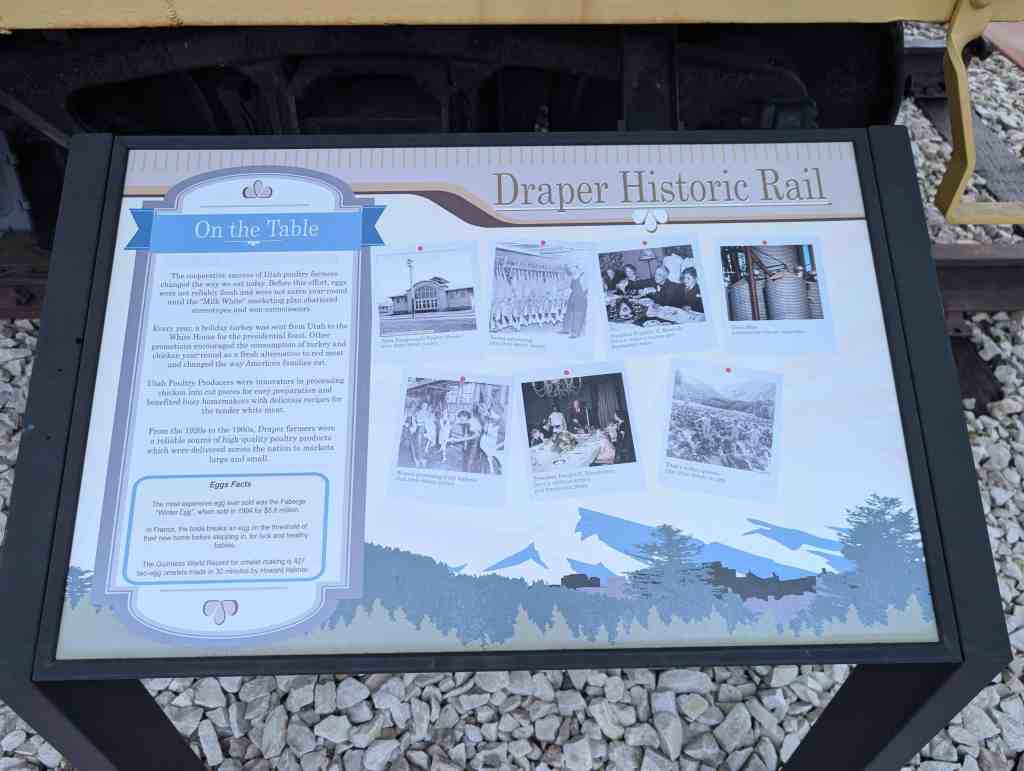
On the Table
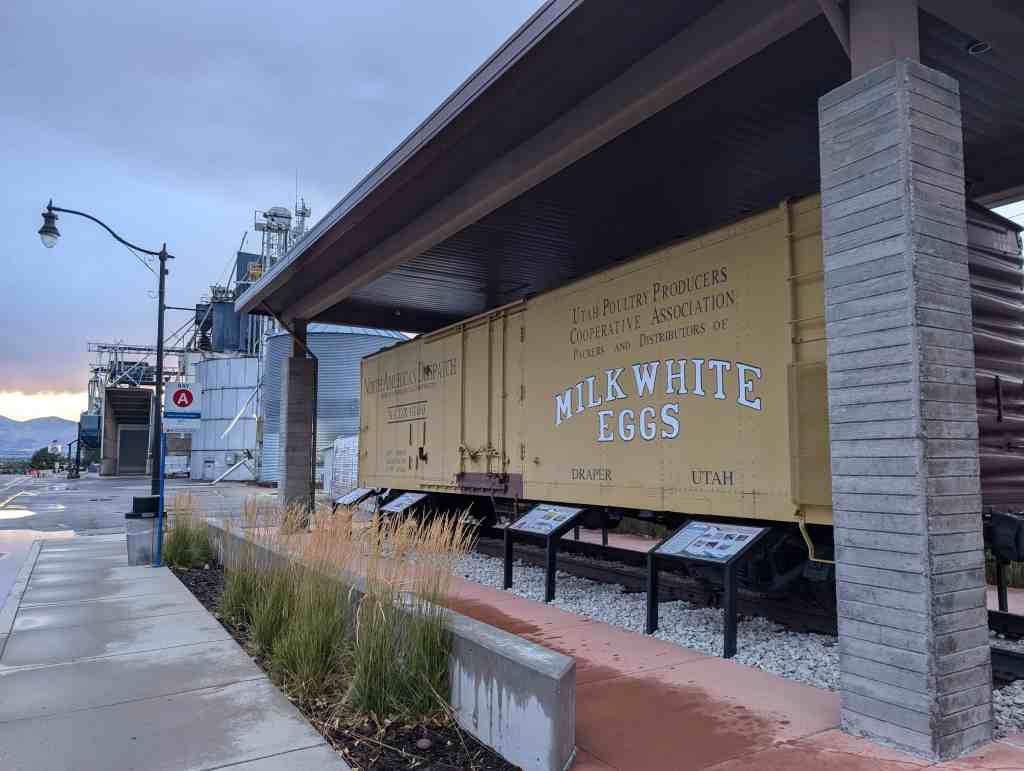
The cooperative success of Utah poultry farmers changed the way we eat today. Before this effort, eggs were not reliably fresh and were not eaten year-round until the “Milk White” marketing plan shattered stereotypes and won connoisseurs.
Every year, a holiday turkey was sent from Utah to the White House for the presidential feast. Other promotions encouraged the consumption of turkey and chicken year-round as a fresh alternative to red meat and changed the way American families eat.
Utah Poultry Producers were innovators in processing chicken into cut pieces for easy preparation and benefited busy homemakers with delicious recipes for the tender white meat.
From the 1920s to the 1960s, Draper farmers were a reliable source of high-quality poultry products which were delivered across the nation to markets large and small.
Eggs Facts
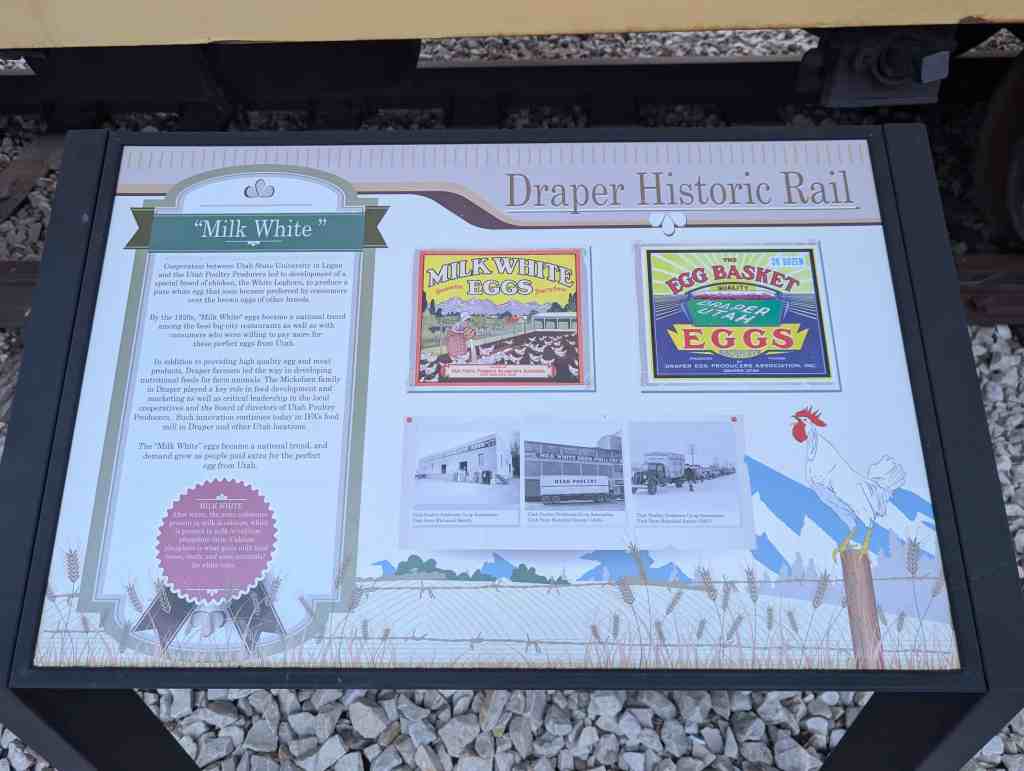
“Milk White”
Cooperation between Utah State University in Logan and the Utah Poultry Producers led to development of a special breed of chicken, the White Leghorn, to produce a pure white egg that soon became preferred by consumers over the brown eggs of other breeds.
By the 1920s, “Milk White” eggs became a national trend among the best big-city restaurants as well as with consumers who were willing to pay more for these perfect eggs from Utah.
In addition to providing high quality egg and meat products, Draper farmers led the way in developing nutritional feeds for farm animals. The Mickelsen family in Draper played a key role in feed development and marketing as well as critical leadership in the local cooperatives and the board of directors of Utah Poultry Producers. Such innovation continues today in IFA’s feed mill in Draper and other Utah locations.
The “Milk White” eggs became a national trend, and demand grew as people paid extra for the perfect egg from Utah.
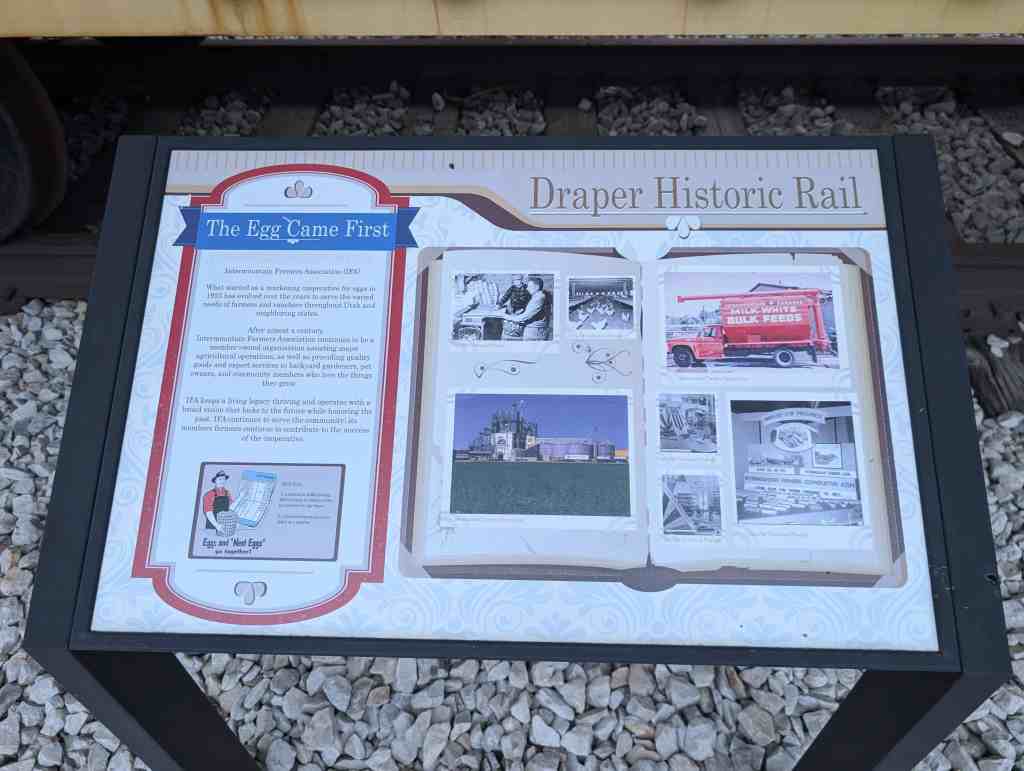
The Egg Came First
Intermountain Farmers Association (IFA)
What started as a marketing cooperative for eggs in 1923 has evolved over the years to serve the varied needs of farmers and ranchers throughout Utah and neighboring states.
After almost a century, Intermountain Farmers Association continues to be a member-owned organization assisting major agricultural operations, as well as providing quality goods and expert services to backyard gardeners, pet owners, and community members who love the things they grow.
IFA keeps a living legacy thriving and operates with a broad vision that looks to the future while honoring the past. IFA continues to serve the community; its members farmers continue to contribute to the success of the cooperative.

Life on the farm…
By many standards, Utah land is not well suited to agriculture Nature has been stingy in that regard. Good crop land is scarce. Water is not plentiful, nor can it even be found in many places. Yet, driven by a sense of gathering and a yearning for order, Mormon pioneers preferred an agricultural approach to the land in contrast to developing mining or industry. Recognizing the scarcity of good cropland, the early settlers chose to band together and develop the land as a community, rather than individually. Together they built extensive canal systems to bring precious water from the mountains to their otherwise parched land, and soon the desert “blossomed as a rose,” as they liked to say. The Draper Irrigation Company was incorporated in 1888.
This spirit of communalism served Draper very well for many years. Land values remained low. Debt was rare. Diversified self-sustaining agriculture was dominant. For many area families, care of the land had much deeper meaning than just economics – it was a way of life.
In the 1920s, with congressional help, cooperatives were established to help market area crops. A strong partnership with the railroads was key to their success. In Draper, the Utah Poultry Producers and Draper Egg & Feed both had warehouses near the tracks which eventually transitioned into Intermountain Farmers Association – a member owned cooperative that continues to thrive today. In this way, Draper remained a vibrant and prosperous farming community for many generations.
CASH ON THE BARRELHEAD! This term originated in the days when upended barrels served as both seats and tables in bars, and customers were required to pay for their drinks immediately, literally putting their money on the top (head) of a barrel.
23 Saturday Sep 2023
Posted in Uncategorized
Tags
Art, Salt Lake County, Statues, UTA Stops, UTA Trax, utah, West Valley City