
Tags
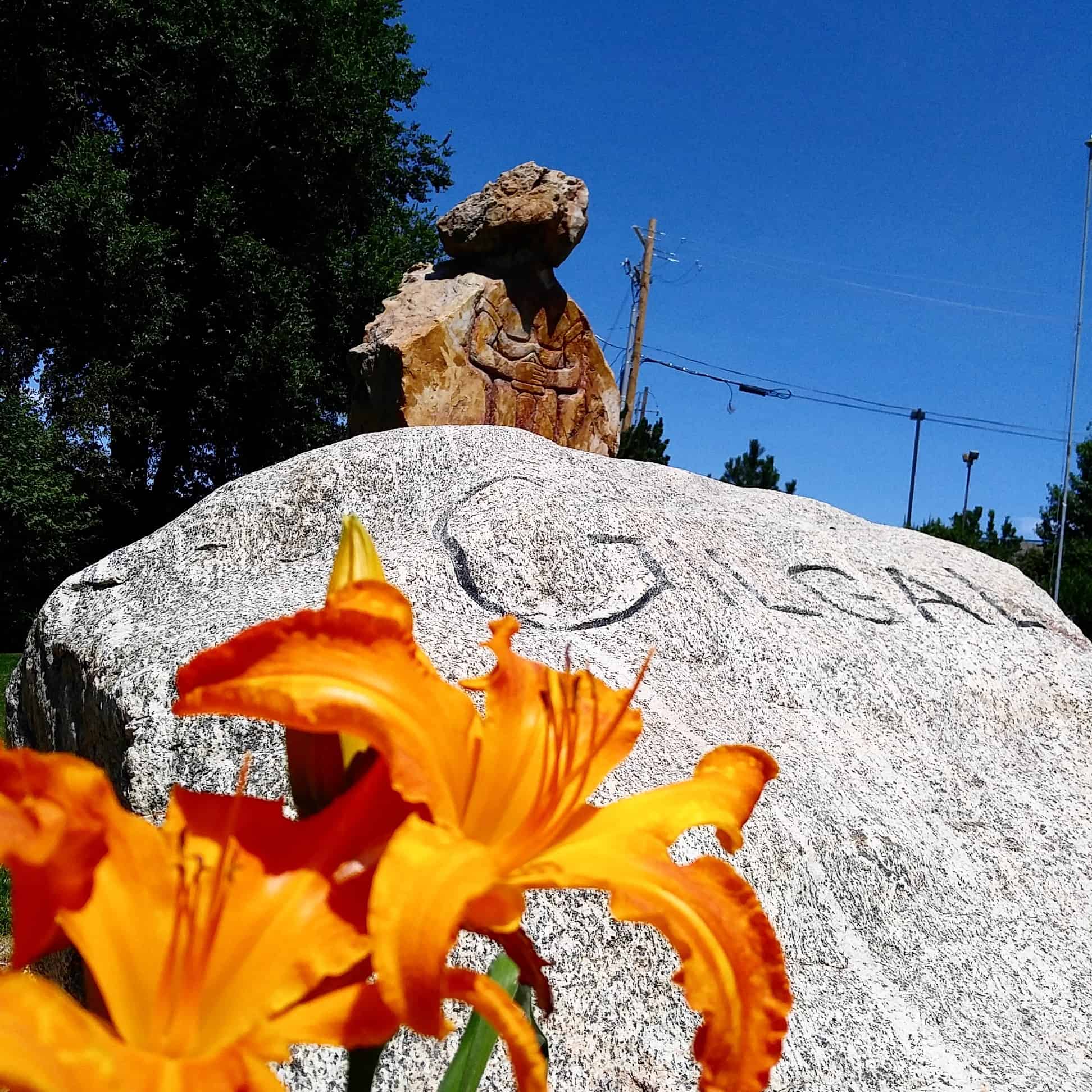
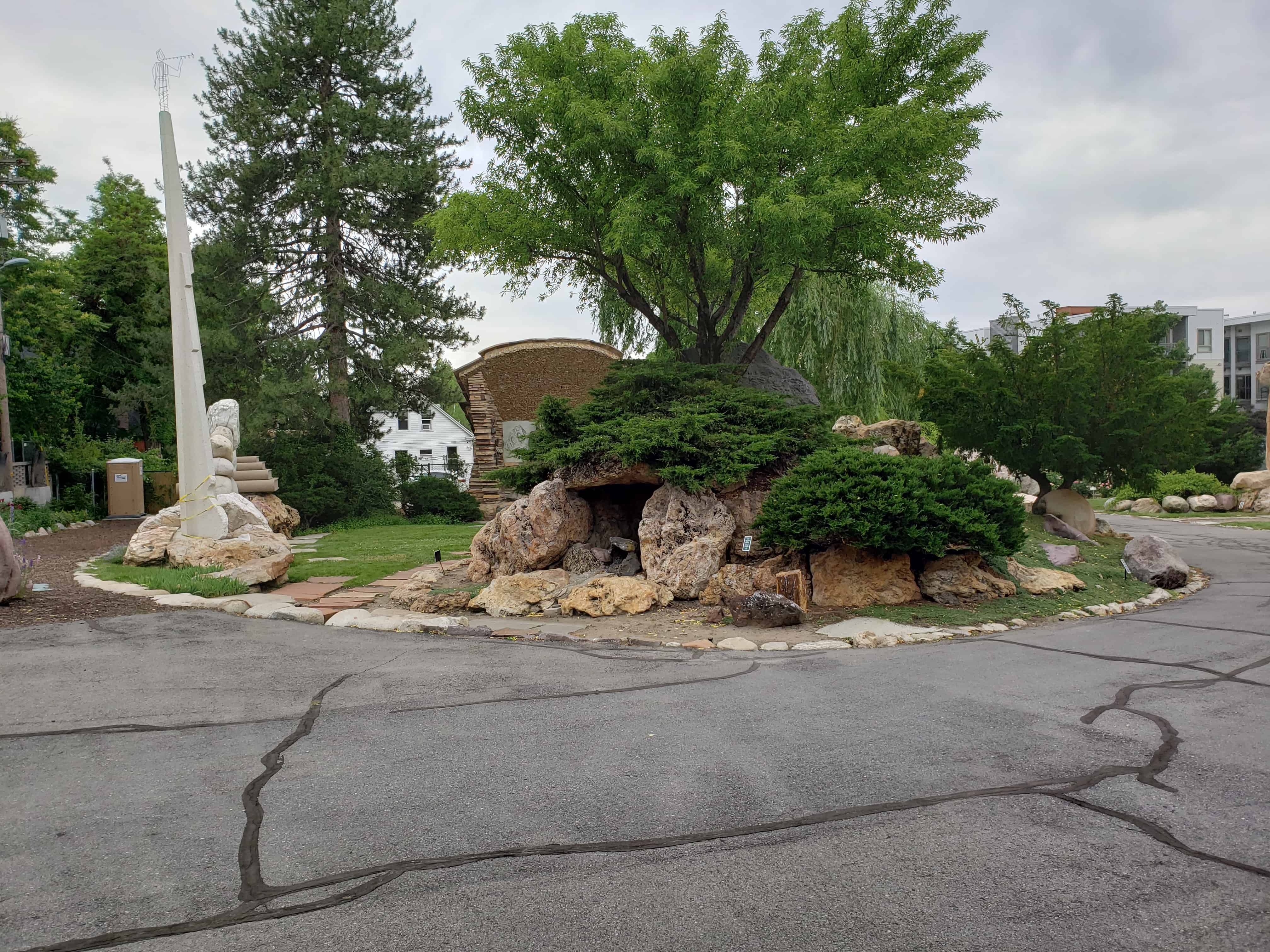
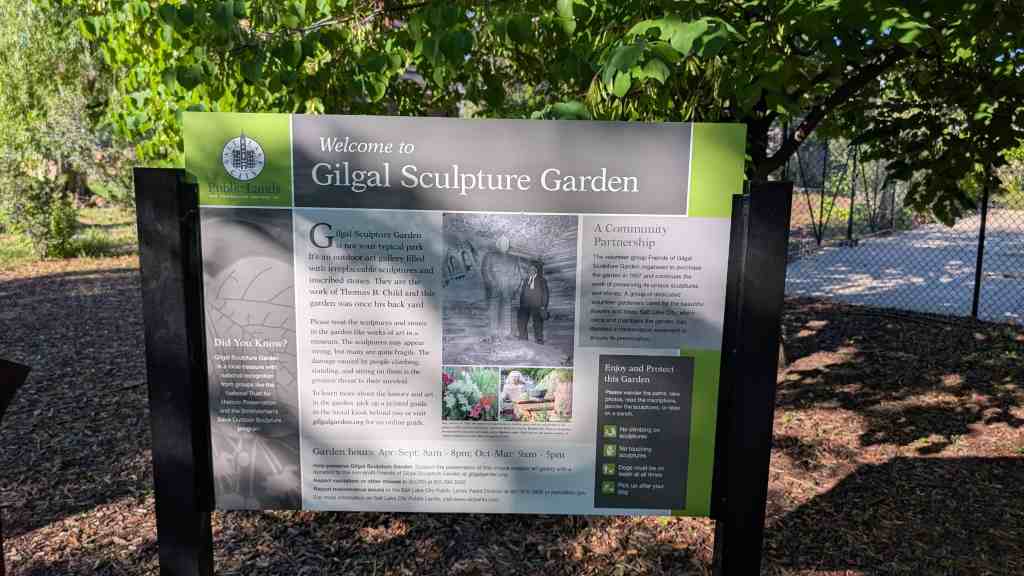
Located at 749 East 500 South in Salt Lake City, Gilgal Sculpture Garden was envisioned, designed and created by Thomas Battersby Child, Jr. in the mid-twentieth century.
Tucked in the middle of the block behind houses and businesses, many are still unaware of its existence and enjoy a true sense of discovery when they visit the garden for the first time.
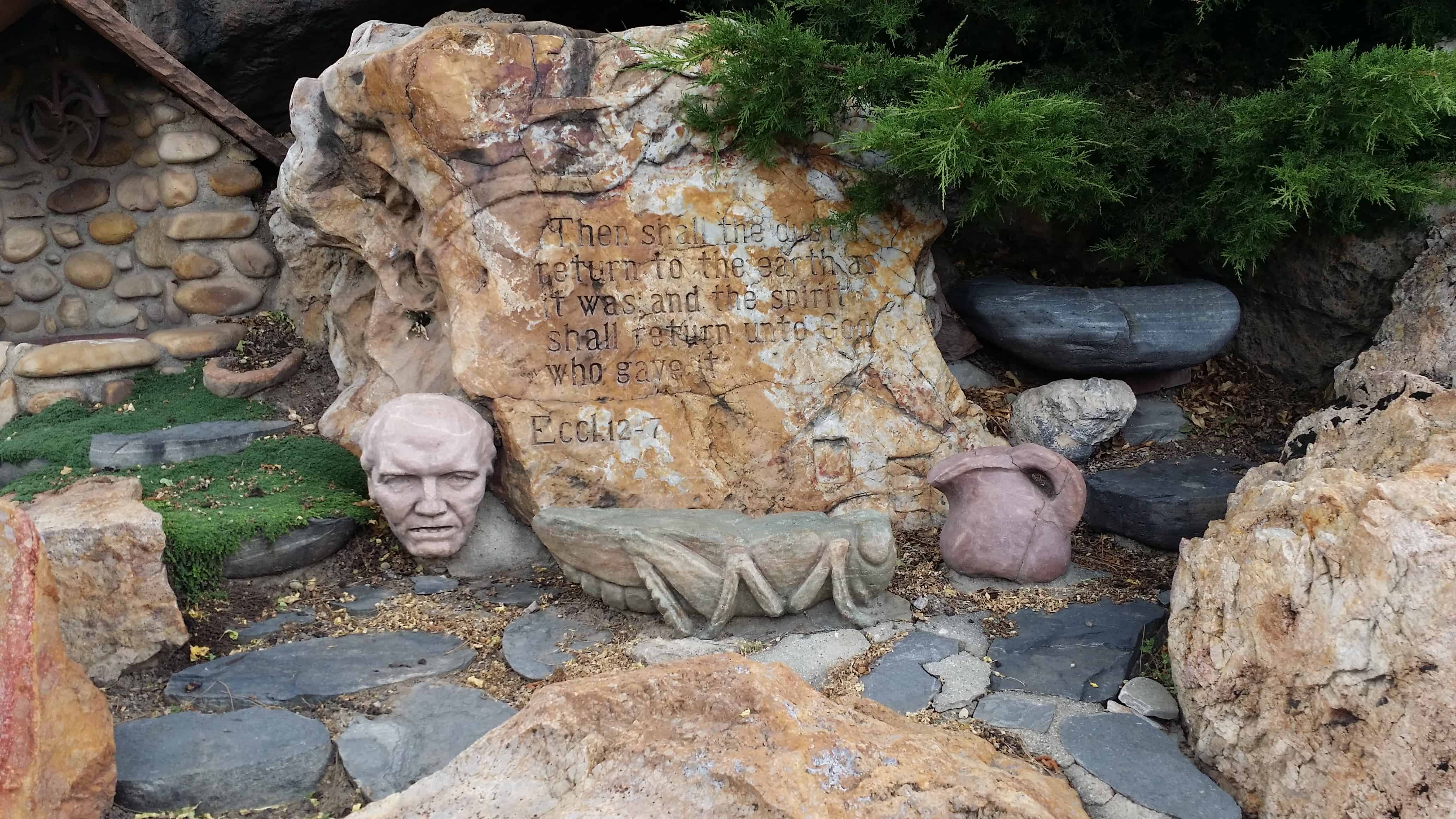
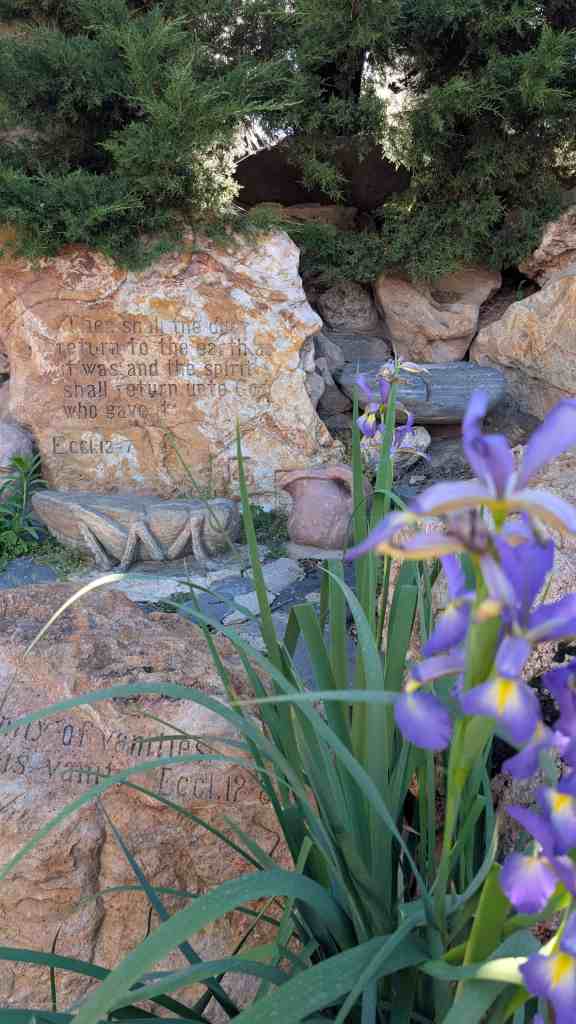
Gilgal Sculpture Garden contains 12 original sculptures and over 70 stones engraved with scriptures, poems, and literary texts. As a whole, Gilgal Sculpture Garden is significant as the only identified “visionary art environment” in Utah.

The public is invited to visit the garden seven days a week. There is no admission charge. Walking tour brochures are available at the garden. Visiting hours: April/September – 8 am to 8 pm October/March – 9 am to 5 pm Closed New Year Day; Thanksgiving; Christmas.(*)
Gilgal Garden is the legacy of Thomas Child’s desire to give physical form to his deep-felt beliefs. “If you want to be brought down to earth in your thinking and studying, try to make your thoughts express themselves with your hands,” Child wrote. The garden contains twelve original sculptural arrangements and over 70 stones engraved with scriptures, poems, and philosophical texts. Each represents an idea that rang of truth to Child in his life-long spiritual quest. Together, the sculptures and stones create a landscape of meaning and a unique work of art.
Child shared Gilgal Garden with thousands of visitors during his lifetime. He hoped the garden would inspire viewers to ponder “the unsolved mysteries of life” and struggle to find their own answers. Child was aware that many people would find Gilgal Garden strange, but hoped they would accept its challenge. “You don’t have to agree with me,” he explained. “You may think I am a nut, but I hope I have aroused your thinking and curiosity.”
Child began work on Gilgal Garden in 1945, when he was 57 years old. By then, he had already led a successful career as a masonry contractor, married and raised a family, been a leader in community affairs, and served as a bishop of the LDS Tenth Ward for over 19 years. Child’s passion for his garden consumed much of his time and money until his death in 1963.

















The Construction:
Workshop
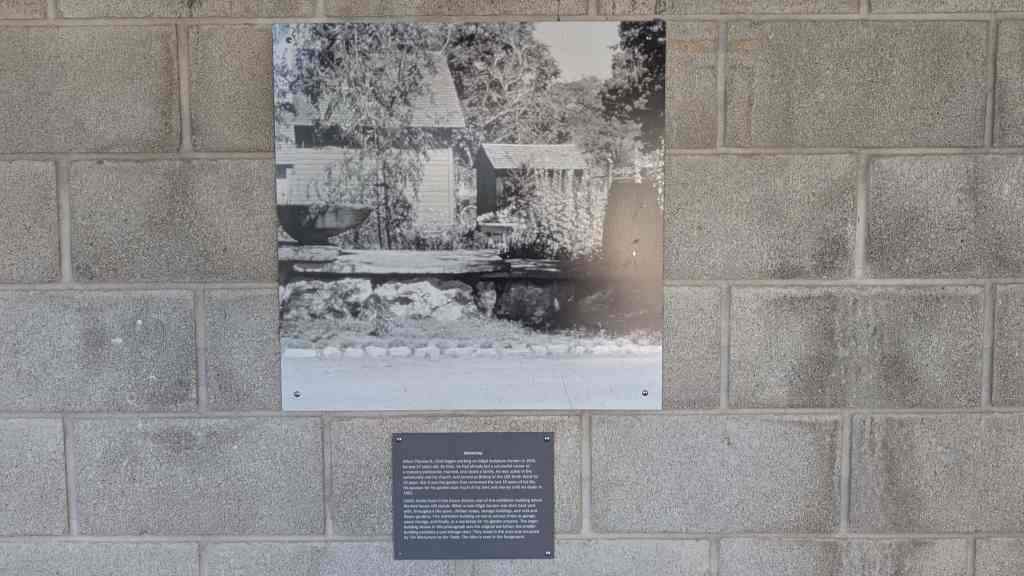
When Thomas B. Child began working on Gilgal Sculpture Garden in 1945, he was 57 years old. By then, he had already led a successful career as a masonry contractor, married, and raised a family. He was active in the community and his church, and served as Bishop of the LDS Tenth Ward for 19 years. But it was the garden that consumed the last 18 years of his life. His passion for his garden took much of his time and money until his death in 1963.
Child’s family lived in the house directly east of this exhibition building where the bird house still stands. What is now Gilgal Garden was their back yard with, throughout the years, chicken coops, storage buildings, and rock and flower gardens. This exhibition building served at various times as garage, wood storage, and finally, as a workshop for his garden projects. The larger building shown in this photograph was the original workshop; the smaller building probably a coal storage shed. They stood in the area now occupied by The Monument to the Trade. The Altar is seen in the foreground.
Canyon
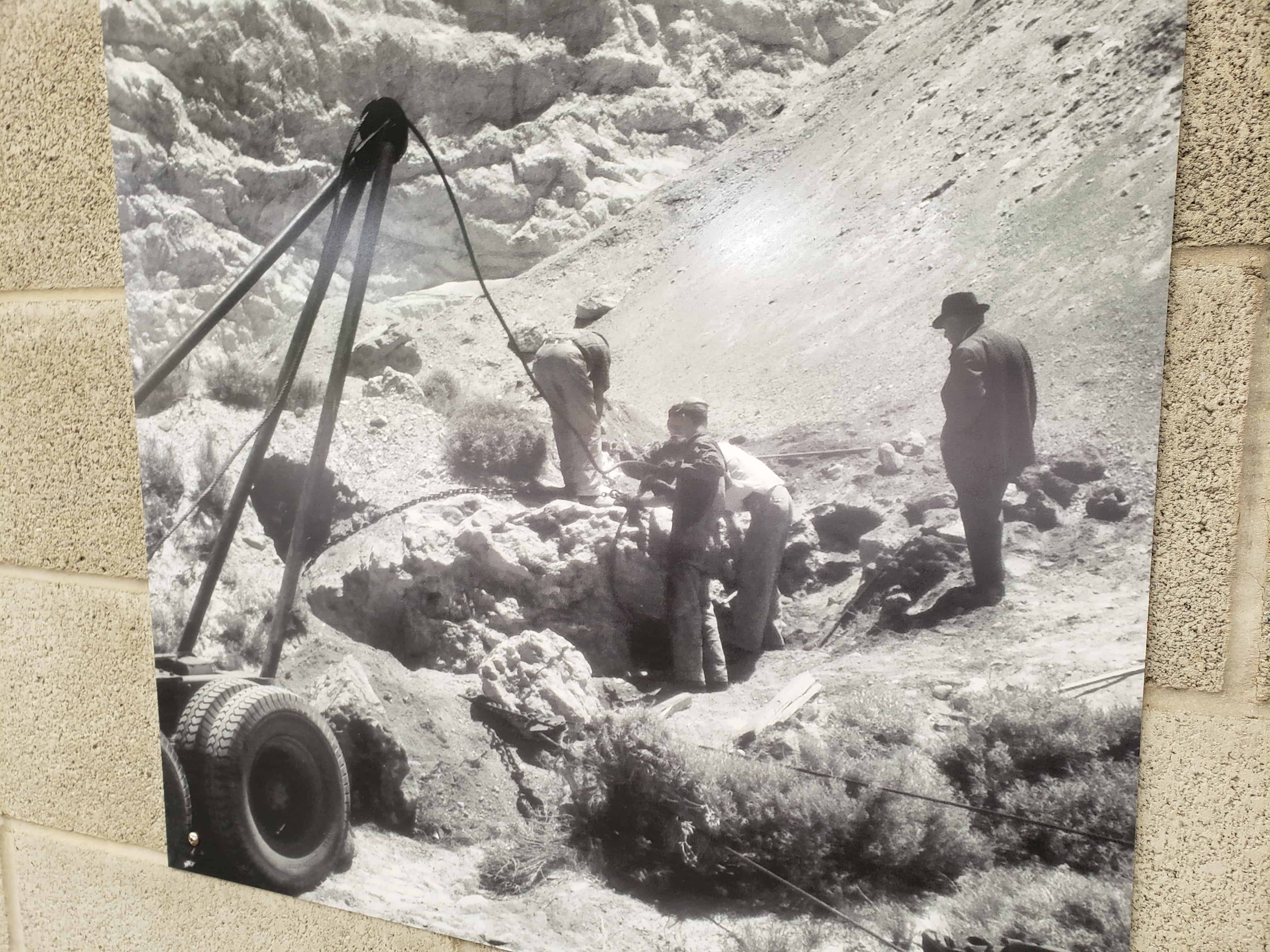
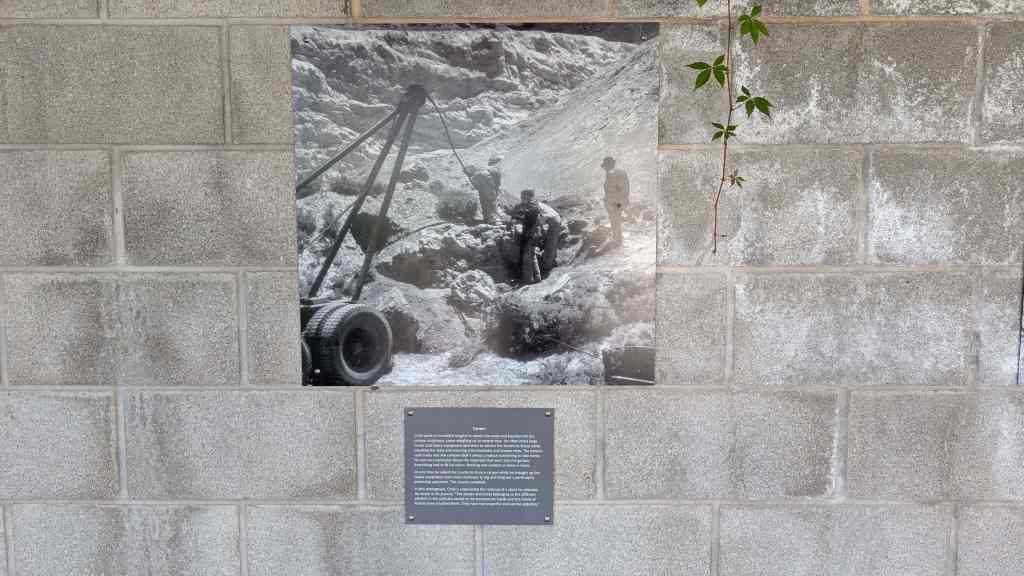
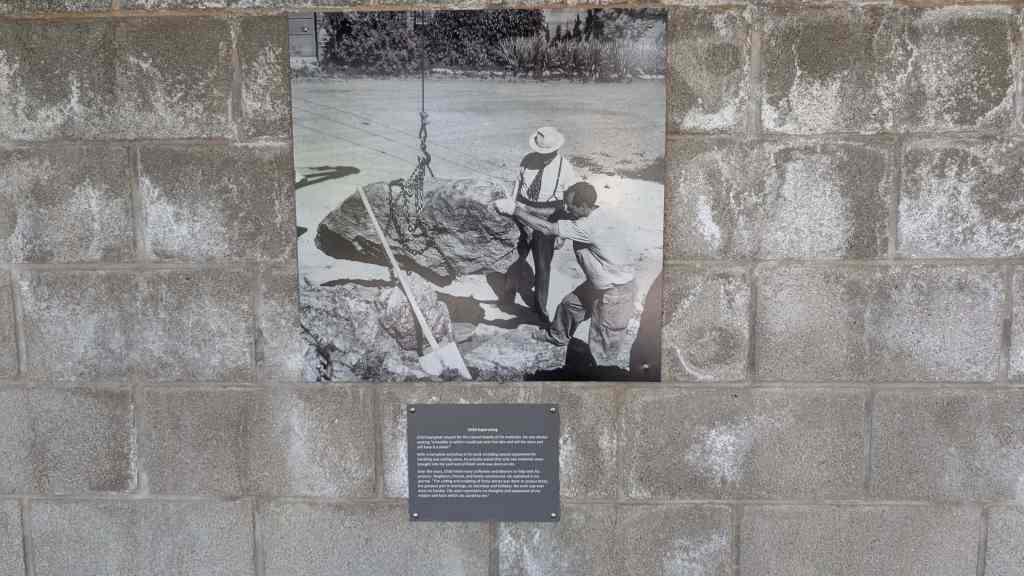
Child went to incredible lengths to obtain the rocks and boulders for his unique sculptures, some weighing up to several tons. He often hired large trucks and heavy equipment operators to extract the stones he found while traveling the state and scouring mountainsides and stream beds. The famous rock hunts into the canyons didn’t always produce something to take home. He was very particular about the materials that went into the garden. Everything had to fit his vision. Nothing was random or done in haste.
At one time he asked the County to close a canyon while he brought up the heavy equipment and crews necessary to dig and drag out a particularly promising specimen. The County complied.
In this photograph, Child is supervising the removal of a stone he selected. He wrote in his journal, “The stones and bricks belonging to the different exhibits in the yard are sacred to me because my hands and the hands of friends have touched them. They have had prayerful and careful selection.”
Child Supervising
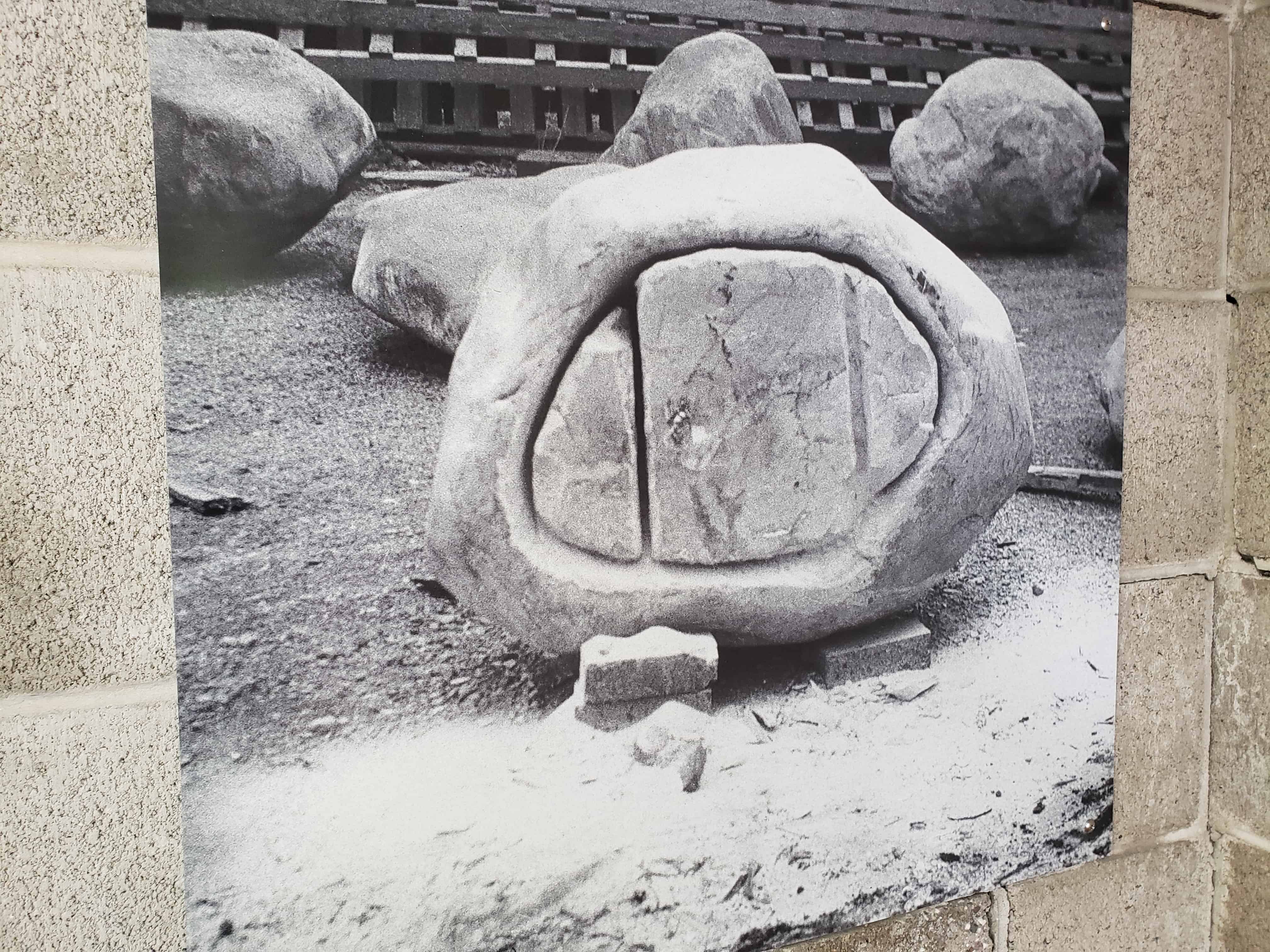
Child had great respect for the natural beauty of his materials. He was always seeking “a boulder in which I could put over the idea and tell the story and still have it a stone.”
With a complete workshop in his yard, including special equipment for handling and cutting stone, he proudly stated that only raw materials were brought into the yard and all finish work was done on site.
Over the years, Child hired many craftsmen and laborers to help with his projects. Neighbors, friends, and family volunteered. He explained in his journal, “The cutting and sculpting of these stones was done at various times, the greatest part in evenings, on Saturdays and holidays. No work was ever done on Sunday. The work represents my thoughts and expression of my religion and facts which are sacred to me.”
Higgs & Torch
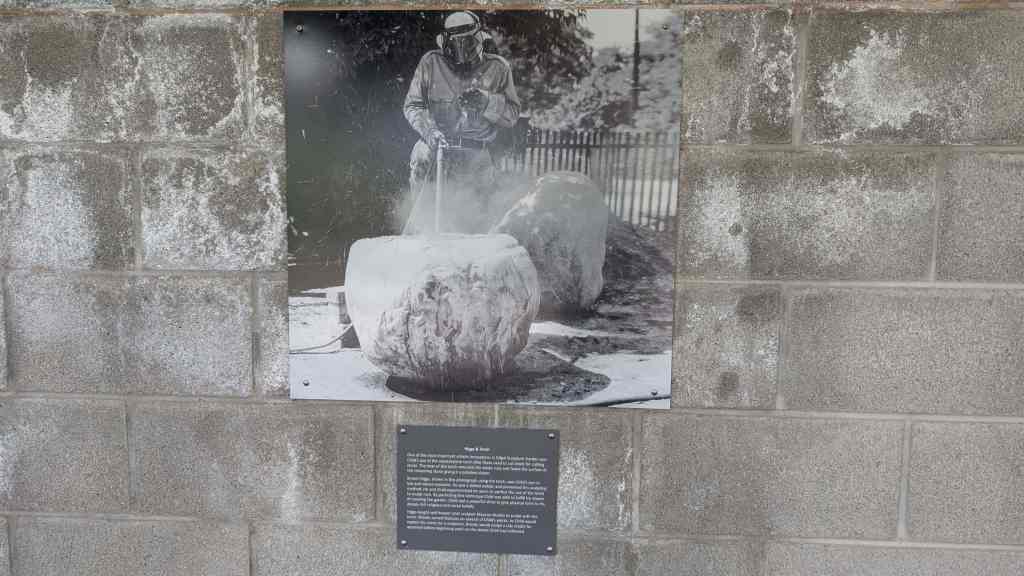
One of the most important artistic innovations in Gilgal Sculpture Garden was Child’s use of the oxyacetylene torch (like those used to cut steel) for cutting stone. The heat of the torch removed the waste rock and fused the surface of the remaining stone giving it a polished sheen.
Bryant Higgs, shown in this photograph using the torch, was Child’s son-in- law and valued assistant. He was a skilled welder and pioneered this sculpting method. He and Child experimented for years to perfect the use of the torch to sculpt rock. By perfecting this technique Child was able to fulfill his dream of creating the garden. Child had a powerful drive to give physical form to his deeply-felt religious and social beliefs.
Higgs taught well known Utah sculptor Maurice Brooks to sculpt with the torch. Brooks carved features on several of Child’s works. As Child would explain his vision for a sculpture, Brooks would sculpt a clay model for approval before beginning work on the stones Child had collected.
Early Mount
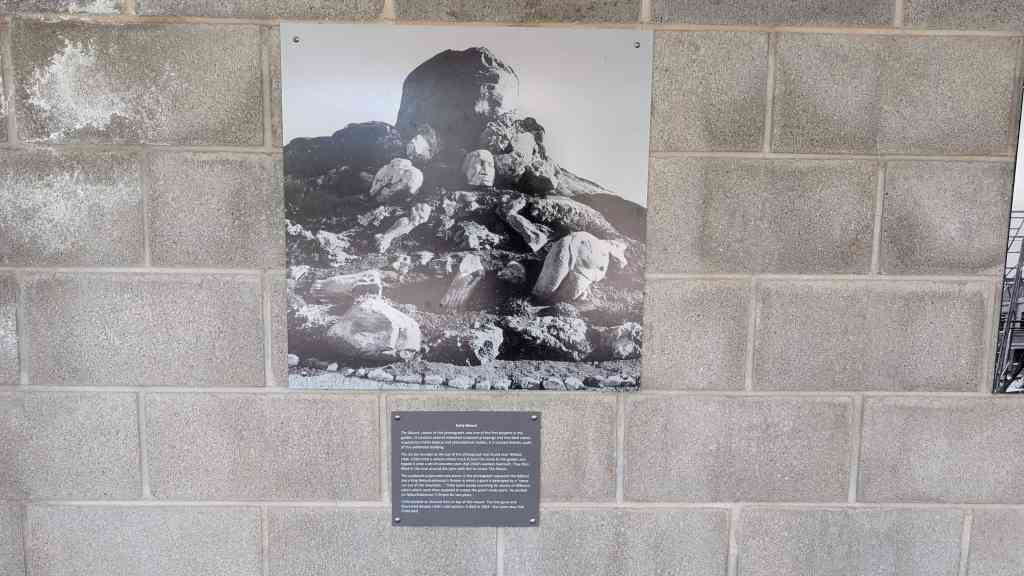
The Mount, shown in this photograph, was one of the first projects in the garden. It contains several individual sculpture groupings and inscribed stones inspired by Child’s biblical and philosophical studies. It is located directly south of this exhibition building.
The 32-ton boulder at the top of the photograph was found near Willard, Utah. Child hired a sixteen-wheel truck to haul the stone to the garden and tipped it onto a set of concrete piers that Child’s workers had built. They then filled in the area around the piers with dirt to create The Mount.
The scattered sculptured rock pieces in the photograph represent the biblical story King Nebuchadnezzar’s Dream in which a giant is destroyed by a “stone cut out of the mountain…” Child spent weeks searching for stones of different colors which were then sculpted to create the giant’s body parts. He worked on Nebuchadnezzar’s Dream for two years.
Child planted an almond tree on top of this mount. The tree grew and flourished despite Utah’s cold winters. It died in 1963-the same year that Child died.
Raising Captain’s Head
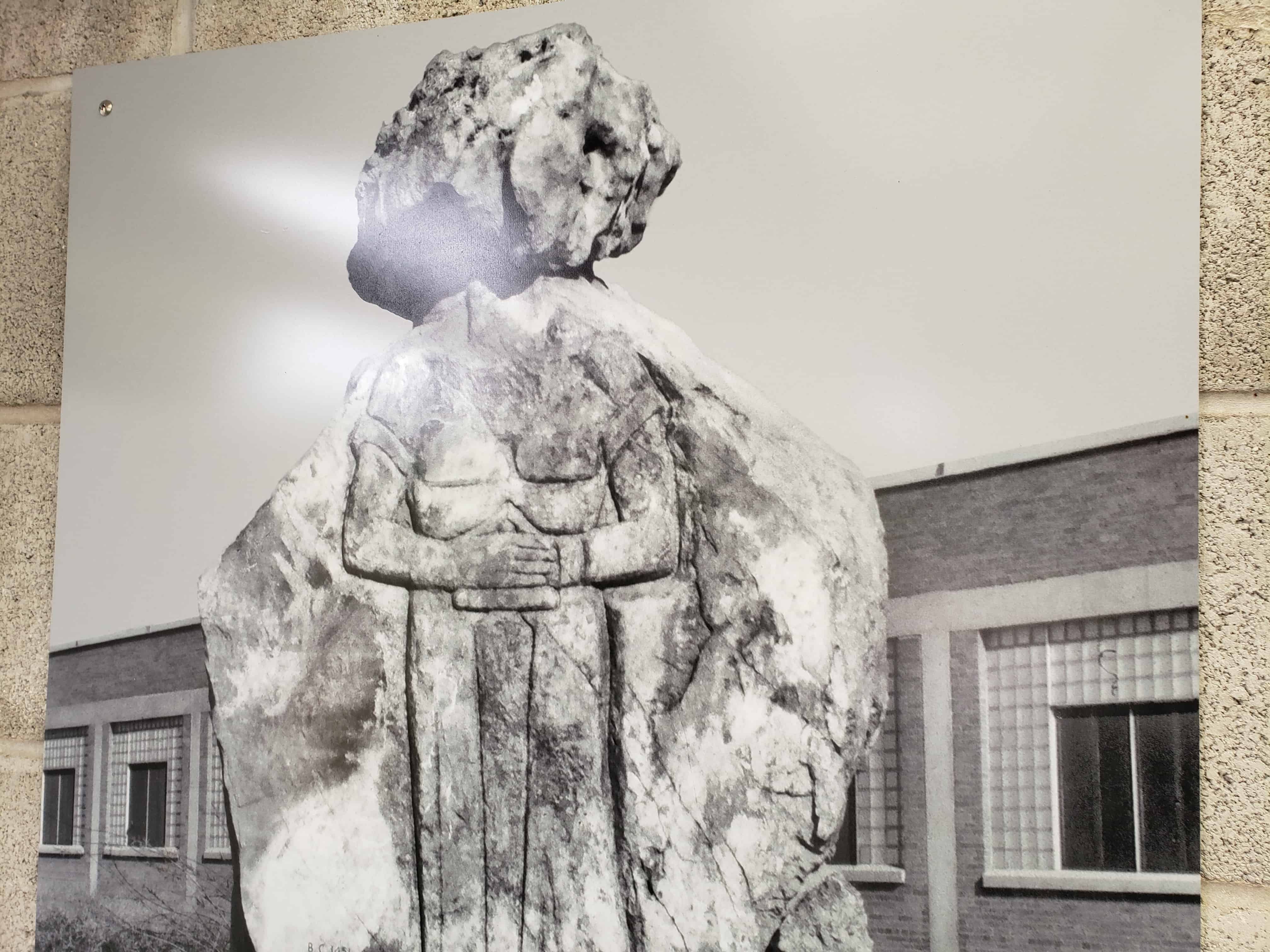
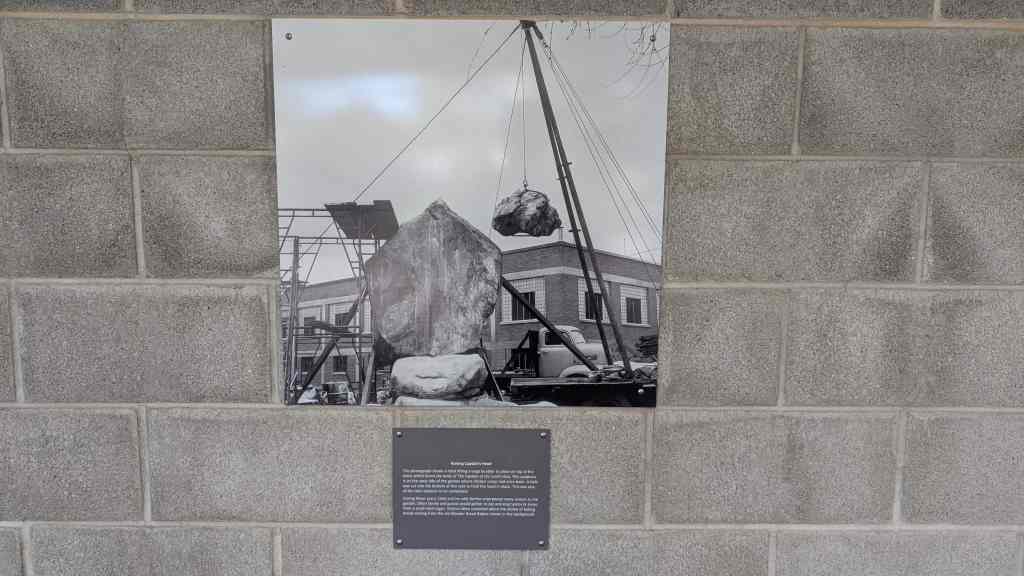
This photograph shows a hoist lifting a large boulder to place on top of the stone which forms the body of The Captain of the Lord’s Host. This sculpture is on the west side of the garden where chicken coops had once been. A hole was cut into the bottom of this rock to hold the head in place. This was one of the later projects to be completed.
During these years, Child and his wife Bertha entertained many visitors in the garden. Often family and guests would gather to eat and sing hymns to tunes from a small reed organ. Visitors often remarked about the aroma of baking bread coming from the old Wonder Bread Bakery shown in the background.

Finished Captain
In this photograph, the finished sculpture of The Captain of the Lord’s Host illustrates how sculptor Maurice Brooks used the oxyacetylene torch to outline the body on the surface of the 38-ton silica quartzite stone.
The gnarled and pitted stone that forms the head prompted visitors to ask Child if he planned to carve it. He replied, “No, I intend to leave it as it is thereby taking advantage of the liberties of modern art. The nature of this monument does not require accuracy…it is sometimes more potent to suggest and cause wonderment than to explain in detail.”
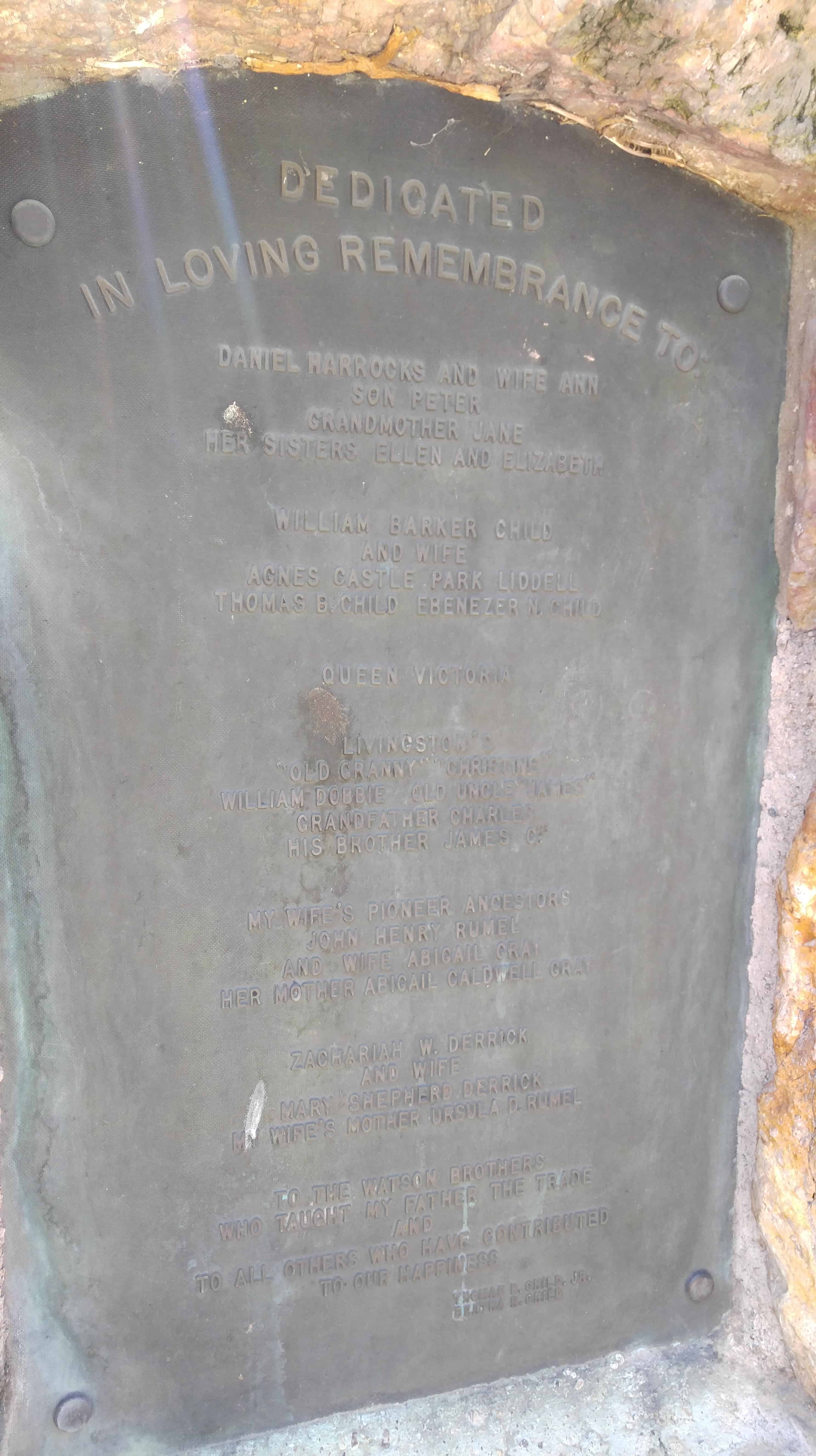
Behind this sculpture is a patio of engraved stones and boulders that commemorate Child’s ancestors and others who contributed in some way to his happiness. This patio has a boulder carved into a seat which was Child’s favorite place for meditation.

Trade Head Lowering
In The Monument to the Trade, Child wanted to convey his great love for the masonry trade and for his religion. The monument is an example of the superb masonry workmanship for which Child was known.
This photograph shows the head of the figure in The Monument to the Trade being lowered to the top of the statue and illustrates the complicated logistics required to assemble the sculptures in the garden. The stone used for the head was found in Willard, Utah.
Child referred to the construction of Gilgal as his hobby. “I realize that this hobby will never be very popular… to get the significance of it you must understand the gospel… You must appreciate and love nature and get the point of view of the working man, especially one who works in brick and stone. I have been told that it is a waste of time and money, that I am a crack pot, nut, etc., but I have also been encouraged by the very few who feel that it is original thinking in art.”
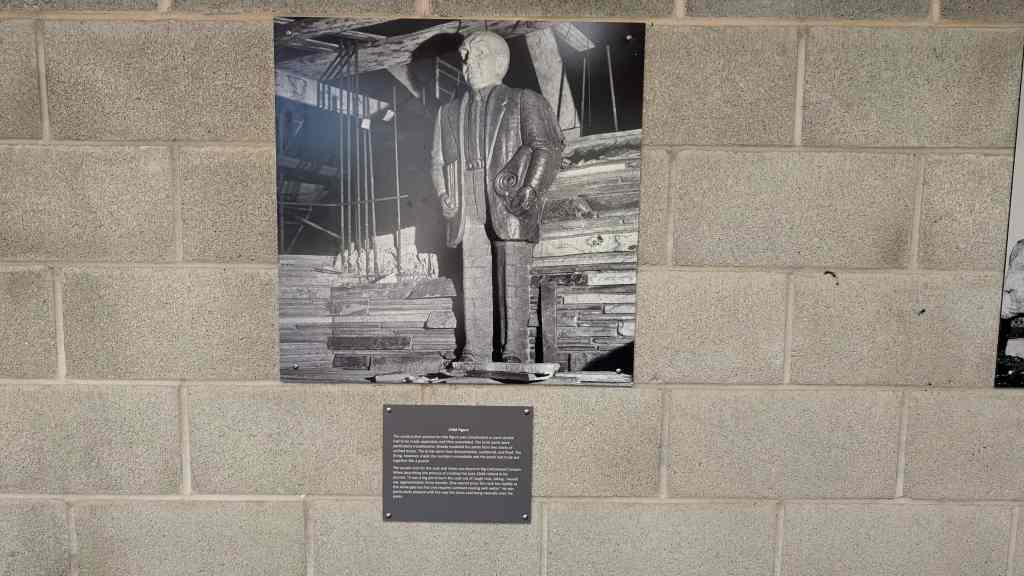
Child Figure
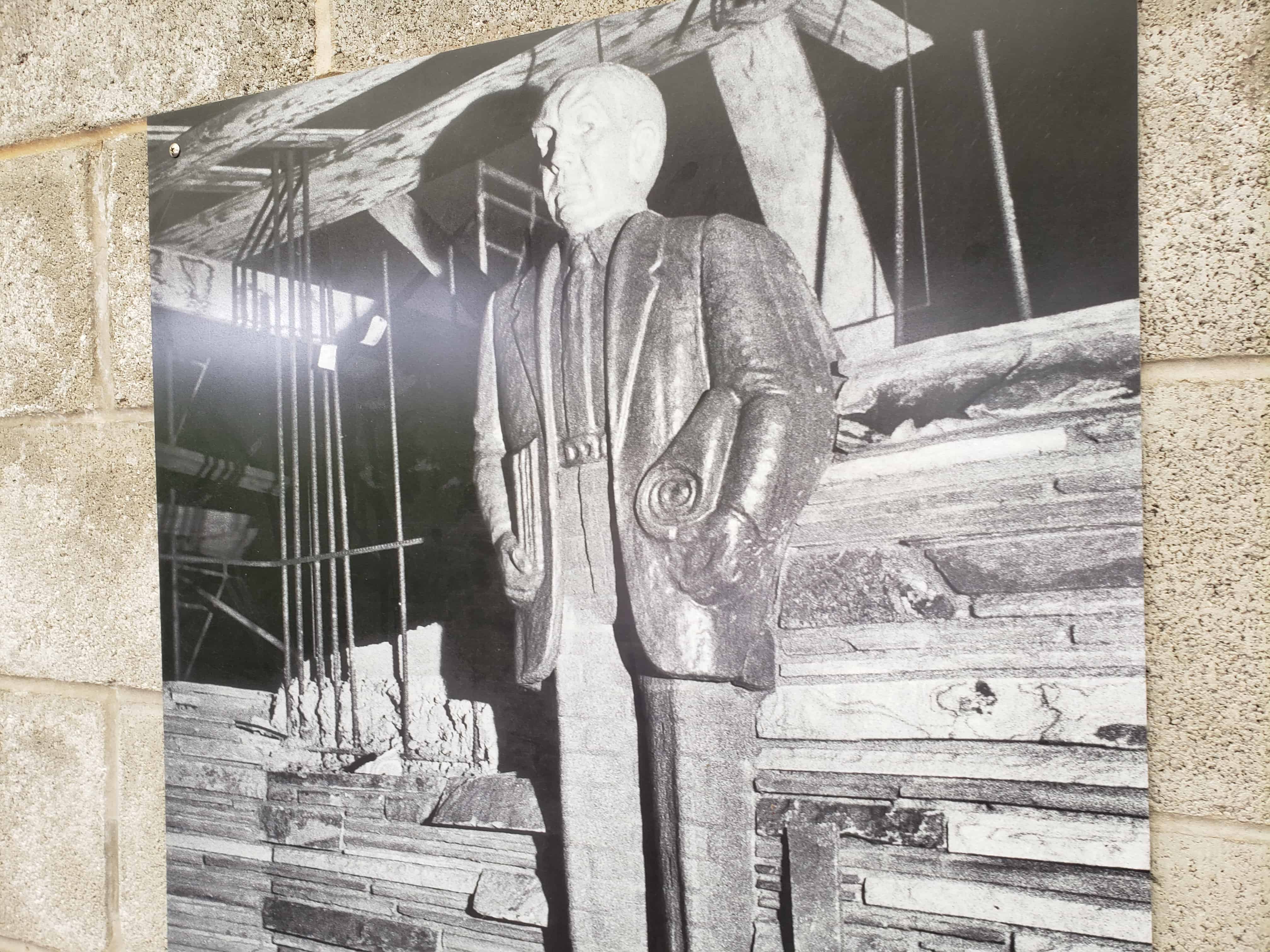
The construction process for this figure was complicated as each section had to be made separately and then assembled. The brick pants were particularly troublesome. Brooks modeled the pants from two stacks of unfired bricks. The bricks were then disassembled, numbered, and fired. The firing, however, made the numbers unreadable and the pants had to be put together like a puzzle.
The purple rock for the coat and shoes was found in Big Cottonwood Canyon. When describing the process of creating the coat, Child related in his journal, “It was a big job to burn the coat out of rough rock, taking, I would say, approximately three months. One cannot press this rock too rapidly as the stone gets too hot and requires constant cooling with water.” He was particularly pleased with the way the stone coat hung naturally over the pants.

The Sphinx
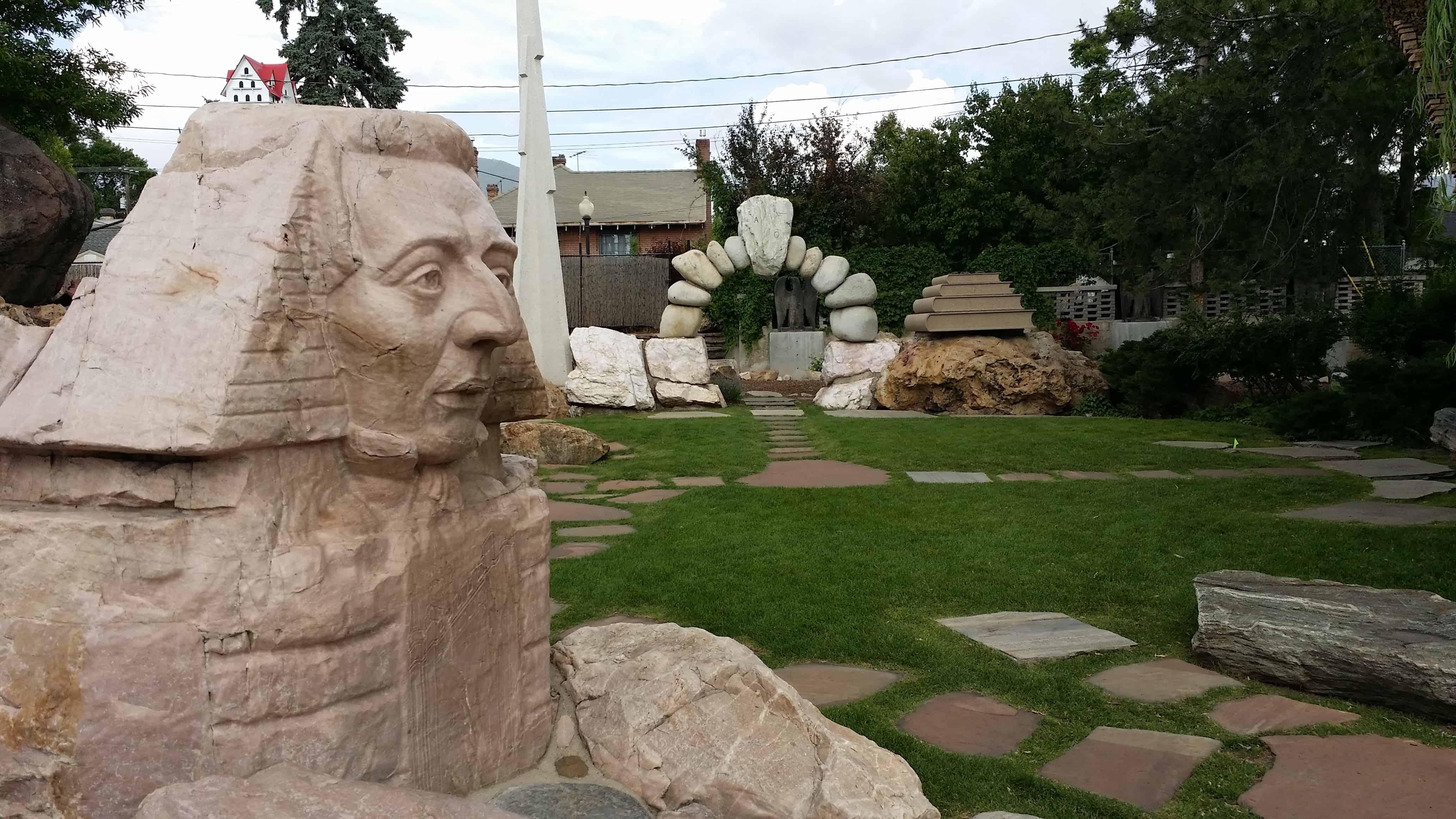
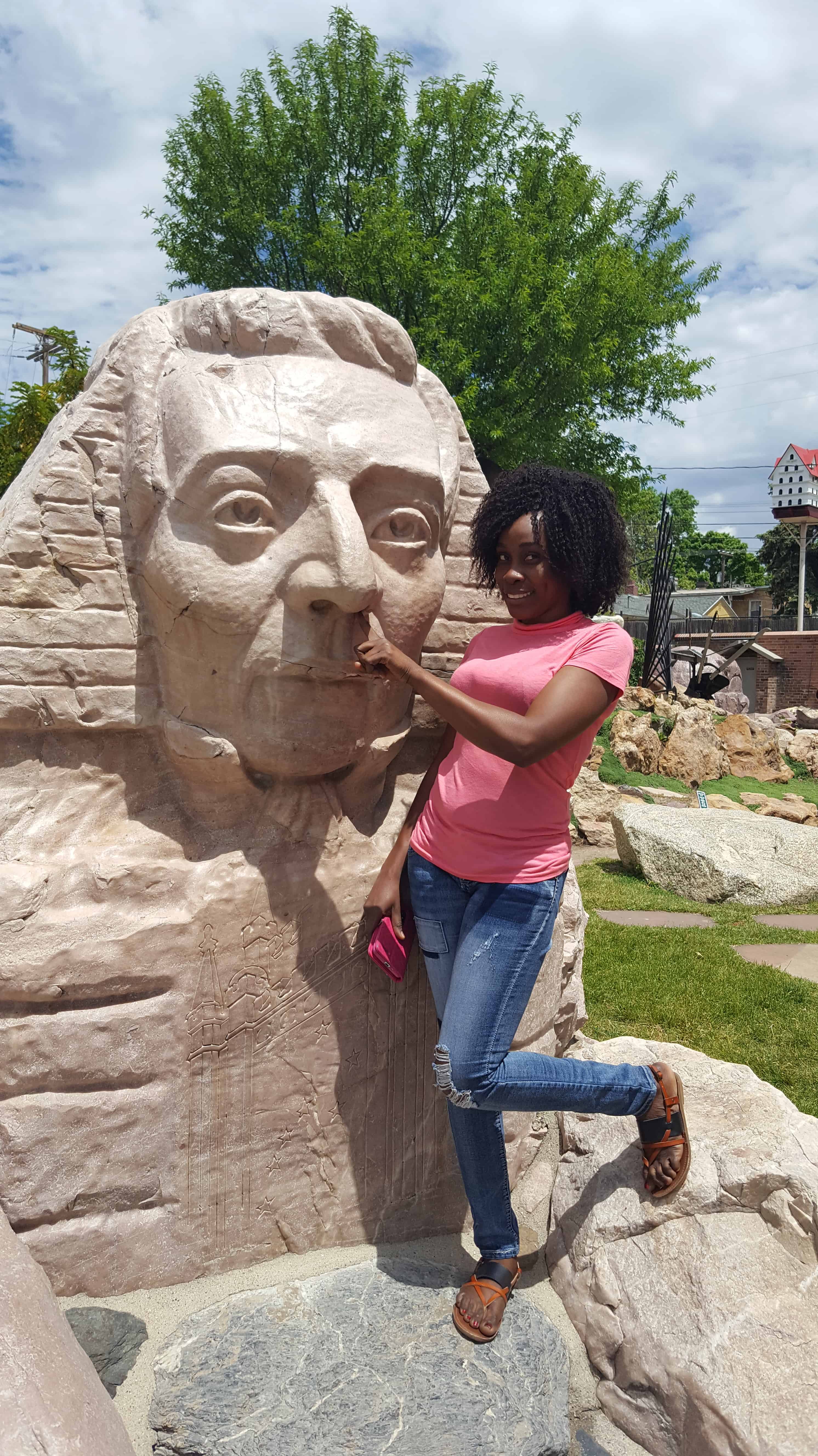
The Sphinx is the best-known sculpture in the Garden. The contrast of unhewn stones arranged to suggest a crouching animal with the finely carved face of LDS Church founder Joseph Smith makes this a remarkable piece. Child carefully selected the huge quartzite stones and hired Brooks to carve the face. The smooth shiny surface resulted from the heat of the torch.
In his journal Child wrote, “Ever since we began the process of cutting figures and bowls from boulders, I have had in mind that I would like to carve a sphinx… The Sphinx is the basis of thought or inspiration for all that is built around it.”
When describing the process of creating the sculptures in the garden he said, “The more natural and interesting the stone, the better. Oh, the times these stones have been moved into various positions for study as to proportion, perspective and cutting.”

Child and Unfinished Rock
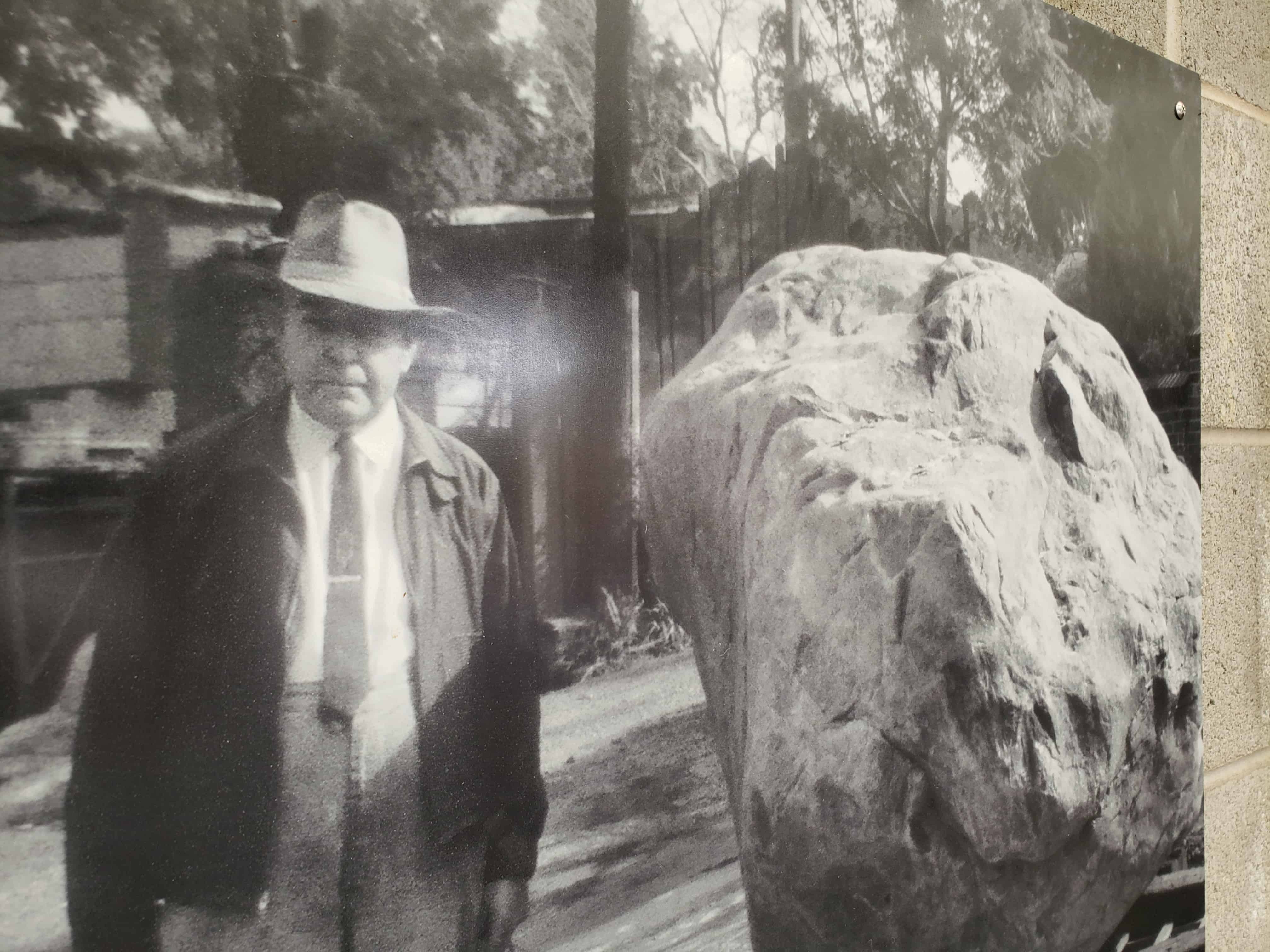
In this photograph, Child is standing beside the boulder in the east driveway that he had started to carve into a round shape to represent the world. This was the last project he planned for his garden. He died before it was completed.
He wrote in his journal, “As I have read and contemplated on the lives of the philosophers and their attempts to find happiness and meaning in life, I have felt the urgent desire to make the surroundings of my home of such a nature as would lead me in my old age to enjoy peace and contentment as I stroll around the yard.”
Child wanted to view the garden “as a delight in the expression of my own progressive self and God’s work…and also to demonstrate my faith by my works.”
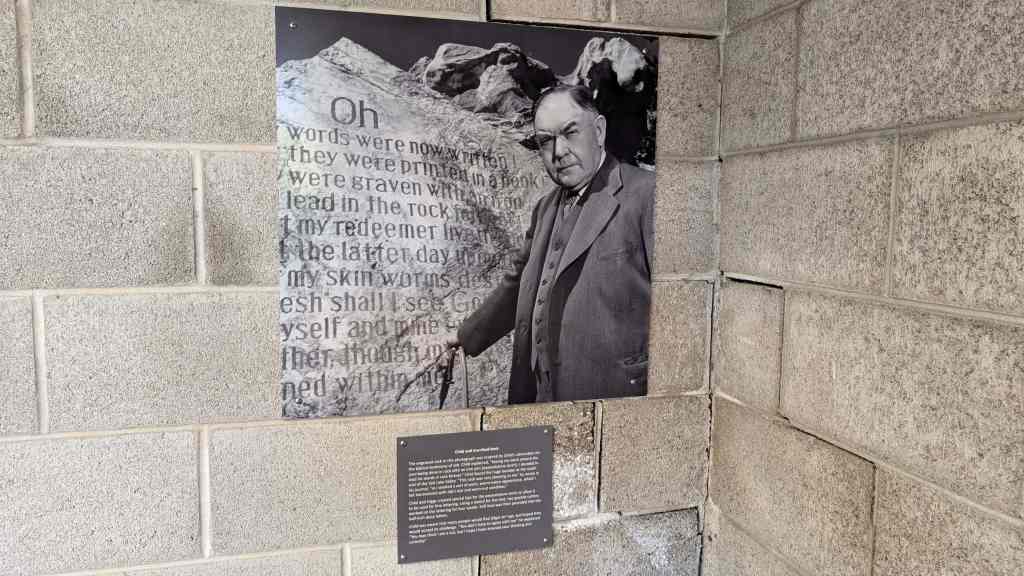
Child and Inscribed Rock
The engraved rock in this photograph was inspired by Child’s admiration for the biblical testimony of Job. Child explained, “Seeing my work around the yard being done in rock with an iron pen [oxyacetylene torch], I decided to lead his words in rock forever.” Child found the huge boulder at the south end of the Salt Lake Valley. “This rock was very pleasing to me” he wrote in his journal, “as I wanted a sort of worn, worm-eaten appearance, which I felt harmonized with Job’s sick and worn-out condition.”
Child and Higgs created special tips for the oxyacetylene torch to allow it to be used for fine lettering. Using a stencil for the text, two granite cutters worked on the lettering for four weeks, Soft lead was then pounded into the half-inch deep letters.
Child was aware that many people would find Gilgal strange, but hoped they would accept its challenge, “You don’t have to agree with me” he explained. “You may think I am a nut, but I hope I have aroused your thinking and curiosity,”

Pingback: Sphinx in Utah | JacobBarlow.com
Pingback: Salt Lake City, Utah | JacobBarlow.com
Pingback: Salt Lake City Parks | JacobBarlow.com