
Tags

Edwin Whiting is actually my Great Great Great Great Grandfather. He has a lot of history in the Springville/Mapleton area where I grew up.
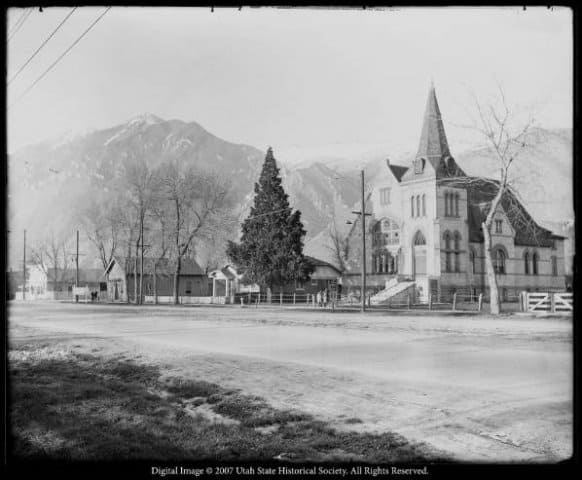
There is tree where one of his homes was located that he planted in 1861, see more info here.
The “Big House” was later demolished and in 1913, the Church of Jesus Christ of Latter-day Saints built a chapel on the property. Extensive remodeling on the historic church building was completed in 1998 (see photo below) and the building was re-dedicated by Gordon B. Hinckley, then president of the Church. The building was extensively damaged by vandals in 2006, who set fire to the structure. It was demolished as a result. The juniper tree still stands (source).
Related:
- Family Search
- Findagrave
- His daughter Helen Amelia Whiting Buchanan and her husband Archibald Walker Overton Buchanan
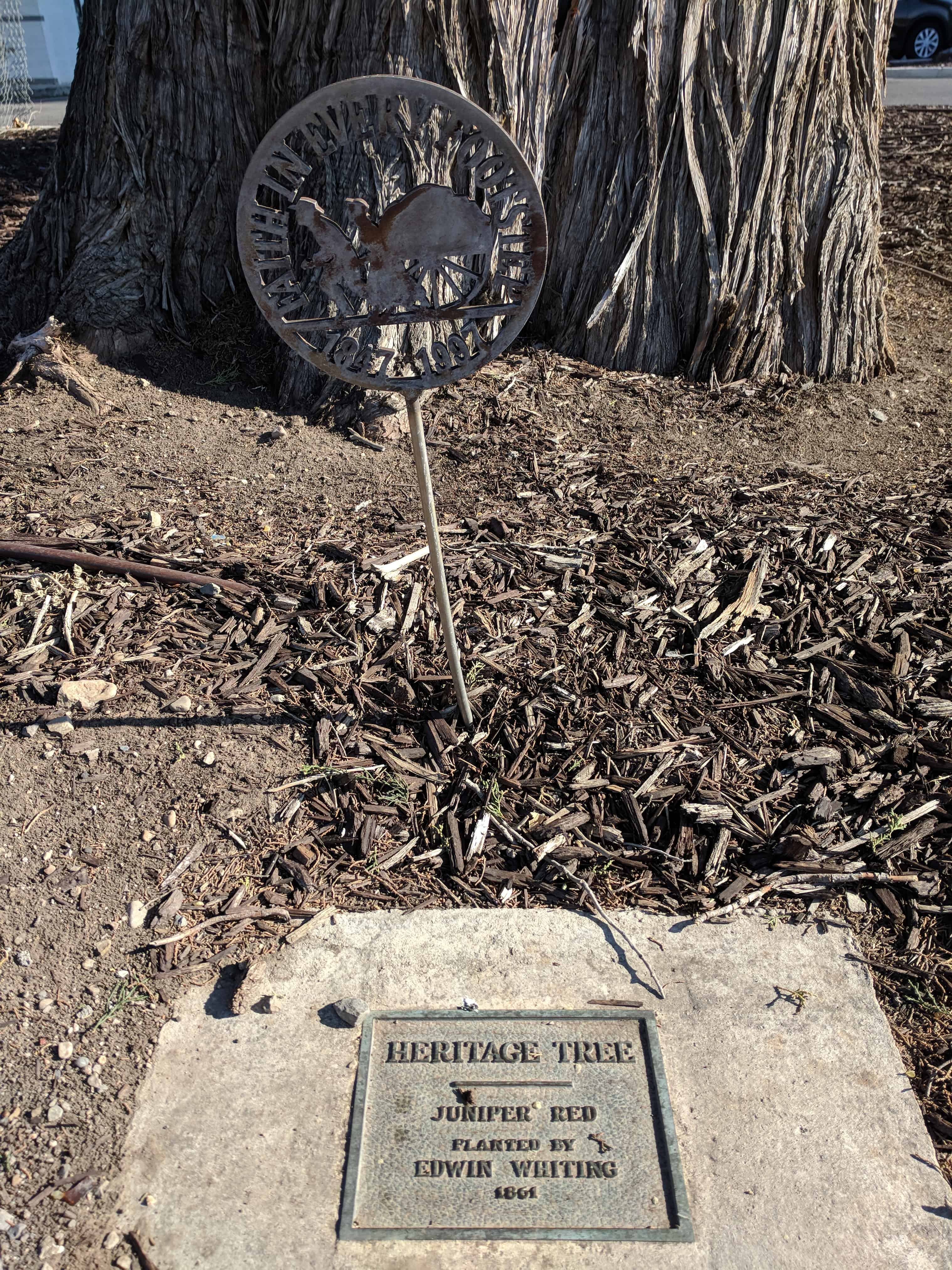
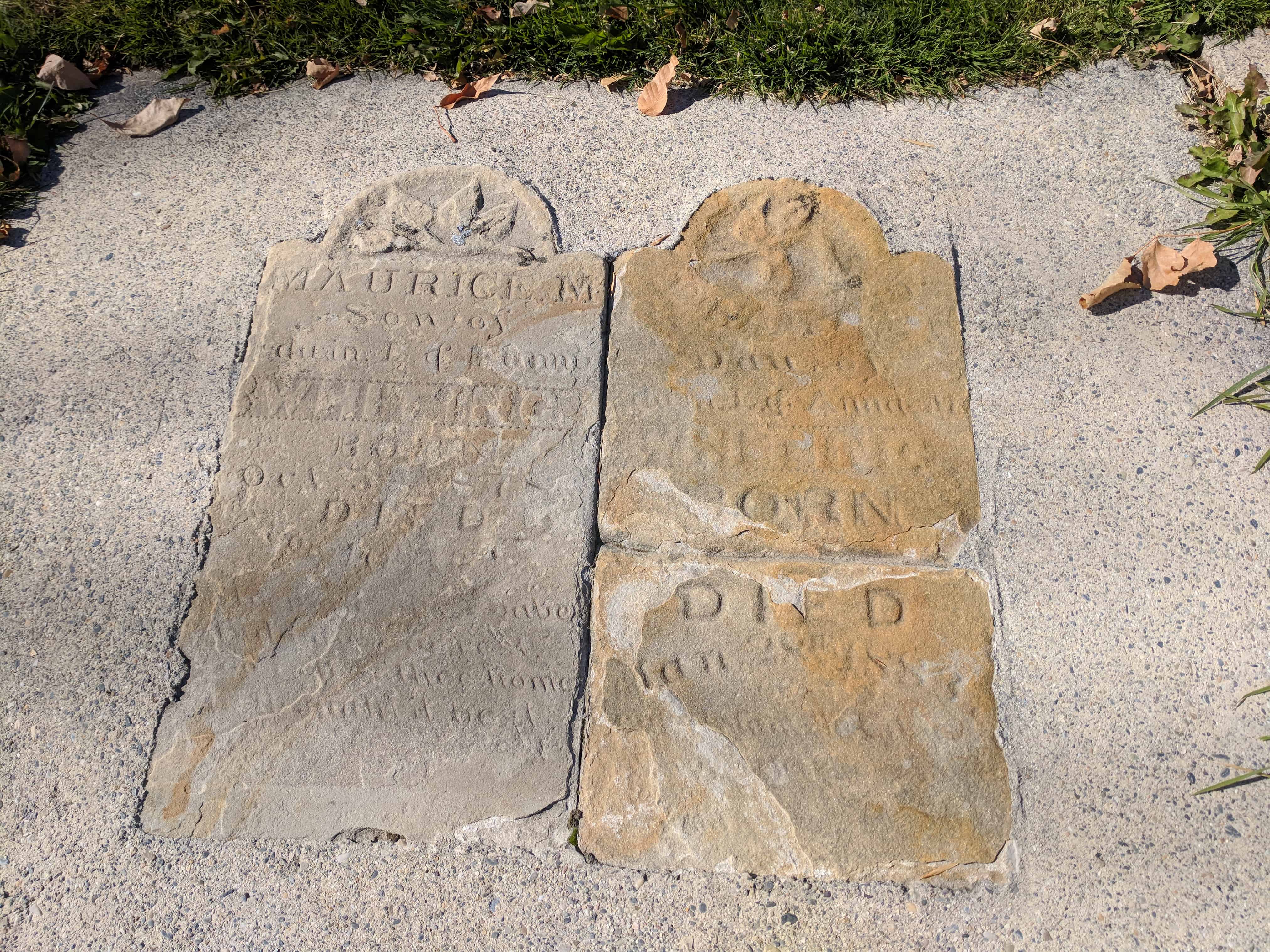
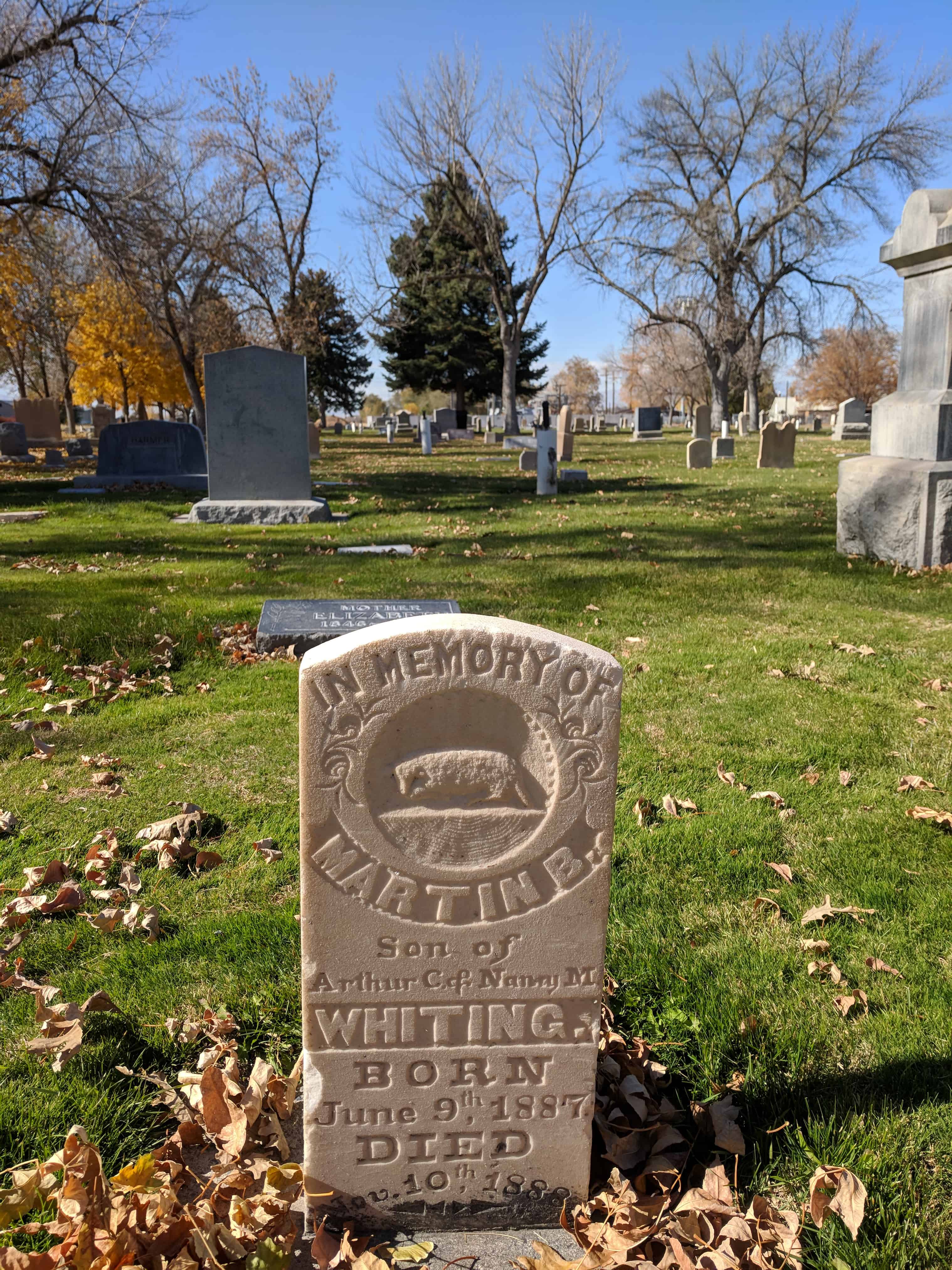
Below are photos from the tree and from his grave in the Springville Cemetery.
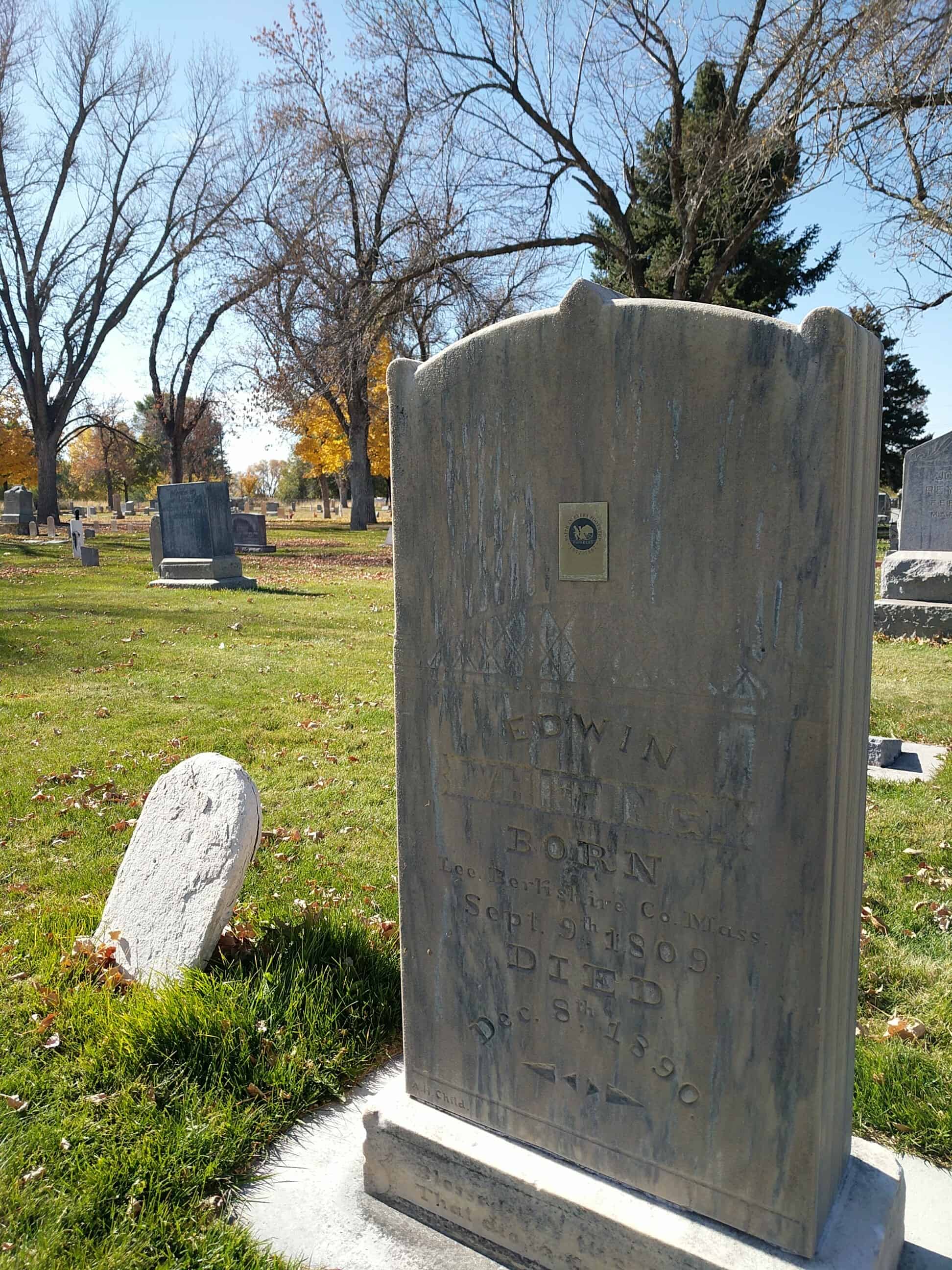


Edwin Whiting was born on September 9, 1809 and was the third child of 12 that were born to Elisha and Sally Hulett Whiting in Lee, Massachusetts. When he was six years old, his family moved to Nelson Portage County, Ohio, where they lived on the western frontier of the United States of America.
Edwin’s education was very limited, but he learned the “3 R’s;” and he wrote with a legible hand which was quite a feat for his time. He learned the chair-making trade from his father and his workmanship was excellent. In 1833 at the age of 24 he married Elizabeth Partridge Tillotson, an Ohio girl of French descent, who was a highly educated schoolteacher.
In 1837, the gospel of Jesus Christ was brought to the Whiting family. Edwin, his wife, his father and mother, and some of his siblings joined the Church of Jesus Christ of Latter-day Saints. They were baptized by Thomas Marsh in 1838. As early members of the Church, they soon joined the saints in Kirtland, Ohio. It was here that many trials began which took much faith in God to endure.
Forced to leave Ohio and all of their belongings, the saints fled to Far West, Missouri. There the Whiting family had just built a home for their family of four children when a mob, several thousand strong, ordered them out and burned everything to the ground. They fled again to join the saints in Lima in the Morley Branch, where Edwin was a counselor to Brother Morley.
For several years, the saints were happily building up the city of Nauvoo and the temple. Edwin was appointed Colonel in the Nauvoo Legion and continued to help build-up the Church.
Through authority and for a righteous purpose Edwin was called to enter the law of plural marriage. In 1845 he married Almira Meacham, and in the following year, 1846, he married Mary Elizabeth Cox. That same year he was called on a mission to Pennsylvania and was there at the time of the martyrdom of the Prophet Joseph Smith and his brother, Hyrum Smith. He soon returned home and took up arms with his brothers to protect his property and the lives of his family.
During the battle of Crooked River his brother Charles was killed. However, a greater trial was when several of his siblings did not feel that Brigham Young should lead the Church, so they followed a Mr. Cutler to Cleveland, Minnesota.
Now with his family and parents, he moved west to Mt. Pisgah (Talmedge), Iowa. There they prepared for the journey west. Cholera took the lives of his parents and a brother. In April 1849 Edwin, his family, and other families started westward in Brother Morley’s company. They fought Indians, suffered for a lack of food, and had their cattle stampeded. After reaching the Black Hills, a heavy snow came. Many cattle died. President Brigham Young sent teams and provisions to help them.
On October 28, 1849, they reached Salt Lake City, which looked like a “heaven of rest” to the travel-worn company. But their rest was of short duration and lasted only a few days. Edwin Whiting, the Morleys, and the Coxes were called to setting the San Pitch River which is now known as Manti. Again, they journeyed on. It took weeks to go from Salt Lake City because they had to build their own roads. Arriving on December 1, 1849, with little to eat, no feed for the cattle, no shelter, and cold weather upon them, they made dugouts on the south side of the hill where the Manti Temple now stands.
It became necessary to build a fort to protect themselves from the Indians who felt that the white man had stolen their land. The gates of the fort were locked while the men went to the fields with guns in hand. This developed into the Walker War, and Edwin was appointed Captain of the Militia.
Crops were poor, but they managed to survive and were a happy family in spite of their hardships. In 1854, Edwin was called to Ohio on a mission and was gone for two years. While he was away, grasshoppers came and ate everything they grew. They faced starvation, but miraculously where the crops had been, a patch of pigweeds grew; and they lived on that until the corn ripened in Utah county. This was a strange thing because the Indians said the pigweed had never grown there before. Interestingly enough, it has not grown there since which was a miracle blessing.
While he lived in Manti, Edwin was among the foremost men in religious and civic affairs in the community. He was a counselor to the Stake President and Mayor of the city from 1857- 1861. He was a member of the legislature for two terms and as before stated, he was Captain of the Militia in the Walker War.
After finding the climate of Manti unfavorable for raising fruit, Edwin was advised by President Brigham Young to try out his nursery in Springville. There he moved in 1861 and was able to plant and grow all varieties of fruit trees, vegetables, and flowers. Edwin transplanted many evergreen trees from the mountains in various places. One is still living by the old Courthouse in Provo, several are in the Springville City Park, and one large evergreen tree stands southwest of the Manti Temple and can be seen for many miles.
In Edwin’s later years he did a lot of temple work for his ancestry. He attended temples in Salt Lake City, Logan, and St. George. In 1881 he moved to St. George.
Edwin Whiting and his family lived the principles of the restored gospel. He was honest, charitable, and loved his wives and children. He died in Mapleton on December 9, 1890, at the age of 81 firm in his belief and testimony of the truthfulness of the gospel of Jesus Christ of Latter-day Saints.
Edwin’s testimony to his children: “My children, I have guarded the prophet Joseph Smith while he slept; I have guarded him while he walked the earth. I have felt the power of God in his life. I have seen the mantle of the Holy Ghost hover over him. I have received the witness that I know that he was and is a prophet of the living God; and I want you children, my family, to honor him and to honor each succeeding prophet following him because your security in the Kingdom of God and your security in the Church depends upon your full allegiance to the prophets on the earth. This testimony I leave with you, and I know that he was a prophet of the living God.”
Source:
- Excerpts were taken from the history of Jennie Hill (a granddaughter) and Ruby Jensen (a granddaughter).
Pingback: Historic Springville City Cemetery | JacobBarlow.com
Pingback: Juniper Red – Edwin Whiting Historic Tree | JacobBarlow.com