
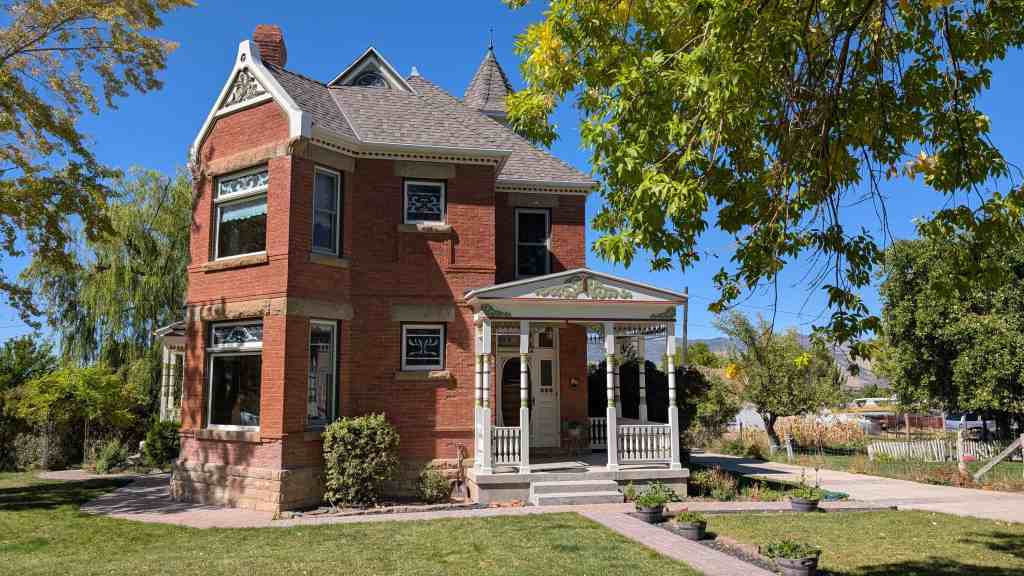
L. R. Anderson Home / Lewis and Clara Anderson House
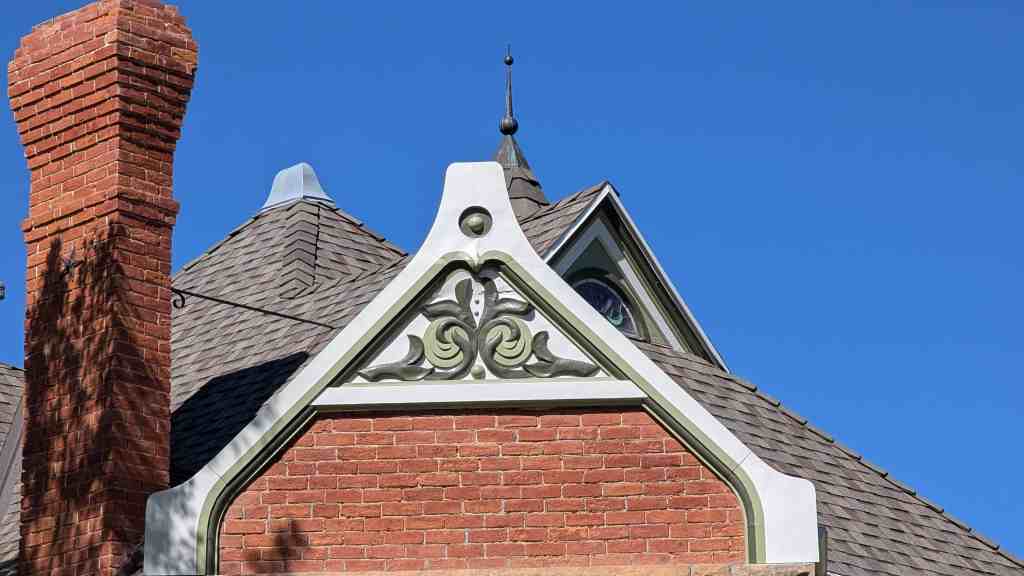
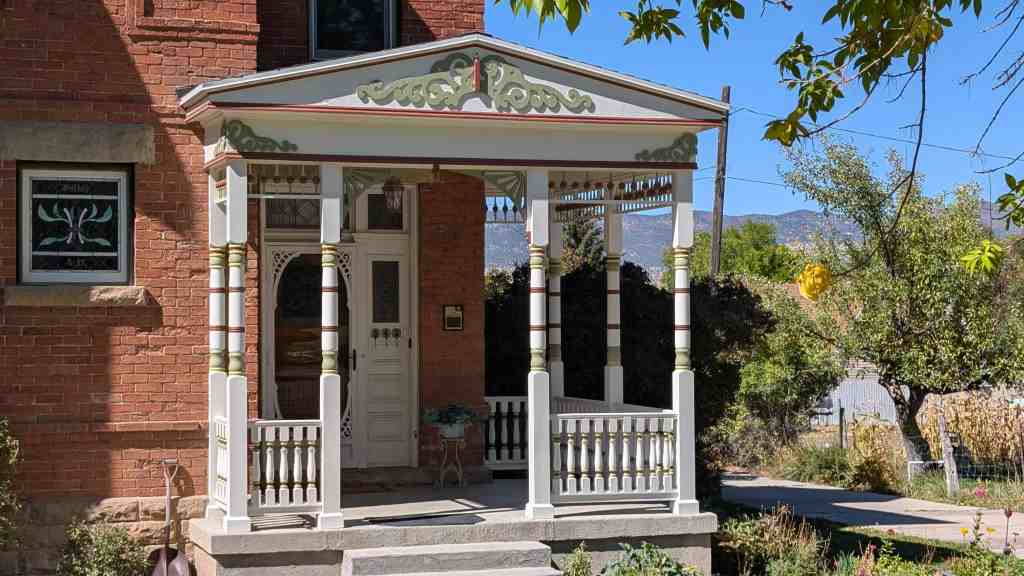
The Lewis and Clara Anderson House, built 1886-1915, is an excellent example of a Victorian Eclectic with Queen Anne detailing house style remaining from the historic period in Manti. This style of architecture documents an important period of growth in Manti and the Sanpete Valley. The design, though executed by a local builder influenced by pattern-books, combines a remarkable unity of composition with elaborate decoration. With its prominent position on Main Street, the Anderson house is one of the most distinctive architectural landmarks of Manti. Both the exterior and interior details of the home have been extraordinarily well-preserved. The Anderson house is also significant for its association with L. R. Anderson, a prominent church leader, politician, and rancher in the area. His leadership in the town of Manti was extensive and impacted the direction of its growth during the first part of the twentieth century.
The Victorian Eclectic style is reflective of changes that occurred in Utah near the turn of the century. The architecture in Utah was founded in American building traditions and the early builders had been, for the most part, isolated from the secular influences of much of the country and used established methods brought with them from their homes of origin. As Utah grew and became more integrated with non-Mormons, the architectural styles that were made popular through pattern books were readily available to Utah builders. The building boom of the 1880s and 1890s corresponded with the growth of the non-Mormon population in Utah and brought with it the opportunity to bring in new building traditions such as those published in the style books, popular in Utah during the late nineteenth and early twentieth centuries. With the introduction of plan books, “the former isolation of rural areas was no longer an obstacle to building due to the widespread dissemination of information and building materials.” Plan book Victorian stylistic features were based upon the use of multiple forms and elements and were probably influential in building the uniquely stylized, eclectic, Lewis and Clara Anderson. The Victorian Eclectic style was popular in Utah between 1885-1905.
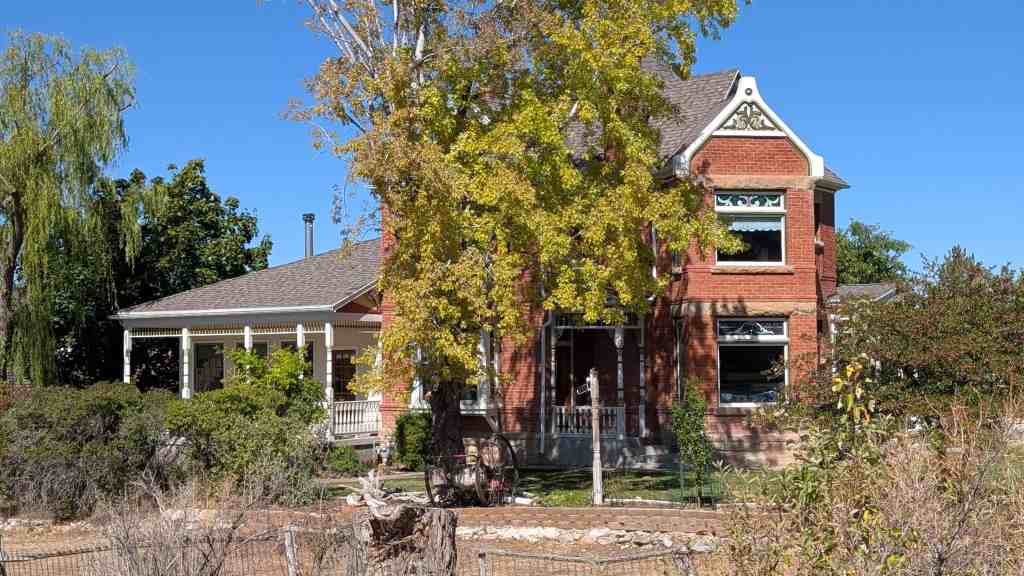
Located at 542 South Main Street in Manti, Utah and added to the National Historic Register (#97001629) on January 12, 1998.
Anderson History
Lewis R. (L. R.) Anderson was born in Fountain Green on March 26,1872 to Lewis and Mary Ann Crowther Anderson. L. R. attended Snow College and Brigham Young Academy before becoming a wool broker and rancher. He worked with his father and brothers in the industry and in 1907, along with other investors, acquired ranches in Salina Canyon and incorporated the Manti Livestock Company. He was a prominent personality in the community. He served as mayor of Manti for six years (1902-08). He ran for mayor on a “no more floods program” platform. Under his leadership as mayor, the town of Manti petitioned President Theodore Roosevelt to create a national forest reserve on their mountain. President Roosevelt did so by executive order on May 29,1903. As a result livestock grazing and other use in Manti Canyon was placed under proper management, vegetation was restored on the steep slopes and no more serious floods occurred.
L. R. was an LDS stake president and temple president for 16 years (1943-59), performing the ordinances and ceremonies sacred to the Mormon culture. He and his wife, Clara, entertained LDS general authorities, civic leaders, and numerous businessmen in their home. L.R. served on the Utah State Legislature beginning in 1913 for two terms and was selected as the Speaker of the House of Representatives. During the legislative session, his family lived with him in Salt Lake City. His wife, Clara Maria Munk, was born in Manti on September 4,1873 to Peter Mikkel and Eunice Ann Brown Munk. She and L.R. were married in the Manti Temple on December 11,1895. During the first years of their marriage, L.R. was employed to run the Central Utah Wool Company for $75/month, and Clara was a school teacher for $25/month. L.R. and Clara raised four girls and three boys in this home. During the time L.R. was president of the Manti Temple, Clara was the matron. She also held many positions in the Relief Society, and was president of the Manti Camp of the Daughters of Utah Pioneers. Clara was interested in music and taught it to her children. She considered her primary responsibility to be homemaking, and she helped L. R. entertain the many dignitaries that visited their home.
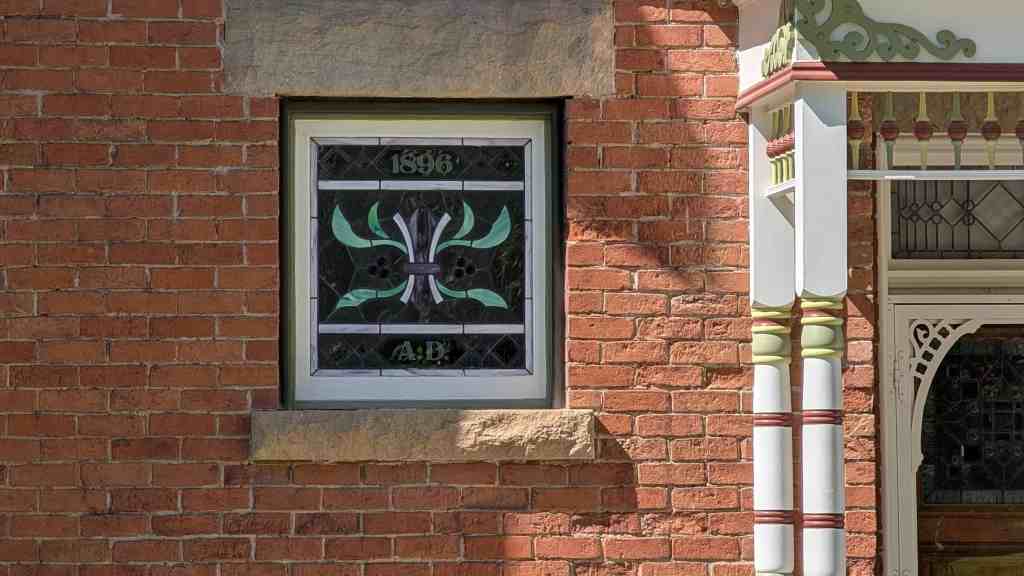
L. R. began building this house in 1896. The house initially consisted of only two rooms. L. R. was called on an LDS mission for two years and when he returned he began construction on the staircase and upper bedrooms. He later added the back bathroom and kitchen, as well as the basement. Most of these additions were completed by 1899. In 1910, he fenced in the front yard with a wrought iron fence. The last addition to the house was made in 1915 when L. R. built a large bay window in the dining room to display Clara’s plants. In the 1920s, L. R. built a chicken coop and a brick carriage house in the back yard. The Andersons lived here until their deaths, L. R. on October 19,1968, and Clara on May 22,1978.
Ronald and Eleanor Mason Sessions purchased the house in 1992. Since then they have done extensive restoration work, such as removing the paint from the exterior brick, restoring the wood finishes throughout the house, and refinishing the floors. They have also reproduced leaded glass windows through the use of historic photos. They added the turret dormer on the north side of the house.
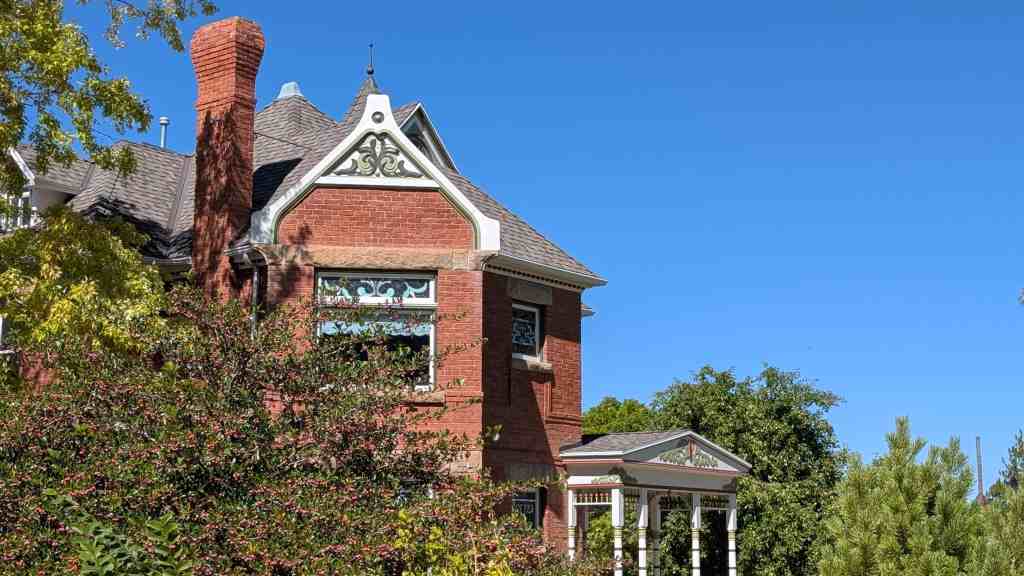
Manti History
Manti, the county seat of Sanpete County, was settled in late November 1849 by 224 men, women, and children, the first settlement south of Provo, Utah. Ute chief Walker invited President Brigham Young of the Church of Jesus Christ of Latter-day Saints (the Mormons) to send a colony of his people to join the encampments of Chief Sanpeetch’s people already in the valley. Jesse W. Fox surveyed the plat 1 for the “city” in the same summer, and Manti was incorporated in February 1851.
Pioneer subsistence agriculture soon gave way to the production of grain for the market. The Indian hostilities that had began in the 1850s ended in the 1870s opening. Adjacent mountain rangelands during the summer for a range livestock industry, mostly large sheep herds. Hay production increased subsequently. Then between 1889 and about 1905 most Sanpete Valley towns experienced annual summer floods, which followed cloudbursts on overgrazed lands at elevations over 8,000 feet. In the 1890s the Manti City Council put into effect the political action that by 1903 resulted in the protection of its watershed by the federal Forest Service: the Manti National Forest.
The railroad system was important to the town’s agricultural and ranching industries. The first into Manti was the Sanpete Valley Railway in 1880, from Nephi. The Denver and Rio Grande Western (D&RGW) completed its line to Manti from thistle Junction in 1890, and extended its operations beyond Manti the following year. The D&RGW purchased the Sanpete Valley Railway in 1910, and immediately abolished its section between Ephraim and Manti. The last passenger train left Manti for Salt Lake City in 1949.
The Church of Jesus Christ of Latter-day Saints is a significant part of the town of Manti and is closely tied to its leadership. The Mormon temple, begun in 1877 and dedicated in 1888, is an important part of the community’s cultural makeup and is a central focus of the town. The LDS concept of the relationship between this world and the next is related to the sacred ceremonies of the temples. Only active Latter-day Saints may enter the temples. Mormons attend the temples to perform baptism, “endowment,” marriage, and “sealing,” and other ordinances for themselves and vicariously in behalf of the dead, especially loved ones and ancestors, in the belief that the dead will hear the gospel preached, that these earthly ordinances must be performed for them, and that they will have their own opportunity to accept or reject. The site of the Manti Temple is where over 100,000 people come yearly to witness the “Mormon Miracle Pageant”.
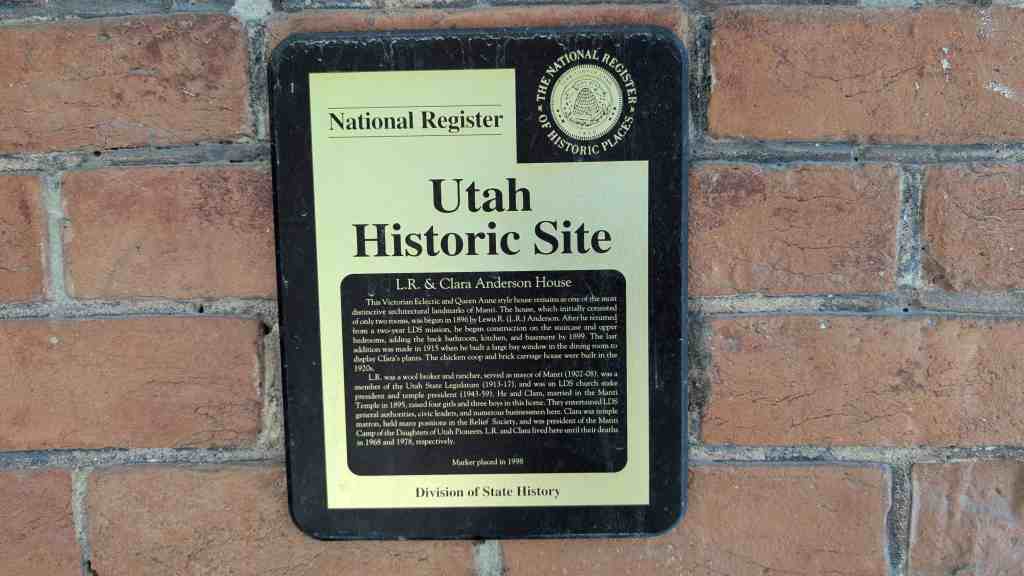
L.R. & Clara Anderson House
This Victorian Eclectic and Queen Anne style house remains as one of the most distinctive architectural landmarks of Manti. The house, which initially consisted of only two rooms, was begun in 1896 by Lewis R. (L.R.) Anderson. After he returned from a two-year LDS mission, he began construction on the staircase and upper bedrooms, adding the back bathroom, kitchen, and basement by 1899. The last addition was made in 1915 when he built a large bay window in the dining room to display Clara’s plants. The chicken coop and brick carriage house were built in the 1920s.
L.R. was a wool broker and rancher, served as mayor of Manti (1902-08), was a member of the Utah State Legislature (1913-17), and was an LDS church stake president and temple president (1943-59). He and Clara, married in the Manti Temple in 1895, raised four girls and three boys in this home. They entertained LDS general authorities, civic leaders, and numerous businessmen here. Clara was temple matron, held many positions in the Relief Society, and was president of the Manti Camp of the Daughters of Utah Pioneers. L.R. and Clara lived here until their deaths in 1968 and 1978, respectively.
Pingback: Manti by Address | JacobBarlow.com