
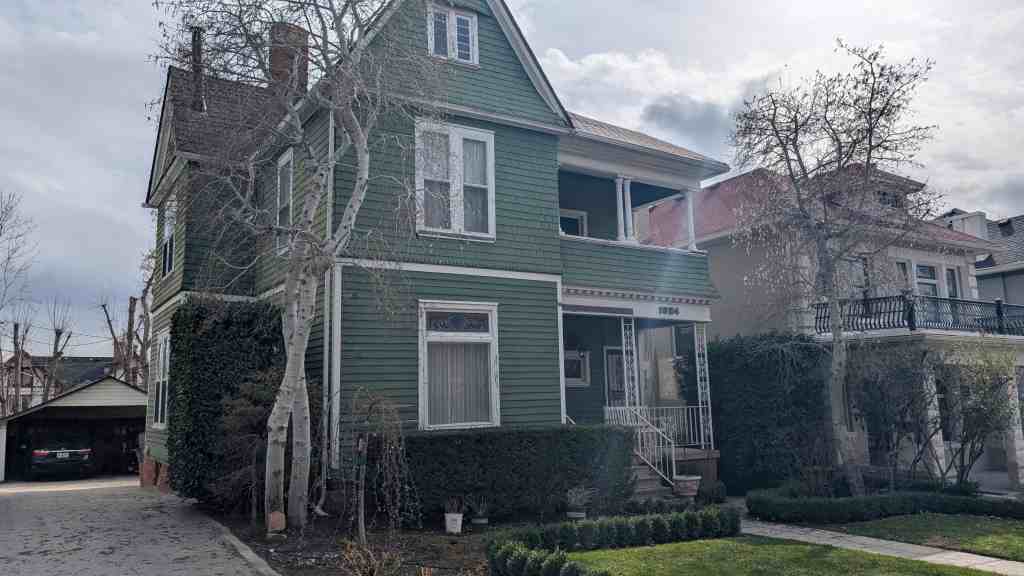
1024 1st Avenue
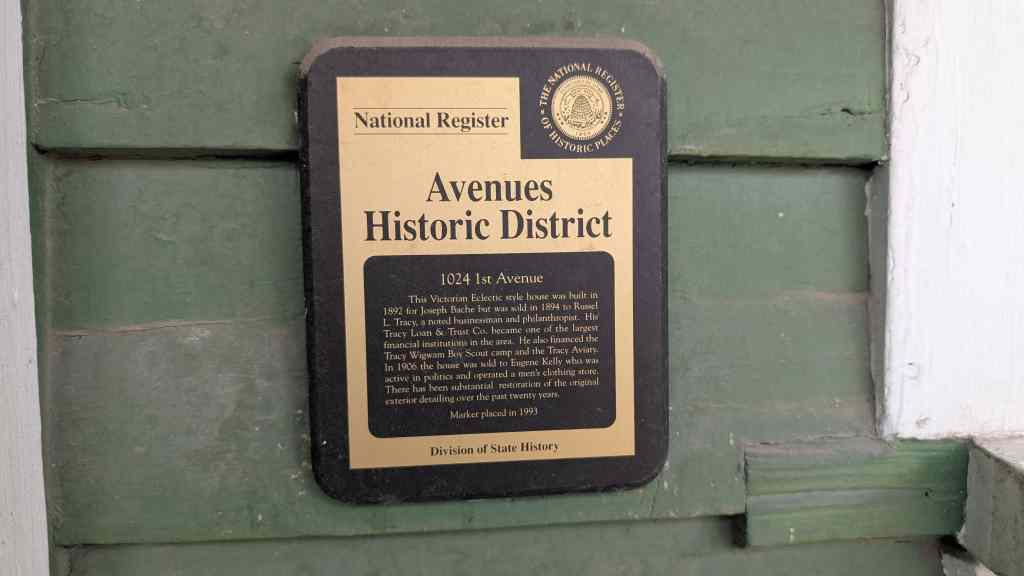
This Victorian Eclectic style house was built in 1892 for Joseph Bache but was sold in 1894 to Russel L. Tracy, a noted businessman and philanthropist. His Tracy Loan & Trust Co. became one of the largest financial institutions in the area. He also financed the Tracy Wigwam Boy Scout camp and the Tracy Aviary. In 1906 the house was sold to Eugene Kelly who was active in politics and operated a men’s clothing store. There has been substantial restoration of the original exterior detailing over the past twenty years.
1024 East First Avenue in The Avenues in Salt Lake City, Utah
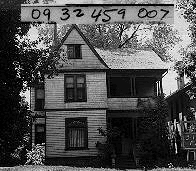
Russel L. Tracy / Eugene W. Kelly House
This two-story Victorian house of pattern-book design is historically significant because of its association with Russel L. Tracy and Eugene W. Kelly.
It was built in 1892 for Joseph P. Bache, an apparently interesting person about whom it would be nice to know more. Unfortunately, the only information available about him is found in Salt Lake City Directories. According to them, at the time he built the house he was “Utah Territorial Librarian” and “Clerk, Supreme Court.” Bache evidently held the house as rental property until 1894 when he sold it to Russel L. Tracy. According to his obituary, he was “a noted Salt Lake financier and philanthropist.” Tracy was born in Mansfield, Ohio, December 10, 1860. In 1883 he moved to Cheyenne, Wyoming, and in 1884 founded the Tracy Loan and Trust Company. In 1892 he moved to Salt Lake City and transferred headquarters of the company here. Eventually, the business became one of the largest of its kind in the Intermountain West. In addition to coimnercial affairs, Tracy was active in community affairs. He financed the Boy Scout camp, known as Tracy Wigwam, in Millcreek Canyon, and funded the Tracy Aviary in Salt Lake’s Liberty Park. Tracy was a member of the Congregational Church.
In 1906 Tracy moved to a larger house in Salt Lake City (1285 Military Way) and sold this one to Eugene W. Kelly. He was born in Fillmore, Utah in 1873, received his schooling there and remained in the town until coming to Salt Lake City in 1902. Active in politics , while in Fillmore he served as it s mayor, in the stat legislature, and as chairman of the Utah State Republican Committee. Upon coming to Salt Lake City he founded Rowe and Kelly Men’s Clothing Store, later Mullett-Kelly, and continued his involvement in politics, in the 1930’s he was twice an unsuccessful candidate for the office of Salt Lake City Mayor and in 1936 unsuccessfully sought the Republican nomination for Governor. He was
also widely known for editorials appearing in local newspapers boosting Utah. In 1923 he sold the house to Zora W. Phinney. She was not listed in Salt Lake City Directories, and was evidently an out of town investor. She held the house for two years, and in 1925 sold it to a commercial painter named John T. Fomander. Three years later, in 1928, he sold it to Thomas A.C. Bruce and his wife Chloe. They held it as a rental property until 1936 when they lost it in a tax sale. For the next ten years, Zion’s Benefit Building Society was the owner. In 1946 the company sold it to Lillia n M. Taylor, an insurance salesperson. She lived in it until the late 1950’s. In the early 1960’s the house was converted into a number of small apartments. When the present owner bought it , he converted it back into a single family residence.
This is a two-story Victorian home, probably of pattern-book design. Most of it s original details were removed or covered when the house was sided wit h asbestos shingles, probably in the 1950’s. The tall front gable was probably covered with wood shingle siding, as was the second floor, which is flare d out over the first. The second floor porch still has the original wooden paired columns, while those on the first are gone. Above the large firs t floor front window is an art-glass transom.