
Tags
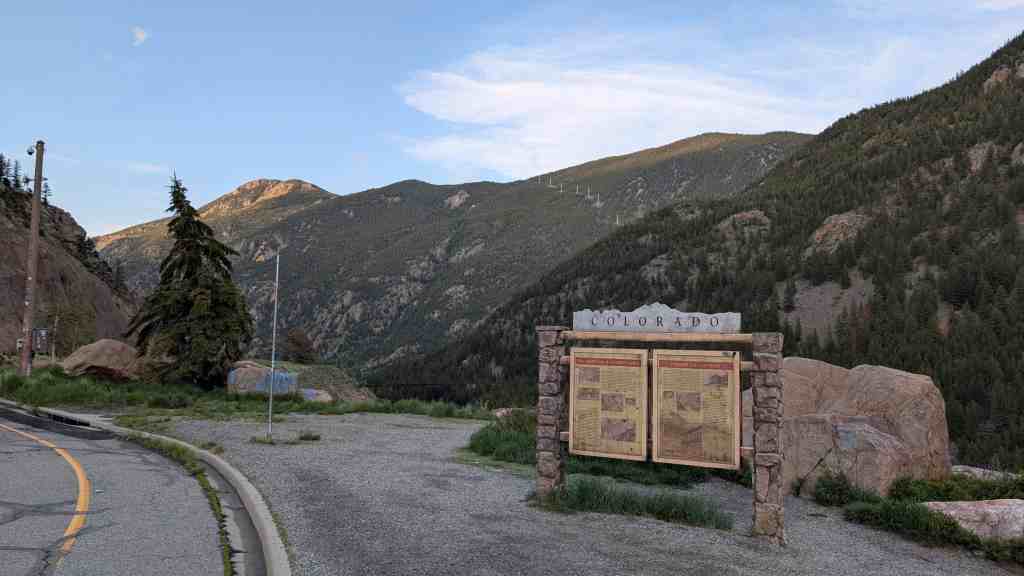
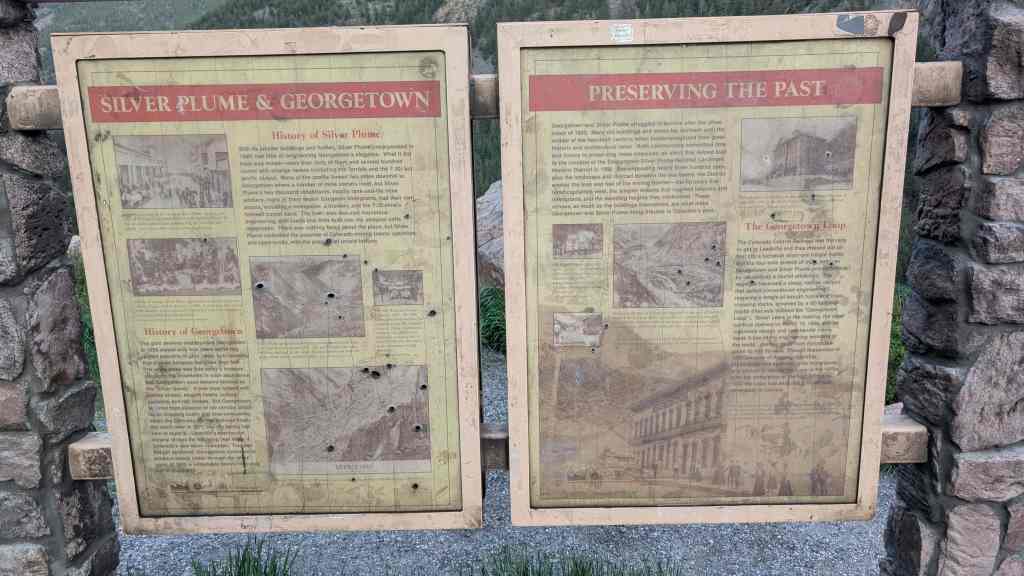
Silver Plume & Georgetown
History of Silver Plume
With its smaller buildings and homes, Silver Plume (incorporated in 1880) had little of neighboring Georgetown’s elegance. What it did have was mines-more than forty of them and several hundred claims with strange names (including the Terrible and the 7:30) but terrific output. Many of the profits flowed two miles downhill to Georgetown where a number of mine owners lived, but Silver Plume’s two thousand inhabitants, mostly rank-and-file mine workers, many of them recent European immigrants, had their own assets, including a newspaper, a brewery, and the 7:30 mine’s beloved cornet band. The town also featured marvelous engineering, with roads and mills built into the steepest cliffs imaginable. There was nothing fancy about the place, but Silver Plume embodied the essence of Colorado mining towns: optimism and opportunity, with the proof untold fortune.
History of Georgetown
The gold seekers who founded Georgetown in 1859 stayed only four years extracting mited amounts of gold, never fully realizing that a silver bonanza lay under their feet. The white metal was this valley’s treasure, streaking the mountains in such abundance that Georgetown soon became famous as the “Silver Queen.” It was royal indeed with platted streets, elegant hotels, cultural societies, and tidy homes. But Georgetown Suered from absence of rail service, which mode shipping costly and time-consuming. When the Colorado Central Railroad Tinally did reach town in 1877 the city barely had time to enjoy It-Leadville’s spectacular mineral strikes the following year made it Colorado’s new silver champion. Trumped but not tarnished, Georgetown continged to produce steady yields through the siler panic of 1893, a remarkable twenty-nie-year run of prosperity.
Preseving the Past
Georgetown and Silver Plume struggled to survive after the silver crash of 1893. Many old buildings and mines lay dormant until the middle of the twentieth century, when locals recognized their great historic and architectural value. Both communities committed time and money to preserving these treasures, an effort that helped lead to the creation of the Georgetown-Silver Plume National Landmark Historic District in 1966. Encompassing nearly three hundred sites, plus the landscape and railroad between the two towns, the District evokes the look and feel of the mining frontier-the fortunes that lured capitalists west, the simpler dreams that inspired laborers and immigrants, and the daunting heights they confronted. These echoes, as much as the buildings themselves, are what make Georgetown and Silver Plume living tributes to Colorado’s past.
The Georgetown Loop
The Colorado Central Railroad lost the race. to get to Leadville and thus missed out on that city’s lucrative silver-ore freight traffic. But the four-mile stretch of tre beten Georgetown and Silver Plume proved almost as valuable as a tourist attraction. The segmt traversed a steep, narrow canyon that defied conventional engineering, requiring a tangle of hairpin turns and criss- crossing tracks, crowned by a 95-foot-high trestle (that was dubbed the “Georgetown Loop”). Seven years in the making, the steel curlicue opened on March 10, 1884, and its ingenious design and spectacular views made it one of the engineering wonders of the world. Visitors came from across the globe to ride its rails. Though dismantled in 1939 because of flagging ridership, preservationists understood its importance and worked to rebuild the Loop in the 1970s, With the completion of the high bridge in 1984, the Loop had attracted a whole new generation of tourists.
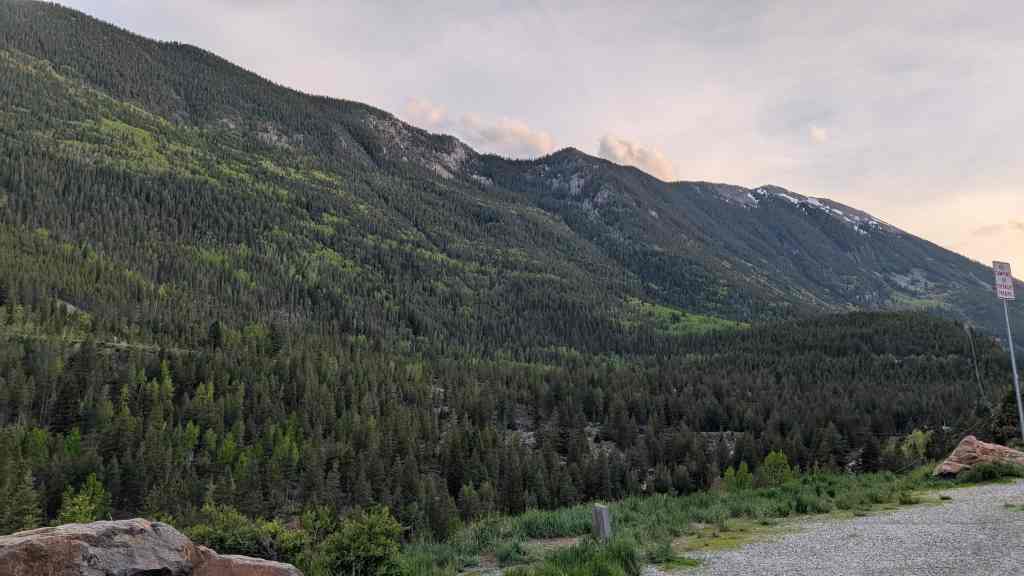
Located at 39.69933081577133, -105.7108966736141