
Monkey Town
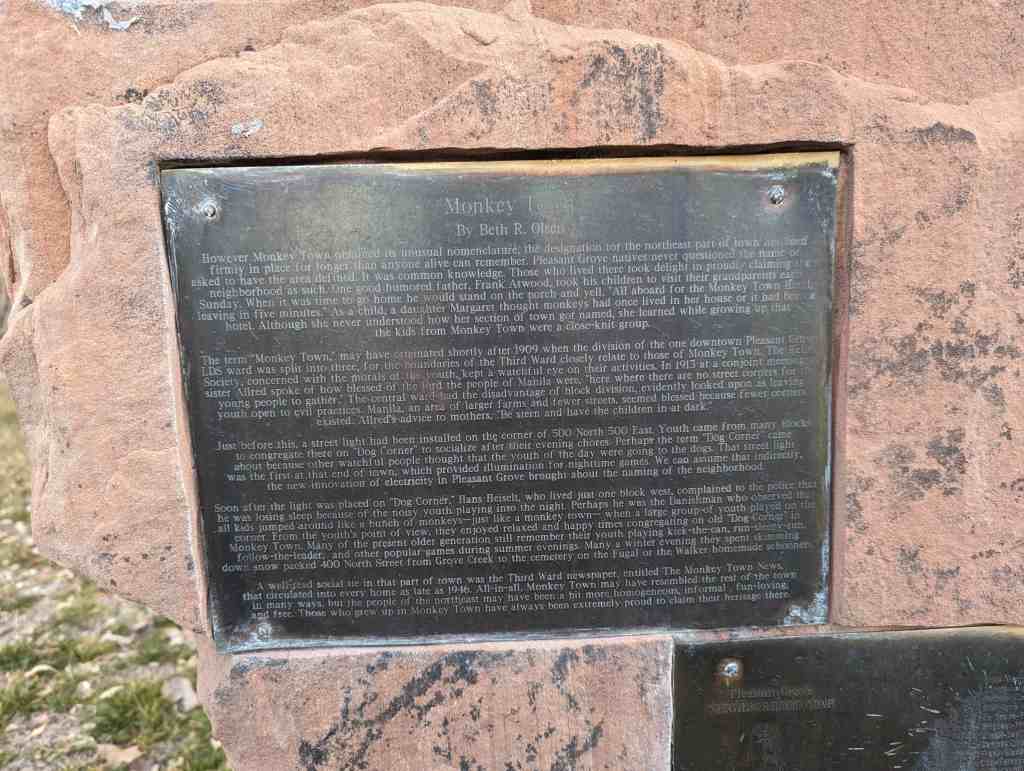
By Beth R. Olsen
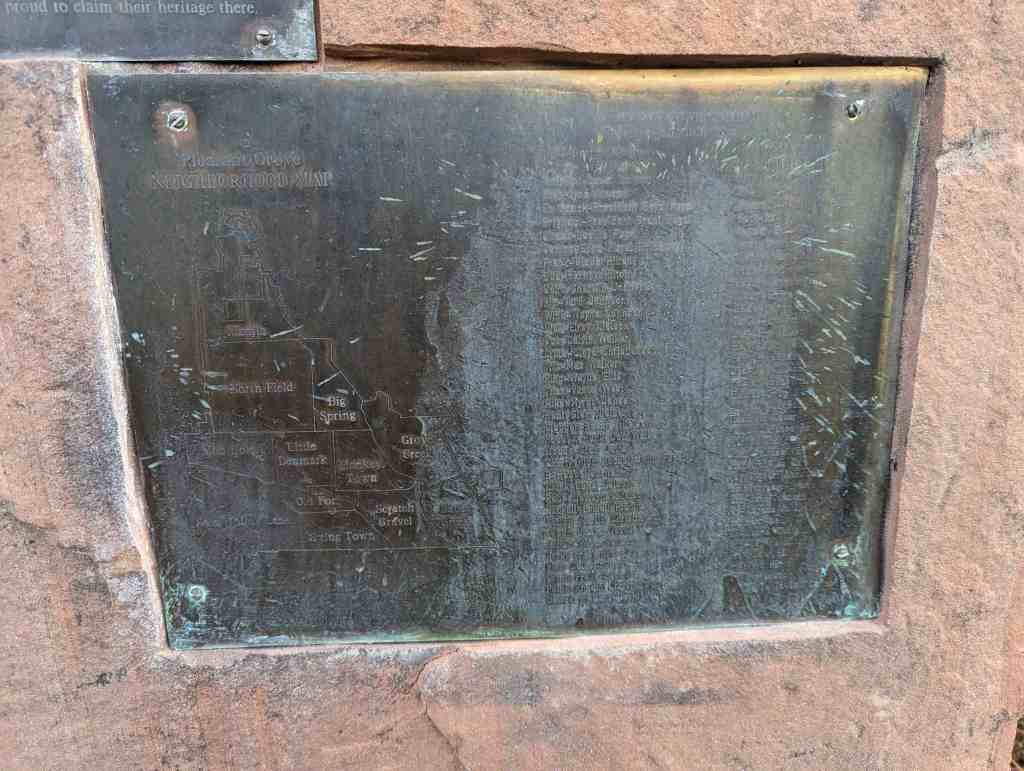
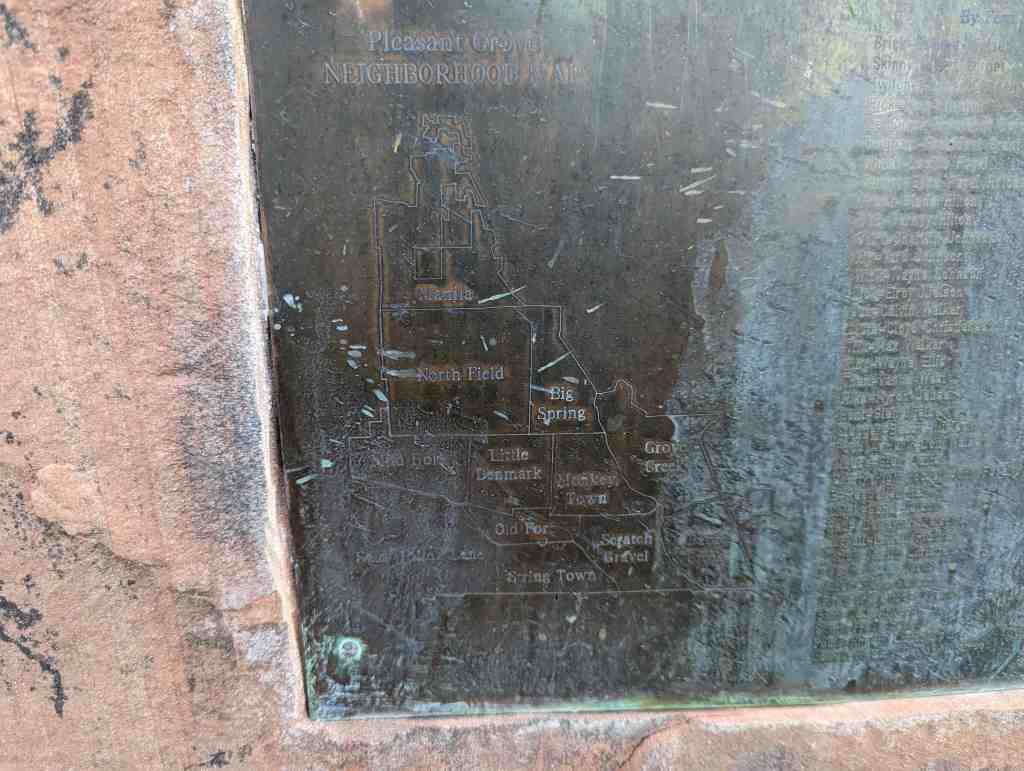
However Monkey Town obtained its unusual nomenclature, the designation for the northeast part of town has been firmly in place for longer than anyone alive can remember. Pleasant Grove natives never questioned the name or asked to have the area defined. It was common knowledge. Those who lived there took delight in proudly claiming the neighborhood as such. One good humored father, Frank Atwood, took his children to visit their grandparents each Sunday. When it was time to go home he would stand on the porch and yell, “All aboard for the Monkey Town Hotel, leaving in five minutes.” As a child, a daughter Margaret thought monkeys had once lived in her house or it had been a hotel. Although she never understood how her section of town got named, she learned while growing up that the kids from Monkey Town were a close-knit group.
The term “Monkey Town,” may have originated shortly after 1909 when the division of the one downtown Pleasant Grove LDS ward was split into three, for the boundaries of the Third Ward closely relate to those of Monkey Town. The Relief Society, concerned with the morals of the youth, kept a watchful eye on their activities. In 1913 at a conjoint meeting, a sister Allred spoke of how blessed of the lord the people of Manila were, “here where there are no street corners for the young people to gather.” The central ward had the disadvantage of block division, evidently looked upon as leaving youth open to evil practices. Manila, an area of larger farms and fewer streets, seemed blessed because fewer corners existed. Allred’s advice to mothers, “Be stern and have the children in at dark.”
Just before this, a street light had been installed on the corner of 500 North 500 East. Youth came from many blocks to congregate there on “Dog Corner” to socialize after their evening chores. Perhaps the term “Dog Corner” came about because other watchful people thought that the youth of the day were going to the dogs. That street light was the first at that end of town, which provided illumination for nighttime games. We can assume that indirectly. the new innovation of electricity in Pleasant Grove brought about the naming of the neighborhood.
Soon after the light was placed on “Dog Corner,” Hans Heiselt, who lived just one block west, complained to the police that he was losing sleep because of the noisy youth playing into the night. Perhaps he was the Danishman who observed that all kids jumped around like a bunch of monkeys–just like a monkey town– when a large group of youth played on the corner. From the youth’s point of view, they enjoyed relaxed and happy times congregating on old “Dog Corner” in Monkey Town. Many of the present older generation still remember their youth playing kick-the-can, run-sleepy-run, follow-the-leader, and other popular games during summer evenings. Many a winter evening they spent skimming down snow packed 400 North Street from Grove Creek to the cemetery on the Fugal or the Walker homemade schooners.
A well read social tie in that part of town was the Third Ward newspaper, entitled The Monkey Town News, that circulated into every home as late as 1946. All-in-all, Monkey Town may have resembled the rest of the town in many ways, but the people of the northeast may have been a bit more homogeneous, informal, fun-loving, and free. Those who grew up in Monkey Town have always been extremely proud to claim their heritage there.
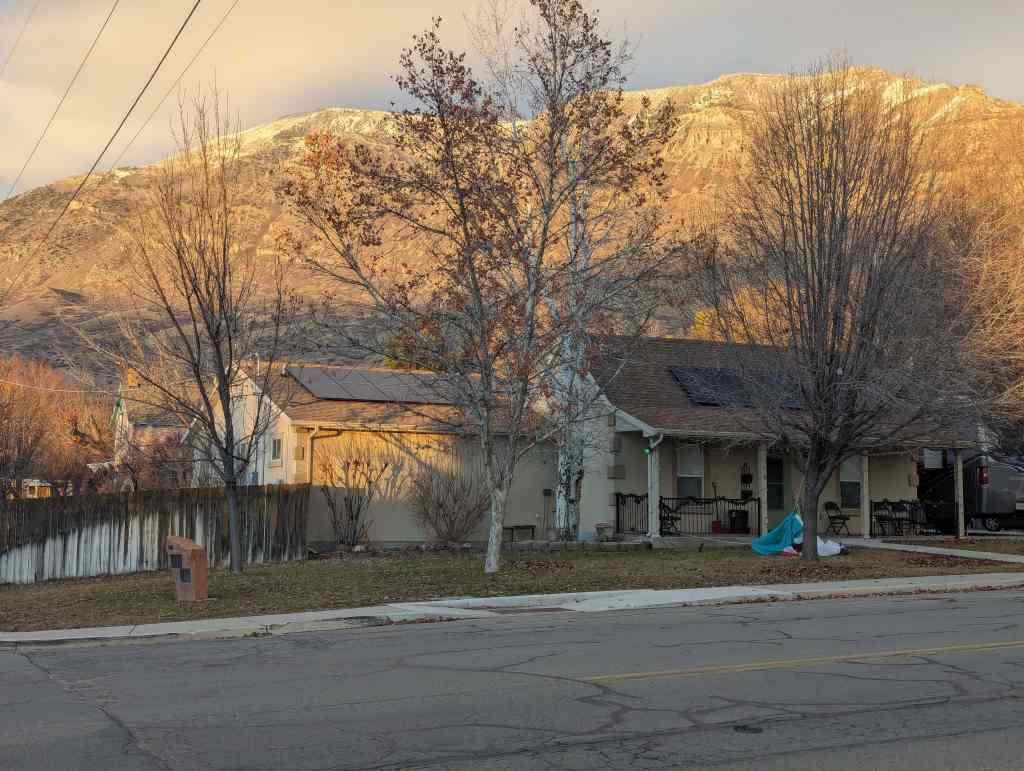
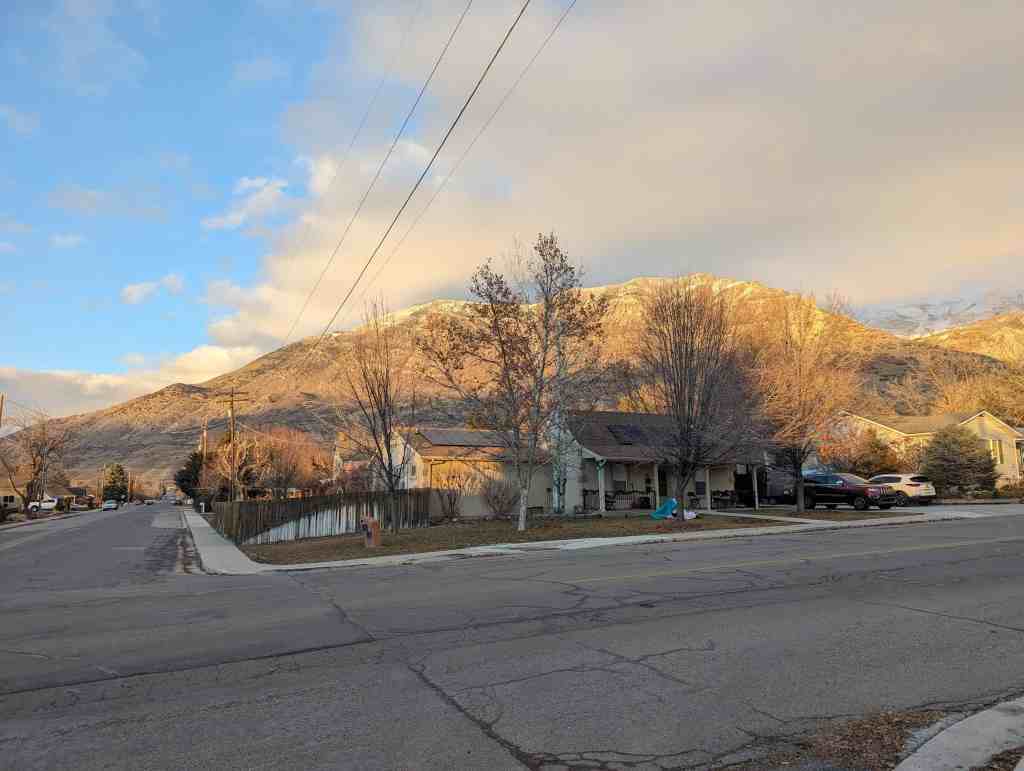
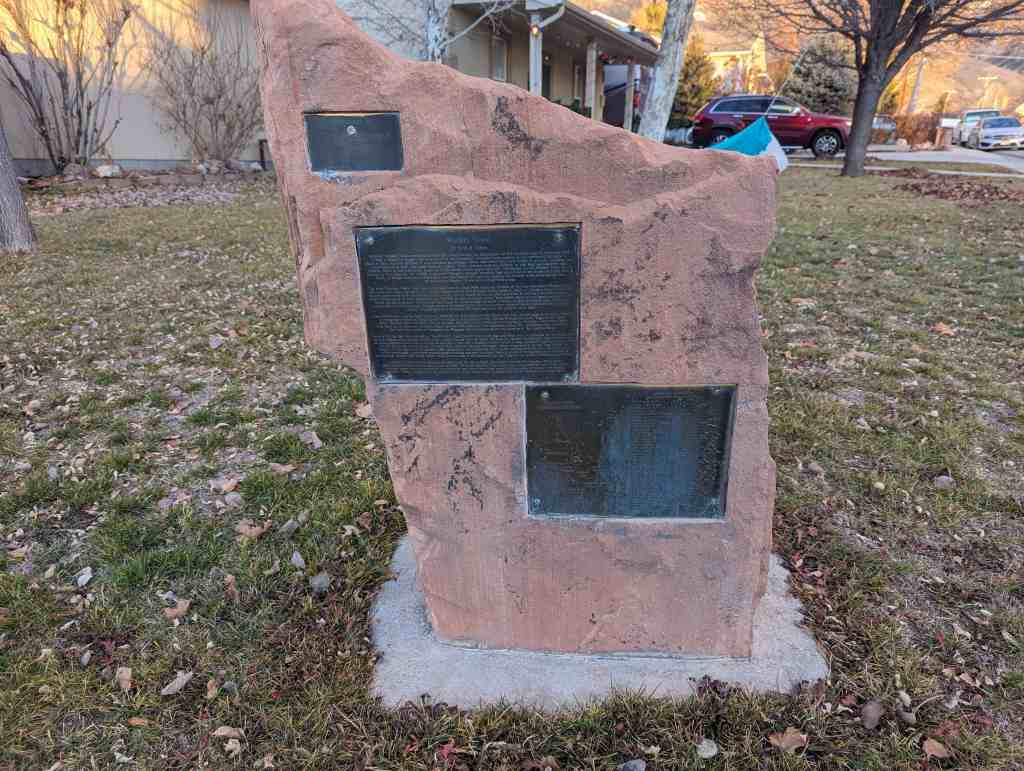
This historic marker is located at 511 East 500 North in Pleasant Grove, Utah
Related: