Tags
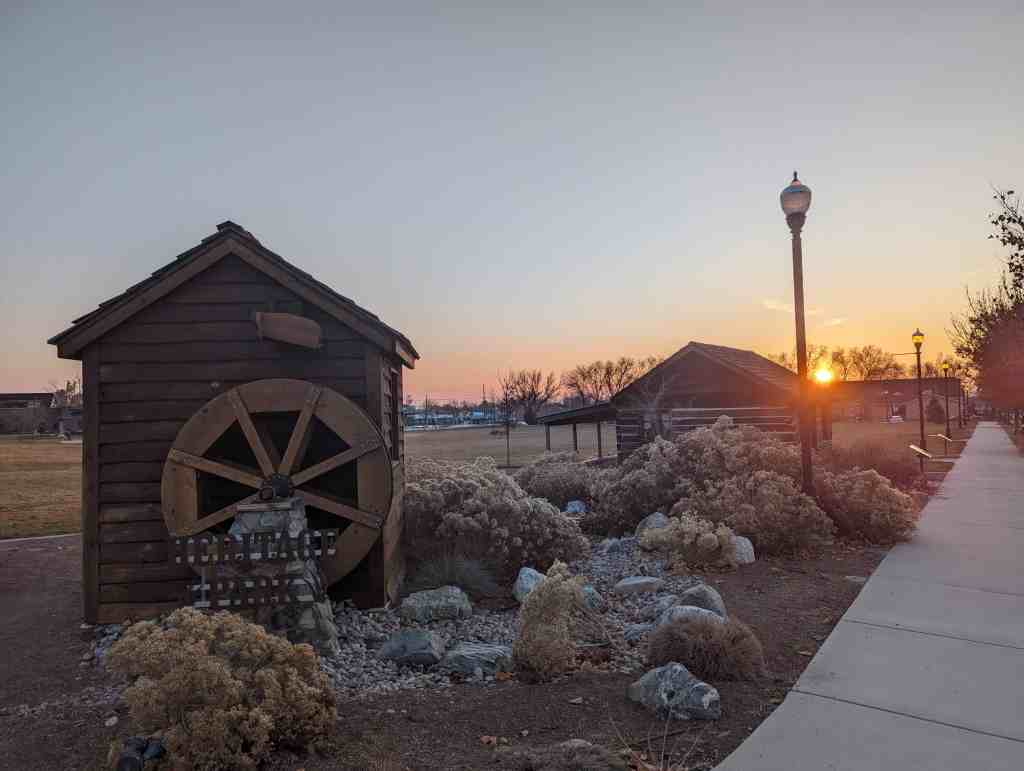
Heritage Park at 250 North Fairfield Road in Kaysville, Utah
Related:
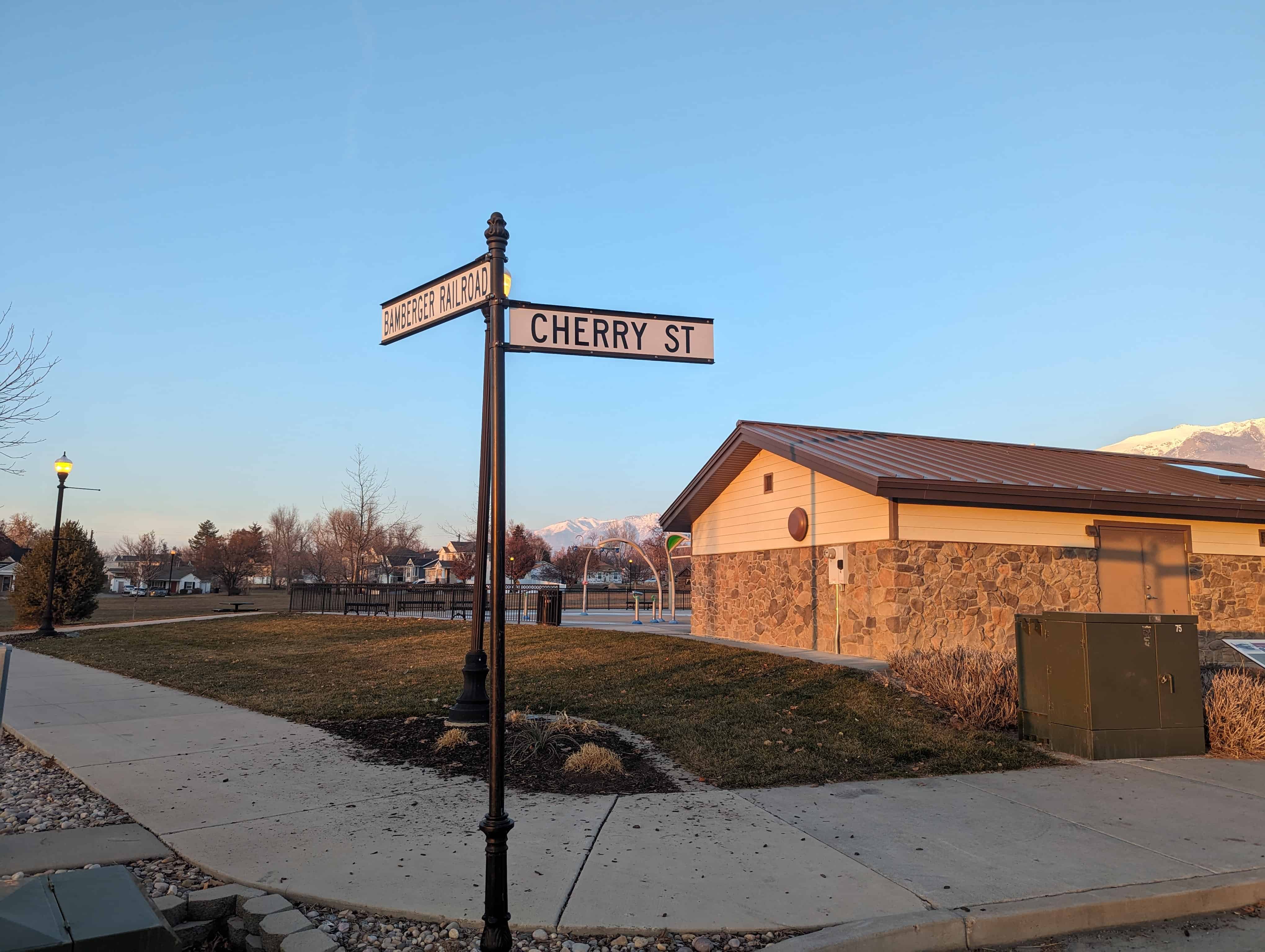
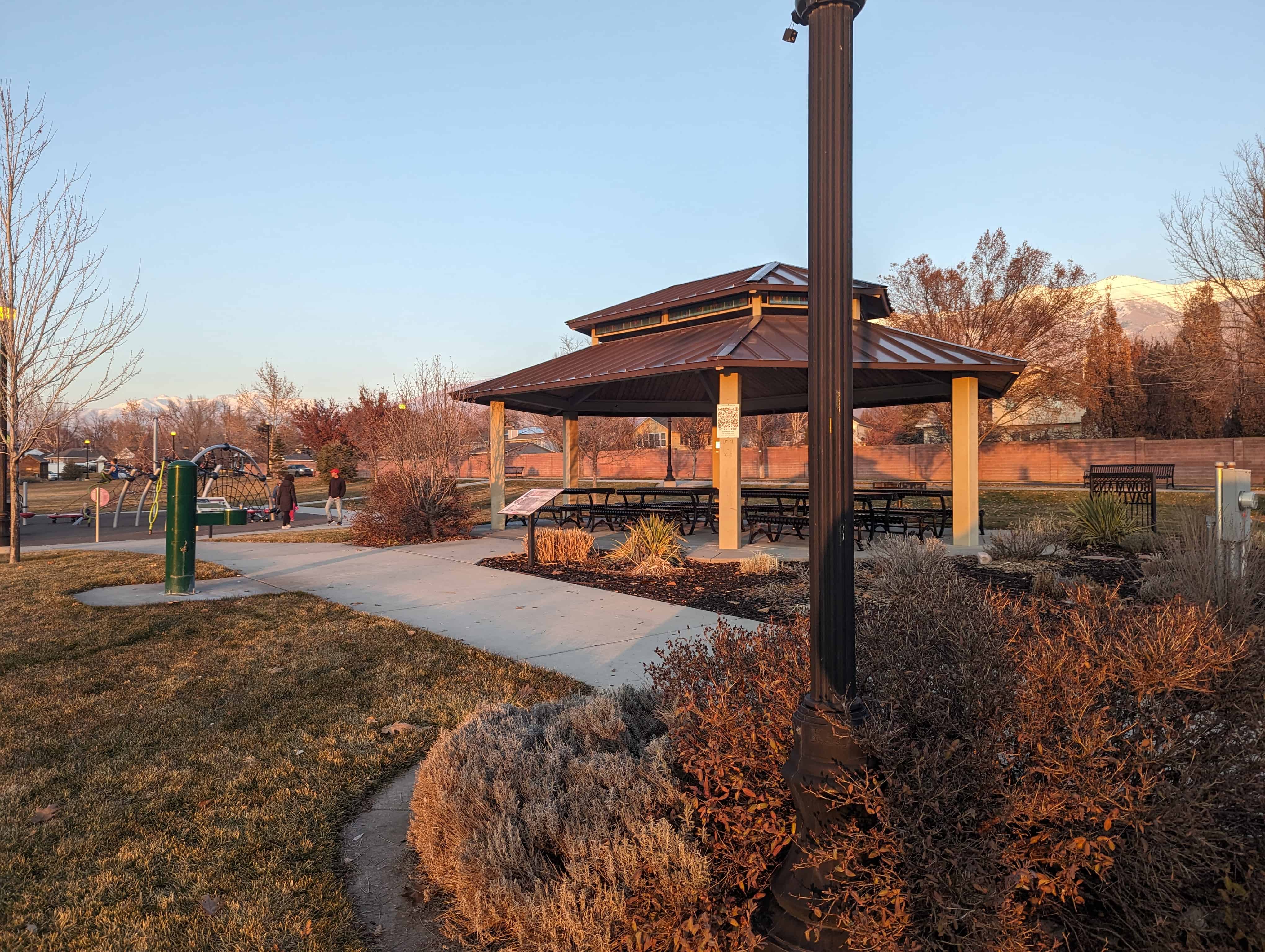
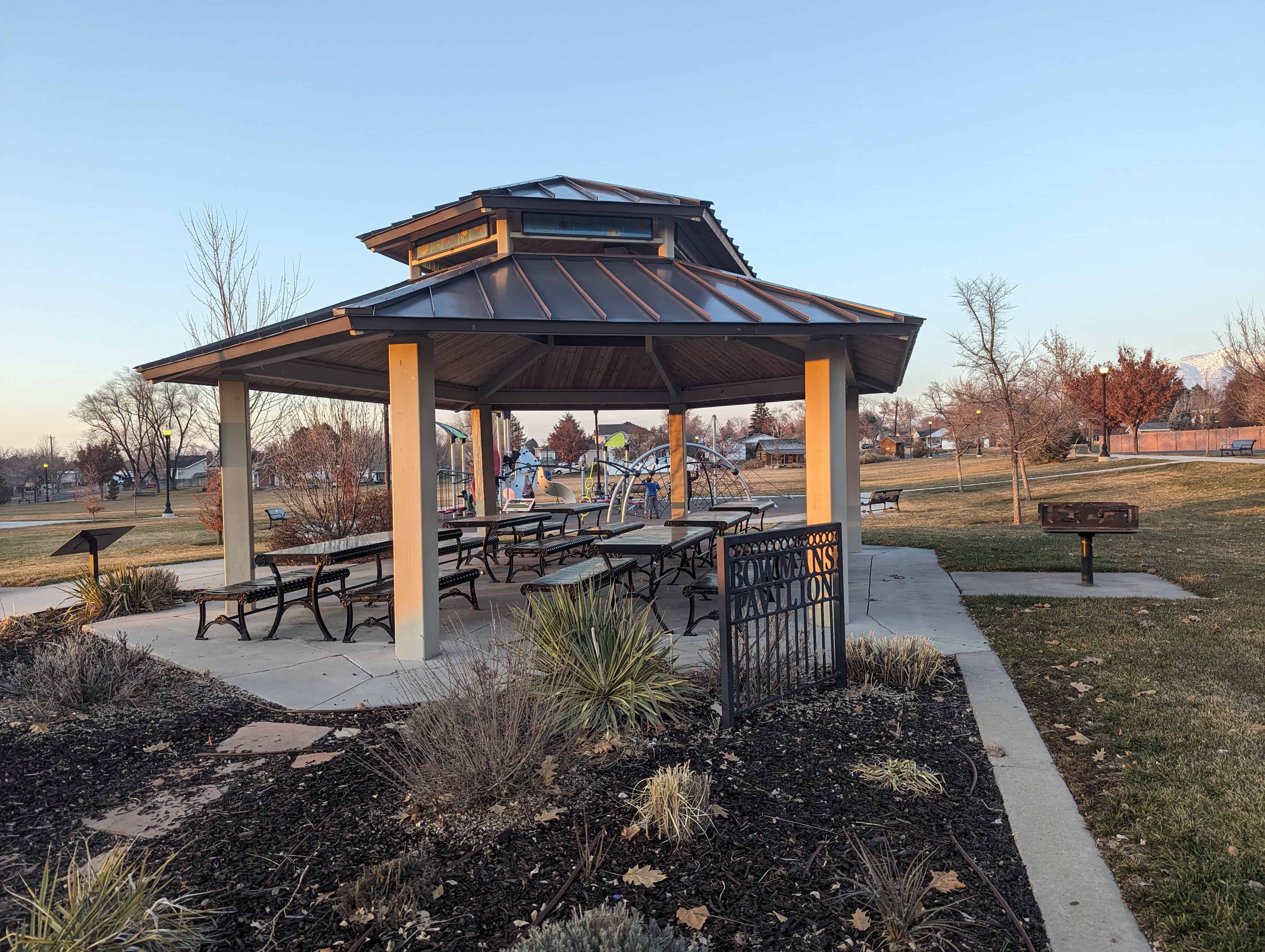

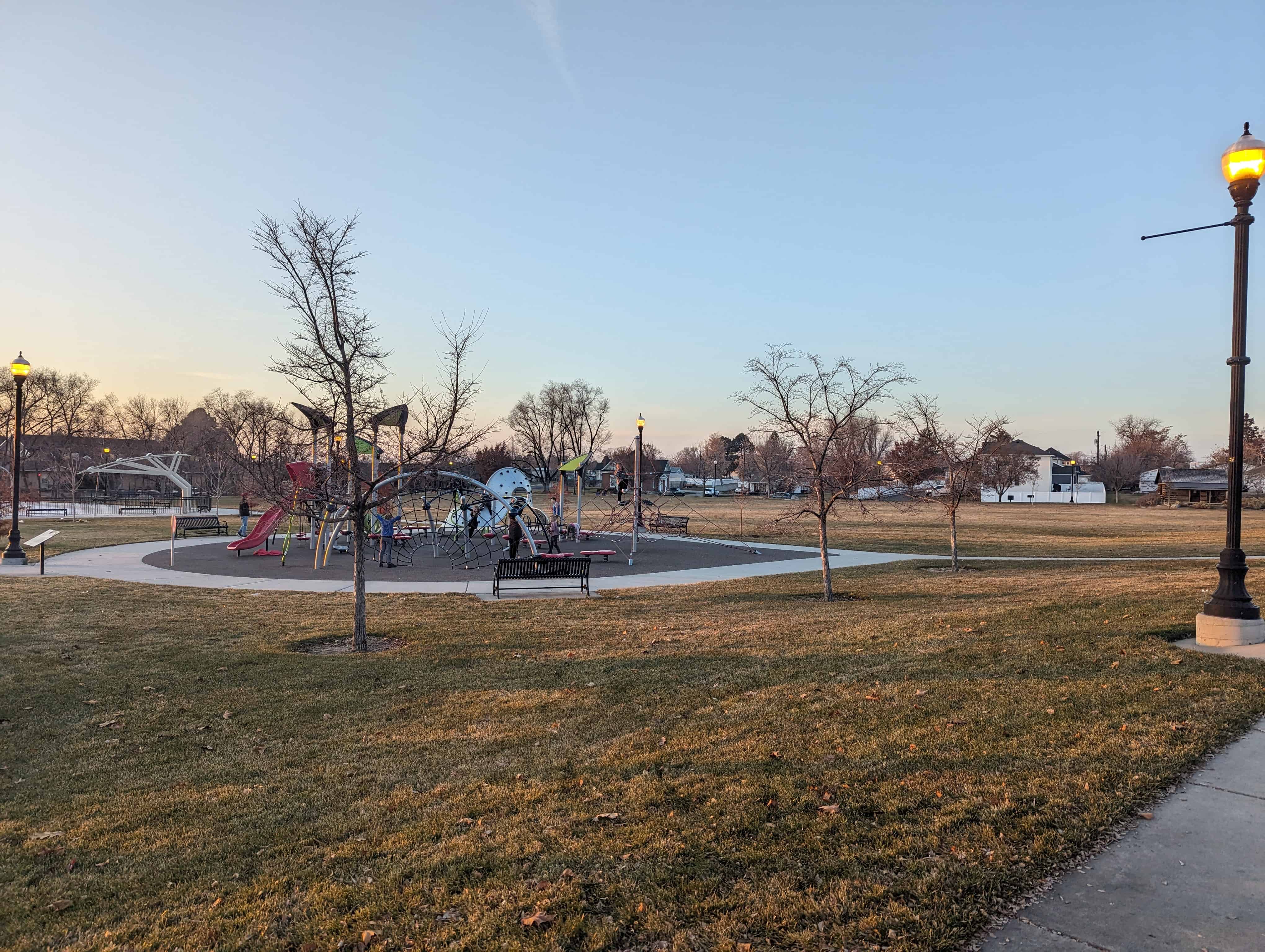
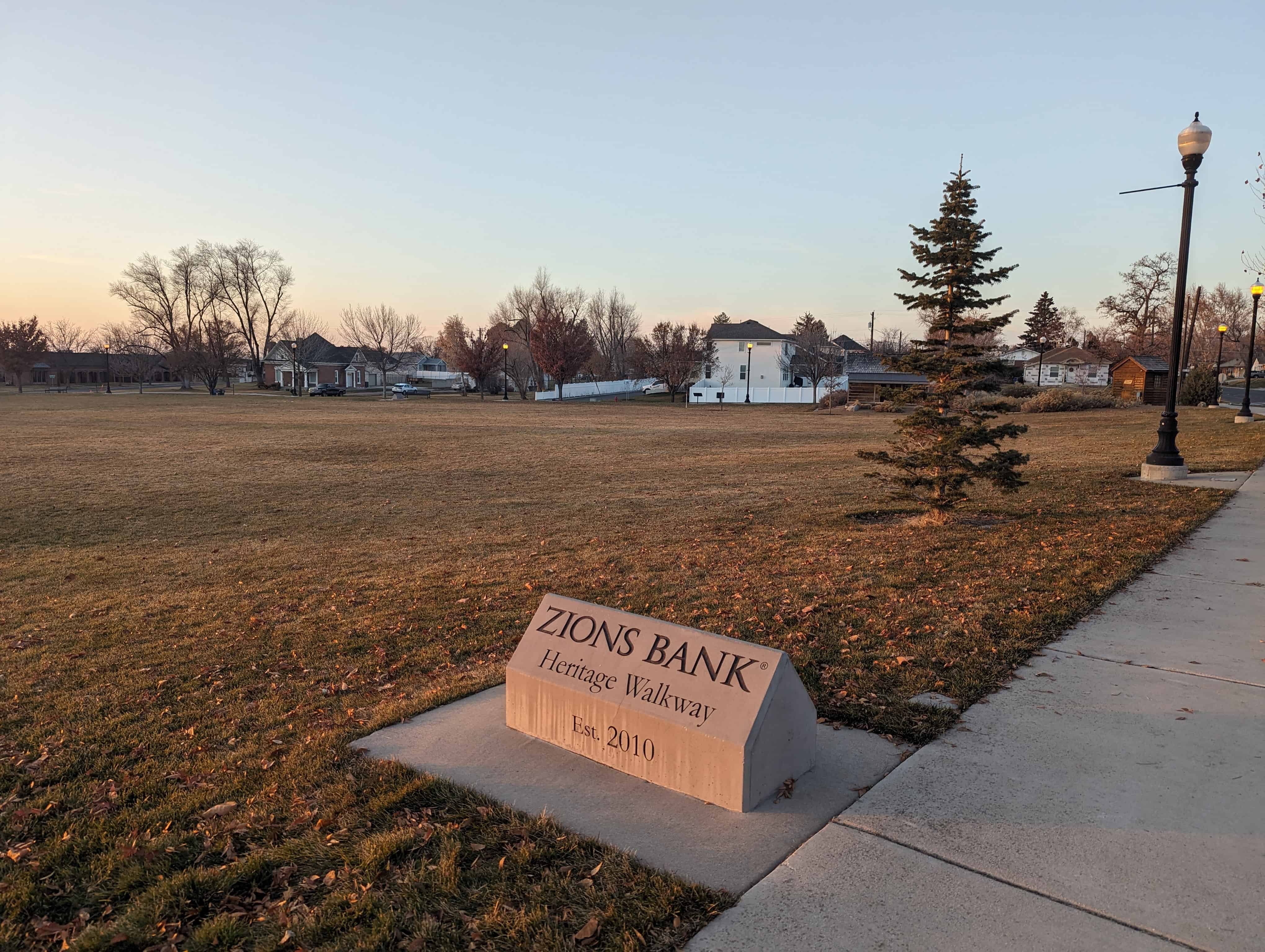
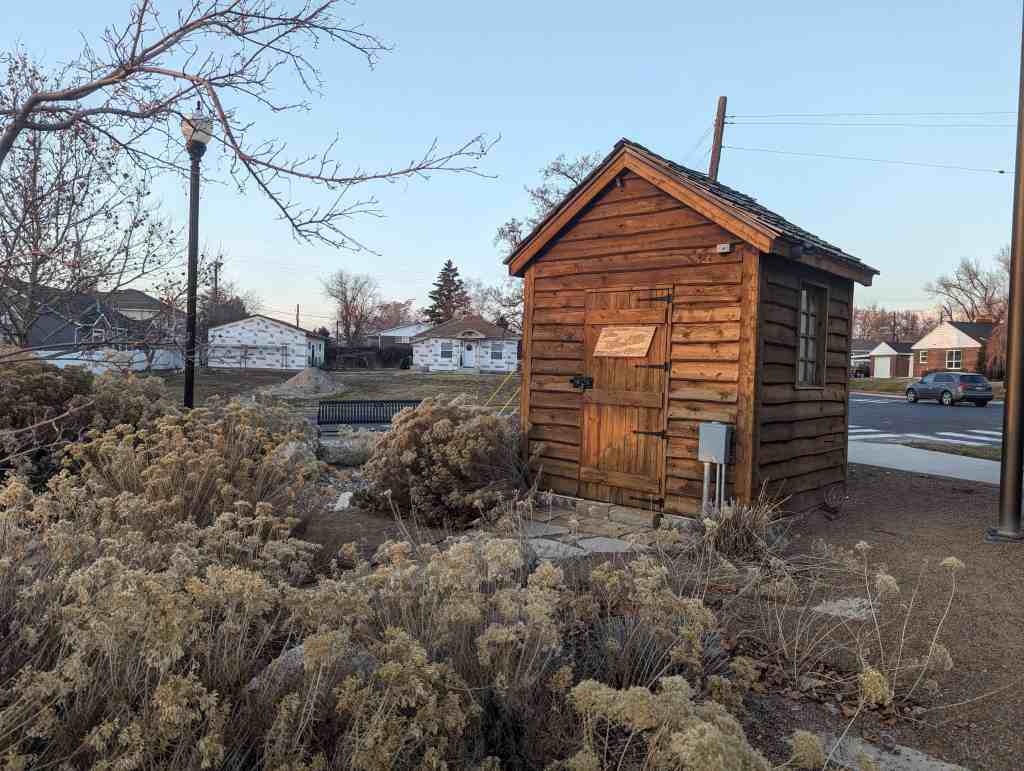

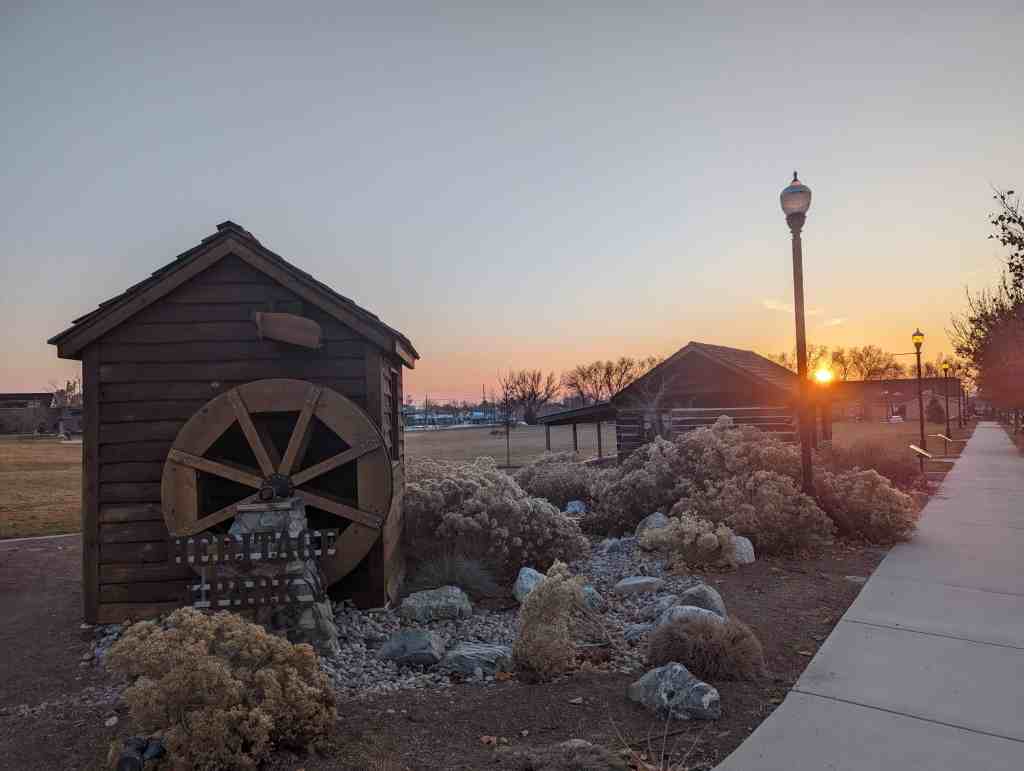
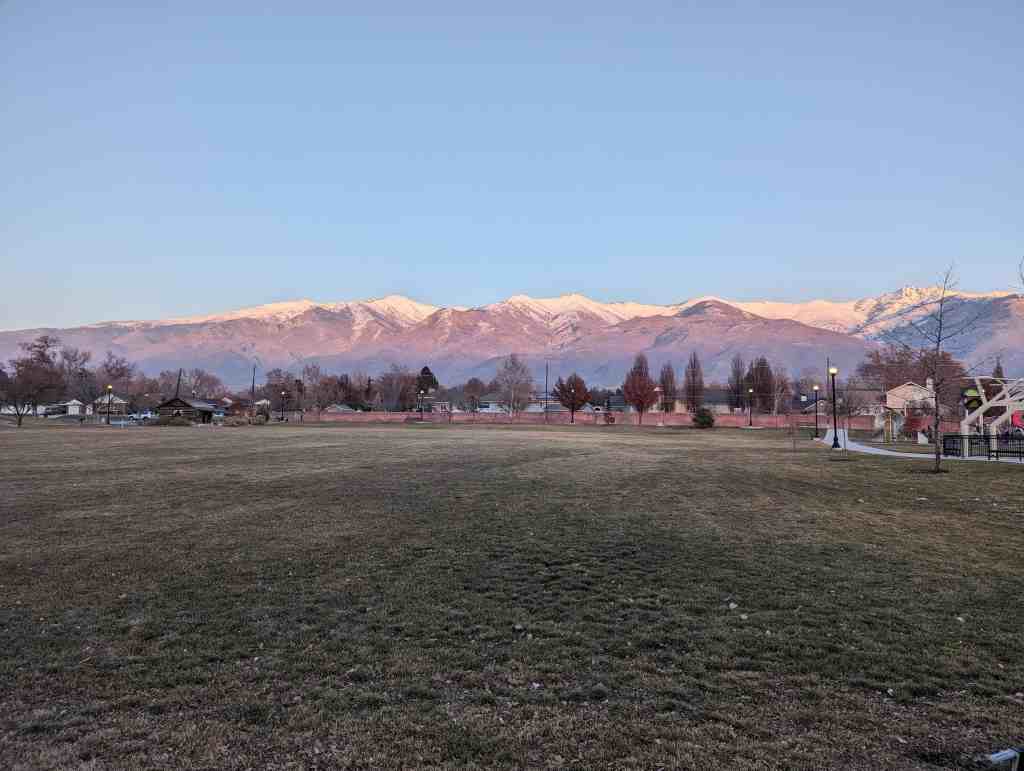
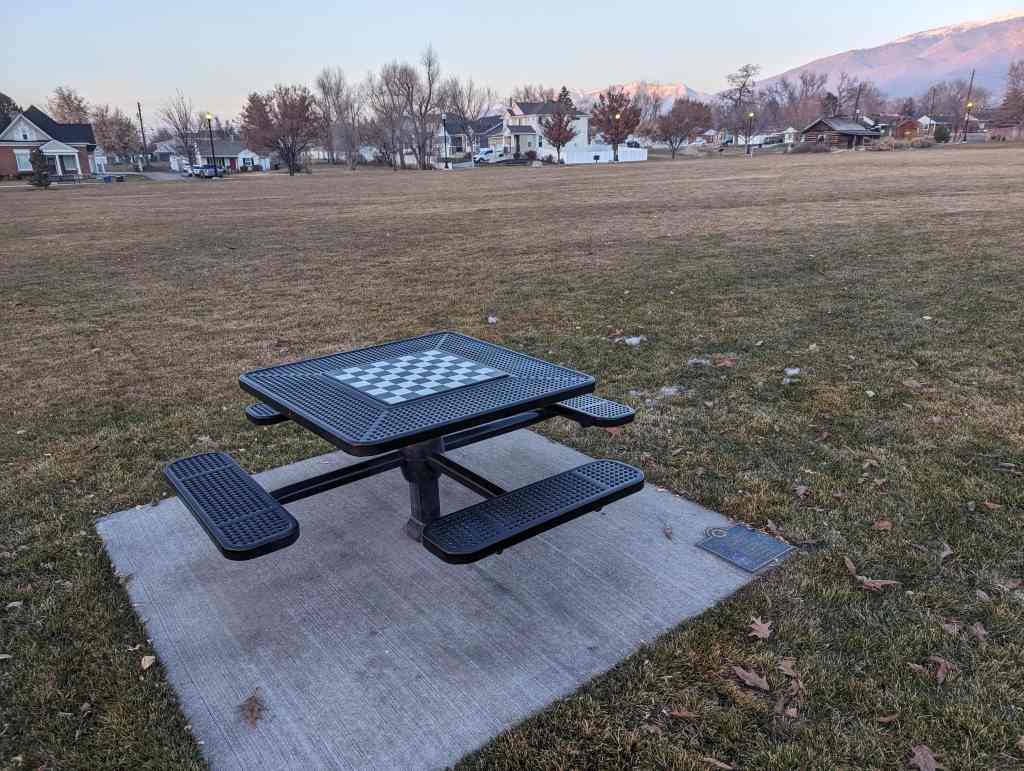
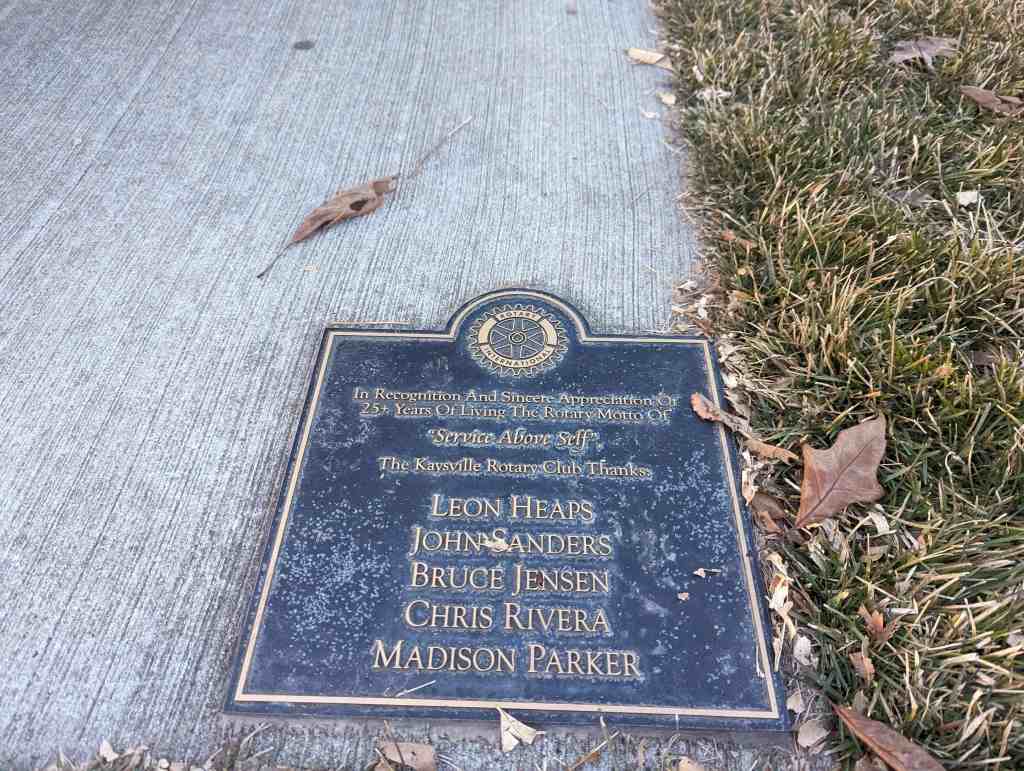
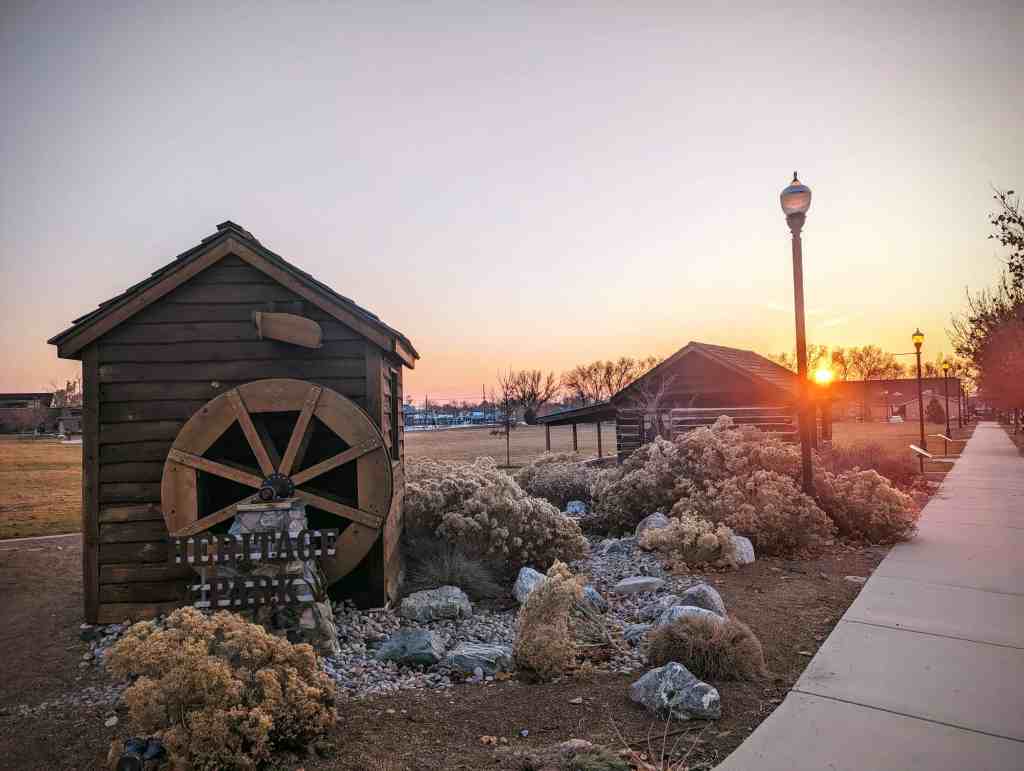
There are historic cabins, a playground, plaques and monuments about local history and more in this park.
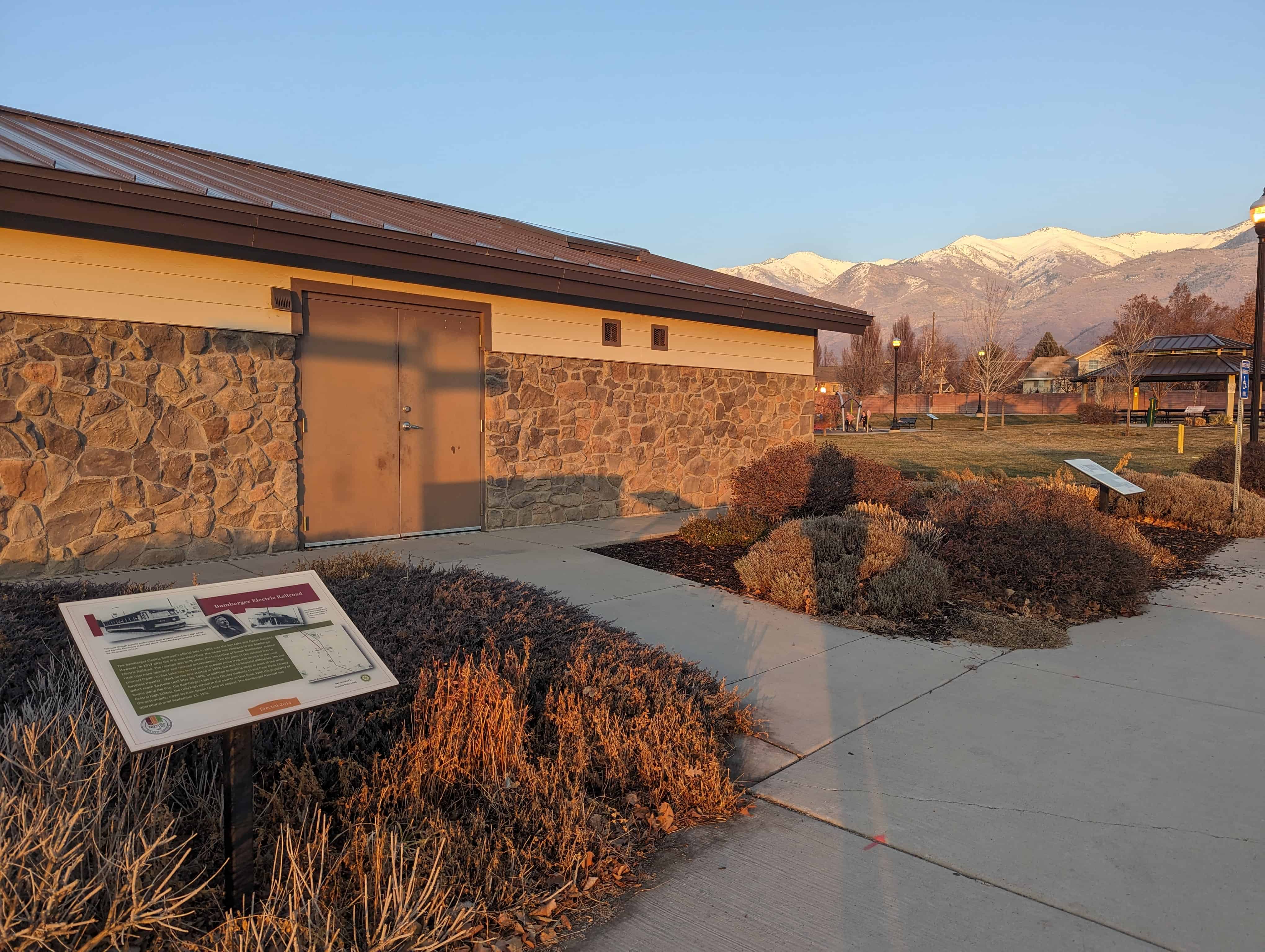
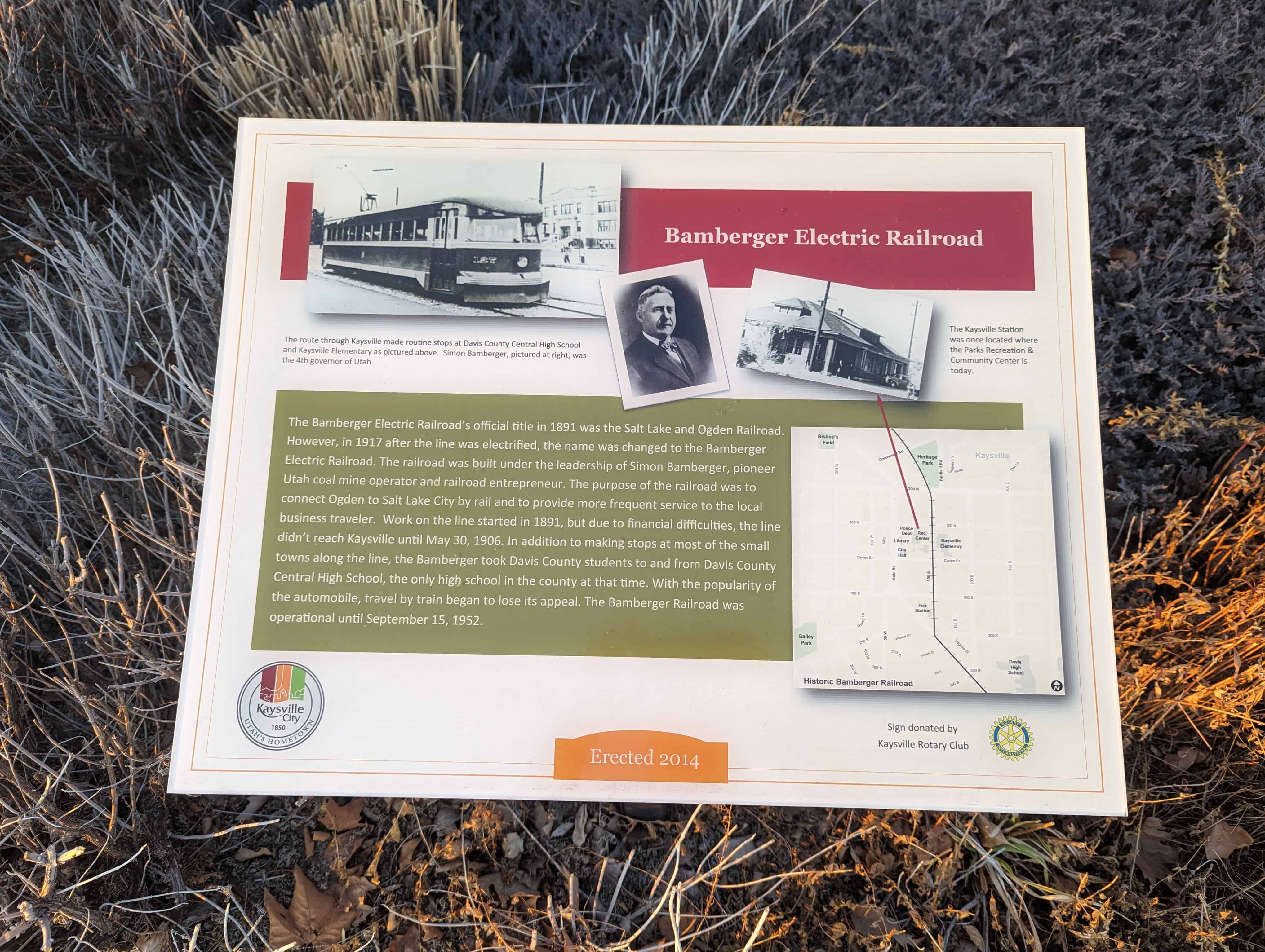
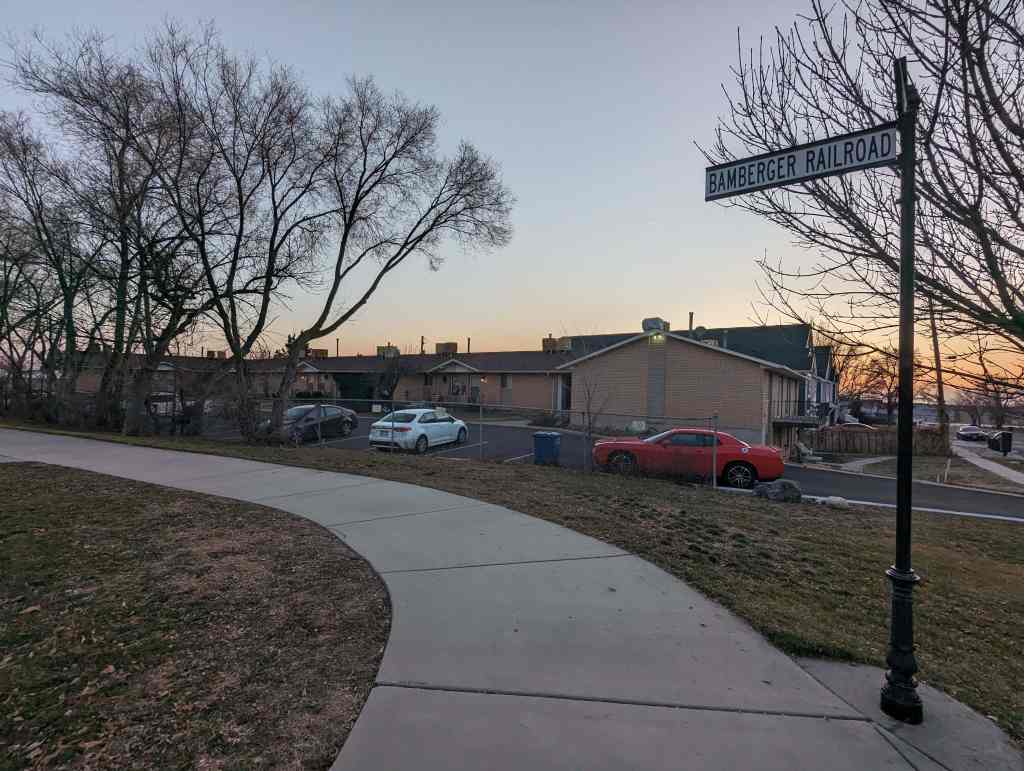
Bamberger Electric Railroad
The Bamberger Electric Railroad’s official title in 1891 was the Salt Lake and Ogden Railroad. However, in 1917 after the line was electrified, the name was changed to the Bamberger Electric Railroad. The railroad was built under the leadership of Simon Bamberger, pioneer Utah coal mine operator and railroad entrepreneur. The purpose of the railroad was to connect Ogden to Salt Lake City by rail and to provide more frequent service to the local business traveler. Work on the line started in 1891, but due to financial difficulties, the line didn’t reach Kaysville until May 30, 1906. In addition to making stops at most of the small towns along the line, the Bamberger took Davis County students to and from Davis County Central High School, the only high school in the county at that time. With the popularity of the automobile, travel by train began to lose its appeal. The Bamberger Railroad was operational until September 15, 1952.
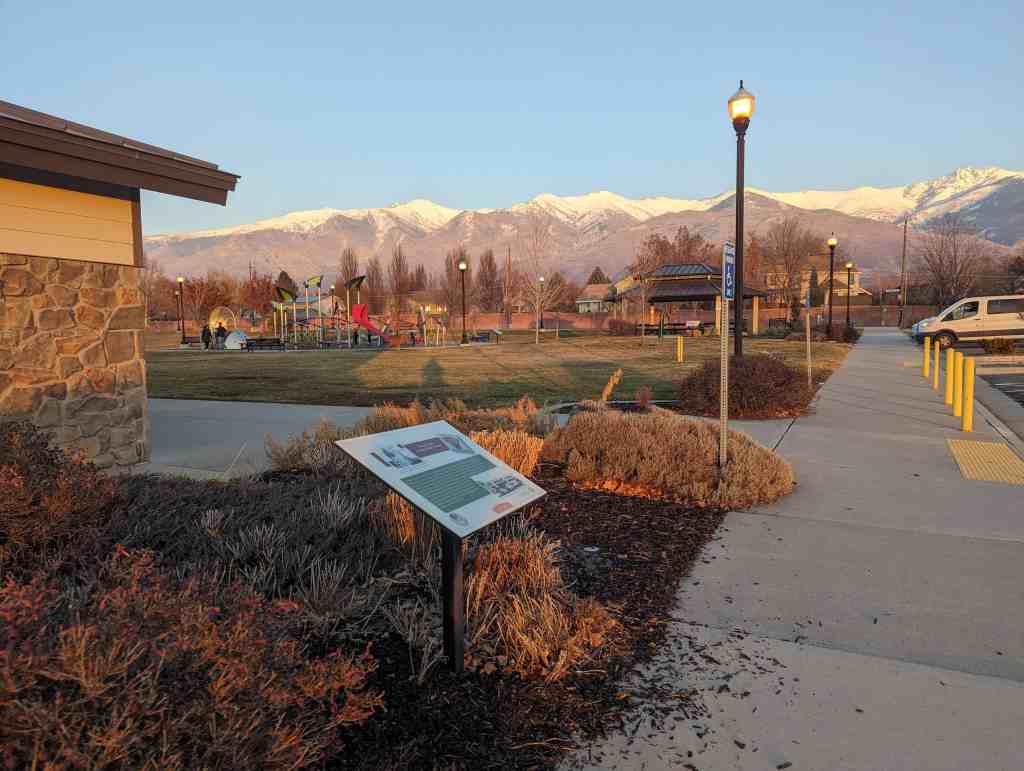
Clover Club Potato Chip Factory
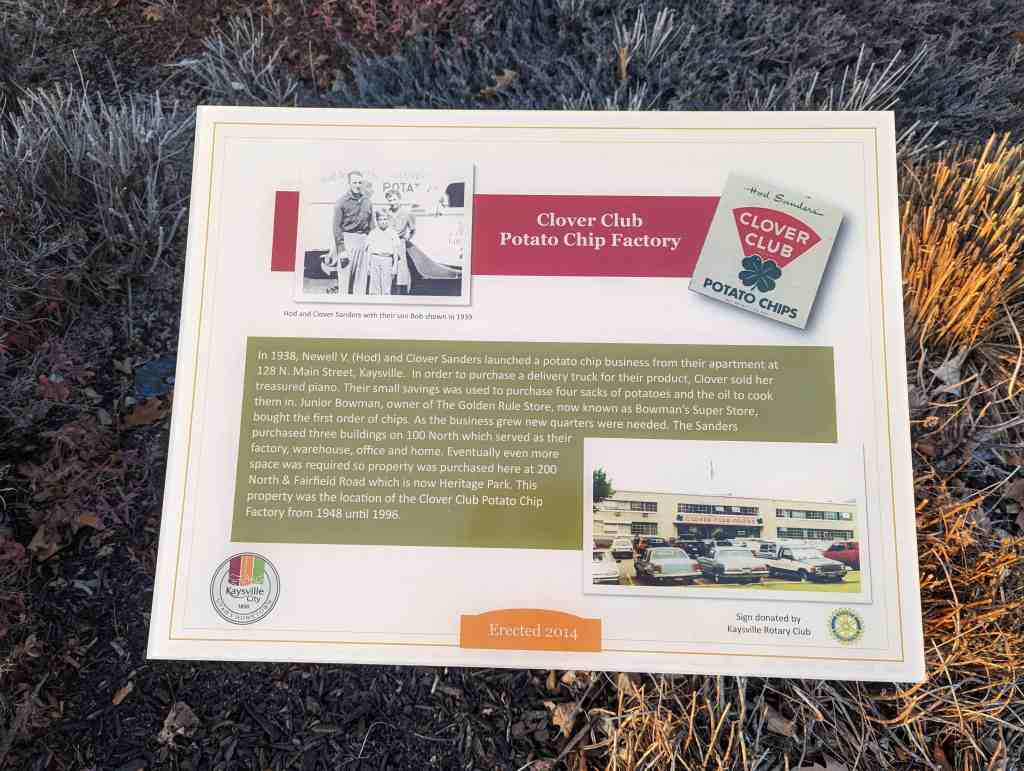
In 1938, Newell V. (Hod) and Clover Sanders launched a potato chip business from their apartment at 128 N. Main Street, Kaysville. In order to purchase a delivery truck for their product, Clover sold her treasured piano. Their small savings was used to purchase four sacks of potatoes and the oil to cook them in. Junior Bowman, owner of The Golden Rule Store, now known as Bowman’s Super Store, bought the first order of chips. As the business grew new quarters were needed. The Sanders purchased three buildings on 100 North which served as their factory, warehouse, office and home. Eventually even more space was required so property was purchased here at 200 North & Fairfield Road which is now Heritage Park. This property was the location of the Clover Club Potato Chip Factory from 1948 until 1996.
The Kindness of the Anonymous Donor
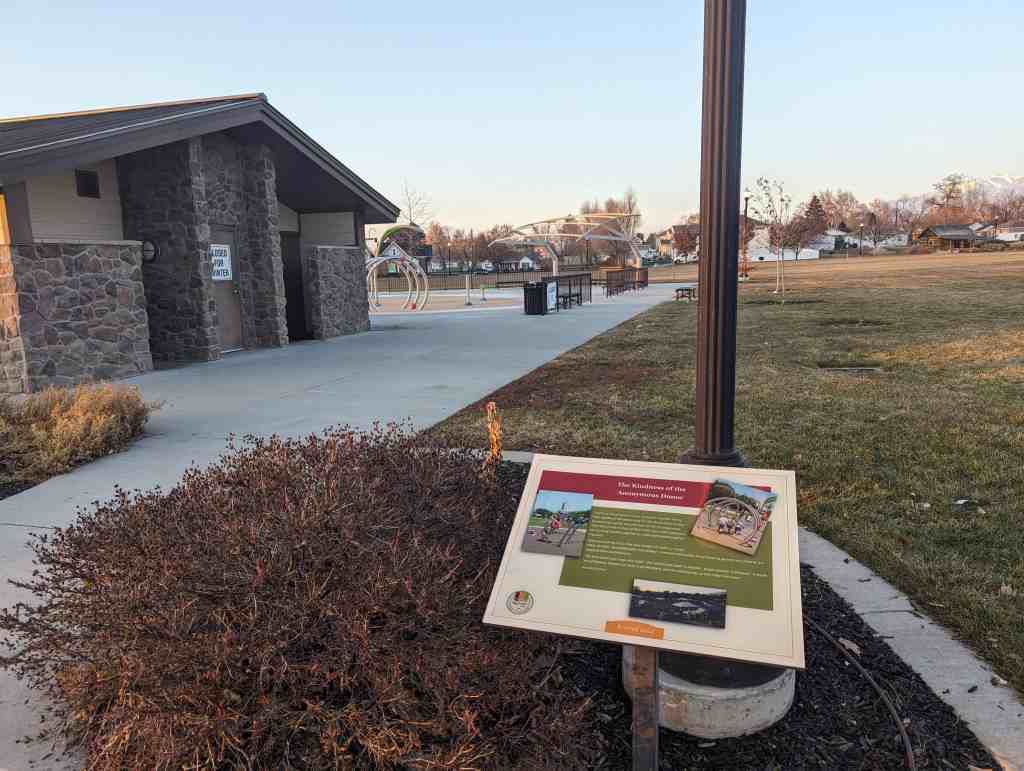
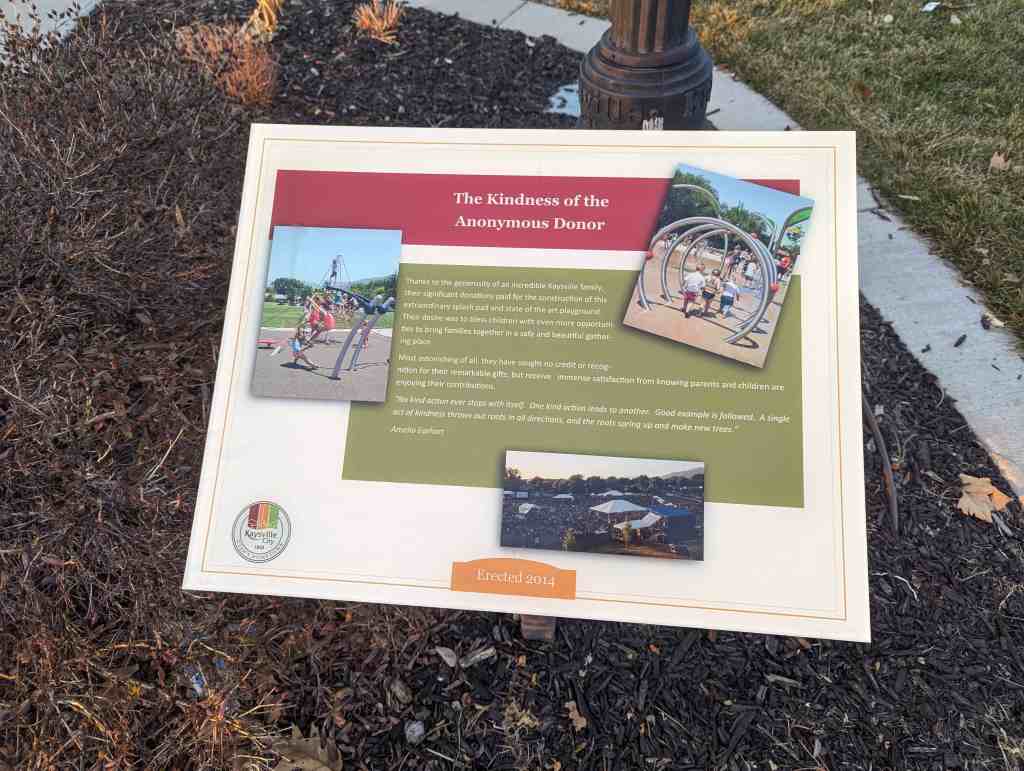
Thanks to the generosity of an incredible Kaysville family, their significant donations paid for the construction of this extraordinary splash pad and state of the art playground. Their desire was to bless children with even more opportunities to bring families together in a safe and beautiful gathering place.
Most astonishing of all, they have sought no credit or recognition for their remarkable gifts, but receive immense satisfaction from knowing parents and children are enjoying their contributions.
“No kind action ever stops with itself. One kind action leads to another. Good example is followed. A single act of kindness throws out roots in all directions, and the roots spring up and make new trees.” – Amelia Earhart
Bowman’s Market
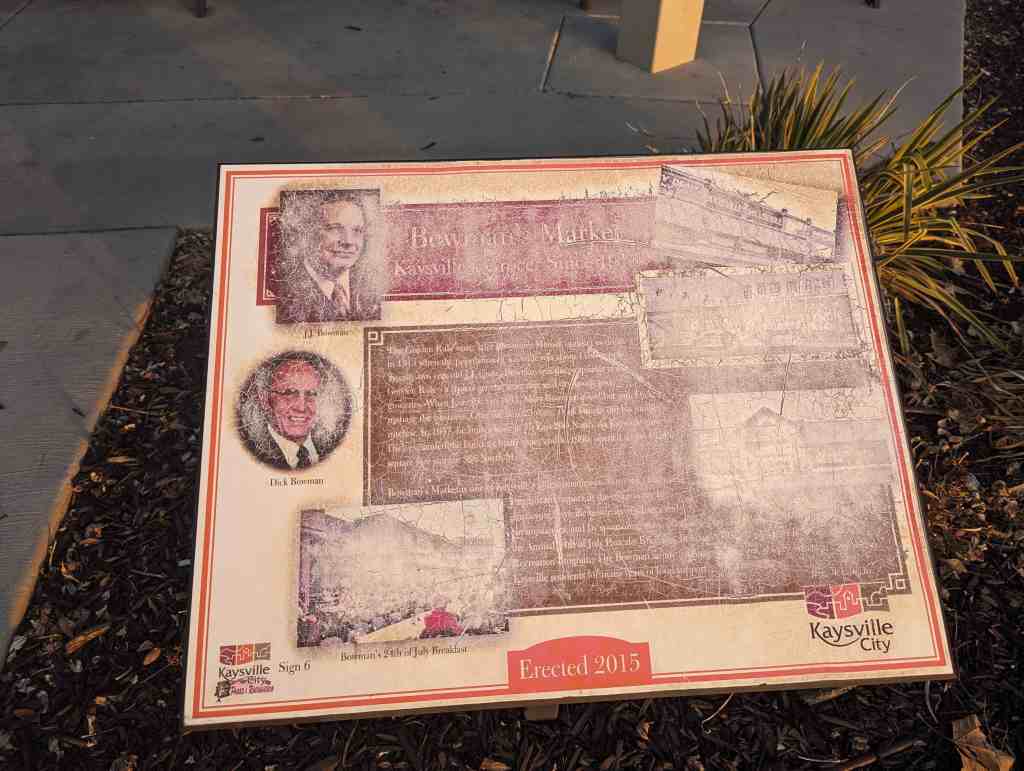
Kaysville’s Grocer Since 1913
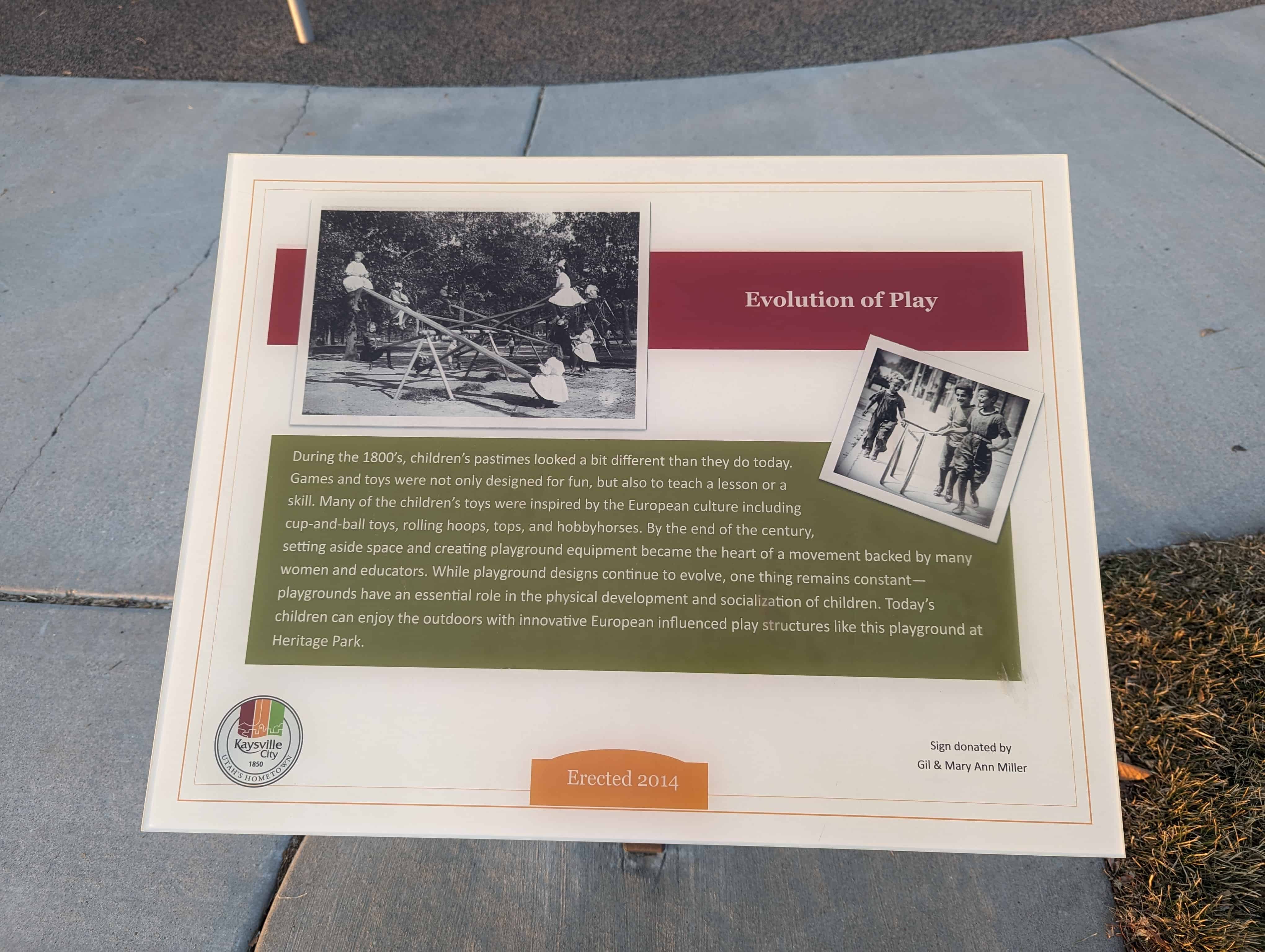
Evolution of Play
During the 1800’s, children’s pastimes looked a bit different than they do today. Games and toys were not only designed for fun, but also to teach a lesson or a skill. Many of the children’s toys were inspired by the European culture including cup-and-ball toys, rolling hoops, tops, and hobbyhorses. By the end of the century, setting aside space and creating playground equipment became the heart of a movement backed by many women and educators. While playground designs continue to evolve, one thing remains constant— playgrounds have an essential role in the physical development and socialization of children. Today’s children can enjoy the outdoors with innovative European influenced play structures like this playground at Heritage Park.
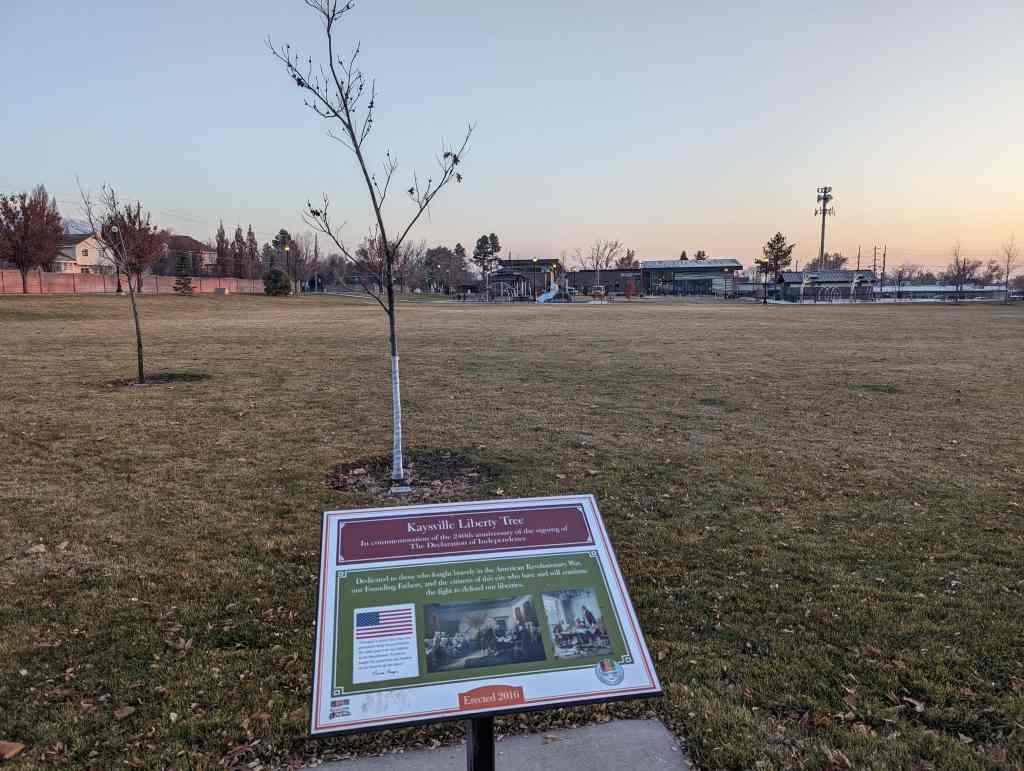
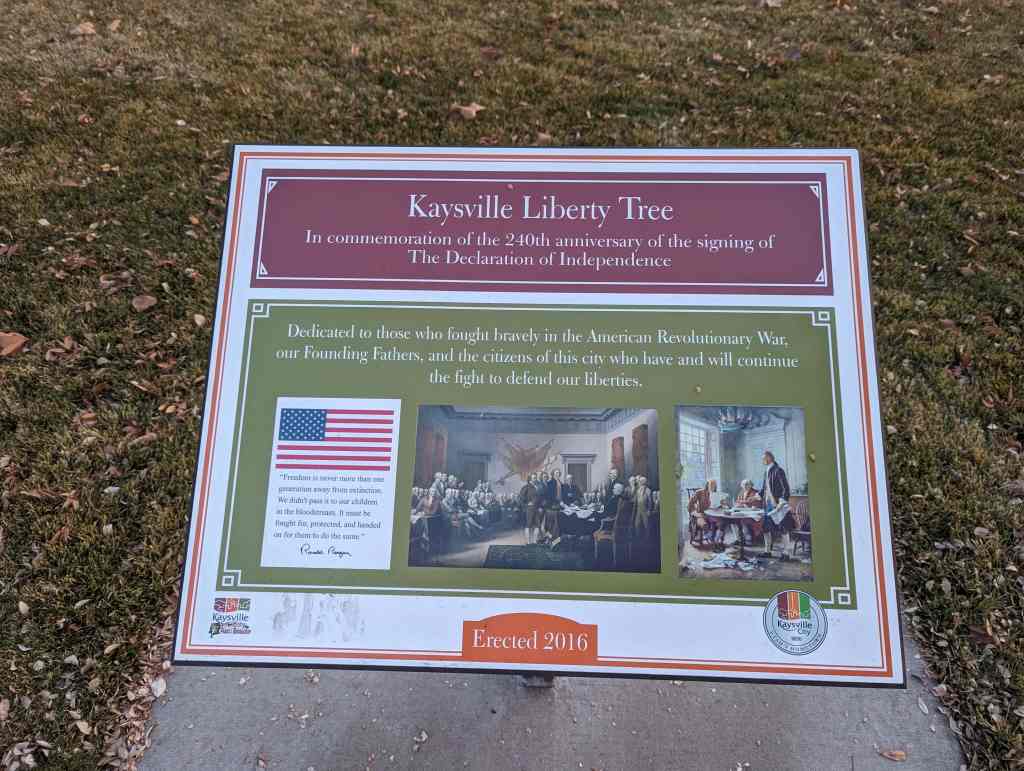
Kaysville Liberty Tree
In commemoration of the 240th anniversary of the signing of The Declaration of Independence.
Dedicated to those who fought bravely in the American Revolutionary War, our Founding Fathers, and the citizens of this city who have and will continue the fight to defend our liberties.
“Freedom is never more than one generation away from extinction. We didn’t pass it to our children in the bloodstream. It must be fought for, protected, and handed on for them to do the same.” – Ronald Reagan
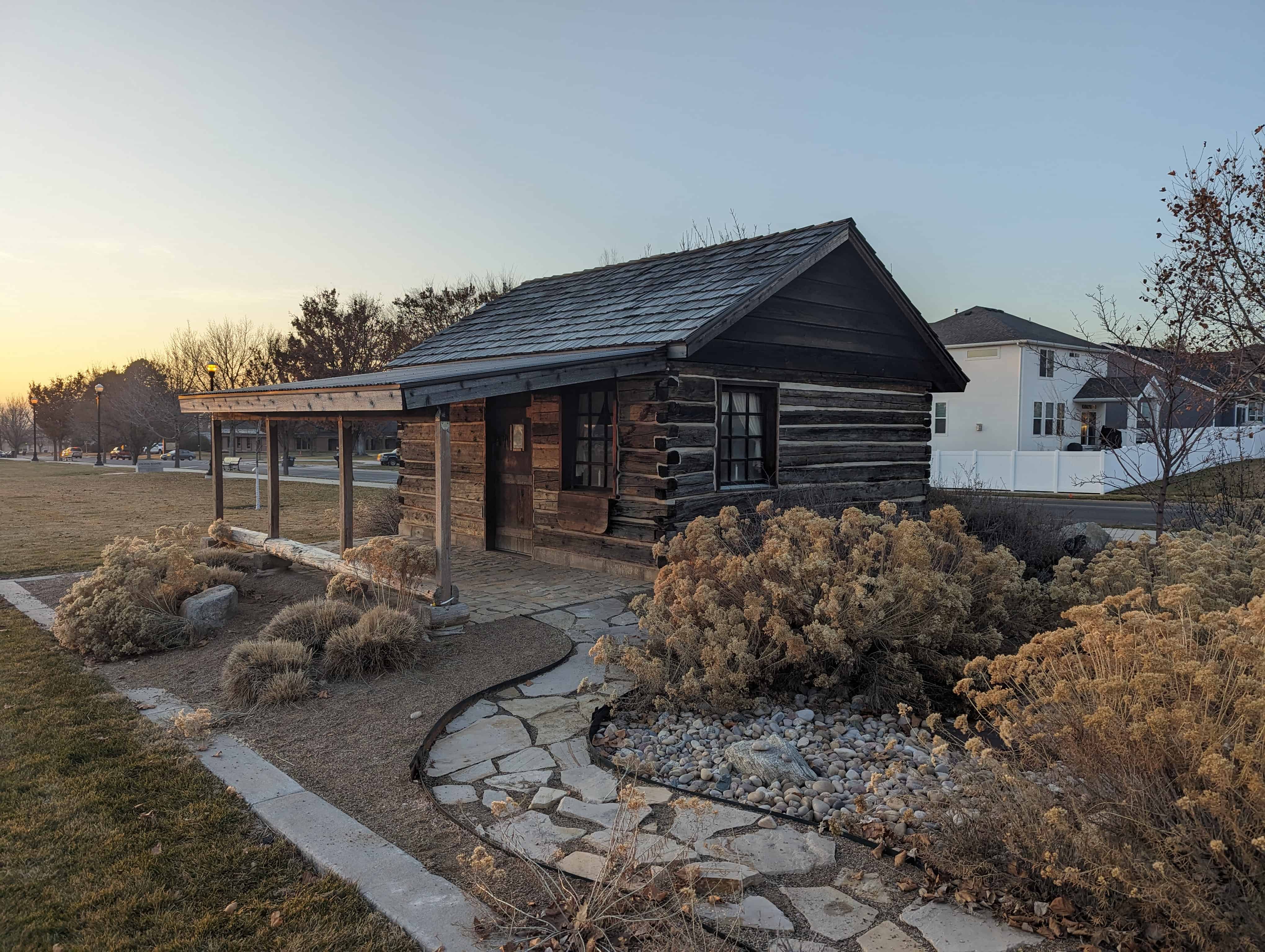
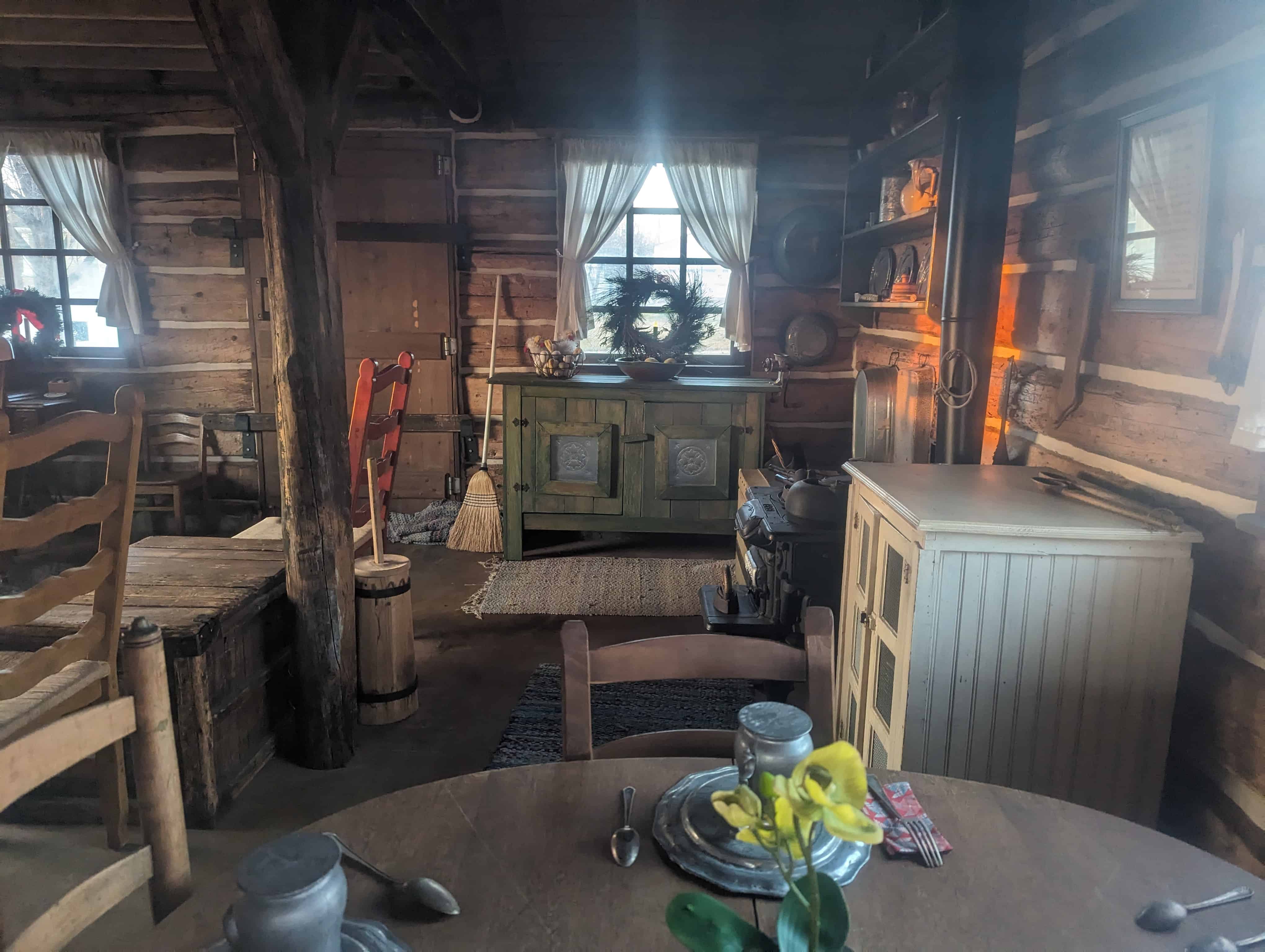
George Pilling Adams Cabin
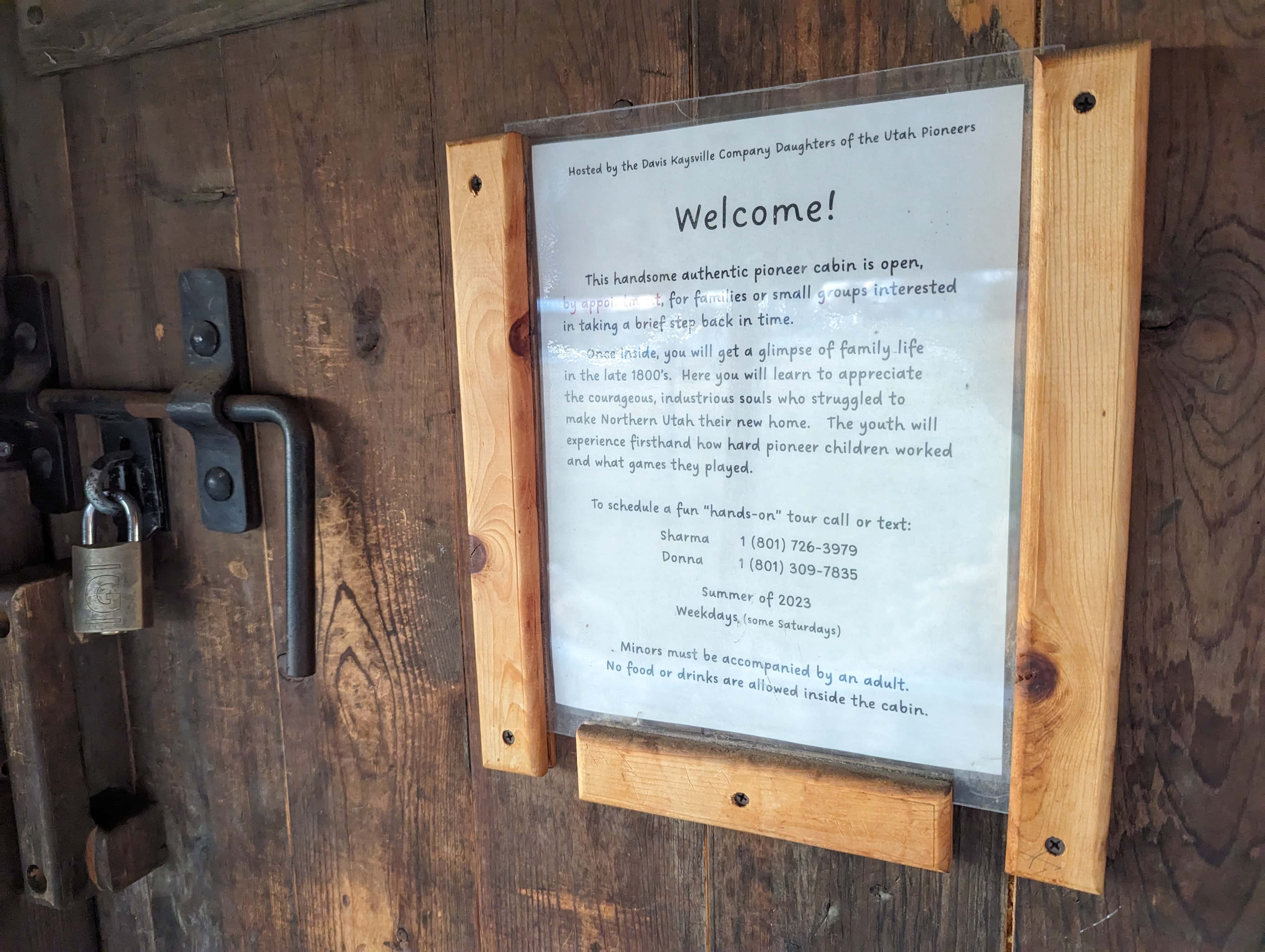
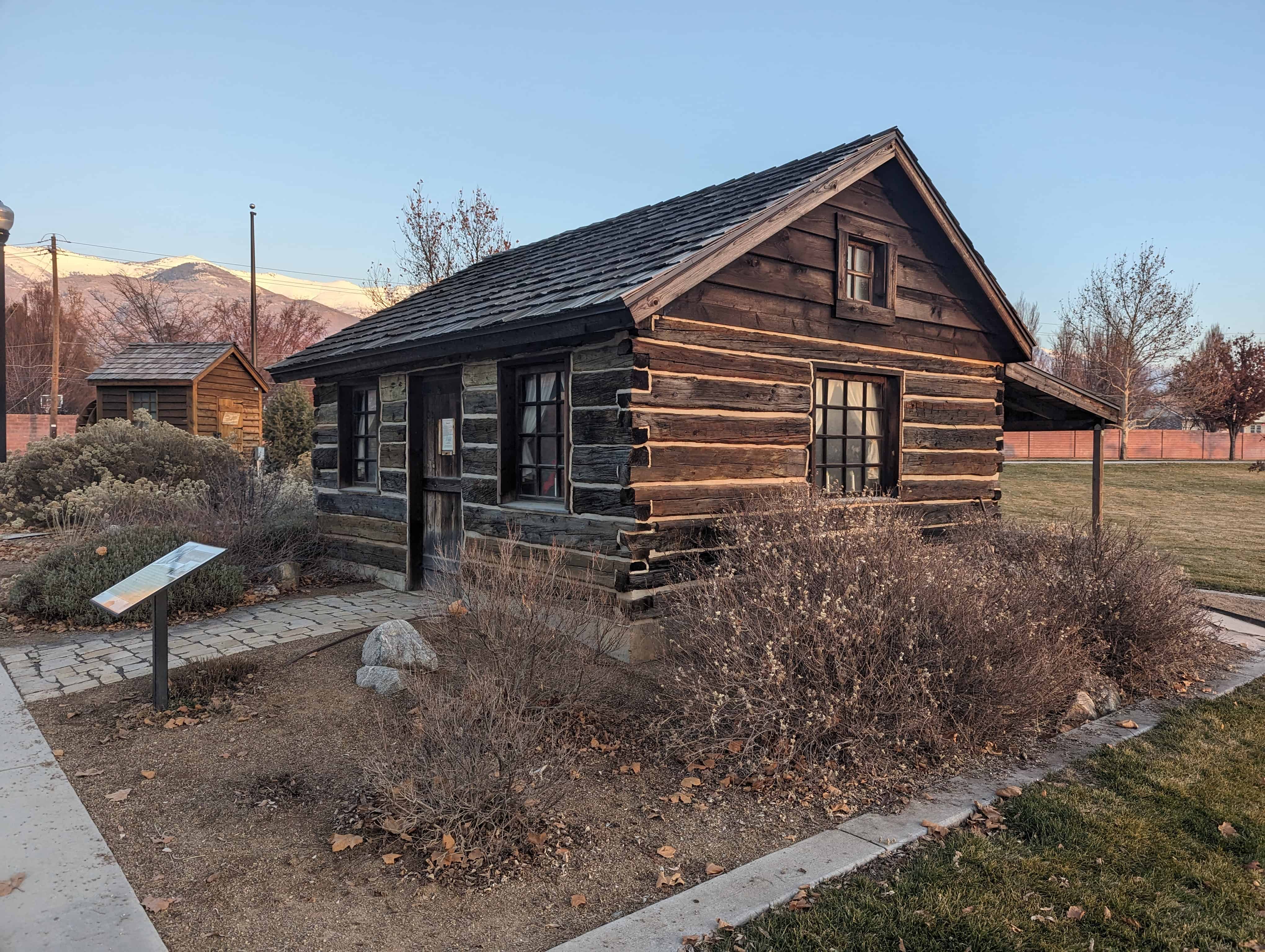
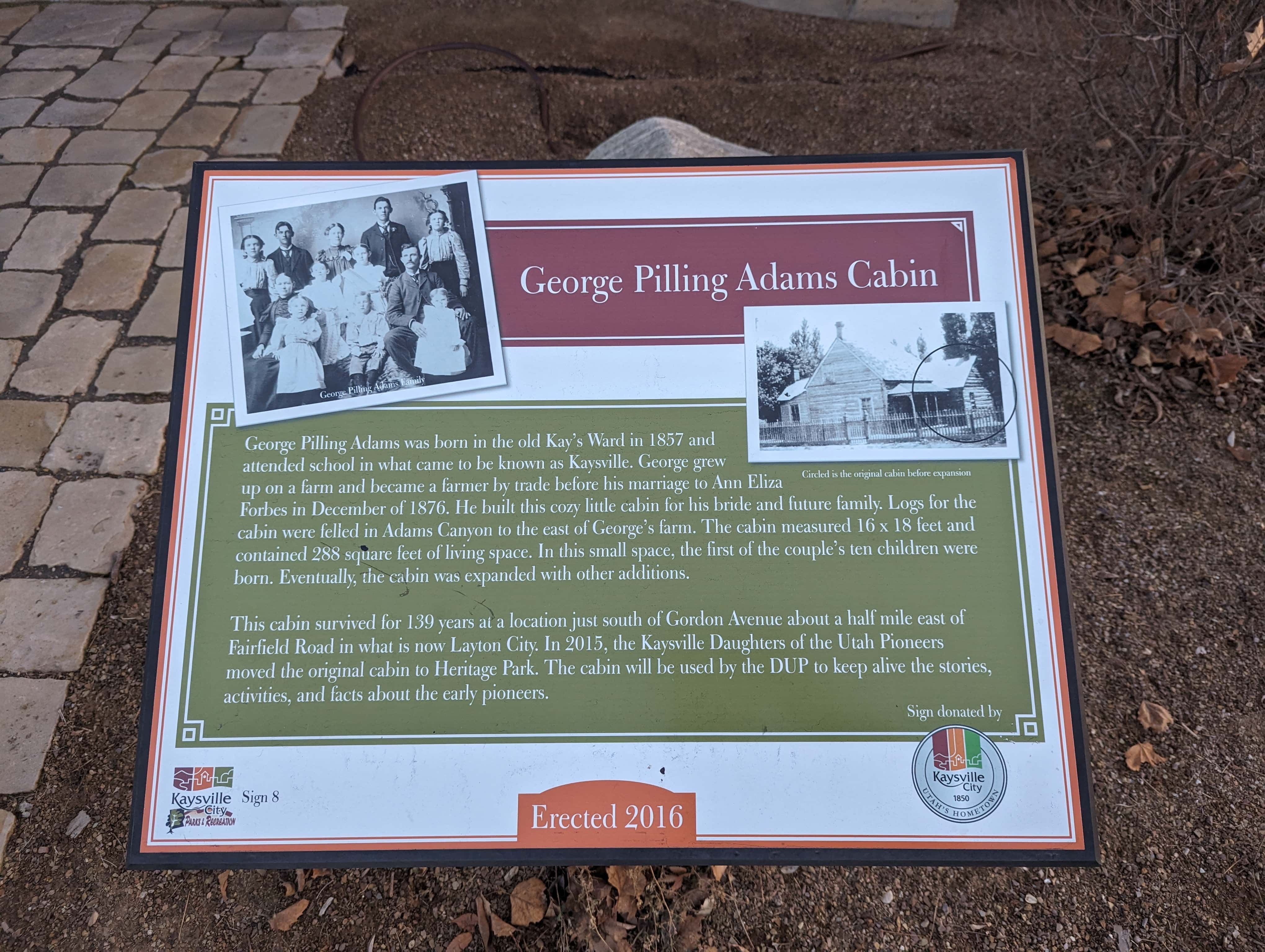
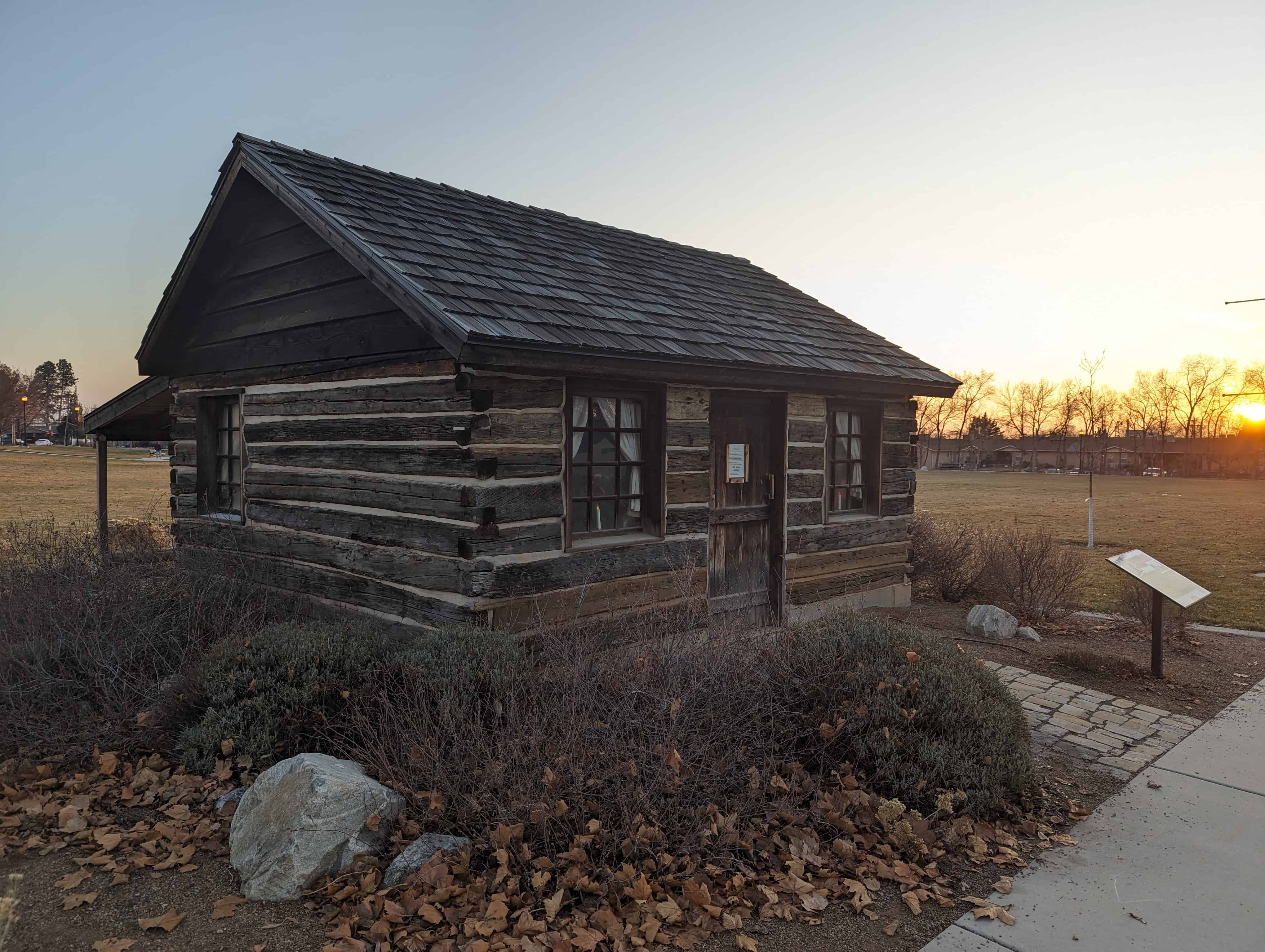
George Pilling Adams was born in the old Kay’s Ward in 1857 and attended school in what came to be known as Kaysville. George grew up on a farm and became a farmer by trade before his marriage to Ann Eliza Forbes in December of 1876. He built this cozy little cabin for his bride and future family. Logs for the cabin were felled in Adams Canyon to the east of George’s farm. The cabin measured 16 x 18 feet and contained 288 square feet of living space. In this small space, the first of the couple’s ten children were born. Eventually, the cabin was expanded with other additions.
This cabin survived for 139 years at a location just south of Gordon Avenue about a half mile east of Fairfield Road in what is now Layton City. In 2015, the Kaysville Daughters of the Utah Pioneers moved the original cabin to Heritage Park. The cabin will be used by the DUP to keep alive the stories, activities, and facts about the early pioneers.