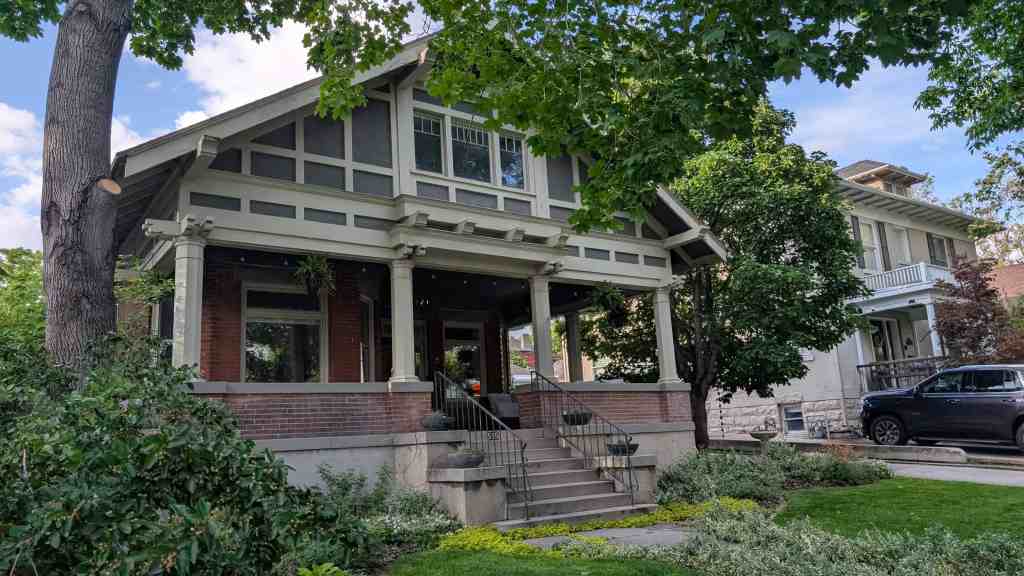
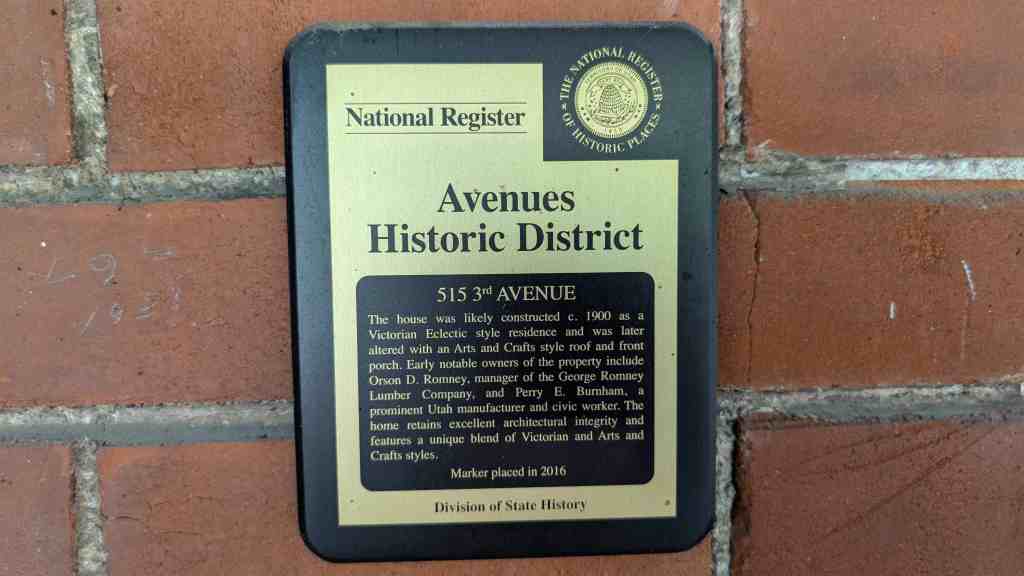
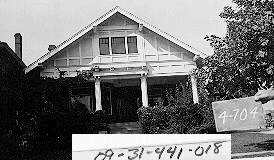
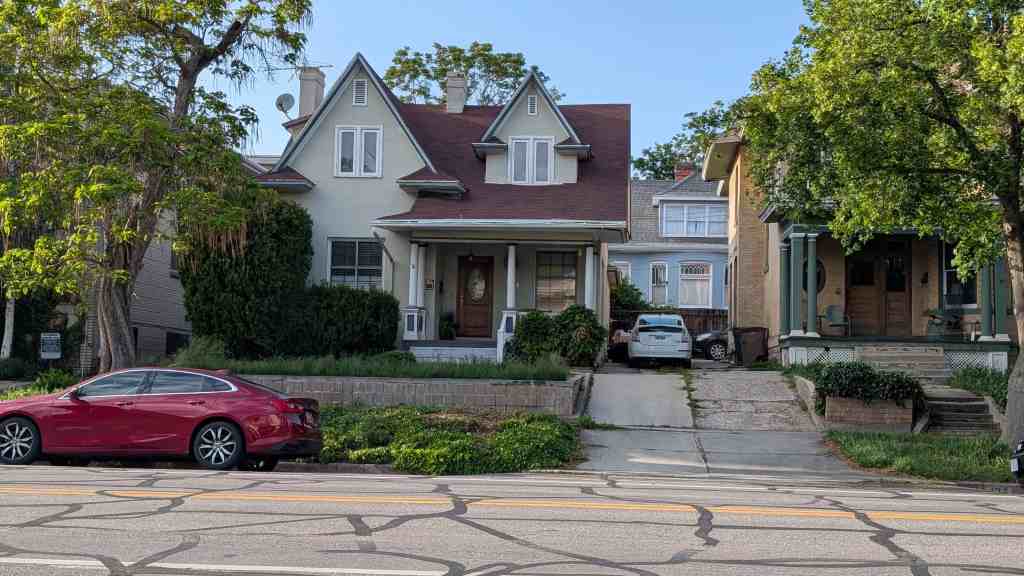
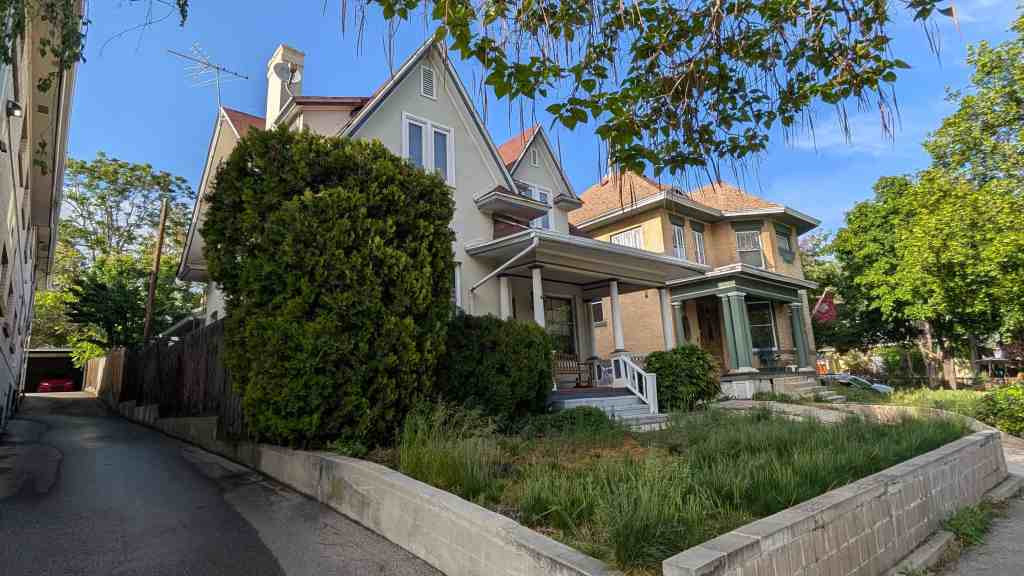
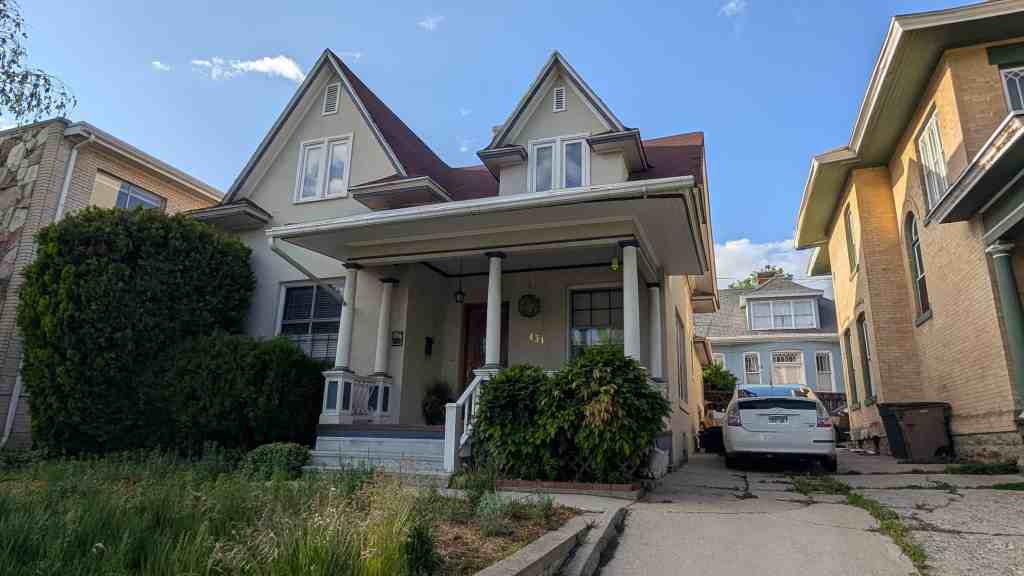
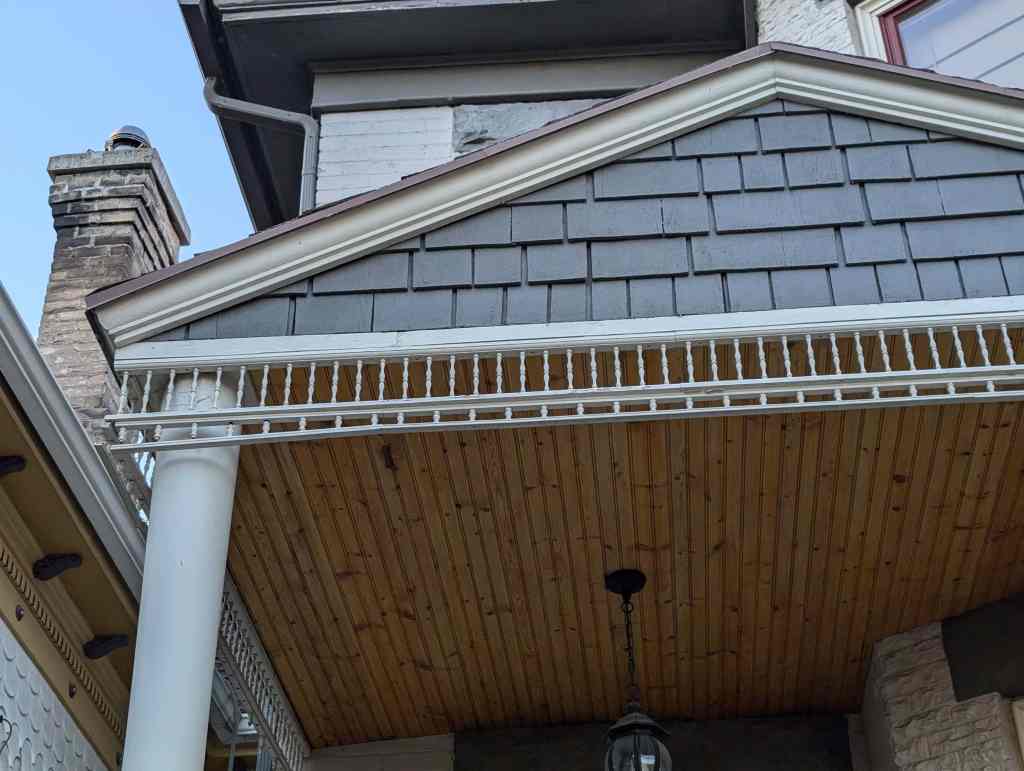
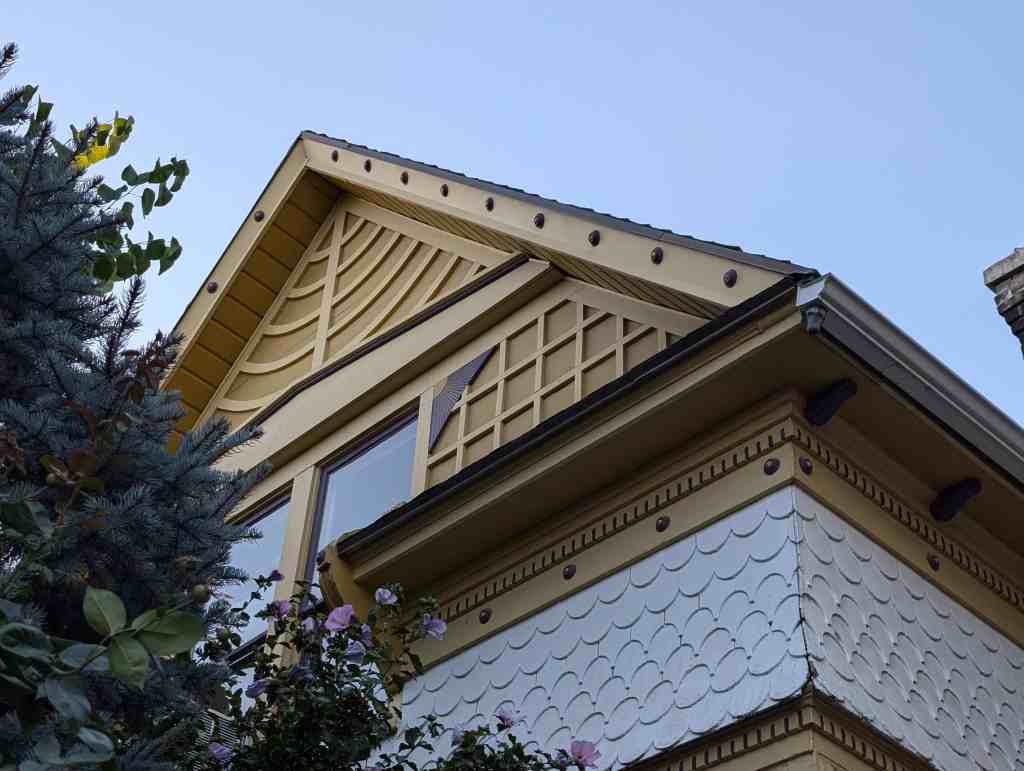
The house was likely constructed c. 1900 as a Victorian Eclectic style residence and was later altered with an Arts and Crafts style roof and front porch. Early notable owners of the property include Orson D. Romney, manager of the George Romney Lumber Company, and Perry E. Burnham, a prominent Utah manufacturer and civic worker. The home retains excellent architectural integrity and features a unique blend of Victorian and Arts and Crafts styles.
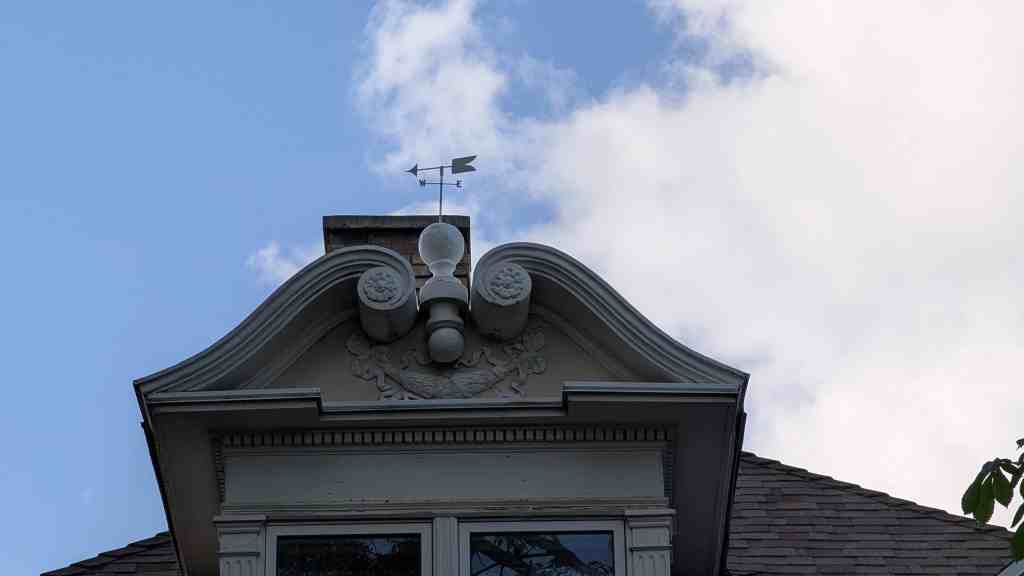
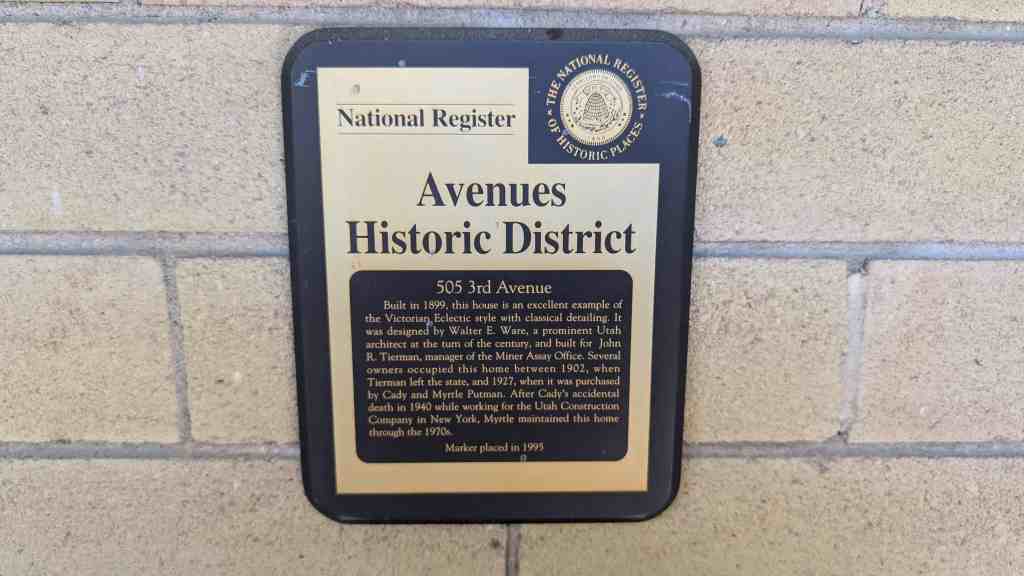
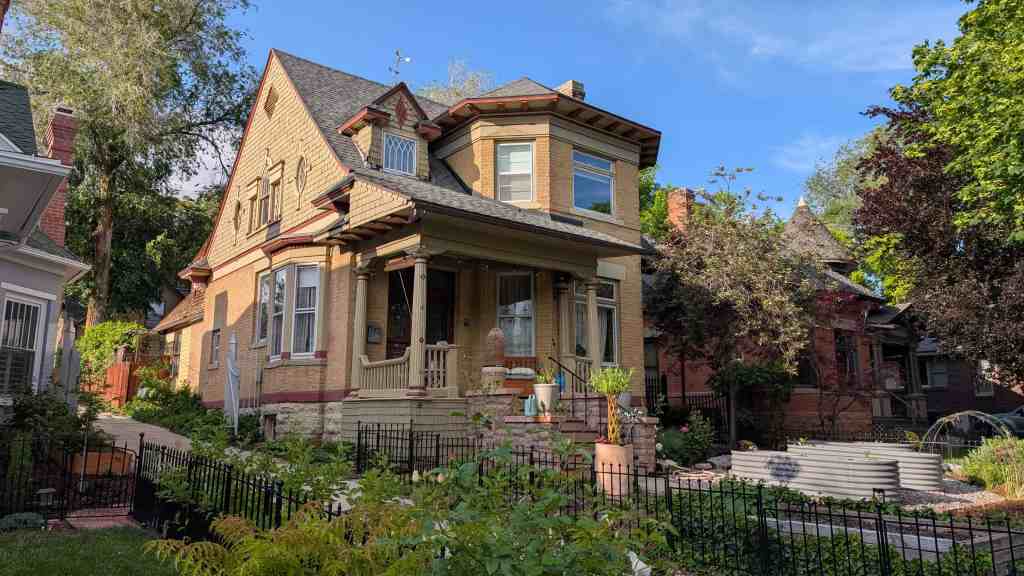
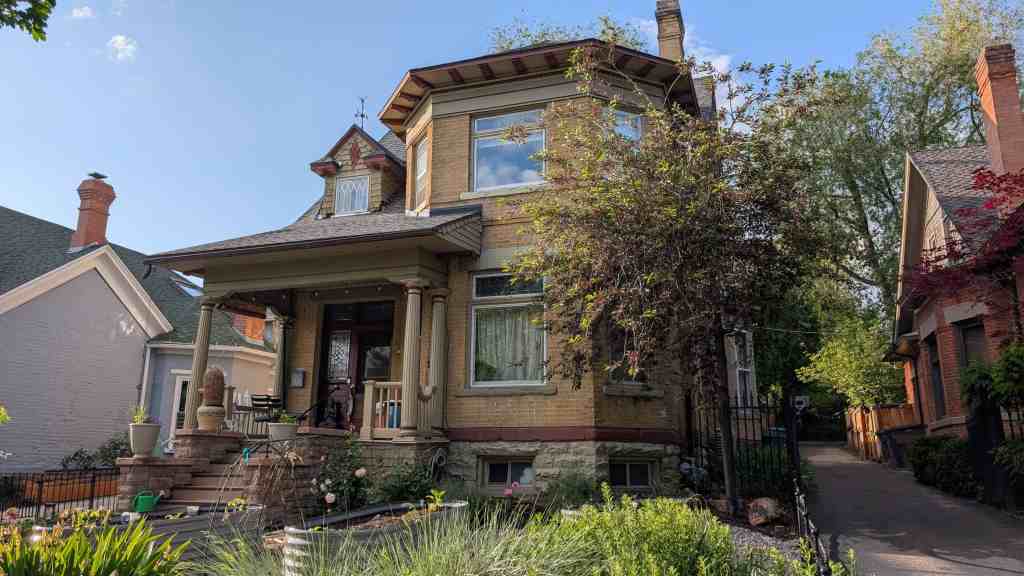
Built in 1899, this house is an excellent example of the Victorian Eclectic style with classical detailing. It was designed by Walter E. Ware, a prominent Utah architect at the turn of the century, and built for John R. Tierman, manager of the Miner Assay Office. Several owners occupied this home between 1902, when Tierman left the state, and 1927, when it was purchased by Cady and Myrtle Putman. After Cady’s accidental death in 1940 while working for the Utah Construction Company in New York, Myrtle maintained this home through the 1970s.
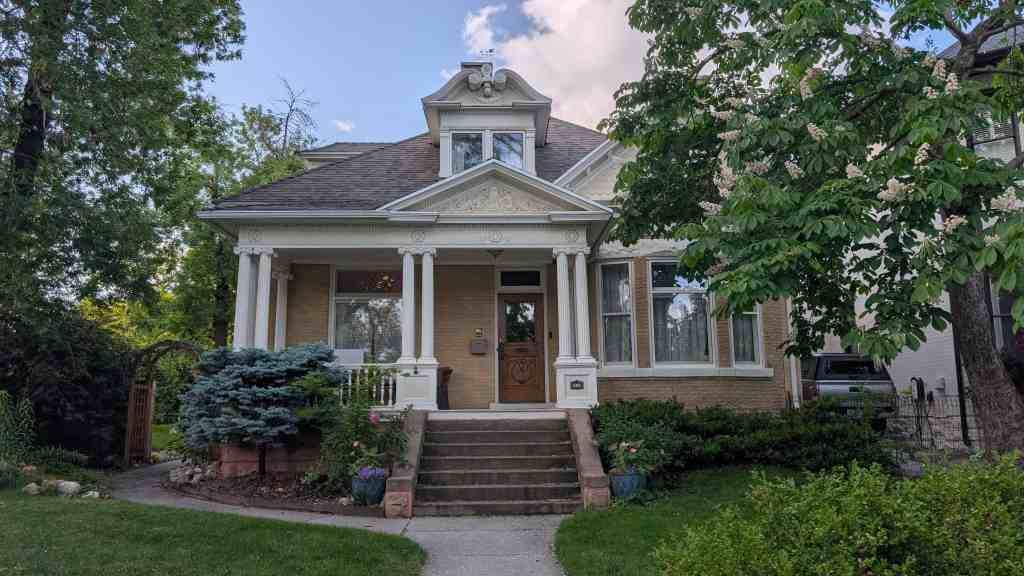
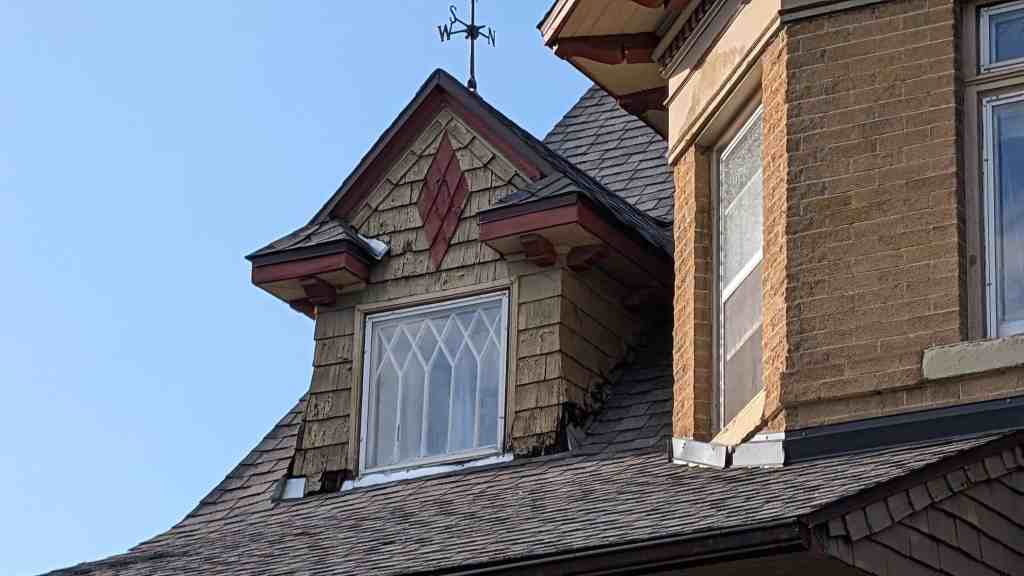
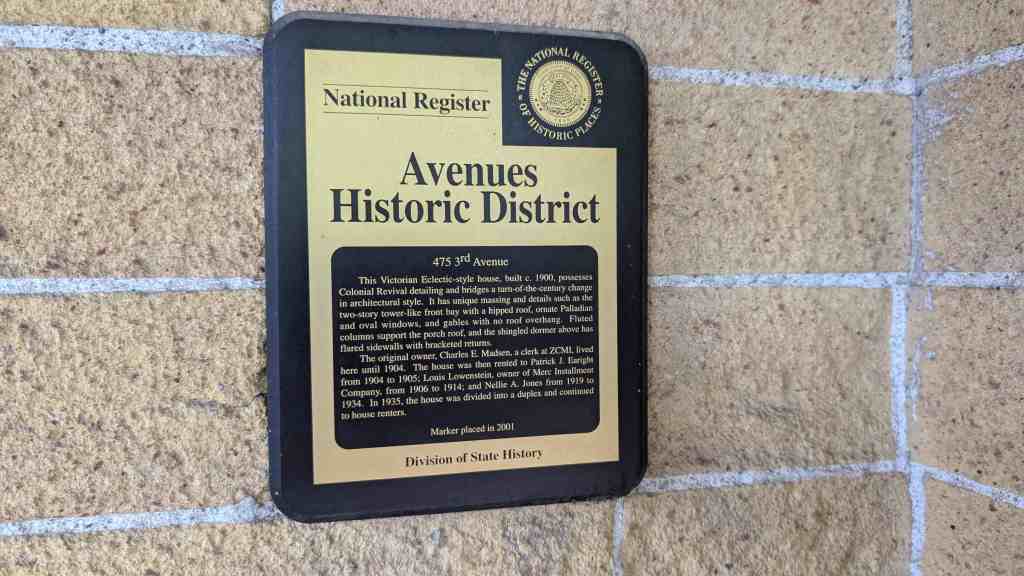
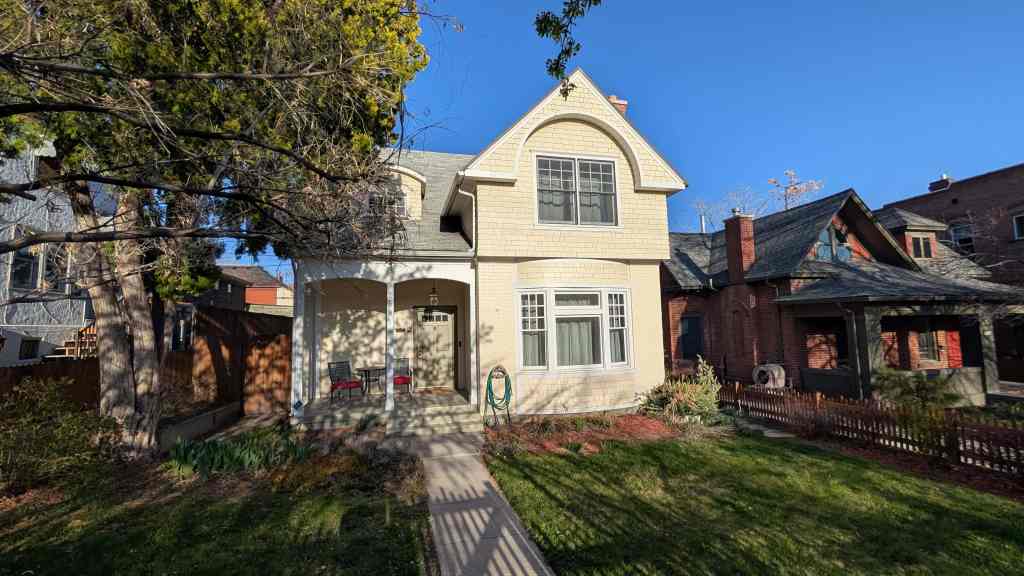
This Victorian Eclectic-style house, built c. 1900, possesses Colonial Revival detailing and bridges a turn-of-the-century change in architectural style. It has unique massing and details such as the two-story tower-like front bay with a hipped roof, ornate Palladian and oval windows, and gables with no roof overhang. Fluted columns support the porch roof, and the shingled dormer above has flared sidewalls with bracketed returns.
The original owner, Charles E. Madsen, a clerk at ZCMI, lived here until 1904. The house was then rented to Patrick J. Earight from 1904 to 1905; Louis Lowenstein, owner of Merc Installment Company, from 1906 to 1914; and Nellie A. Jones from 1919 to 1934. In 1935, the house was divided into a duplex and continued to house renters.
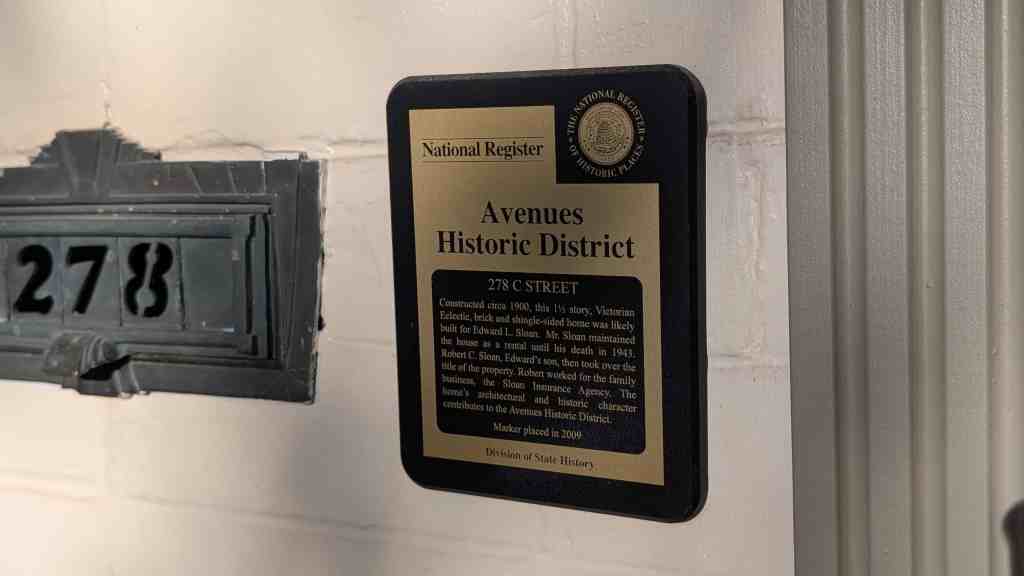
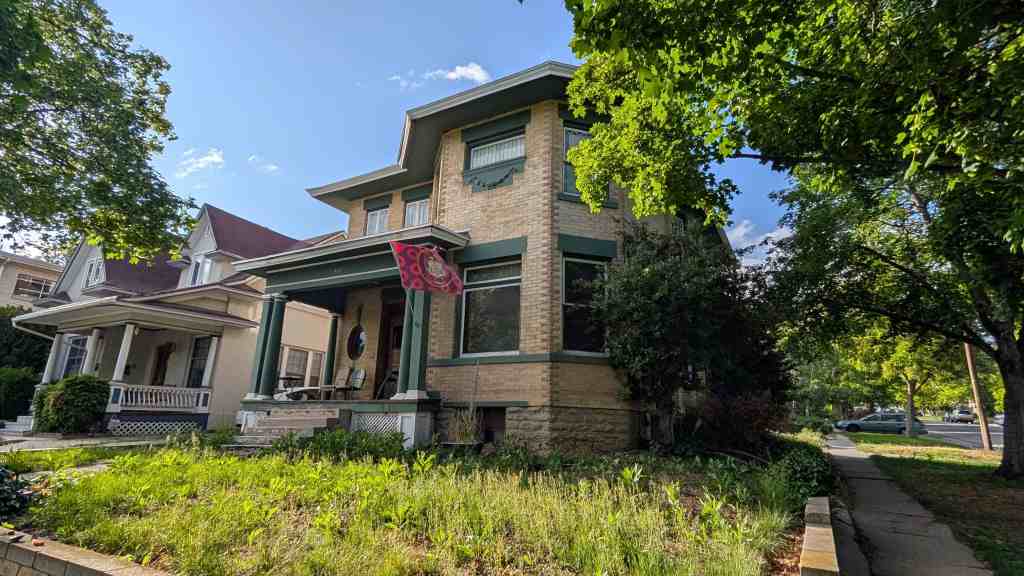
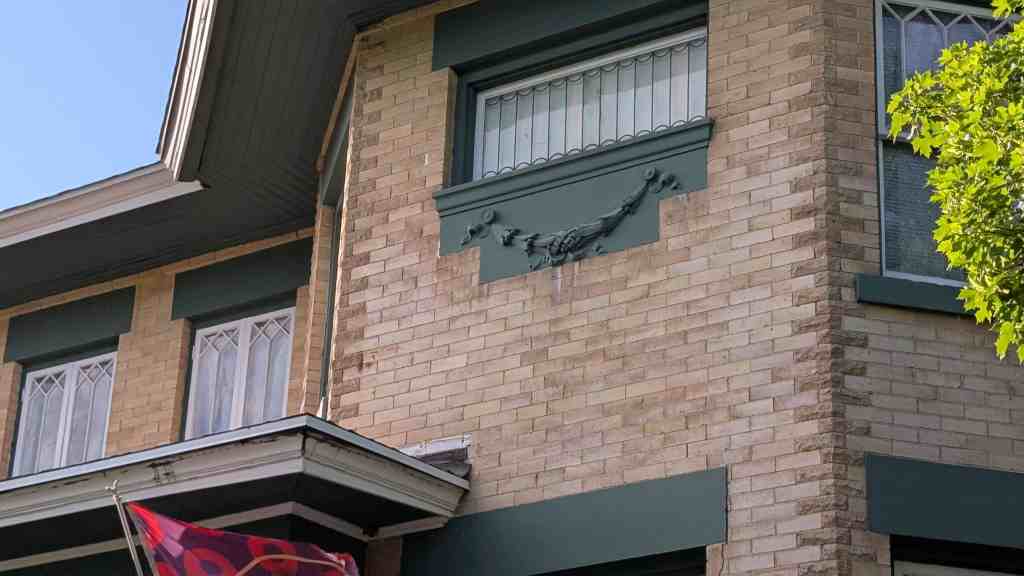
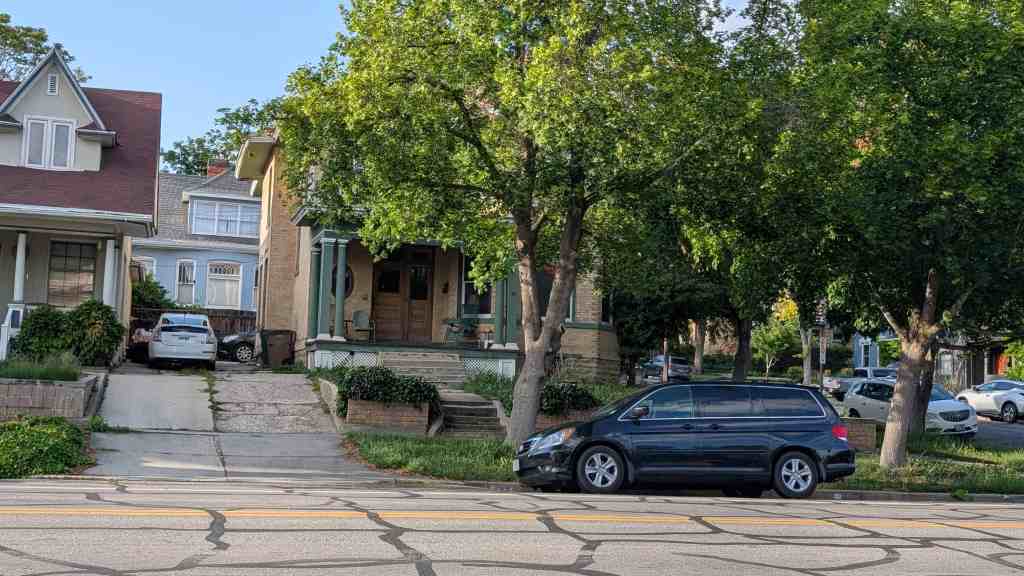
Constructed circa 1900, this 1/2 story, Victorian Eclectic, brick and shingle-sided home was likely built for Edward L. Sloan. Mr. Sloan maintained the house as a rental until his death in 1943. Robert C. Sloan, Edward’s son, then took over the title of the property. Robert worked for the family business, the Sloan Insurance Agency. The home’s architectural and historic character contributes to the Avenues Historic District.
This two-story classic box house was designed by John Headlund and constructed in 1902 for Louis A. Amsden, Secretary of the Blackbird Gold and Copper Mining Company.
In 1902, Louis A. Amsden, financier and secretary for the Blackbird Copper/Gold Mining Company, built this home. At the turn of the century, two primary types characterized vernacular design, the “bungalow” and the “box.” John Alfred Headlund, utilizing the box, designed this “Foursquare” and three other structures on the original lot. He incorporated a steep gable roof reflecting Gothic, or Jacobethan influence, and included slender Doric Columns on paneled wooden posts to support the broad porch eaves.
This home is located within the Avenues Historic District, one of Salt Lake City’s oldest and most venerable residential areas, which reflects a large variety of architectural styles completed between 1850 and the 1930s. By 1890, the Avenues had become a well-established residential area complete with a growing number of com- munity services, including churches, schools, shops, and stores. As early as the first decade of the 20th century, rental properties became common in the Avenues. Since then, the structure has been almost continuously occupied, either by private owners or tenants. The building interior was renovated 1997-98 to meet current standards.
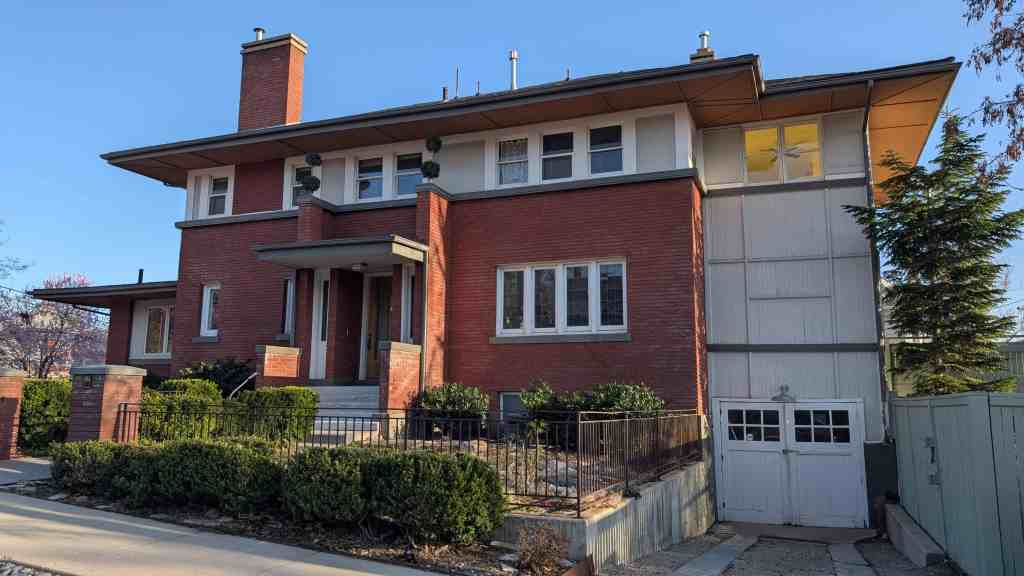
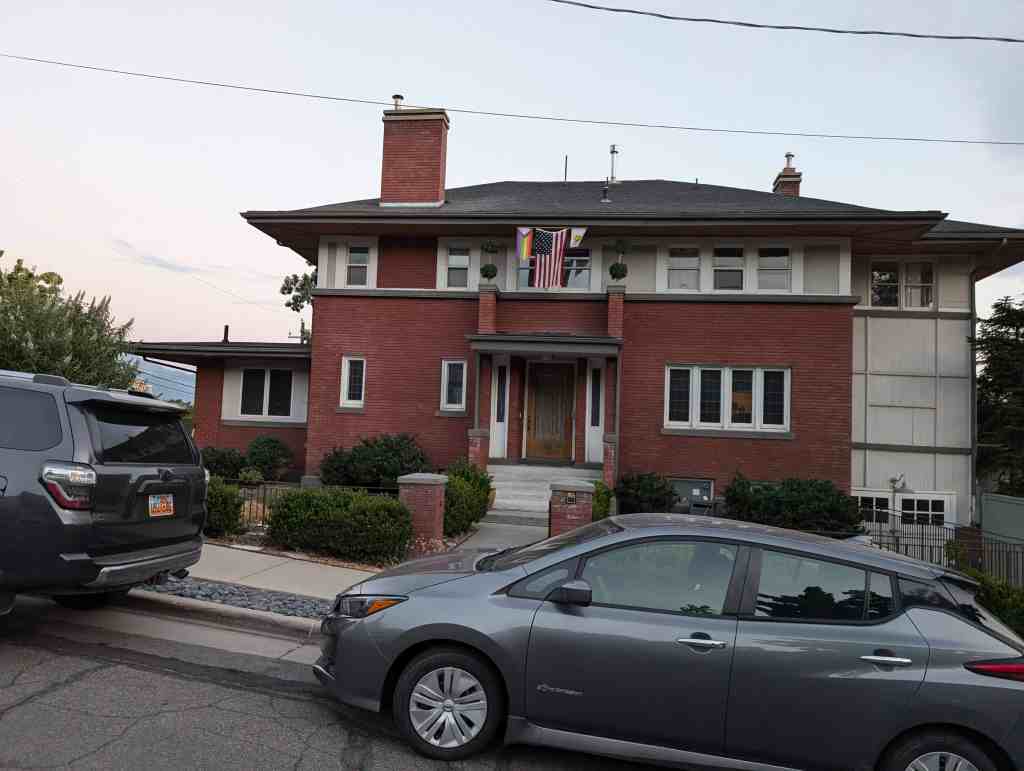
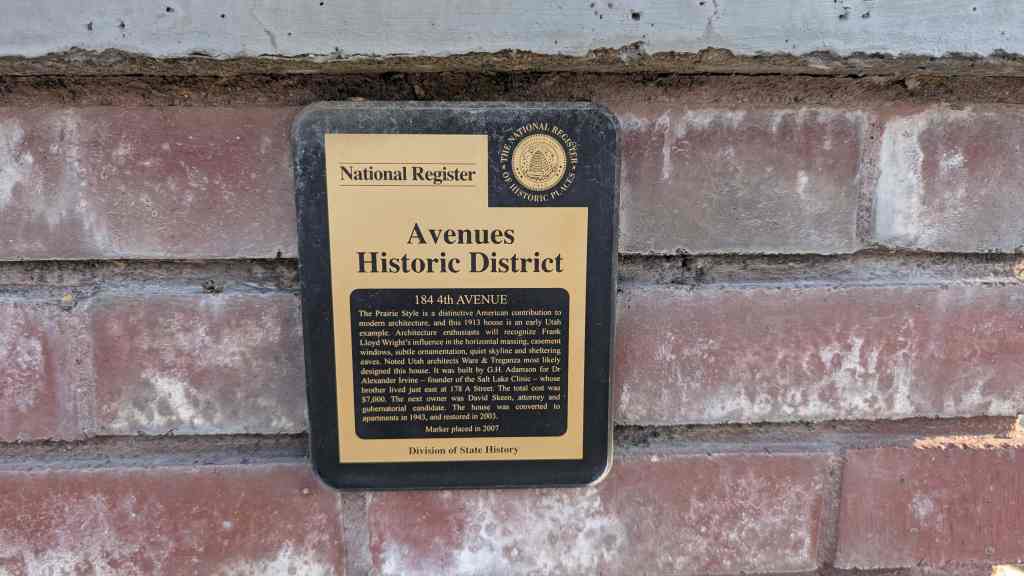
The Prairie Style is a distinctive American contribution to modern architecture, and this 1913 house is an early Utah example. Architecture enthusiasts will recognize Frank Lloyd Wright’s influence in the horizontal massing, casement windows, subtle ornamentation, quiet skyline and sheltering eaves. Noted Utah architects Ware & Treganza most likely designed this house. It was built by G.H. Adamson for Dr Alexander Irvine – founder of the Salt Lake Clinic – whose brother lived just east at 178 A Street. The total cost was $7,000. The next owner was David Skeen, attorney and gubernatorial candidate. The house was converted to apartments in 1943, and restored in 2003.
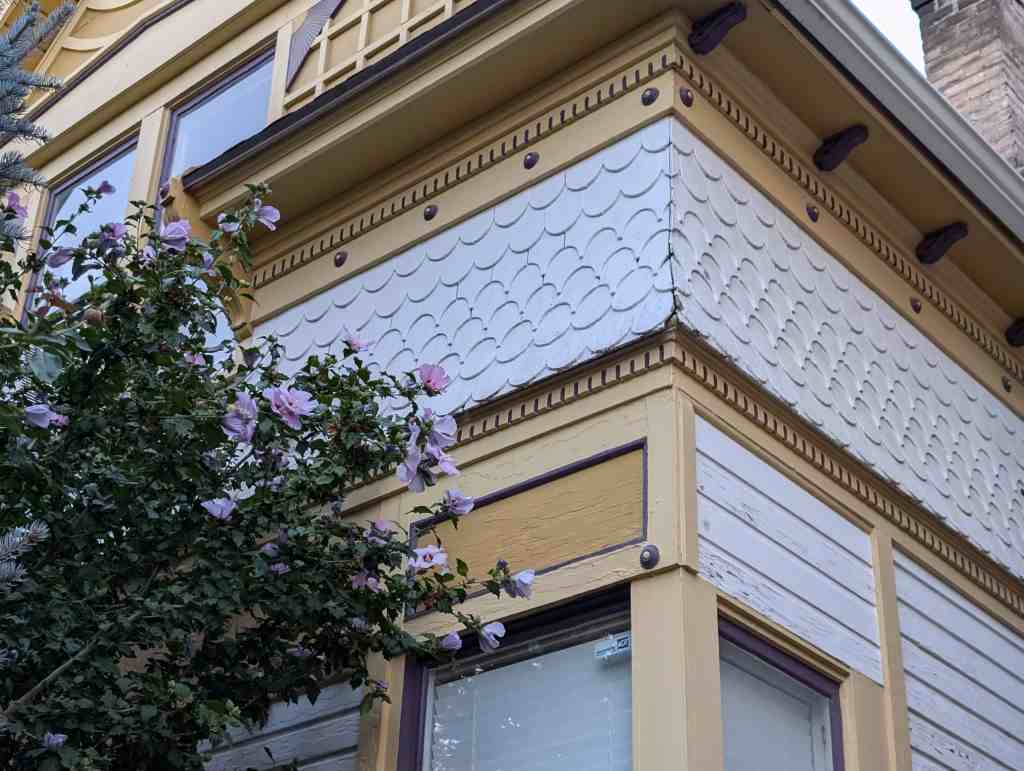
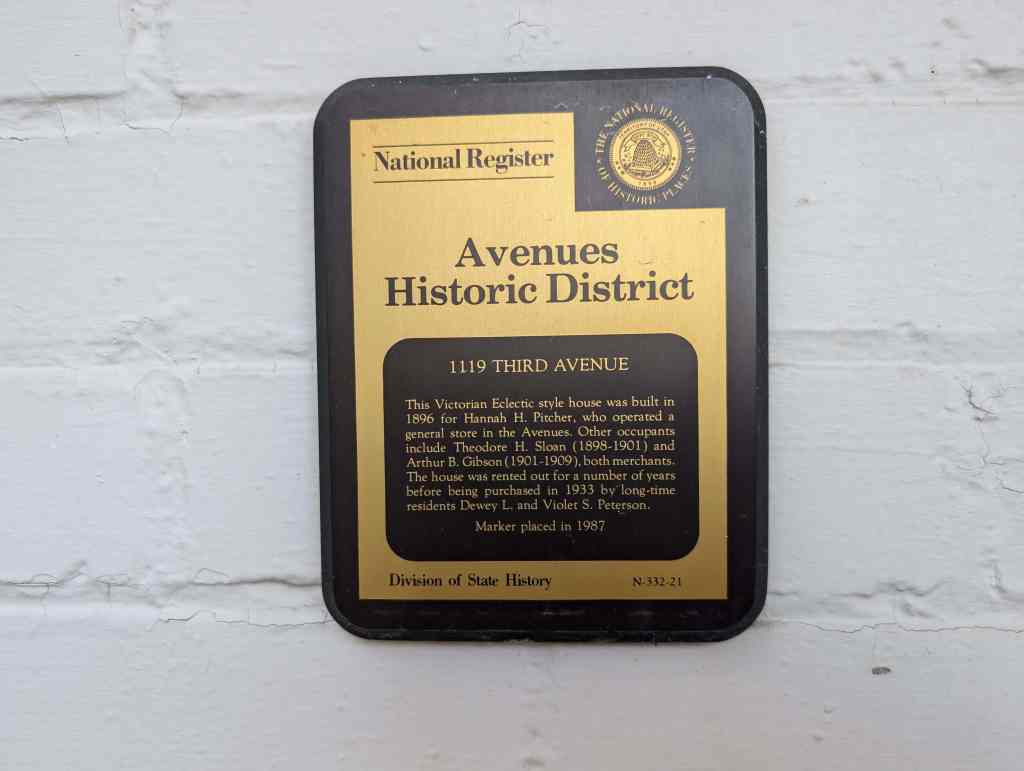
This Victorian Eclectic style house was built in 1896 for Hannah H. Pitcher, who operated a general store in the Avenues. Other occupants include Theodore H. Sloan (1898-1901) and Arthur B. Gibson (1901-1909), both merchants. The house was rented out for a number of years before being purchased in 1933 by long-time residents Dewey L. and Violet S. Peterson.
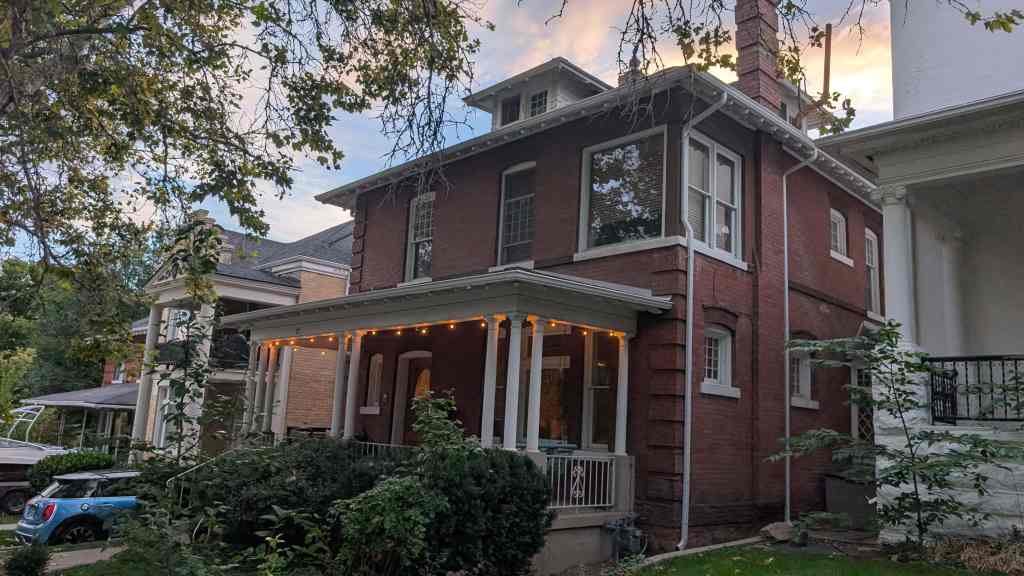
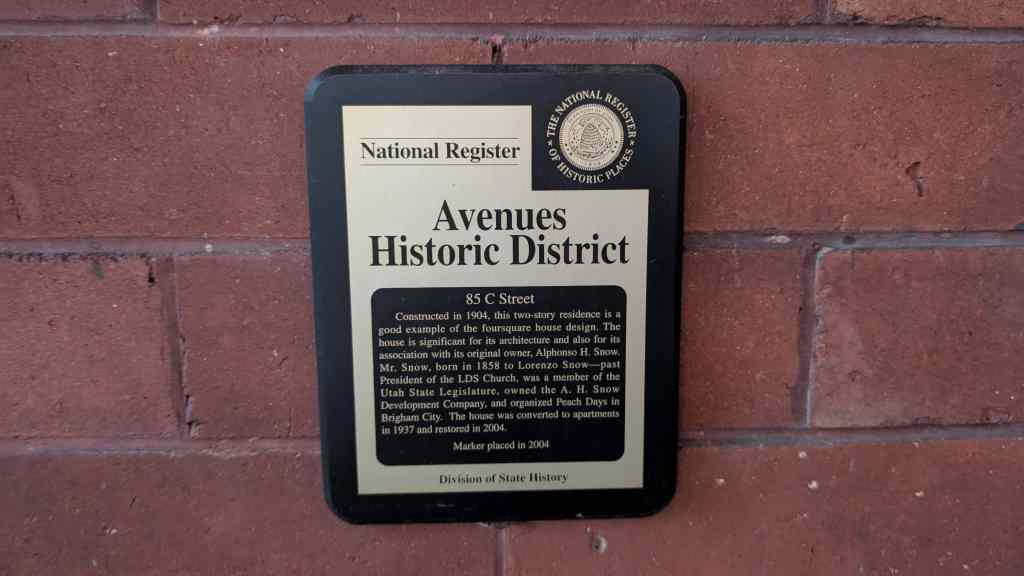
Constructed in 1904, this two-story residence is a good example of the foursquare house design. The house is significant for its architecture and also for its association with its original owner, Alphonso H. Snow. Mr. Snow, born in 1858 to Lorenzo Snow-past President of the LDS Church, was a member of the Utah State Legislature, owned the A. H. Snow Development Company, and organized Peach Days in Brigham City. The house was converted to apartments in 1937 and restored in 2004.
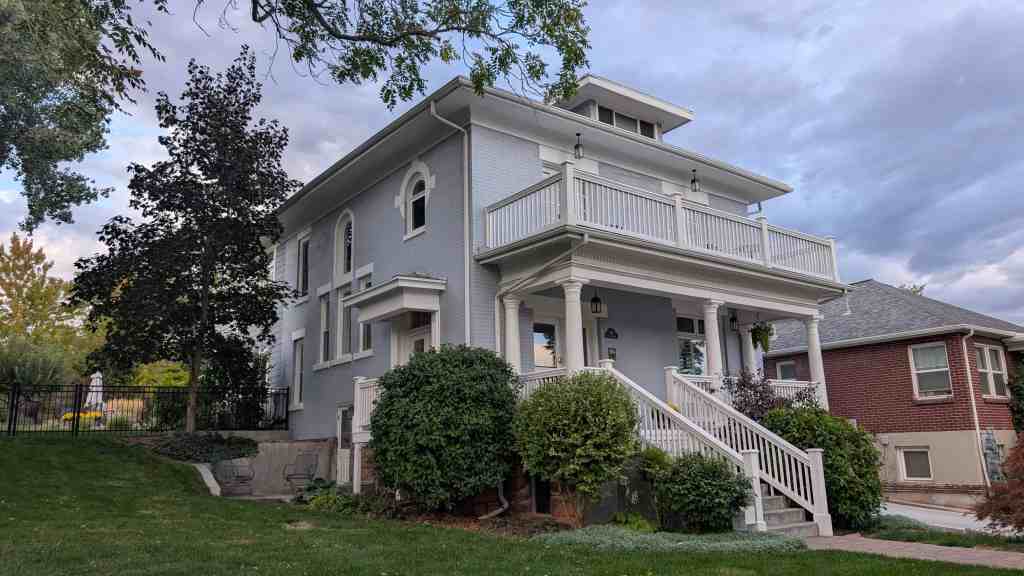
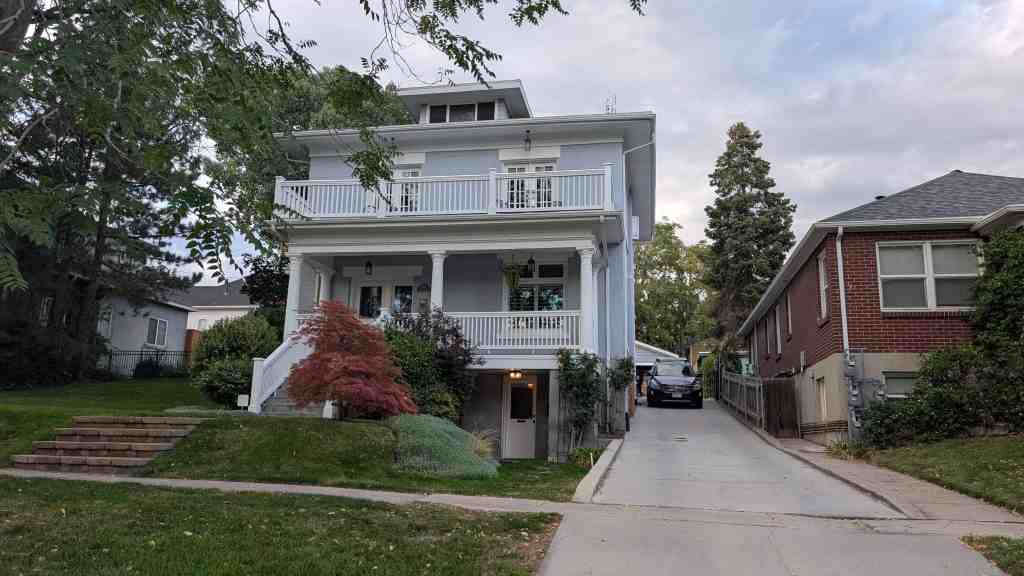
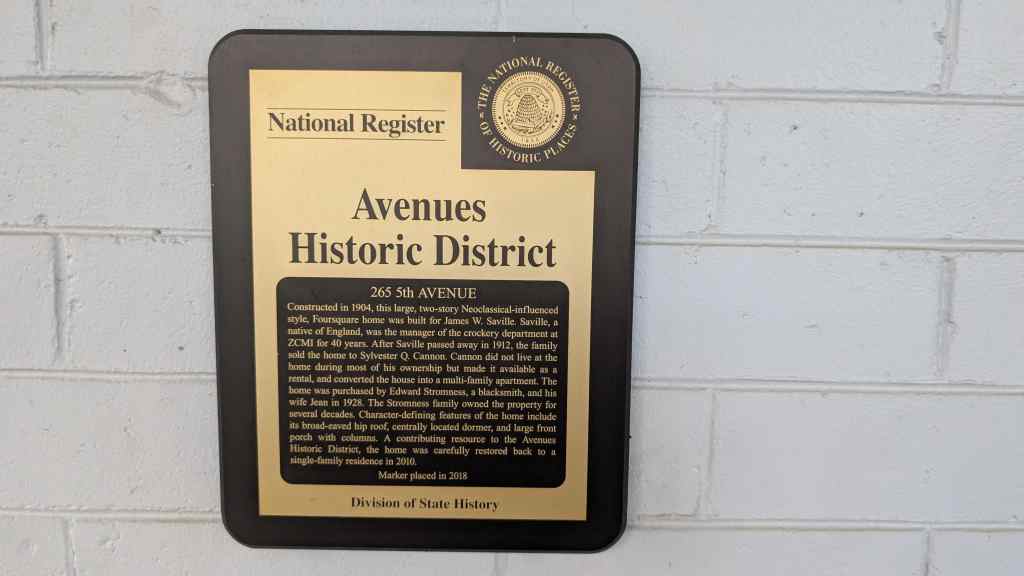
Constructed in 1904, this large, two-story Neoclassical-influenced style, Foursquare home was built for James W. Saville. Saville, a native of England, was the manager of the crockery department at ZCMI for 40 years. After Saville passed away in 1912, the family sold the home to Sylvester Q. Cannon. Cannon did not live at the home during most of his ownership but made it available as a rental, and converted the house into a multi-family apartment. The home was purchased by Edward Stromness, a blacksmith, and his wife Jean in 1928. The Stromness family owned the property for several decades. Character-defining features of the home include its broad-eaved hip roof, centrally located dormer, and large front porch with columns. A contributing resource to the Avenues Historic District, the home was carefully restored back to a single-family residence in 2010.