• About JacobBarlow.com
  • Cemeteries in Utah
  • D.U.P. Markers
  • Doors
  • Exploring Utah Email List
  • Geocaching
  • Historic Marker Map
  • Links
  • Movie/TV Show Filming Locations
  • Oldest in Utah
  • Other Travels
  • Photos Then and Now
  • S.U.P. Markers
  • U.P.T.L.A. Markers
  • Utah Cities and Places.
  • Utah Homes for Sale
  • Utah Treasure Hunt

JacobBarlow.com

~ Exploring with Jacob Barlow

JacobBarlow.com

Tag Archives: Capitol Hill Historic District

James J. Wyatt Home

20 Wednesday Oct 2021

Posted by Jacob Barlow in Uncategorized

≈ Leave a comment

Tags

Capitol Hill Historic District

Evidence of title and directories suggests this “tenement” was built about 1885 by James J. Wyatt. Wyatt, listed in directories as a plasterer, lived at 102 Pear and by the late 1880’s has disappeared from the directories. This building originally contained six very small apartments and was later expanded and remodeled into the present four units. A number of members of Bishop Alonzo P. Raleigh’s several families lived in here in the 1890’s and early 1900’s.

  • 1885 Wyatt to Alonzo P. Raleigh
  • 1902 Estate of A.P. Raleigh to Emily P. Raleigh
  • 1903 Raleigh to Alice E. Browning
  • 1907 Browning to Martin S. Lindsay
  • 1918 Lindsay to Elsie E. Flynn
  • 1920 Flynn to Anton Christensen
  • 1925 Christensen to Christina Christensen
  • 1930 Estate of Christensen to Anton Christensen
  • 1937 Anton Christensen to Carl Peterson
  • 1938 Peterson to Mathilda Waterstrom
  • 1938 Waterstrom to Elizabeth Peterson

This number designation comprises four one-story brick units arranged in “row” fashion, I.E., the individual units share external walls. The “row” rises from west to east up a slope on goon and this change in elevation is witnessed in the row have two levels of gabled roof. Lean-to shed extensions occur to rear of each unit. The individual units in the row appear to be transformations of the basic “rectangular cabin” vernacular building type and the units are pierced, from west to east, in a “door-window-window” , “window-door-window”, “door-window-window”, “window-door-window-window” pattern.

The “row” of houses follows a pattern which seems to have been quite popular in early Salt Lake City. Sanborn-perris insurance maps from 1884-1898 reveal numerous “row” houses in both adobe and brick. This example remains one of the last vernacular “rows” extant in the city.

One other interesting feature of the house is the east side wall. The house
borders Wall St. On the east and at this particular intersection, Wall and 600 N do not come together at right angle. Wall St. cuts back to west at about a 60° angle. This house has a east wall which also cuts back to the northwest at 60 angle.

Located at 136-146 West 600 North in the Capitol Hill Historic District in Salt Lake City, Utah.
Harden Bennion Home

20 Wednesday Oct 2021

Posted by Jacob Barlow in Uncategorized

≈ Leave a comment

Tags

Capitol Hill Historic District

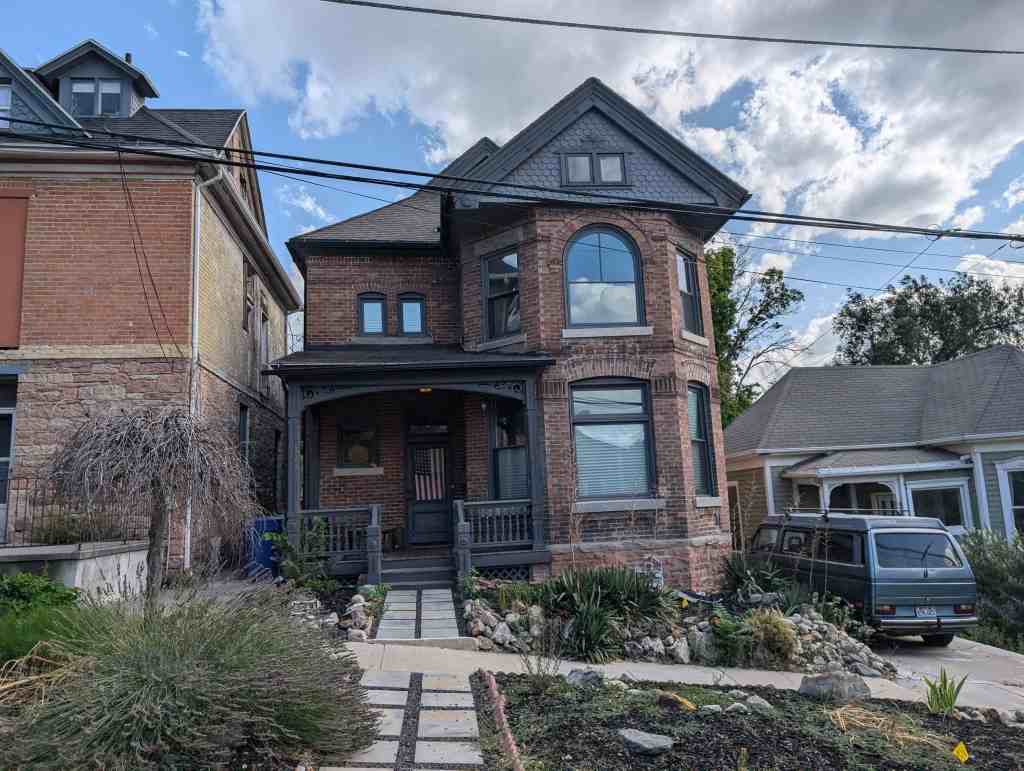
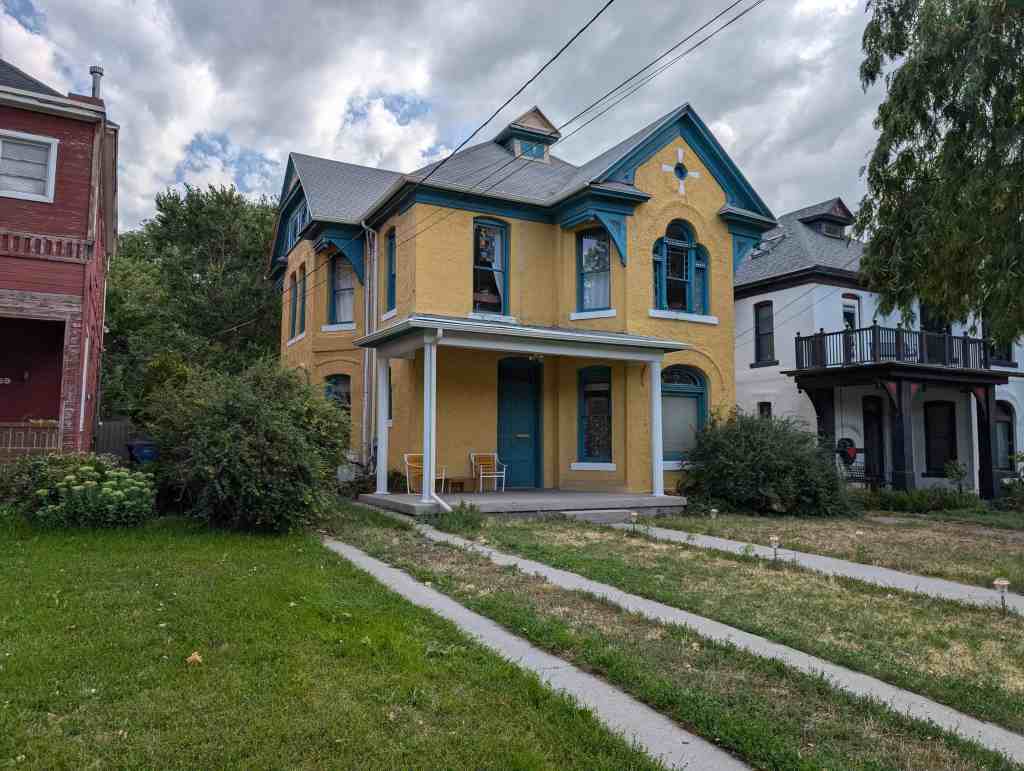
From evidence of title, city directories, and Sanborn maps, this home appears to 5 have been built in 1892. The original owner of the home was Harden Bennion.

Bennion was born October 7, 1862, in Taylorsville. He was a son of John and Esther Ann Birch Bennion. He married Vilate Kiniball Nebeker on March 31, 1893, in Salt Lake. Bennion was active in state government serving as a state commissioner of agriculture, a state senator, and as secretary of state. He was also state chairman of the Democratic Committee. He was a member of the L.D.S. Church, serving in a number of leadership positions. He died October 12, 1936.

The chain of title to the property is as follows:

  • Sidney K, Hooper to Harden Bennion 1892
  • H. Bennion to Lucerne Land and Water Co. 1918
  • Lucerne Land and Water Co. to Ernest M. Madsen 1925
  • Esther Bennion to Vilate K. Bennion 1930
  • V.K. Bennion to Harden K. Bennion 1934
  • H.G. Bennion to Aurelia Bennion et al 1935

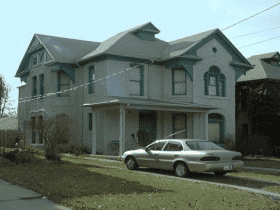
This is a two and one half story Victorian eclectic house. The hip roof central mass has gabled bays projecting from the front and east side. There is a gabled dormer at the peak of the hip. The bays have canted corner, pent gable returns and decorative window treatments. The plaster was probably added later and the porch posts are replacements.

Located at 227 West 400 North in the Capitol Hill Historic District in Salt Lake City, Utah.
(county records)

John D. Nutting Home

20 Wednesday Oct 2021

Posted by Jacob Barlow in Uncategorized

≈ 1 Comment

Tags

Capitol Hill Historic District

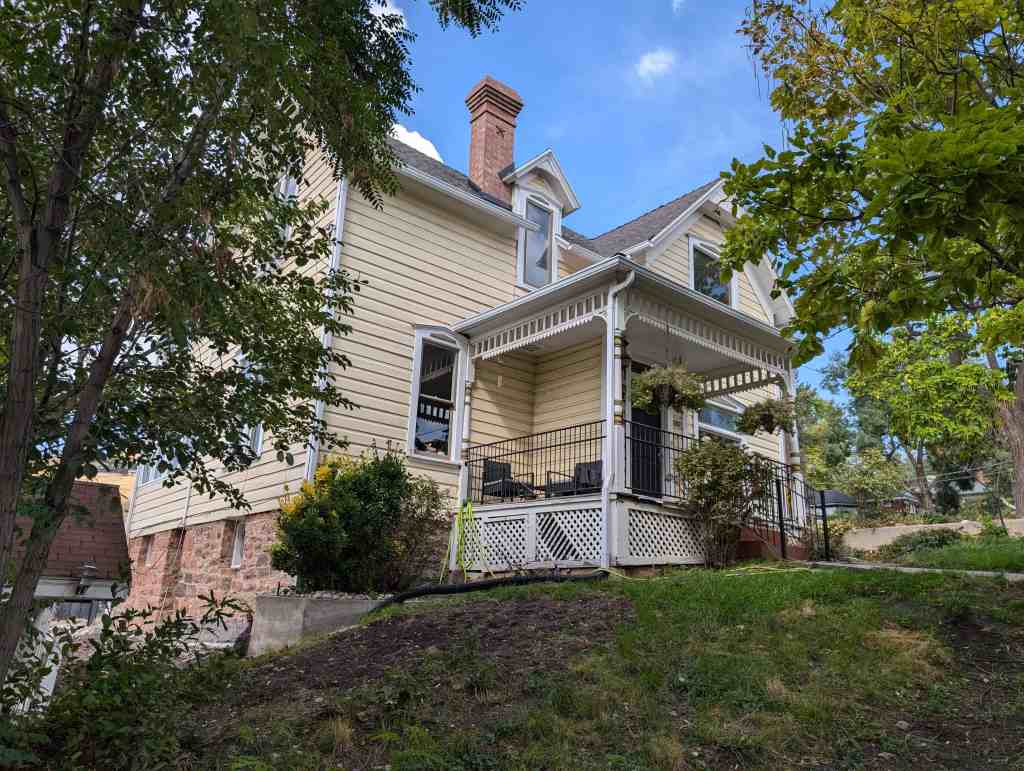
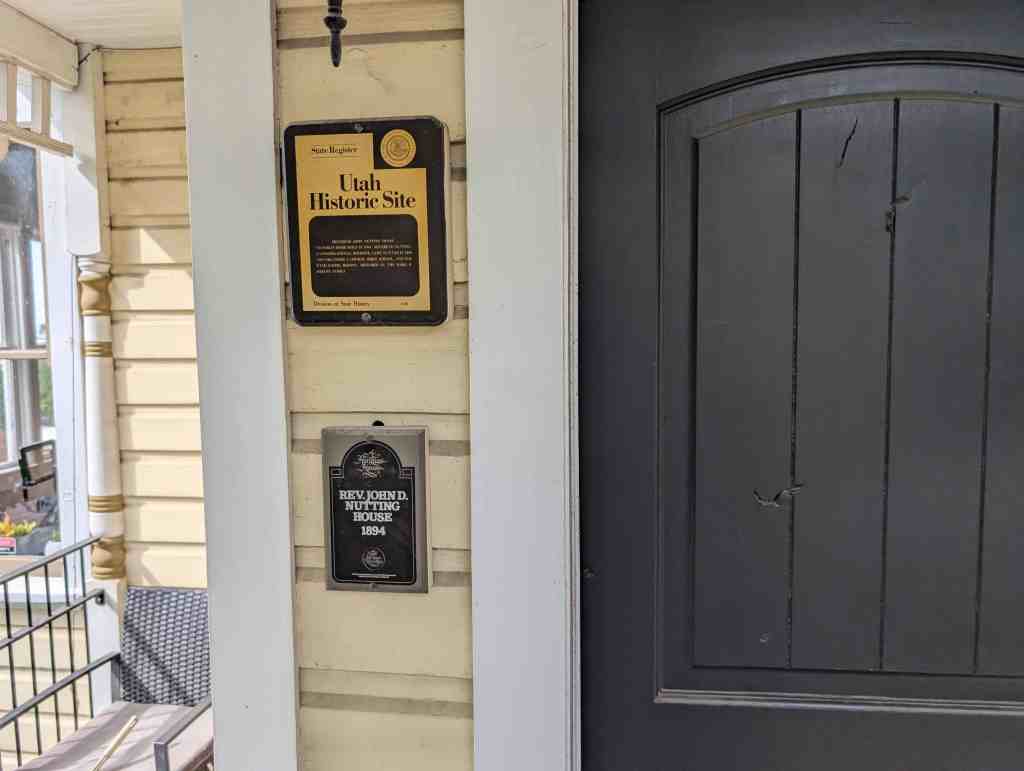
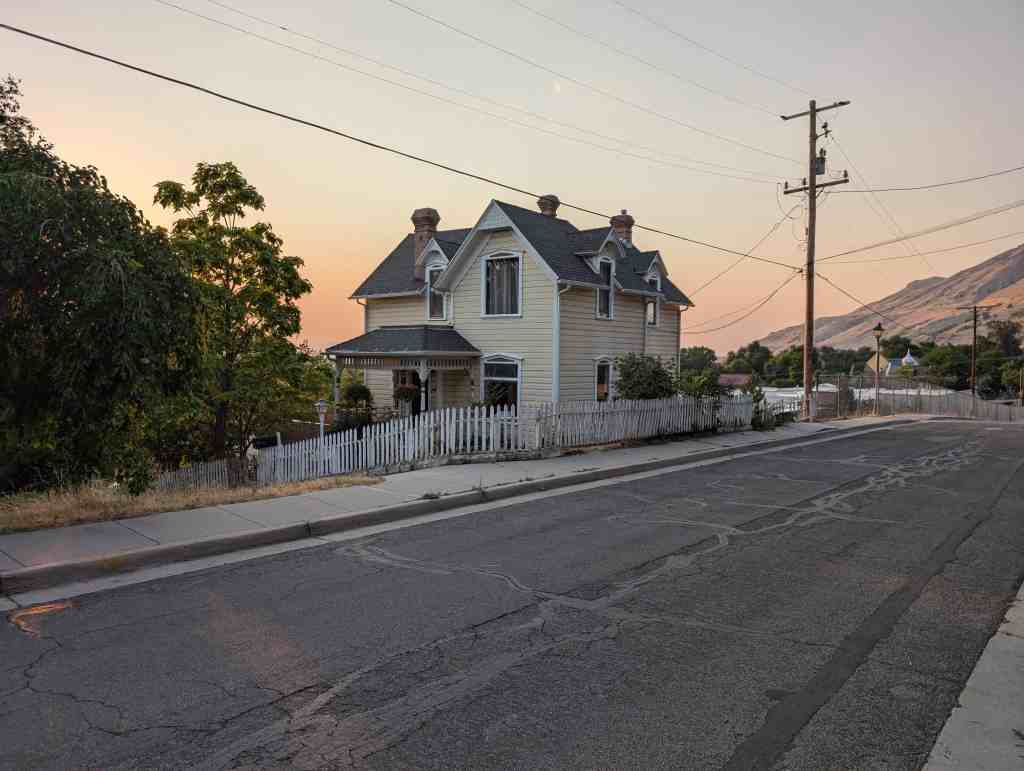
This house was built in 1894 for the Reverend John D. Nutting. Nutting was born in Vermont in 1854, graduated from Oberlin Theological Seminary, and was ordained a Congregational minister. He came to Salt Lake in 1890 with his wife Lillis R.M. Nutting, and their three children. He was pastor of the Plymouth Congregational Church, 232 W 400 North. In 1898 he was apparently called back to Oberlin. He evidently returned to Utah as he founded the Utah Gospel Mission in 1900 and traveled widely as its secretary through the mountain west. He edited a newspaper, “Light on Mormonism” as well. In 1904 the house was sold to Mrs. M.P. Peters, later Broadhead. In 1924 she sold the house to Laura E. Peters, her daughter, who was a school teacher.

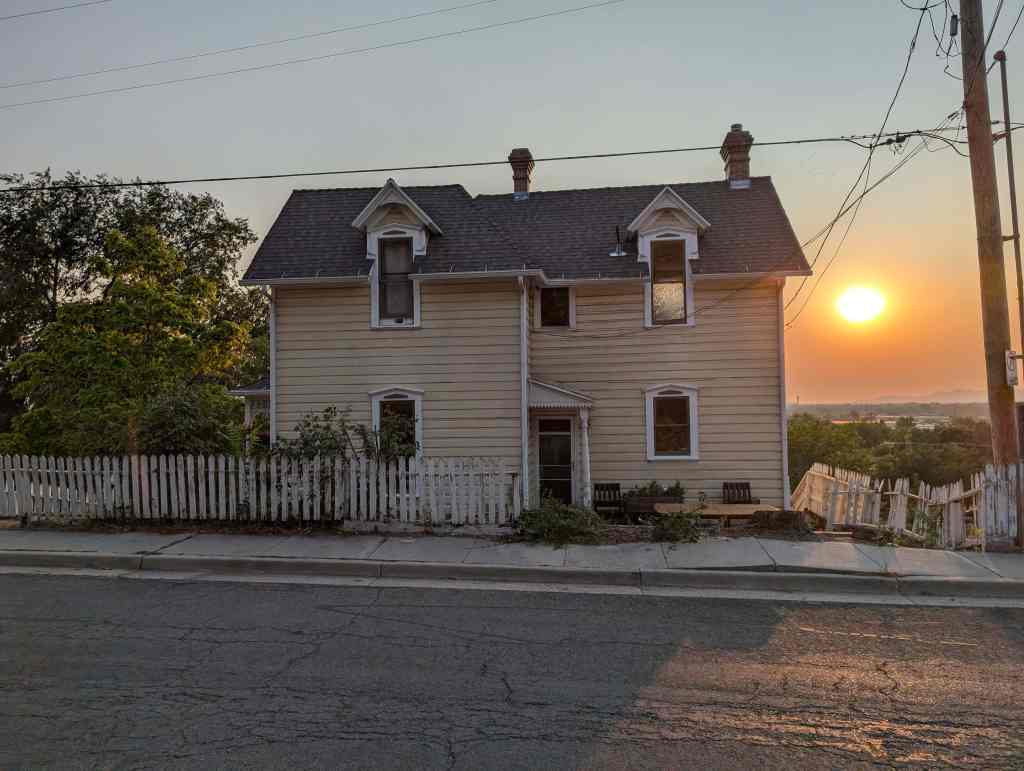
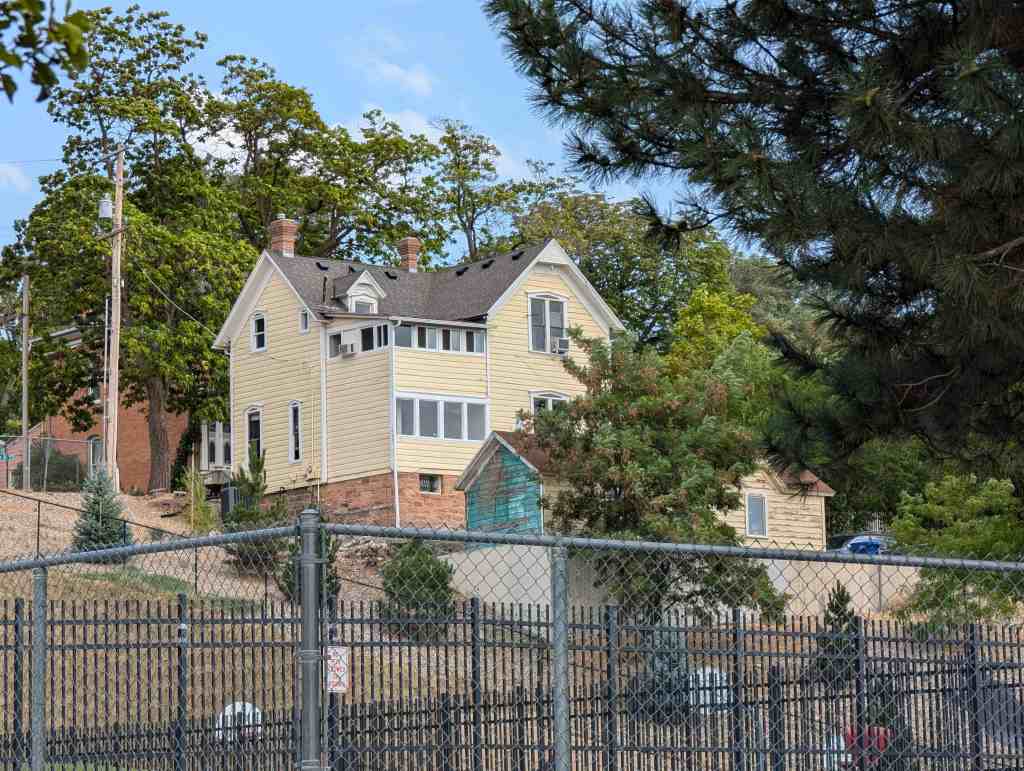
The Reverend Nutting home is a 1 1/2 story frame structure with ship lap siding. Adhering to a scheme typical of many homes built during the last two decades of the nineteenth century, the house follows a basic “T” plan formula which was then individualized by the use of elements such as wall dormers and ornamental trim as evidenced here in the gable peaks, the window surrounds and the front porch. The Nutting house is a well preserved, and, therefore, important example of a Victorian house type. It contributes significantly to the character of the central Marmalade Area of the Capitol Hill Historic District.

Located at 161 West 400 North in the Capitol Hill Historic District in Salt Lake City, Utah.

Related:

  • Architect: Richard K. A. Kletting

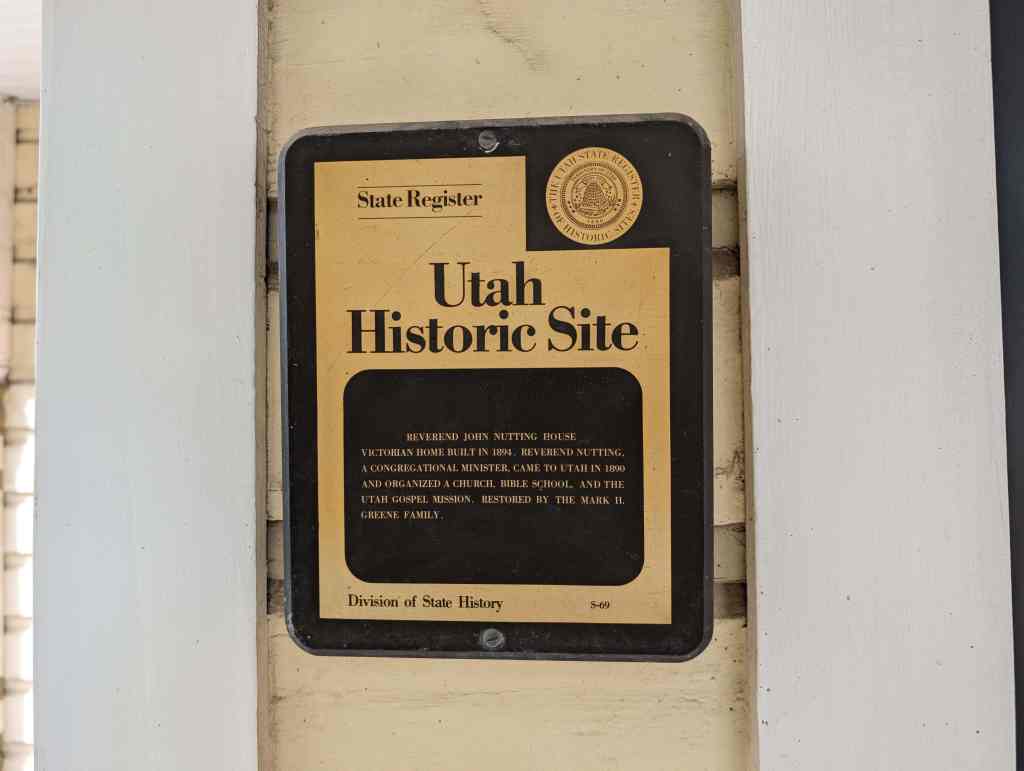
Reverend John Nutting House
Victorian home built in 1894. Reverend Nutting, a Congregational Minister, came to Utah in 1890 and organized a church, bible school, and the Utah Gospel Mission.
Restored by the Mark H. Greene Family.

(county records)

Charles L. Berry Home

20 Wednesday Oct 2021

Posted by Jacob Barlow in Uncategorized

≈ 1 Comment

Tags

Capitol Hill Historic District

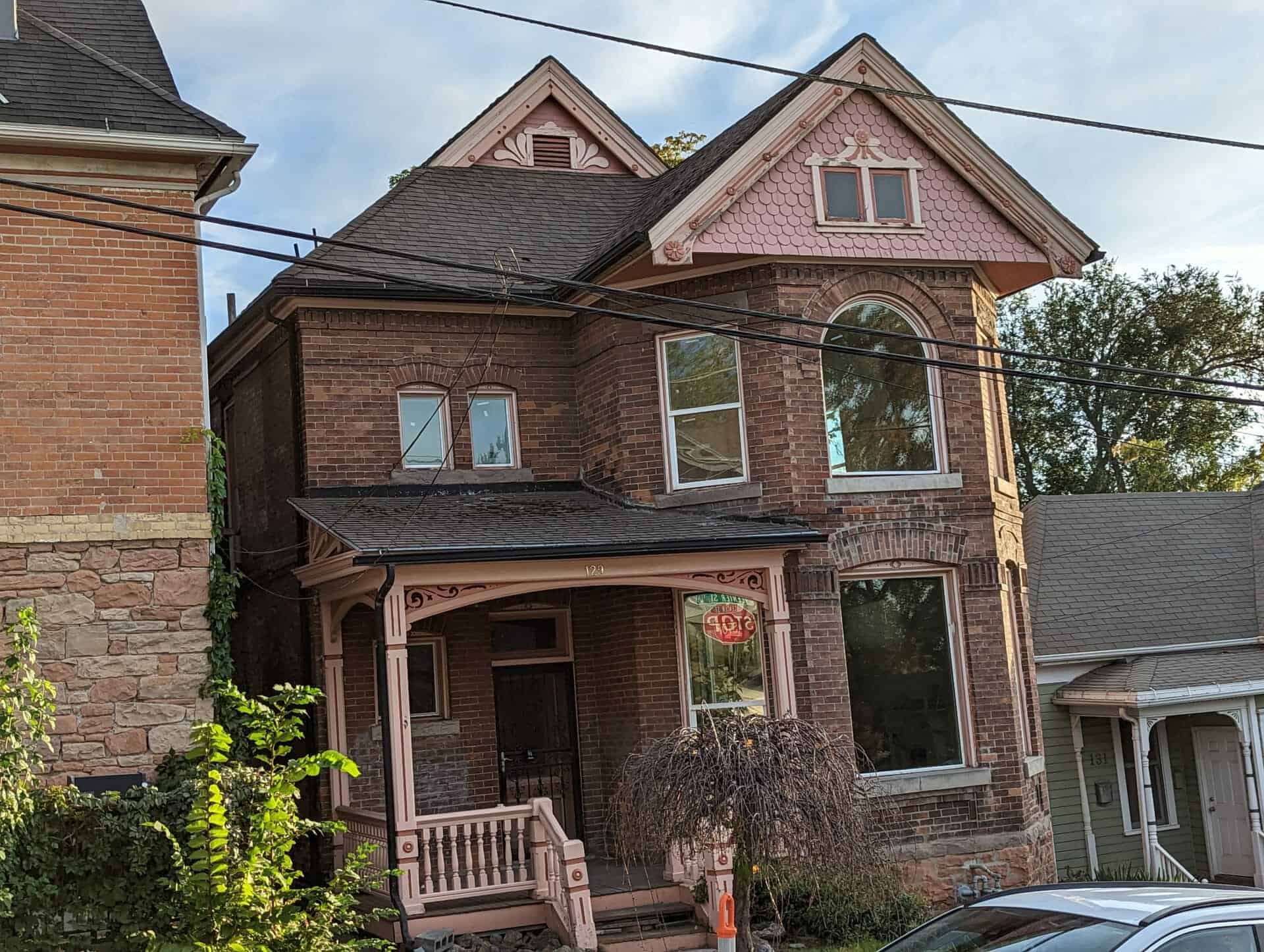
This house was built about 1892-93 for Charles Lewis Berry. Berry was born. March 29, 1867 in Bristol, England. He was brought to Utah in 1869 by his mother Lydia Allen Berry. He married Rachel L., by whom he had three children. He entered the employ of Auerbach’s, eventually becoming manager of the dry goods department. He later operated a “mercantile establishment” at Idaho Falls. He was an active musician, played in Helds’ band, and was a charter member of the American Federation of Musicians and an officer.

This 2 1/2 story Victorian home has a hipped roof. A front, projecting bay has gabled roof and canted corners. The gable exhibits a moulded cornice with triangular returns containing a flower motif. The gable wall is shingled. At the second story of the bay is a round arched window. Other window treatment includes segmental arches and archivolts. Victorian Eclectic ornament marks the front porch area. Some brick corbelling is located at cornice areas.

Located at 129 West 400 North in the Capitol Hill Historic District in Salt Lake City, Utah.

(from county records)

Winter Apartments

20 Wednesday Oct 2021

Posted by Jacob Barlow in Uncategorized

≈ Leave a comment

Tags

Capitol Hill Historic District

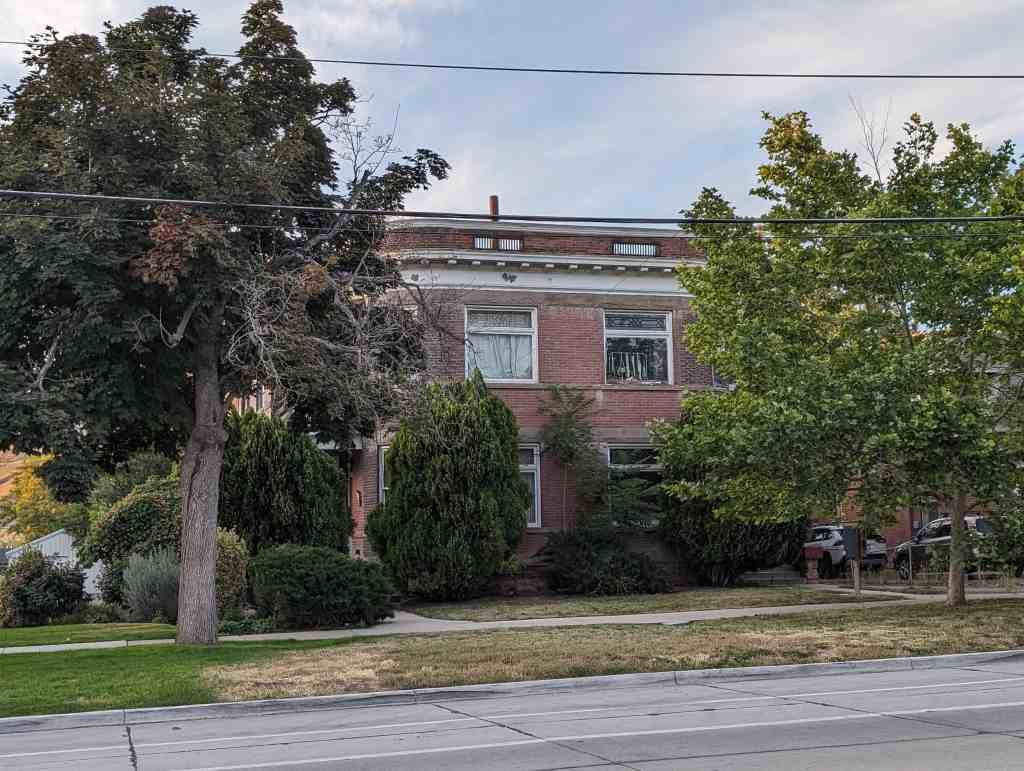
From evidence of title, city directory, and Sanborn Maps, this apartment appears to have been built about 1900. The-original owner of the apartment was James Winter. Winter was born December 15, 1859, in Sheffield, England. He was a son of Richard and Mary Hattersly Winter. He was later married to Martha Hanson. Winter was involved in sheep ranching all of his life. He was a member of the L.D.S. Church. He died on October 31, 1940. James Winter deeded the home to George H. Winter in 1940.

This two story apartment has a flat roof and is symmetrically arranged with, curved corners. The building has side entrances with porches and balconies on the second floor. There are some leaded glass transoms.

Located at 230 West 300 North in the Capitol Hill Historic District in Salt Lake City, Utah.
Ebenezer Beesley Home

15 Friday Oct 2021

Posted by Jacob Barlow in Uncategorized

≈ Leave a comment

Tags

Capitol Hill Historic District

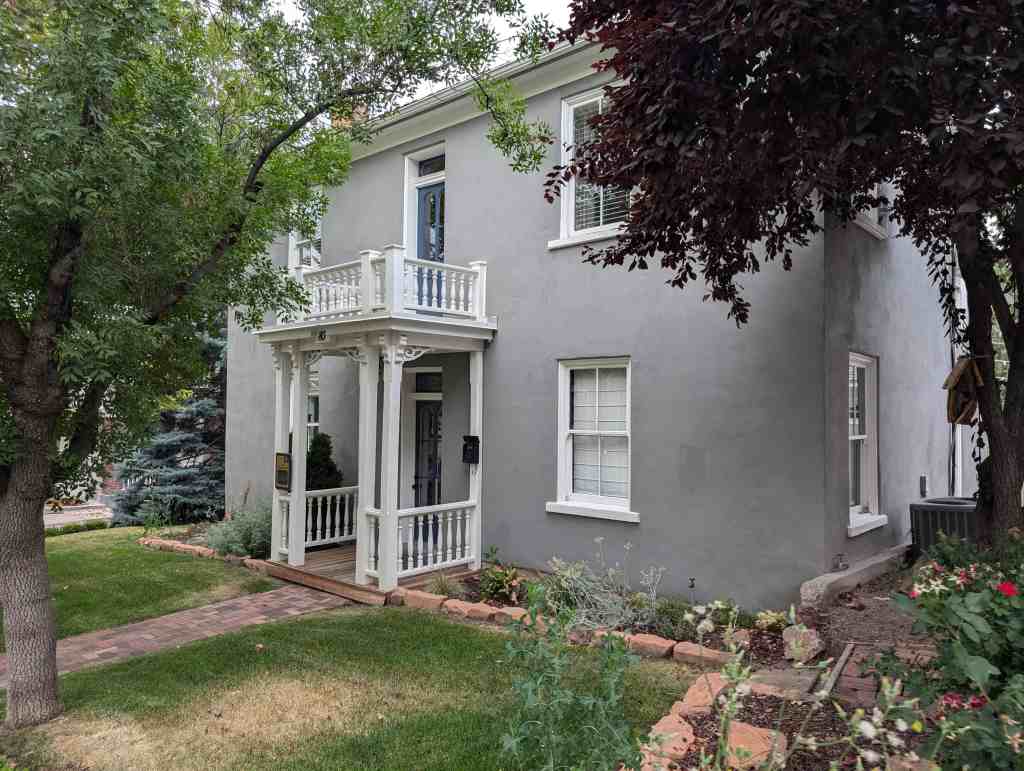
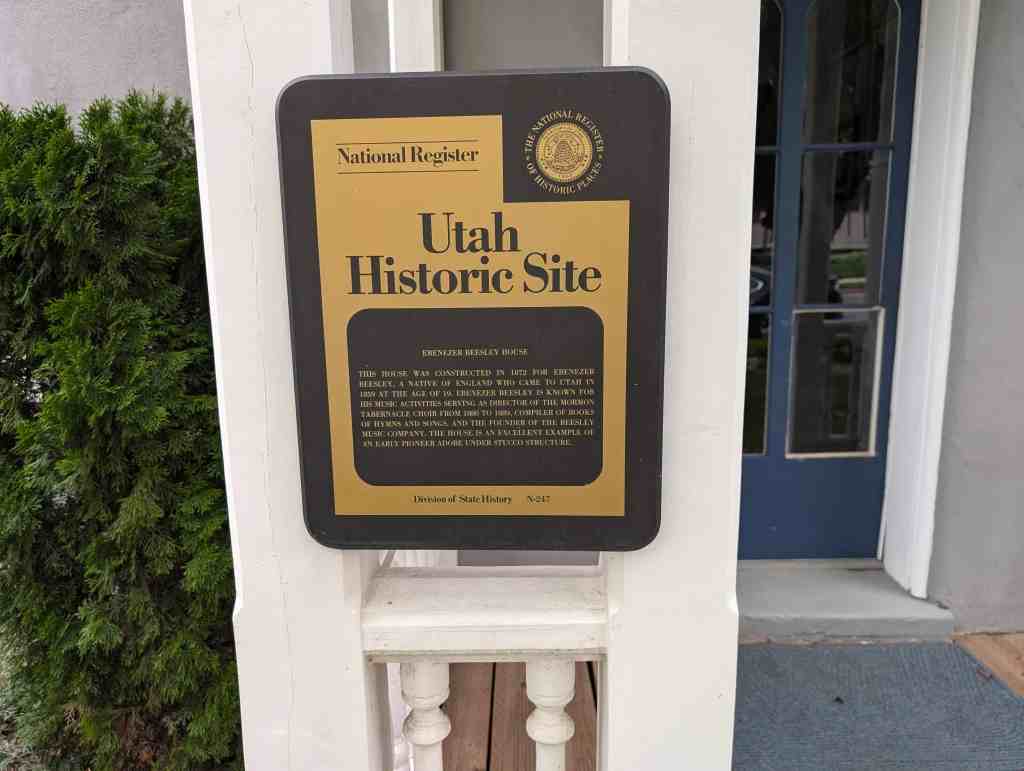
This house was built for Ebenezer Beesley, quite probably before 1866 when a city directory appears to list him in residence there. Beesley was born December 14, 1840 in Bicester, Oxfordshire, England. He joined the LDS Church 1849. He married Sarah Hancock in 1859 and came to Utah the same year in Captain George Rowleys handcart company, He was employed as a shoemaker in the 1860’s and as a musician thereafter. He led the volunteer Salt Lake Theater orchestra, directed the Tabernacle Choir for 10 years, and founded the Beesley Music Company in 1904. He lived for sometime in Lehi and Tooele. He composed many religious songs including many for children, of which he had 16. He died in March, 1906.

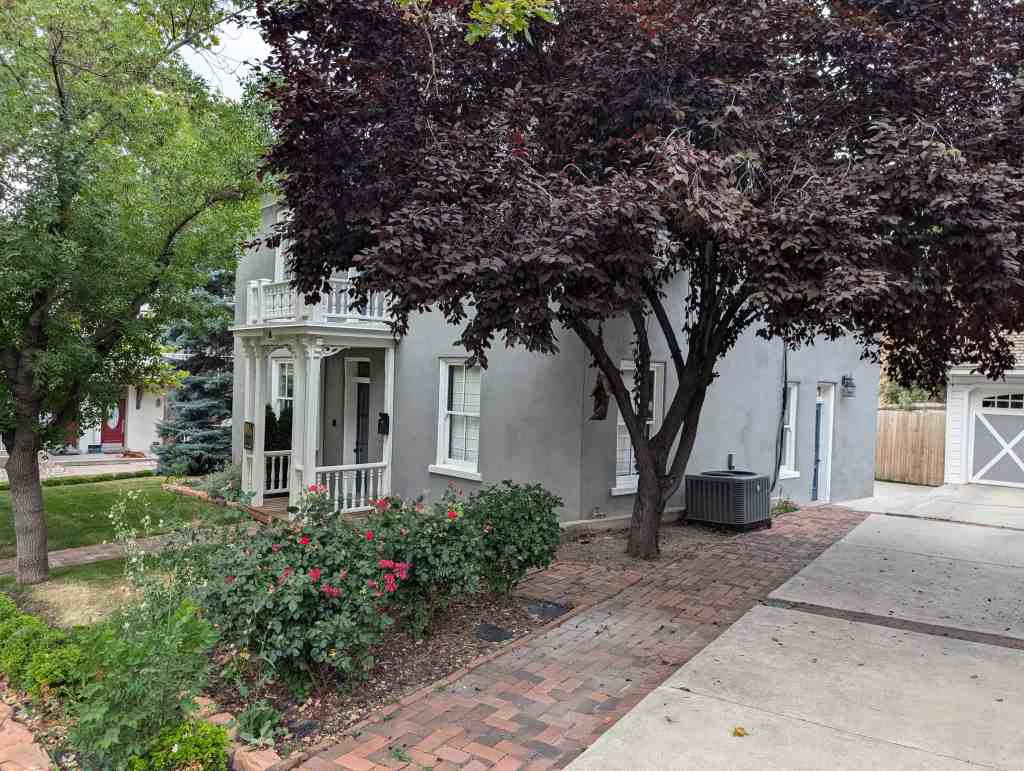
The Beesley House is a central hall vernacular type, two stories high, and a three over three façade piercing arrangement which includes a second story door. The home has been added on to in the rear – first a 1h story rectangular portion was appended to the original structure in a “T” configuration. This 1 1/2 story section has a one over three opening pattern including a dormer with a classical pediment. Windows are two-over-two, double hung sash types. Another adobe and a brick section were later modifications of the original house.

The Beesley house is one of the few remaining examples in SLC of the I-form stuccoed adobe house, and reflects the strength in the mid-nineteenth century of the vernacular building traditions brought to Utah from the East by Mormon settlers. Although this house type is common in some rural Utah towns, it has almost vanished from the larger cities.

Located at 80 West 300 North in the Capitol Hill Historic District in Salt Lake City, Utah.
Ebenezer Beesley Home

This house was constructed in 1872 for Ebenezer Beesley, a native of England who came to Utah in 1859 at the age of 19. Ebenezer Beesley is known for his music activities serving as director of the Mormon Tabernacle Choir from 1880 to 1889, compiler of books of hymns and songs, and the founder of the Beesley Music Company. The house is an excellent example of an early pioneer adobe under stucco structure.

Elias L. T. Harrison Home

15 Friday Oct 2021

Posted by Jacob Barlow in Uncategorized

≈ 2 Comments

Tags

Capitol Hill Historic District

This house is significant because of its association with Elias L.T. Harrison, architect, editor, and religious dissenter.

Evidence of title and directories suggest this house was built in the early 1870s s for Harrison who is listed in residence there in 1873. Harrison, who probably designed the house, lived there until his death in 1900. He received title from the estated Heber C. Kimball, the original claimant, to all of this block except the lots at the southwest and northwest corners. A private street running through the interior of the block is referred to in several early title transactions, apparently the Belleview Terrace listed as Harrisons address in the 1870’s.

Elias Lacy Thomas Harrison was born March 27, 1830, at Barking, Essex, England. He was trained as an architect in England and became a convert to the LDS Church there. He served the Essex and London Conferences in several capacities including the presidency of the latter.

He emigrated to Utah in 1861 with his wife whom he buried on the plains. He took a second wife, Jennie, in Salt Lake who also died after giving him two daughters described as “talented and devoted”. An old friend came from London to become his third wife and also preceded him in death.

He practiced architecture in association with Henry W. Nichols, designing many prominent buildings, among them the Daft Building.

He is better known today as a Mormon dissenter and founder and editor of several publications including the “Peep 0’Day”, (1864), a magazine published at Fort Douglas, the “Utah Magazine, (1868) of which Harrison was the editor and W.S. Godbe the proprietor. The latter merged into the Mormon Tribune in 1870 which became the Salt Lake Tribune in 1871. Despite his break with the LDS Church, Harrison explicitly rejected the Salt Lake Tribune’s anti-mormon stance.

In association with such men. as W.S. Godbe, E.W. Tultidge and Eli B. Kelsey, he questioned the extent of Brigham Young’s authority, and the wisdom of attempting to retain a self-sufficient economy based on agriculture. Harrison also delved into spiritualism. The “New Movement” they hoped would reorganize the Church is better’ known today as the Godbeite Movement. Harrison was excommunicated in 1869 for apostasy.

It is a measure of his personal charm and ability that despite his excommunication he had retained his friendships among members of the church, of which several prominent officers spoke at his funeral. Harrison died in this house and services were conducted there as well.

Located at 10 West 300 North in the Capitol Hill Historic District in Salt Lake City, Utah.
This two-story brick home has a flat roofline with a corbelled brick cornice. The asymmetrical plan includes front and side bays. Extensive modifications to windows and porch areas radically change original character.

The photos below are from Lezlee Gorey‘s real estate listing:

Snow “Villa” Apartments

15 Friday Oct 2021

Posted by Jacob Barlow in Uncategorized

≈ Leave a comment

Tags

Capitol Hill Historic District

This structure was erected as rental dwelling by the Franklin R. Snow Company around w 1927. Their construction necessitated the leveling of the Anna Beckstrom Snow home x built sometime in the early 1880’s. Anna was the widow of Erastus Snow; Franklin was one of his sons who had become a well to do contractor. In the 1920’s his personal property was incorporated into the Franklin R. Snow Company.

This one and one half story multiplex has a Mediterranean character dating from the 1930 f s. It is a multi-gabled, multi-level complex organized on an overall “U” plan with a central landscaped courtyard. Red tile covers the roof. Walls are made of alternating courses of large and small pink-tinted concrete blocks. Windows are metal casement types.

Located at 55-65 East 200 North in the Capitol Hill Historic District in Salt Lake City, Utah.
Charles G. Crismon Home

15 Friday Oct 2021

Posted by Jacob Barlow in Uncategorized

≈ Leave a comment

Tags

Capitol Hill Historic District

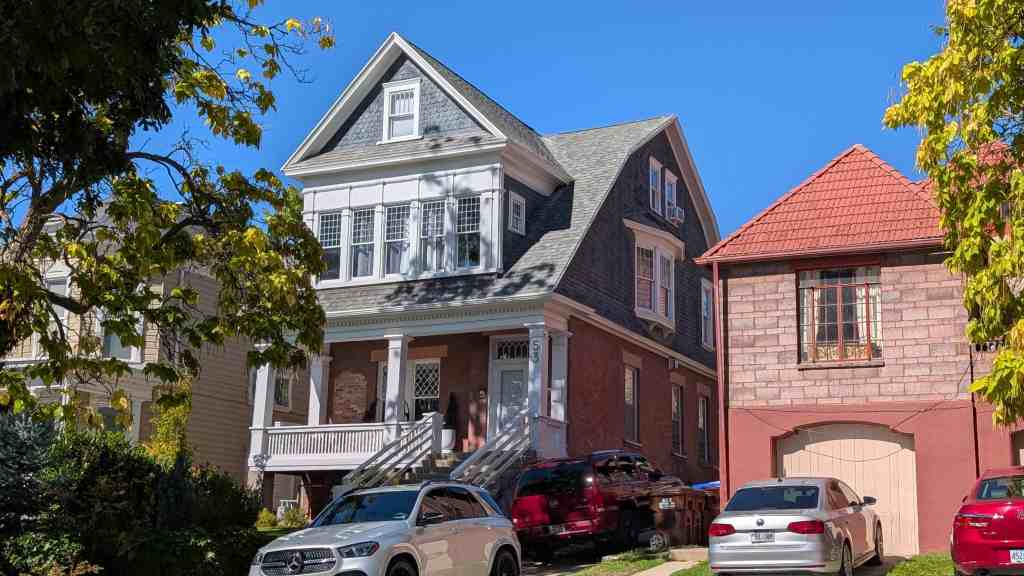
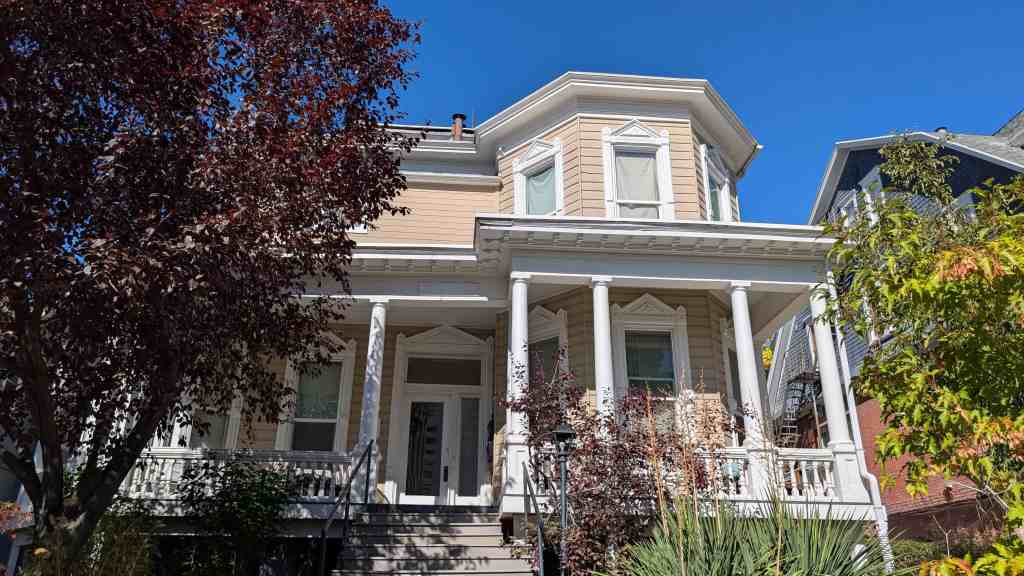
Charles C. Crismon purchased this property from Franklin R. Snow in Spring of 1905. He had his home built the fall of that year and took up residency there in 1906. Franklin Snow was a Salt Lake contractor and it is possible that he built the Crismon home. Charles was born in 1875. He attended the University of Utah and the University of Geneva in Switzerland.

After graduation free the latter he returned to Utah to start the firm of Crismon & Nichols. The assaying firm was one of the first established in Salt Lake and was Important in certifying many of Utah’s major ore discoveries. Charles was married in 1905 to Gertrude Mayer of Silver City, Idaho.

In 1929 Gertrude sold the home to Mable J. Paul.

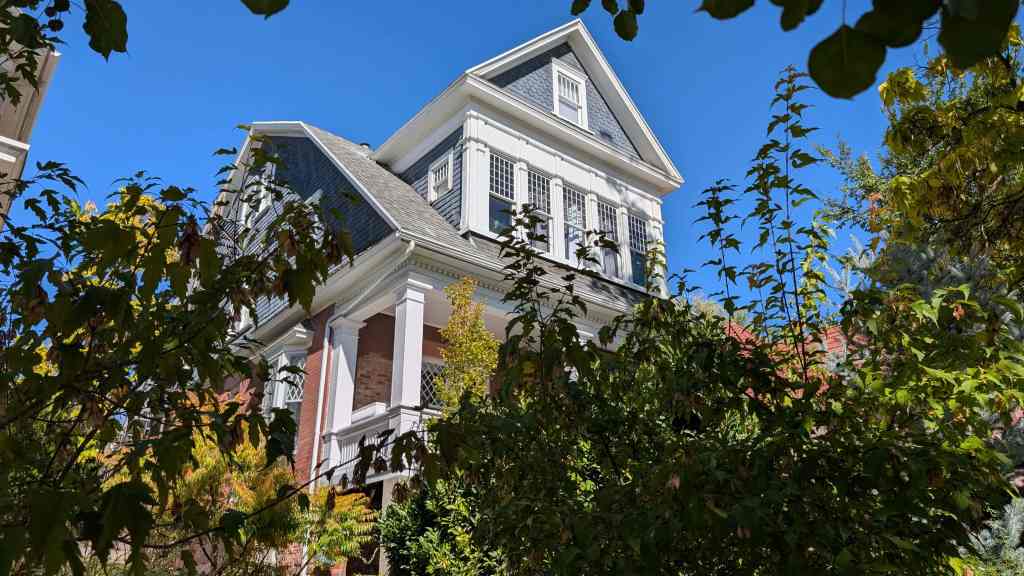
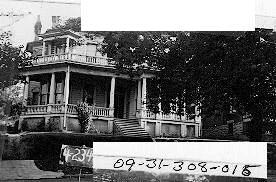
The gambrel roof of this two and one half story home has its broad side facing the street. A large shingled dormer is centered on the roof of the main façade. Applied wood pilasters divide the windows here. Classically derived square posts marked the indented front porch which also displays a low plain balustrade and dentiled cornice. Side gable ends are shingled and have oriel windows.

Located at 53 East 200 North in the Capitol Hill Historic District in Salt Lake City, Utah.
Related:

  • Crismon Mill Site
(from county records)


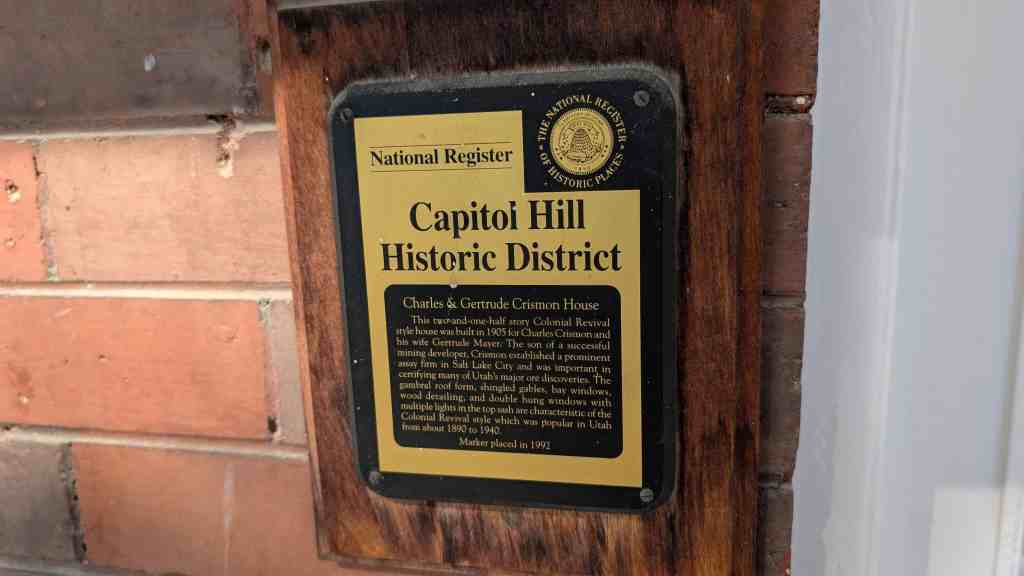
Charles & Gertrude Crismon House

This two-and-one-half story Colonial Revival style house was built in 1905 for Charles Crismon and his wife Gertrude Mayer. The son of a successful mining developer, Crismon established a prominent assay firm in Salt Lake City and was important in certifying many of Utah’s major ore discoveries. The gambrel roof form, shingled gables, bay windows, wood detailing, and double hung windows with multiple lights in the top sash are characteristic of the Colonial Revival style which was popular in Utah from about 1890 to 1940.

Seckels-Spence Home

14 Thursday Oct 2021

Posted by Jacob Barlow in Uncategorized

≈ Leave a comment

Tags

Capitol Hill Historic District

This home is on land once owned by Heber C. Kimball who sold it to William Tucker in 1872 (all of Lot 2, Block 2, containing 52 rods). Tucker sold a part of Lot 2 to Heber C. Kimball’s daughter Sarah Kimball Seckels and her husband Louis Seckels in 1888. They built this beautiful home in 1889. Louis was in mining and real estate. In 1902 he was Sec and Treas. of the Watseca Gold Mining Co. In 1893 the Seckels sold the home to Joseph E. Oppenheimer and his wife Phoebe S. who however, they did not live in the home. Their relative Elias S. Oppenheimer, bookkeeper of the Siegel Clothing Co. lived there. The Oppenheimers sold their home to Cynthia Ann Eldredge Spence and William Charles Spence in 1905, and the Spences occupied the home until after their youngest son was married in 1923. William C. Spence was the Transportation Agent for the LDS Church. He was born in London, came to Salt Lake Valley where he met and married Cynthia Ann Eldredge. They were the parents of eight children.

Subsequent owners are:

  • Ezra & E. Reed Lindsay 1955-1970
  • Donal Ferrin 1970

This two story asymmetrically planned home has a segraental front bay. Tuscan posts, turned balustrade and modillioned cornice identify the porch. Windows have elaborate Victorian eclectic surrounds and pedimental headers. – D. Diana Johnson

Located at 45 East 200 North in the Capitol Hill Historic District in Salt Lake City, Utah.
(from county records)

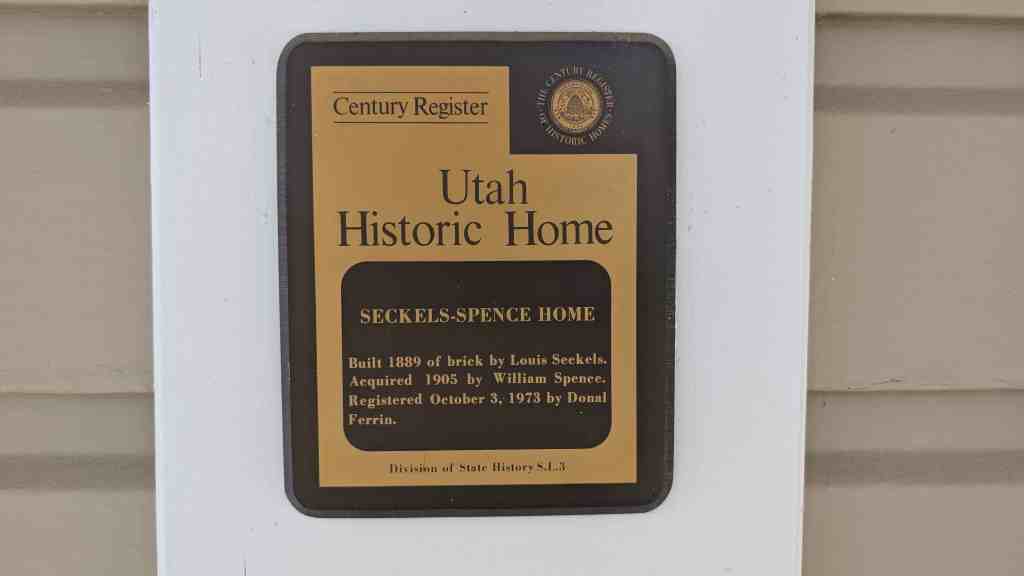
Seckels-Spence Home

Built 1889 of brick by Louis Seekels. Acquired 1905 by William Spence. Registered October 3, 1973 by Donal Ferrin.
← Older posts
Newer posts →

Follow Jacob

Follow Jacob

Come wander with me on Youtube.

Blog Stats

  • 2,087,547 hits

Social and Other Links

BarlowLinks.com

Recent Posts

  • Provo High School Seminary Building
  • 821 E 100 S
  • 820 E 100 S
  • 817-819 E 100 S
  • 814 E 100 S

Archives

Loading Comments...