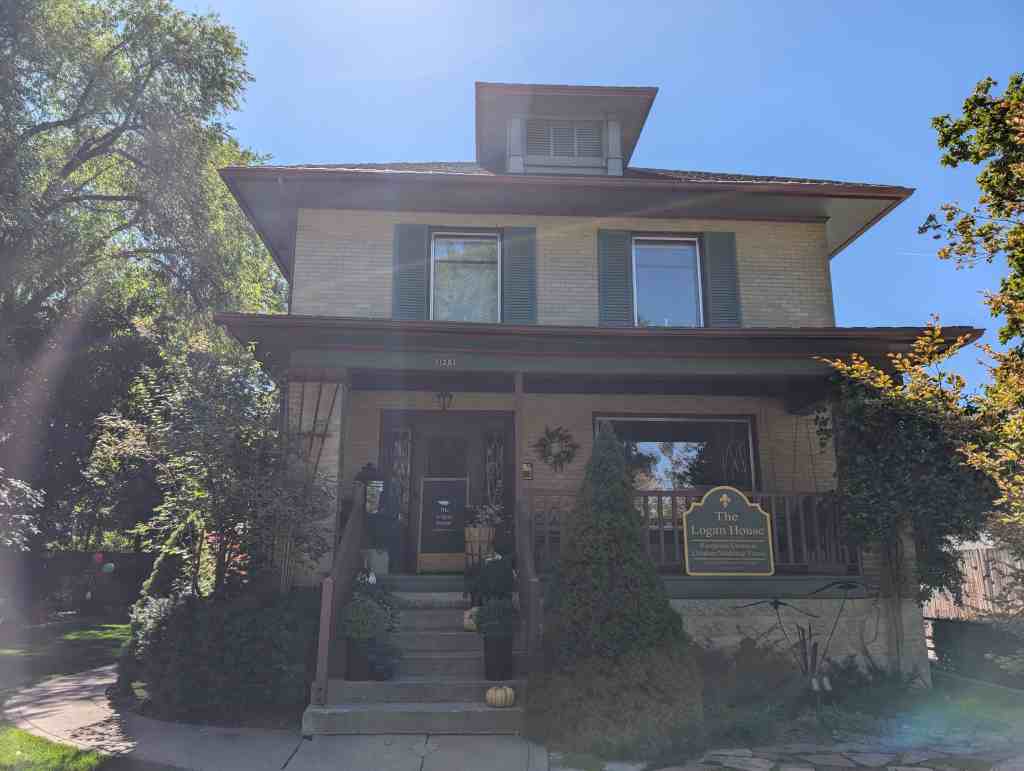
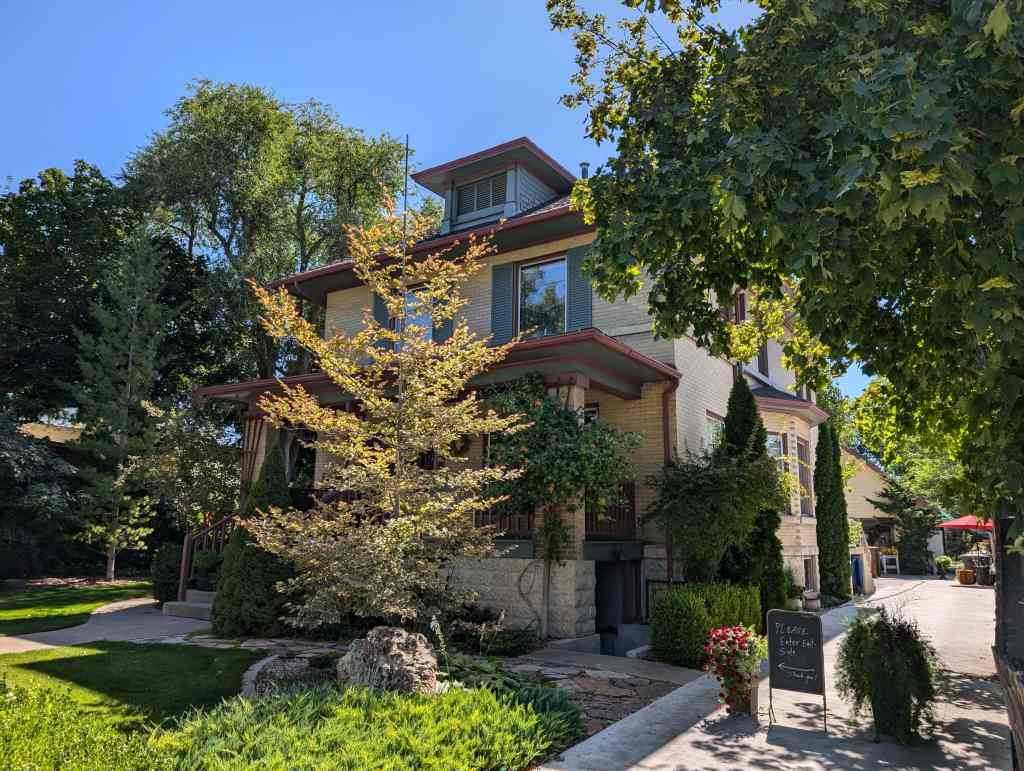
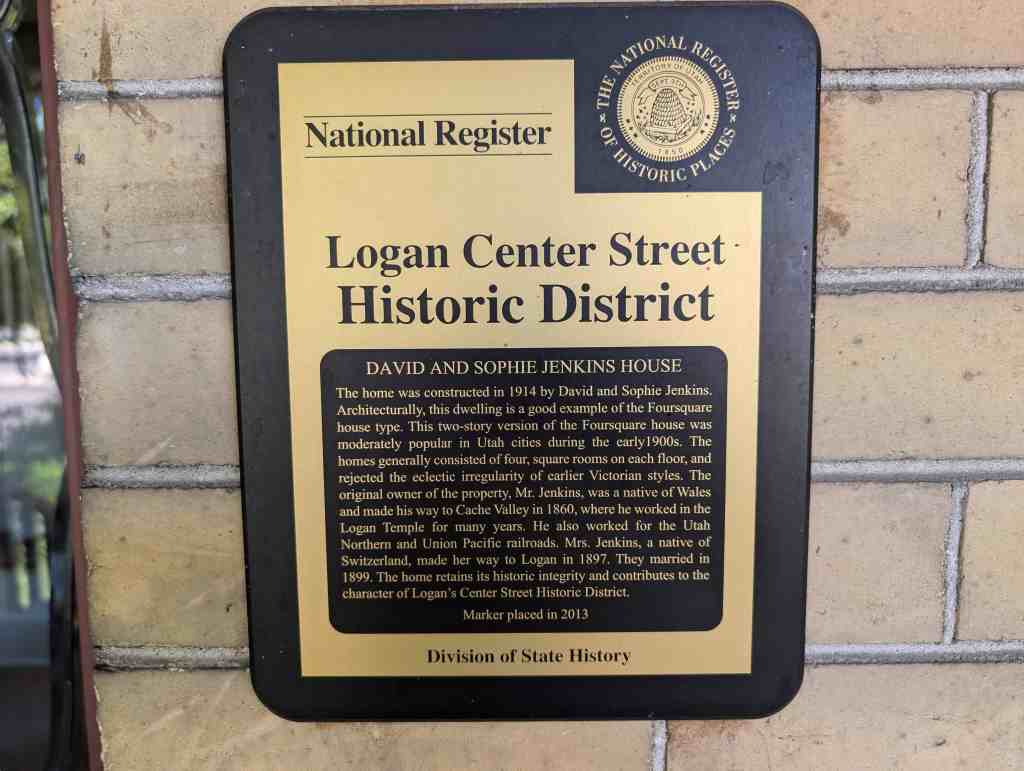
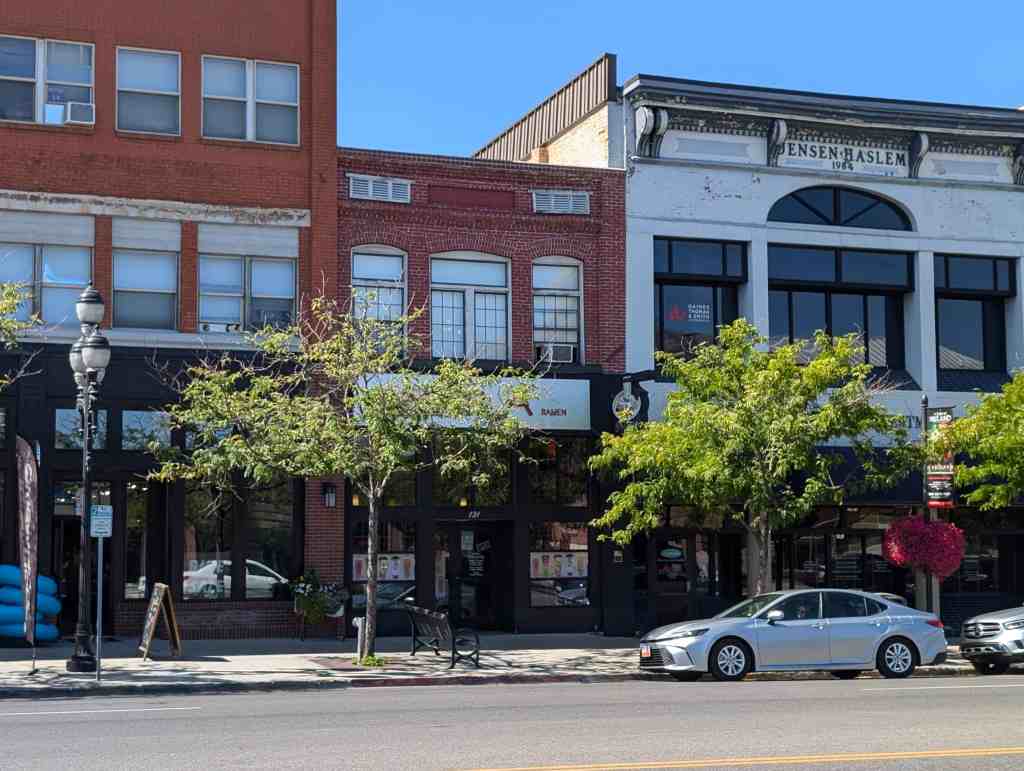
The home was constructed in 1914 by David and Sophie Jenkins. Architecturally, this dwelling is a good example of the Foursquare house type. This two-story version of the Foursquare house was moderately popular in Utah cities during the early 1900s. The homes generally consisted of four, square rooms on each floor, and rejected the eclectic irregularity of earlier Victorian styles. The original owner of the property, Mr. Jenkins, was a native of Wales and made his way to Cache Valley in 1860, where he worked in the Logan Temple for many years. He also worked for the Utah Northern and Union Pacific railroads. Mrs. Jenkins, a native of Switzerland, made her way to Logan in 1897. They married in 1899. The home retains its historic integrity and contributes to the character of Logan’s Center Street Historic District.
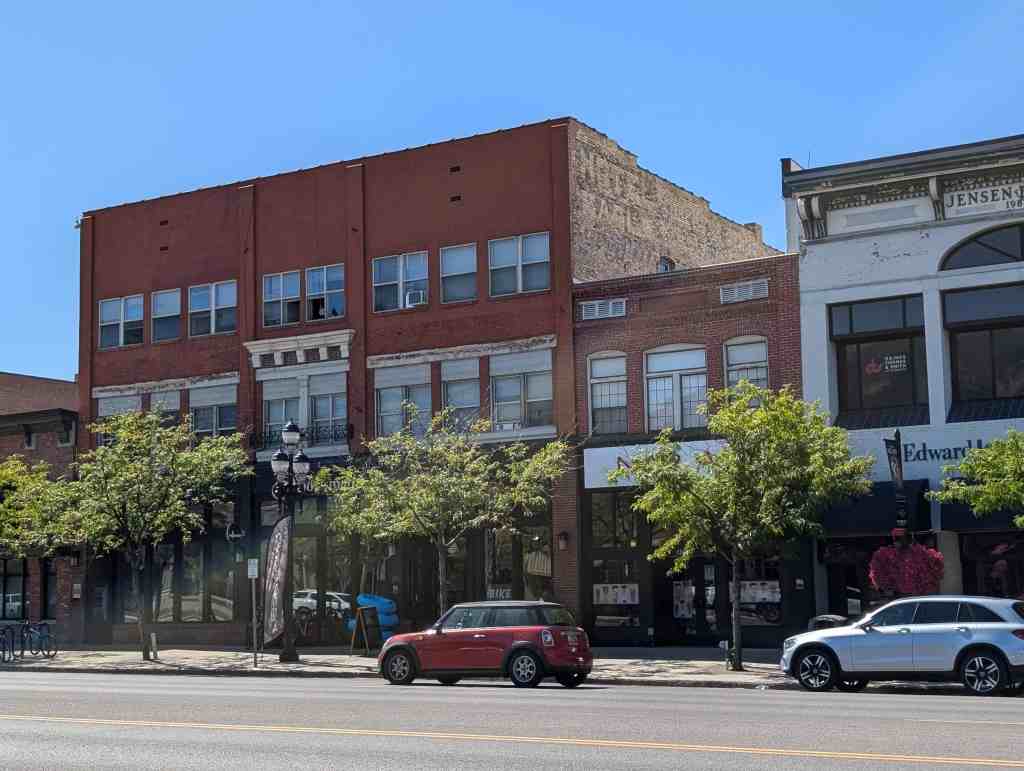
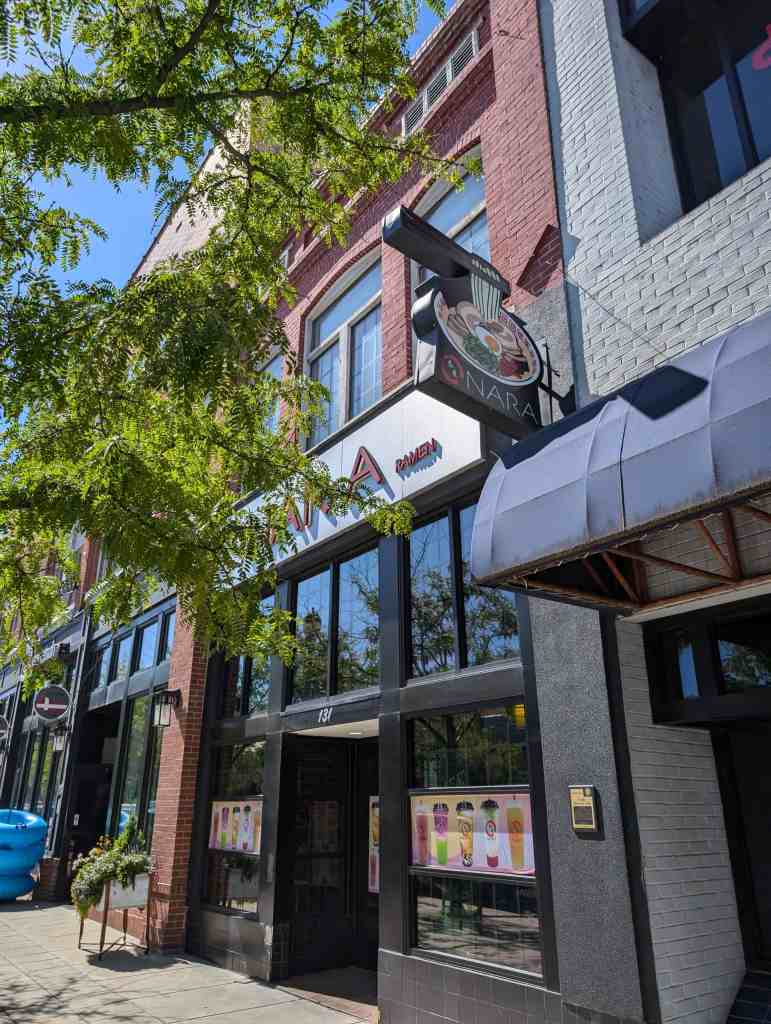
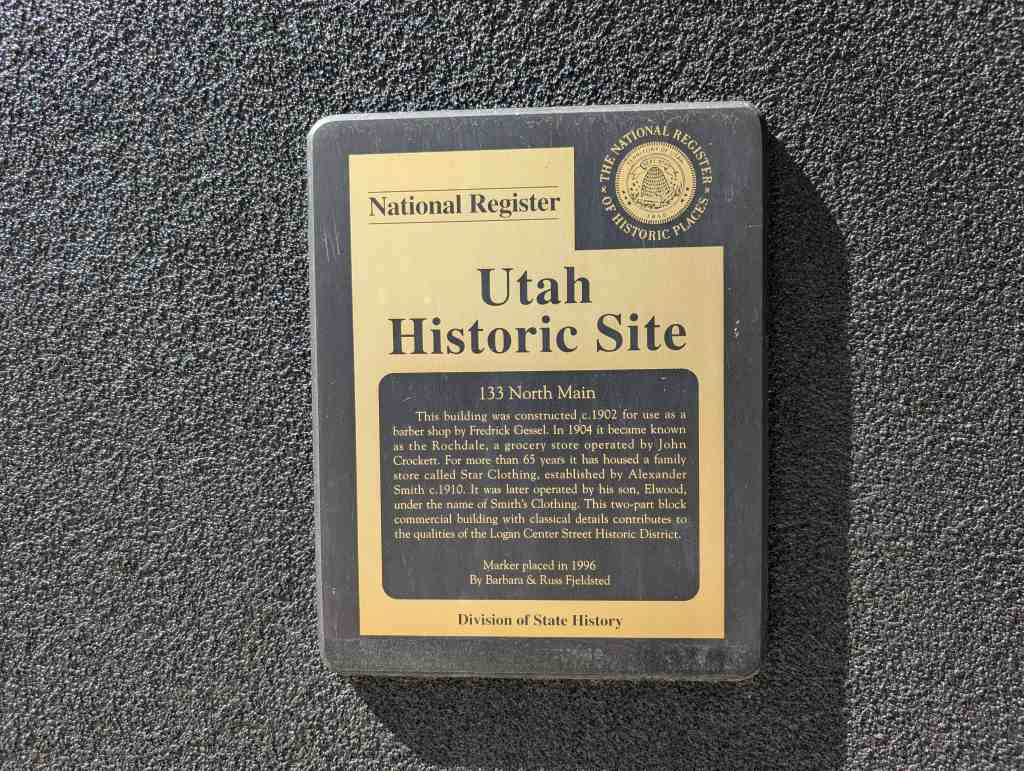
This building was constructed c.1902 for use as a barber shop by Fredrick Gessel. In 1904 it became known as the Rochdale, a grocery store operated by John Crockett. For more than 65 years it has housed a family store called Star Clothing, established by Alexander Smith c.1910. It was later operated by his son, Elwood, under the name of Smith’s Clothing. This two-part block commercial building with classical details contributes to the qualities of the Logan Center Street Historic District.
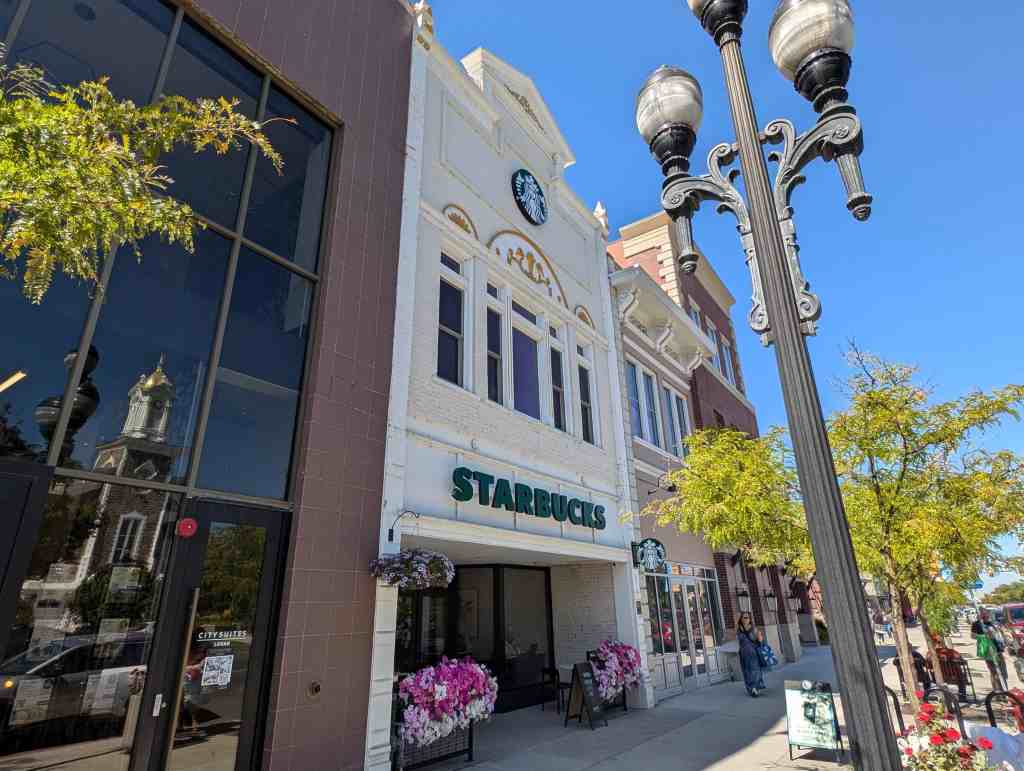
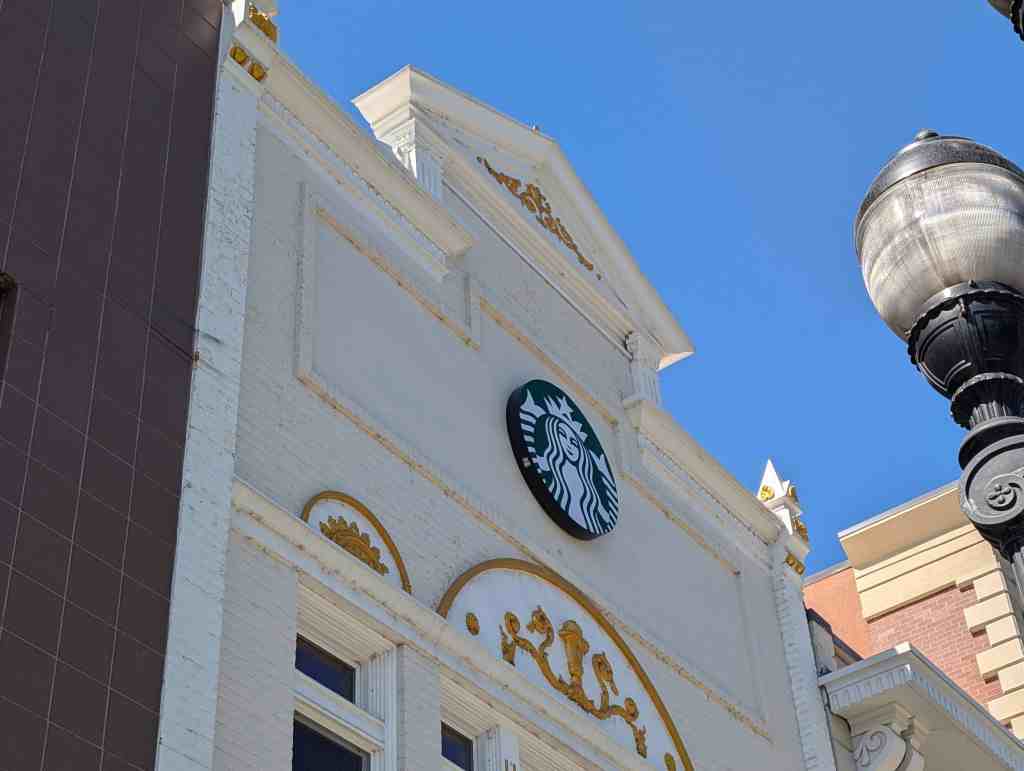
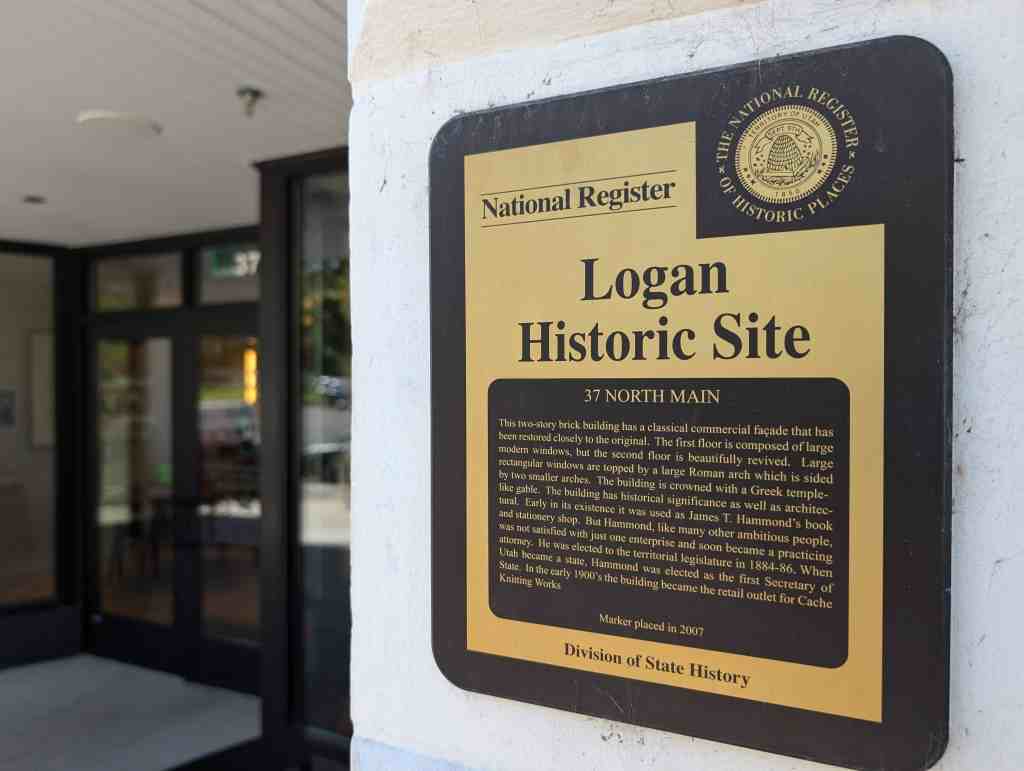
This two-story brick building has a classical commercial façade that has been restored closely to the original. The first floor is composed of large modern windows, but the second floor is beautifully revived. Large rectangular windows are topped by a large Roman arch which is sided by two smaller arches. The building is crowned with a Greek temple- like gable. The building has historical significance as well as architec- tural. Early in its existence it was used as James T. Hammond’s book and stationery shop. But Hammond, like many other ambitious people, was not satisfied with just one enterprise and soon became a practicing attorney. He was elected to the territorial legislature in 1884-86. When Utah became a state, Hammond was elected as the first Secretary of State. In the early 1900’s the building became the retail outlet for Cache Knitting Works.
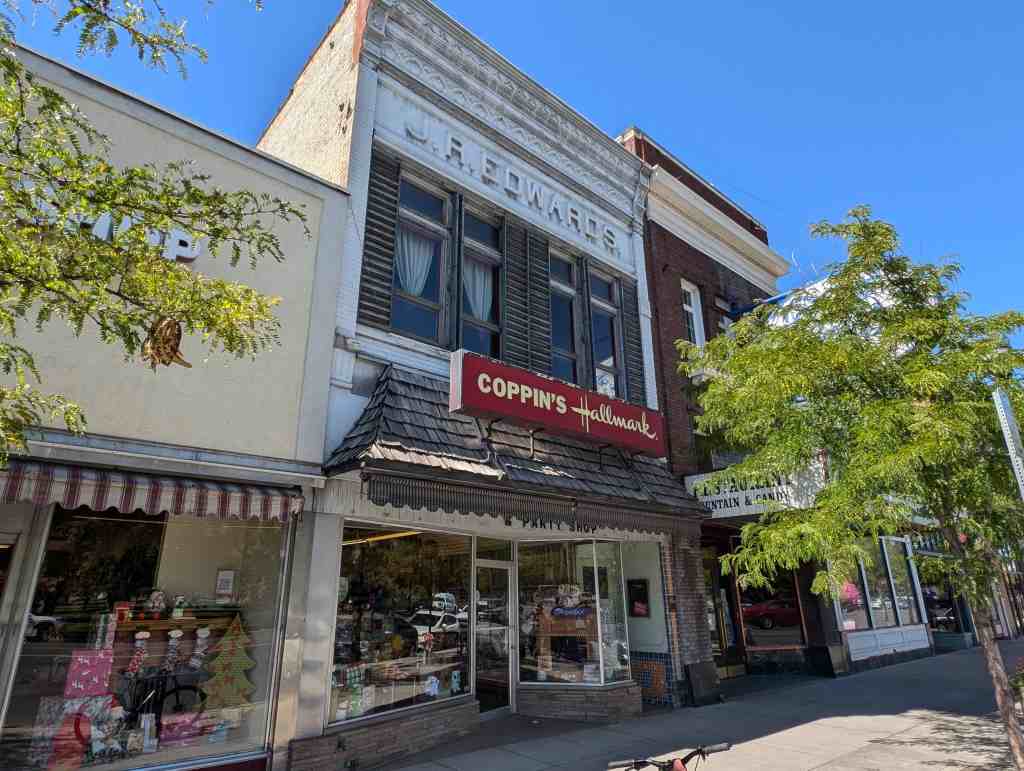
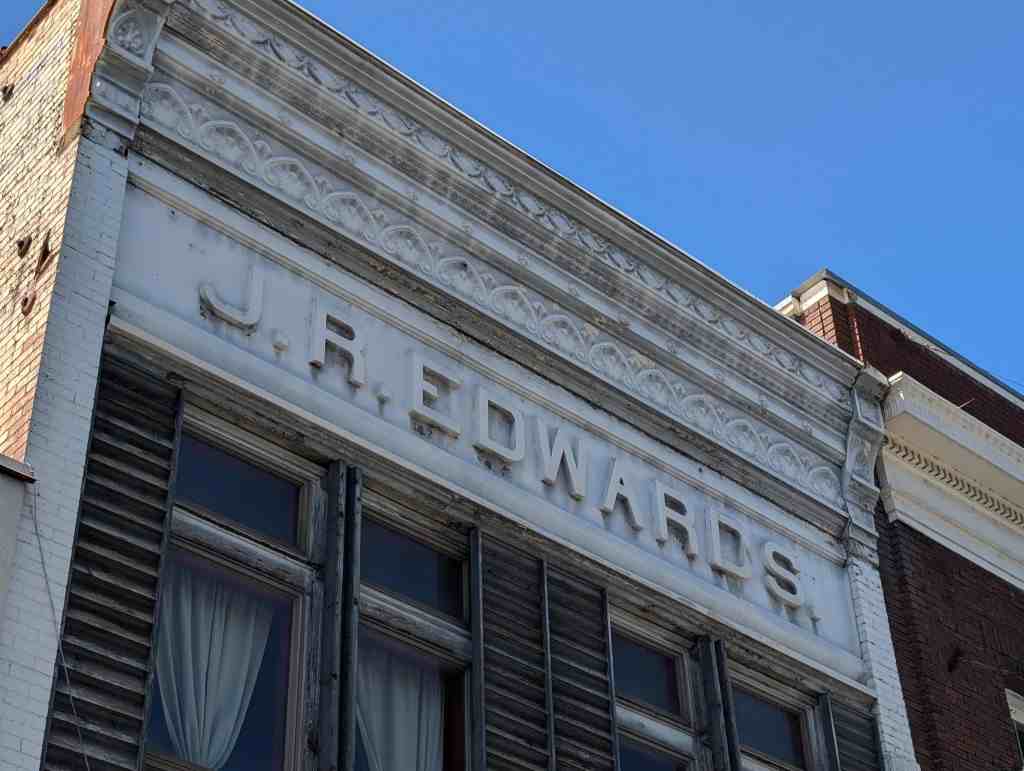
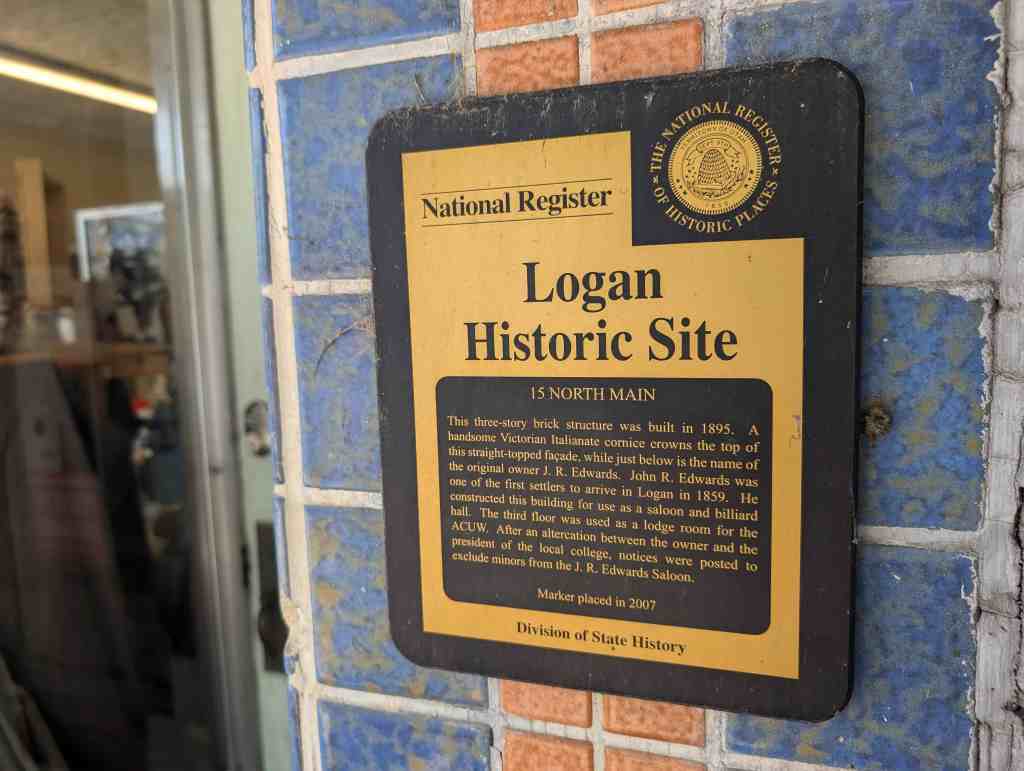
This three-story brick structure was built in 1895. A handsome Victorian Italianate cornice crowns the top of this straight-topped façade, while just below is the name of the original owner J. R. Edwards. John R. Edwards was one of the first settlers to arrive in Logan in 1859. He constructed this building for use as a saloon and billiard hall. The third floor was used as a lodge room for the ACUW. After an altercation between the owner and the president of the local college, notices were posted to exclude minors from the J. R. Edwards Saloon.
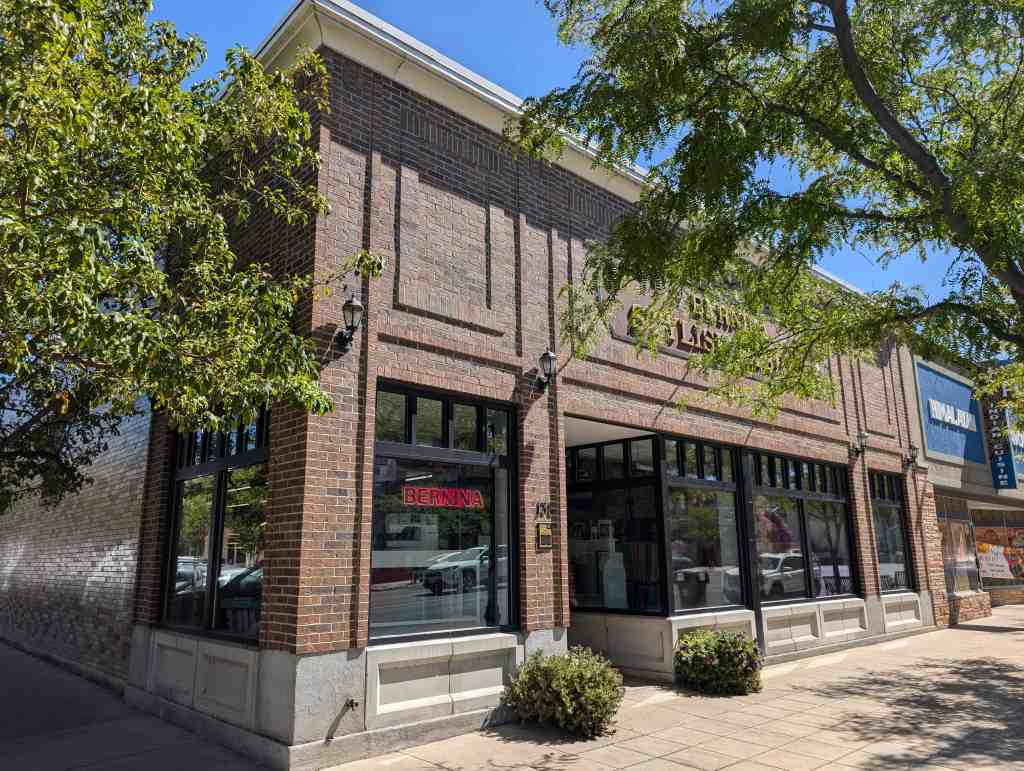
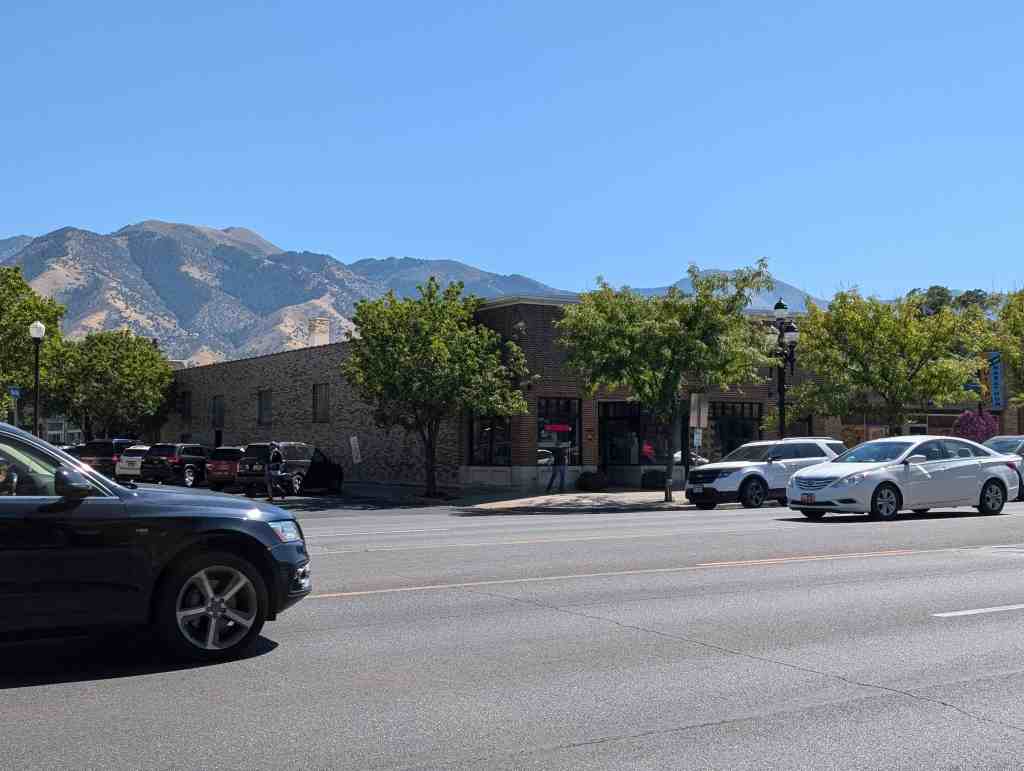
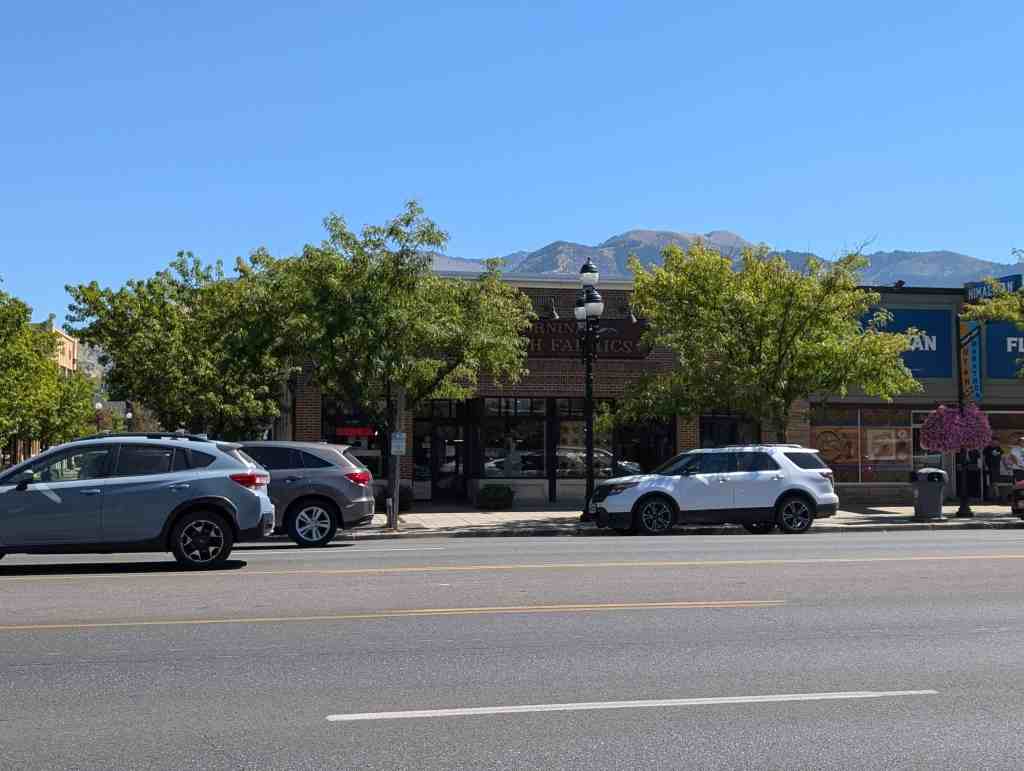
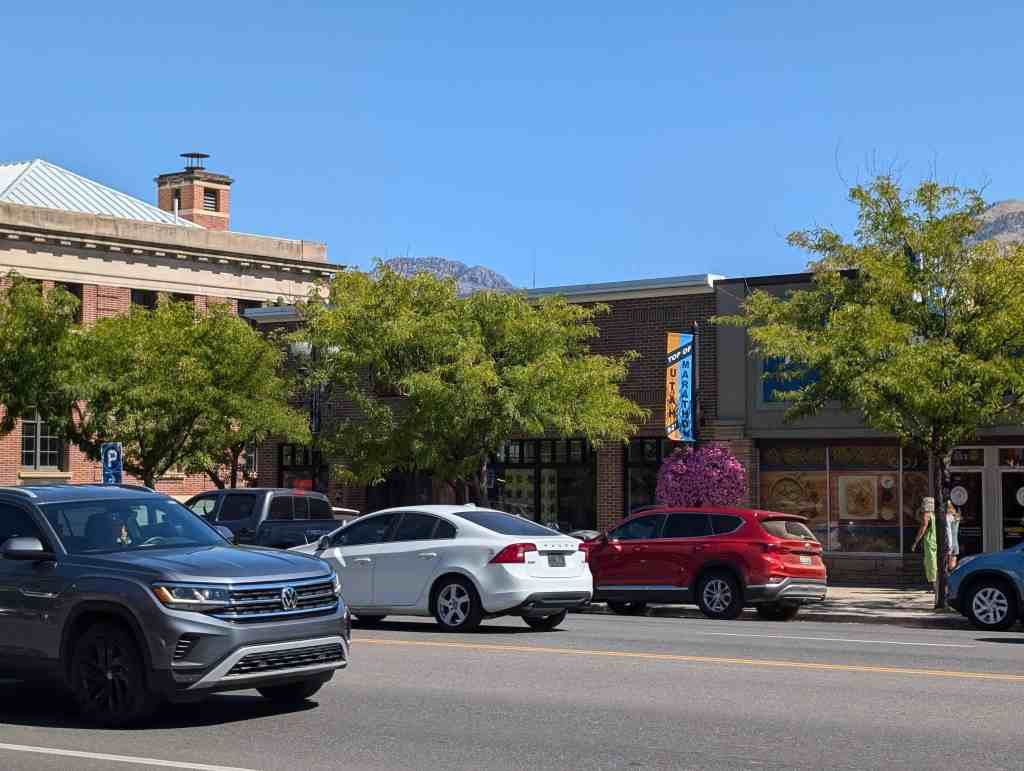
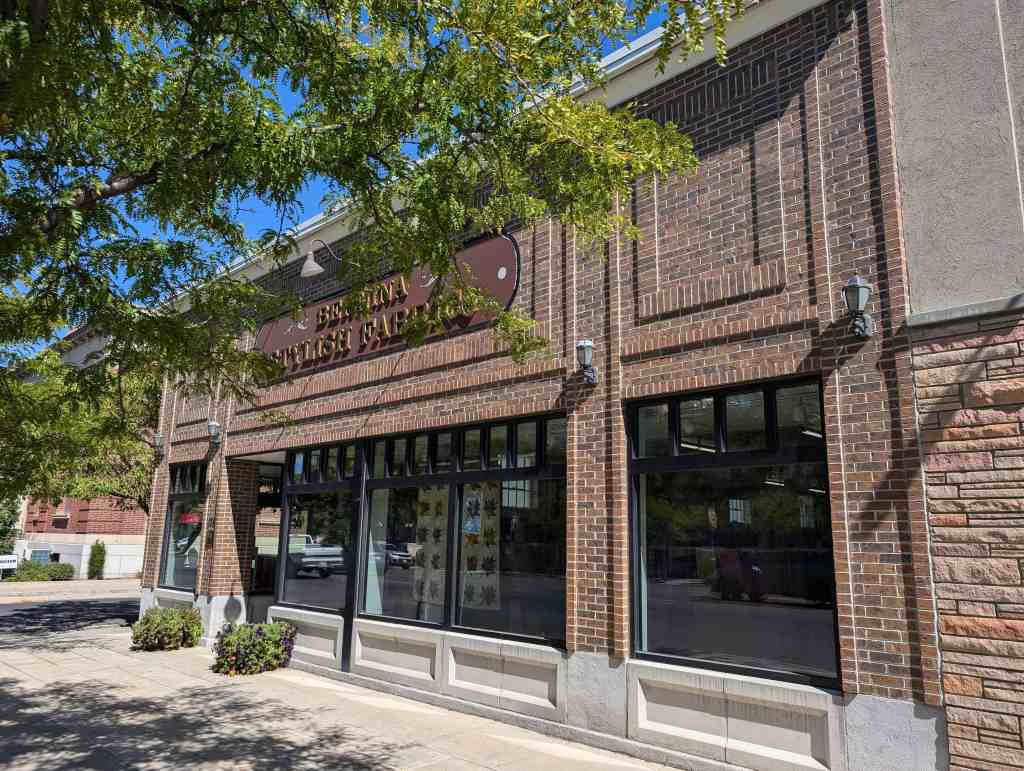
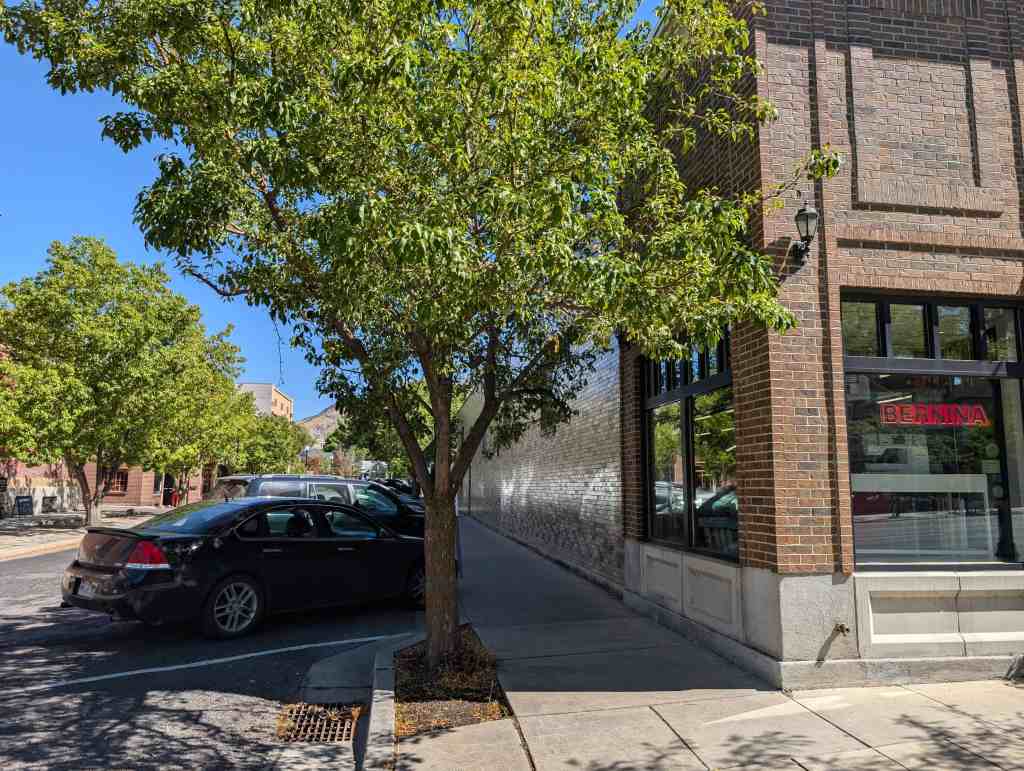
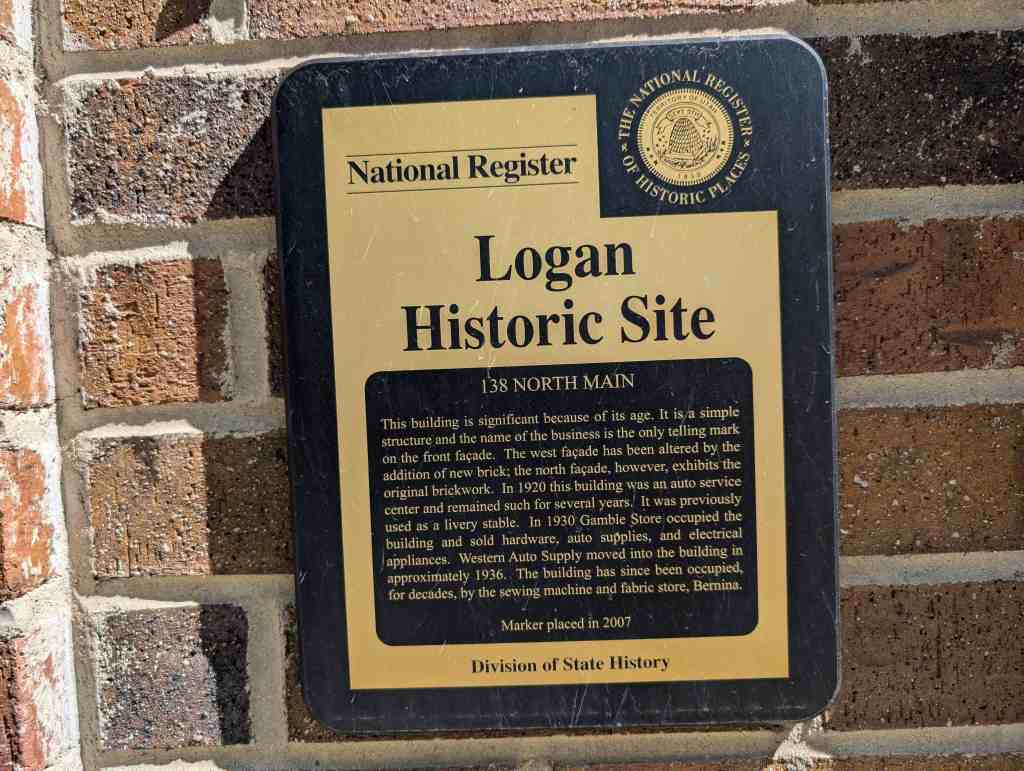
This building is significant because of its age. It is a simple structure and the name of the business is the only telling mark on the front façade. The west façade has been altered by the addition of new brick; the north façade, however, exhibits the original brickwork. In 1920 this building was an auto service center and remained such for several years. It was previously used as a livery stable. In 1930 Gamble Store occupied the building and sold hardware, auto supplies, and electrical appliances. Western Auto Supply moved into the building in approximately 1936. The building has since been occupied, for decades, by the sewing machine and fabric store, Bernina.
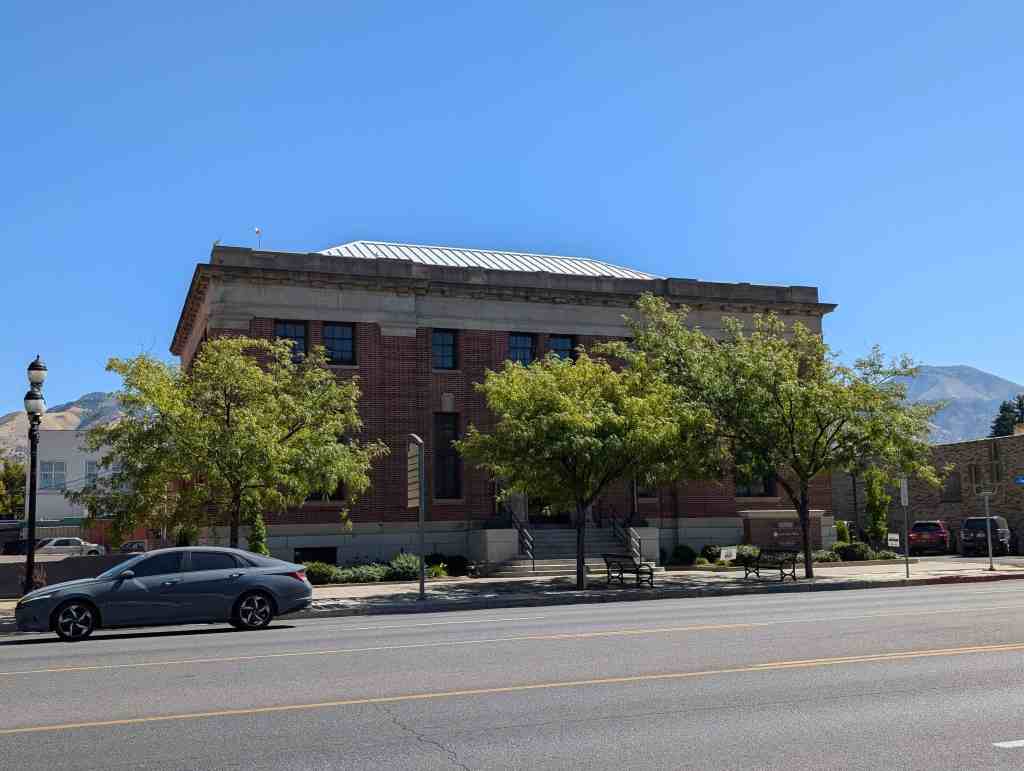
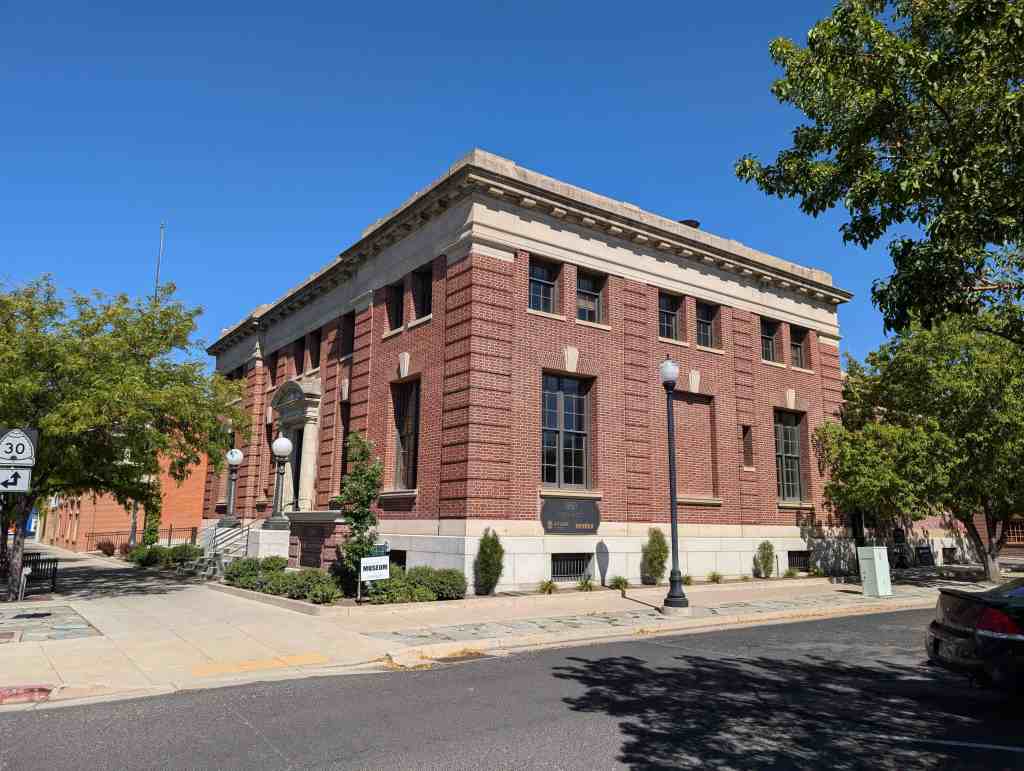
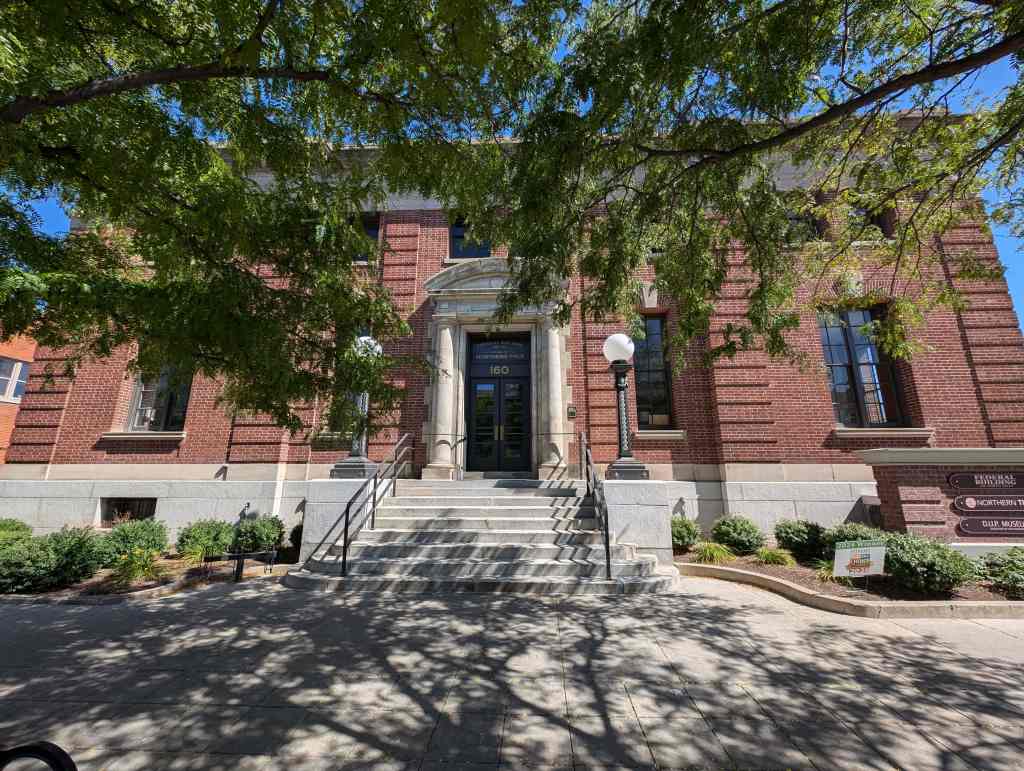
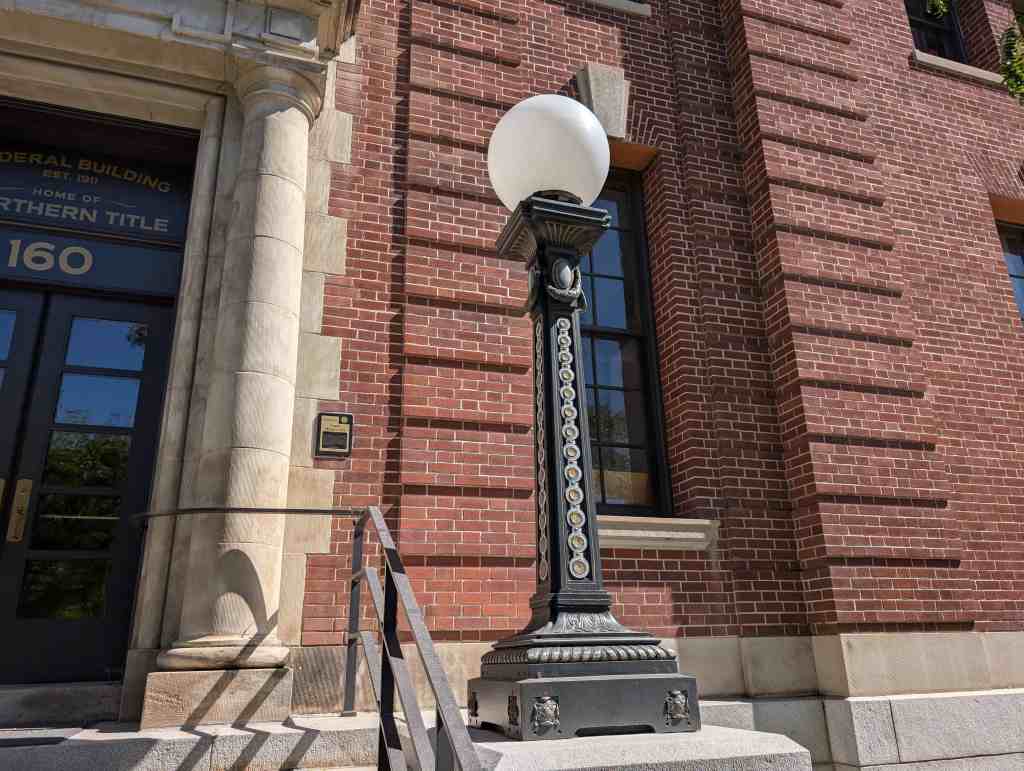
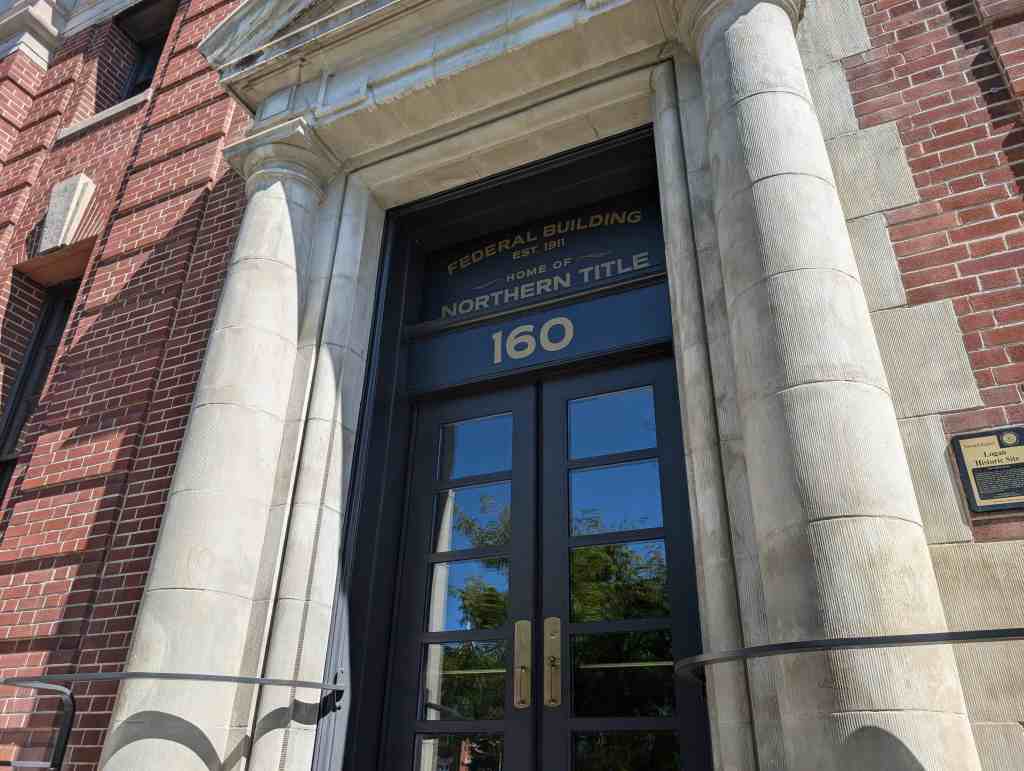
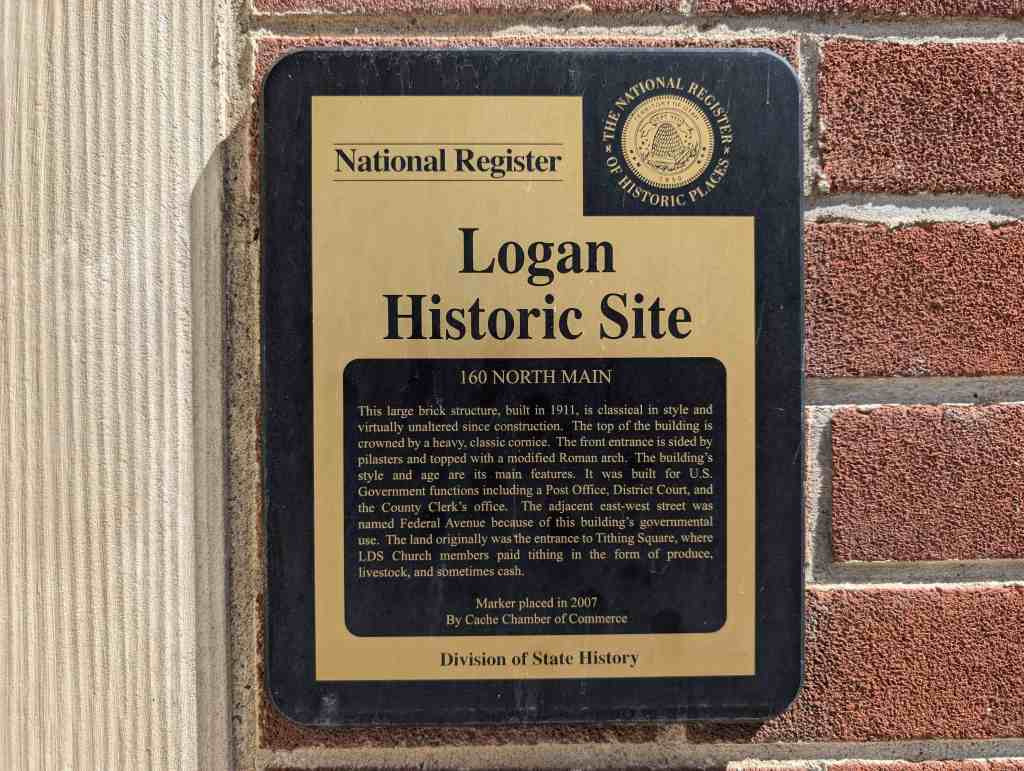
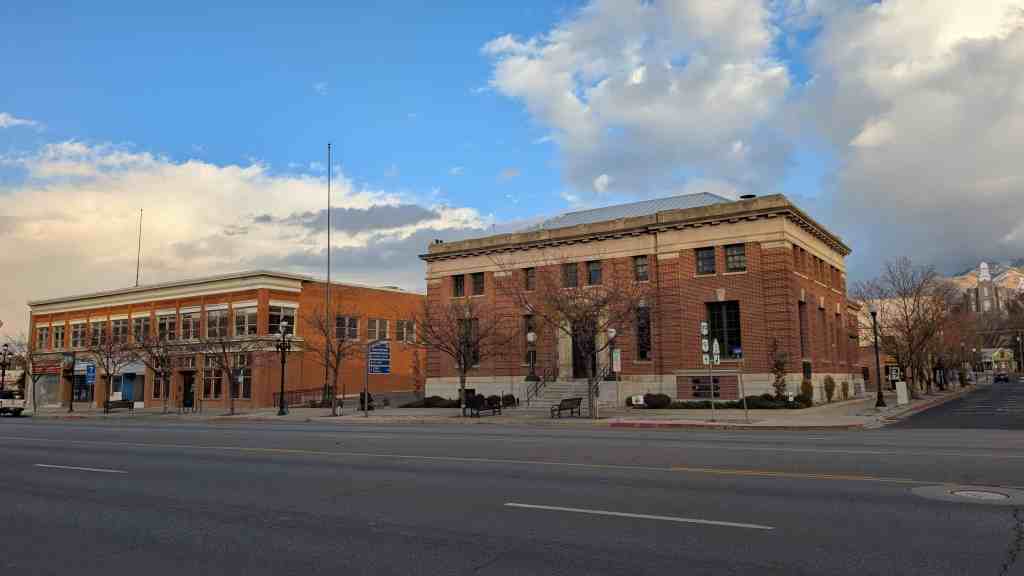
This large brick structure, built in 1911, is classical in style and virtually unaltered since construction. The top of the building is crowned by a heavy, classic cornice. The front entrance is sided by pilasters and topped with a modified Roman arch. The building’s style and age are its main features. It was built for U.S. Government functions including a Post Office, District Court, and the County Clerk’s office. The adjacent east-west street was named Federal Avenue because of this building’s governmental use. The land originally was the entrance to Tithing Square, where LDS Church members paid tithing in the form of produce, livestock, and sometimes cash.
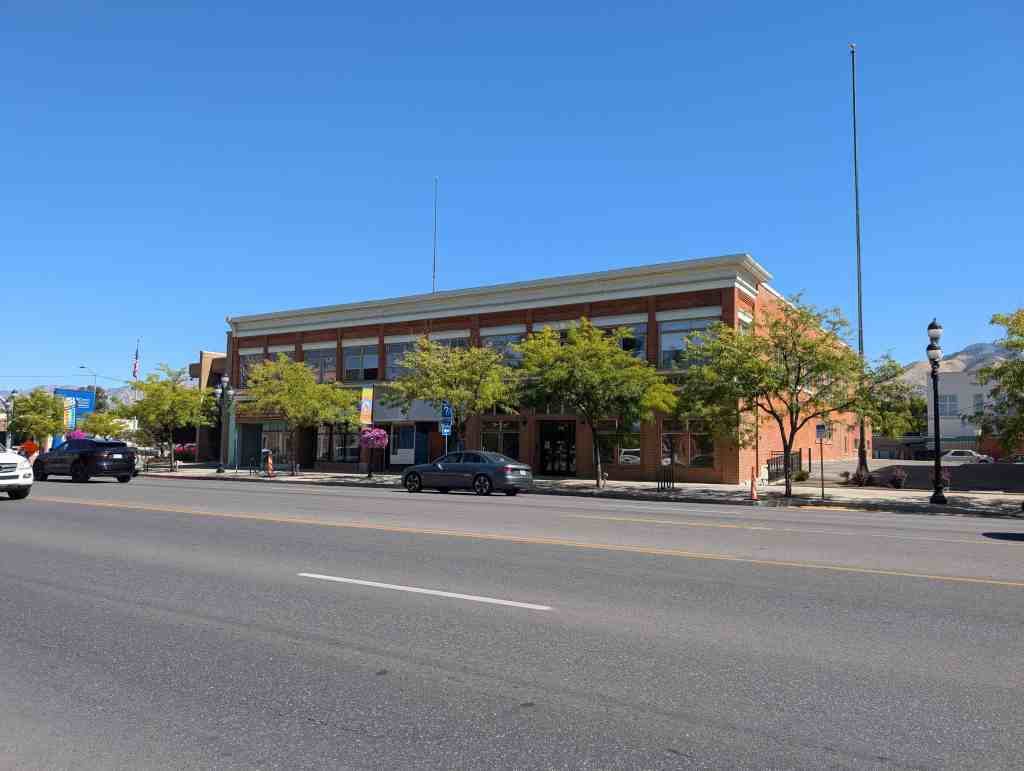
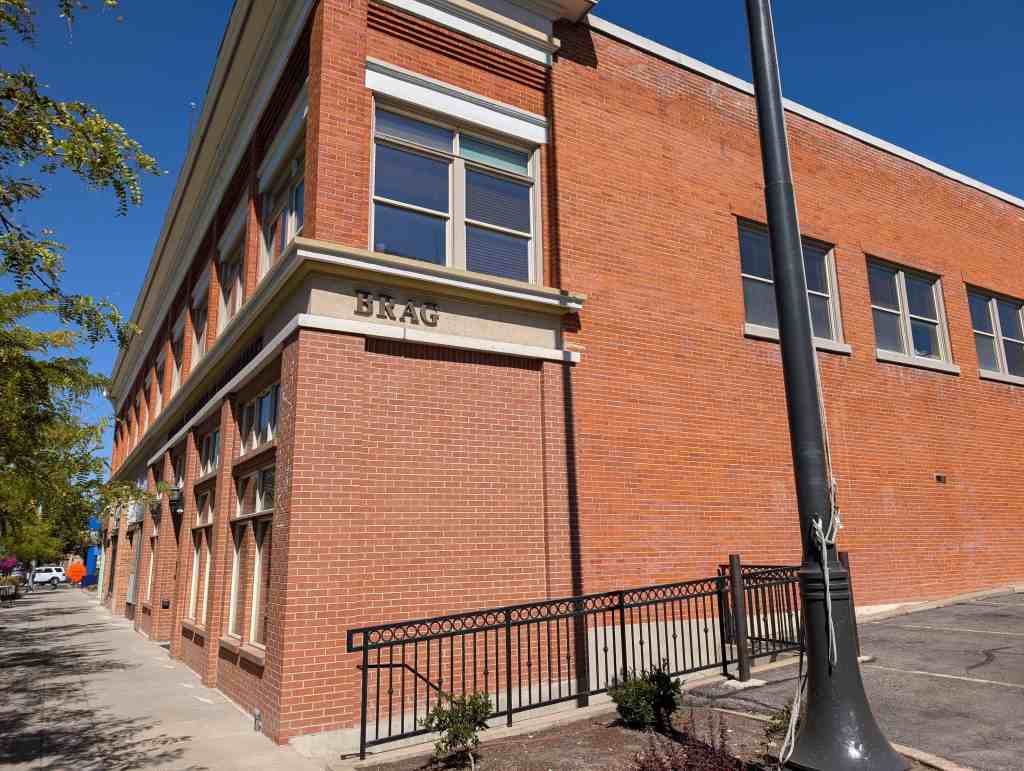
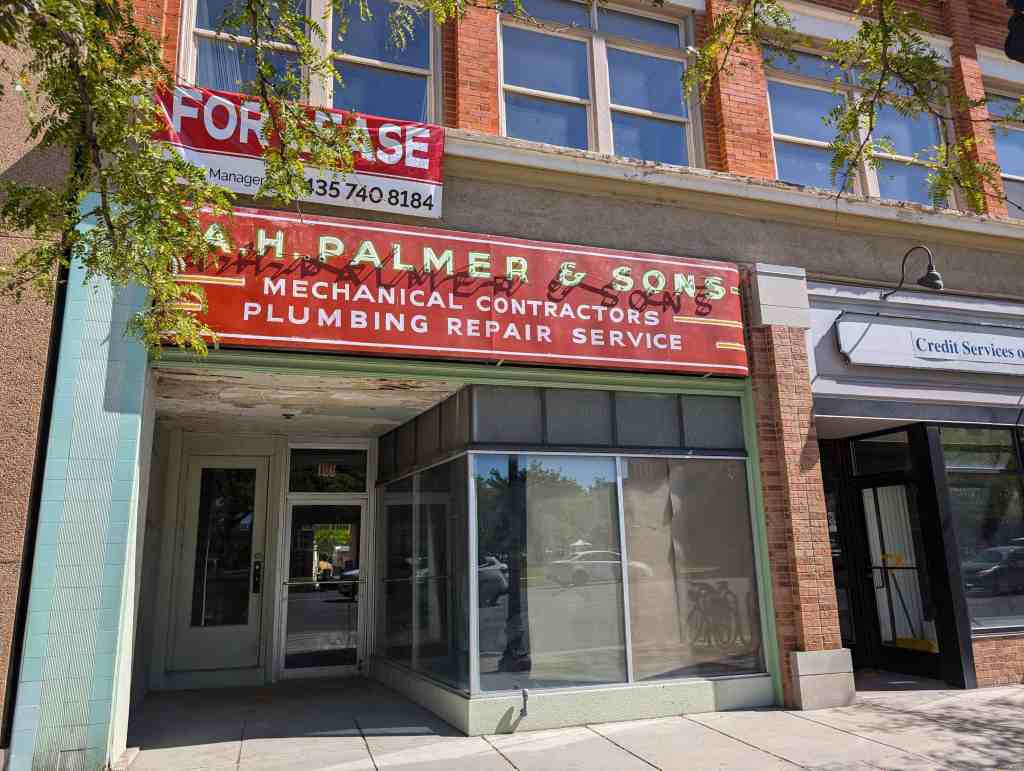
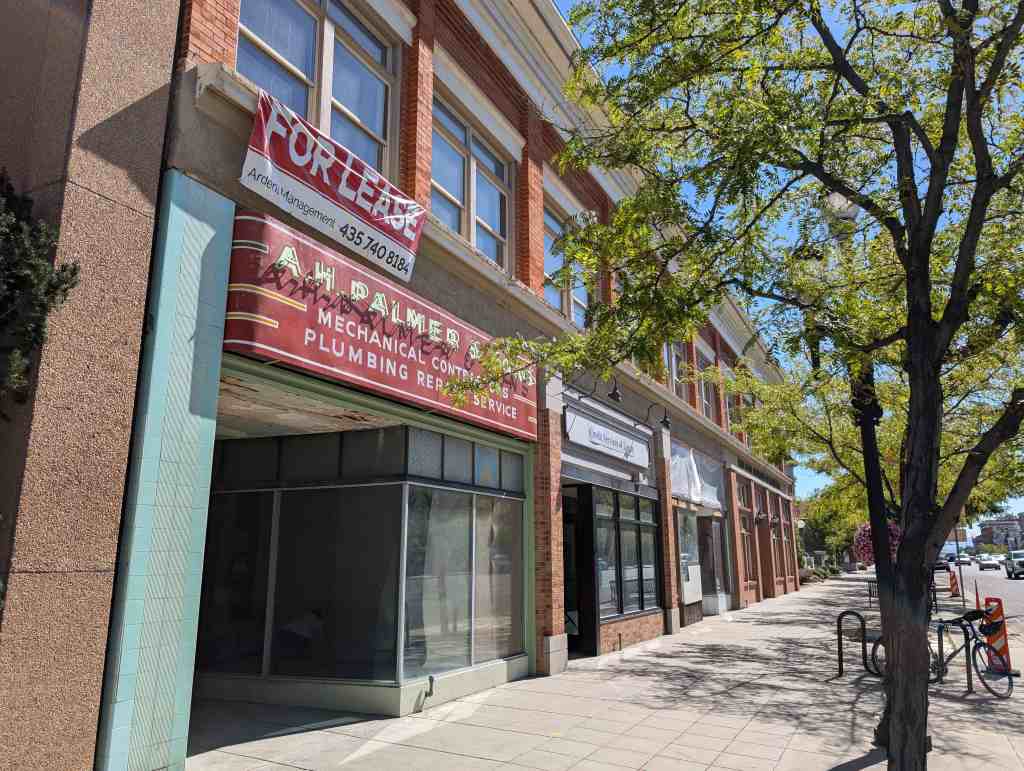
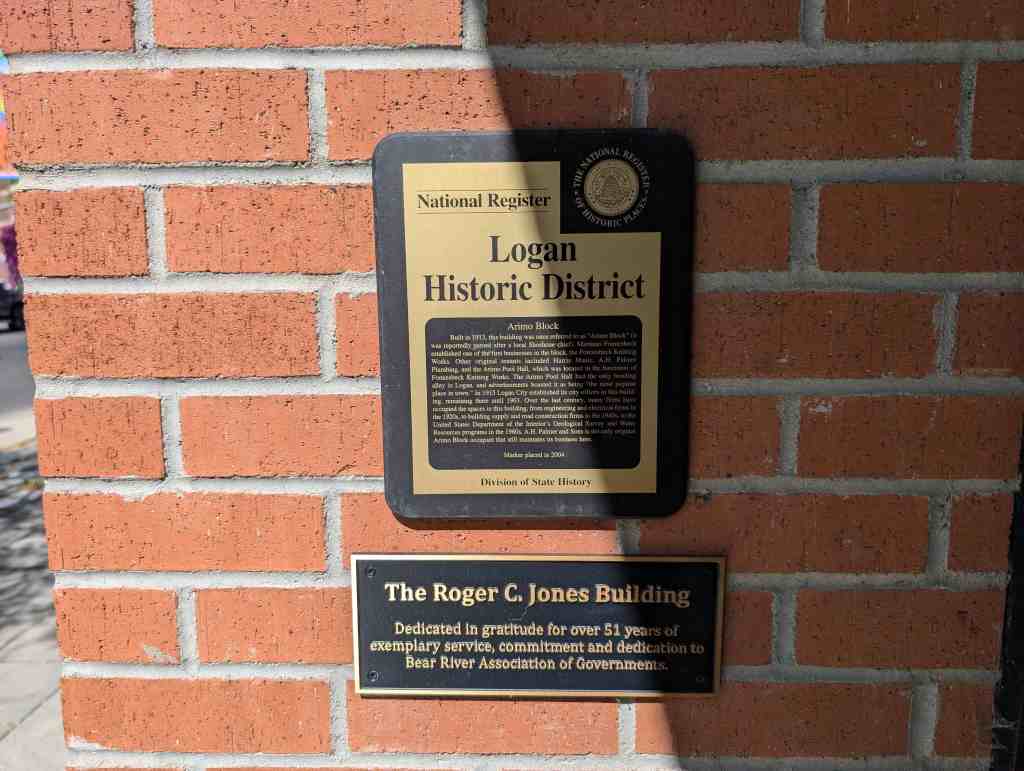
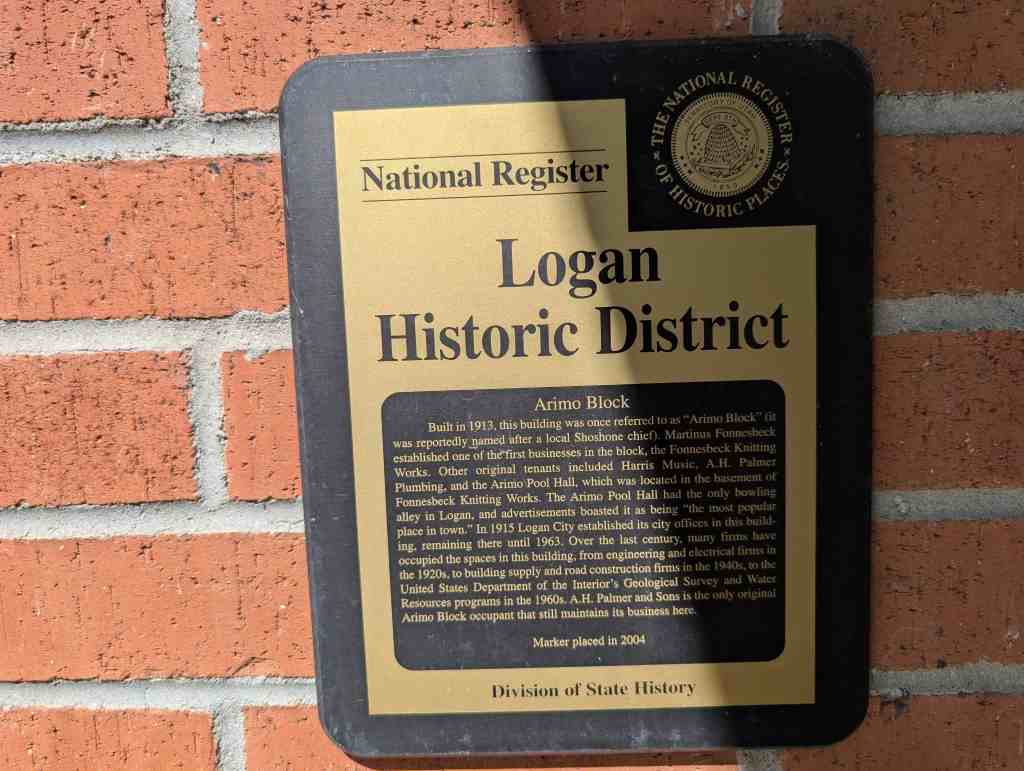
Built in 1913, this building was once referred to as “Arimo Block” (it was reportedly named after a local Shoshone chief). Martinus Fonnesbeck established one of the first businesses in the block, the Fonnesbeck Knitting Works. Other original tenants included Harris Music, A.H. Palmer Plumbing, and the Arimo Pool Hall, which was located in the basement of Fonnesbeck Knitting Works. The Arimo Pool Hall had the only bowling alley in Logan, and advertisements boasted it as being “the most popular place in town.” In 1915 Logan City established its city offices in this build- ing, remaining there until 1963. Over the last century, many firms have occupied the spaces in this building, from engineering and electrical firms in the 1920s, to building supply and road construction firms in the 1940s, to the United States Department of the Interior’s Geological Survey and Water Resources programs in the 1960s. A.H. Palmer and Sons is the only original Arimo Block occupant that still maintains its business here.
The Redmond Hotel is significant as a good example of a public boarding house in a rural, Mormon community. Based upon a comprehensive survey of Sevier County, it is the best example of this building type in the county. It is also an excellent example of structural adaptation of a building to local events for the “hotel” has evolved as the community evolved. The Redmond Hotel stands today as one of the best remembered “old hotels” in Sevier County.
The Redmond Hotel is located at 15 East Main Street in Redmond, Utah and was added to the National Register of Historic Places (#80003964) on June 20, 1980.
Ifedmond Utah is a small agricultural community settled in 1876, surveyed in 1879 and “given” a local government in 1878. in 1879, John Johnson, an early Jtedmond settler, town surveyor and Mormon bishop contracted to have a three-room stone home built on Main and Center. The probable builder of the home was Jacob Nielsen, a Mormon, local stone mason, and Danish immigrant like John Johnson. This early structure is the core of the Ifedmond Hotel on which later additions were built.
The appointment of Johnson to the office of bishop, a position he held for 10 years, reflected his growing economic and social importance in the area. Around 1888 Johnson had a larger and more stylish home built east of his first home on Main Street. The older, smaller home was rented out, probably to his son-in-law and business partner, John B. Sorenson with whom he established the financially successful Redmond Co-op.
In 1892, two years after the Denver and Rio Gande Railroad arrived in the Sevier Valley, Johnson sold his main street properties to Henry McKenna Sr. The latter was an early settler of Salina whose past and future experiences with hotel building leads one to suppose that his purchase was a form of “hotel speculation.” Redmond was only a few miles from the Salina railhead and its untapped agricultural and mineral resources could be expected to bring in new residents. This demographic change was expected to cause, as it had elsewhere in Utah, the need for the temporary or seasonal services of teachers, salesmen, laborers, miners and entertainment troupes. To accommodate these mobile residents a pifolic house would be necessary for the community.
Henry McKenna sold his property in 1894 to his son, Henry McKenna Jr. Redmond’s economy continued to improve and so in 1503, the new owner mortgaged the Johnson properties to finance the remodeling of the three-room home into a public boarding house. In 1904, apparently unable to satisfy his creditors, McKenna Jr. sold the structure to James Frandsen who had been hired to do the remodeling work for the hotel (the new owner had done the remodeling work in the area before under taking the building of the Redmond Hotel). The daily operation of the boarding house given over to his wife Miranda as James continued to farm and raise livestock.
After sixteen years of successfully keeping boarders the Fandsen’s sold the building to Anthony C. Willardsen a local merchant. In B20 Anthony opened a store in the front and hired Ada Nielsen, granddaughter of Jacob Nielsen, to run the boarding house. The collapse of agricultural prices that followed World War I adversely affected the local economy and thereby affected the success of the Willardsen enterprise. With two outstanding mortgages and under threat of public sale for payment of back taxes, he sold the boarding house to Ada. With her extra income as post mistress and sales clerk, she was also able to keep the boarding business afloat. It was during her ownership that the public house became widely known as the Redmond Hotel. Ada continued to rent rooms through the depression. In 1946 Charles Hampton bought the building and continued to rent rooms until 1951 when he readapted the public house again, this time back into a private residence. The economic boom for Resdmond had come and gone and with it the Redmond Hotel.
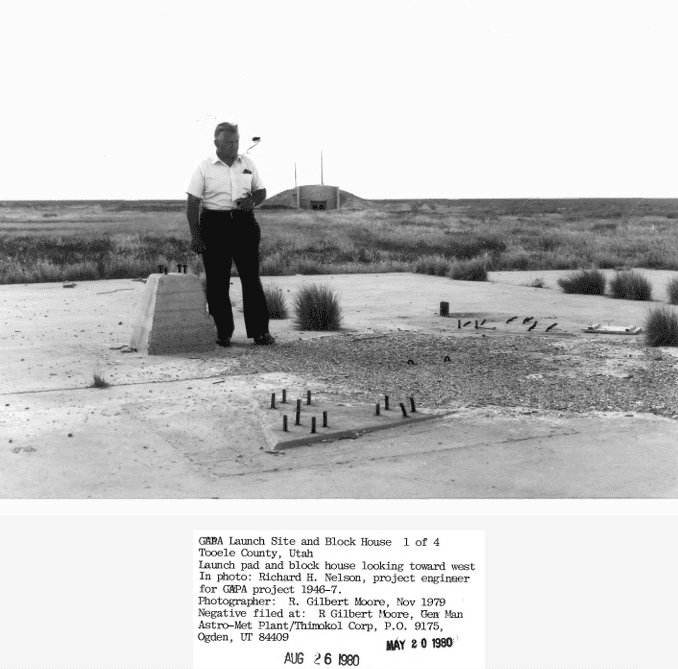
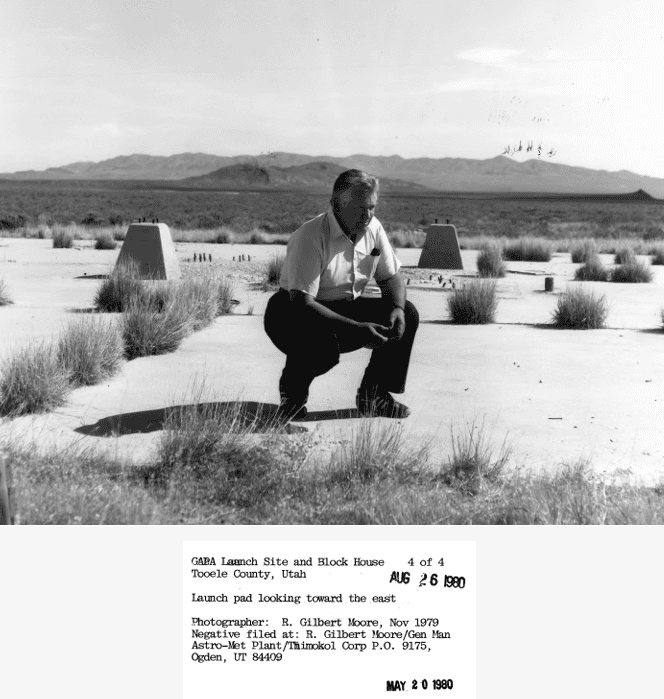
This site is significant as the original launch site for the United States Air Force’s first supersonic guided missile, which was named the Ground-to-Air Pilotless Aircraft (GAPA). Thirty-eight two-stage GAPA solid-rocket-propelled aerodynamic test vehicles were launched by the Boeing Airplane Company from this site between June 13, 1946, and July 1, 1947. Stable supersonic flight was first achieved by GAPA test Vehicle 600 Series, Serial Number 10 on August 6, 1946. The GAPA program was subsequently transferred to Holloman Air Base in New Mexico, where an additional 73 missiles, propelled by various combinations of ramjet engines and solid and liquid rockets, were launched between July 24, 1947 and May 9, 1950.
GAPA was the lineal ancestor of the Air Force’s Bomarc air defense missile, which first flew on September 10, 1952, and is still in limited service 28 years later. The original GAPA launch site in Utah was the birthplace of the United States Air Force supersonic missile flight test program.
The GAPA Launch Site and Blockhouse was added to the National Register of Historic Places (#80003972) on August 26, 1980.
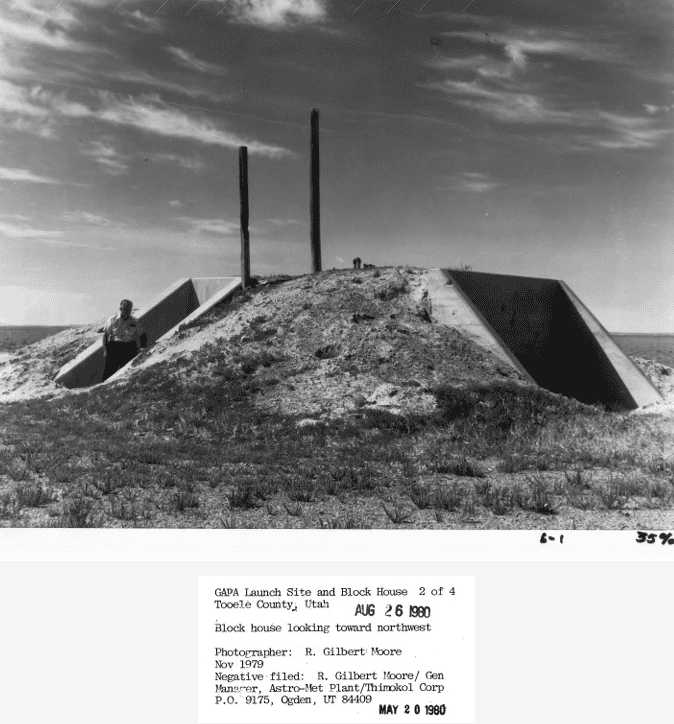
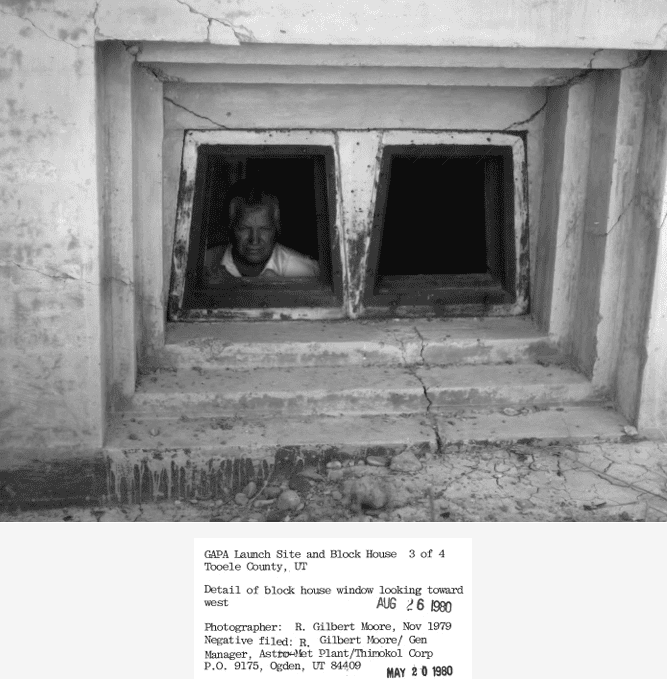
Reinforced concrete, semisubmerged blockhouse and launch pad. The Blockhouse is in original condition, except for damage caused by a single act of vandalism, to wit: entry door blown off hinges, glass viewports gone, hole blown in concrete floor and walls cracked, all apparently from a single explosive charge placed on blockhouse floor.
Reinforced concrete launch pad in same condition as when site was abandoned in July 1947. Steel launch tower no longer present.
The GAPA launch site and blockhouse is located three miles east and seven miles north of Knolls, Utah. The site includes the reinforced concrete launch pad approximately 100′ x 100′. The 40 foot steel tower, used in the launching moves, has been removed. Approximately 300 feet south of the launch pad is the original blockhouse from which the GAPA missiles were launched by remote control. The blockhouse remains in original condition except for damage done when an explosive charge was set off on the blockhouse floor. The explosion blew the entry door off its hinges, broke the glass view-ports, cracked the walls and left a hole in the concrete floor. The blockhouse is build of concrete, rises six feet above the ground level and is approximately 40 feet x 40 feet in size.
The Elsinore Sugar Factory is significant as the single most important agri-business in Sevier County history. The factory’s economic and social impact on local communities, as assessed by a recent county wide historical survey, exceeds that of any other business enterprise for the years 1911 to 1928. Also, the Elsinore plant is significant as a good representative of the overall sugar beet industry in Utah and as an excellent example of the Utah-Idaho Sugar Company’s contribution to the history of the state.
The Elsinore Sugar Factory is located at approximately 2905 North Highway 118 in Elsinore, Utah and was added to the National Register of Historic Places (#80003959) on June 17, 1980.
The first attempt at refining sugar from beets in Utah occurred in the early 1850 ‘s under the auspicious of the Deseret Manufacturing Company. With the strong financial and social support of Brigham Young, and with imported French machinery, a sugar beet factory was erected in Provo. This primitive plant was unable to recrystallize the sugar from the beet juice. With the company near ing financial ruin, it was purchased by the Mormon Church. After removing the machinery to Salt Lake City, the church tried anew, and again the process failed. This second attempt was the last try at refining sugar in Utah until 1891.
During these thirty plus years the MDrmon desire for economic self-sufficiency kept alive the “sugar beet hope”. Experimentation with sugar beets reached Sevier County in 1878 as William Seegmiller and C.A. Madsen each produced a few high quality plants. Local soil conditions were discovered to be excellent and with improved irrigation systems, large yearly crops were predicted. The improved refining techniques used by E.H. Dyer at his California plant that resulted in the production of a high quality sugar, helped revive the sugar beet interests in Utah. With increased tariffs on sugar that came with the Merrill Act, 1883 and the McKinley Act, 1890, the atmosphere for the “sugar business” improved.
The Mormon desire hope for financial autonomy now had the technological means, the capital and the interest to form the Utah Sugar Company in 1889. Two years after incorporation a sugar beet refinery was erected in Lehi under the direction of E.H. Dyer. As in the 1850 ‘s the Mormon leadership strongly endorsed the enterprise. Church wards encouraged local farmers to plant sugar beets in the spring for processing in the fall. The refinery was from the beginning a technical success but it took time for utahns to accept the fact that beet sugar was as good as cane sugar.
As the financial success of the sugar beet enterprise became apparent, it accelerated the proliferation of other sugar beet refineries. In 1898 sugar produced from beets made up 2% of the American sugar out-put, by 1901 it was 7% and rising. At this time that the American Sugar Refining Company, which controlled 98% of sugar cane market decided to buy stock in western sugar beet companies. In 1902 ASR purchased 50% interest in the Utah Sugar Company the result of which liquified assets for investment in new sugar beet refineries.
Around this same time the farmers of Sevier and San Pete Counties began to agitate for the location of a plant there. In 1906 the Utah Sugar Company promised to help build a factory at Moroni and towards implementing this offer a local sugar company was incorporated. An infestation of “curly-top”, a sugar beet disease, and opposition to the San Pete County location by Sevier County farmers, killed the proposed plant. The next year, 1907, the Utah-Idaho Sugar Company was created by the merger of Utah Sugar, Idaho Sugar and Western Idaho Sugar companies. The new corporation, as a result of increased assets and decreased competition, was able to increase its factory building program.
After getting a promise from Sevier County farmers to raise at least 6000 tons of sugar beets, a factory site was selected east of Elsinore and North of Monroe, near a small settlement named Frogs Jump. The land was purchased in 1910 and the construction of the rail spurs and beet silo sheds were begun. The following summer the main structural elements of the factory were completed so that by the fall of 1911 the first sugar beet campaign was carried out in Sevier County. The Elsinore plant like the one in Lehi was erected by the E.H. Dyer and Sons Construction Company. It was built at a cost of 620,000 dollars. In 1916 and again in 1925 the factory was enlarged to handle an ever greater number of beets. In its lifetime the Elsinore plant produced 1.9 million, 100 pound bags of high quality sugar.
The impact of the new enterprise on Sevier County was immediate and profound. From a steadily widening area of expenditures, through workers wages and payments to farmers, new homes, barns and schools were built, and new farm machinery purchased. The influx of technicians needed to operate the plant settled in Frogs Jump, changing the scattered community into an organized company town which was renamed Austin. In addition to the direct impacts of the plant, one must consider an important secondary economic consequence of sugar beet production. Local livestock interests were able to use the beet tops, pulp and unrefined molasses to feed both sheep and cattle. Southern Sevier County became Central Utah’s center for fattening livestock.
In 1926, one year after increasing the beet capacity at the Elsinore factory, the plant was forced to shut down. It reopened in 1927 but the sugar production was so low that U & I officials closed it for good in 1928. There
have been four explanations advanced for the plant’s failure. The first justifies closure by the recurring infestation of the “curly-top” disease in the Sevier Valley. Competition for locally grown beets by the erection of the Gunnison Sugar Beet Factory in 1918 is offered as the second; and the third argues that the relationship between the farmers and U & I officials continued to decline as both struggled to stay alive during the agricultural decline of the 1920’s. The fourth explanation argues that low tariffs on sugar confoined with a 20 million dollar mortgage hanging over U & I properties did not allow for keeping marginal factories in operation.
In 1928 the beet processing machinery was sold to a firm in Quebec. Fourteen years later, in 1942, the factory’s main structural elements were dismantled leaving only the office and sugar warehouse intact. At the end of World War II the warehouse was converted into a drying plant for potatoes from which a flour was made and then shipped to Europe. The operation was owned by Utah Food Products Cooperative and was a locally owned concern. In 1945 the business was forced to sale the property because it had failed to meet its mortgage payments. American Food Products Corporation bought the site but it suffered the same fate as the Utah Company. After a series of owners the Elsinore Sugar Factory property was purchased by Wilson Milburn. He has converted the office into a home and hopes to reuse the sugar warehouse as a local shopping mall.
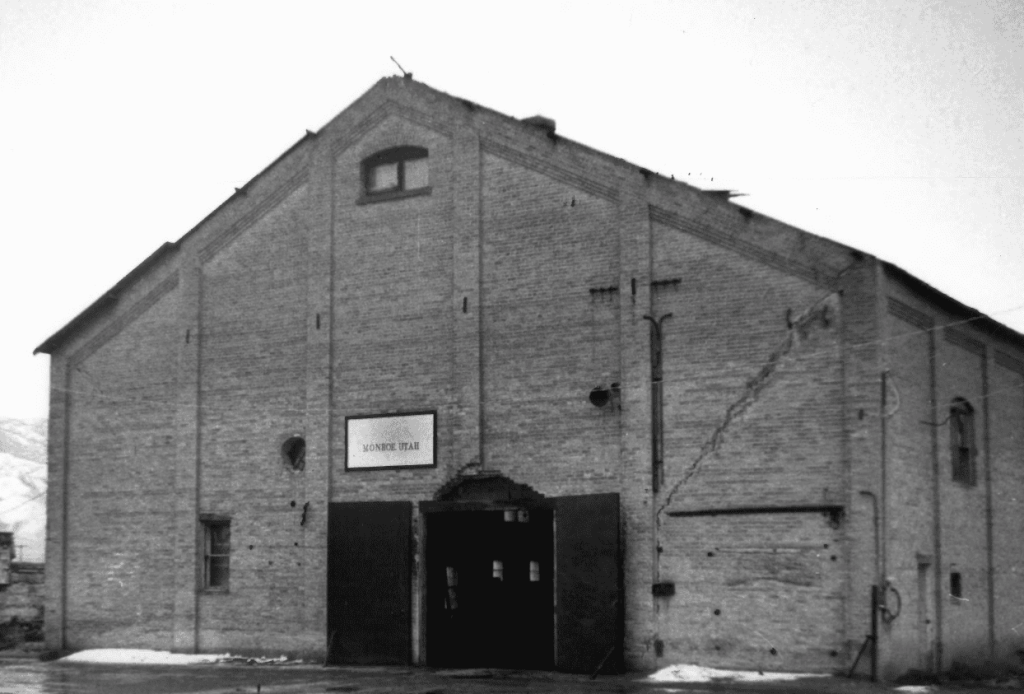
Only two buildings of the Utah-Idaho Sugar Company’s factory complex in Elsinore, Utah are extant. The warehouse is a large brick building of symmetrical rectangular plan with a gabled roof. Piers divide the elevations into bays. Brick corbelling at the roof line creates the effect of a cornice. All openings have segmental arches.
Most of the houses in Austin were built by the sugar beet factory for workers. They were all variations of a similar pattern of modest, detached single family dwellings typical of the period, ca. 1910. The different configurations of this building may reflect its different function and location near the factory. The factory office occupies the ground floor. Rooms on the upper floor undoubtedly served as temporary accommodations for seasonal employees.
The factory office and rooming house is a gable roofed rectangular structure. The ground floor of the 1 1/2 story building is brick while the upper level is frame with shingle siding. Piercing of gable end facades is symmetrical. The broad sides exhibit asymmetrical piercing and paired shed dormers. Ground floor openings have segmental arches. The original window configuration was a two-over-two scheme. A balcony and porte cochere have been extended from the main façade. A small gable roofed portico shelters the entrance of the rear elevation.
The boundaries of the nomination encompass almost the same acreage as was purchased by the Utah-Idaho Sugar Company in 1910 for their Elsinore factory. Its addition to the two standing structures, the office/boardinghouse and sugar warehouse, the foundations of the main factory, the boiler and machine shop, the beet sheds and, the numerous pulp silo storage pits are included.