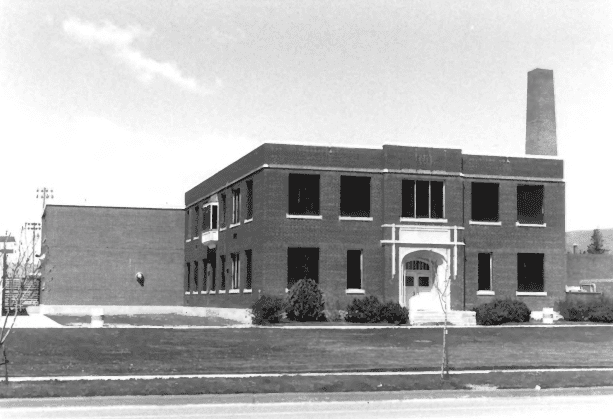
This page is specifically for documenting Route 66 sites in California, most of the text on the page comes from the nomination form for the National Register of Historic Places.
Related:
U.S. Highway 66 in California, more commonly known as “Route 66,” is the western terminus of an early cross-country highway that extended from Chicago, Illinois, to Santa Monica, California. Established in 1926, U.S. Highway 66 was part of the first nationally designated highway system and was one of 13 original U.S. Highways designated in California. It was one of three Southern California east-west highways that extended from the Colorado River to the Pacific Coast.
The history and development of U.S. Highway 66 in California represents important themes under the following National Register of Historic Places (National Register) areas of significance: Transportation, Engineering, Social History, Commerce, Entertainment/Recreation, and Architecture. This Multiple Property Documentation Form (MPDF) provides historic context related to these areas of significance and identifies the important themes for which U.S. Highway 66 derives significance under the National Register Criteria for Evaluation. It also describes the associated property types that have an important association under each historic context and U.S. Highway 66 for listing in the National Register.
Related sites:
Development of U.S. Highway 66 in California, San Bernardino and Los Angeles Counties, California, 1926-1974
The route is significant under Criterion A and Criterion C as a representative example of important state and local trends in twentieth century transportation development and highway design and construction. U.S. Highway 66 had its origins in one of the earliest cross-country automobile routes (the National Old Trails Road) to be widely publicized and signed before being designed as one of 13 U.S. Highways in California. Subsequent efforts by state, county, and municipal groups are representative of important planning and development trends in state transportation efforts to provide a corridor into Los Angeles from the eastern border of the state. Portions of the route continue to convey a sense of time and place of an earlier era of highway travel prior to the construction of Interstate Highways, and the challenges faced by motorists in crossing expanses of desert and high mountain passes on their way to Los Angeles.
U.S. Highway 66 demonstrates a number of major innovations in highway design and methods of construction, and exemplifies solutions to complex highway engineering challenges. In the 1920s and early 1930s important innovations in desert highway construction were developed in portions of the route in the Mojave Desert to adapt to the conditions of sand, lava, and drainage. Urban improvements U.S. Highway 66 in California included one of the first four-lane divided highways in California (Foothill Boulevard in Claremont, Los Angeles County) and the first limited access freeway in the Western United States (Arroyo Seco Parkway connecting Los Angeles and Pasadena in Los Angeles County). U.S. Highway 66 was in the forefront of important transitions in highway design and construction that subsequently became ubiquitous in California and across the nation in the decades following World War II.
U.S. Highway 66 as a Migratory Route, San Bernardino and Los Angeles Counties, California, 1926-1974
U.S. Highway 66 played an important role as a migratory route that facilitated large population shifts from the East, Midwest, and Southwest into Southern California. From the time of its designation as a part of the U.S. Highway system in 1926, U.S. Highway 66 served as a main route for those seeking a warmer climate in the 1920s Sunshine Migration; jobs in agriculture and industry in the midst of the Great Depression during the 1930s; and employment in the defense industries leading up to and during World War II and during the postwar period. These migrations made this part of the country, particularly Southern California, one of the fastest growing parts of the country in the first half of the twentieth century. These waves of western migration were important in reshaping California, especially Southern California and the Los Angeles basin, in terms of demographics, culture, and growth, and thus represent a significant trend under Criterion A: Social History.
Auto and Tourism Businesses on U.S. Highway 66, San Bernardino and Los Angeles Counties, California, 1926-1974
U.S. Highway 66 in California facilitated commercial development along the route in two different environments. Outside the Los Angeles basin and largely contained within San Bernardino County, businesses catering to migrants and tourists developed along the highway to provide needed goods and services. Local economies included small-scale mining and farming, and commercial development occurred to support local needs for goods and services. However, the presence of the highway led to substantial numbers of restaurants, motels, tourist courts, service garages, gas stations, and other tourist and auto businesses in direct response to traffic along the route. In the urban Los Angeles basin roughly contained within Los Angeles County, commercial development along the route served the traveling public along U.S. Highway 66, which become more dispersed as migrants and tourist reached the end of the route, and also provided goods and services to the large numbers of local residents. In both environments, the pattern of commercial development seen in auto and tourism businesses due to their close proximity to U.S. Highway 66 provides an important representation of the commercial development trend under Criterion A: Commerce.
Recreation and U.S. Highway 66, San Bernardino and Los Angeles Counties, California, 1926-1974
U.S. Highway 66 in California played an important role in the development of travel stops and recreational destinations in areas the route passed. Beginning in the late 1890s tourism was one of California’s major industries. Noted for its scenic diversity, sanguine climate, recreational and outdoor opportunities, and its movie industry, Southern California was a major tourist destination actively promoted by auto clubs, chambers of commerce, local booster groups, and the hotel and motel industry. U.S. Highway 66 in California served as an important tourist route that in turn facilitated the growth and development of destinations of entertainment and recreation, some of which were directed toward the traveling public along U.S. Highway 66. Promotional activities and boosterism that served to entice travelers to Southern California and the role U.S. Highway 66 played to facilitate the growth as embodied in travels stops and recreational attractions and destinations in areas the route passes may be representative of important events under Criterion A: Entertainment/Recreation.
Period of Significance
The period of significance for U.S. Highway 66 in California begins in 1926 when the route was designated as a U.S. Highway and extends to 1974 when the last portion of the route was bypassed by Interstate 40 (I-40), I-15, I10, and I-210, marking the end of the route’s heyday of use as a U.S. Highway in California. The period of significance represents the designation, subsequent growth, and heyday of use as a major transportation corridor. Individual properties nominated under this MPDF will have their own defined period of significance determined by the specific criterion under which they derive significance and their period of association with U.S. Highway 66.
Development of U.S. Highway 66 in California, San Bernardino and Los Angeles Counties, California, 1926-1974
Prior to the twentieth century, rail was the preferred method of transportation while the country’s road system was based on trails and wagon routes. A system of roads developed haphazardly based on routine travel and the continued use of earlier trails and wagon routes. The movement of farmers to transport crops to market often resulted in little more than ruts from rural areas into communities. Through the efforts of citizen groups and local and state governments, these trails evolved into a regional and national network of highways during the twentieth century
The influence of the railroad
The alignment of U.S. Highway 66 in California, especially through the Mojave Desert, can be traced back to surveys completed for the construction of the second transcontinental railroad. Following completion of the first transcontinental railroad, with its western terminus in Oakland, railroad lines began extending southward to other cities such as Los Angeles and San Diego. Immigration, agriculture, and industrial growth fueled the rapid expansion of railroad networks in the last several decades of the nineteenth century. Railroad lines were extending westward from the Midwest and southern states toward California, including the Southern Pacific Railroad segment across the Mojave Desert from Arizona. In 1885 the Atchison Topeka and Santa Fe Railway company constructed a segment westward from the Los Angeles basin over the Cajon Pass to Barstow to connect with the Southern Pacific’s line, which had been extended to Barstow from the Colorado River a couple years earlier. By 1897 both segments were owned by the Atchison Topeka and Santa Fe. With this connection, this railroad extended westward from Needles, through Barstow and San Bernardino, and terminated in Los Angeles, along an alignment that U.S. Highway 66 would eventually follow through California.
Railroad routes were carefully selected to follow contours of the land and to avoid steep grades. As the railroad was built across Southern California, particularly through the Mojave Desert, communities typically developed every 15 to 20 miles along the route to provide services such as water to replenish steam engines. In between the communities, railroad sidings, or short segments of auxiliary tracks used for trains to pass one another and for freight loading and unloading to occur, were often established to provide additional water stops and section houses to provide for railroad maintenance crews.
Good Roads Movement and promotion of road development
In response to the poor condition of the nation’s road system, the “Good Roads Movement” emerged in 1880. The popularity of the bicycle later followed by the introduction of the automobile in the early 1900s raised public awareness of the need for an adequate road network. Interest groups began pressuring the federal government to reevaluate its role in the development of roads. A group of bicyclists organized the League of American Wheelmen, founding the first of many organizations to promote road improvements as part of the Good Roads Movement. With the motto “lifting our people out of the mud,” the League of American Wheelmen and other advocates of the Good Roads Movement, such as automobile clubs, lobbied the federal and state governments for road building and maintenance activities.
Numerous national, state, and local groups were involved in road promotion through the National Good Roads Association, chapters of which sprang up in numerous locations across the country, including California. The Sacramento chapter, in conjunction with the newly established State Highway Commission, created “good road” models for display at the 1916 State Fair. Another chapter, the Inyo Good Roads Club, organized auto caravans across the state to publicize the need for better roads, while the Mojave County Good Roads Boosters lobbied for roads in Needles. The Automobile Club of Southern California (ACSC), founded in 1900, while not a chapter of the National Good Roads Association, also supported good roads, although its focus was primarily on improving streets and boulevards within the Los Angeles area. In 1908 the ACSC was instrumental in supporting Los Angeles County’s first successful bond issue for better roads in the urban area.
The movement’s goal was hard surfaced roads, either through the use of macadam, bituminous macadam, or concrete. Despite the efforts of the movement and highway agencies, only 154,000 of the country’s more than two million miles of road were improved (hard surfaced) by 1904. As efforts continued across the country, the total stood at 257,000 miles by 1916. California contained 4,359 miles of improved roads by 1914, and an additional 5,641 miles of graded and graveled roads.
Good Roads groups worked with organizations promoting named trails, the combined efforts of which resulted in a “confusing jumble” of road names and routes by 1925, when the federal government established a numbered national highway system. Among the “jumble,” noted by transportation historian Richard Weingroff, was the National Old Trails Road/Ocean-to-Ocean Highway. Established in 1911 through the efforts of the Missouri Old Trails Association and the Santa Fe Old Trails Association, the National Old Trails Road/Ocean-to-Ocean Highway Association held its first convention in Kansas City. In 1912 there were competing routes for the designation of the National Old Trails Road, one that roughly followed what would become U.S. Highway 66 through Needles and Barstow to Los Angeles and a more southerly route that ended in San Diego. The National Old Trails Road/Ocean-to-Ocean Highway Association deferred making a final routing decision until 1913 at its second convention. During 1912 the Mojave County Good Roads Boosters in Needles lobbied heavily for the route to pass through its town, publishing articles claiming superior road conditions and the availability of fine accommodations in the form of Harvey Houses in Needles, Barstow, and San Bernardino. Aiding the effort was a visit from O.K. Parker, of the ACSC, who was mapping the area. As a result of the visit from Parker and the boosterism by Needles, the ACSC agreed in December 1912 that the route from Needles to Los Angeles would be included in the road maps of the Club. This routing ignored the “ocean-to-ocean” alignment that had been promoted by the San Diego contingent and led to the National Old Trails Association dropping the Ocean-toOcean part of its name.14 The adopted National Old Trails Road was transcontinental and linked former wagon roads rooted in the Old Cumberland Trail, also known as the National Road, in the Eastern U.S. to Los Angeles. In California, the National Old Trails Road generally followed the route established by the surveys for the railroad that extended from Needles through Barstow and San Bernardino to Los Angeles.
The route of the National Old Trails Road was designated between 1911 and 1914, with the California portion designated last. The National Old Trails Association was successful in securing public funding for the road, and by 1914 approximately $2 million had been spent nationally on improvements. The ACSC, which had become a large and influential promoter of automobile travel, undertook the endeavor to signpost the National Old Trails Road between Southern California and Kansas City to facilitate travel to the 1915 Panama Pacific International Exposition in San Francisco and the Panama California Exposition in San Diego. Much of the National Old Trails Road was unimproved or in poor condition through the 1910s and into the 1920s.
Early roadway development in the United States and California through 1930
Beginning in the late nineteenth century, federal and state governmental agencies began to work cooperatively to build a more comprehensive and integrated transportation system in the country. The development of federal and state transportation agencies resulted in a complex structure of federal and state funding and legislation, which governed the development of highways in California and other states across the nation. Until the establishment of the U.S. Highway system in the 1920s, road promoters such as the National Good Roads Association heavily influenced this work while local government was responsible for the development and maintenance of roads, such as efforts by San Bernardino County in the Mojave Desert portion of the route.
The federal government formally became involved in roads in 1893 with the formation of the Office of Road Inquiry within the United States Department of Agriculture. The engineers within the Office of Road Inquiry worked with the Good Roads Movement, and the office evolved into a central source of technical road-related information. The Office of Road Inquiry collected data and released bulletins and circulars addressing road construction and administrative issues. In 1899 it was renamed the Office of Public Road Inquiry and continued with technical and promotional efforts to improve roads. One effort was to develop a materials testing laboratory to test samples and identify suitable road materials. In 1905 the Office of Public Roads was created by the passage of the Agriculture Appropriations Act, which terminated the Office of Public Road Inquiry and established a permanent federal road agency with an annual budget of $50,000.
The California State Bureau of Highways (Bureau) was established in 1895, becoming just the nation’s second state highway department behind Massachusetts in 1893. California was at the forefront of establishing a state transportation agency, creating the Bureau to inventory existing roads and make recommendations for a system of state roads. In 1902 the state constitution was amended to allow the state legislature to establish a system of state highways consistent with the Bureau’s recommendations. Soon after the constitutional amendment, the Bureau began a program of designation, with the first state highway designated between Placerville and Lake Tahoe, later to become U.S. Highway 50. During these early years, the state legislature changed the name and administrative location of the organization several times, often enhancing its mandated functions at the same time. A few years after its creation, the Bureau’s name was changed to the Department of Highways. In 1907 it then ceased to be an independent entity and was placed under the State Department of Engineering, which oversaw both transportation and water engineering. Finally, in 1921 the state legislature created the Department of Public Works, which included an appointed State Highway Commission, a policy making body, and a new Division of Highways to carry out design, construction, and maintenance and administer federal funds until 1973, when it became the California Department of Transportation (Caltrans).
During the 1910s and 1920s, California developed its own funding base for road construction. Beginning in 1909 the State of California passed a series of Highway Bond Acts to finance road construction and maintenance throughout the state. In 1914 the state passed an act that required the registration of all motor vehicles and the payment of a fee. This fee provided a permanent source of revenue, a portion of which went to highway construction. Bonds issued in 1915 and 1916 provided additional funds, and the state passed a larger bond for $40 million in 1919. Most importantly, in 1923 the state approved a two-cent-per-gallon gas tax. The resulting funds were split, with half going to maintenance and reconstruction of state highways and the other half to counties for improvement of their roads.
In the first decades of state transportation administration, the majority of state highway funding was expended in Northern California. The Division of Highways and its predecessors made an early and important link between transportation and tourism in the state’s economy, and many highway designations and improvements were selected to create better access to tourist attractions and recreational areas. In 1905 the California Legislature passed an act “to construct a public highway from General Grant Park to the King’s River Canyon,” a route it declared a state highway in 1909. In that same year, the California Legislature authorized the construction of segments of the Pacific Coast Highway (Legislative Route Number [LRN] 1, later U.S. 101) through the Avenue of Giants.
In 1915 the road from Barstow through Victorville and Cajon Pass into San Bernardino was incorporated into the State of California’s highway system designated as LRN This was the first section of the route to be brought under state jurisdiction, although San Bernardino County continued with road improvements and maintenance well into the 1920s. To carry out these responsibilities, the county passed a local bond measure in 1915 to improve a section of LRN 31 between Barstow and San Bernardino. The state undertook little highway construction until the late 1920s, when it undertook a major initiative to build new sections of highway (discussed below).
In 1916 the U.S. Congress passed the Federal Aid Road Act, which was the first formal federal highway policy with a regular funding appropriation distributed to the states. By this time the number of automobile registrations in the country had reached 2.3 million, and the auto industry and motorists were heavily lobbying for programs and funds to improve roads. This funding had been a long-time goal of the National Old Trails Association and the Good Roads Movement, who were influential in the passage of the Federal Aid Road Act of 1916. Managed by the Secretary of Agriculture, funding for road construction and maintenance was allocated to states by a formula based on a state’s population, land area, and road mileage. Under this act, the federal government would finance up to 50 percent of the cost of construction, not to exceed $10,000 per mile.
World War I greatly hindered new road construction and the improvement of existing roads due to construction deferment and limited labor and supplies. Congress continued federal funding for highway construction after the war with the passage of the Federal-Aid Highway Act of 1921. This act created the Bureau of Public Roads, which replaced the Office of Public Roads and was assigned to administer the federal government’s road program. The act also provided states financial aid for the construction of highways that were “interstate in character” under the “seven percent system,” a formula created by Congress in which each state was eligible for assistance in constructing seven percent of its highways. Within two years each state was required to designate three percent of its primary roads and four percent of its secondary roads as part of the federal-aid highway system; as a result, these roads were eligible for federal assistance. Federal funding was to be matched by state funds on a 50-50 basis, and road designs were required to adhere to the federal government’s standards for minimum width, grade, and adequacy of roadbed type for the traffic load. States were also required to submit their plans to the Bureau of Public Roads for approval. As a result of the Federal Highway Act of 1921, the 1920s were a boon for highway improvements and new construction nationwide, with over $10 billion invested in roads.
During the 1920s the California State Highway Commission and the Division of Highways were the state government agencies in charge of transportation. In 1925 the legislature passed the Melville Act, which provided that the state assume responsibility for all traversable highways and gave the Division of Highways the power to build highways through small cities that could not afford them.
Creation of the U.S. Highway System
Prior to 1918, federal and state transportation agencies took no consistent responsibility for road signage. This void was filled by local and national organizations that marked named highway routes in the early twentieth century. However, a need existed for a uniform system for marking inter-state roads and warning signs. The movement for a nationwide system of highway routes and road signs was rooted in part in the many organizations and associations that, like the ACSC, each posted highways with different symbols and signs. Additional factors included that many of the named trails did not provide travelers with the shortest or most direct route between cities and that some named trails overlapped each other.
In 1918 Wisconsin became the first state to adopt a state highway numerical number system to alleviate the haphazard and confusing system of named trails and roads with a more systematic approach. The movement for a nationwide system of highway routes and road signs was proposed at an annual meeting of the American Association of State Highway Officials (AASHO) in 1922. AASHO, an organization of senior state and federal highway officials formed in 1914, served as a link between road booster groups, state governments, and the federal government. The organization had a role in shaping many aspects of road policy, including building, financing, and maintenance activities.
Following the 1922 AASHO annual meeting and its subsequent recommendation to identify the system’s routes, the Secretary of Agriculture appointed the Joint Board on Interstate Highways to undertake the endeavor of designating the system of highway routes and establishing a standard system of signing the routes. Throughout 1925 the Joint Board on Interstate Highways held meetings across the country to receive input on the new system of highway routes. Early on, Joint Board of Interstate Highways members agreed the system would be numbered rather than named, and would be designated as U.S. Highways. The remainder of their work focused on identifying the routes to be designated as U.S. Highways and developing standardized signage.
By the end of 1925 a national numbering system plan was adopted for U.S. Highways along with a standard design for signs between states. When this plan took effect in 1926, the new numbering system affected 145 roads and 76,000 miles of road across the U.S. The uniform white shield sign had bold black text and the only variation was the name of the state. The state’s name was included in the top portion of the sign, and the highway number appeared in large bold text in the lower portion. In 1926, 13 of California’s 70 designated State Highways were incorporated into the newly created U.S. Highway System, including U.S. Highway 66 in California.
It should be noted that even after National Old Trails Road segments west of Las Vegas were designated as U.S. Highway 66, the name “National Old Trails Road” was so ingrained that the name continued to be used in literature, in ACSC and other maps, and signage to identify U.S. Highway 66.
Highway development in the United States and California, 1930 through World War II
New Deal programs and federal relief of the 1930s provided jobs and funding that contributed to the construction and improvement of roads throughout the country. In 1931 $80 million in emergency federal aid was made available to the states to supplement their required matching funds. During the Great Depression, this allowed states to continue with highway construction and put unemployed people to work. In 1932 a second emergency relief act was passed by Congress with stipulations. States were required to pay a minimum wage rate (30 cents per hour for unskilled labor and 50 cents per hour for skilled labor) and give hiring preferences to locals and ex-servicemen with dependents. To employ as many people as possible, laborers were hired for only a 30-hour work week.
The resulting New Deal programs that organized the labor to complete projects, such as the Civil Works Administration (CWA), may have been involved with road construction; however, research and survey completed for this MPDF did not reveal the direct involvement of a New Deal program in the construction of the route or properties along the route. After the suspension of the CWA on March 31, 1934, the Federal Emergency Relief Administration (FERA) began organizing work divisions. CWA projects that were not completed prior to March 1, 1934, were transferred to FERA and continued as work relief projects. Highway beautification projects began in 1934 when the federal government passed the National Recovery Act (NRA). Under the act, the Bureau of Public Roads required that at least one percent of total funding to each state be used for landscaping of parkways and roadsides. The act advocated for roads that conformed to their natural setting, including sensitive siting, conserving soil, selective tree cutting, and appropriate plantings. During the 1930s the California Division of Highways undertook a major program of highway construction aimed at improving road conditions and relieving traffic congestion, such as projects to realign highways, including the route of U.S. Highway 66. In several notable cases, the Division of Highways used federal funding to pioneer innovative road designs and develop a more comprehensive highway landscaping program, such as that carried out for the Arroyo Seco Parkway in Los Angeles (the Arroyo Seco Parkway Historic District was listed in the National Register in February 2011). Research did not reveal the role of the CWA, FERA, and NRA in the development of U.S. Highway 66. Since the role of New Deal programs in highway development in California is not understood, the effect New Deal programs had on U.S. Highway 66 in California is an area of further intensive-level research.
The 1930s were a time of aggressive state planning to meet future transportation needs. The steady increase of population in the state combined with constantly rising auto ownership created a situation in which traffic consistently outpaced efforts to anticipate and relieve traffic congestion. In a state that maintained one of the highest ratios of car ownership to population in the country, the capacity of the state road system was always being tested, especially in Southern California, which was growing faster than any other part of the state. By the end of the 1930s the state took major steps to create a new comprehensive transportation system. The new system did not supplant the state highway system, but rather expanded it with a wide-ranging system of limited access roadways to eliminate congestion-causing road features such as at-grade intersections, traffic lights, and two-way traffic. Although limited access freeways were being considered in other states, California was one of the first states to embark on a program of implementation, beginning with the Arroyo Seco Parkway in the 1930s. Limited access freeways were referred to at the time as “parkways;” the terms are used interchangeably in state and regional transportation literature.
Californians had ample opportunity to absorb the concept of a road system that would provide free-flowing traffic unimpeded by cross traffic and stop signs. The idea of freeways had been considered as a solution to California’s transportation needs as early as the 1920s. Landscape architect Fredrick Law Olmsted, Jr. was one of the first to propose a system of regional parkways throughout Los Angeles that would separate through traffic and relieve pressure on city streets. A local and regional planning organization, the Regional Planning Commission of Los Angeles County, echoed Olmsted’s view throughout the 1930s. This line of thinking culminated in 1937, when the ACSC issued a major report entitled Traffic Survey, Los Angeles Area, which concluded that the only viable solution to Los Angeles’ traffic problems, and by implication the state’s as well, lay in a “network of traffic routes for the exclusive use of motor vehicles over which there shall be no crossing and along which there shall be no interference from land use activities.” The viability of this solution was enhanced with passage of the Breed Bill (1939), which authorized the construction of highways along which adjacent property owners would no longer have rights to immediate access and gave the state land acquisition powers to acquire the right-of-way to build freeways, and the Collier-Burns Highway Act in 1947, which provided for additional transportation funding to construct and maintain freeways in urban areas. Further road building, however, was cut short after 1941 by preparations for entry into World War II.
Mobilization for the war effort placed limits on civilian access to gas and tires and substantially cut highway usage for travel. With the exception of roads needed for military purposes, road construction activities generally stopped after the U.S. became involved in the war. The Defense Highway Act of 1941 further restricted the activities of state highway departments by limiting federal highway funds on the Strategic Highway Network; the construction of roads to military bases, defense manufacturing plants, or air bases; and advanced engineering surveys for projects to be initiated after the war.
For national security, the War Department and the Bureau of Public Roads identified a system of roads known as the Strategic Highway Network to access military bases, defense manufacturing plants, and other strategic sites. The National Old Trails Road was designated as part of the original Strategic Highway Network established during World War I. In 1941 the Bureau of Public Roads prepared a report on “Highways for National Defense” as a part of the war preparedness efforts leading up to entry into the war. U.S. Highway 66 was designated as a strategic route in the report’s listing of route priorities designated by the War and Navy Departments. Under the 1941 Act, defense highway projects remained eligible for federal funding for improvement and construction. The report also identified military posts essential to a war effort and directed Post Commanders to make all studies necessary to identify access improvements needed to facilitate movement to and from installations. In the Mojave Desert an anti-aircraft range near Victorville was one of the facilities identified in California.
Highway development in the United States and California following World War II
Following World War II, the Federal-Aid Highway Act of 1944 (1944 Act) was passed to address road deficiencies that resulted from deferred funding and maintenance. Notably, the 1944 Act provided new funding for construction of urban highways and expressways. Previous federal aid prior to World War II focused largely on rural roads. The 1944 Act provided $500 million nationwide per year during the three years successive to the end of World War II for which the states were responsible to match at a 50/50 ratio. Funding was distributed differently for urban and rural roads. For urban highways it was distributed by total population, while for rural highways it was distributed to the states in proportion to rural population, geographic area, and post road mileage (roads along postal delivery routes). The desert portions of U.S. Highway 66 likely benefitted as a result.
Importantly, the 1944 Act also authorized designation of a national system of Interstate Highways. The Interstate Highway system was intended to connect principal metropolitan areas, cities, and industrial centers; serve national defense; and connect border points with routes of continental importance in Canada and Mexico. The system was expected to carry 20 percent of the nation’s traffic and connect 90 percent of cities with a population of 50,000 or more. The 1944 Act, however, did not provide funding for construction of the Interstate system, but allowed for preliminary planning efforts.
The 1944 Act provided only modest funding for road construction and did not provide funding for development of the Interstate Highway system to solve the nation’s transportation needs. Its passage did not anticipate Americans’ postwar financial prosperity, which dramatically increased automobile ownership, highway usage, and commercial development. The unexpected increase in automobile usage created congestion in many urban areas. Several other federal-aid highway acts were passed in 1950, 1952, 1954, and 1956. The acts of the early 1950s continued federal funding to states for road and bridge projects with only slight increases and provided limited funding for the Interstate Highway system.
The Federal-Aid Highway Act of 1956 (1956 Act) not only substantially increased federal appropriations to states for highway construction, but also made the first significant appropriations for construction of the Interstate Highway system. The 1956 Act authorized the expenditure of $25 billion over a 12-year period for construction of a “National System of Interstate and Defense Highways.” The system would include 41,000 miles of new roads, built to “the highest standards” of safety and efficiency, and would be funded by increases in federal gas, tire, and vehicle taxes. Revenues would be collected in a newly created Highway Trust Fund that would enable the federal government to complete the system on a “pay-as-you-go” basis. Each state would be responsible for completing sections of the system within its borders, with 90 percent of the funding provided by the federal government. The 1956 Act also authorized an initial 13-year construction period for Interstate Highways, which would eventually be extended as states faced routing and funding difficulties. Lawmakers passed the bill with only one dissenting vote and pledged that the entire network would be completed by 1972.
California, like many areas of the country, emerged from World War II in critical need of highway improvements, which severely impacted a road system already experiencing serious traffic problems before the war. Planned improvements had to be postponed until after the war, such as completion of the Arroyo Seco Parkway project. While large portions of the Arroyo Seco Parkway had been opened prior to the war, further work was postponed until after the war. However, planning efforts begun in the 1930s and 1940s gave California a jump on other states in its postwar highway building program.
In addition to federal postwar funding, California took actions of its own to facilitate a new freeway system. The Collier-Burns Act of 1947 raised the gas tax specifically to finance freeways in urban centers, required the state to maintain highways in cities, and provided for a more equal distribution of state highway funds between the northern and southern portions of the state. These latter provisions of the bill made it possible to undertake an aggressive program of freeway building in the Los Angeles area where local politicians and transportation planners had advocated the creation of a comprehensive transportation system based on the automobile. In 1959 the state legislature created the California Freeway and Expressway System, sponsored by State Senator Randolph Collier, who played a major role in California transportation legislation from 1938-1976. The legislation authorized a freeway grid through the Los Angeles Metropolitan Area that eventually consisted of 1,557 miles of freeway. The state legislation, combined with the federal Interstate Highway program, greatly facilitated the construction of new freeways destined to bypass and replace the U.S. Highway system that had been in place since 1926, including U.S. Highway 66.
The development of U.S. Highway 66 in California
The development and improvement of U.S. Highway 66 in California was a direct result of early federal aid and California state transportation programs that developed in the 1910s and 1920s and continued to increase in the following decades. The state employed various combinations of federal, state, and local revenues to undertake a broad range of projects to continually upgrade the condition of the highway and respond to the needs created by an ever-expanding stream of traffic.
U.S. Highway 66 was a direct beneficiary of California’s bond acts and gas taxes. The institution of the two-cent gas tax in 1923 made it possible for the state to greatly expand its highway maintenance efforts. As a result, the Division of Highways (District 8), which covered San Bernardino and Imperial Counties, hired a full-time engineer. During the 1920s the state was able to expend a total of $1,870,947 on grading, paving, and bridge construction on the National Old Trails Road route. The majority of these funds were expended in the Los Angeles area, bringing the metropolitan portions of the route into generally good condition by the mid-1920s. Only $100,000 of these funds was expended on the desert portion of the road, which remained in generally neglected condition. It was described as badly rutted and only passable at slow speeds until the end of the decade.
The period from the late 1920s through World War II was one of continued improvement on the route that began with re-surfacing and bridge construction across the desert portion of the route to address drifting sand and many seasonal washes. By the late 1920s and the 1930s, work progressed to realign and straighten the highway. Major projects along the route, such as the improvement of Cajon Pass, the Arroyo Seco Parkway, and the widening of Foothill Boulevard, indicate that the state placed a high priority on the development of U.S. Highway 66. By the 1930s the route came to embody some of the most advanced aspects of highway design and engineering in the state and reached its full geographic extent.
U.S. Highway 66 in the Mojave Desert
In the late 1920s the state began to recognize the need for improvement along California’s desert routes and initiated an ambitious program of construction. In the May/June 1929 issue of California Highways and Public Works, J.P. Baumgarten of the State Highway Commission introduced what he termed “the largest desert highway program ever undertaken by the Highway Commission,” a program in which the state’s desert trails, including U.S. Highway 66, “have either become or within a few years will be veritable boulevards.” The article recognized that the desert landscape was “among the attractions de luxe of the wonderful Southland,” and that improved roads were essential not only to cross-country travel, but to the development of the desert region’s recreation areas. One of the major problems on U.S. Highway 66 and the other Southern California desert routes was drifting sand that periodically covered portions of the highways. Along U.S. Highway 66 in the Mojave Desert, sections of roadbed were affected by washouts along sloughs, particularly in areas with large amounts of lava rock. This problem was addressed by the construction of numerous timber stringer bridges between Daggett and Topock and re-engineering the roadbeds to eliminate the effects of drifting sand between Barstow and Needles. This work accomplished by the Division of Highways on this portion of U.S. Highway 66 and the Algodones Dunes area on U.S. Highway 80 represents an early engineering solution and design solution to challenging site conditions.
The evolution of the corridor is demonstrated from the earlier trails and roads on which the route was established and the eventual designation of the former National Old Trails Road between Topock and Los Angeles as one of California’s 13 U.S. Highways in 1926 and its subsequent development. Considerable improvements in road surfacing were accomplished in the latter part of the 1920s. By 1926 U.S. Highway 66 was paved from Victorville southwest to Los Angeles, and plans were in place for the route from Victorville northeast to Daggett to be upgraded to a gravel surface by June of that year. The paving and graveling of the route led the ACSC to conclude that these improvements made it possible to travel the entire route at 50 to 60 miles per hour “―if such a speed is desired, and the speeder does not run afoul of the traffic officer.”
U.S. Highway 66 improvements
While improvements made travel easier and more secure, the alignment of the route largely continued to follow the route of the National Old Trails Road until the 1930s. In the desert, the route followed topography and resulted in a circuitous road that did not always make the most direct connection between towns.73 This pattern of using old alignments was also found in metropolitan areas, where the route followed pre-existing roads and streets that meandered between the small communities through the citrus belt of the Pomona Valley, San Gabriel Valley, and the Arroyo Seco river region, and finally into urban downtown Los Angeles. Indeed, from the early 1900s through 1940 the National Old Trails Road and U.S. Highway 66 traversed several different major alignments from Pasadena to downtown Los Angeles. The first routing followed Huntington Drive through South Pasadena and the El Sereno area of Los Angeles to terminate in downtown Los Angeles. In 1931 the route was shifted to the western edge of the Arroyo Seco riverbed along Figueroa Street through the Highland Park section of greater Los Angeles. After the Arroyo Seco Parkway project was initiated in 1938, U.S. Highway 66 traffic was temporarily re-routed over the Colorado Street Bridge through Eagle Rock, south on Eagle Rock Boulevard to connect to the downtown terminus until the new highway opened in 1940.74 Other minor alternative routes also likely existed.
The 1930s saw a number of major changes and alterations to U.S. Highway 66 in California instituted by the State Highway Commission. At the western end of the route in downtown Los Angeles, where the National Old Trails Road and the 1926 portion of U.S. Highway 66 ended, the highway was extended in 1936 to add approximately 15 miles of to the route into Santa Monica. The new extension, which went west on Sunset Boulevard to Santa Monica Boulevard and then followed Santa Monica Boulevard to its intersection with U.S. Highway 1 in Santa Monica, took the route in close proximity to the Pacific Ocean.
During this period, the California Division of Highways began to re-engineer U.S. Highway 66 to conform to more modern concepts of highway design and to abandon segments of the National Old Trails Road. It was at this time that the road began to take its current form in many areas. Major changes included eliminating the road from Needles northwest through Goffs and providing a more direct connection between Needles and Essex (to the west). See Map Nos. 3 through 6. A more direct route was also constructed between Essex and Amboy.77 Older road segments were widened, generally to 36 feet (although it ranged from 30 to 40 feet); five-foot shoulders were incorporated on either side of the pavement; and much of the route was repaved. Other new features of the roadway included corrugated metal pipe culverts, storm protection ditches and dikes, and other drainage features. The change and progression in highway features such as these convey examples of the evolution of the U.S. Highway design in California history.
U.S. Highway 66 in the Cajon Pass
One of the largest and most ambitious road straightening projects accomplished in the 1930s by the Division of Highways was the realignment of Cajon Pass between Victorville and San Bernardino. See Map Nos. 26 and 27. Cajon Pass, a deep cut between the San Bernardino and San Gabriel mountain ranges that separate the Mojave Desert from the Los Angeles basin, represented one of the biggest engineering challenges on U.S. Highway 66 in California. A natural pass that had served as a Native American trail and later a wagon road, Cajon Pass underwent a number of road changes and realignments over time. By the 1920s the road was generally 16 feet wide and, since 1916, had been surfaced with a macadam pavement. Between 1932 and 1934 large portions of the roadway were widened to include 20-foot-wide graded roadbed with five-foot-wide shoulders. This eliminated a number of treacherous curves and generally straightened the road. In addition, bridges were improved and a railroad grade separation was constructed near Gish and Alray. One of the major improvements was through the Blue Cut area, a section of the road subject to slides resulting from movement on the San Andreas geological fault. Cajon Creek was channelized and a retaining wall was installed to prevent flooding and rock fall. In 1938 a major flood in the canyon washed out a part of the recently improved Blue Cut, which resulted in additional work to place the roadway to be more stable and less prone to flooding. The construction and realignment of the route through Cajon Pass represents innovative and bold engineering solutions to address challenging site conditions in California highway design and construction.
U.S. Highway 66 along Foothill Boulevard
A number of improvements also were instituted by the Division of Highways in the 1930s along the San Gabriel Valley portion of the highway. Foothill Boulevard between San Bernardino and Pasadena to the west was repeatedly widened during the decade to accommodate increased traffic. In 1930 Foothill Boulevard was widened to three lanes and in 1937 increased to four lanes with a center median. See Map Nos. 31 and 32. These improvements on Foothill Boulevard conformed to the most forward-looking highway standards being promoted by the federal government, the California Division of Highways, and the County of Los Angeles. The 1941 county Master Plan of Highways for Los Angeles advocated that the major roadways providing circulation over the widely spread-out metropolis should become wide boulevards or throughways designed with an even number of traffic lanes (usually four in number to allow for both fast and slow vehicles), center dividers, and left turn lanes. The state Division of Highways was already pursuing a road widening policy of its own in advance of the Los Angeles County report. The standardization of four-lane divided highways was first incorporated into the U.S. Highway 66 improvements on Foothill Boulevard near Claremont in the San Gabriel Valley. At the completion of the widening project in 1938, Foothill Boulevard was the longest four-lane highway segment in California. The project resulted from state, county, and local cooperation and planning efforts that also characterized road development in Los Angeles after World War II.
The Foothill Boulevard project was also the realization of another aspect of highway planning in the 1930s: a new awareness of the aesthetic dimension of road building and the role of landscaping in highway planning. Articles on the project that appeared in the state’s public works magazine, California Highways and Public Works, placed considerable emphasis on the aesthetic element of the widening project. A 1937 description of the road segment called attention to the “miles of eucalyptus trees, palm and orange trees” that bordered “almost the entire length of the boulevard.” It also noted that this long allee functioned to frame views of snow-capped Mt. San Bernardino for the last 30 miles of Foothill Boulevard. Research did not reveal if these improvements were associated with the New Deal FERA beautification projects.
U.S. Highway 66 and the Arroyo Seco Parkway
Only a few years later, the landscaping along Foothill Boulevard was dwarfed in scale by the Arroyo Seco Parkway project in Los Angeles on the route, where thousands of native plants were transplanted along the parkway’s recessed slopes and the adjacent roadside. Without question, the largest and most significant change to U.S. Highway 66 during the 1930s and 1940s was the construction of the Arroyo Seco Parkway to carry U.S. Highway 66. See Map Nos. 34-37.
Although construction of the parkway did not begin until 1938, it had been in the planning stages since 1916 when Pasadena City Engineer Harvey Hinks first developed a plan for a parkway that would link Pasadena, South Pasadena, and Los Angeles. This plan initiated a long period of political controversy pitting those who favored a scenic route that emphasized the natural aspects of the Arroyo Seco against those who advocated for a limited access roadway that primarily would reduce congestion. Many sides weighed in on the debate, including notable landscape designers and urban planners Fredrick Law Olmsted, Jr., Charles Cheney, and Harland Bartholomew; road improvement groups such as the ACSC; and local advocacy groups.
The result was a compromise of sorts that combined elements of a traditional parkway with those of the emerging limited access freeway. It consisted of a heavily landscaped, below-grade roadway that included a number of grade separation bridges, access and exit ramps, sodium vapor lighting, and limited access. Financing for the project came from numerous federal, state, and local sources, including the state’s Assembly Bill 2345, the county’s share of gas-tax funds, and New Deal federal relief funds.
Construction of the parkway began in 1938 with 6.2 miles completed and opened by 1940. Between 1940 and 1943 the southerly extension was completed, extending the earlier parkway terminus to Adobe Street in the downtown. A last half-mile was completed following World War II and connected the parkway to the Hollywood freeway. The original six-mile segment was the first fully-grade-separated, limited access, landscaped “freeway” built as a non-toll state highway in the western U.S. 92.
From the time of its opening in 1940 to 1964, the Arroyo Seco Parkway was the official route of U.S. Highway 66 from Pasadena to Los Angeles. The earlier route that followed Figueroa Street was designated as the U.S. Highway 66 alternate. This is one of the earliest examples of the use of the “alternate” designation, which became commonplace in the 1950s and 1960s as freeways bypassed central business districts and separated through traffic from local and regional usage. In 1954 the parkway was renamed the Pasadena Freeway, but continued to be designated U.S. Highway 66.
U.S. Highway 66 as a strategic defense highway
U.S. Highway 66 also has an important association with World War II defense efforts. The route’s designation as part of the Strategic Highway Network and its likely use leading up to and during World War II to carry heavy truck traffic and military convoys resulted in needed improvements during the mid-1940s and into the 1950s, including work to strengthen and widen many of the timber stringer bridges in the Mojave Desert portion of the route. 95 Further information on the role of the route as a defense highway is provided under the subtheme of military migration related to World War II under the historic context U.S. Highway 66 as a Migratory Route.
U.S. Highway 66 and Los Angeles metropolitan planning efforts
At a local level, Los Angeles metropolitan planning efforts also had a role in the development of U.S. Highway 66 in California during the twentieth century. The state’s development of U.S. Highway 66 was carried out in conjunction with the City and County of Los Angeles. As one of the earliest auto-intensive cities in the U.S., the city and county long had their own well-developed transportation planning process. The ability to drive an automobile year-round, the sprawling pattern of city development, and a swelling population each contributed to Los Angeles having a high level of traffic and congestion early in the history of automobile usage. Los Angeles planning efforts were generally directed to the realization of a fully integrated regional road system and the relief of traffic congestion, which had already become a major problem in the 1920s. These efforts obviously included the U.S. and state highway systems that crossed the city and county. Approximately 22 percent of U.S. Highway 66 in California resided within the jurisdictional boundaries of Los Angeles County over county and city streets and boulevards that pre-dated the designation of the U.S. highway system. As one of the major cross-country routes leading into Los Angeles and an important intra-regional route serving the city’s northern suburbs, U.S. Highway 66 figured largely in the county’s transportation planning.
The city and county of Los Angeles were early leaders in the regional planning movement. By 1924 the Los Angeles Traffic Commission had produced a traffic street plan that set forth the goal of developing an integrated auto transportation plan for the region. The County Planning Commission, established by city ordinance in 1922, was the first body of its kind in the country. One of the Commission’s first acts was to initiate a series of transportation plans; one of the first was the plan for the San Gabriel Valley that included sections of U.S. Highway 66. The Commission’s selection of the foothill area as a first priority was in part due to the projections of future population and residential growth in the area. However, the focus on the Foothill Boulevard corridor was also an acknowledgement of the steadily growing highway traffic that came from out of state. In its 1929 Regional Plan of Highways, the Commission identified U.S. Highway 66 as a major arterial to be widened to 100 feet throughout the county. This planning objective was realized by the widening projects of 1930 and 1938 along Foothill Boulevard.
In 1941 the Los Angeles County Regional Planning Commission’s efforts culminated in a Master Plan of Highways. This major regional plan was prepared under the authority of the state’s new California Planning Act, which mandated that all cities and counties in the state prepare master plans for growth and development, including transportation. Building on its previous plans from 1929 and 1934, the Commission envisioned a tiered system of transportation routes. At the top of the tier would be a new system of freeways that would provide uninterrupted travel “connecting centers of major importance over comparatively long distances.” Below that would be traditional highways “connecting major and intermediate centers at shorter distances” and offering frequent access to freeways. The plan recognized that some existing highways would be turned into freeways and others would become alternates, while others would be rendered obsolete. It anticipated that most highways would continue to function, but their use for long-distance travel would be substantially reduced and they would become wide roads primarily serving a local populace.
Los Angeles played an important role in determining the fate of U.S. Highway 66 in California. In a certain sense, the seeds of its own destruction were sowed by the success of the highway and the heavy volume of traffic it carried through one of the most heavily populated areas in the country, which resulted in the replacement of the route with more expansive freeways.
U.S. Highway 66 and the freeway and Interstate system
While the process of replacing older U.S. Highways with new limited access construction was by no means unique to California, the state’s strong commitment to freeway design and construction from the late 1930s onward helped to translate a vision of unobstructed through-traffic roadways into a reality immediately following the war. The funding of the Interstate Highway system in the Federal-Aid Highway Act of 1952 and the subsequent Federal-Aid Highway Act of 1956 significantly assisted the state in realizing its transportation goals, especially in the Los Angeles area. The funding formulas based on population were particularly useful since postwar Los Angeles was one of the fastest growing cities in the country. Historian Michael Cassity points out that the complete replacement of U.S. Highway 66 from Chicago to Santa Monica took over three decades, with the final segment bypassed at Williams, Arizona, in 1984. In California the bypassing of U.S. Highway 66 proceeded at a much more rapid pace. Between 1958 and 1966 the Interstate and state freeways that bypassed U.S. Highway 66, such as the Foothill Freeway (I-210) and I-40, were completed and opened to traffic. In 1974 the last link in the new routes was forged when I-15 from Las Vegas was connected to I-10 (San Bernardino/Santa Monica freeways) at Ontario. In California many of the new freeways bypassed rather than replaced U.S. Highway 66, which resulted in large portions of the route remaining intact.
Prior to World War II, the Arroyo Seco Parkway pioneered the limited access roadway.105 Immediately following the war, plans were announced for the “Hollywood Parkway,” which would circumvent the downtown business district and connect to the Arroyo Seco Parkway via an unprecedented four-level interchange.106 The proposed parkway would replace portions of U.S. Highway 101, which was co-signed with U.S. Highway 66 along Sunset Boulevard west of downtown. The U.S. Highway 101 and the Arroyo Seco Parkway connection was completed in 1953, fully integrating the Arroyo Seco Parkway into the postwar freeway system in Los Angeles.
In 1958 the construction of the Foothill Freeway (I-210) paralleling Foothill Boulevard followed much the same route as U.S. Highway 66 through Pasadena. In the desert, I-40 replaced U.S. Highway 66 as the primary transportation route from Needles to Barstow, while I-10 provided access to downtown Los Angeles and Santa Monica. Planning and acquisition for I-10, the so-called Ramona Freeway, had already commenced by 1941 and was noted in the Master Plan of Highways issued that year by the Los Angeles Regional Planning Commission.
The formal decommissioning of U.S. Highway 66 (i.e., its removal from the U.S. Highway System) occurred unevenly, with various segments removed from the system at different points in time.108 Subsequent to its decommissioning from the federal highway system, the state also decommissioned portions of former U.S. Highway 66 from the state road system, transferring segments to local jurisdictions.109 Additional documentation to this MPDF includes maps of the main alignment and major alternative road segments surveyed and researched and the dates these segments were designated as U.S. Highway 66. These maps were based on secondary sources. As individual properties are researched and nominated, further intensive-level research may be needed to document the date of decommissioning or when a particular segment was bypassed to establish an appropriate period of significance.
A Comparison between U.S. Highway 66 and other Southern California all-weather routes (U.S. Highway 80 and U.S. Highway 60/70)
In order to understand the use, popularity, and role of U.S. Highway 66 in California, it is necessary to see it within the larger context of similar transportation corridors. The modern mythology of U.S. Highway 66, discussed below, tends to be self-referential, treating the highway as an isolated and unique entity. In historical reality, it was not the only cross-country, east-west route into Southern California and Los Angeles. For much of its existence as a highway, and prior to that as an early auto route, it competed for commerce and tourists with two other major routes: U.S. Highway 80 and Highway 60/70. All three were referred to as all-weather highways that were free of snow and ice and were passable 12 months of the year, and were heavily traveled routes that played similar roles in the growth and development of Southern California.
For travelers whose destination was California, the cross-country routes through Southern California offered a number of advantages. The terrain was mostly flat with only a few natural barriers along the otherwise open road, an important consideration at a time when autos struggled with uphill climbs and frequently overheated. On U.S. Highway 66, the Cajon Pass was the primary mountain barrier between the Mojave Desert and Los Angeles, and was consistently improved from the 1920s through the 1950s. The most obvious advantage of the southern routes was their location in an “all year” climate zone, hence the frequent reference to them as “all-weather” routes. Aside from the occasional torrential rain storm, the southern part of the state offered no impediments in the form of snow, ice, or inclement weather.
U.S. Highway 80 from Atlanta, Georgia, to San Diego, California, was also one of the original U.S. Highways designated in 1926 and, along with U.S. Highway 66, one of the three “all-weather” routes across the country and through Southern California. Over much of its route, U.S. Highway 80 followed the route of the “Dixie Overland Highway.” An association formed in Savannah, Georgia, in 1914 promoted the highway as a cross-country route through the southern states. The highway was heavily favored by San Diego booster groups who felt a fierce rivalry and competition with Los Angeles.
Through the 1920s the primary southern California east-west routes were U.S. Highway 66 (the National Old Trails Road) and U.S. Highway 80 (the Dixie Overland Trail). The unfinished U.S. Highway 60/70 did not become a major route until its completion in 1932. Based on traffic data recorded at the Agricultural Inspection Stations (discussed below in Description of transportation-related properties) at the state line, U.S. Highway 66 through the Mojave Desert had the lowest volumes of traffic of the three “all-weather” routes from the 1930s through the early 1950s, although with the exception of the World War II years (1942-1944) its traffic volumes steadily increased passing the 100,000 mark in 1941. Heavier volumes of traffic through the Blythe (U.S. Highway 60/70) and Yuma (U.S. Highway 80) Agricultural Inspection Stations, than through Daggett (U.S. Highway 66) may in part reflect the active desert agricultural economies of Indio and El Centro, both in terms of commercial traffic and seasonal farm labor migrations. However, in the Los Angeles basin from 1933 through the 1950s U.S. Highway 66 carried a heavier traffic load than its rivals. Traffic merging into U.S. Highway 66 from U.S. Highway 91 at Barstow brought a large stream of traffic via Las Vegas, which then flowed into Los Angeles on U.S. Highway 66. The heavy use of this stretch of the highway was reflected in the California Department of Highways’ decisions to make Foothill Boulevard one of the first four lane divided highways in the state. Traffic on U.S. Highway 66 across the Mojave Desert reached its height in 1960 with 357,000 travelers enumerated at Daggett and 814,000 counted at Yermo. Together, nearly 1,161,000 entered Los Angeles along the U.S. Highway 66 corridor.
San Diego migrants of the 1920s were similar in profile to those who came to Los Angeles: middle-class Midwesterners relocating either for winter stays or permanent residency. Like Los Angeles, San Diego had developed an infrastructure of hotels and resorts that were intended to serve tourists coming for a stay of weeks or months. The most famous of these was the massive beach-front Hotel del Coronado. Along U.S. Highway 80, a pattern of development similar to that of U.S. Highway 66 developed. El Centro, a major town along the route and an important agricultural center, built a tourism infrastructure of hotels and auto repair and service facilities in the 1920s that remained relatively stable through the Great Depression.
An infrastructure of agricultural labor and migration also developed along U.S. Highway 80. Historian James Gregory’s history of Depression era migration to California, American Exodus, also indicates that an annual migration occurred from Texas to the Imperial Valley on U.S. Highway 80 in the 1920s to pick cotton in the harvest season. A large number of “lodgings” or workingmen’s boarding houses were scattered through El Centro in the 1920s and 1930s. During the prosperous 1920s the seasonal migrants attracted little hostility, but as numbers grew during the 1930s prejudice against “Okies” ran high in the southernmost part of the state. More than 100,000 travelers a year entered California through Ft. Yuma during the 1930s, making U.S. Highway 80 a major route during the Depression era’s relocation of internal population, especially from the southwest to California. The Farm Security Administration established at least two formal migrant camps in the vicinity of El Centro.
Like U.S. Highway 66, the other Southern California east-west routes had their origins in early travel to and within the Southland and consisted of a number of pre-existing state and local routes. U.S. Highway 60/70 (a co-signed highway) and U.S. Highway 80 are the other two east-west highways in Southern California. They are located south of U.S. Highway 66 and ran from the Arizona border to Los Angeles and San Diego, respectively. U.S. Highway 60/70 traversed San Bernardino, Riverside, and Los Angeles Counties and ran through major desert centers at Blythe, Indio, and northeast of Palm Springs. Through Los Angeles it was routed through, Pomona, West Covina, and El Monte. The landscape that it crossed was very similar to that of U.S. Highway 66: desert to the Coachella Valley east of San Bernardino with cotton fields, date groves, and citrus orchards through Indo, Redlands, and Riverside, and culminating in a path through developing suburban towns as it approached Los Angeles.
U.S. Highway 60/70 was not fully completed and designated as a U.S. Highway until 1932, so is difficult to compare it with the other southern routes in the 1920s. While parts of the route of the highway were in use in this period and an Agricultural Inspection Station stopped traffic along the road at Blythe, it did not function as a highway equivalent to U.S. Highways 66 and 80. In the early 1930s, when the California Division of Highways began substantially improving the state’s desert highway routes, usage along U.S. Highway 60/70 substantially increased, surpassing the number of entries at Daggett by 1933 and nearly doubling usage along the route a year later. From the mid-1930s to World War II traffic on U.S. Highway 60/70 steadily increased.
The WPA Guide to California of 1939 indicates that U.S. 60/70, which passed between Joshua Tree National Monument (created in 1936) and the Salton Sea in the desert, was sparsely populated with most businesses oriented to serving a tourist population. Sanborn Insurance Maps for Blythe and Indio present a picture of towns with numerous accommodations for travelers, including both hotels and tourist courts, and a substantial number of service stations, garages, and auto service-related business.
In the 1939 Los Angeles Planning Commission transportation plan, U.S. Highway 60/70 was designated as a route destined to be converted to a parkway. Planning for what would become I-10 began in 1941 and was recommenced after the war. The completion of I-10 c. 1973 between Blythe and Barstow replaced large parts of the old highway. At Barstow, I-10 provided a freeway alternative to both U.S. Highways 60 and 66 into Los Angeles.
The California Department of Agriculture began distinguishing trucks from other vehicle types in 1936. It is clear that by this time U.S. Highway 60/70 was by far the preferred truck route to Los Angeles. In the decade prior to World War II the only other route that attracted substantial truck traffic was U.S. Highway 80 through Ft. Yuma, but its truck count consistently remained lower than that at Blythe. Only once, at the height of the war in 1943, did truck traffic on U.S. Highway 66 (Dagget and Yermo traffic counts combined) rise to the level of its rivals. In 1943 truck traffic through Yermo on U.S. Highway 91 merging into U.S. Highway 66 rose substantially over that of previous or subsequent years. While probably war related, the reasons for this surge might inform a better understanding of the World War II military infrastructure on U.S. Highway 66 and the role the highway played in the war effort. 125 While the Agricultural Inspection Station statistics demonstrate the preference of commercial vehicles for U.S. Highway 60/70, they do little to explain why this is the case. It is possible that part of the traffic was generated by the cotton and date crops of Indio. Additionally, in Los Angeles U.S. Highway 60 provided the best access to Long Beach and San Pedro harbors southwest of the city. In the 1950s truck traffic continued to increase along U.S. Highway 60/70, rising from 28,000 in 1946 to 76,000 in 1960. However, in the post-World War II period, U.S. Highway 80 overtook U.S. Highway 60/70 as the favored Southern California east-west truck route.
The advertising and booster literature for travel to California and particularly the Los Angeles area did not generally promote one auto travel route over another, although many hotel maps did show U.S. Highway 66 as a convenient route with close access to many tourist destinations. The WPA Guide to California provided a fairly comparable description and listing of tourist attractions for U.S. Highways 66, 80, and 60/70. Most travel guides included Redlands and Riverside on U.S. Highway 60/70 as attractions. The Mission Inn, a huge Spanish Revival fantasy in downtown Riverside, was highly recommended as both an accommodation and an attraction. By the late 1930s Palm Springs had become a destination in itself, with the 1939 WPA Guide to California noting that it was “one of the newest playgrounds of rich America” and a “transplanted section of Hollywood Boulevard,” an allusion to the movie star colony that had established itself there beginning in the 1920s. The guide descriptions of routes were generally factual accounts of the routes and their various attractions.
In Los Angeles the WPA Guide to California treats the Los Angeles area separately from any of the highways that provided access into the city. Although many of its suggested scenic tours were organized along the major highway routes, including U.S. Highway 66 through Pasadena, Highland Park and Hollywood, the highway designations do not figure in the discussion. Like many of the ACSC and All-Year-guides, the WPA guide assumed Los Angeles to be a final destination and was more concerned with providing sightseeing information for the city as a whole, rather than the attractions immediately associated with travel along a particular route.
Although all of the “all weather” highways figured prominently in migration and tourism in Southern California, only U.S. Highway 66 seems to have captured the American imagination as more than a means of getting from one point to another, even if one of those points was California and the Pacific Coast. U.S. Highways 60/70 and 80 led to the same general destination and had comparable traffic counts, but they did not inspire their own songs or TV series, or end up as iconic images on everything from the walls of the Museum of Modern Art to thousands of t-shirts. The prominence of U.S. Highway 66 in part is a result of successive generations of tourist literature that appear to have been more prolific than that of the other southern California routes. The National Old Trails Road was among the very first routes mapped and signed by the ACSC, which unquestionably played a role in attracting motorists in the 1910s and 1920s. A number of guides through the 1920s and 1930s, including guides in 1923 and 1934 exclusive to the National Old Trails Road and U.S. Highway 66, continued to give the highway prominence among the alternative routes. Although joint highway guides rarely favored one highway over another, the volume of literature for U.S. Highway 66 seems to have been more extensive and therefore more assessable. Combined with well-publicized highway events such as the Bunion Derby and the Will Rogers, Jr. car caravan, the highway early and persistently made itself widely known. By the end of World War II it merited its own guide book, Rittenhouse’s Guide Book to Highway 66, at about the time that Bobby Troupe composed the popular and much recorded song that came out of his own journey along the route to California.
Description of transportation-related properties
Road segments and road-related features
In California, U.S. Highway 66 roughly followed the route of the Atchison, Topeka, and Santa Fe Railroad across the desert into the urban environs of Los Angeles. The early segments designated as U.S. Highway 66 were generally narrow and followed the natural topography. With improvements and upgrades through the years, the urban roadway typically had shoulders with some medians, straightened or banked curves, and side slopes. In its half century of service, U.S. Highway 66 in California evolved to meet increasingly stringent standards for heavier and faster traffic. From the early days of highway construction, engineers and road builders were faced with design challenges to resolve issues such as the continuously shifting sands along the desert segments of the highway and washouts during heavy rains. An early response to drifting sand was construction of a plank road on portions of the route in the Mojave Desert. Portions of plank road were likely constructed from timber; however, research and survey completed as part of the MPDF did not reveal any extant sections of plank road or its method of construction. As sand dunes shifted or winds blew sand over the road, the highway had to be dug out and raised or lowered to accommodate the new topography of sand dunes. In the 1920s the California Division of Highways conducted a study to develop a different strategy for addressing the issues caused by the sand dunes. The study found that sand dunes over 30 feet in height moved very slowly. Therefore, the resultant strategy was to construct the highway atop sand fills made level with the top of the 30-foot dunes. The sand fills were oiled to keep them from blowing away.
As U.S. Highway 66 was upgraded from the 1930s through the mid-twentieth century, engineering features were incorporated into roadway design to resolve issues such as washouts during heavy rains and to provide for a safer highway. Road segments were generally straightened to remove sharp curves, widened, and received upgraded surfaces, including the use of concrete west of Cajon Pass. Erosion control and drainage features such as bridges, culverts, retaining walls, and spillways were constructed where needed along the desert highway segments subject to frequent washouts. Other engineering features included installation of curb and gutter and the construction of center median dividers, left turn lanes, and access ramps in the urban Los Angeles basin.
One of the most ambitious projects accomplished during the early years of U.S. Highway 66’s history was the realignment of Cajon Pass between Victorville and San Bernardino. Between 1932 and 1934 the road was widened and a number of treacherous curves were removed. Additionally, Cajon Creek was channelized and a retaining wall was installed to resolve issues with repeated slides and flooding. In 1938 a major flood in the canyon washed out a part of the recently improved Blue Cut and resulted in an alignment to place the roadway on more stable ground less prone to flooding.
An aspect of highway planning that received greater attention after the 1930s was an awareness of the aesthetic dimension of road building and the role of landscaping. As part of the boulevard design concept the Division of Highways and Los Angeles County adopted for the urban segments of U.S. Highway 66, eucalyptus, palm, and orange trees were planted to border the length of roadways. In locations along the segment of U.S. Highway 66 also known as Foothill Boulevard, long allees of trees framed views of the snow-capped San Bernardino and San Gabriel Mountains. Planters were also incorporated into the roadway design in certain locations, particularly along the Arroyo Seco Parkway. Other landscaping features along the urban segments of U.S. Highway 66 included stone retaining walls and wood railings and fencing, rather than the typical concrete, monolithic retaining walls, and decorative lighting. Landscaping along the desert segments of U.S. Highway 66 was limited to locations such as the roadside park at Cajon Pass, where trees were planted to provide shade over picnic tables.
Today, two categories of roadbed remain from U.S. Highway 66: roadbed segments still in use (as major and minor arterials, alternate routes, and frontage roads) and abandoned segments. Several types of roadway surface material may be found on existing segments of U.S. Highway 66; these may help date the road segment. Road improvements occurred at different times in different locations, and in some cases an alignment was abandoned for a new one.
After the construction of Interstate Highways and freeways, whole sections of U.S. Highway 66 were bypassed. However, in some locations, especially in the metropolitan regions west of Cajon Pass, segments remained in service as major and minor arterials, local roads, and frontage roads after the highway was decommissioned. Segments of U.S. Highway 66 left in service as local and frontage roads are unlikely to retain original roadway surface materials, but may provide evidence of the improvements made to the roadway throughout the highway’s history. This evidence would provide an understanding of the technology of highway construction and transportation engineering.
Abandoned segments of U.S. Highway 66 are found primarily in the Mojave Desert. Survey efforts identified one section of abandoned roadway in the Cajon Pass. The segment is characterized as a four-lane divided highway with a concrete surface with curb and gutter. Two lanes currently serve as a frontage road and two lanes are closed to traffic. The curb displays an impression from the contractor indicating it was constructed in 1952. In metropolitan areas, former alignments became part of the local network. Due to significant population growth throughout the twentieth century, the metropolitan areas’ road networks have experienced ongoing improvements and upgrades to meet increased traffic demands. Abandoned segments vary in condition and generally are recorded as historical archeological sites. These segments may represent unaltered examples of road construction or provide information on methods of construction at particular periods in California highway design and construction history.
Roadside parks
Historically, additional elements of the transportation network of U.S. Highway 66 included roadside rest areas and parks. Survey efforts during the preparation of the MPDF revealed one roadside rest area in the Blue Cut area of the Cajon Pass in San Bernardino County. Any buildings associated with this rest area are nonextant. It is characterized by an extended gravel shoulder area for automobile parking centered around a concrete pad (perhaps remnants of building) with trees and a stone retaining wall overlooking the valley below. One urban park, Sycamore Grove Park located at 4676 North Figueroa Street in Los Angeles, features buildings that function as a band shell, a restroom, a concession stand and park maintenance buildings along with park benches and picnic tables. Additional examples of roadside rest areas and parks are known to have existed, especially in the Mojave Desert portion of the route. In general, roadside rest areas and parks were constructed to provide respite for travelers, and typically featured amenities such as picnic tables and trees for shade. Scenic vista points and turnoffs provided travelers with places to take in the scenic landscape or access travel stops or recreational sites along the highway. Although scenic vista points and turnoffs were identified in U.S. Highway 66 tourism literature, research did not reveal a specific government-sponsored program to construct scenic vista points or turnoffs along U.S. Highway 66, and survey efforts did not identify extant examples although vistas points and turnoffs are known to have existed, especially in the Mojave Desert portion of the route.
Bridges
Bridges were integral elements of the U.S. Highway 66 network and should be considered collectively with the transportation network. Bridge types along California’s segments of U.S. Highway 66 varied depending on construction date and location. Bridges in place before U.S. Highway 66 was designated were typically singlespan steel through trusses and pony trusses commonly used in the late nineteenth and early twentieth century.140 As U.S. Highway 66 in California was upgraded, steel girder and timber stringer bridges were built along the highway’s desert segments. Utilitarian in nature, these bridges did not reflect significant engineering or aesthetic considerations in their design.
According to historian Matt Bischoff, a unique bridge style incorporating reinforced concrete technology emerged in California in the early twentieth century and became the state’s preference for bridge construction, especially along the urban segments of U.S. Highway 66. He states that “Reinforced-concrete bridges are, in fact, more numerous in California than in any other state and were used much earlier than in most states.” Reinforced concrete bridge types along urban segments of the route included open and closed spandrel arch, concrete slab, rigid frame, and semi-rigid frame box girder.
In metropolitan areas, consideration of aesthetics in bridge design was important, especially for the monumental, gateway structures. For less monumental bridges, modest aesthetic elements, such as pared-down modernistic design and minimally ornamented railings, were incorporated into the design. While not bridges, the Figueroa Street tunnels that pierce the hills of Elysian Park along the Arroyo Seco Parkway in Los Angeles provide important examples of roadway structures with decorative entrance portals.
Several bridges historically associated with U.S. Highway 66, including the Colorado Street Bridge in Pasadena and a number of bridges associated with the Arroyo Seco Parkway, have already been listed in the National Register.
Agricultural inspection stations
Agricultural inspection stations were constructed on various main highways and border locations in California in an effort to prevent the import and spread of parasites and diseased fruits and plants that are harmful to the state’s agricultural industry. Because these buildings are related to the process of conveying materials, this property type is considered under this historic context.
Survey and research revealed one agricultural inspection station constructed along U.S. Highway 66 remains, located east of Daggett, and operated until 1967. At the Daggett station, westbound travelers were stopped and each vehicle was thoroughly searched. Plants, fruits, and vegetables were confiscated, and travelers were given an inspection and admission certificate to continue into the state. Other stations along the route are not known to be extant. Agricultural check stations also served as data collection points for statistics about travelers into California. Agricultural inspection stations typically consisted of multiple traffic lanes (connecting the highway to the inspection area), covered parking areas, and buildings to house functions such as offices and mechanical systems.
U.S. Highway 66 as a Migratory Route, San Bernardino and Los Angeles Counties, California, 1926-1974
U.S. Highway 66 in California played an important role as a migratory route from the time of its designation as a part of the U.S. Highway system. Several distinct waves of migration from the 1920s through the 1970s assisted in the development of Southern California. Well-recognized patterns of migration included the Sunshine Migration (1920s), Depression-era migration (1930s), World War II and defense migration (1940s), and Post-World War II migration (1950s-1970s). The highway carried large numbers of people in each of these successive migrations, thus contributing to an important shift in internal population in the U.S. and patterns of settlement within the West and in California.
The population of California grew steadily from the 1920s to World War II and then virtually exploded in the postwar years. Economics loomed large as a motivation for coming to California from the Gold Rush era through the post-World War II economic boom years, but people came for other reasons as well. The weather played an important role, as did the romantic image of California as the “Mediterranean” or “Italy” of the U.S. Well up to World War II, California’s Spanish heritage added an air of exoticism to the Southland. In the postwar era, the image of Los Angeles came to be associated with “cool,” a world of sleek convertibles, modernist architecture, freeways, and industries, such as aeronautics, that embodied the future.
In Southern California, Midwestern and Southwestern states accounted for much of the internal migration. In contrast to San Francisco, which was a city of primarily nineteenth century Irish, German, Scandinavian, and Italian immigrants, Los Angeles was a city of twentieth century migrants from other states who were predominately white and protestant. Although the migration to California steadily increased year after year, its composition changed from one decade to another, reflecting the social trends in the country at large. From the 1920s onward most migrants came by auto, and U.S. Highway 66 was a major route for bringing people to settle in the “Golden State.”
In 1924 the State of California began gathering statistics on vehicular traffic entering the state. Highway entry information was collected by the California Department of Agriculture as a byproduct of the state’s agricultural inspection program. Agricultural inspection stations on main highways stopped entering vehicles to check for blight or pests that might damage the state’s citrus industry or other specialty crops. The information that the program collected from its inception through the 1960s provides a broad picture of highway usage and various types of vehicular travel over time. However, the data has a number of deficiencies when it comes to providing detailed information on migration. The earliest statistics of border crossings provide figures only for gross numbers of vehicles coming into the state in a given year. The Department of Agriculture became more sophisticated in the 1930s and began to count automobiles separately from busses and trucks, as well as distinguishing between “foreign” cars (i.e., those from out-of-state) and local traffic.146 Unfortunately, “foreign” automobiles were defined as those carrying luggage and no differentiation was made between visitors with a few suitcases and a vehicle piled with a family’s possessions. The broad definition given to “foreign” cars makes it difficult to assess with any degree of statistical accuracy the number of travelers who qualified as migrants rather than those who were just visitors or tourists. Nonetheless, these data provide us with a broad understanding of automobile entry into California prior to the construction of the state’s freeways and Interstate Highways, and provide insights into the patterns of migration from various places in the country.
The Sunshine Migration in the 1920s
Prior to the 1920s, those migrating to Southern California did so primarily by railroad in what historian and journalist Carey McWilliams dubbed the “Pullman-car migration,” which lasted from the 1880s through the early twentieth century. The railroads played a dual role in this migration, serving not only as the carrier but also as a booster and ultimate beneficiary of this orchestrated westward movement. The railroads were the first major promoters to establish well-thought-out, multi-level campaigns that involved media publicity, settlement agents, land bureaus, and real estate interests. The Southern Pacific Railroad ran “emigrant trains” that brought Midwesterners to spend an organized week or two in the Southland viewing new subdivisions, local scenery, and attractions while enjoying the mild weather and contemplating permanent relocation. Prior to the 1920s, the automobile played only a minor role in the “booms” that brought thousands of new residents to Southern California. Although, it is worth noting that the earliest auto guides, in addition to providing information on roads and road conditions, consistently advertised “shipping service,” which would send an auto owner’s vehicle by rail to meet them in California without having to brave the uncertainties of the road in between.
The auto began to play a more significant role in migration in the 1920s, in part due to improved auto technology that made cars more reliable, a substantial increase in auto ownership among the middle-class, and improvements in cross-country highways. McWilliams attributes the migration “boom” of the 1920s in large part to the automobile and asserts that the boom was both the “first great migration of the automobile age” and “the largest internal migration in the history of the American people.” While this might be a slight exaggeration, during the decade from 1920 to 1930 more than two million people moved into California, with 72 percent of them settling in Southern California. During this period, this social trend resulted in Los Angeles surpassing San Francisco in size, becoming the largest city in California and the tenth-largest city in the U.S.150 Migratory routes, including U.S. Highway 66, which carried these migrants played an important role in facilitating this trend.
Traffic over Southern California’s “all-weather” highways (U.S. Highways 66, 60/70, and 80), a description that referred to a road’s drive-ability the entire year, increased throughout the decade. In 1924, the first year the state of California counted vehicles entering the state, 88,000 travelers crossed the state line into California. By 1929 this number had increased to 188,000. Over the entire decade, approximately 1,200,000 vehicles entered California, and U.S. Highway 66 carried approximately 25 percent of traffic entering the state during this decade from the seven highways counted, which included U.S. Highways 6, 40, 50, 60/70, 66, 80, and State Route 88.
Until the Great Depression of the 1930s, the in-migration to Southern California was comprised of those of modest to middle-class means who came from within the U.S.153 Historian James Gregory argued that “…the initial [pre-1930] migrations to California can be understood as a conventional westward trek by moderately well-off opportunity seekers.” Although the economic status of migrants remained relatively stable through the 1920s, the point of origin for many migrants shifted markedly from the East Coast in the late nineteenth century to the Midwest in the twentieth century. During the 1920s, the majority of Southern California in-migration came from Illinois, New York, Ohio, Missouri, Iowa, Pennsylvania, and Kansas.
Depression Era migration in the 1930s
The image of U.S. Highway 66 during the 1930s has been heavily shaped by the Grapes of Wrath, John Steinbeck’s saga of the Joad family, which was made into a popular film starring Henry Fonda. This image of destitute refugees from the “dust bowl” states (Oklahoma, Arkansas, Texas, and Missouri) was reinforced by the photographic images and research of Dorothea Lange and Paul Taylor and the music of Woody Guthrie. Recent scholarly work on the Great Depression and rural migration has concluded that, while there were desperate migrants on the roads in the 1930s, the actual picture of the so-called “dust-bowl” migrations is more varied and nuanced than the common stereotype. Migrants headed for California were a more diverse group than has been formerly recognized, in terms of financial circumstances, occupation, and background. Additionally, entry statistics and other research on migration patterns suggest that, while U.S. Highway 66 was an important migratory corridor, the paths of the 1930s migrants took them on other highways, as well as off the main highways in search of temporary work.
The loss of population from the western-most southern states and from the Midwest was well underway in the 1920s; this was a result of changing farm technology, market conditions, and soil depletion that was in motion long before it reached a crisis point during the Great Depression. Historian Walter Nugent recognized that in general, the migration from these areas to the western states actually decreased during the Great Depression; although, westward migration was greater than any other internal migration during the decade. The Great Depression, however, did little to diminish the stream of travelers coming into California. The 1930s, like the 1920s, saw a steady growth in border crossings with over half a million vehicles entering the state in 1933. Fortynine percent of border traffic in 1933 entered California on the Southern California all-weather routes: U.S. Highway 66, 60/70, and 80.
Entry statistics collected by the California Department of Agriculture are useful in understanding the complexities of the 1930s migrations and the role that U.S. Highway 66 played in the movement of an agricultural and industrial working class from the U.S. heartland to California. Until 1930 traffic on U.S. Highway 66 was counted at the Daggett Agricultural Inspection Station, east of Barstow, and only included those automobiles that crossed into California at Topock. During this decade highway usage counts began to include traffic intersecting into U.S. Highway 66 from U.S. Highway 91, just northeast of Barstow, entering from Nevada. In 1930 a new agricultural inspection station established at Yermo on U.S. Highway 91 began counting the previously ignored stream of traffic entering California via Las Vegas. In Barstow this route linked into U.S. Highway 66, which then proceeded into Los Angeles. Historian James Gregory points out that, contrary to the commonly held image that all “Okie” migrants headed directly for California’s Central Valley, urban Los Angeles was the most popular destination for dust-bowl migrants. Los Angeles accounted for 38 percent of migrant destinations between 1935 and 1940, with the San Joaquin Valley accounting for 28 percent. While Gregory does not dismiss the importance of farm laborers, he cautions that the dust bowl migrants were diverse in both their class and occupational origins and in the destinations they sought in California. Of those who fled the dust bowl conditions, a large number were bluecollar workers that headed to the Los Angeles area.