The Redmond Hotel is significant as a good example of a public boarding house in a rural, Mormon community. Based upon a comprehensive survey of Sevier County, it is the best example of this building type in the county. It is also an excellent example of structural adaptation of a building to local events for the “hotel” has evolved as the community evolved. The Redmond Hotel stands today as one of the best remembered “old hotels” in Sevier County.
The Redmond Hotel is located at 15 East Main Street in Redmond, Utah and was added to the National Register of Historic Places (#80003964) on June 20, 1980.
Ifedmond Utah is a small agricultural community settled in 1876, surveyed in 1879 and “given” a local government in 1878. in 1879, John Johnson, an early Jtedmond settler, town surveyor and Mormon bishop contracted to have a three-room stone home built on Main and Center. The probable builder of the home was Jacob Nielsen, a Mormon, local stone mason, and Danish immigrant like John Johnson. This early structure is the core of the Ifedmond Hotel on which later additions were built.
The appointment of Johnson to the office of bishop, a position he held for 10 years, reflected his growing economic and social importance in the area. Around 1888 Johnson had a larger and more stylish home built east of his first home on Main Street. The older, smaller home was rented out, probably to his son-in-law and business partner, John B. Sorenson with whom he established the financially successful Redmond Co-op.
In 1892, two years after the Denver and Rio Gande Railroad arrived in the Sevier Valley, Johnson sold his main street properties to Henry McKenna Sr. The latter was an early settler of Salina whose past and future experiences with hotel building leads one to suppose that his purchase was a form of “hotel speculation.” Redmond was only a few miles from the Salina railhead and its untapped agricultural and mineral resources could be expected to bring in new residents. This demographic change was expected to cause, as it had elsewhere in Utah, the need for the temporary or seasonal services of teachers, salesmen, laborers, miners and entertainment troupes. To accommodate these mobile residents a pifolic house would be necessary for the community.
Henry McKenna sold his property in 1894 to his son, Henry McKenna Jr. Redmond’s economy continued to improve and so in 1503, the new owner mortgaged the Johnson properties to finance the remodeling of the three-room home into a public boarding house. In 1904, apparently unable to satisfy his creditors, McKenna Jr. sold the structure to James Frandsen who had been hired to do the remodeling work for the hotel (the new owner had done the remodeling work in the area before under taking the building of the Redmond Hotel). The daily operation of the boarding house given over to his wife Miranda as James continued to farm and raise livestock.
After sixteen years of successfully keeping boarders the Fandsen’s sold the building to Anthony C. Willardsen a local merchant. In B20 Anthony opened a store in the front and hired Ada Nielsen, granddaughter of Jacob Nielsen, to run the boarding house. The collapse of agricultural prices that followed World War I adversely affected the local economy and thereby affected the success of the Willardsen enterprise. With two outstanding mortgages and under threat of public sale for payment of back taxes, he sold the boarding house to Ada. With her extra income as post mistress and sales clerk, she was also able to keep the boarding business afloat. It was during her ownership that the public house became widely known as the Redmond Hotel. Ada continued to rent rooms through the depression. In 1946 Charles Hampton bought the building and continued to rent rooms until 1951 when he readapted the public house again, this time back into a private residence. The economic boom for Resdmond had come and gone and with it the Redmond Hotel.
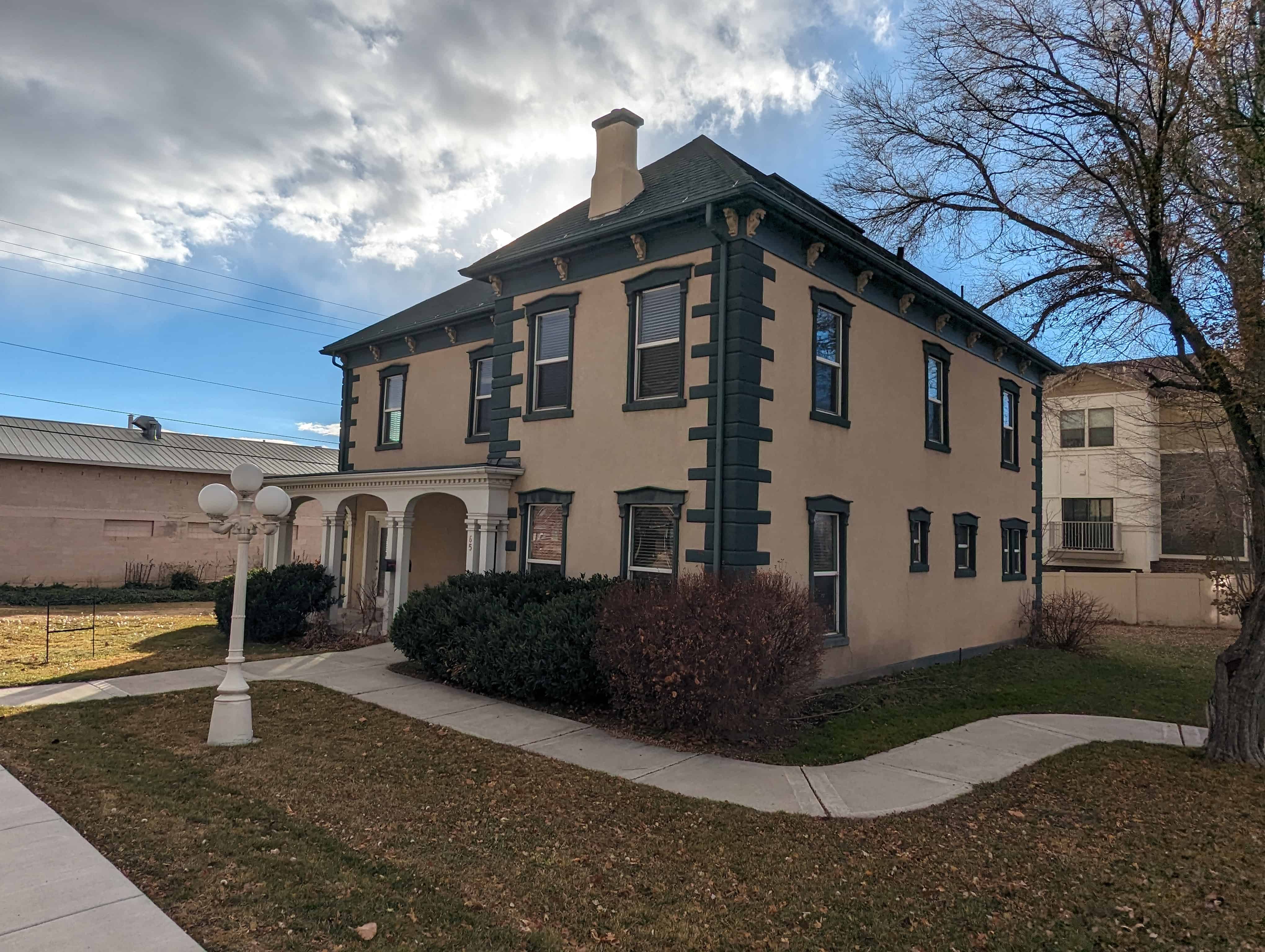
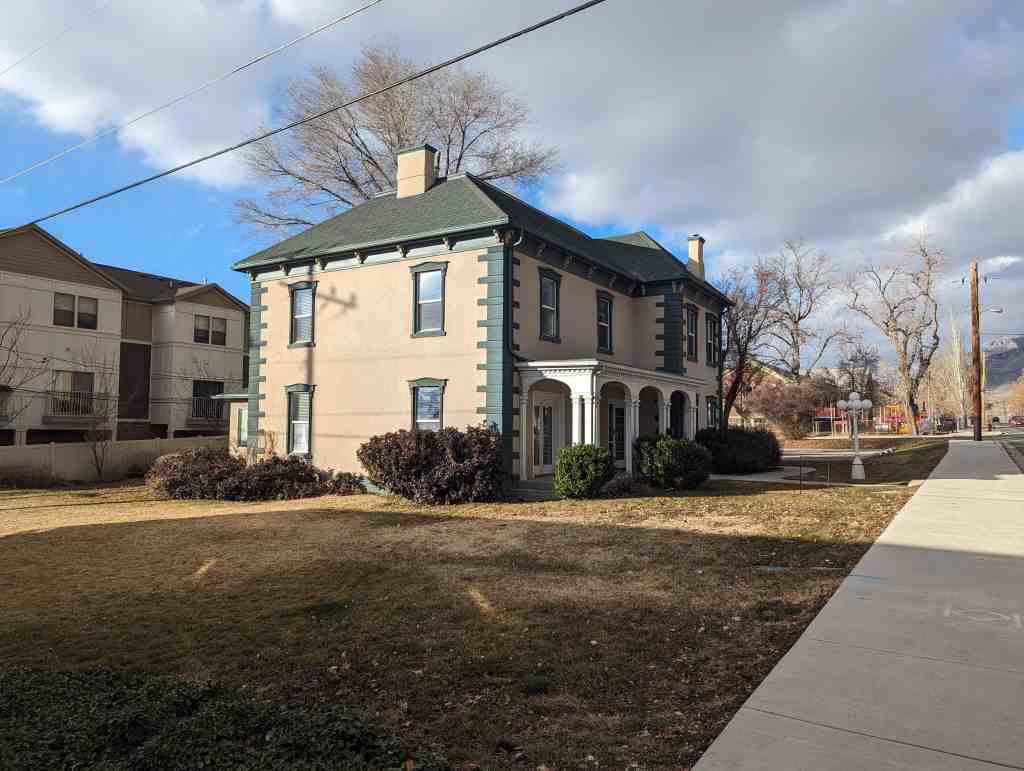
The Beers House/Hotel is both historically and architecturally significant in the community of Pleasant Grove. Franklin and Elizabeth Beers had this Italianate style house constructed in 1885 to serve as a hotel and residence for their family. This hotel identifies with the development of Pleasant Grove as a stopping place for many travelers passing through and for immigrants trying to establish homes. The Beers Hotel is significant architecturally as one of only two Italianate buildings constructed in Pleasant Grove and because it retains the character-defining features and integrity of this ornate style.
Located at 65 North 100 East in Pleasant Grove, Utah and added to the National Historic Register (#94000296) on April 7, 1994. The text on this page is from the national register’s nomination form.
The Beers House/Hotel is located on 100 East, a major thoroughfare in Pleasant Grove. The town’s first school and city hall were also built on 100 East, a road that extends north to American Fork. The Beers House/Hotel was within a diffused central core that included a railroad depot to the west, the Mormon tabernacle to the east and the Presbyterian Church to the north.
The Beers House/Hotel was one of three hotels in the city of Pleasant Grove during the late 19th and early 20th centuries. The Hawley House, the first hotel in Pleasant Grove, was built of soft rock in 1870 by Captain Hawley (and was demolished in the 1960s). The Mayhew House, a one and one-half story frame house built c.1860, was run as a boarding house by Elijah and Sarah Young Mayhew in the late 1890s and early 1900s, and is one of the oldest remaining houses in Pleasant Grove.
The residential scale of these three house/hotels was common for travel accommodations. Multiple use of a residential building was also common and is illustrated by the fact that the Beers House/Hotel was not only known as the Pleasant Grove Hotel, it was later called Beers’ Hall. Other similar establishments combining hotel and hall may be seen in the example of Fairfield Hotel and Amusement Hall of the same period.
Pleasant Grove was first settled by Mormon pioneers in the summer of 1850. Farming was a mainstay from the town’s settlement and to irrigate the various parcels of ground a crude dam c.1851 to carry the water to their lands. A large influx of settlers occurred and the first school was built in 1852. After the Golden Spike was driven to complete the transcontinental railroad at Promontory on May 10, 1869, a new era of development began in the West. The influx of new people attracted by the mining industry also encouraged growth through this region. In 1873, Pleasant Grove’s first train arrived at their station.
Pleasant Grove’s development was further encouraged by individuals providing accommodations and supplies for travelers as well as residents of the community. In addition to building one of the first hotels in Pleasant Grove, Franklin Beers developed a mercantile store with a butcher shop, tin shop, tailor shop, and shoe store with livery stable attachments. Franklin and Elizabeth built this hotel/residence in 1885 near his general merchandise store. “Frank Beers, our enterprising merchant, is finishing up a very fine dwelling house just north of his store. B will keep travelers.
In 1885, Thomas Featherstone, a mason from Lehi, laid the adobe bricks and is believed to have plastered the interior walls. William L. Hayes, a 15 year-old clerk in the Beers Mercantile, carried the hod (a mason’s tool or tray). E. J. Ward, who operated a planing and finishing mill at 200 South 200 East in Pleasant Grove, was hired to do the carpentry and finish work. The wood came from Mr. Ward’s sawmill in American Fork Canyon. All interior and exterior woodwork was done by Mr. Ward and his two sons, Charles O. and Joseph H. Ward.
Franklin Beers was born August 16, 18439 in New York when his parents were traveling from England to Nauvoo, Illinois. In 1848 he and his mother, Susan Gazy Beers, crossed the plains with a group of Mormon pioneers arriving in Salt Lake City in the fall of that year (his father had previously returned to the East). They moved to Pleasant Grove in 1850.
Beginning at an early age Franklin took an active part in the settlement and financial growth of Utah. He participated in the Blackhawk Indian War and traveled across the plains numerous times to assist the immigrant pioneers. His step-father often sent him with the wagon to act as an escort for Brigham Young on his early trips to southern Utah.
Elizabeth Glines Beers was born in Harris Grove, Iowa on March 13, 1852, the daughter of James Harvey and Elizabeth Ann Myers Glines. She arrived in Salt Lake City with her family on October 4 of that same year. They made their home in Cedar Fort, Utah County in April 1853. Franklin Beers was Elizabeth’s teacher at Cedar Fort school prior to their marriage on April 26, 1869 in the Endowment House in Salt Lake City.
She assisted Franklin in his mercantile business that he and Benjamin Driggs bought from George H. A. Harris in 1879. They sold stock in this business and operated as the Battle Creek Co-op. Owners of the Pleasant Grove Co-op sued Driggs and Beers and the Battle Creek Co-op was dissolved. Beers then built his own modern two story mercantile shop (no longer in existence) c.1884 on the corner of Center Street and 100 East. This mercantile business is considered a forerunner to the department store because it included a shoe shop, butcher shop, tailoring shop, a millinery run by Elizabeth and their daughters, an upstairs dance hall, and a livery stable at the rear. Elizabeth Beers managed the hotel while raising their nine children in the house.
The Beers operated both businesses successfully until 1895–the 1893 financial panic and the extension of credit had begun to make their merchandise business unprofitable. They retained ownership of the Pleasant Grove properties, but moved to Vernal in 1895, where Elizabeth’s father had moved. In Vernal, Franklin established a mercantile in which his wife and daughters again operated a millinery shop. Beers introduced the first bee industry in the Uintah Basin. From this business, he shipped the first railroad car loads of honey from Utah to the eastern states.
In a very short time, they recouped their losses and moved to Provo where they built a home on Academy Avenue. Elizabeth and her daughters established a millinery shop in Provo. Franklin Beers passed away, July 28, 1905, owning considerable property in Vernal, Pleasant Grove, and Provo. Elizabeth and their daughters retained ownership of the Pleasant Grove hotel until 1925. The hotel/residence was rented during the years they lived in Vernal and Provo.
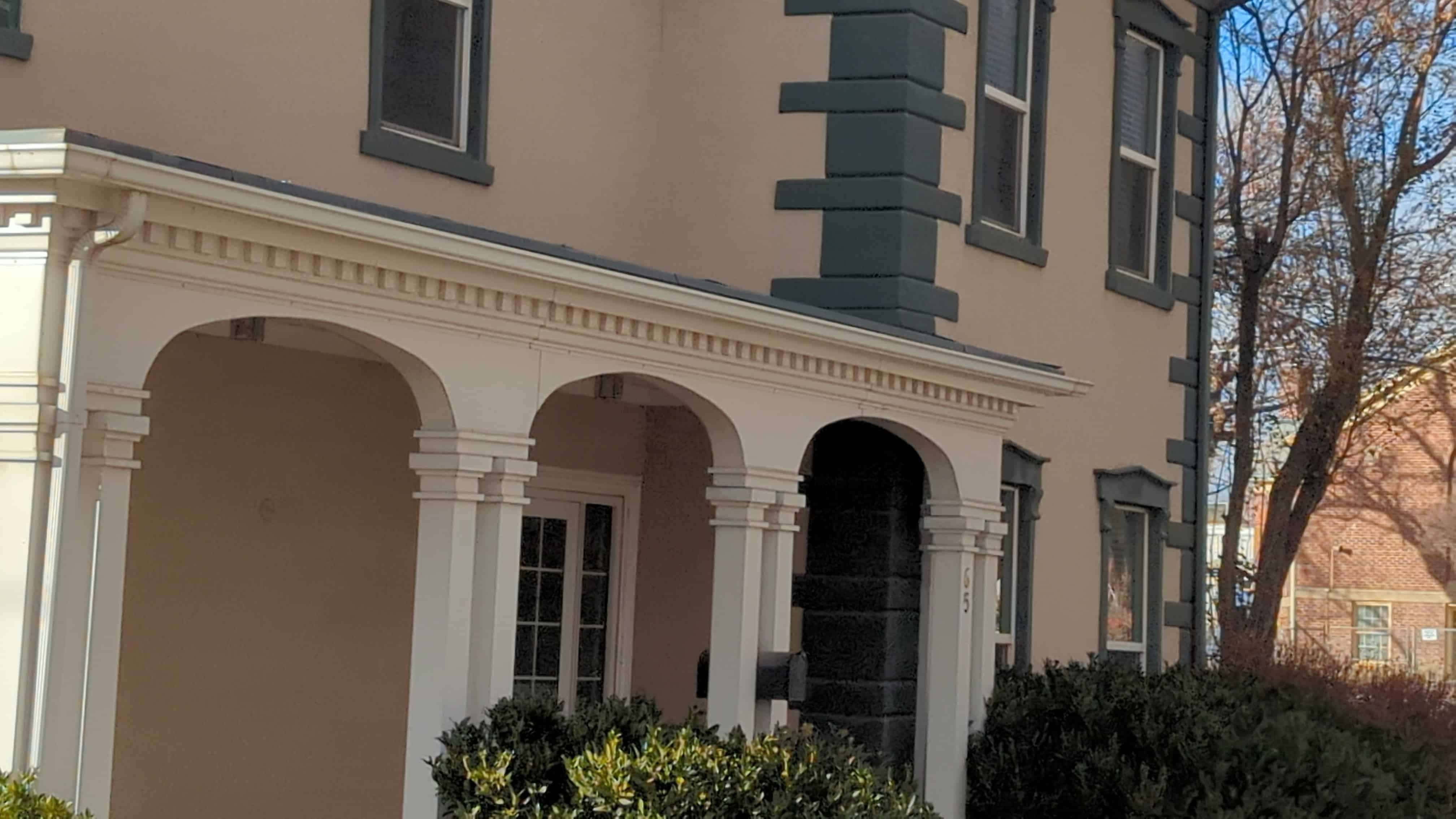
The hotel/residence was purchased by Eleroy and Lois West in 1925. In 1930, under the direction of Fred Markham, a prominent Provo architect, the Wests had the small porches removed, the exterior walls stuccoed and quoins added. Other alterations on the façade included the installation of French doors, side-lights flanking the front door and a balcony porch with balustrade. Plumbing and electrical wiring were installed, closet and storage spaces were added, a basement was excavated under the southwest rooms, and archways were opened and a fireplace installed between the southeast and southwest living rooms.
The Wests were natives of Pleasant Grove, having both attended school there and graduated from Brigham Young University. They were married on June 2, 1920, and raised five children. Both were prominent members in the community, the local Mormon Church, and in education. Lois West was born October 23, 1897. She taught school in Pleasant Grove and Nevada for 18 years, was an accomplished musician, and organized the first PTA in the community as well as the first school lunch program. She was a member of Utah Federated Women. Eleroy West was born January 2, 1895. He earned a degree from the University of Utah as well as BYU, taught school for 35 years in Utah, and worked for the U.S. Forest Service during summer months. He served in France in WWI. Eleroy was instrumental in forming the National Guard in Utah County and served as commanding officer for all counties from Utah County to the southern border of Utah. He served in the United States during WWII with the National Guard; after serving 27 years, he retired with the rank of Colonel. Lois passed away July 8, 1991, and Eleroy died March 5, 1993 having lived in the house for 66 years.
A grandson of Lois and Eleroy, William G. West, purchased the building, refurbished it, and moved his two businesses, EBS Electronic Business Systems and Knight West Construction, into the spacious building. William is a native of Pleasant Grove and is currently serving as an elected Pleasant Grove City Councilman.
The Beers Hotel is significant architecturally as one of only two Italianate style buildings constructed in Pleasant Grove. The Italianate style did not become popular in Utah until after the Civil War and was not common in outlying communities until the 1880s. The Beers Hotel takes the shape of the commonly used cross-wing form and is characterized by a low-pitched hip roof, overhanging eaves, bracketed cornices and hooded window heads. Other characteristics include an asymmetrical plan and façade. The changes made to the building in the 1930s, including the stuccoed exterior with quoins and the balcony porch, are in keeping with the Italianate style. This hotel/house retains its character and contributes to the community’s architectural heritage.
The Beers House/Hotel, constructed of adobe in 1885, is a two-story cross-wing Italianate style house with a hip roof. Stucco was applied to the exterior walls as a part of a 1930 remodeling. A 1993 remodeling involved other minor alterations to the exterior and interior, but overall the house retains a high degree of its original integrity. The house is located on a residential lot one block east of Main Street in the heart of the town. The building maintains its historic character and continues to contribute to the architectural heritage of Pleasant Grove.
The adobe bricks are 12 x 5 x 4 inches and are laid two wythes thick. Italianate features include an asymmetrical plan and façade, a low hipped roof, and bracketed eaves and cornices. The paired, tall, narrow windows include pedimented lintels with rosettes in the centers. In 1930, small porches were removed, the exterior walls were stuccoed and quoins were added. French doors, side-lights flanking the main front door, and a balcony porch with a balustrade were other changes made to the facade that are in keeping with the original style. Plumbing components and electrical wiring were installed. Closets and storage spaces were added and a basement was excavated under the southwest rooms. Twin archways were opened between the southeast and southwest living rooms and a fireplace was added between the archways.
In 1993, the building again underwent renovation that included rewiring and replumbing. The front wooden door was replaced with a metal door of like appearance. The side-lights were replaced with solid glass side-lights of the same size. The twelve-light French doors were replaced with single-light metal doors. No other changes to the façade or exterior have been made. Uneven plaster walls on the interior were covered with a layer of sheetrock, bringing the walls flush with the interior woodwork. No changes to interior wall placement or ceiling height have occurred.
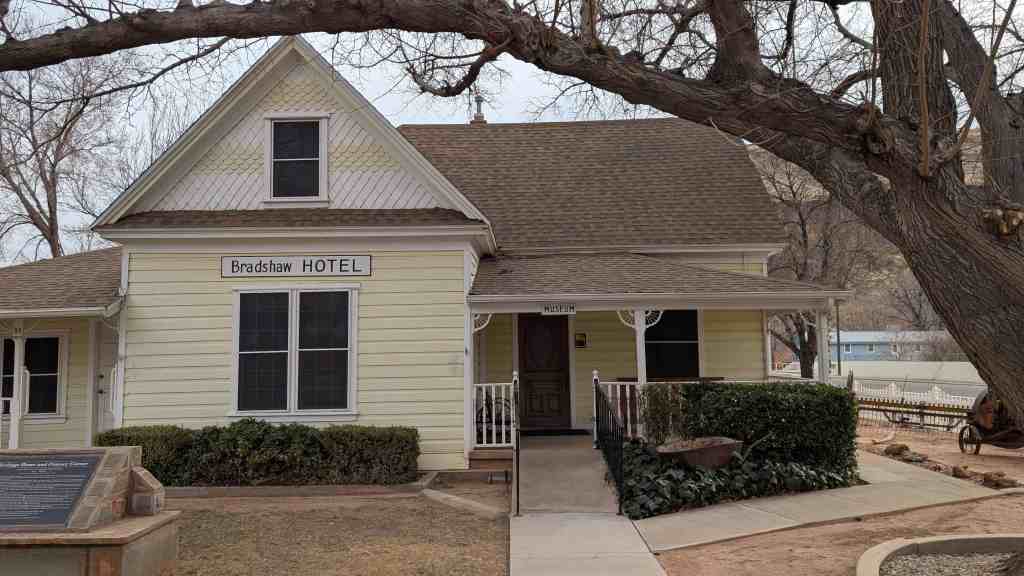
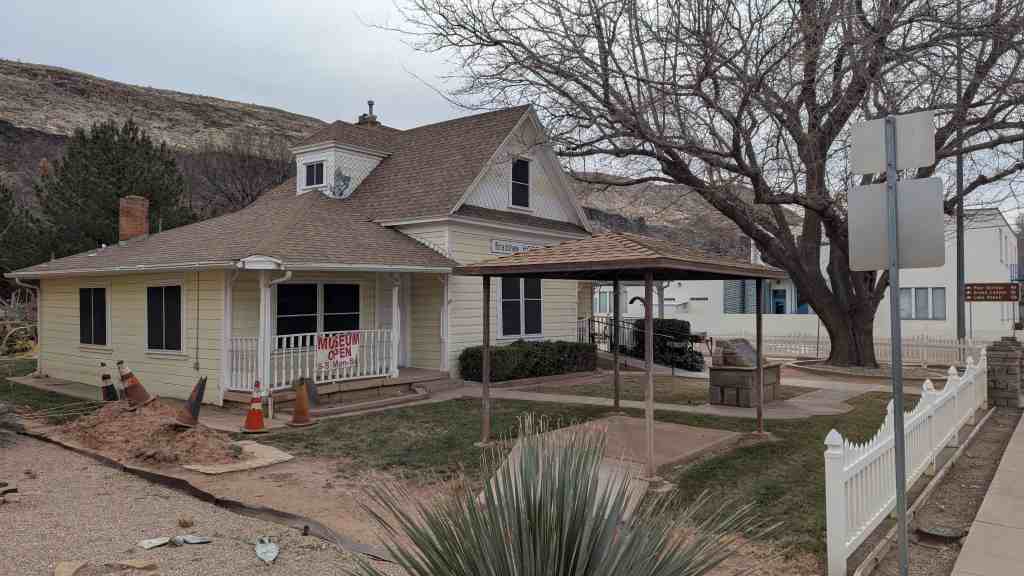
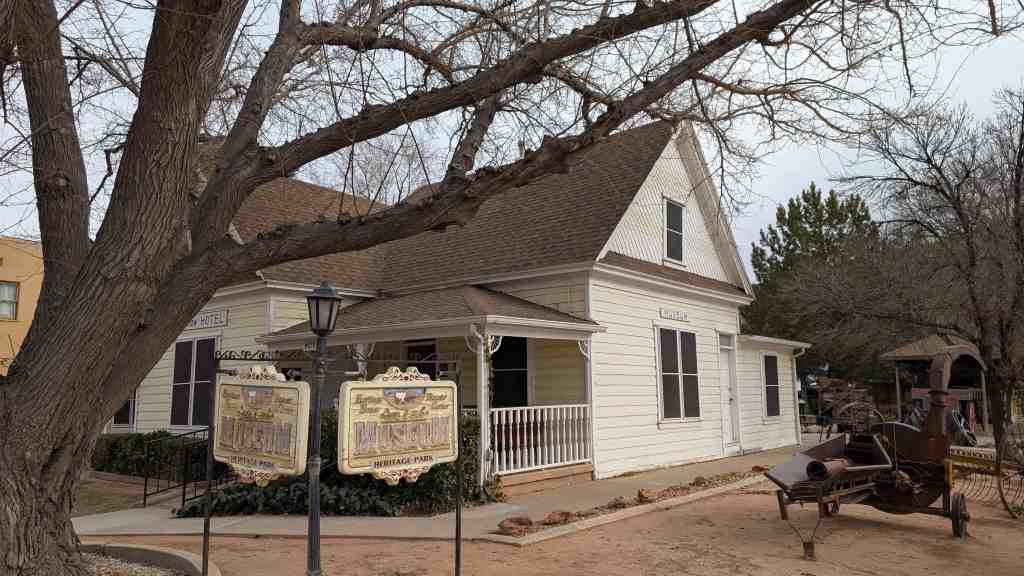
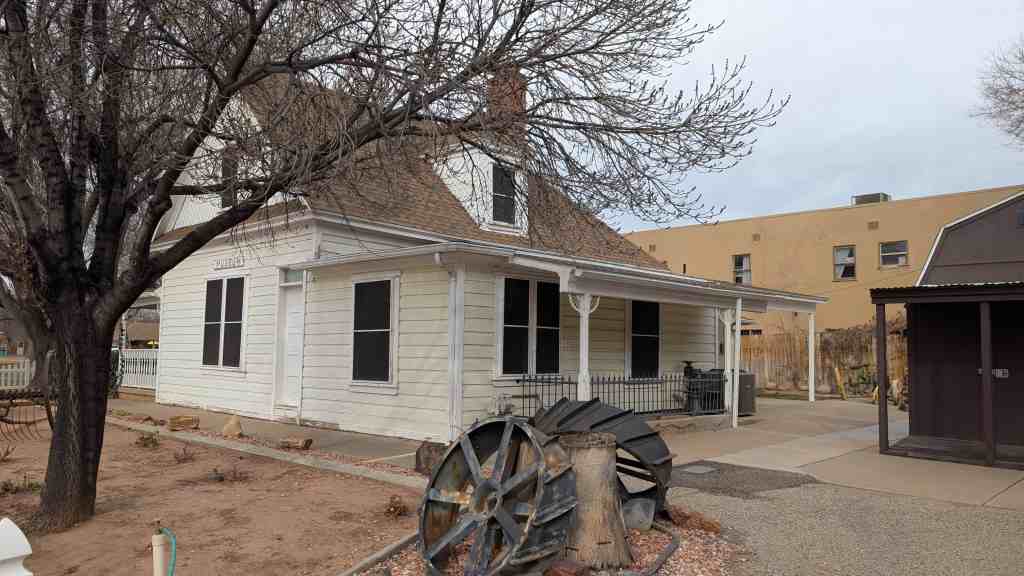
Built in 1906-08, the Bradshaw House/Hotel is significant for its role in the settlement and early community life of Hurricane, Utah. It was the first permanent house built in the town, which was established soon after the Hurricane Canal (National Register) was completed to bring water to this previously dry benchland. In addition to its use as the Bradshaw family residence, the house served as the first school in the town, as a place for Sunday school, and for a variety of other public gatherings. The Bradshaws also operated it as a boarding house and hotel, the first in the community. It was one of the few hotels in the town and one of the longest-lived, operating for over 25 years.
The Bradshaw House-Hotel is located at 85 South Main Street in Hurricane, Utah and was added to the National Historic Register (#91001443) on September 26, 1991. The text on this page is from the nomination form from when it was added to the register.
Ira E. and Marion Hinton Bradshaw started construction of this house in early 1906 and had it sufficiently completed by the end of the summer for the family to move in. According to family and local histories, it was the first permanent house built in the new community of Hurricane. As such it served a variety of community purposes since it was the largest building in town. The northwest room, though at first unfinished, served as the town’s first school, as a Sunday school room, and for other public gatherings. These activities were eventually shifted to other buildings as the town developed. These included a social hall (1908), a church (1907-08), and a school (1917).
Completion of the Hurricane Canal in 1904 opened up the Hurricane Bench for agriculture and instigated the formation of the town. Residents of neighboring communities first began constructing the canal in 1893. They continued under adverse conditions for nine years. By then only a few of the original canal stockholders still had faith to remain with the project. One of them was Ira Bradshaw, who served as president of the Hurricane Canal Company from 1901 to 1907. The group contacted the First Presidency of the Church of Jesus Christ of Latter-day Saints (Mormon Church) in Salt Lake City requesting assistance with their project. The church had directed the establishment of over 300 communities in Utah from 1847 to the late 1880s, so assisting with settlement efforts was not new. At this time, however, the church was no longer actively colonizing in Utah. The effort to build the canal and establish the town of Hurricane was a private venture. The church’s decision to invest $5,000 in the project demonstrates the leaders’ willingness to assist with community-building, though in a more business-like fashion than it had in the nineteenth century. Without the infusion of cash generated by the church’s purchase of stock, the company may not have completed the canal.
Settlement of the town of Hurricane began soon after the canal was completed. Stockholders drew lots to determine their parcels in the new townsite. The town was laid out in five-acre blocks divided into four lots. Twenty-acre farm sites south of town were divided in the same manner. Many of the early settlers built cellars or granaries that could serve temporarily as homes and later be used as auxiliary structures. Only one of those granaries is extant: the George H. and Annie C. Isom granary located at 274 W. 100 North, where it was moved in 1945.
Ira Bradshaw’s house is credited as the first permanent home in the town. Others were apparently built at approximately the same time. A Washington County News article from January 1908 noted that, “Lewis Campbell is finishing off the Ira Bradshaw house. It will soon be ready for the painter. Jesse Lemmon expects to have his house painted soon. Jesse Demill’s house is almost completed.” Though Bradshaw’s house was not completed until 1908, it was, according to numerous local sources, being used in an unfinished condition as early as the fall of 1906. Of the three houses mentioned in the article only the Bradshaw house remains standing.
Both Ira and Marion Bradshaw were lifelong residents of southern Utah. They were married in 1883 and had five children. They made their home in Virgin until moving to Hurricane after the canal was completed. Ira held a variety of jobs, including farmer, canal worker, and hotel operator. He served six years as president of the Hurricane Canal Company and twenty years as a member of the school board.
In addition to its community uses, the house also functioned as a hotel. Marion Bradshaw was an industrious homemaker and managed to accommodate traveling salesmen, known as “drummers,” and other travelers in the house. She also boarded teachers. From 1910 to 1923 the house became known as the Bradshaw Hotel. A c.1912 photograph shows the house, complete with a balustraded front porch and a “Bradshaw Hotel” sign over the front window. Thus it was the first hotel in the town of Hurricane. In 1917, The Hotel Monthly magazine gave a description of the clean rooms and sumptuous meals at the “little Bradshaw Hotel.” After Marion Bradshaw’s death in 1924, a daughter and son-in-law, “Mack” and Juanita Bradshaw Naegle, helped run the hotel and take care of the family still at home. Ira Bradshaw transferred title to the property to Juanita in 1929. Mack and Juanita decided to construct a new hotel just to the north. They operated that hotel only from 1930 until 1932. The economic decline brought on by the Depression forced them to close it down. They resumed taking boarders in the old home as before. Soon after Ira Bradshaw 1 s death in 1934, the loan company that held title to the property sold it, forcing the family to close down the hotel and move.
Other owners since 1942 were: the J. H. Ridings, the Golden Taylors, the Kenneth Gublers and Leah C. Adams and Miriam L. Cochran. The last two (who were joint owners) sold the property to Washington County in 1976. In June of 1989, Washington County leased the property to the City of Hurricane, who then leased it to the Hurricane Heritage Park Foundation in July of 1989. It is leased for a 25 year period, for a $100 per year lease with an option to renew. The foundation is in the process of the rehabilitating the hotel.
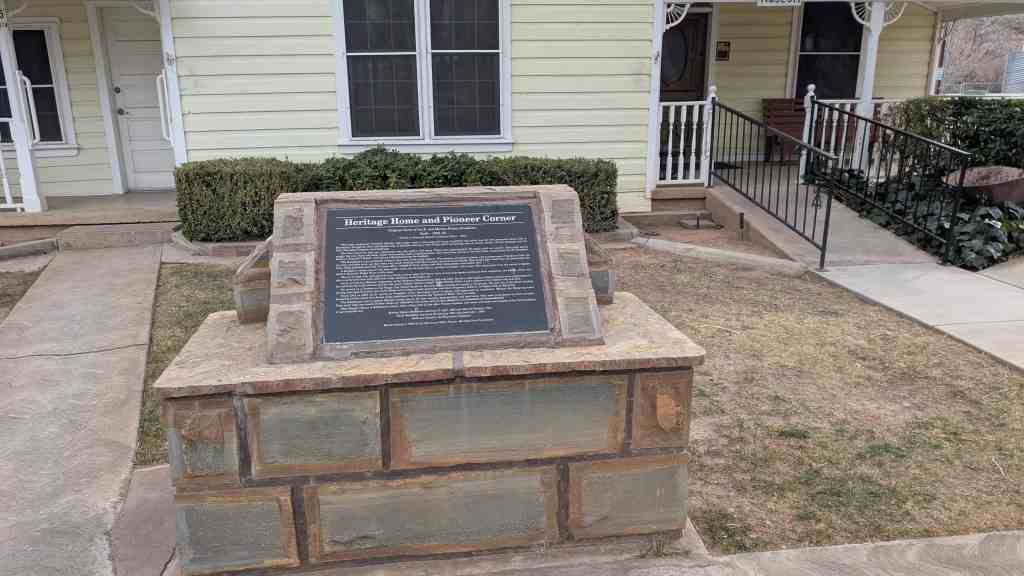
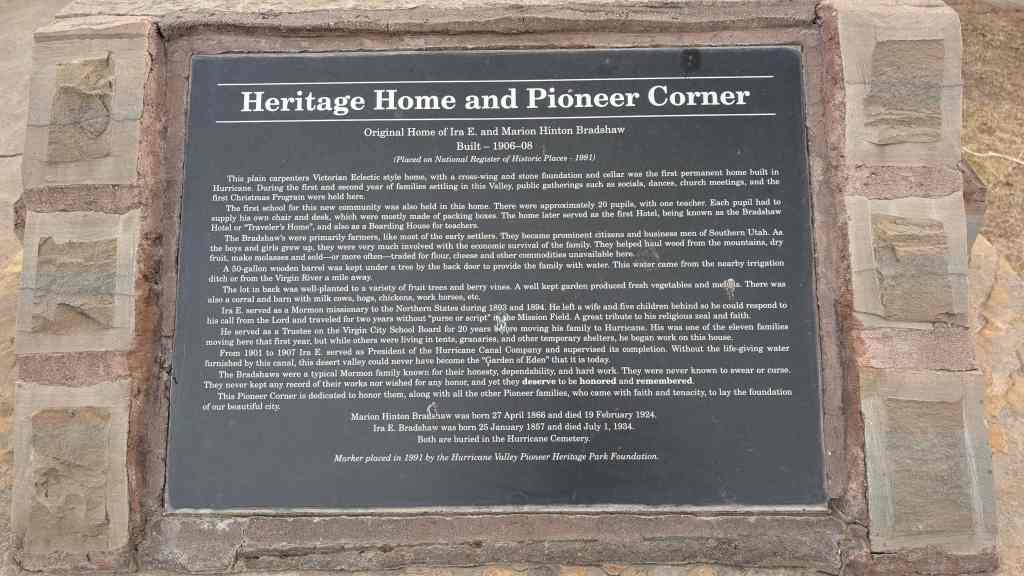
Heritage Home and Pioneer Corner Original Home of Ira E. and Marion Hinton Bradshaw Built 1906-08 (Placed on National Register of Historic Places – 1991)
This plain carpenters Victorian Eclectic style home, with a cross-wing and stone foundation and cellar was the first permanent home built in Hurricane. During the first and second year of families settling in this Valley, public gatherings such as socials, dances, church meetings, and the first Christmas Program were held here.
The first school for this new community was also held in this home. There were approximately 20 pupils, with one teacher. Each pupil had to supply his own chair and desk, which were mostly made of packing boxes. The home later served as the first Hotel, being known as the Bradshaw Hotel or “Traveler’s Home”, and also as a Boarding House for teachers.
The Bradshaw’s were primarily farmers, like most of the early settlers. They became prominent citizens and business men of Southern Utah. As the boys and girls grew up, they were very much involved with the economic survival of the family. They helped haul wood from the mountains, dry fruit, make molasses and sold-or more often-traded for flour, cheese and other commodities unavailable here.
A 50-gallon wooden barrel was kept under a tree by the back door to provide the family with water. This water came from the nearby irrigation ditch or from the Virgin River a mile away.
The lot in back was well-planted to a variety of fruit trees and berry vines. A well kept garden produced fresh vegetables and melons. There was also a corral and barn with milk cows, hogs, chickens, work horses, etc.
Ira E. served as a Mormon missionary to the Northern States during 1893 and 1894. He left a wife and five children behind so he could respond to his call from the Lord and traveled for two years without “purse or script” in the Mission Field. A great tribute to his religious zeal and faith.
He served as a Trustee on the Virgin City School Board for 20 years before moving his family to Hurricane. His was one of the eleven families moving here that first year, but while others were living in tents, granaries, and other temporary shelters, he began work on this house.
From 1901 to 1907 Ira E. served as President of the Hurricane Canal Company and supervised its completion. Without the life-giving water furnished by this canal, this desert valley could never have become the “Garden of Eden” that it is today.
The Bradshaws were a typical Mormon family known for their honesty, dependability, and hard work. They were never known to swear or curse. They never kept any record of their works nor wished for any honor, and yet they deserve to be honored and remembered.
This Pioneer Corner is dedicated to honor them, along with all the other Pioneer families, who came with faith and tenacity, to lay the foundation of our beautiful city.
Marion Hinton Bradshaw was born 27 April 1866 and died 19 February 1924. Ira E. Bradshaw was born 25 January 1857 and died July 1, 1934. Both are buried in the Hurricane Cemetery. Marker placed in 1991 by the Hurricane Valley Pioneer Heritage Park Foundation.
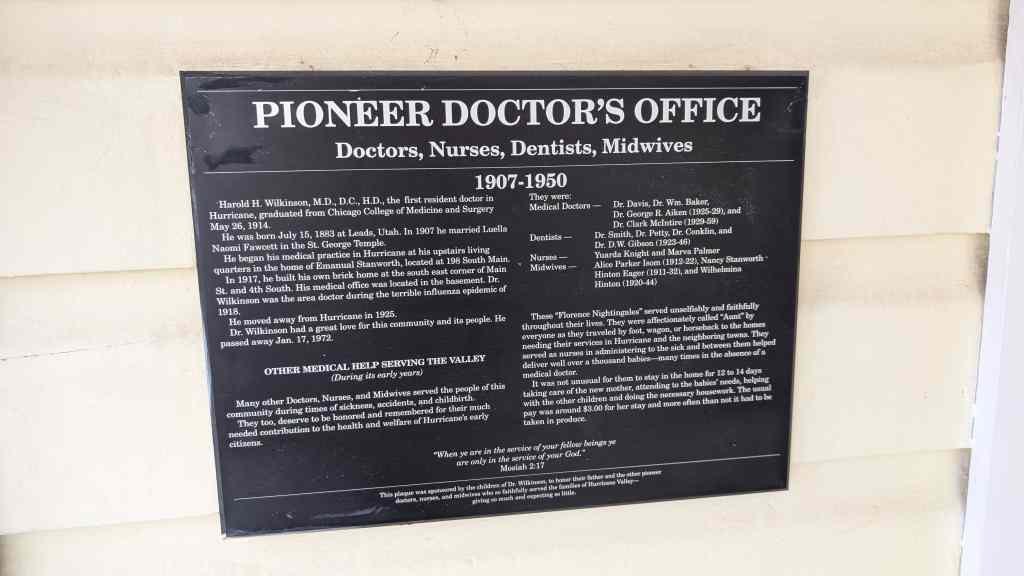
Harold H. Wilkinson, M.D., D.C., H.D., the first resident doctor in Hurricane, graduated from Chicago College of Medicine and Surgery May 26, 1914.
He was born July 15, 1883 at Leads, Utah. In 1907 he married Luella Naomi Fawcett in the St. George Temple.
He began his medical practice in Hurricane at his upstairs living quarters in the home of Emanual Stanworth, located at 198 South Main. In 1917, he built his own brick home at the south east corner of Main St. and 4th South. His medical office was located in the basement. Dr. Wilkinson was the area doctor during the terrible influenza epidemic of 1918.
He moved away from Hurricane in 1925.
Dr. Wilkinson had a great love for this community and its people. He passed away Jan. 17, 1972.
OTHER MEDICAL HELP SERVING THE VALLEY (During its early years)
Many other Doctors, Nurses, and Midwives served the people of this community during times of sickness, accidents, and childbirth.
They too, deserve to be honored and remembered for their much needed contribution to the health and welfare of Hurricane’s early citizens.
They were:
Medical Doctors
Dr. Davis, Dr. Wm. Baker,
Dr. George R. Aiken (1925-29),
Dr. Clark McIntire (1929-59)
Dentists
Dr. Smith,
Dr. Petty,
Dr. Conklin,
Dr. D.W. Gibson (1923-46)
Nurses
Yuarda Knight
Marva Palmer
Midwives
Alice Parker Isom (1912-22),
Nancy Stanworth Hinton Eager (1911-32),
Wilhelmina Hinton (1920-44)
These “Florence Nightingales” served unselfishly and faithfully throughout their lives. They were affectionately called “Aunt” by everyone as they traveled by foot, wagon, or horseback to the homes needing their services in Hurricane and the neighboring towns. They served as nurses in administering to the sick and between them helped deliver well over a thousand babies-many times in the absence of a medical doctor.
It was not unusual for them to stay in the home for 12 to 14 days taking care of the new mother, attending to the babies’ needs, helping with the other children and doing the necessary housework. The usual pay was around $3.00 for her stay and more often than not it had to be taken in produce.
“When ye are in the service of your fellow beings ye are only in the service of your God.” Mosiah 2:17
This plaque was sponsored by the children of Dr. Wilkinson, to honor their father and the other pioneer doctors, nurses, and midwives who so faithfully served the families of Hurricane Valley- giving so much and expecting so little,
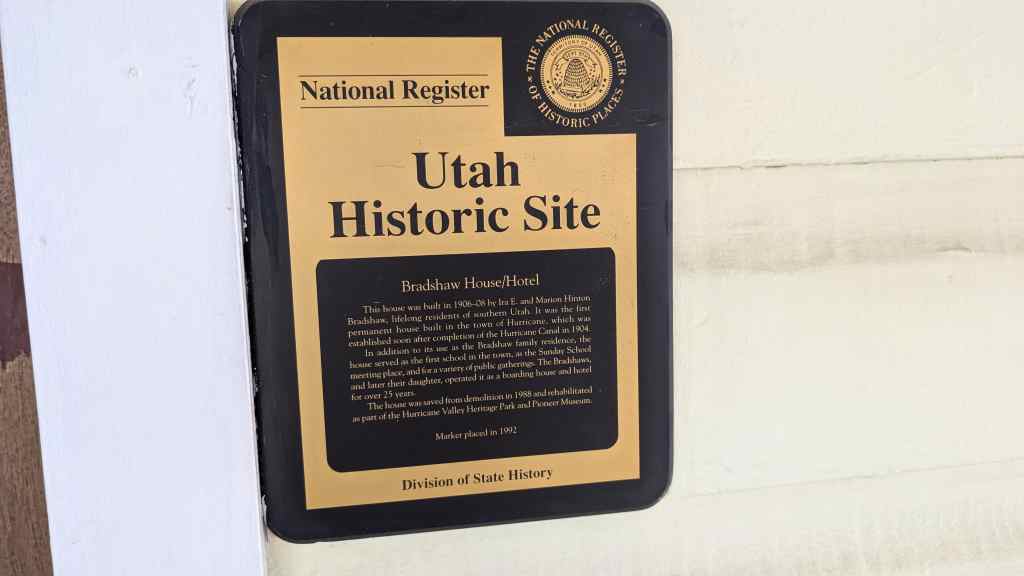
Bradshaw House/Hotel
This house was built in 1906-08 by Ira E. and Marion Hinton Bradshaw, lifelong residents of southern Utah. It was the first permanent house built in the town of Hurricane, which was established soon after completion of the Hurricane Canal in 1904.
In addition to its use as the Bradshaw family residence, the house served as the first school in the town, as the Sunday School meeting place, and for a variety of public gatherings. The Bradshaws, and later their daughter, operated it as a boarding house and hotel for over 25 years.
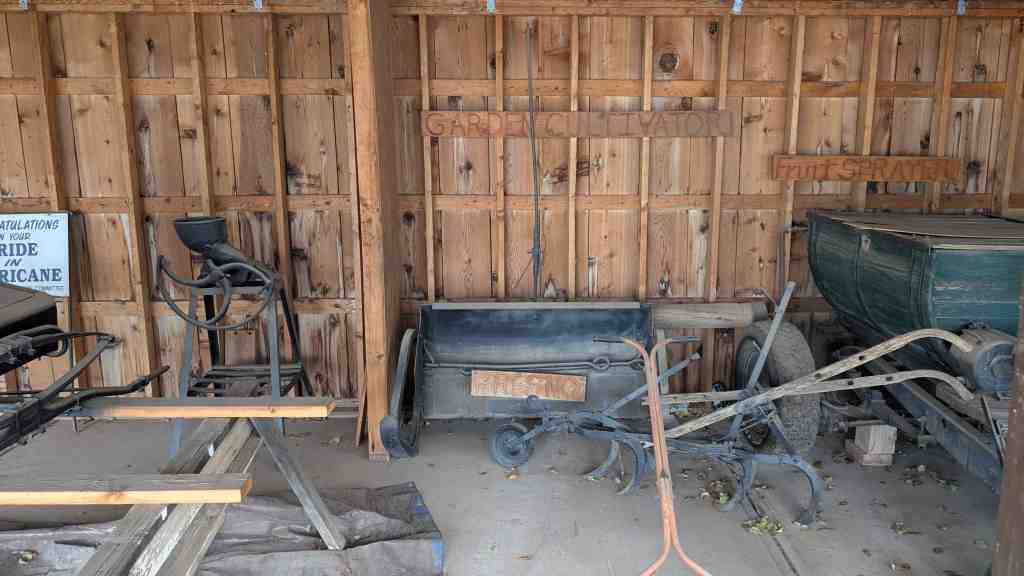
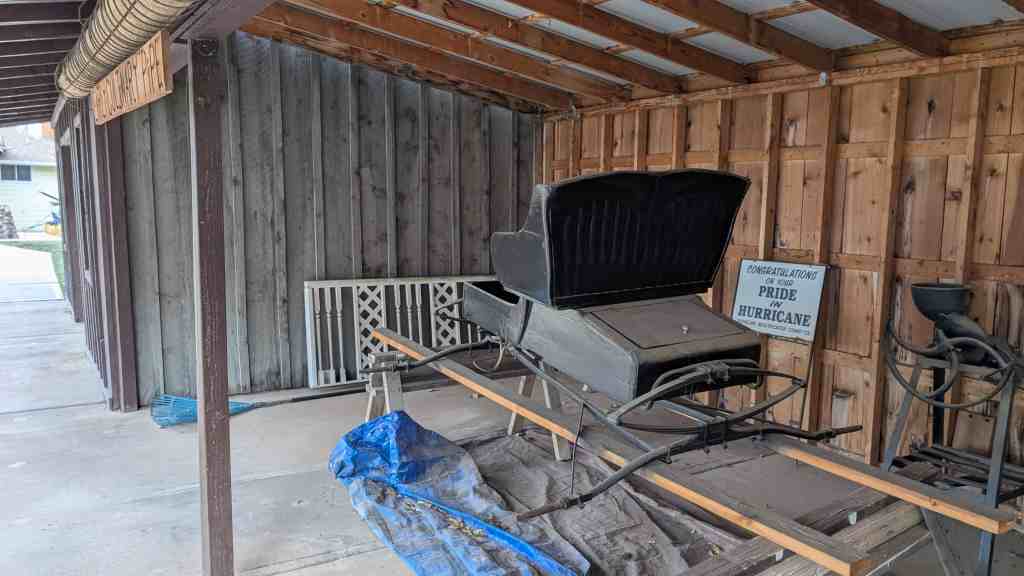
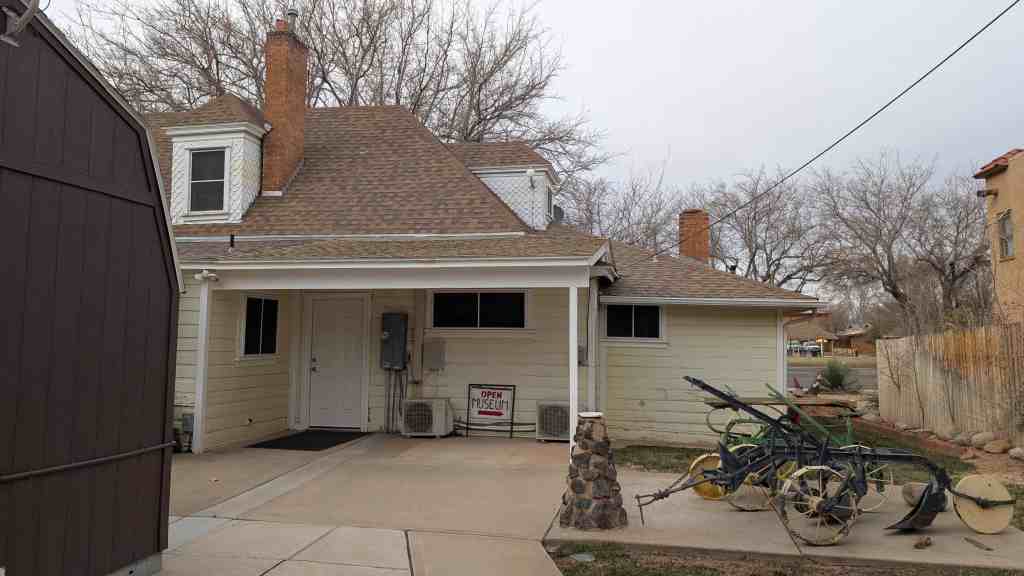
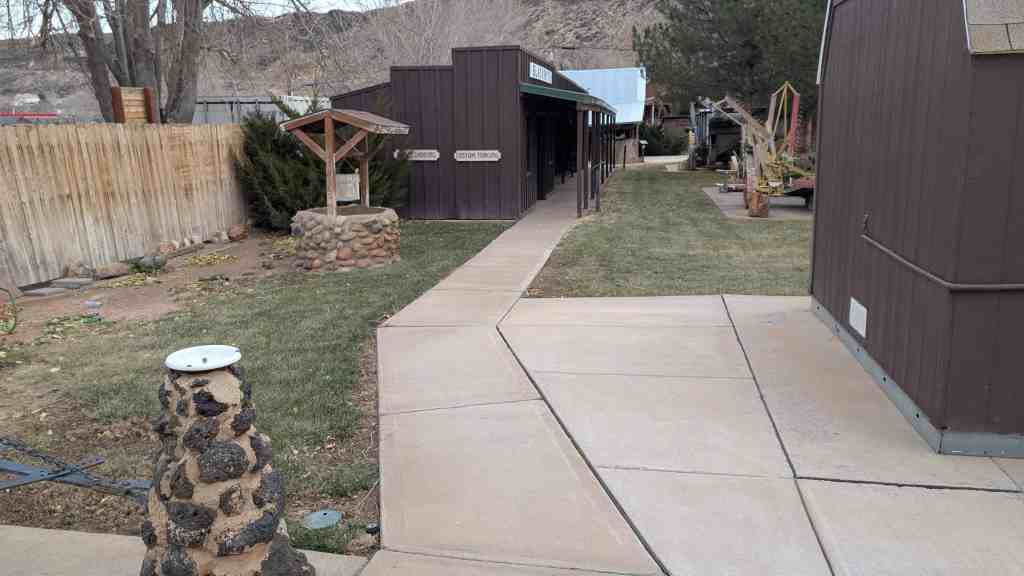
The house was saved from demolition in 1988 and rehabilitated as part of the Hurricane Valley Heritage Park and Pioneer Museum.
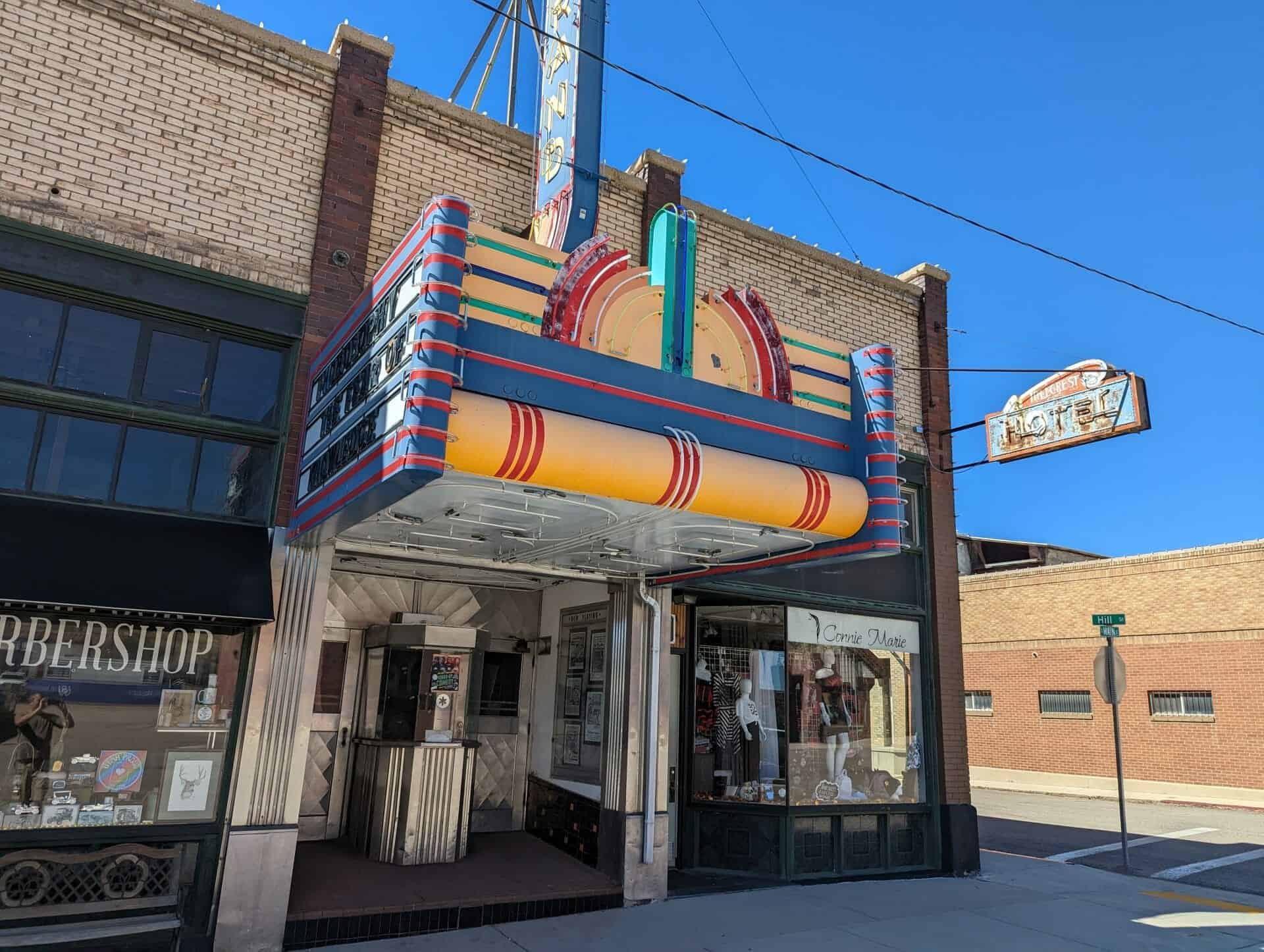
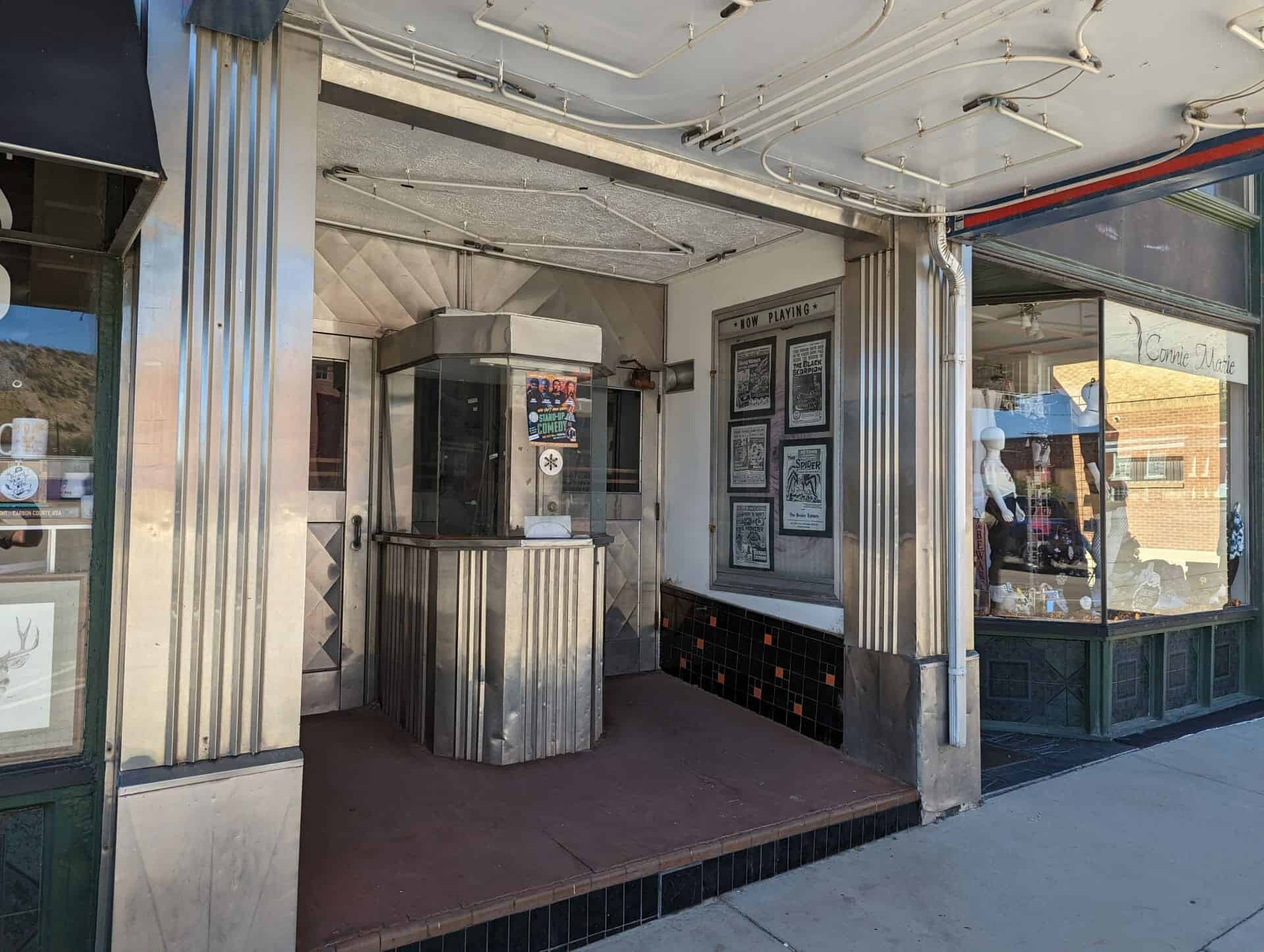
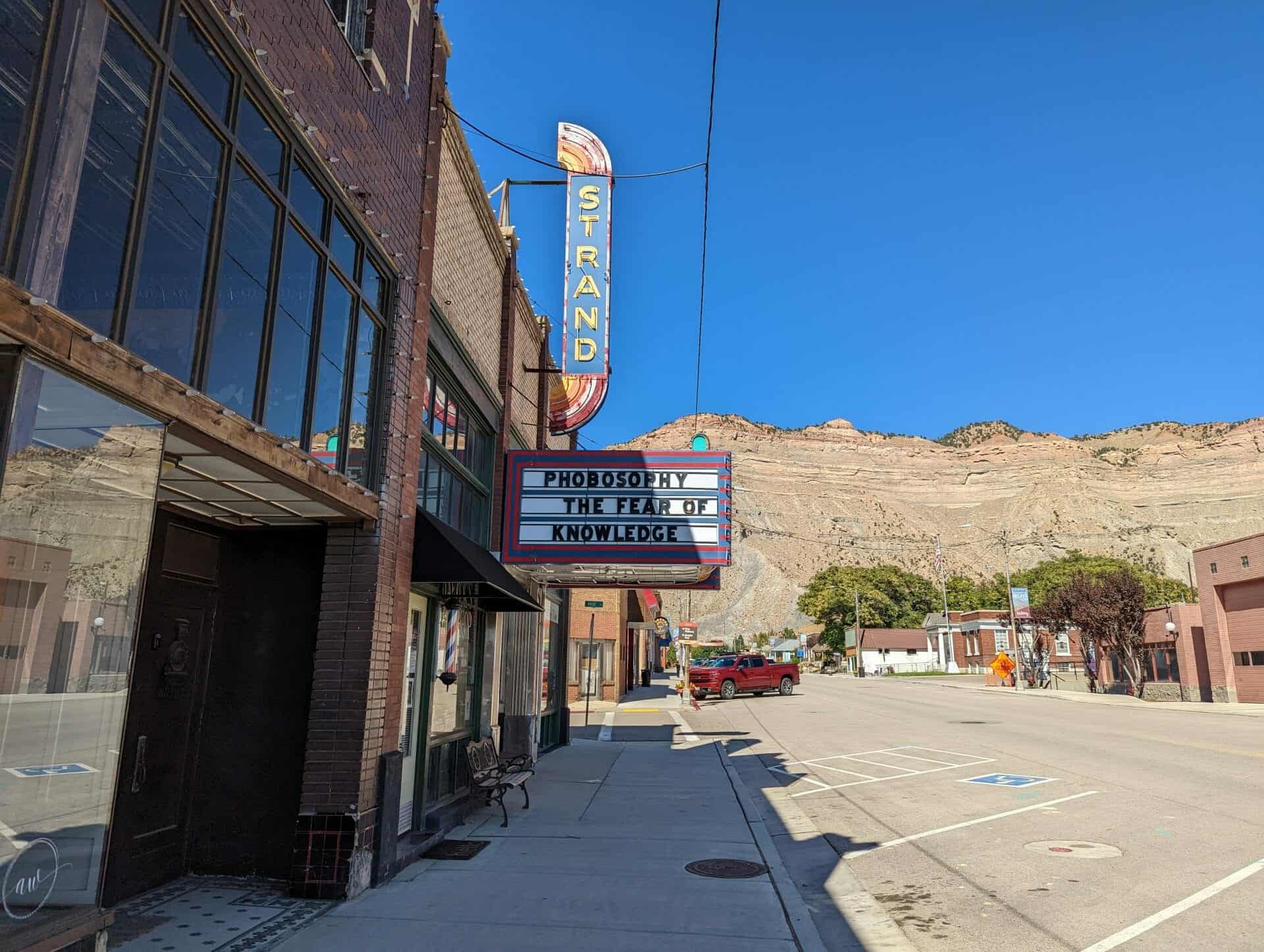
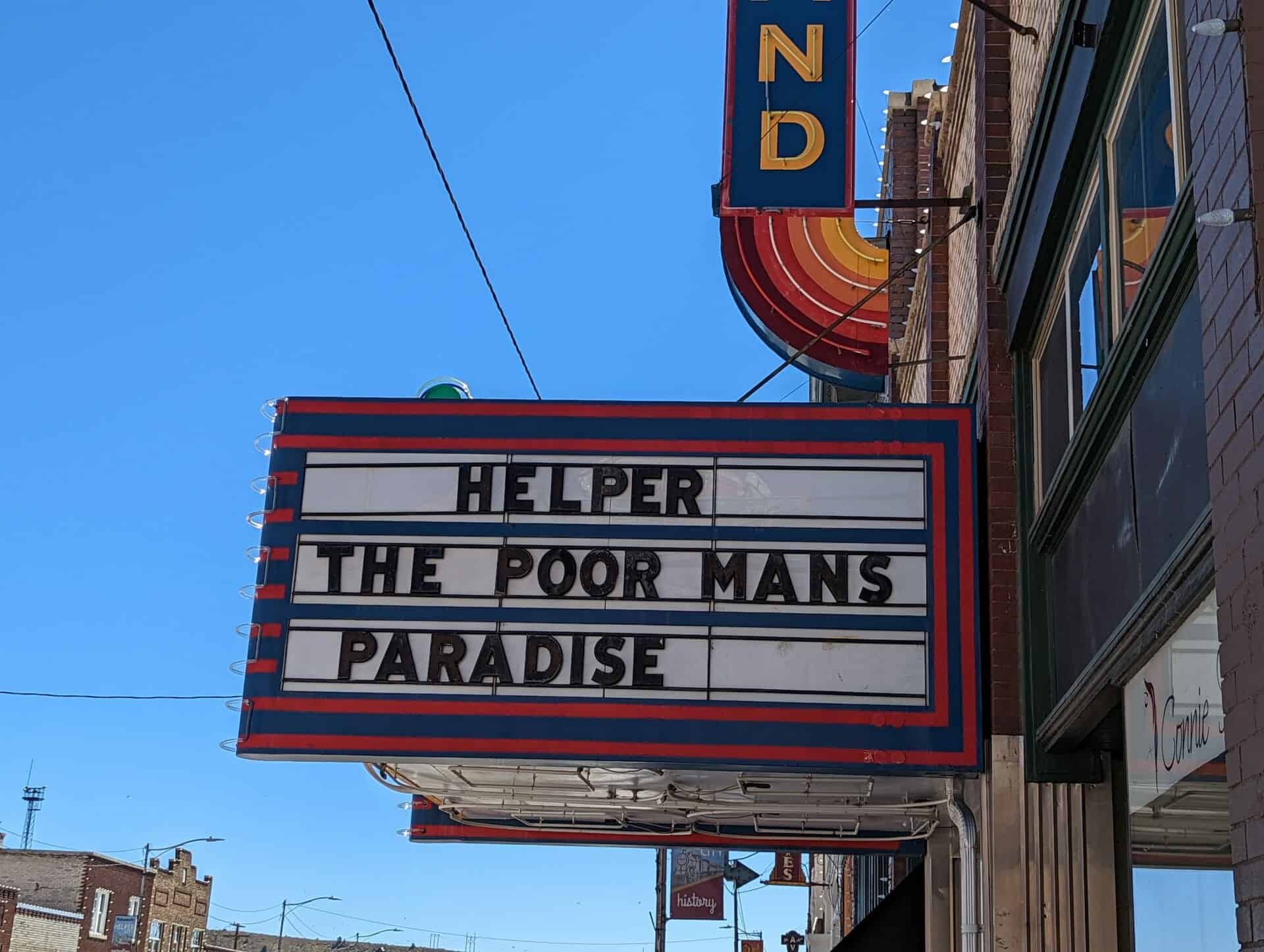
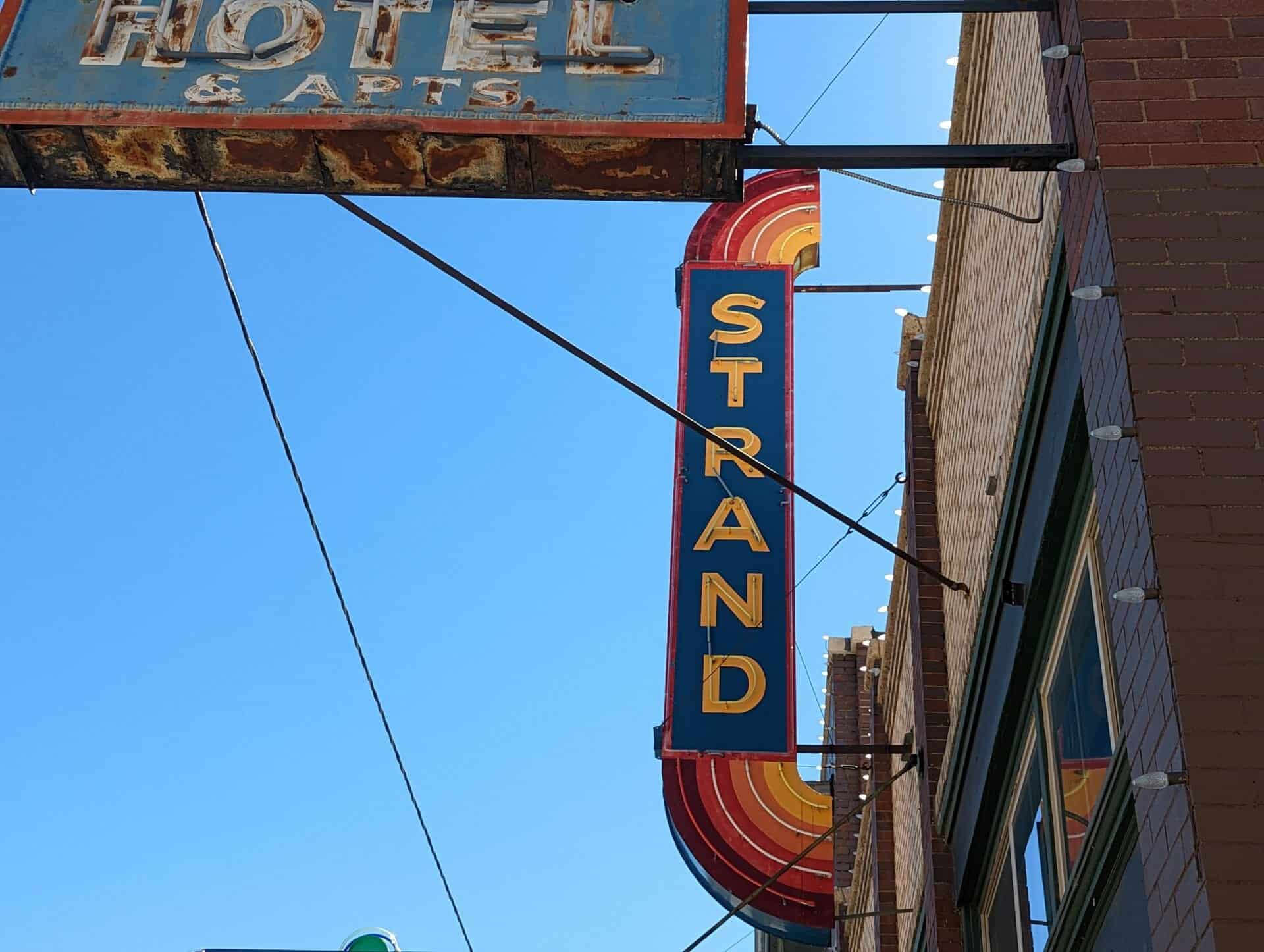
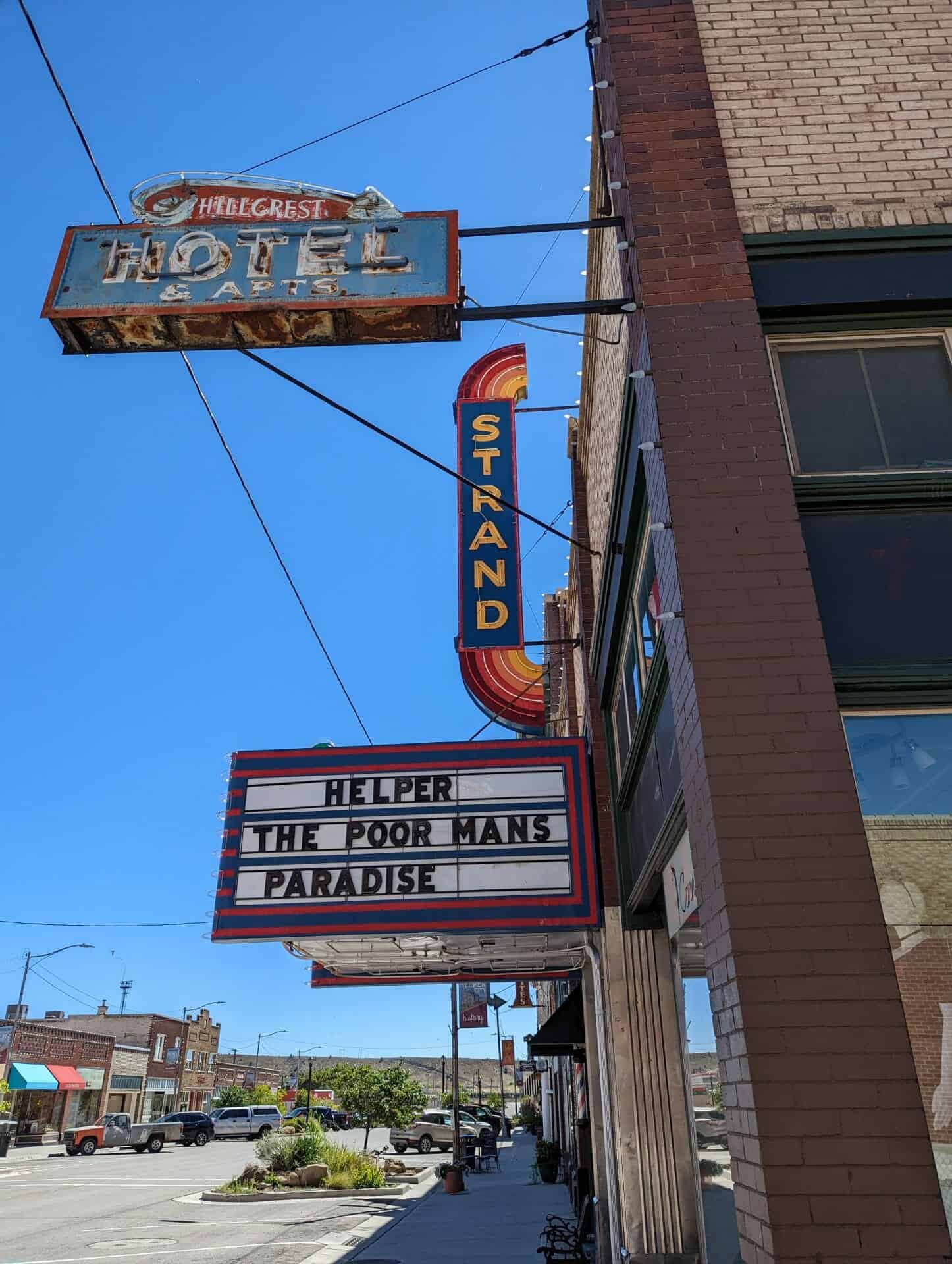
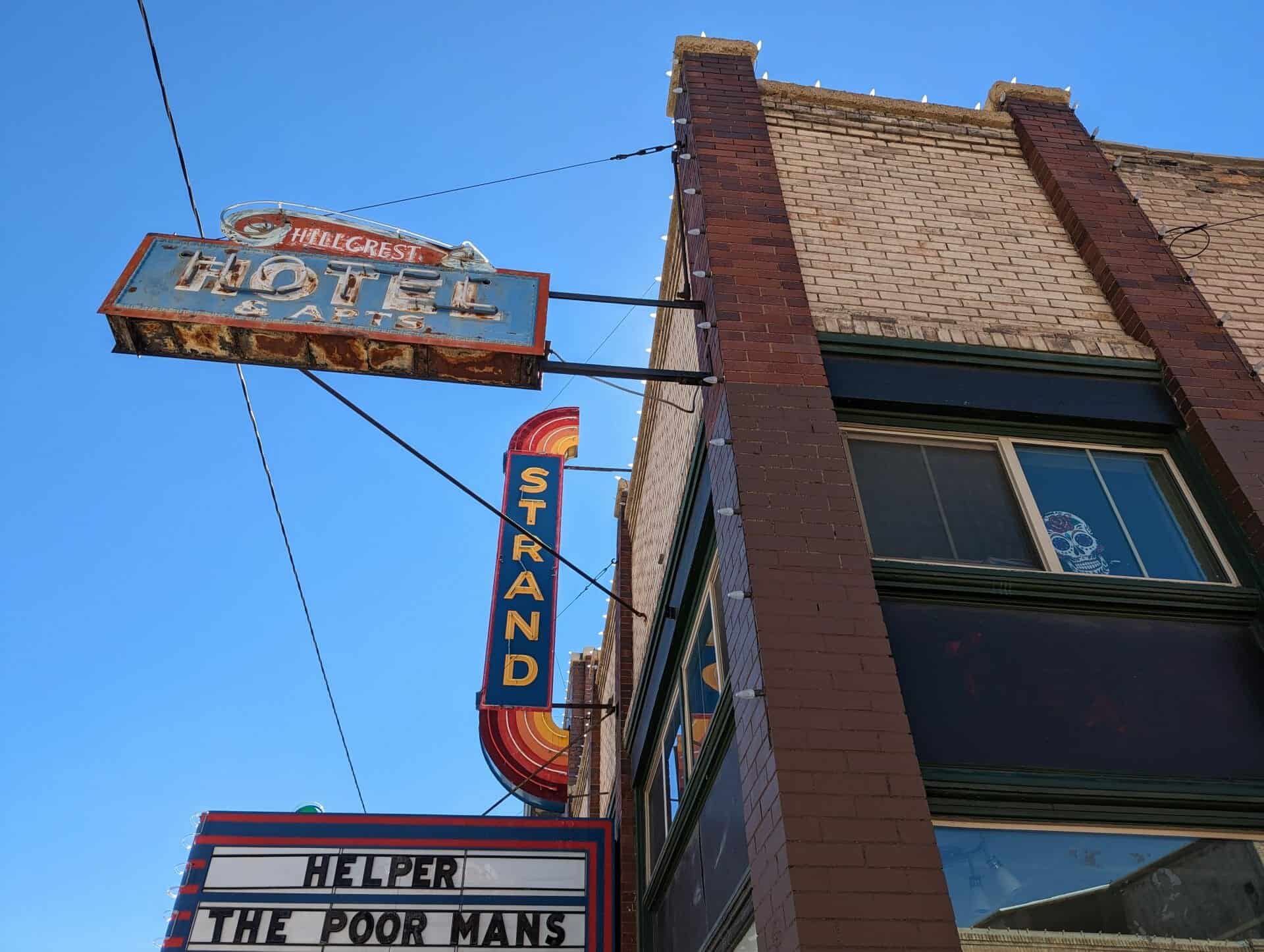
One story brick theater, originally owned by J.C. and Helen Ossana. The theater was initially called the Paramount, and was later changed to the Strand in 1929. William Littlejohn managed the theater from 1929 until 1935, when C.E. Huish of Eureka took it over. The basement used to house a Japanese “pool hall” operated by Harry Eda prior to the opening of the variety store. In addition to gambling and pool, the establishment also used to have silent Japanese movies and hosted traveling Kabuki theater groups. By 1934 the basement had been converted into the Strand Sweet Shop, operated by A.J. Ossano. The business on the LHS was Robert A. Nielson’s gift shop and jewelry until 1927 when he moved across Main Street. The RHS business was at one time a confectionary and later (in 1936) was a fashion shop operated by (Bessie) DeViettie and Dusserre. Except for the RHS portion, the building is presently unoccupied and, except for a more recent theater sign, is essentially unaltered.
This building was constructed in 1914 and is historically significant for its long association with the early 20th century development of Ogden City’s transportation and railroad district. The Royal Hotel originally provided housing for blue collar railroad workers and travelers. In the 1920s and 1930s, the hotel provided housing to many of the Basque workers from the Pyrenees Region of France and Spain who had come to work in the wool and sheep industry which was largely dependent on rail transportation until the early 1940s. During the 1940s, the Royal became one of very few accommodations available to African-Americans, because of segregation. The hotel also served as an office for the black military police during World War II.
The Royal was constructed during a time in which this area was becoming a center for commerce, entertainment, and lodging. Several other hotels were also constructed around this same time including the Healy Hotel and the New Brigham Hotel, both of which are on Wall Avenue, and the Marion Hotel, Windsor Hotel, and Helena Hotel which are on 25th Street.
The contractor for the Hotel was George A. Whitmeyer and Sons, a prominent local builder and contractor, who had built many of Ogden’s important public buildings, schools, libraries, office buildings, hotels and residences. The first story provided space for shops and offices while residential rooms were found on the second and third stories. The building was one of the most modest hotels in the district in terms of size and design.
A later addition to the rear of the original building was a jai alai (hie-lie) court. This structure is similar in size to the hotel and was constructed between 1920 and 1930 to provide the Basque residents a place to play their native game, which loosely resembles squash played by two teams of two people. The jai alai court was an important tie to the culture and heritage identity of these Basque immigrants.
The Hotel is a three-story brick building with a flat roof. The exterior façade is a uniform reddish brown, and a common variegated red/brown/tan colored brick for the sides and rear walls. The lower front façade features three bays matching the second and third story bays. The center door bay is recessed with historic entry doors made of wood and aluminum. Above the center door is transom of pattern glass. The upper façade features a concrete sill above the second and third floor window panels with a broad, simple detailed overhanging cornice made of metal.
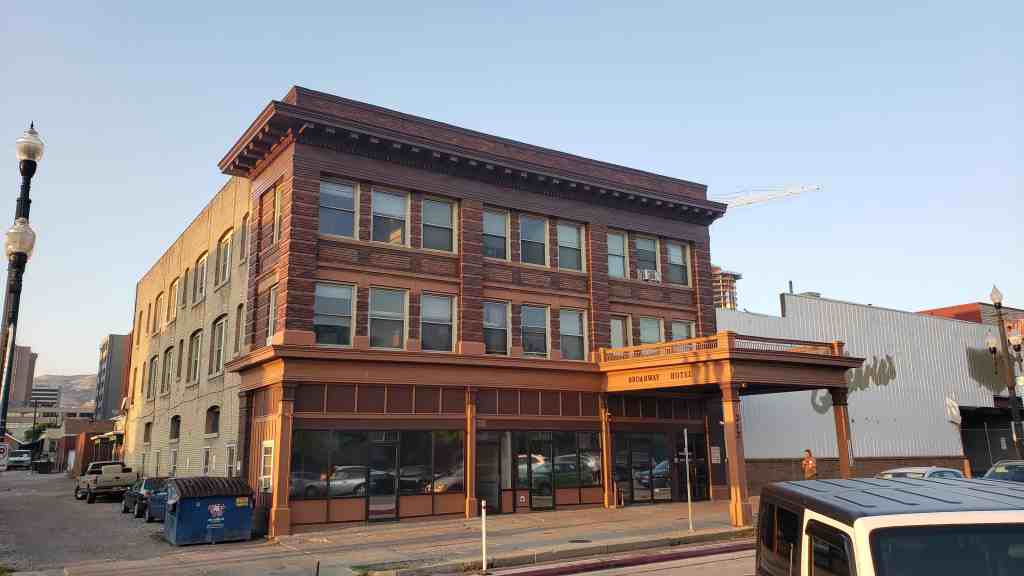
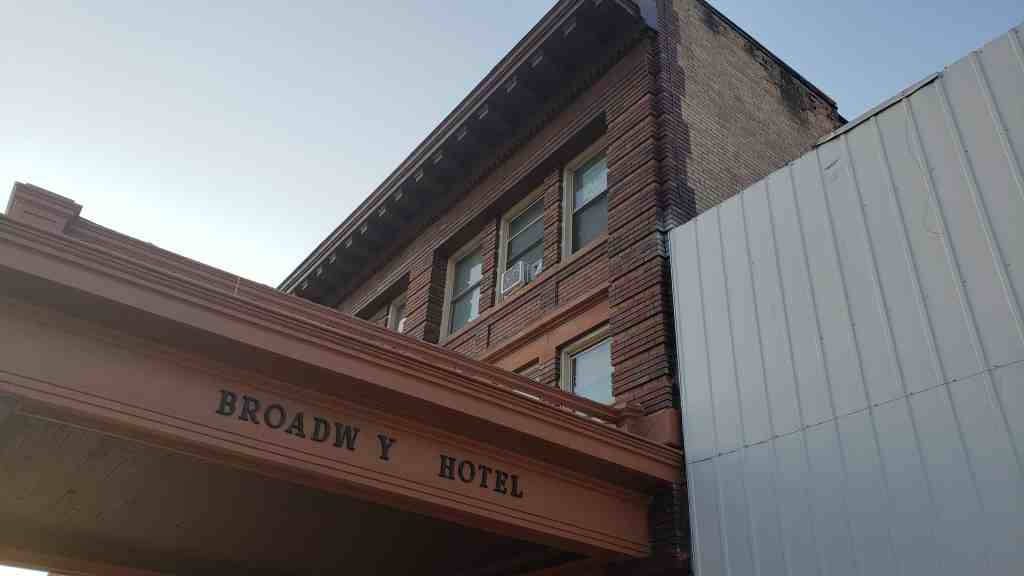
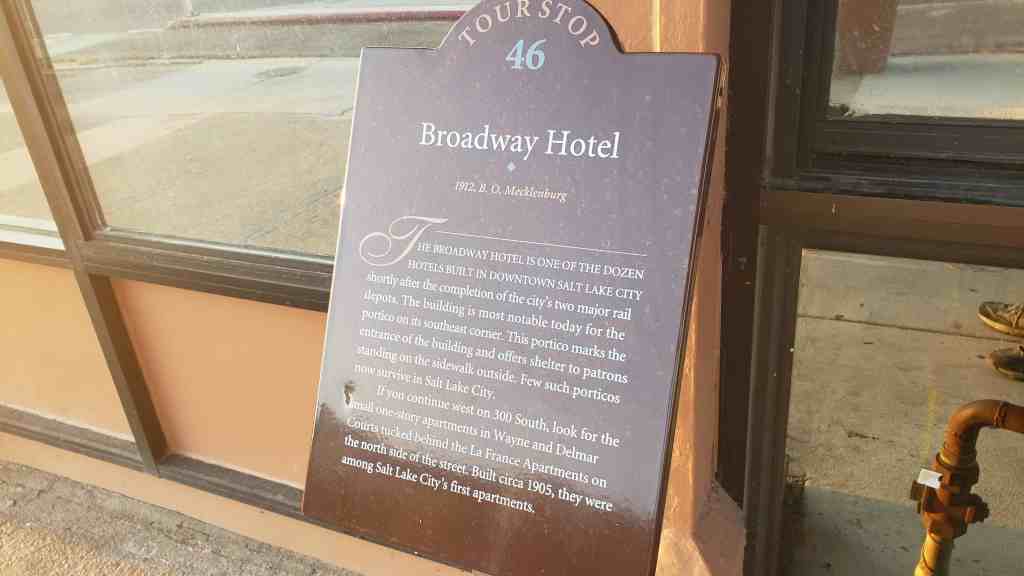
The Broadway Hotel is one of the dozen hotels built in downtown Salt Lake City shortly after the completion of the city’s two major rail depots. The building is most notable today for the portico on its southeast corner. This portico marks the entrance of the building and offers shelter to patrons standing on the sidewalk outside. Few such porticos now survive in Salt Lake City.
If you continue west on 300 South, look for the small one-story apartments in Wayne and Delmar Courts tucked behind the La France Apartments on the north side of the street. Built circa 1905, they were among Salt Lake City’s first apartments.
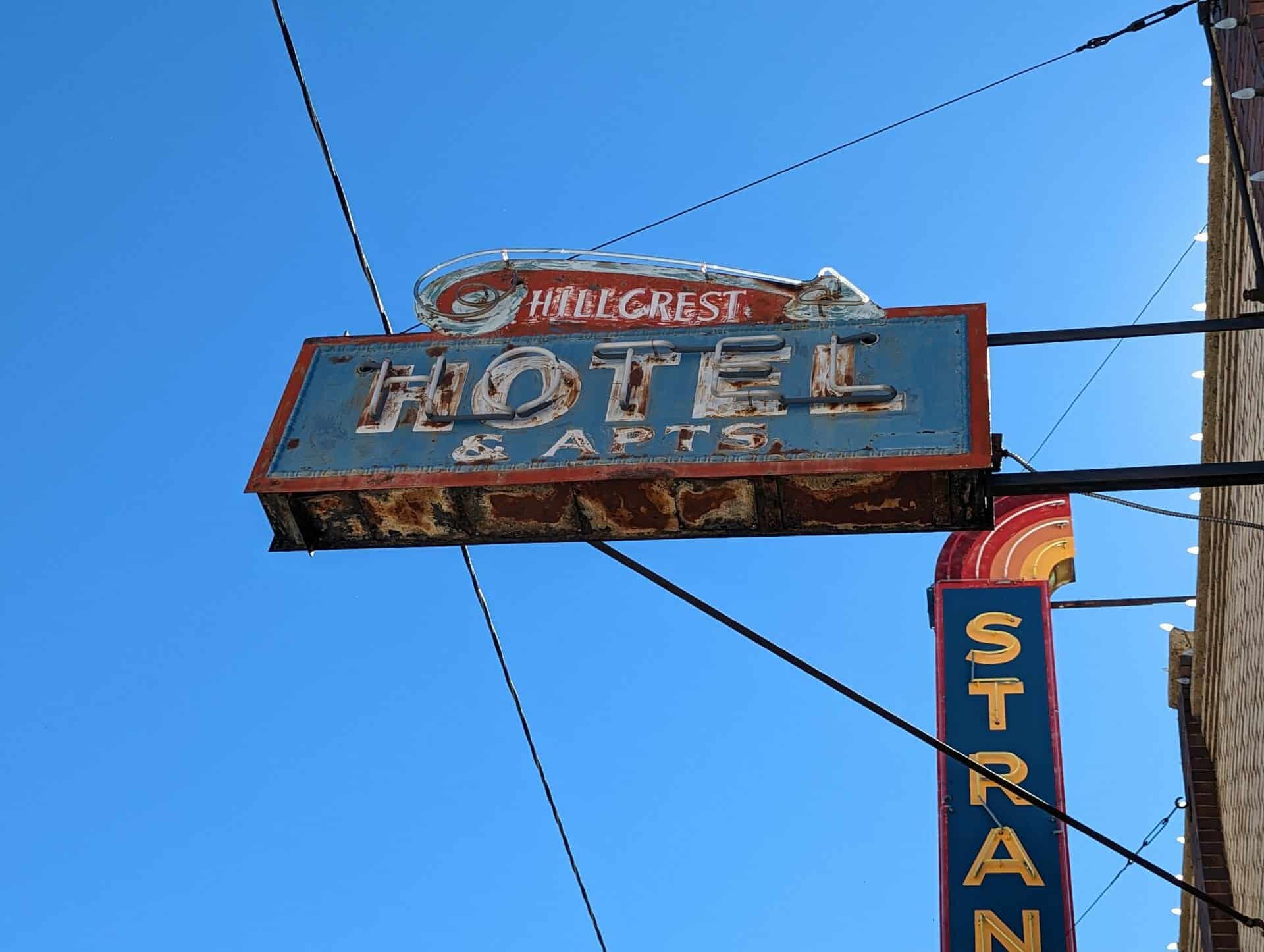
This building was constructed in 1919 out of brick and stone rubble salvaged from the burned Double Rock store. Helper Furniture and Hardware Company, a business started by Mike Bergera and purchased by Joe and John Quilico in 1923, was located on the first floor. The original J. C. Penney store in Helper was also located on the first floor. The Hotel Utah, operated in the 1930s by D. C. Cavenah, was located on the second floor. This two-story commercial building contributes to the historic character of the Helper National Register Historic District.
Two story red brick stone and stucco commercial building. Present building was originally owned by Mike P. Bergera and was constructed from the brick and stone rubble of the Double Rock store building which burned in May 1919. The Helper Furniture and Hardware Company was located in the first floor. Begun by Mike Bergera, the furniture business was purchased by Joe and John Quilico in 1923. The original J.C. Penney business was located in the LHS of the first floor. The second floor was the Hotel Utah (presently called the Utah Hotel), operated in 1935 by D.C. Cavenah. The first floor decorative tile dates Business offices presently occupy front façade has been altered. from the early 30’s. Business offices presently occupy the first floor, and the front façade has been altered.
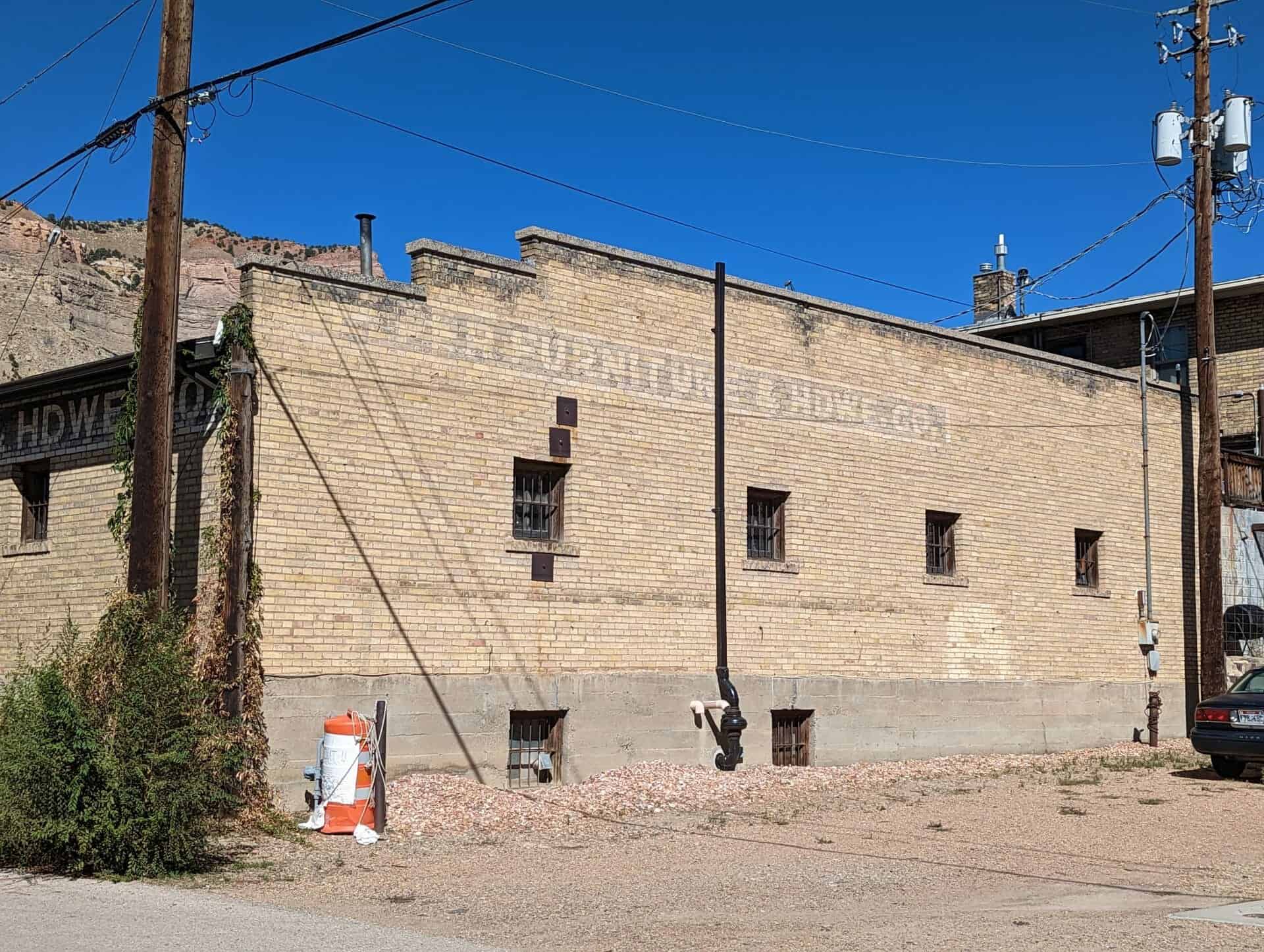
Behind the building is this one story hip roof, tan brick warehouse building constructed for Helper Furniture and Hardware Co., listed as CR-07-676 in the Helper Commercial District.