Tags
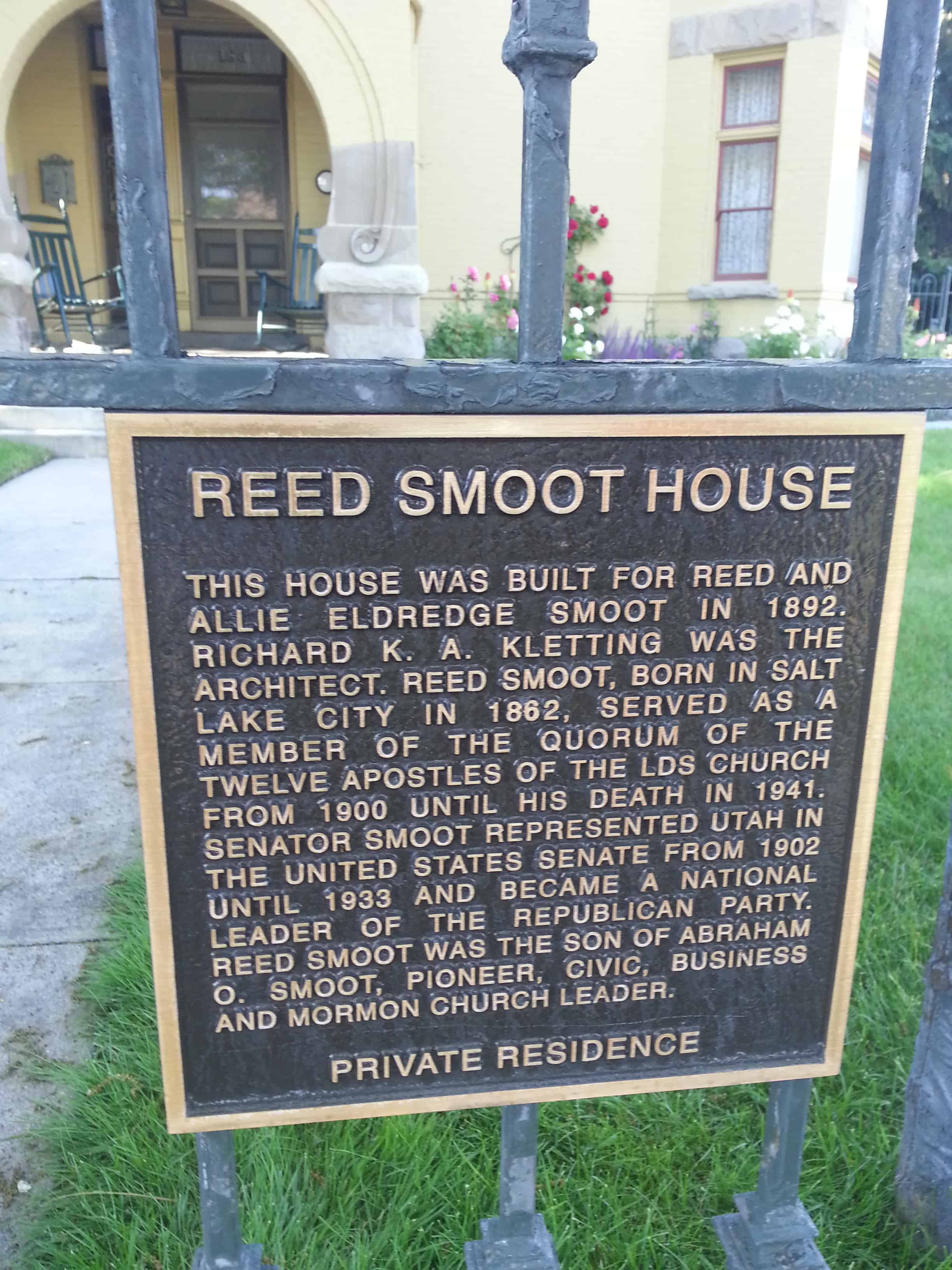
This house was built for Reed and Allie Eldredge Smoot in 1892. Richard K. A. Kletting was the architect. Reed Smoot, born in Salt Lake City in 1862, served as a member of the Quorum of the Twelve Apostles of the LDS Church from 1900 until his death in 1941. Senator Smoot represented Utah in the United States Senate from 1902 until 1933 and became a national leader of the Republican Party. Reed Smoot was the son of Abraham O. Smoot, pioneer, civic, business and Mormon Church leader.
Located at 183 East 100 South in Provo, Utah and added to the National Register of Historic Places (#75001831) on October 14, 1975.
From the Nomination form for the national register:
The nationwide campaign from 1903 to 1907 to unseat Senator Reed Smoot was, according to historian Thomas F. O’Dea, the “last major flareup of the Mormon-gentile conflict on a national scale.” Shortly after Smoot took his seat in 1903 against a background of decades of gentile animosity toward Mormons, a movement backed by petitions bearing more than 1 million signatures urged his expulsion from the Senate on grounds that he was a high official in an organization that, despite assertions to the contrary, countenanced polygamy and violated the constitutional tenet of separation of church and state. From 1904 to 1907 the Senate Committee on Privileges and Elections held hearings on the Smoot case, calling numerous witnesses and compiling 4,000 pages of testimony. Although the majority report recommended his expulsion, the Senate under pressure from President Theodore Roosevelt refused to concur, and Smoot retained his seat. -Thus ended the last major episode in a religious and political controversy that had rocked the federal system for decades. Until he left the Senate in 1933, no one, says Smoot biographer Milton R. Merrill, did more than he “in changing the public’s opinion from one of scorn and obloquy for the despised Mormons to one of respectful admiration.”
Throughout his Senate career Smoot was usually aligned with the “standpat” wing of the Republican Party not only because of his innate conservatism but because this group had supported him wholeheartedly in his fight to prevent expulsion. He was a leading Harding supporter in 1920, and at the Republican National Convention in Chicago, it was Smoot, says Harding biographer Andrew Sinclair, who informed the press that “Harding had been chosen by the Senate bosses and would be nominated.” This statement became the basis for a political legend that a coterie of Senators had engineered Harding’s selection in a “smoke-filled” room.
It was Smoot, says Harding biographer Andrew Sinclair, who informed the press that “Harding had been chosen by the Senate bosses and would be nominated” after the famous meeting in the “smoke-filled room” of the Blackstone Hotel. Actually, those in attendance had been unable to reach a decision, but since Smoot f s statement proved correct, it became the basis for a political legend that a coterie of Senators had engineered Harding’s selection.
During the 1920’s Smoot, according to his biographer Milton R. Merrill, became “known as the watchdog of the Treasury” because of his demand for reduced Federal spending and lower taxes. His area of greatest expertise, however, was the tariff. An extreme protectionist, Smoot in 1930 as chairman of the Senate Finance Committee played a leading role in the drafting and passage of the Hawley-Smoot Tariff. This measure, says historian John D. Hicks, “raised American import duties to an all-time high” and was “so unsound economically that it drew the opposition of nearly every reputable economist in the United States.” Its high rates in turn caused 25 nations to raise their levies on American products in retaliation, thus worsening the Nation’s depressed economy.
In 1932 Smoot went down to overwhelming defeat as a result of the Democratic landslide. After leaving the Senate in 1933, he returned to Utah and devoted most of his time to church affairs. He became a bitter critic of the New Deal, expressing his opposition in no uncertain terms. On February 9, 1941, while vacationing in St. Petersburg, Fla., he died of heart and kidney disease at the age of 79.
Smoot’s area of greatest expertise was the tariff. According to tariff historian F. W. Taussig he was “an out-and-out protectionist of the most intolerant stamp.” His Hawley-Smoot Tariff, says historian John D. Hicks, “raised American import duties to an all-time high,” drew the opposition of nearly every reputable economist in the United States, caused 25 nations to raise their levies on American products in retaliation, and worsened the Nation’s depressed economy.
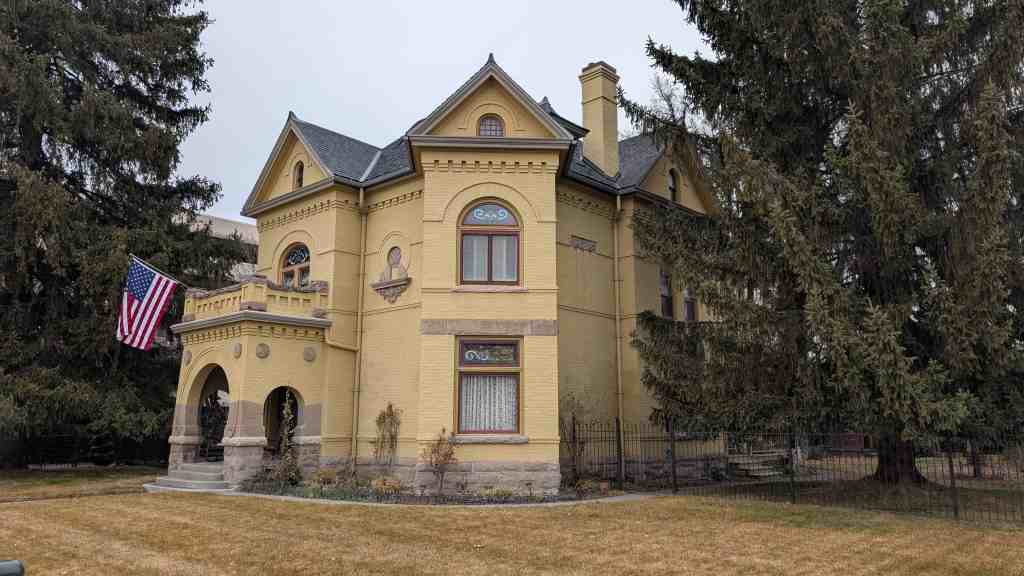
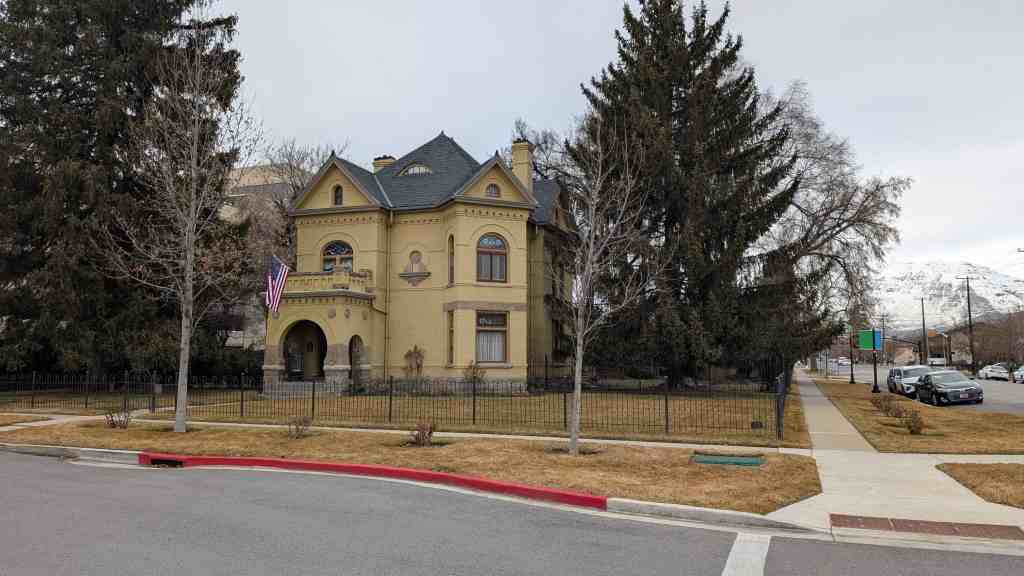
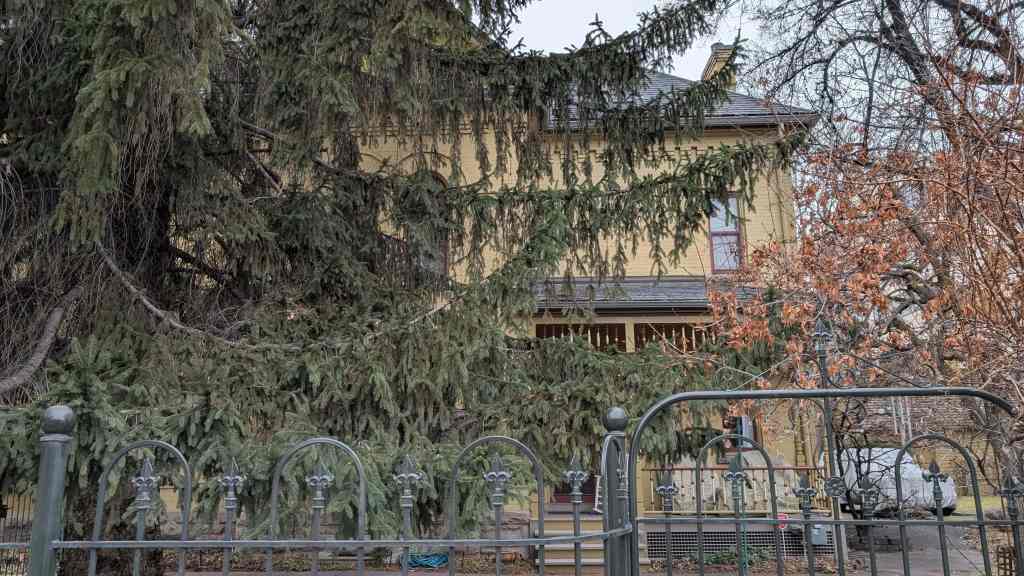
Smoot paid $4,000—excluding cost of the heating plant, hardwood floors, and certain other trim — to have this 2 1/2-story, beige-painted, red brick house built in 1892. He drew the preliminary specifications himself, and architect Richard K. A. Kletting completed the design. Smoot made his permanent home here until his death, and the little-altered dwelling remains in the Smoot family. The Senator’s primary Washington, D.C., home has been demolished, and he occupied his only other known extant residence only 5 years. Thus this Provo house clearly memorializes Smoot best.

Biography
Reed Owen Smoot was born January 10, 1862, in Salt Lake City, Utah, to Abraham 0. and Anne M. Smoot. The Smoots were one of Utah’s leading Mormon families, and Reed was the child of one of his father’s several wives. After receiving his basic education in church schools, he entered Brigham Young Academy (later University) as a member of its first class in 1877. Upon graduation in 1879, Reed joined his father’s business in Provo. By the time he was 18, he was manager of the Provo Co-op Institute, a general store, and 5 years later was managing the Provo Woolen Mills. Within a few years he had acquired widespread business and agricultural interests, and by the time he was 35, Smoot had accumulated a considerable fortune. At the same time, he advanced in the hierarchy of the Mormon Church. In 1900 he was ordained as one of the Quorum of Twelve Apostles, a position in the church second only to the presidency.
Appearance of home
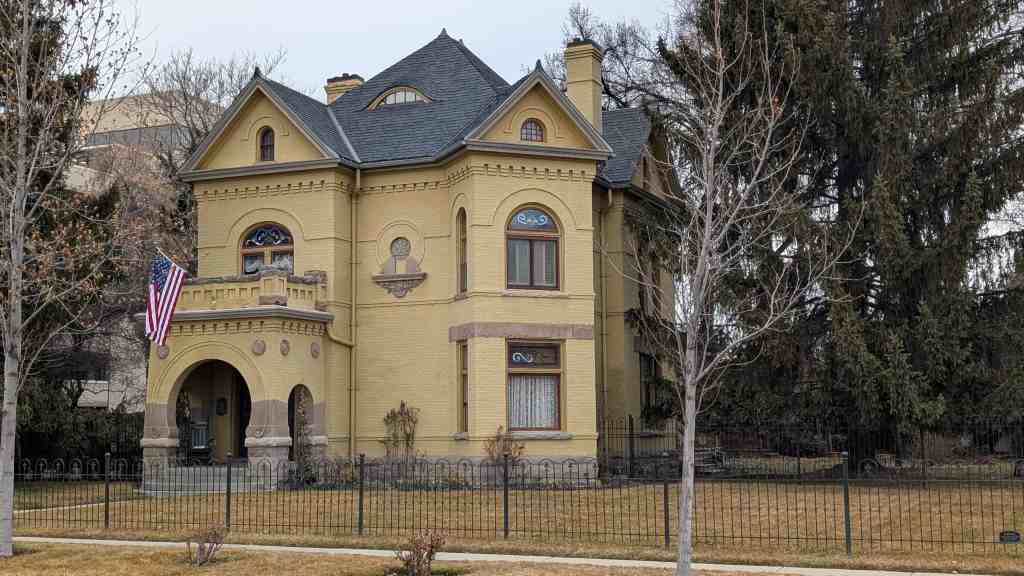
Reed Smoot paid $4,000—excluding cost of the heating plant, hardwood floors, and certain other trim — to have this 2 1/2-story, beige painted, red brick house built in 1892. He drew the preliminary specifications himself, and architect Richard K.A. Kletting completed the design. The stately dwelling remained the Senator’s permanent home until his death in 1941, and his descendants retain the structure today. Little-altered and in excellent condition, the dwelling holds many original Reed Smoot furnishings, including Mrs. Smoot’s china, her collection of pitchers, and his collection of paintings by Lee Green Richards and other artists. The only other extant Reed Smoot residence is a white-painted brick house at 4500 Garfield in Washington, D.C. He occupied that dwelling from 1929 to 1933. His previous Washington home, at 2521 Connecticut Avenue, where he lived from 1910 to 1929, has been demolished. Clearly the structure that best memorializes Senator Smoot is the Provo residence.
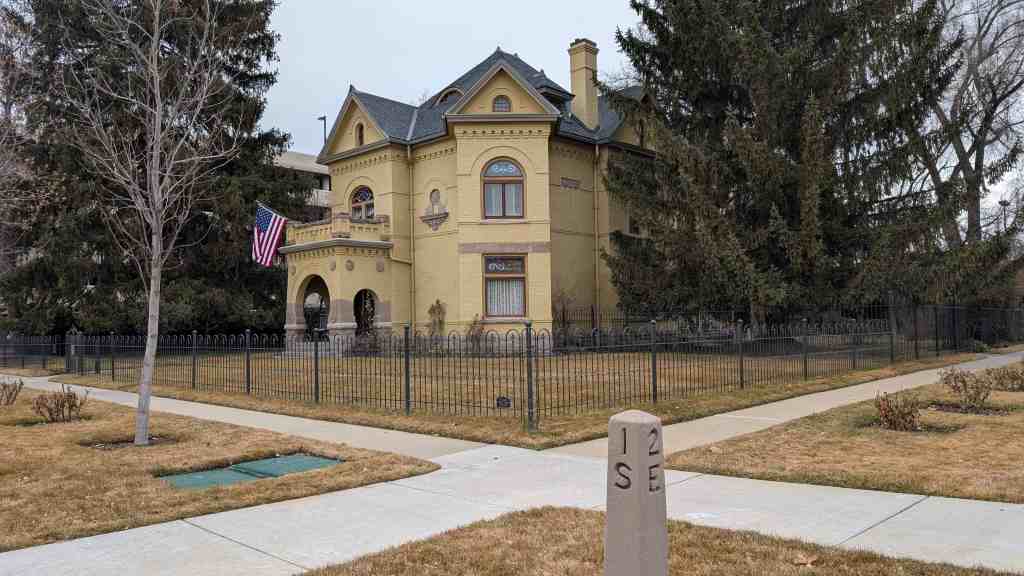
The south-facing house consists of a nearly square, hip-roofed main block; a similarly rendered wing affixed to the eastern half of the rear façade; a full-height, hip-roofed pavilion projecting from the northern half of the west side; and three full-height, gable-roofed, pedimented pavilions. One of the latter juts from the northern half of the east façade, a second springs from the southeast corner of the main block, forming a 45° angle with the south and east walls; and a third thrusts forward from the western half of the front façade. All these sections rest on a rusticated stone foundation that rises some 3 feet above ground everywhere except on the rear wing. In addition the walls of every section rise to the same height and are encompassed by a box cornice resting on a band of brick corbeling. The main block and four pavilions are additionally belted by a rusticated stone water table; a two-row brick stringcourse at first-story window-sill level; a similar stringcourse at second-story window-sill level; and a one-row brick stringcourse that outlines the arches above the second-floor windows. Three corbeled, brick chimneys pierce the dwelling’s irregular roofline: one stack rises from the rear slope of the rear-wing roof, while the other two soar upward from the Juncture of the main block with the east and the west pavilion.
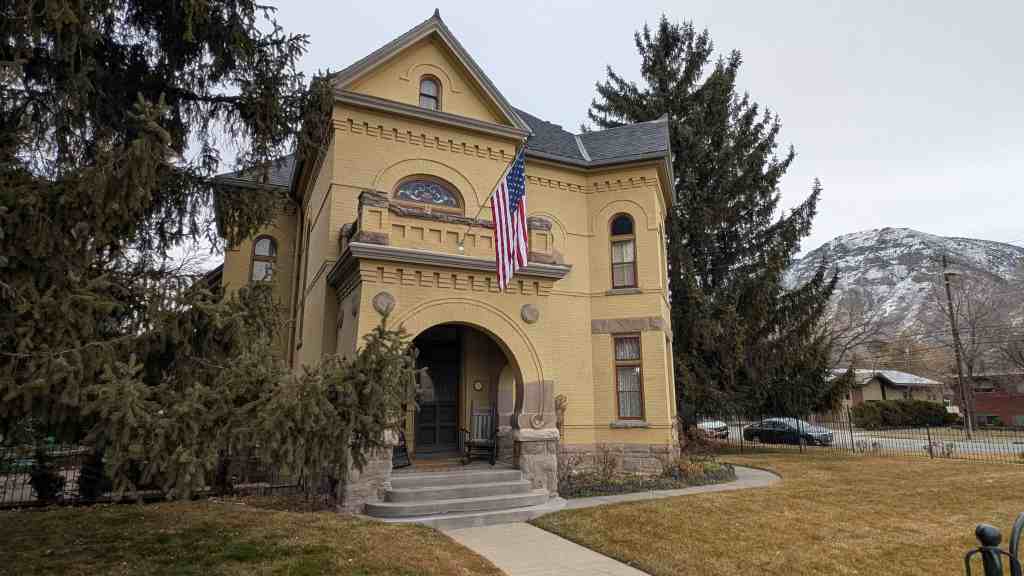
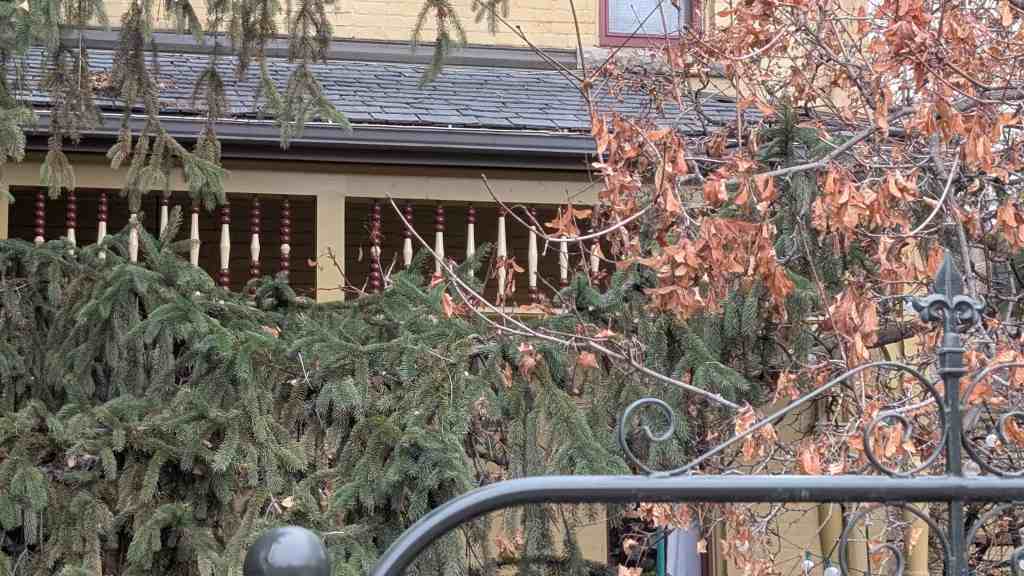
Three porches or porticoes grace the Smoot House. Projecting from the south pavilion, a one-tier, square-shaped, brick portico rests on rusticated stone piers, carries a solid, paneled, brick deck railing, and shelters the front entrance. Brick corbeling and stone medallions decorate the portico, radiating brick voussoirs form a semicircular arch over a single opening on both the east and west sides and a horseshoe arch over the front access steps. In contrast a light, airy, one-story, hip-roofed veranda with turned wood support posts, treillage, and balustered railing crosses the east side of the rear wing and abuts the north side of the east pavilion, where there is a seldom used side entrance. The third porch is a second-story, screened sleeping room, which rests on two simple, wood pilasters and a wood post, and which fills the angle formed by the west side of the rear wing and the north side of the hip-roofed pavilion. Underneath the sleeping porch, three wood steps ascend to a stoop before the house’s rear door in the west wall of the rear wing. The porch also shelters the full basement’s access steps, which descend between the solid-railed stoop and the pavilion wall.
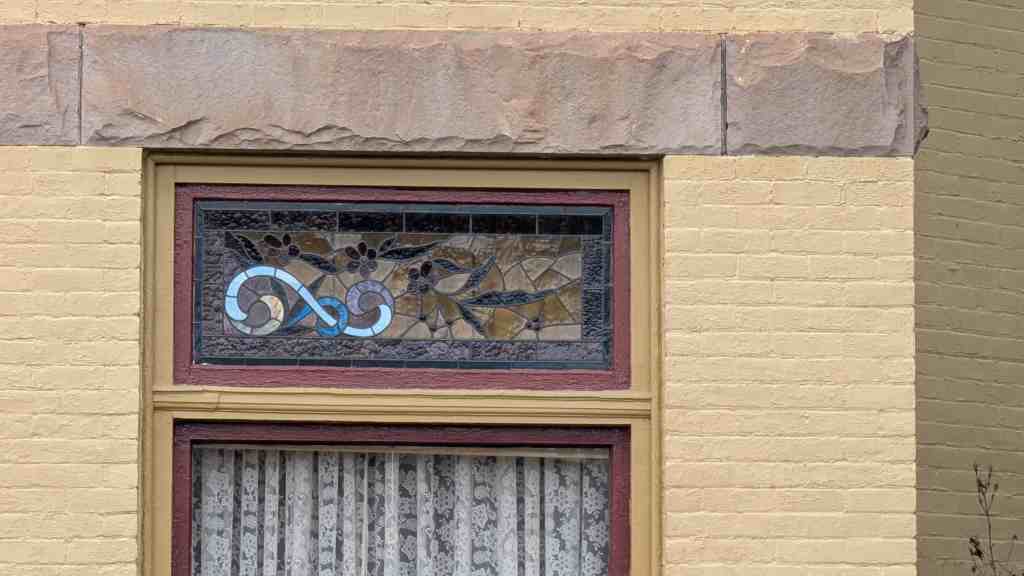
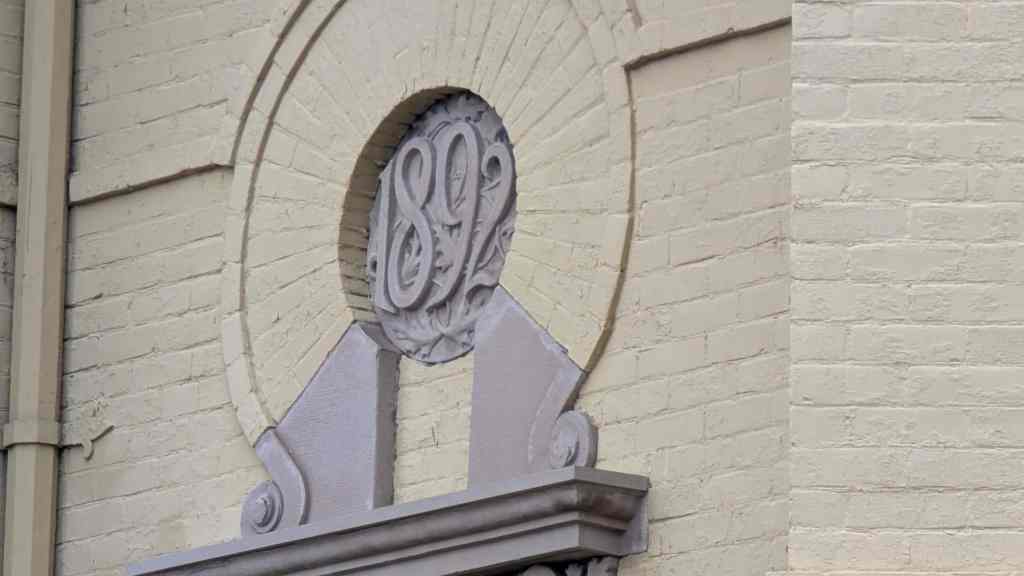
Fenestration in the Smoot House is irregular, but all windows have stone sills and are set in wood frames. Generally, first-floor windows are rectangular and have flat arches of radiating brick voussoirs. Notable exceptions are the first-floor openings in the pavilions, where massive, rusticated stone lintels top the windows. Most second-story windows, except those in the rear wing, have semicircular transoms under similar arches of radiating brick voussoirs. Each pavilion is one bay wide and has one window on each floor plus a small, multipane, round-arched window in the pedimented gable end. These help light the house’s attic, as do a hipped dormer on the east slope of the mainblock roof, another on the opposite slope, and a swept dormer on the front slope. The windowless front façade of the exposed portion of the main block highlights a round, carved stone, inscription plaque bearing the date of construction.
The main entrance to the residence is a transomed, single door set under the front portico and composed of four lower wood panels, a middle glass panel, and three upper wood panels. Left of the door is a wide, transomed sidelight. Inside, the house differs little from its appearance during Senator Smoot’s residency. Beautiful oak woodwork remains unfinished and in excellent condition. The major changes, other than removal of some of the Senator’s furniture, are the addition of some new carpeting and some new wallpaper, although in the latter instance the family attempted to match the original patterns.
On the first floor, the house follows a modified side-hall plan. The front door opens into a foyer, and along its left wall a two-flight, open, balustraded stair rises to the second floor. In the right foyer wall a double, sliding, oak door gives access to the parlor with its original furniture. A similar door in the rear or north parlor wall opens into the dining room. This chamber has original furnishings too, and is also accessible from Smoot’s sitting room and office north of the stair. Lying beyond the sitting and dining rooms is the original kitchen, which, except for a huge ice box, contains modern equipment.
Upstairs, the second floor follows a central-hall plan. Here the left front room served as the Smoot’s nursery, and the right front as their master bedroom. Their original bedroom furniture remains. Beyond each of these chambers, on each side of the hall, is another bedroom, and in the rear wing there is a bath and maid’s room. Between the servant’s chamber and the right, rear bedroom, a narrow enclosed stairway rises to the unfinished attic and descends to the kitchen.
The Smoot House sits on a tree-shaded, corner lot and retains part of the wrought-iron fence that once surrounded the property. In the rear stands a small, rectangular, gable-roofed, frame garage or carriage house. An office building occupies the lot rear of the Smoot House, but the neighborhood remains essentially residential.