
Tags
Glenwood, Mercantile Buildings, NRHP, Sevier County, utah, ZCMI

The Glenwood Mercantile was erected by the United Order Building Board in 1878 as the retail operation of the Glenwood United Order. The oldest commercial outlet in Sevier County, it is one of the few remaining cooperative stores in all of Utah built during the United Order movement of the 1870s. Established in 1874 by The Church of Jesus Christ of Latter-day Saints, the Glenwood United Order required all participating members to give over their property, receiving in turn, shares of the corporation. Prices in the store were set by the committee that also set local wages. The cooperative store was run by Bishop Archibald Oldroyd, president of the Glenwood United Order. By 1882 the Order was discontinued and the store transferred to private ownership. The name, Glenwood Cooperative, continued to be used.
In 1898 Neils Heilesen purchased the store and ran it until 1910 when he sold it to his son, Henry Edwards Heilesen. In 1912 the building was remodeled, and the pressed tin pilasters flanking the entrance alcove and the carved wood cornice were made part of the new facade. The name was changed to Glenwood Mercantile. It was operated as a store until 1952.
Related:
Located at 15 West Center Street in Glenwood, Utah and added to the National Register of Historic Places (#80003960) on April 29, 1980.
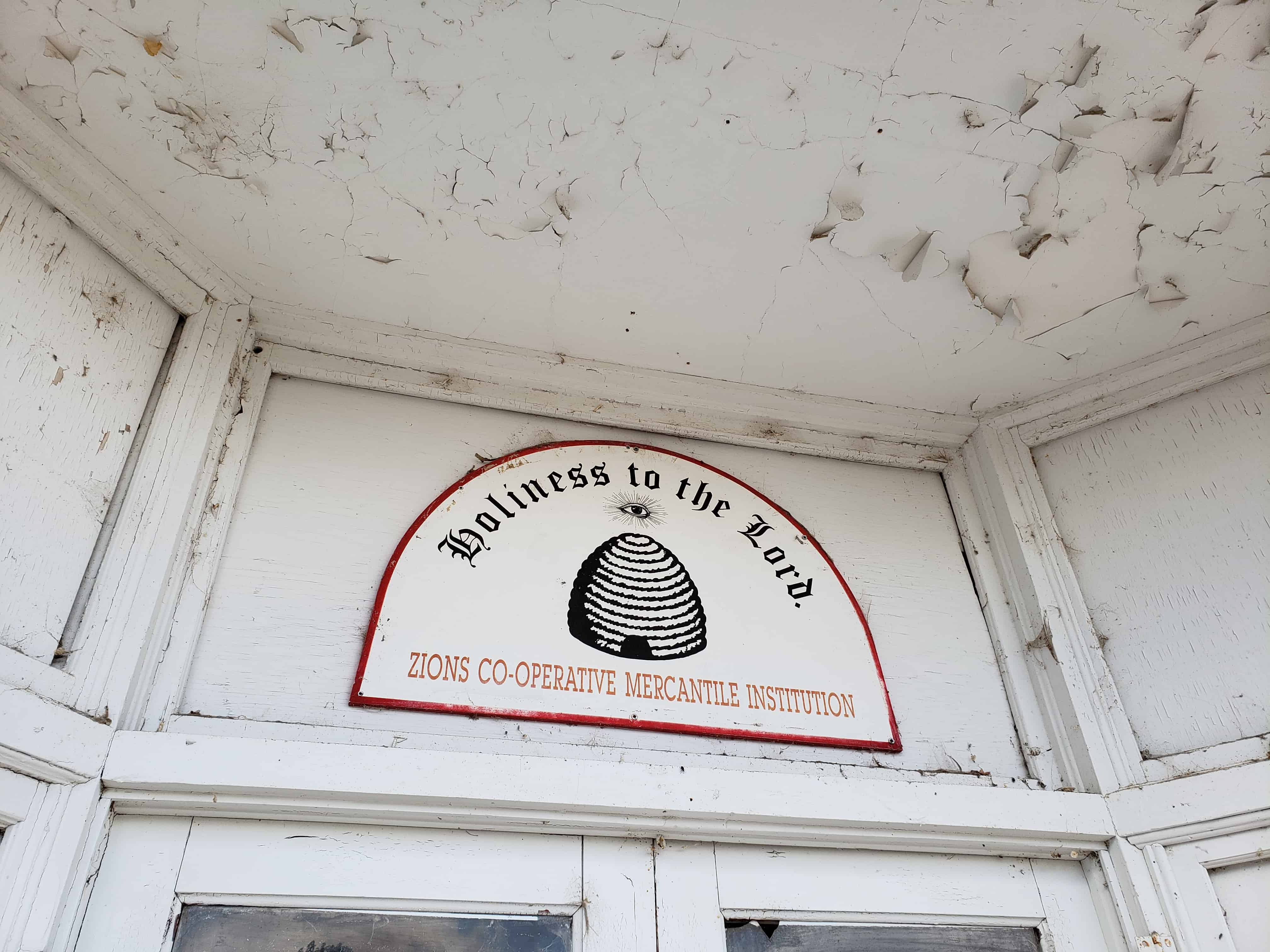


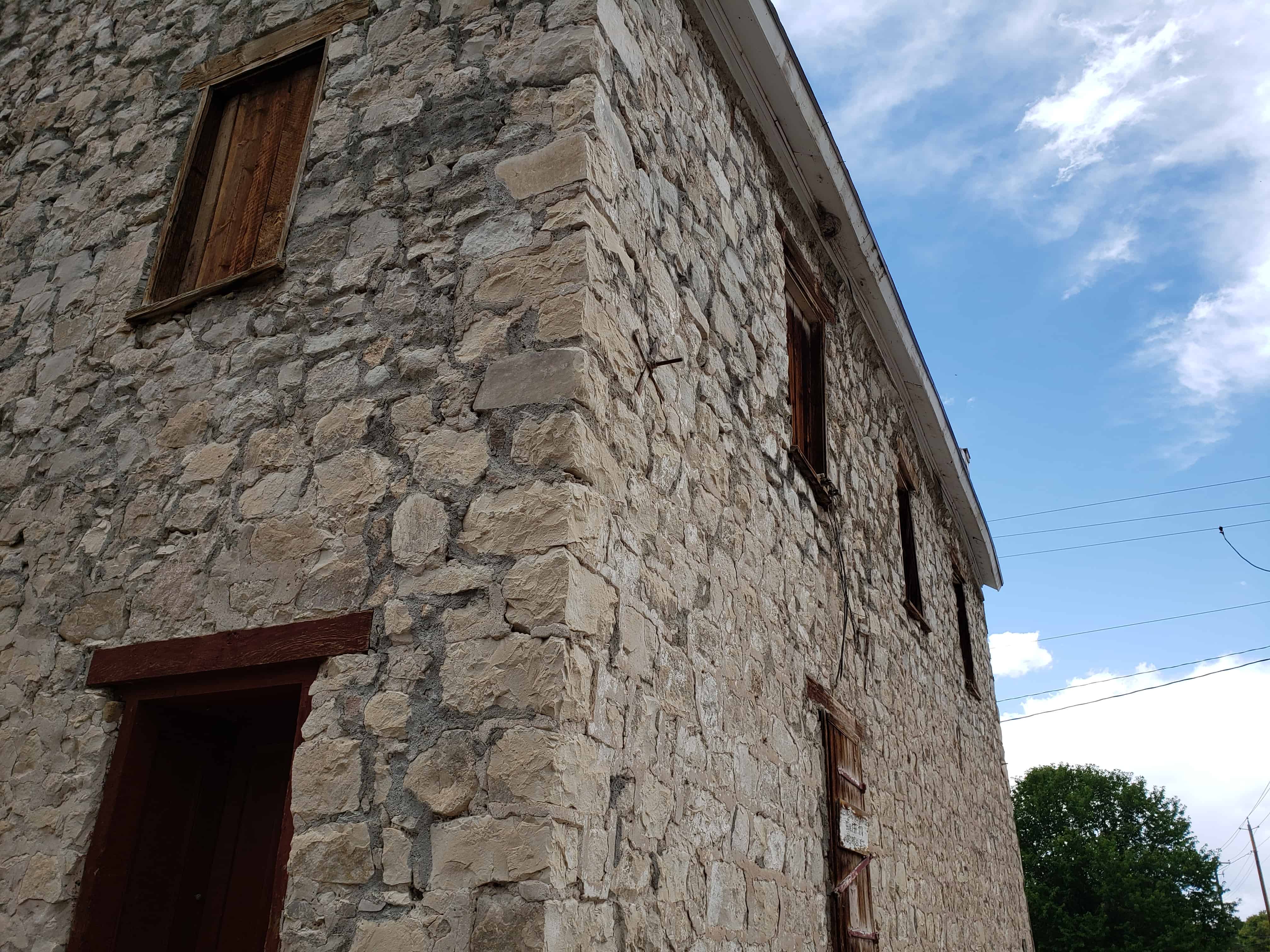



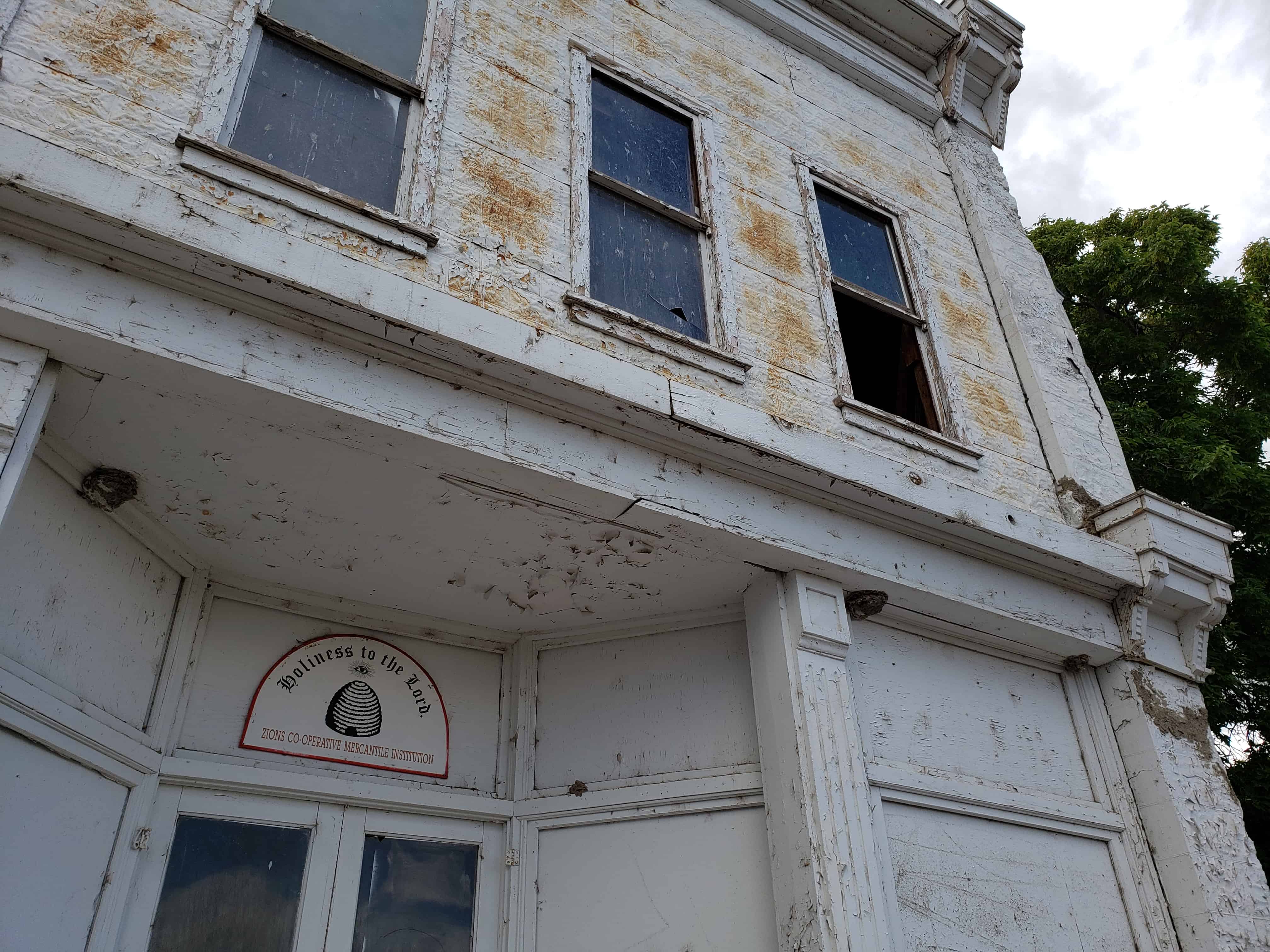


The Glenwood Mercantile is significant as one of the few remaining cooperative stores in Utah built during the United Order Movement of the 1870s. The store is also significant because it is the oldest commercial outlet in Sevier County. locally the building represents a successful communal past where religion, economics and recreation intermixed. Its significance was documented as part of a comprehensive survey of Sevier County.
Glenwood, settled first as Glencove in 1864, was resettled in 1870 after the termination of the Blackhawk War (1866-69). This agricultural community included a number of kin-related Danish severs that gave the town strong social cohesion. Because of the lateness of Sevier Valley colonization, the cooperative and: mi ted Order movements came almost at the same time: Co-ops in 1873, Orders in 1874.
Mormon cooperatives were much more than mere business associations. Its members were local businessmen but its purpose was building up the kingdom of God and not individual profits. Cooperatives were instituted to free Mormons from the need for non-Mormon economic help. In 1873 Brigham Young took a more drastic step toward Mormon self-sufficiency by pushing for the creation of local United Orders. These communal enterprises followed one of four patterns: all private goods were “given over” to be returned as wages and dividends (St. George Plan) ; expansion of existing cooperatives (Brigham City Plan) ; use of the Brigham City Plan for the Mormon wards of larger cities; and, the total giving over and communistic design of the Gospel or Orderville Plan.
When the United Order was established in Glenwood, it absorbed the local cooperatives. Following the St. George Plan where all participating members gave over their property, receiving in return shares in the corporation. Dividends were small because the purpose of the Order was not individual profit but community development and, therefore, were restricted so that the order could accumulate capital to expand its industries.
The Glenwood Cooperative Store was the retail operation of the Glenwood Order. It was erected by the Order’s Building Board in 1878. This committee was composed of carpenters, masons, adobe makers, and plasterers. Their responsibility was to assess and implement the building of all structures in Glenwood. The running of the cooperative fell to Archibald Oldroyd, Bishop and President of the Glenwood United Order. Prices in the store were set by a committee that also set local wages. In theory both wages and prices were supposed to be in balance but many times they were not. The result was either liberal credit which hurt the store or quarreling among the members which hurt the movement.
The residents of Glenwood gave their almost unanimous support to the experiment and this helped keep the Order alive and successful until 1881. In 1882 John Taylor, President of the Mormon Church, withdrew exclusive church support for cooperative stores. He did so because many had lost their community-wide base and had gradually slipped into private ownership. In Glenwood after 1882, the cooperative store was run by previous Order members like Issac W. Pierce and Abraham Shaw.
The store was sold in 1898 to a private investor and resident of Glenwood, Neils Heilesen, who continued to use the name “Glenwood Cooperative”. This advertising practice changed when his son Henry Edwards purchased the store in 1910. After remodeling the building in 1912 he attached the title “Glenwood Mercantile” to the front of his “modernized” store.
The continued growth of Sevier County during the early 1900s gave rise to a competitive store, the Glenwood Cash Store. This period was also marked by a decline in agricultural prices so that by 1927 Heilesen had outlasted his competitor but was experiencing hard financial times. Yearly mortgages became a common occurrence. In 1930 Heilesen leased the store to the Texas Company. Their success was no greater than his own and in 1933 he resumed operation of the store. In 1952 the store ceased operation and has remained vacant up to the present.
The Glenwood Mercantile exists today as updated in 1912. It is a two-story commercial style structure, built of coursed, rough-faced ashlar. A gable roofed brick extension of one story is located at the west. A boomtown façade shields the rear gable roof. The symmetrically arranged street façade exhibits an upper wood cornice with a central frame parapet. Pour double hung sash windows mark the second story.
At the ground floor level is the indented double door entrance approached by steps. Flanking the entrance alcove are pressed tin pilasters. The cornice above the first floor is also pressed tin, as is the siding of the second story wall here. Large rectangular windows and transoms of the ground floor have been boarded up. Lintels of secondary elevation windows are wood. As the Glenwood Co-op, the structure exhibited a gable end street façade and was lacking ornament except for the sign located above the first floor which was replaced by a cornice. Façade piercing was a symmetrical three over three arrangement and included a second story door. The entrance area was not indented. Ground floor windows had multipaned, rectangular lights and shutters.
Pingback: Z.C.M.I. | JacobBarlow.com
Pingback: Glenwood, Utah | JacobBarlow.com
Hey, I know this is a long shot, but do you know if this Historic Coop Mercantile building was bought. I see it was for sale in 2020. thanks!